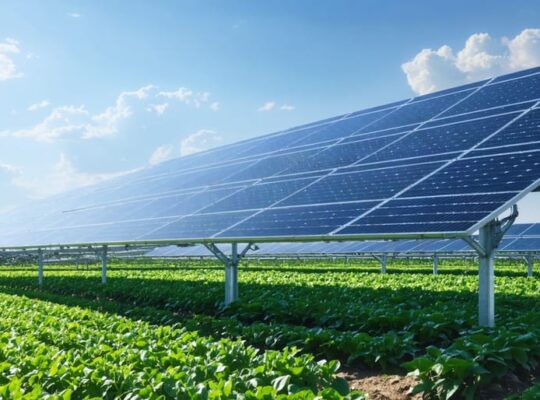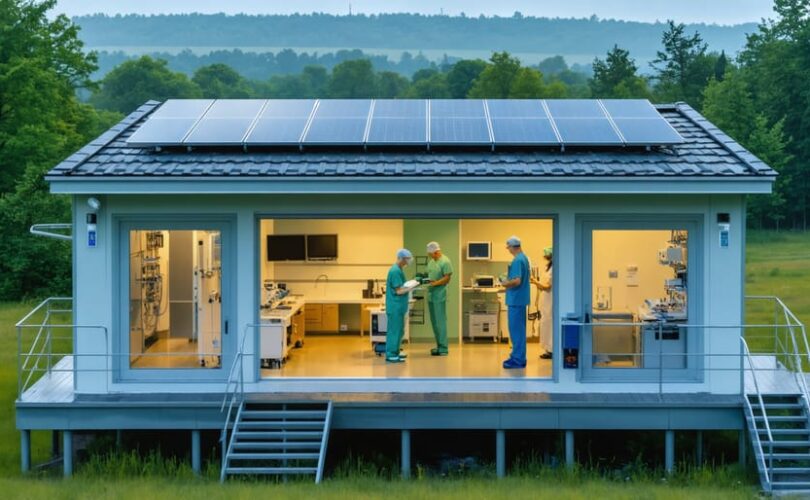
Remote solar jobs represent a dynamic intersection of renewable energy innovation and flexible work arrangements, offering unprecedented opportunities in the rapidly expanding solar industry. As organizations worldwide accelerate their transition to sustainable energy solutions, the demand for skilled professionals who can design, manage, and optimize solar installations from anywhere has skyrocketed. These positions span various disciplines, from solar system design and project management to data analysis and technical sales, allowing professionals to contribute to the global renewable energy revolution while enjoying location independence.
The evolution of digital tools, cloud-based platforms, and remote monitoring systems has transformed traditional solar industry roles into viable remote positions. Modern solar professionals can now perform complex system analyses, conduct virtual site assessments, and coordinate installation projects through sophisticated software solutions. This technological advancement has not only enhanced operational efficiency but also opened doors for talented individuals worldwide to participate in the solar sector’s growth.
For healthcare facilities and other institutional adopters of solar technology, remote solar positions offer a cost-effective approach to maintaining and optimizing their renewable energy infrastructure. These roles combine technical expertise with the flexibility and efficiency of remote work, ensuring continuous system performance while reducing operational overhead.
The Vital Link Between Solar Power and Remote Healthcare

Challenges of Powering Remote Medical Facilities
Remote medical facilities face unique challenges in maintaining reliable power supplies essential for life-saving equipment and critical healthcare services. The implementation of sustainable off-grid power solutions requires careful consideration of multiple factors, including unpredictable weather patterns, varying energy demands, and equipment maintenance requirements.
Key challenges include ensuring uninterrupted power for temperature-sensitive medical storage, operating room equipment, and emergency lighting systems. Medical facilities must maintain precise temperature control for vaccines, medications, and blood supplies, requiring consistent energy availability 24/7. Additionally, diagnostic equipment such as X-ray machines and laboratory analyzers demands stable power output to function accurately.
Battery storage capacity presents another significant challenge, as medical facilities need robust backup systems to maintain operations during extended periods of limited solar exposure. The integration of monitoring systems and redundant power sources is crucial for preventing service interruptions that could compromise patient care. These facilities must also consider staff training requirements for system maintenance and emergency protocols, ensuring operational continuity in all scenarios.
Critical Medical Equipment Power Requirements
Healthcare facilities in remote locations require reliable power sources for critical medical equipment. Essential devices such as ventilators, patient monitors, refrigeration units for vaccines and medications, and diagnostic imaging equipment demand consistent, uninterrupted power supply. A typical rural medical facility requires approximately 10-15 kWh per day to maintain basic operations.
Primary medical equipment power requirements include:
– Diagnostic imaging systems: 2-4 kW peak demand
– Laboratory equipment: 1-2 kW continuous load
– Refrigeration units: 0.5-1 kW with cyclical operation
– Emergency room equipment: 3-5 kW reserve capacity
– Vital sign monitors: 100-200W per unit
Solar installations for medical facilities must incorporate redundant systems and battery storage to ensure 24/7 operation. The design should account for peak usage periods, emergency situations, and seasonal variations in solar production. Engineering calculations must include a minimum 20% power buffer above standard requirements to accommodate unexpected medical emergencies and equipment additions.
Energy monitoring systems are essential to track consumption patterns and maintain optimal system performance, ensuring critical medical services remain operational at all times.
Technical Requirements for Remote Healthcare Solar Systems
System Design Considerations
When designing reliable solar systems for medical facilities in remote locations, several critical factors must be considered to ensure uninterrupted power supply. Load calculation and capacity planning are paramount, requiring thorough analysis of essential medical equipment power requirements, peak usage patterns, and future expansion needs.
The system architecture must incorporate redundancy measures, including backup batteries and hybrid capabilities, to maintain continuous operation during adverse weather conditions or equipment maintenance. Energy storage solutions should be sized to provide at least 48-72 hours of autonomous operation, considering the critical nature of medical services.
Environmental factors significantly impact system performance and longevity. Designers must account for local climate conditions, solar irradiance patterns, and potential weather extremes. Panel orientation and mounting systems should be optimized for maximum energy capture while ensuring structural integrity against wind loads and other environmental stresses.
Monitoring and control systems are essential components, enabling remote diagnostics and preventive maintenance. These systems should include real-time performance tracking, fault detection, and automated alerts to ensure prompt response to any operational issues.
Compliance with medical facility regulations and safety standards is crucial. The design must incorporate proper electrical isolation, grounding systems, and surge protection to safeguard sensitive medical equipment. Additionally, the installation should minimize electromagnetic interference that could affect medical devices.
Cost-effectiveness and sustainability considerations should balance initial investment with long-term operational expenses, including maintenance requirements and component lifecycle management. This approach ensures the system remains financially viable while meeting the facility’s critical power needs.
Backup and Redundancy Requirements
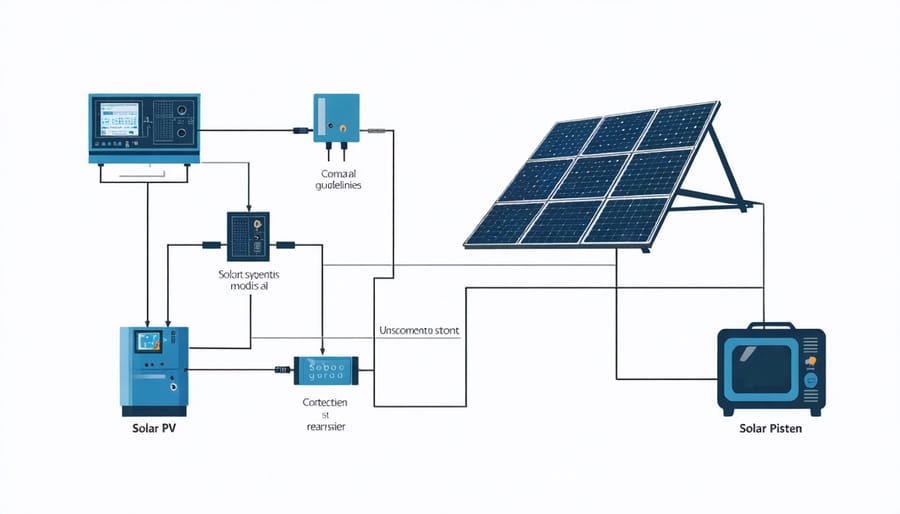
In remote solar installations, robust backup and redundancy systems are critical for maintaining uninterrupted power supply. These systems typically incorporate multiple layers of protection, including battery banks, auxiliary generators, and sophisticated power management controllers.
Primary backup solutions must include high-capacity lithium-ion or deep-cycle lead-acid battery systems, sized appropriately to maintain essential operations during extended periods without solar generation. These systems should be capable of providing at least 48-72 hours of autonomous operation under normal load conditions.
Redundancy measures often incorporate hybrid configurations, combining solar PV systems with diesel or natural gas generators. This approach ensures continuous power availability even during extended periods of adverse weather or system maintenance. Modern installations typically feature automatic transfer switches and smart load management systems that optimize power distribution and minimize downtime.
Monitoring and control systems play a vital role in maintaining system reliability. Remote monitoring capabilities allow technicians to identify potential issues before they become critical, while automated fault detection systems can initiate backup protocols without human intervention. Regular maintenance schedules must be established to verify the operational status of all backup components and ensure their readiness for deployment.
Documentation and emergency response protocols should be clearly defined and regularly updated. This includes detailed procedures for system switchover, maintenance guidelines, and emergency contact information. Training programs for on-site personnel must cover basic troubleshooting and emergency response procedures to ensure quick resolution of power-related issues.
Career Opportunities in Remote Healthcare Solar Projects
Key Skills and Qualifications
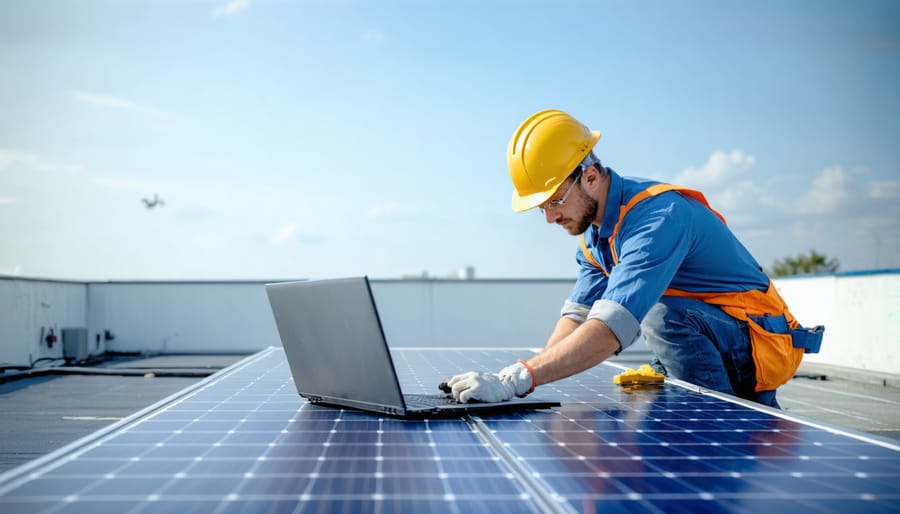
Professionals seeking remote solar positions must possess a comprehensive skill set combining technical expertise with project management capabilities. A bachelor’s degree in electrical engineering, renewable energy, or related fields is typically required, along with relevant industry certifications such as NABCEP (North American Board of Certified Energy Practitioners) certification.
Essential technical skills include proficiency in solar system design software, understanding of electrical codes and regulations, and experience with off-grid solar installation techniques. Knowledge of energy storage systems, power electronics, and monitoring equipment is crucial for remote diagnostics and troubleshooting.
Remote positions demand strong digital literacy, including familiarity with remote monitoring platforms, data analysis tools, and project management software. Professionals should demonstrate expertise in virtual collaboration tools and cloud-based documentation systems.
Additional qualifications often include:
– Experience with CAD software and 3D modeling
– Understanding of local building codes and permit requirements
– Ability to analyze site surveys and satellite imagery
– Strong problem-solving and analytical skills
– Excellent written and verbal communication abilities
– Project coordination and client management experience
– Safety certification and OSHA compliance knowledge
Continuing education and staying current with evolving solar technologies and industry standards is essential for career advancement in remote solar positions.
Project Management and Implementation
Project management in remote solar installations requires a structured approach that combines technical expertise with effective coordination skills. Remote project managers oversee the entire implementation process, from initial site assessment through final system commissioning, all while coordinating with multiple stakeholders from different locations.
Key responsibilities include developing detailed project timelines, managing resource allocation, and ensuring compliance with local regulations and safety standards. Project managers utilize specialized software platforms for remote monitoring, documentation management, and team collaboration. They coordinate with on-site contractors, equipment suppliers, and local authorities while maintaining clear communication channels with all parties involved.
Risk management plays a crucial role, particularly in remote locations where access and logistics present unique challenges. Managers must develop contingency plans for potential issues such as weather delays, equipment failures, or connectivity problems. They also ensure proper documentation of all project phases, including permits, inspections, and system performance data.
Quality control is maintained through regular virtual inspections, data analysis, and performance monitoring. Project managers leverage remote monitoring systems to track installation progress, system functionality, and energy production metrics in real-time. They also coordinate training sessions for local maintenance teams and end-users, ensuring long-term system sustainability.
Success in remote solar project management requires strong organizational abilities, technical knowledge of solar systems, and expertise in digital collaboration tools. Professionals must stay updated with industry best practices and emerging technologies that enhance remote project execution capabilities.
Success Stories and Case Studies
The successful implementation of solar PV systems in remote healthcare facilities has demonstrated significant positive impacts on patient care and operational efficiency. Several notable case studies illustrate the transformative potential of these installations.
In rural Tanzania, the Bugando Medical Centre implemented a 180kW solar PV system in 2019, reducing their energy costs by 65% while ensuring uninterrupted power supply for critical medical equipment. The facility now maintains consistent refrigeration for vaccines and operates surgical equipment without disruption, serving over 100,000 patients annually.
The Santa Cruz Hospital in Bolivia presents another compelling example. Their 120kW solar installation, completed in 2020, includes advanced battery storage systems that provide up to 72 hours of backup power. This implementation has enabled the hospital to expand its services to remote communities, supporting emergency procedures and diagnostic imaging even during extended grid outages.
In remote Alaska, the Norton Sound Regional Hospital’s 200kW solar array demonstrates the viability of solar solutions in extreme climates. Despite challenging weather conditions, the system provides 30% of the facility’s total energy requirements and has proved particularly valuable during winter months when grid connectivity is vulnerable to disruption.
The success of these implementations relies heavily on careful planning and skilled professionals. At the Kenyan Women and Children’s Wellness Centre, a team of local technicians trained in solar PV maintenance ensures system reliability. This facility’s 150kW installation has operated at 98% efficiency since its 2018 deployment, supporting essential medical services for over 50,000 patients yearly.
These case studies highlight common success factors: comprehensive site assessment, appropriate system sizing, integration with existing infrastructure, and ongoing maintenance protocols. The installations have not only improved healthcare delivery but also created sustainable employment opportunities for local communities. Training programs developed alongside these projects have equipped numerous professionals with specialized skills in solar PV maintenance for healthcare applications.
The documented outcomes from these implementations include average energy cost reductions of 40-70%, increased reliability of medical services, and expanded healthcare access in underserved areas. These success stories continue to inform best practices for future installations and demonstrate the vital role of skilled solar professionals in remote healthcare settings.
The integration of solar PV systems in remote healthcare facilities represents a crucial intersection of renewable energy technology and public health services. These implementations not only provide reliable power solutions for critical medical equipment but also create diverse career opportunities in an emerging specialized field. The growing demand for sustainable energy solutions in healthcare has opened new pathways for professionals with expertise in both solar technology and healthcare facility operations.
Career prospects in remote solar healthcare projects span various roles, from system design and installation to maintenance and facility management. These positions require a unique combination of technical knowledge in photovoltaic systems and understanding of healthcare facility requirements. Professional certifications in solar PV technology, coupled with healthcare facility management experience, can significantly enhance career advancement opportunities in this field.
The future outlook for remote solar healthcare jobs remains promising, driven by global initiatives to improve healthcare access in remote areas and the increasing adoption of renewable energy solutions. Organizations worldwide are investing in sustainable healthcare infrastructure, creating sustained demand for qualified professionals. This career path not only offers technical and professional growth but also the satisfaction of contributing to both environmental sustainability and improved healthcare access in underserved communities.
For those interested in pursuing this career path, continuous education and staying updated with technological advancements in both solar PV systems and healthcare facility requirements are essential for long-term success.