The integration of renewable energy sources into existing power grids represents one of the most critical challenges in our transition to sustainable energy systems. As global renewable capacity surges past 3,000 GW, power utilities and grid operators face unprecedented technical and operational challenges in maintaining grid stability while accommodating intermittent power sources. Modern grid integration solutions combine advanced power electronics, sophisticated forecasting algorithms, and intelligent control systems to transform traditional unidirectional networks into flexible, bidirectional smart grids capable of handling variable renewable inputs.
This evolution demands a comprehensive understanding of both conventional grid operations and cutting-edge technologies like virtual power plants, advanced inverter capabilities, and energy storage systems. Grid operators must balance multiple priorities: maintaining frequency regulation, voltage stability, and power quality while maximizing renewable energy utilization and ensuring system reliability. The successful integration of renewable resources requires coordinated planning across generation, transmission, and distribution systems, supported by robust regulatory frameworks and market mechanisms.
As we progress toward higher renewable penetration levels, innovative solutions in grid flexibility, energy storage, and demand response become increasingly crucial for achieving seamless integration while maintaining power system stability and reliability.
Core Components of PV Grid Integration
Grid-Tie Inverters and Power Conditioning
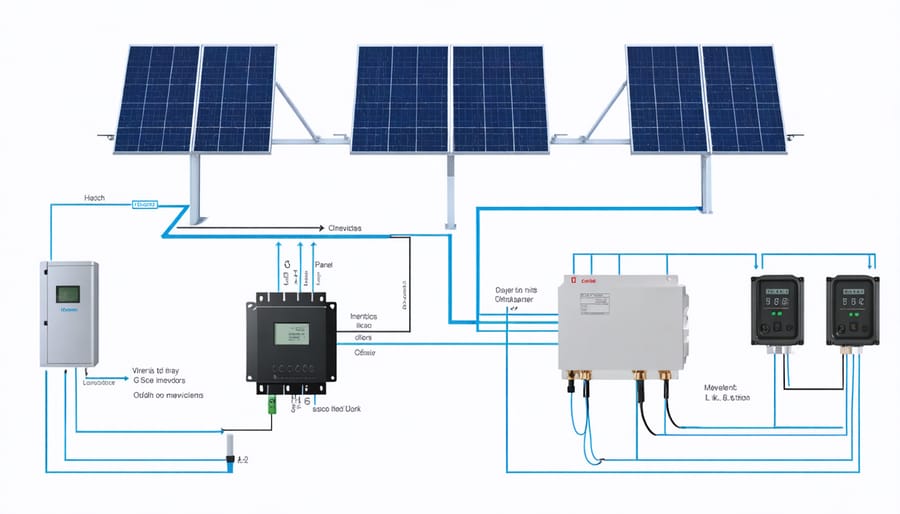
Grid-tie inverters serve as the crucial interface between renewable energy systems and the electrical grid, converting DC power from solar panels into grid-compatible AC power. Modern utility interactive inverters incorporate sophisticated power conditioning features to ensure seamless integration while maintaining power quality standards.
These inverters must comply with strict IEEE 1547 and UL 1741 requirements, which govern grid interconnection standards. Key power quality parameters include voltage regulation within ±5% of nominal, frequency synchronization (59.3-60.5 Hz), and total harmonic distortion (THD) below 5%. Advanced inverters also provide reactive power support and low voltage ride-through capabilities to enhance grid stability.
Modern grid-tie inverters incorporate Maximum Power Point Tracking (MPPT) technology to optimize energy harvest under varying conditions. They also feature anti-islanding protection, automatically disconnecting from the grid during power outages to ensure safety and prevent backfeeding.
Power conditioning systems within these inverters employ advanced filtering techniques to minimize electromagnetic interference and maintain power factor correction, typically achieving values above 0.95. Smart monitoring capabilities allow real-time performance tracking and remote diagnostics, enabling proactive maintenance and optimal system operation.
Monitoring and Control Systems
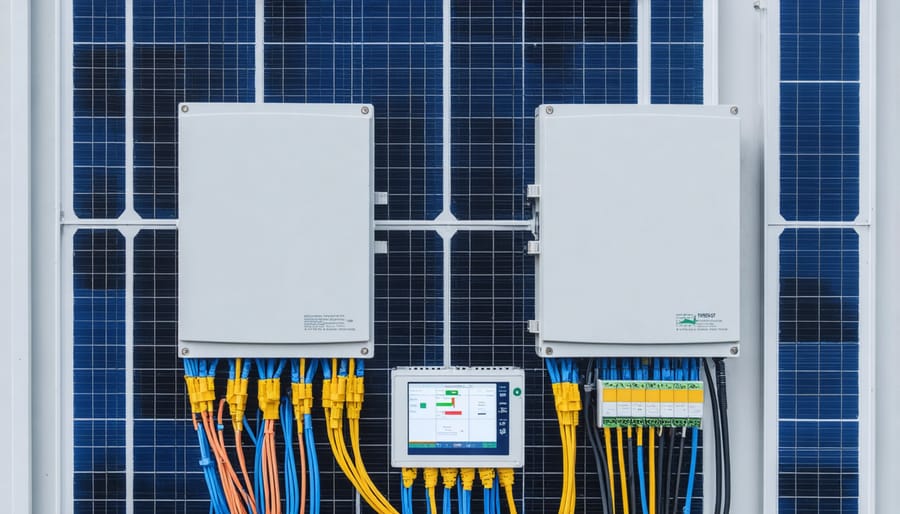
Advanced monitoring and control systems are essential components for successful renewable energy grid integration, enabling real-time oversight and management of power flow between renewable sources and the grid. These systems typically incorporate sophisticated SCADA (Supervisory Control and Data Acquisition) platforms that provide operators with comprehensive visibility of grid conditions and system performance.
Modern grid monitoring solutions utilize an array of sensors and measurement devices deployed across the network to collect critical data points, including voltage levels, frequency variations, power quality metrics, and equipment status. This information is transmitted through secure communication protocols such as IEC 61850 and DNP3, which ensure reliable data exchange between grid components and control centers.
Smart grid communication infrastructure employs both wired and wireless technologies, including fiber optic networks, cellular systems, and dedicated RF channels. These networks enable bidirectional communication, allowing grid operators to not only monitor conditions but also implement remote control actions when necessary.
Advanced analytics and artificial intelligence systems process the collected data to predict potential issues, optimize power flow, and maintain grid stability. These tools help operators manage the intermittent nature of renewable energy sources by providing accurate forecasting and automated response capabilities.
Real-time monitoring systems also facilitate demand response programs and grid balancing services, ensuring proper coordination between renewable generation, energy storage systems, and conventional power sources. This integration helps maintain power quality and system reliability while maximizing renewable energy utilization.
Technical Requirements for Grid Connection
Voltage and Frequency Regulation
Voltage and frequency regulation are critical components in maintaining grid stability when integrating renewable energy sources. The intermittent nature of solar and wind power creates unique challenges for grid operators who must maintain consistent power quality across the network.
Modern grid systems employ sophisticated control mechanisms to manage voltage fluctuations. These include automatic voltage regulators (AVRs), on-load tap changers (OLTCs), and static VAR compensators (SVCs). These devices work in concert to maintain voltage levels within acceptable ranges, typically ±5% of nominal voltage, even during rapid changes in renewable energy generation.
Frequency regulation requires precise balancing between power generation and consumption. Grid operators maintain this balance through primary, secondary, and tertiary frequency control mechanisms. Primary control responds within seconds to frequency deviations, while secondary control adjusts generation levels over minutes to restore the system to its nominal frequency.
Advanced inverter technologies play a crucial role in grid stability. Smart inverters can provide reactive power support, voltage ride-through capabilities, and frequency response services. These features help renewable energy systems actively participate in grid stability rather than merely feeding power into the network.
Energy storage systems are increasingly deployed to enhance voltage and frequency regulation. Battery systems can respond rapidly to power quality issues, providing both up and down regulation services. This capability is particularly valuable in microgrids and areas with high renewable energy penetration.
Grid codes and interconnection standards specify the requirements for voltage and frequency control, ensuring that renewable energy systems contribute positively to grid stability rather than compromising it.
Power Quality and Grid Codes
Power quality is a critical aspect of renewable energy grid integration, requiring strict adherence to established grid codes and industry standards. These regulations ensure that renewable energy systems maintain grid stability and reliability while delivering clean power to consumers.
Grid codes specify technical requirements for voltage regulation, frequency control, and power factor correction. Modern renewable energy systems must incorporate advanced power electronics and control systems to meet these requirements. Voltage must typically be maintained within ±5% of nominal values, while frequency variations should not exceed ±0.5 Hz under normal operating conditions.
Power quality parameters that require careful monitoring include harmonic distortion, voltage flicker, and power factor. Total Harmonic Distortion (THD) limits are typically set between 3-5% for most grid connections, while power factor requirements often mandate operation between 0.95 leading and 0.95 lagging.
International standards such as IEEE 1547 and IEC 61000 provide frameworks for grid interconnection and electromagnetic compatibility. These standards define specific requirements for:
– Fault ride-through capabilities
– Active and reactive power control
– Anti-islanding protection
– Power quality monitoring
– Grid synchronization
Compliance testing and certification processes ensure that renewable energy systems meet these requirements before grid connection approval. Regular monitoring and reporting are essential to maintain compliance throughout the system’s operational lifetime. Grid operators may require additional specific requirements based on local network conditions and system capacity.
As grid codes continue to evolve with increasing renewable energy penetration, system designers and operators must stay informed about updates and amendments to maintain compliance and optimal grid integration.
Challenges and Solutions in PV Grid Integration
Intermittency Management
Managing intermittency in solar power generation requires a multi-faceted approach to ensure reliable grid operation. The variable nature of solar resources presents unique challenges that modern grid operators address through several key strategies.
Energy storage systems play a crucial role in smoothing out power fluctuations. Battery storage technologies, particularly lithium-ion systems, can store excess solar generation during peak production periods and discharge this energy when solar output decreases. This capability helps maintain grid stability and provides consistent power delivery throughout the day.
Advanced forecasting techniques utilizing artificial intelligence and machine learning algorithms help predict solar resource availability with increasing accuracy. These predictions enable grid operators to anticipate production variations and adjust conventional generation sources accordingly, ensuring continuous power supply to consumers.
Demand response programs represent another vital tool for intermittency management. By incentivizing consumers to adjust their electricity consumption patterns based on grid conditions, operators can better align demand with variable solar generation. Smart grid technologies facilitate this process by enabling real-time communication between utilities and consumers.
Geographic diversification of solar installations helps mitigate localized weather effects on power generation. When solar arrays are distributed across different locations, the aggregate output tends to be more stable than that of a single, large installation. This approach, combined with robust transmission infrastructure, creates a more resilient grid system.
Hybrid power plants that combine solar with other renewable or conventional generation sources can also help address intermittency. These facilities often include on-site storage and sophisticated control systems to provide more predictable power output, supporting grid stability while maximizing renewable energy utilization.
Energy Storage Integration
Energy storage plays a crucial role in addressing the intermittent nature of renewable energy sources and ensuring grid stability. Modern energy storage solutions encompass various technologies, with lithium-ion batteries leading the market due to their high energy density and declining costs.
Grid-scale battery systems provide essential services including frequency regulation, voltage support, and peak shaving. These systems can store excess renewable energy during periods of high generation and release it when demand exceeds supply, effectively smoothing out the variable output of solar and wind installations.
Beyond batteries, other storage technologies contribute to grid flexibility. Pumped hydroelectric storage remains the most widely deployed large-scale storage solution globally, while emerging technologies like flow batteries and compressed air energy storage show promise for specific applications. Thermal storage systems, particularly in conjunction with concentrated solar power plants, offer another avenue for energy conservation and dispatch.
The integration of storage systems requires sophisticated control systems and power electronics. Modern battery management systems optimize charging and discharging cycles while protecting the storage assets from degradation. Grid operators increasingly rely on advanced software platforms to coordinate multiple storage resources and maximize their value to the grid.
For optimal performance, storage systems must be strategically sized and located within the grid infrastructure. Factors including load profiles, generation patterns, and transmission constraints influence storage deployment decisions. The combination of storage with smart inverters and advanced control systems enables more efficient grid operation and higher renewable energy penetration levels.

Smart Grid Technologies
Modern smart grid technologies form the backbone of successful renewable energy integration, enabling bidirectional power flow and real-time monitoring capabilities. These advanced systems incorporate sophisticated power electronics, automated control mechanisms, and intelligent communication networks to maintain grid stability and optimize energy distribution.
Key technological components include advanced metering infrastructure (AMI), which provides detailed consumption data and enables demand response programs. Supervisory Control and Data Acquisition (SCADA) systems monitor grid conditions in real-time, while power quality management systems ensure voltage and frequency regulation.
Energy storage systems play a crucial role in smart grid functionality, helping to balance supply and demand while providing ancillary services. Battery management systems, coupled with advanced inverter technologies, enable smooth integration of intermittent renewable sources.
Grid modernization efforts also incorporate artificial intelligence and machine learning algorithms for predictive maintenance and optimal resource allocation. These systems analyze weather patterns, consumption trends, and grid conditions to forecast renewable energy generation and adjust grid operations accordingly.
Communication protocols such as IEC 61850 and IEEE 2030 standards ensure interoperability between different grid components, while cybersecurity measures protect against potential threats. Together, these technologies create a resilient, efficient, and flexible grid infrastructure capable of accommodating increasing amounts of renewable energy while maintaining system reliability.
The successful integration of photovoltaic systems into existing power grids represents a critical milestone in the global transition toward renewable energy. Throughout this discussion, we’ve explored the technical challenges, solutions, and best practices that enable efficient grid integration of solar power. Advanced inverter technologies, smart grid systems, and energy storage solutions have emerged as key enablers for managing intermittency and maintaining grid stability.
Looking ahead, the future of PV grid integration appears promising, with continuous technological advancements driving improved efficiency and reliability. The development of more sophisticated energy management systems, enhanced forecasting capabilities, and innovative storage solutions will further facilitate seamless integration of solar power into existing infrastructure.
Several trends are likely to shape the evolution of PV grid integration. These include the increasing adoption of artificial intelligence for grid management, the deployment of advanced monitoring systems, and the implementation of dynamic pricing mechanisms. Additionally, regulatory frameworks are expected to evolve, supporting higher penetration levels of solar power while ensuring grid reliability and stability.
For industry professionals and stakeholders, staying informed about these developments and maintaining updated technical expertise will be crucial. Continued collaboration between utilities, researchers, and technology providers will drive innovation and establish new standards for grid integration, ultimately accelerating the transition to a more sustainable energy future.