The convergence of edge computing and solar power technology is revolutionizing how we harness and manage renewable energy. As solar installations become increasingly sophisticated, the integration of edge computing capabilities enables real-time monitoring, predictive maintenance, and autonomous optimization of photovoltaic systems. This technological fusion addresses critical challenges in solar energy management, from latency reduction to enhanced grid stability.
Edge computing architecture, when strategically deployed across solar installations, processes data directly at the source, enabling microsecond response times and reducing bandwidth consumption by up to 90%. This distributed intelligence paradigm transforms traditional solar farms into smart energy networks capable of adapting to environmental changes, grid demands, and maintenance requirements with unprecedented efficiency.
For photovoltaic professionals and energy stakeholders, understanding the implementation of edge solar systems represents a crucial step toward maximizing renewable energy potential. The technology not only optimizes energy production and distribution but also enhances system reliability through advanced analytics and automated decision-making processes, setting new standards for sustainable energy management in the modern era.
Understanding Edge Computing in Solar PV Systems
Core Components of Edge Solar Systems
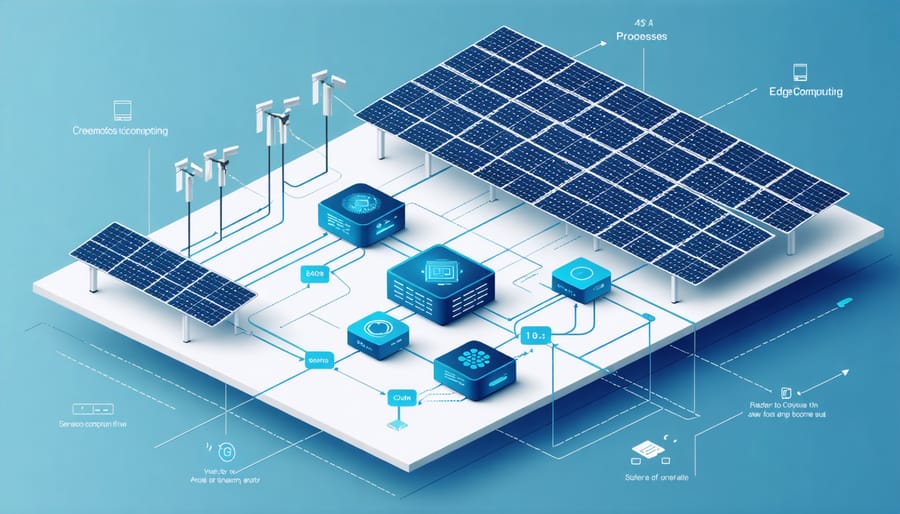
Edge-enabled solar PV systems comprise several essential hardware and software components that work together to optimize energy generation and management. The hardware infrastructure includes smart inverters equipped with edge computing capabilities, advanced monitoring sensors, and intelligent control units. These components collect real-time data about system performance, environmental conditions, and power output.
The data acquisition system incorporates high-precision sensors for measuring solar irradiance, temperature, voltage, and current. Modern edge solar installations also feature integrated communication modules that enable secure data transmission and system control. Advanced metering infrastructure (AMI) plays a crucial role in measuring and analyzing energy production and consumption patterns.
On the software side, edge computing platforms process data locally, utilizing sophisticated algorithms for performance optimization and predictive maintenance. The system includes edge analytics software that performs real-time data analysis, fault detection, and power forecasting. Cloud integration capabilities enable selective data transmission to central management systems while maintaining operational autonomy at the edge.
Security features, including encryption protocols and access control mechanisms, protect the system from cyber threats while ensuring reliable operation. The entire setup is managed through a user interface that provides system monitoring, control, and reporting functionalities.
Data Collection and Processing at the Edge
Edge solar systems excel at collecting and processing data directly at the installation site, enabling immediate response to performance variations and system anomalies. These systems utilize advanced sensors and microprocessors to gather crucial operational metrics, including power output, voltage levels, and environmental conditions. Through sophisticated real-time analytics, edge devices can process this information locally, reducing latency and bandwidth requirements while enabling swift decision-making.
The local processing capabilities allow for immediate fault detection, performance optimization, and predictive maintenance scheduling without relying on cloud connectivity. Edge devices employ machine learning algorithms to analyze patterns in power generation, weather impacts, and system behavior, creating a responsive and intelligent solar installation. This distributed intelligence architecture ensures continuous operation even during network disruptions, making the system more resilient and self-sufficient.
By processing data at the source, edge solar systems can implement automated responses to changing conditions, optimize energy harvesting, and maintain optimal performance levels while minimizing data transmission costs and storage requirements.
Real-time Optimization Benefits
Enhanced Energy Production
Edge computing technology revolutionizes solar energy production by enabling real-time monitoring and optimization of photovoltaic systems. Through advanced data processing at the panel level, IoT-enabled solar systems can achieve significant improvements in energy yield and operational efficiency.
By processing data directly at the source, edge computing systems can make instantaneous adjustments to panel orientation, inverter settings, and power conditioning parameters. This immediate response capability helps maximize energy capture during varying weather conditions and reduces performance losses due to shading or equipment inefficiencies.
Studies have shown that edge-enabled solar installations typically demonstrate a 10-15% increase in energy production compared to traditional systems. This improvement stems from enhanced Maximum Power Point Tracking (MPPT), rapid response to environmental changes, and predictive maintenance capabilities that minimize downtime.
The integration of edge computing also enables sophisticated panel-level optimization, where each module can operate independently to achieve peak performance. This granular control ensures that underperforming panels don’t compromise the entire array’s output, a common issue in conventional string configurations.
Furthermore, edge computing facilitates advanced forecasting algorithms that can predict solar generation patterns and adjust system parameters proactively, leading to more stable power output and improved grid integration capabilities.

Reduced Latency and Quick Response
Edge computing in solar systems significantly reduces latency by processing data closer to the source, enabling near-instantaneous response times crucial for optimal system performance. Traditional cloud-based solar monitoring systems typically experience delays of 100-200 milliseconds, while edge-enabled systems can respond within 10-20 milliseconds, representing a tenfold improvement in response time.
This enhanced speed allows solar installations to make real-time adjustments to various operational parameters. For instance, when sudden weather changes occur, the system can immediately modify inverter settings, adjust power flow, and optimize energy distribution without waiting for cloud server communication. This rapid response capability is particularly valuable during critical events such as voltage fluctuations or equipment malfunctions, where immediate action can prevent system damage and maintain stability.
The reduced latency also enables more sophisticated monitoring and control features. Edge devices can process high-frequency data streams from multiple sensors, making split-second decisions about power management and load balancing. This capability is especially beneficial for large-scale solar installations where even minor delays in response times can impact overall system efficiency.
Furthermore, the quick response times facilitate better integration with smart grid systems and energy storage solutions, allowing for more precise control over energy flow and improved grid stability. This responsiveness ensures that solar installations can better participate in demand response programs and maintain optimal performance under varying conditions.
Implementation Strategies
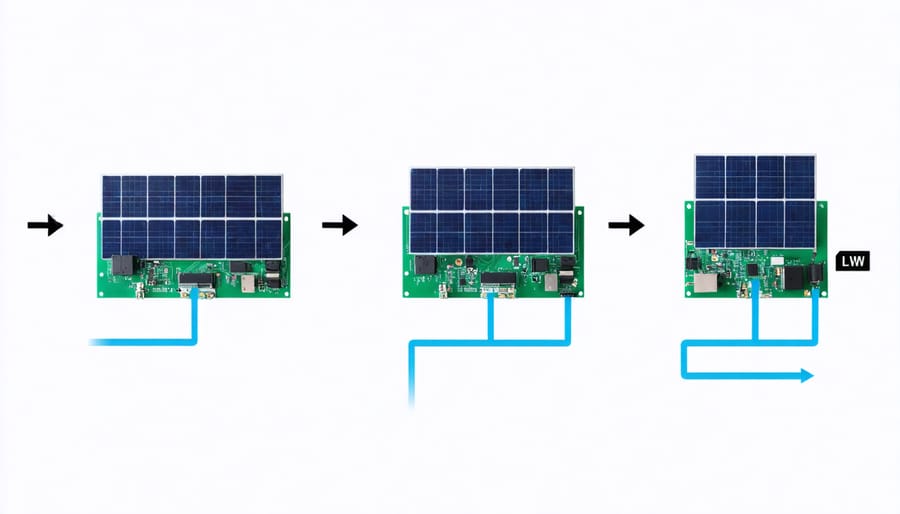
Hardware Integration Steps
The integration of edge computing capabilities into solar installations follows a systematic process that ensures optimal performance and reliability. Begin by installing the edge computing hardware, typically a ruggedized industrial computer or gateway device, in a weather-protected enclosure near the solar inverters. This device should be equipped with sufficient processing power and memory to handle real-time data analytics.
Next, connect the edge device to your solar system’s monitoring equipment using standard communication protocols such as Modbus or RS485. Install environmental sensors, including irradiance meters and temperature probes, connecting them directly to the edge device’s I/O ports for comprehensive data collection.
Configure the network connectivity by establishing a secure local area network (LAN) and ensuring redundant communication paths through both ethernet and cellular connections. Implementation of appropriate cybersecurity measures, including firmware encryption and secure boot mechanisms, is crucial at this stage.
Install the edge computing software stack, including the operating system, containerization platform, and analytics applications. Configure data preprocessing algorithms to filter and organize raw sensor data before transmission to cloud servers.
Finally, integrate the edge system with your existing solar monitoring platform through APIs or custom middleware. Conduct thorough testing of all communications, ensuring proper data flow and system response times. Regular calibration and maintenance schedules should be established to maintain optimal performance of both hardware and software components.
Remember to document all connection points, IP addresses, and system configurations for future reference and troubleshooting purposes.
Software Configuration Best Practices
Proper software configuration is crucial for maximizing the efficiency and reliability of edge solar systems. Begin by establishing a secure network infrastructure with robust firewalls and encryption protocols to protect sensitive operational data. Implement role-based access control (RBAC) to manage user permissions and maintain system integrity.
Configure data sampling rates and storage parameters based on your specific monitoring requirements. For optimal performance, set sampling intervals between 1-5 minutes for critical parameters and 15-30 minutes for secondary metrics. Enable data compression algorithms to manage storage efficiently while maintaining data quality.
Integration with AI-powered predictive maintenance systems requires careful configuration of communication protocols and data transfer settings. Ensure compatibility with industry-standard protocols such as Modbus TCP/IP or MQTT for seamless device integration.
Implement automated backup procedures and establish disaster recovery protocols. Configure system alerts with appropriate thresholds for key performance indicators (KPIs) and environmental parameters. Set up redundancy measures for critical software components to ensure continuous operation.
Regular software updates and patch management should be scheduled during low-production periods. Maintain detailed documentation of all configuration changes and establish version control practices for software modifications. These measures ensure system reliability while facilitating troubleshooting and maintenance procedures.
Future Developments and Industry Impact
The integration of edge computing with solar systems continues to evolve rapidly, promising transformative developments in the renewable energy sector. Industry experts predict that advanced AI algorithms will further optimize solar panel performance through real-time analytics and predictive maintenance capabilities.
Emerging trends indicate a shift toward decentralized energy management systems that leverage edge computing to enable autonomous operation of solar installations. This advancement will significantly reduce response times and enhance grid stability, particularly in remote locations or during extreme weather events.
The convergence of 5G technology with edge-enabled solar systems is expected to facilitate ultra-low latency communication between distributed energy resources. This integration will enable microsecond-level adjustments to power generation and distribution, maximizing system efficiency and grid reliability.
Machine learning algorithms at the edge are becoming increasingly sophisticated, enabling more accurate weather prediction and solar generation forecasting. These improvements will lead to better resource allocation and enhanced grid integration of renewable energy sources.
Industry stakeholders are investing heavily in edge security solutions specifically designed for solar installations. These developments focus on protecting against cyber threats while ensuring seamless operation of critical infrastructure components.
The implementation of digital twins at the edge is gaining traction, allowing operators to simulate and optimize system performance in virtual environments before deploying changes to physical installations. This approach significantly reduces operational risks and implementation costs.
Future developments will likely include enhanced integration with energy storage systems, enabling more intelligent power distribution and storage decisions based on real-time demand and generation data. These advancements will contribute to the creation of more resilient and efficient renewable energy networks, ultimately accelerating the global transition to sustainable power sources.
Edge computing has emerged as a transformative force in solar photovoltaic systems, revolutionizing how we harness and manage solar energy. By bringing computational power closer to the source of data generation, edge computing enables real-time monitoring, rapid decision-making, and enhanced system performance. The integration of edge computing with solar PV installations has demonstrated significant improvements in energy efficiency, maintenance scheduling, and overall system reliability.
Key takeaways for successful implementation include the careful selection of edge devices that can withstand environmental conditions, robust cybersecurity measures to protect sensitive data, and scalable architecture design that accommodates future expansion. Organizations should prioritize proper training for technical staff and establish clear protocols for data management and system maintenance.
The future of solar energy systems lies in the convergence of renewable technology and advanced computing capabilities. Edge computing solutions will continue to evolve, offering increasingly sophisticated tools for optimization and automation. For organizations considering implementation, a phased approach starting with pilot projects can help manage risks and validate benefits before full-scale deployment.
By embracing edge computing in solar PV systems, organizations can achieve higher energy yields, reduced operational costs, and improved grid stability. The technology’s ability to process data locally while maintaining seamless integration with cloud systems positions it as an essential component of modern solar infrastructure. As the renewable energy sector continues to grow, edge computing will play an increasingly vital role in maximizing the potential of solar power generation and distribution.