
The global solar energy market stands at a critical inflection point. While silicon-based photovoltaic systems dominate current installations, their manufacturing costs, material rigidity, and energy-intensive production processes create significant barriers to universal adoption. Organic solar panels—photovoltaic devices utilizing carbon-based semiconducting materials—represent a transformative alternative that addresses these fundamental limitations through innovative hybrid material architectures.
Unlike conventional crystalline silicon panels, organic photovoltaics leverage lightweight polymers and small organic molecules that can be deposited through low-temperature, solution-based processes. This manufacturing approach dramatically reduces production costs and energy requirements while enabling unprecedented flexibility in panel design. The integration of hybrid organic-inorganic structures, particularly perovskite materials combined with organic transport layers, has propelled power conversion efficiencies from single digits to over 18% in laboratory settings within the past decade.
The technology’s significance extends beyond efficiency metrics. Organic solar panels offer semi-transparency, making them viable for building-integrated photovoltaics in windows and facades. Their mechanical flexibility enables applications on curved surfaces, portable electronics, and wearable devices—markets inaccessible to rigid silicon panels. Solution processing allows for roll-to-roll manufacturing techniques that could reduce production costs by 50% compared to conventional photovoltaic fabrication.
However, commercialization faces substantial challenges. Operational stability remains the primary obstacle, with most organic devices experiencing significant degradation under prolonged exposure to moisture, oxygen, and ultraviolet radiation. Material toxicity concerns, particularly with lead-based perovskites, require resolution before widespread deployment. The photovoltaic industry increasingly recognizes that overcoming these barriers demands collaborative research between academic institutions, material scientists, and manufacturing engineers to transition organic solar technology from laboratory curiosity to grid-scale reality.
What Are Organic Solar Panels?

The Science Behind Organic Photovoltaics
Organic photovoltaics operate through a fundamentally different mechanism than traditional silicon-based solar cells. At their core, these devices utilize carbon-based semiconducting polymers or small molecules that can absorb photons and generate electrical charge carriers. When light strikes the organic material, it creates bound electron-hole pairs called excitons, rather than the free charges produced in conventional semiconductors.
The operational principle begins with the absorption of sunlight by conjugated organic molecules, which possess alternating single and double carbon bonds. This conjugation allows electrons to move along the molecular structure, creating semiconducting properties. However, because excitons in organic materials have strong binding energy, they require an additional step for charge separation.
This critical separation occurs at the interface between two different organic materials: an electron donor and an electron acceptor. The donor-acceptor heterojunction creates an energetic driving force that splits the exciton into free electrons and holes. The electrons migrate through the acceptor material toward one electrode, while holes travel through the donor material to the opposite electrode, generating electrical current.
The efficiency of this process depends on several factors, including the absorption spectrum of the organic materials, the morphology of the donor-acceptor blend, and the mobility of charge carriers through the organic layers. Recent advances in molecular engineering have significantly improved these parameters, enabling organic photovoltaics to achieve increasingly competitive power conversion efficiencies while maintaining their inherent advantages of flexibility, lightweight construction, and solution-based processing.
Key Components and Materials
Organic solar cells rely on several key materials that distinguish them from traditional silicon-based photovoltaics. At the core of these devices are conjugated polymers, which serve as the primary light-absorbing and charge-transporting materials. These polymers feature alternating single and double bonds along their carbon backbone, creating a delocalized electron system that enables electrical conductivity and efficient light absorption across the visible spectrum. Common examples include poly(3-hexylthiophene) (P3HT) and various derivatives of polyfluorene and polycarbazole.
Small organic molecules represent another crucial category of active materials in organic photovoltaics. Unlike their polymeric counterparts, these compounds have defined molecular weights and structures, offering advantages in terms of purity, batch-to-batch consistency, and ease of purification. Researchers frequently employ materials such as phthalocyanines, oligothiophenes, and squaraine dyes in small molecule-based solar cells.
Fullerene derivatives, particularly phenyl-C61-butyric acid methyl ester (PCBM), function as electron acceptors in the majority of organic solar cell architectures. These carbon-based molecules possess excellent electron mobility and form favorable nanoscale morphologies when blended with donor materials, facilitating efficient charge separation at the donor-acceptor interface.
Recent developments have introduced non-fullerene acceptors, which offer improved light absorption in the near-infrared region and enhanced device stability. These materials, combined with advances in conjugated polymer design, continue to push the boundaries of organic photovoltaic performance, making them increasingly competitive with conventional technologies.
Understanding Hybrid Organic-Inorganic Solar Materials
Perovskite Solar Cells: The Leading Hybrid Technology
Perovskite solar cells represent one of the most significant breakthroughs in photovoltaic technology over the past decade. These innovative devices utilize hybrid perovskite materials that combine organic and inorganic components in a unique crystalline structure, typically featuring a chemical composition of ABX3, where A represents an organic cation (such as methylammonium), B represents a metal cation (commonly lead), and X represents a halide anion (like iodide or bromide).
The remarkable success of perovskite solar cells stems from their exceptional optoelectronic properties. These materials exhibit high absorption coefficients, long carrier diffusion lengths, and tunable bandgaps, allowing them to efficiently capture and convert sunlight across a broad spectrum. Within just over a decade of research, laboratory efficiencies have skyrocketed from 3.8% in 2009 to over 26% today, rivaling the performance of traditional silicon cells.
The crystalline structure of perovskites facilitates both excellent light absorption and efficient charge transport. Their direct bandgap nature ensures minimal energy loss during photon absorption, while their defect-tolerant properties maintain high performance even with structural imperfections. Furthermore, perovskite materials can be processed using low-temperature solution-based methods, significantly reducing manufacturing costs compared to silicon processing.
Research institutions and universities worldwide are collaborating to optimize perovskite formulations, enhance stability, and develop lead-free alternatives. These ongoing academic partnerships drive continuous improvements in efficiency, durability, and environmental compatibility. Educational programs now incorporate perovskite technology, preparing the next generation of photovoltaic professionals to advance this transformative field toward commercial viability and widespread deployment.

Other Hybrid Approaches
Beyond traditional bulk heterojunction systems, researchers are exploring several alternative hybrid architectures that promise enhanced performance and manufacturing flexibility. Quantum dot-polymer hybrids represent one such approach, combining semiconductor nanocrystals with organic polymers to enable tunable light absorption and improved charge transport. These systems leverage the size-dependent optical properties of quantum dots while maintaining the processing advantages of organic materials.
Dye-sensitized solar cells (DSSCs) incorporating organic components offer another pathway, utilizing organic dyes anchored to mesoporous metal oxide scaffolds. While conventional DSSCs employ liquid electrolytes, newer iterations integrate solid-state organic hole transport materials, improving stability and manufacturability. These hybrid configurations demonstrate efficiencies exceeding 13 percent in laboratory settings, with ongoing development focused on scaling production and extending operational lifetimes. Research institutions collaborating with industry partners continue advancing these technologies through targeted educational programs, preparing the next generation of photovoltaic professionals to refine and commercialize these promising alternatives.
Advantages of Organic and Hybrid Solar Technologies
Manufacturing and Cost Benefits
One of the most compelling advantages of organic solar panels lies in their manufacturing process, which differs fundamentally from conventional silicon-based photovoltaics. Unlike traditional solar cells that require energy-intensive high-temperature processing often exceeding 1000°C, organic photovoltaic materials can be deposited at room temperature or with minimal heating, typically below 150°C. This lower temperature requirement significantly reduces energy consumption during production and allows for the use of flexible, lightweight substrates such as plastic films that would otherwise degrade under extreme heat.
The compatibility of organic semiconductors with solution processing techniques enables cost-effective manufacturing methods including roll-to-roll printing, spray coating, and inkjet deposition. These approaches mirror processes used in newspaper printing, allowing for rapid, continuous production of large-area solar panels. Roll-to-roll manufacturing, in particular, promises substantial economies of scale by enabling high-volume production with reduced material waste and shorter production cycles compared to the batch processing required for crystalline silicon cells.
Furthermore, the reduced capital investment needed for production facilities, combined with lower operational costs and the potential for automated manufacturing, positions organic solar technology as an economically attractive option for distributed energy generation applications where traditional panels may prove cost-prohibitive.
Flexibility and Application Versatility
One of the most compelling advantages of organic photovoltaics lies in their inherent mechanical flexibility and lightweight properties. Unlike conventional crystalline silicon panels, which require rigid glass substrates and heavy aluminum frames, organic solar cells can be manufactured on flexible plastic or metal foils using roll-to-roll printing techniques. This manufacturing approach dramatically reduces weight—organic panels typically weigh less than 500 grams per square meter compared to 10-15 kilograms for traditional modules.
This flexibility opens entirely new application territories previously inaccessible to rigid solar technology. Building-integrated photovoltaics benefit significantly, as organic films can conformally coat curved architectural surfaces, windows, and façades without structural reinforcement. The technology enables solar-powered textiles for outdoor gear and military applications, portable charging solutions that fold into backpacks, and integration into consumer electronics where weight and form factor prove critical.
Research institutions collaborating with industry partners are exploring organic photovoltaics for aerospace applications, where every gram matters, and for disaster relief scenarios requiring rapidly deployable, transportable power generation. Agricultural greenhouse operators are investigating semi-transparent organic films that simultaneously generate electricity while allowing optimized light spectra for crop growth. These diverse applications demonstrate how organic solar technology transcends the limitations of conventional photovoltaics, creating opportunities for professionals entering the renewable energy sector to engage with truly innovative deployment scenarios.
Environmental and Sustainability Factors
Organic solar panels present significant environmental advantages compared to their conventional silicon counterparts, particularly in manufacturing and lifecycle management. The production of organic photovoltaics requires substantially lower processing temperatures, typically below 150°C, contrasting sharply with silicon solar cells that demand energy-intensive processes exceeding 1400°C. This reduced energy intensity translates to a considerably smaller carbon footprint during fabrication, with estimates suggesting up to 70% lower embodied energy in certain organic PV configurations.
The lightweight nature and flexible substrate compatibility of organic solar panels further minimize material consumption and transportation-related emissions. Additionally, many organic semiconductors can be deposited using solution-based printing techniques, eliminating the need for vacuum processing equipment that consumes substantial electricity.
End-of-life considerations represent another environmental benefit, as organic materials typically demonstrate greater recyclability potential than conventional silicon modules encased in glass and aluminum frames. The organic active layers can often be dissolved and recovered using environmentally benign solvents, facilitating material reclamation. However, current stability limitations mean replacement cycles may be shorter than traditional panels, potentially offsetting some environmental gains. Research collaborations between manufacturers and universities are actively addressing these durability challenges while developing comprehensive recycling protocols that align with circular economy principles, ensuring organic photovoltaics contribute meaningfully to sustainable energy transitions.
Current Challenges and Limitations
Efficiency and Stability Concerns
Despite their environmental advantages and manufacturing versatility, organic solar panels face significant technical challenges that currently limit widespread commercial adoption. The primary concern centers on power conversion efficiency, which typically ranges between 10-18% for the most advanced organic photovoltaic cells under laboratory conditions. This performance lags substantially behind conventional silicon solar panels, which routinely achieve efficiencies exceeding 20-25% in commercial applications. The efficiency gap stems from fundamental material properties, including lower charge carrier mobility and higher recombination losses within organic semiconductors.
Stability and degradation present equally critical obstacles for organic photovoltaic technology. Organic materials demonstrate marked sensitivity to environmental stressors, particularly moisture and oxygen exposure. These elements can penetrate the active layer, triggering chemical reactions that degrade the polymer structure and compromise electron transport properties. Photodegradation under continuous sunlight exposure further accelerates performance decline, with some organic solar cells experiencing noticeable efficiency losses within months of outdoor operation.
Temperature fluctuations also impact device longevity, as organic materials may undergo structural changes that alter their semiconducting properties. Researchers are actively addressing these challenges through improved encapsulation techniques, development of more stable donor-acceptor combinations, and incorporation of protective barrier layers. Recent advances in hybrid organic-inorganic perovskite materials show promise in enhancing both efficiency and stability, though sustained operational lifetimes comparable to silicon technology remain an ongoing development priority for the photovoltaic industry.
Scalability and Manufacturing Hurdles
Despite promising laboratory results, organic solar panels face significant obstacles in scaling from research prototypes to mass production. One primary challenge involves maintaining consistent material quality across large-area manufacturing processes. While researchers can carefully control conditions for small test cells, industrial-scale production requires reproducible deposition techniques that preserve the precise molecular arrangements critical for efficient charge transport.
Roll-to-roll printing methods, though cost-effective for high-volume manufacturing, must overcome issues with layer uniformity and defect formation that dramatically impact device performance. Even minor variations in film thickness or composition can create inefficiencies that compound across larger panel areas. Additionally, establishing quality control protocols proves difficult when dealing with sensitive organic materials that degrade under standard testing conditions.
The transition from batch processing to continuous manufacturing also introduces contamination risks and environmental control requirements. Universities collaborating with industry partners are developing standardized production protocols, while educational programs increasingly address these manufacturing challenges to prepare the next generation of photovoltaic professionals. Solving these scalability hurdles requires interdisciplinary expertise combining materials science, chemical engineering, and manufacturing technology—a focus area for many renewable energy training initiatives bridging academic research and commercial viability.
Recent Breakthroughs and Research Developments
Efficiency Improvements
Organic photovoltaic technology has achieved remarkable progress in recent years, with efficiency records climbing steadily through innovations in molecular design and device architecture. In 2023, researchers demonstrated single-junction organic solar cells exceeding 19% power conversion efficiency, a significant leap from the sub-10% efficiencies common just a decade ago. These gains stem primarily from advances in non-fullerene acceptor materials, which offer superior light absorption and reduced energy losses compared to traditional fullerene-based systems.
Hybrid perovskite-organic tandem configurations represent another frontier in breakthrough technologies, with laboratory cells surpassing 24% efficiency by combining the best attributes of both material classes. Key enablers include improved interfacial engineering, optimized active layer morphology through solvent additives, and refined bandgap tuning to maximize photon harvesting across the solar spectrum. University collaborations with industry partners have accelerated these developments, translating fundamental research into scalable manufacturing processes. While commercial organic modules currently deliver 10-12% efficiency, the rapid pace of improvement suggests these devices will soon compete more directly with established silicon technologies in specific applications.
Stability Enhancements
Addressing the limited operational stability of organic solar panels remains a critical research priority. Traditional organic photovoltaic materials degrade rapidly when exposed to oxygen, moisture, and ultraviolet radiation, significantly reducing their commercial viability. Recent advancements in encapsulation techniques have demonstrated remarkable progress in extending device lifetimes. Multi-layer barrier films incorporating atomic layer deposition now provide superior protection against environmental stressors, with some devices maintaining over 80% efficiency after 10,000 hours of continuous operation.
Material modifications represent another promising avenue for stability enhancement. Researchers have developed cross-linkable polymer networks that resist morphological changes during thermal stress, while the incorporation of stabilizing additives helps prevent photo-oxidation. Inverted device architectures, which position more stable materials at critical interfaces, have shown improved resistance to degradation compared to conventional structures.
Hybrid organic-inorganic approaches further contribute to longevity by combining the flexibility of organic semiconductors with the durability of inorganic components. Self-healing materials that repair minor defects autonomously are also emerging as innovative solutions. Universities collaborating with industry partners continue advancing these technologies, offering specialized training programs to equip photovoltaic professionals with expertise in stability optimization. These collective efforts are progressively bridging the gap between laboratory performance and commercial requirements.
Commercial Applications and Market Potential
Building-Integrated Photovoltaics (BIPV)
The mechanical flexibility and semi-transparency of organic photovoltaic materials have opened unprecedented possibilities for building-integrated photovoltaics (BIPV), transforming architectural surfaces into energy-generating assets. Unlike rigid crystalline silicon panels, organic solar cells can be manufactured on flexible substrates and tuned for specific light absorption properties, enabling seamless integration into windows, facades, and structural elements without compromising aesthetic design.
Semi-transparent organic solar panels represent a particularly promising BIPV application. By adjusting the active layer thickness and molecular composition, manufacturers can create windows that selectively absorb ultraviolet and infrared radiation while transmitting visible light, maintaining natural illumination inside buildings while generating electricity. This dual functionality addresses a critical limitation of conventional photovoltaic systems, which typically require dedicated roof or ground space.
Research institutions collaborating with architectural firms have demonstrated organic solar facades that conform to curved building surfaces, an impossibility with traditional rigid panels. These installations maintain the building’s design integrity while contributing to energy self-sufficiency. Educational programs in renewable energy increasingly incorporate BIPV design principles, preparing professionals to integrate organic photovoltaics into next-generation sustainable architecture. As manufacturing techniques advance and efficiency improves, BIPV applications of organic solar technology are positioned to revolutionize how buildings interact with their energy environments.

Portable and Consumer Electronics
Organic solar panels are revolutionizing portable and consumer electronics through their unique combination of flexibility, light weight, and customizable form factors. These characteristics make them particularly well-suited for wearable technology, where rigid silicon panels cannot conform to curved surfaces or fabric substrates. Smart watches, fitness trackers, and electronic textiles now integrate thin-film organic photovoltaics to extend battery life and reduce charging frequency.
In the rapidly expanding Internet of Things ecosystem, organic solar cells power remote sensors and monitoring devices deployed in agriculture, environmental monitoring, and smart infrastructure. Their ability to generate electricity under diffuse indoor lighting conditions enables truly autonomous sensor networks that operate indefinitely without battery replacement.
Mobile charging solutions represent another growing application area, with organic solar panels incorporated into backpacks, phone cases, and portable power banks. While current power conversion efficiencies remain lower than conventional silicon alternatives, ongoing research in hybrid organic-inorganic materials continues to improve performance metrics. Universities collaborating with industry partners are developing next-generation organic photovoltaic materials specifically optimized for consumer electronics applications, addressing stability concerns and enhancing efficiency under varied lighting conditions.
The Role of Education and Industry Collaboration
The advancement of organic solar technology relies heavily on strategic partnerships between industry and academia. Universities worldwide have established dedicated research centers focused on developing next-generation photovoltaic materials, including organic and hybrid organic-inorganic compounds. These collaborative environments provide essential resources for fundamental research while creating pathways for translating laboratory discoveries into commercially viable products.
Educational institutions play a crucial role in training the specialized workforce required for the expanding organic photovoltaics sector. Graduate programs in materials science, chemical engineering, and renewable energy now routinely include coursework on organic semiconductors, device physics, and manufacturing processes specific to emerging solar technologies. This academic foundation prepares students to address the unique challenges associated with organic solar panel development, from improving power conversion efficiency to enhancing long-term stability.
Industry leaders recognize that sustained innovation depends on cultivating talent at multiple career stages. Mose Solar exemplifies this commitment through comprehensive educational program offerings designed to bridge the gap between theoretical knowledge and practical application. By providing hands-on training opportunities, internships, and collaborative research projects, companies like Mose Solar ensure that aspiring photovoltaic professionals gain exposure to cutting-edge technologies and industry best practices.
These partnerships yield mutual benefits. Universities gain access to industry expertise, real-world testing facilities, and funding for applied research. Companies, in turn, benefit from academic insights, access to emerging talent, and opportunities to influence curriculum development aligned with industry needs. This collaborative ecosystem accelerates the pace of innovation in organic photovoltaics while building a skilled workforce capable of driving the renewable energy transition forward. As organic solar technology matures, such partnerships will prove increasingly vital in overcoming remaining technical barriers and achieving widespread commercial adoption.
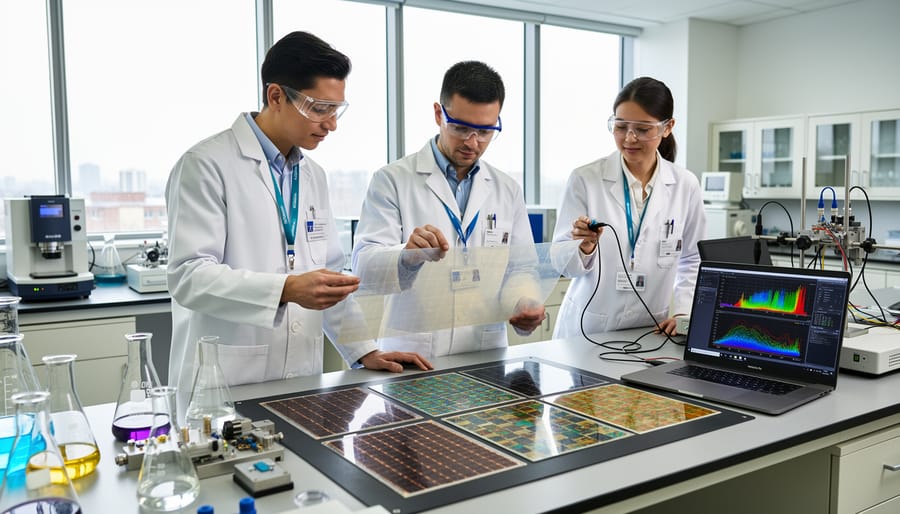
Organic and hybrid solar technologies represent a pivotal frontier in photovoltaic innovation, offering promising pathways toward more sustainable, versatile, and cost-effective energy solutions. While these emerging systems currently face challenges in efficiency and longevity compared to traditional silicon panels, their unique advantages in flexibility, lightweight design, low-temperature processing, and aesthetic integration position them as complementary technologies rather than direct replacements. The potential for building-integrated photovoltaics, portable power applications, and indoor energy harvesting demonstrates that organic solar cells can fill critical niches in the renewable energy landscape.
The continued advancement of hybrid organic-inorganic architectures, particularly perovskite-based systems, has demonstrated remarkable progress in laboratory settings, with efficiency gains accelerating through improved materials design and interfacial engineering. However, translating these achievements into commercially viable, stable products requires sustained research investment, interdisciplinary collaboration between academic institutions and industry partners, and dedicated educational programs that prepare the next generation of photovoltaic professionals.
For aspiring researchers and industry stakeholders, engagement with organic solar technologies offers opportunities to contribute meaningfully to the energy transition. Universities and research centers worldwide are expanding their educational offerings in advanced photovoltaic materials, providing pathways for innovation and career development. As the technology matures through continued investigation into stability mechanisms, scalable manufacturing processes, and lifecycle optimization, organic and hybrid solar cells will increasingly complement conventional photovoltaic systems in building a diverse, resilient renewable energy infrastructure for future generations.