Understanding the true cost of a solar PV system installation requires deep analysis of multiple cost components that influence your investment. Solar panel systems typically range from $15,000 to $25,000 for residential installations, with costs divided across equipment (50-60%), labor (30-35%), and permits/overhead (10-15%). This comprehensive breakdown enables property owners to make informed decisions while identifying potential cost-saving opportunities throughout the installation process.
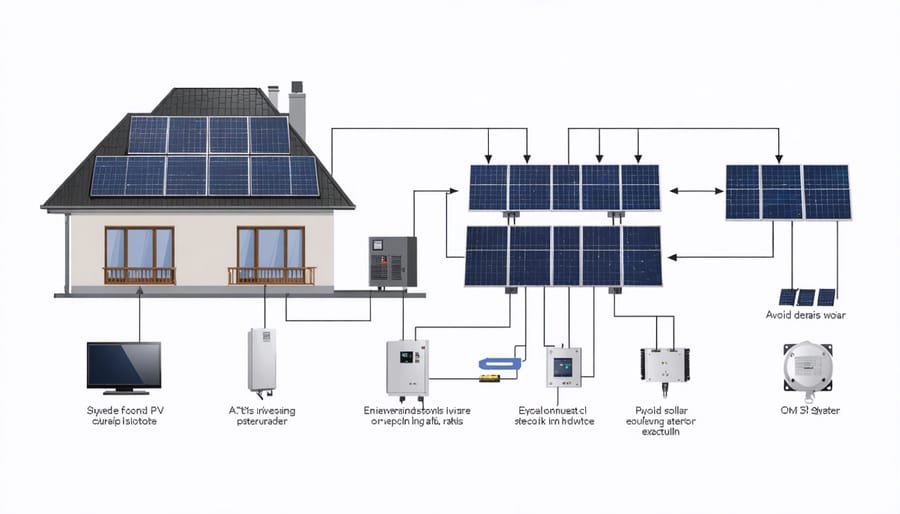
Modern solar installations comprise high-efficiency photovoltaic panels ($200-400 per panel), inverters ($1,000-2,000), mounting hardware ($500-2,500), and sophisticated monitoring systems ($300-600). Professional installation costs vary by region and system complexity, while permit fees and interconnection costs depend on local regulations. Understanding these components helps optimize investment decisions and maximize returns through strategic equipment selection and timing of installation phases.
The increasing efficiency of solar technology, combined with federal tax incentives and state-specific rebates, continues to drive down the overall cost of solar energy systems, making them increasingly accessible to both residential and commercial consumers.
Hardware Costs: The Core Components
Solar Panels and Module Costs
Solar panels typically represent 25-30% of the total system cost, making them a significant component of any PV installation. Currently, monocrystalline panels range from $1.00 to $1.50 per watt, while polycrystalline variants cost between $0.90 and $1.20 per watt. Premium modules with advanced features like bifacial technology or enhanced efficiency can command prices up to $2.00 per watt.
Module quality tiers significantly impact pricing, with Tier 1 manufacturers offering superior warranties and reliability at higher price points. These panels generally demonstrate degradation rates below 0.5% annually and carry 25-year performance guarantees. Mid-tier options balance cost and quality, typically priced 15-20% lower than premium alternatives while maintaining acceptable efficiency ratings.
Recent technological advancements have improved manufacturing processes, resulting in steadily declining panel costs. However, factors such as raw material availability, global supply chain dynamics, and regulatory changes can influence market prices. When selecting modules, consider the long-term cost-benefit ratio rather than focusing solely on initial investment, as higher-quality panels often deliver better returns through improved performance and longevity.
Inverter Systems and Power Electronics
Inverter systems represent approximately 10-15% of total solar PV system costs, making them a significant component in the overall investment. String inverters, typically ranging from $0.15 to $0.25 per watt, offer the most economical solution for residential installations with unobstructed panels. Microinverters, though more expensive at $0.40 to $0.60 per watt, provide enhanced system performance through panel-level optimization and monitoring capabilities.
Power optimizers present a middle-ground solution, combining a string inverter with module-level power electronics. This hybrid approach costs approximately $0.30 to $0.45 per watt and offers many benefits of microinverters while maintaining better cost efficiency. For commercial installations, central inverters become more cost-effective at scale, with prices potentially dropping below $0.10 per watt for large systems.
When selecting an inverter solution, consider factors beyond initial costs, such as warranty periods (typically 10-25 years), maintenance requirements, and system monitoring capabilities. Higher-efficiency inverters may justify their premium price through improved energy yield and reduced losses over the system’s lifetime.
Mounting Systems and Additional Hardware
Mounting systems and hardware typically account for 10-15% of total system costs, encompassing essential components that secure solar panels to roofs or ground-mounted structures. Quality racking systems range from $0.10 to $0.35 per watt, depending on installation type and site requirements. Additional hardware costs include mounting clamps, bolts, wiring conduits, and grounding equipment, averaging $0.05 to $0.10 per watt. For residential installations, roof mounting systems generally cost less than ground-mounted alternatives, though site-specific factors like roof pitch and material can influence final pricing. Commercial installations may require more robust mounting solutions, particularly for ballasted flat-roof systems, which can increase hardware costs by 20-30% compared to standard pitched-roof installations.
Soft Costs: The Hidden Expenses
Permitting and Inspection Fees
Permitting and inspection fees represent a significant administrative cost component in solar PV system installations, typically ranging from $400 to $2,500 depending on your jurisdiction. These fees encompass building permits, electrical permits, and mandatory safety inspections required by local authorities to ensure compliance with building codes and safety standards.
The permitting process usually involves submission of detailed system designs, structural analysis reports, and electrical diagrams. Many jurisdictions have implemented streamlined solar permitting processes, though requirements vary significantly by location. Some municipalities offer expedited permits for residential installations, while others maintain more complex procedures, particularly for commercial systems.
Inspection fees typically cover both preliminary and final inspections. The initial inspection often focuses on structural integrity and mounting systems, while the final inspection verifies electrical connections and system safety features. Some jurisdictions require additional specialized inspections, such as fire safety reviews, which can increase overall costs.
To optimize these expenses, work with experienced installers familiar with local requirements and consider jurisdictions with solar-friendly permitting processes when possible. Some areas offer reduced fees or expedited processing for solar installations as part of their renewable energy initiatives.
Labor and Installation Costs
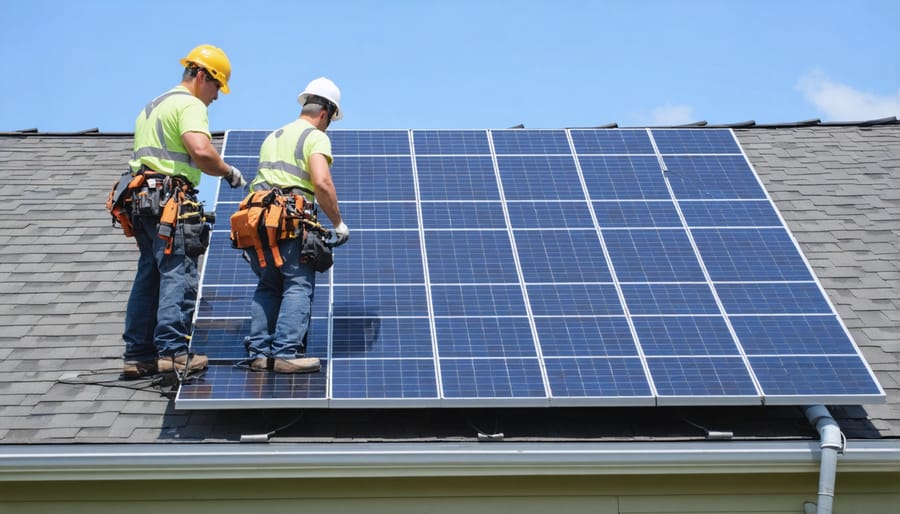
Labor and installation costs typically constitute 10-20% of the total solar PV system expenditure. These costs encompass skilled technician wages, equipment operation, system design, and project management. A standard residential installation requires 2-3 technicians working for 2-3 days, depending on system size and complexity.
Professional installation teams include a master electrician, solar installers, and a project supervisor. Current industry rates range from $0.59 to $1.20 per watt for labor costs alone. For a typical 6kW residential system, this translates to approximately $3,540-$7,200 in workforce expenses.
Several factors influence installation costs:
– Roof type and condition
– System design complexity
– Site accessibility
– Local permitting requirements
– Geographic location
– Seasonal weather conditions
Installation time requirements vary significantly:
– Small residential systems (4-8kW): 2-3 days
– Medium commercial systems (25-50kW): 1-2 weeks
– Large industrial installations (100kW+): 4-8 weeks
Quality installation is crucial for system performance and longevity. Certified installers conduct thorough site assessments, ensure proper mounting and wiring, and perform comprehensive system testing. While DIY installation might seem cost-effective, professional installation ensures compliance with local codes, maintains warranty validity, and optimizes system efficiency.
Design and Engineering Expenses
Design and engineering expenses typically account for 5-10% of the total solar PV system cost, encompassing crucial professional services that ensure optimal system performance and compliance. These costs include site surveys, structural analysis, electrical design, permit documentation preparation, and energy production modeling.
Professional engineers conduct detailed roof assessments to verify structural integrity and determine the best mounting solutions. They also perform shade analysis and create precise CAD drawings for installation teams. The electrical design phase involves calculating appropriate wire sizes, specifying protective equipment, and designing the system’s interconnection with the utility grid.
Project managers coordinate with local authorities to ensure compliance with building codes and utility requirements. They prepare comprehensive documentation for permit applications and manage the approval process. Advanced modeling software is utilized to predict annual energy production and optimize panel placement for maximum efficiency.
While these professional services represent a significant upfront investment, they are essential for system safety, performance, and longevity. Quality design work helps prevent costly modifications during installation and ensures the system meets all regulatory requirements.
Cost Optimization Strategies
Bulk Purchasing and Timing Considerations
Strategic bulk purchasing of solar PV components can significantly reduce overall system costs while ensuring long-term system performance. When planning large-scale installations or multiple projects, timing purchases during industry off-seasons typically yields substantial savings, with potential discounts ranging from 10-25% on major components.
Manufacturers often offer preferential pricing for bulk orders of solar panels, inverters, and mounting systems. The optimal ordering window generally falls between late fall and winter months when demand traditionally decreases. This seasonal purchasing strategy can be particularly effective for commercial installations or community solar projects.
Component costs can be further optimized by coordinating purchases with manufacturer production cycles. Many suppliers announce price reductions when clearing inventory for newer models or during end-of-quarter sales. Establishing relationships with multiple suppliers enables price comparison and negotiation leverage, while maintaining quality standards.
For installation companies and project developers, maintaining a strategic inventory buffer can protect against supply chain disruptions and price volatility. However, this approach requires careful balance with storage costs and technological obsolescence risks. Consider factors such as warehouse capacity, insurance requirements, and projected installation schedules when determining optimal purchase volumes.
Advanced planning and market analysis are essential for maximizing bulk purchasing benefits while maintaining project timelines and quality standards.
Installation Efficiency Improvements
Optimizing installation efficiency represents a significant opportunity to reduce overall solar PV system costs. Modern installation efficiency techniques have evolved to streamline the process while maintaining quality and safety standards.
Pre-assembly of panel components in controlled environments has emerged as a key cost-reduction strategy, reducing on-site labor requirements by up to 25%. Standardized mounting systems and plug-and-play electrical connections accelerate installation time while minimizing the potential for errors.
Advanced planning tools, including 3D modeling and drone surveys, enable precise measurements and optimal panel placement before installation begins. This preparation reduces costly adjustments during installation and ensures maximum system performance.
Training programs for installation teams have also evolved, incorporating best practices that emphasize both speed and precision. Specialized tools and equipment, designed specifically for solar installations, help crews work more efficiently while maintaining safety standards.
Innovative mounting systems, such as rail-less designs and integrated grounding components, reduce the number of parts needed and streamline the installation process. These improvements can cut installation time by up to 40% compared to traditional methods.
Weather-resistant electrical components and pre-configured wiring harnesses minimize the time spent on electrical connections, while ensuring system reliability. Additionally, modular system designs allow for easier future expansions and maintenance, reducing long-term operational costs.
By implementing these efficiency improvements, installers can significantly reduce labor costs while maintaining high-quality standards, ultimately making solar PV systems more affordable for end users.
Financial Incentives and Tax Benefits
Financial incentives and tax benefits significantly reduce the overall cost of solar PV system installations. The federal Investment Tax Credit (ITC) remains one of the most substantial incentives, allowing system owners to deduct 30% of their total installation costs from their federal taxes through 2032. This credit applies to both residential and commercial installations, making it a cornerstone of solar financing strategies.
State-level incentives vary significantly but often include performance-based incentives, rebates, and property tax exemptions. Many states offer Solar Renewable Energy Credits (SRECs), which system owners can sell to utility companies, creating an additional revenue stream. Property tax exemptions ensure that the added home value from solar installations doesn’t increase property tax obligations.
Local utilities frequently provide additional incentives through net metering programs, allowing system owners to receive credits for excess energy production. Some utilities also offer upfront rebates or performance-based incentives that pay for each kilowatt-hour generated.
To maximize these benefits, timing is crucial. Planning installations to coincide with available incentive programs can significantly enhance returns. Documentation requirements must be meticulously followed, as incomplete applications can result in denied claims. Working with certified installers familiar with local incentive programs ensures proper documentation and maximizes benefit capture.
Commercial installations may qualify for additional benefits, including accelerated depreciation through the Modified Accelerated Cost Recovery System (MACRS). This allows businesses to depreciate solar assets over five years, improving project economics substantially.
Regular policy updates can affect available incentives, making it essential to verify current programs before proceeding with installation. Consulting with solar finance specialists can help identify all applicable incentives and optimize their value for specific installations.
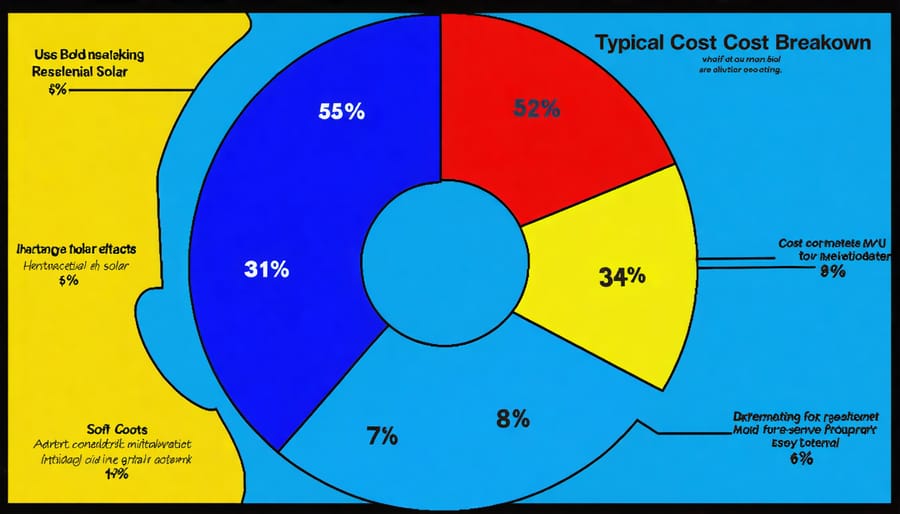
Understanding the cost breakdown of solar PV systems is crucial for making informed investment decisions in renewable energy. The total system cost typically ranges from $2.50 to $3.50 per watt, with hardware components accounting for approximately 60% of the total investment. Solar panels, inverters, and mounting systems remain the primary cost drivers, while soft costs like permits, installation labor, and grid interconnection fees make up the remaining 40%.
To optimize your solar PV investment, consider these key recommendations: First, thoroughly research and compare multiple equipment suppliers and installers to ensure competitive pricing. Second, investigate available federal, state, and local incentives that can significantly reduce your initial investment. Third, evaluate your energy consumption patterns and system sizing requirements to avoid over-dimensioning.
Quality should not be compromised for cost savings, as higher-efficiency components often deliver better long-term value despite higher upfront costs. Consider working with certified installers who can provide detailed cost breakdowns and performance guarantees. Additionally, factor in potential maintenance costs and warranty terms when calculating the total cost of ownership.
The solar PV market continues to evolve with technological advancements and increasing competition driving costs down. By understanding the various cost components and following these recommendations, stakeholders can make well-informed decisions that balance initial investment with long-term benefits while ensuring optimal system performance and return on investment.