

Solar data analysts stand at the intersection of renewable energy and data science, driving the transformation of sunlight into actionable business intelligence. These specialized professionals analyze performance metrics, weather patterns, and system diagnostics to optimize solar installation efficiency and maximize energy production across photovoltaic arrays.
As the renewable energy sector experiences unprecedented growth, solar data analysts have become instrumental in ensuring the reliability and profitability of solar investments. By leveraging advanced analytics tools, machine learning algorithms, and sophisticated monitoring systems, they translate complex data streams into strategic recommendations that enhance system performance and reduce operational costs.
The role combines technical expertise in data analysis with deep knowledge of photovoltaic systems, requiring professionals who can bridge the gap between raw data and practical solar energy applications. From predictive maintenance to performance optimization, solar data analysts serve as key decision-makers in the renewable energy ecosystem, helping organizations harness the full potential of their solar investments while contributing to the global transition toward sustainable energy solutions.
Core Responsibilities of Solar Data Analysts

Performance Monitoring and Analysis
Performance monitoring and analysis forms the core responsibility of solar data analysts, requiring a systematic approach to evaluate photovoltaic system efficiency and optimize energy production. These professionals utilize sophisticated monitoring systems to track key performance indicators (KPIs) including energy yield, performance ratio, and system availability in real-time.
Through advanced data acquisition systems, analysts collect and process information from multiple sources, including weather stations, inverters, and string monitors. They evaluate performance trends, identify efficiency losses, and detect anomalies that might indicate equipment malfunction or degradation. This continuous monitoring enables proactive maintenance scheduling and minimizes system downtime.
Data interpretation involves comparing actual system performance against predicted models, accounting for variables such as solar irradiance, temperature, and weather patterns. Analysts use specialized software tools to generate comprehensive performance reports, providing stakeholders with actionable insights for system optimization.
Key analysis tasks include:
– Monitoring power output fluctuations
– Analyzing system losses and degradation rates
– Evaluating weather impact on system performance
– Calculating energy production efficiency
– Identifying opportunities for performance improvements
By synthesizing complex data sets, solar data analysts help maximize return on investment for system owners while ensuring optimal energy generation. Their analysis supports strategic decision-making regarding maintenance schedules, component upgrades, and system expansions, ultimately contributing to the long-term sustainability and profitability of solar installations.
Fault Detection and Diagnostics
Solar data analysts employ sophisticated methods to detect and diagnose faults in photovoltaic systems, ensuring optimal performance and longevity of solar installations. Through continuous monitoring and analysis of performance metrics, they identify deviations from expected behavior that might indicate system issues or failures.
Key components of fault detection include analyzing power output curves, voltage measurements, and temperature data to identify anomalies. Advanced monitoring systems utilize machine learning algorithms and statistical analysis to establish baseline performance patterns and flag potential problems before they escalate. This approach to predictive maintenance helps prevent system downtime and optimize maintenance schedules.
Diagnostic procedures involve systematic evaluation of system components, including string analysis, thermal imaging, and I-V curve measurements. Analysts interpret this data to differentiate between various types of faults, such as module degradation, inverter issues, or wiring problems. They also assess environmental factors like shading, soiling, and weather patterns that might impact system performance.
By implementing automated fault detection systems and establishing clear diagnostic protocols, solar data analysts help maintain system reliability while reducing operational costs. Their expertise in interpreting complex data patterns enables quick identification of issues and facilitates efficient maintenance responses, ultimately maximizing the return on investment for solar installations.
Essential Tools and Technologies
Monitoring Platforms and Software
Solar data analysts rely on sophisticated monitoring platforms and software tools to effectively track and analyze photovoltaic system performance. Modern solar monitoring solutions integrate seamlessly with various data collection devices, enabling analysts to gather real-time information about energy production, system health, and environmental conditions. As monitoring systems boost efficiency across installations, platforms like SolarEdge, Enphase Enlighten, and Solar-Log have become industry standards.
These platforms typically feature comprehensive dashboards that display key performance indicators (KPIs), power generation metrics, and weather data correlations. Advanced analytics tools such as PVsyst and HelioScope enable analysts to perform detailed system modeling and performance predictions. For data processing and visualization, analysts commonly utilize specialized software including MATLAB, Python with solar-specific libraries, and Power BI.
Asset management platforms like PowerHub and AlsoEnergy provide additional capabilities for portfolio-level analysis and reporting. These tools incorporate machine learning algorithms to detect anomalies, predict maintenance needs, and optimize system performance. Database management systems like SQL and time-series databases are essential for storing and managing large volumes of solar performance data.
Industry professionals also employ weather analytics platforms such as Solcast and SolarGIS to correlate environmental data with system performance, enabling more accurate forecasting and performance assessments.

Data Collection and Integration Systems
Solar data analysts rely on sophisticated data collection systems that combine multiple sources of information to provide comprehensive insights into solar installation performance. These systems typically integrate weather stations, pyranometers, and IoT-enabled monitoring solutions to gather real-time performance metrics.
Modern data collection platforms utilize specialized sensors that measure solar irradiance, ambient temperature, panel temperature, and power output. These measurements are collected through data acquisition systems (DAS) that continuously monitor and record performance parameters at predetermined intervals. The integration process involves combining data from multiple sources through standardized protocols and APIs, ensuring seamless communication between different system components.
Key components of these systems include:
– Remote monitoring devices
– Environmental sensors
– Power quality analyzers
– Data loggers and storage systems
– Network communication infrastructure
The collected data is typically stored in secure cloud-based platforms that enable easy access and analysis. These platforms often feature automated data validation processes to ensure accuracy and reliability. Integration systems also incorporate middleware solutions that help standardize data formats from various sources, making it easier for analysts to process and interpret the information effectively.
Advanced systems may also include machine learning algorithms that help identify patterns and anomalies in the data stream, enabling predictive maintenance and performance optimization strategies.
Skills and Qualifications
Technical Requirements
Solar data analysts require a robust foundation in both technical and analytical skills. Proficiency in data analysis software such as Python, R, or MATLAB is essential, along with expertise in SQL for database management. They must be well-versed in specialized solar monitoring platforms and performance analysis tools like PVsyst or SAM (System Advisor Model).
Strong mathematical and statistical knowledge is crucial for analyzing performance metrics, forecasting energy production, and identifying efficiency patterns. Familiarity with Geographic Information Systems (GIS) enables analysts to evaluate site-specific solar potential and optimize panel placement.
Understanding of electrical engineering principles, particularly related to photovoltaic systems, inverters, and power electronics, is necessary for accurate data interpretation. Knowledge of weather monitoring systems, irradiance sensors, and data acquisition equipment helps in validating measurements and troubleshooting anomalies.
Additionally, competency in data visualization tools like Tableau or Power BI is important for creating comprehensive reports and dashboards. Experience with machine learning algorithms can enhance predictive maintenance capabilities and system optimization strategies.
Professional Development
Professional development for solar data analysts involves continuous learning and certification opportunities to stay current with evolving technology and industry standards. The North American Board of Certified Energy Practitioners (NABCEP) offers specialized certifications that enhance credibility and expertise in solar data analysis.
Many analysts pursue advanced training through professional organizations like the Solar Energy Industries Association (SEIA) and the International Solar Energy Society (ISES), which provide workshops, webinars, and conferences focused on data analytics in solar energy applications.
Online courses through platforms like Coursera and edX offer specialized programs in renewable energy analytics, Python programming for solar data analysis, and machine learning applications in photovoltaic systems. Universities increasingly offer graduate certificates in renewable energy analytics, combining technical skills with industry knowledge.
Membership in professional organizations such as the American Solar Energy Society (ASES) provides networking opportunities, access to research publications, and continuing education resources. Regular participation in industry conferences and workshops helps analysts stay informed about emerging trends, new analytical tools, and best practices in solar energy assessment and monitoring.
Impact on Solar PV Performance
Optimization Success Stories
Solar data analysts have played pivotal roles in numerous system optimization success stories across the industry. A notable example comes from a large-scale solar farm in California, where data analysis revealed that soiling patterns were reducing energy yield by 15%. Through careful monitoring and predictive maintenance scheduling, the facility increased annual energy production by 12% and reduced cleaning costs by 30%.
In another case, a commercial installation in Texas demonstrated how sophisticated data analysis can transform system performance. The analyst team identified micro-inverter communication issues that were causing significant energy losses. By implementing a new monitoring protocol, they achieved a 7% increase in system efficiency and prevented potential equipment failures worth $50,000 in replacement costs.
A particularly impressive optimization occurred at a utility-scale project in Arizona, where data analysts discovered weather-related performance patterns affecting optimal tilt angles. By implementing dynamic adjustment protocols based on seasonal data, the facility improved its energy yield by 9% annually.
Organizations utilizing solar data analysts have also reported substantial improvements in maintenance efficiency. A Massachusetts-based solar developer reduced their maintenance response time by 60% after implementing data-driven diagnostic protocols. The analysis team identified performance anomalies before they developed into critical issues, resulting in a 25% reduction in maintenance costs over two years.
These success stories underscore the vital role of solar data analysts in maximizing system performance and financial returns. Through careful analysis and strategic recommendations, these professionals continue to drive innovations in system optimization and maintenance practices across the solar energy sector.
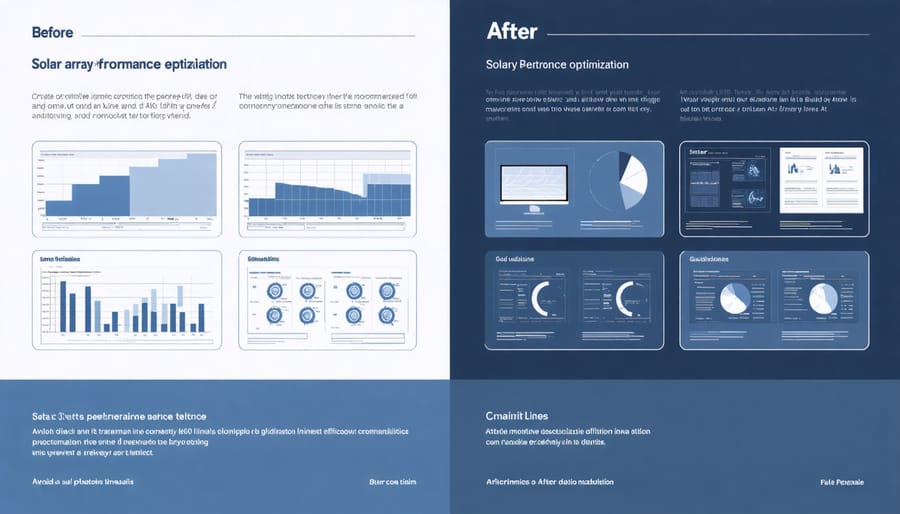
ROI and Performance Metrics
Data analysis in solar PV systems yields quantifiable benefits that directly impact investment returns and operational efficiency. By implementing comprehensive monitoring and analysis systems, organizations can maximize solar ROI through improved performance metrics and predictive maintenance.
Key performance indicators (KPIs) commonly tracked by solar data analysts include system availability, performance ratio, specific yield, and capacity factor. These metrics provide valuable insights into system efficiency and help identify opportunities for optimization. Studies show that data-driven monitoring can increase energy yield by 3-8% annually while reducing maintenance costs by up to 25%.
Financial benefits manifest through multiple channels:
– Early fault detection reducing downtime by up to 70%
– Optimized cleaning schedules improving energy generation by 2-5%
– Enhanced accuracy in production forecasting
– Reduced operational expenses through preventive maintenance
– Improved warranty claim documentation and validation
Performance analysis also enables benchmarking against similar installations, helping identify underperforming components and systems. Solar data analysts typically achieve payback periods of 12-18 months on analytical infrastructure investments through improved system efficiency and reduced maintenance costs.
The long-term value proposition extends beyond immediate financial returns, incorporating:
– Extended equipment lifetime through proactive maintenance
– Improved accuracy in performance guarantees
– Enhanced stakeholder reporting capabilities
– Data-driven decision-making for future installations
– Optimized energy storage integration
These measurable benefits demonstrate the crucial role of data analysis in modern solar PV operations, supporting both technical and financial objectives while ensuring sustainable system performance.
Solar data analysts play an indispensable role in advancing the renewable energy sector through their expertise in data collection, analysis, and interpretation. As the solar industry continues to expand rapidly, the demand for skilled professionals who can transform complex data into actionable insights grows correspondingly. These analysts serve as the bridge between raw solar performance data and strategic decision-making, enabling organizations to optimize their solar installations and maximize renewable energy generation.
The future outlook for solar data analysts appears exceptionally promising, with industry projections indicating sustained growth in solar energy adoption worldwide. As solar technologies become more sophisticated and data collection methods more comprehensive, the role of these specialists will evolve to encompass new analytical tools, machine learning applications, and predictive modeling techniques.
The integration of smart grid technologies and the increasing focus on energy efficiency will create additional opportunities for solar data analysts to contribute to grid stability and energy management solutions. Their expertise will be crucial in addressing challenges related to energy storage, grid integration, and the optimization of solar power systems in various environmental conditions.
For those considering a career in this field, the combination of technical expertise, analytical skills, and renewable energy knowledge positions solar data analysts at the forefront of the clean energy transition. Continuing education and staying current with emerging technologies will remain essential for success in this dynamic and rewarding profession.


