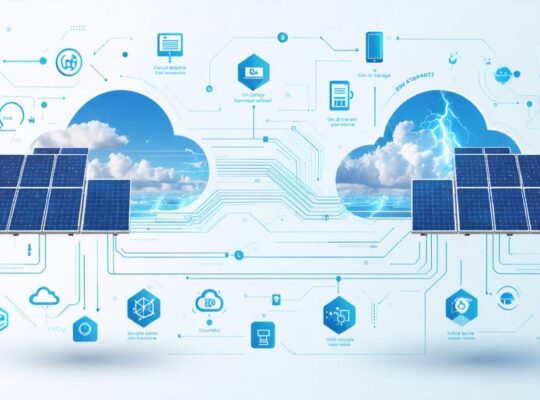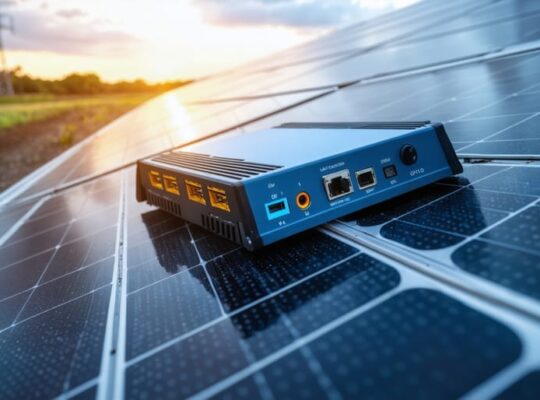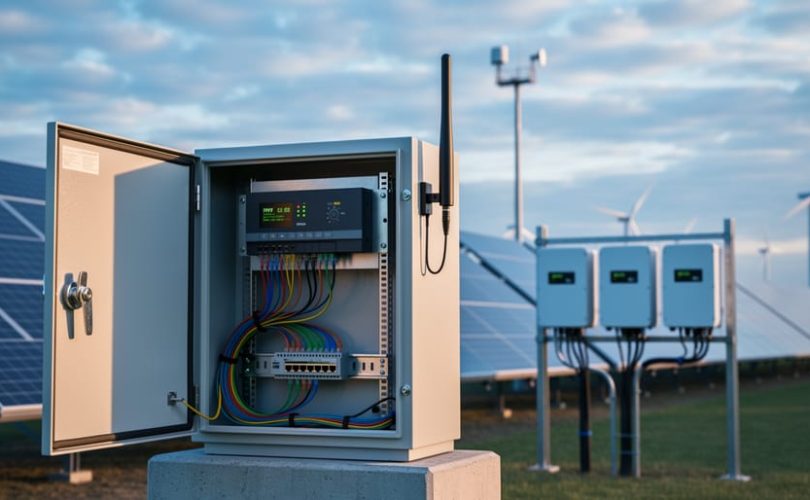
The renewable energy sector stands at a technological crossroads where wind and solar power converge through intelligent control systems. Wind/solar hybrid controllers represent the evolution of renewable energy management, serving as the central nervous system that orchestrates power generation from multiple sources while optimizing storage, distribution, and data analytics. These sophisticated devices do far more than switch between energy sources; they integrate real-time meteorological data, predict generation patterns, balance load requirements, and communicate with cloud-based platforms to enable remote monitoring and predictive maintenance.
For photovoltaic professionals entering this rapidly advancing field, understanding hybrid controllers means grasping both hardware functionality and the cloud infrastructure that amplifies their capabilities. Modern systems leverage hybrid cloud architectures that combine on-site edge computing with centralized data management, creating resilient networks capable of managing distributed energy resources across multiple installations. This integration addresses critical industry challenges: maximizing energy harvest from complementary renewable sources, reducing battery cycling stress through intelligent charge management, and providing stakeholders with actionable insights through advanced analytics.
The practical implications extend beyond theoretical efficiency gains. Commercial installations, remote telecommunications towers, agricultural operations, and island microgrids increasingly depend on hybrid systems that guarantee power continuity when single-source solutions fall short. Wind generation peaks during weather transitions and nighttime hours, precisely when solar arrays produce minimal output—a natural complementarity that hybrid controllers exploit through sophisticated algorithms and machine learning capabilities.
This article examines the technical architecture, cloud integration strategies, real-world deployment scenarios, and selection criteria that define effective wind/solar hybrid control systems. Whether designing off-grid installations, upgrading existing solar arrays, or evaluating solutions for academic research, understanding these systems provides essential knowledge for advancing renewable energy implementation.
What Wind/Solar Hybrid Controllers Actually Do

Core Functions of Hybrid Energy Controllers
Modern wind/solar hybrid controllers perform four essential functions that ensure optimal system performance and longevity. Understanding these core operations is fundamental for professionals designing or maintaining renewable energy installations.
Load management represents the controller’s primary function, intelligently distributing available power to connected devices based on priority settings and real-time demand. The controller continuously monitors consumption patterns and adjusts power allocation to prevent system overload while maximizing equipment utilization. Advanced algorithms enable the system to predict load requirements and prepare power reserves accordingly.
Battery charging optimization extends battery life through sophisticated charging protocols. The controller implements multi-stage charging strategies—bulk, absorption, and float—tailored to specific battery chemistries, whether lithium-ion, lead-acid, or emerging technologies. Temperature compensation and voltage regulation prevent overcharging and deep discharge events that compromise battery health. This optimization can extend battery lifespan by 30-50% compared to unmanaged systems.
Power source prioritization determines which generation source supplies the load at any given moment. Controllers evaluate factors including available renewable energy, battery state of charge, and load requirements to select the most efficient power path. During periods of high solar and wind generation, excess energy charges batteries while simultaneously powering loads. When renewable sources prove insufficient, the controller seamlessly transitions to battery power or alternative backup sources.
System protection features safeguard equipment from electrical faults, including overvoltage, undervoltage, overcurrent, and short-circuit conditions. Integrated monitoring systems provide real-time alerts and automatic disconnection protocols, preventing damage to sensitive components and ensuring operator safety across all operating conditions.
The Data Challenge in Hybrid Systems
Wind and solar hybrid systems present a fundamentally different data management challenge compared to single-source installations. While a standalone photovoltaic array generates relatively predictable data patterns tied to solar irradiance and temperature, hybrid configurations multiply this complexity exponentially. These systems must simultaneously track solar panel output, wind turbine generation, battery storage status, grid interaction points, and environmental conditions from multiple sensors—all in real time.
The volume and velocity of data in hybrid systems can increase by 300-500% compared to solar-only installations. A typical hybrid controller processes hundreds of variables per second, including voltage fluctuations across different generation sources, frequency matching requirements, and dynamic load balancing decisions. This data diversity creates integration challenges, as wind and solar systems often utilize different communication protocols and measurement standards.
Traditional on-site data storage quickly becomes inadequate when managing these complex, multi-dimensional data streams. The sheer computational requirements for analyzing cross-source performance correlations, predicting optimal switching between energy sources, and identifying system-wide efficiency opportunities exceed the capabilities of conventional controller hardware. This data explosion necessitates robust cloud-based solutions that can aggregate, process, and deliver actionable insights from these intricate hybrid energy ecosystems.
How Hybrid Cloud Architecture Solves Solar PV Data Problems
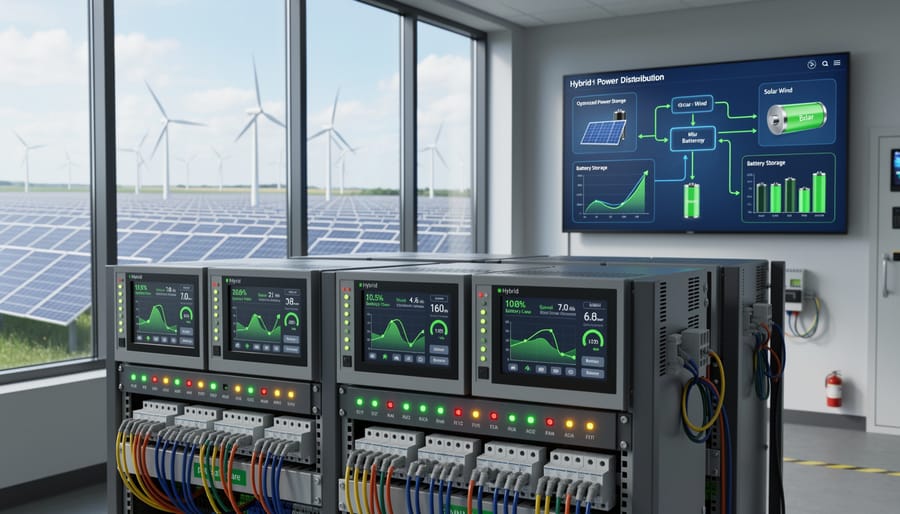
Edge Computing at the Controller Level
Modern wind/solar hybrid controllers leverage edge computing capabilities to process critical system data directly at the device level, eliminating dependence on continuous cloud connectivity for essential operations. This distributed computing architecture enables controllers to analyze sensor inputs, monitor power generation patterns, and execute control algorithms locally within milliseconds rather than waiting for cloud-based processing.
The primary advantage of edge computing integration lies in real-time decision-making for load management and source switching. When weather conditions change rapidly or load demands fluctuate, the controller immediately adjusts power distribution between wind turbines, solar arrays, and battery storage without experiencing network-induced delays. This instantaneous response capability proves essential for maintaining system stability and preventing equipment damage during transient events.
Local data processing also ensures operational continuity during network outages or connectivity disruptions. The controller continues monitoring voltage levels, current flow, and battery state of charge while storing timestamped data for later synchronization with cloud platforms. This hybrid approach combines the reliability of autonomous operation with the analytical advantages of centralized data management.
Furthermore, edge processing significantly reduces bandwidth requirements by filtering and aggregating raw sensor data before transmission. Instead of sending thousands of measurements per minute to the cloud, controllers transmit summarized performance metrics and anomaly alerts, optimizing communication costs while maintaining comprehensive system oversight. This efficiency becomes particularly valuable for remote installations where network connectivity may be limited or expensive.
Cloud-Based Analytics and Storage
Modern wind/solar hybrid controllers leverage cloud-based analytics platforms to transform raw operational data into actionable intelligence. These systems aggregate performance metrics from distributed energy sources, uploading information on energy production, battery state-of-charge, load patterns, and environmental conditions to secure cloud servers. Centralized data aggregation enables portfolio-wide visibility, allowing facility managers to monitor multiple installations from a unified dashboard rather than managing systems individually.
Long-term storage capabilities distinguish enterprise-grade solutions from basic monitoring systems. Hybrid cloud storage solutions retain historical data for years, facilitating trend analysis, predictive maintenance scheduling, and compliance reporting. This archived information proves invaluable for identifying seasonal performance variations, degradation patterns in photovoltaic panels or wind turbine components, and optimization opportunities across the system lifecycle.
Advanced analytics engines apply machine learning algorithms to detect anomalies, forecast energy generation based on weather patterns, and recommend operational adjustments. These computational capabilities exceed what edge devices can perform locally, processing terabytes of data to identify subtle efficiency losses or emerging equipment failures before they impact system availability.
Remote accessibility represents another critical advantage, enabling engineers and technicians to diagnose issues, update controller firmware, and modify operating parameters from any location with internet connectivity. This capability reduces site visit requirements, accelerates response times during outages, and supports collaborative troubleshooting between equipment manufacturers, system integrators, and facility operators. Educational institutions partnering with industry leaders increasingly incorporate cloud-based monitoring platforms into curriculum development, preparing students for real-world renewable energy management scenarios.
The Integration Layer
The integration layer serves as the critical communication bridge between edge devices at renewable energy installations and centralized cloud platforms. Wind/solar hybrid controllers typically employ standardized communication protocols such as MQTT (Message Queuing Telemetry Transport) and HTTPS for secure data transmission. These lightweight protocols enable efficient data transfer even in locations with limited connectivity, ensuring continuous monitoring of system performance metrics including power output, battery state of charge, and equipment health indicators.
Data synchronization strategies vary based on operational requirements. Real-time synchronization enables immediate visibility into system performance, crucial for grid-connected installations requiring rapid response to demand fluctuations. Alternatively, batch synchronization reduces bandwidth consumption by transmitting aggregated data at scheduled intervals, suitable for remote off-grid systems where connectivity may be intermittent.
Modern integration layers incorporate edge computing capabilities, allowing preliminary data processing and analysis at the controller level before transmission to the cloud. This approach reduces bandwidth requirements while enabling autonomous decision-making during connectivity disruptions. Universities collaborating with industry leaders have developed advanced data compression algorithms and prioritization schemes that optimize the balance between data granularity and transmission efficiency, ensuring reliable data flow across diverse network conditions while maintaining system responsiveness.
Real-World Applications for PV Professionals
Remote Site Management
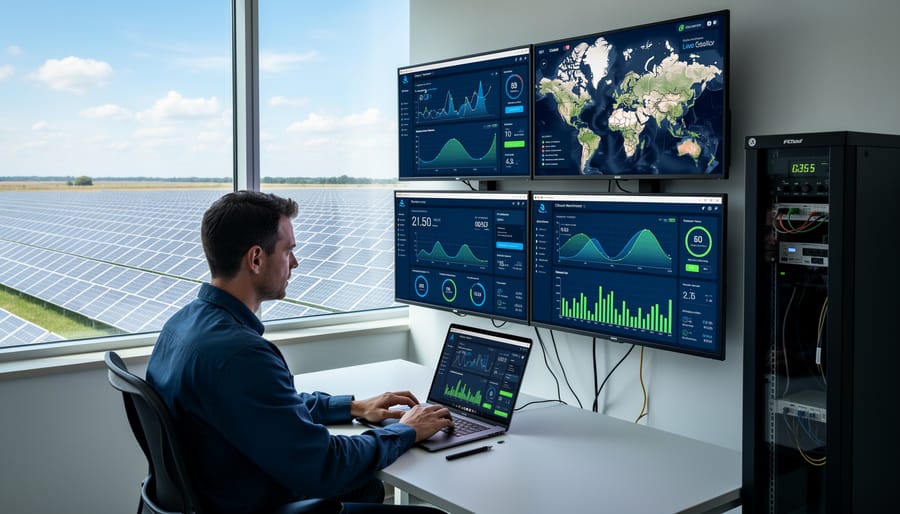
Wind/solar hybrid controllers equipped with cloud connectivity transform how operators manage geographically dispersed renewable energy installations. These systems eliminate the need for constant on-site presence by transmitting critical performance data to centralized dashboards accessible from any internet-connected device. Through real-time monitoring systems, operators can track voltage levels, battery state of charge, energy production from both wind and solar sources, and load consumption patterns simultaneously.
Remote management capabilities extend beyond passive monitoring to active control functions. Operators can adjust charge parameters, modify load priorities, and configure system settings without traveling to remote locations. This functionality proves particularly valuable for installations in challenging environments such as telecommunications towers, weather stations, or agricultural operations in isolated regions. Alert systems notify personnel immediately when performance deviates from expected parameters, enabling rapid response to potential issues.
The cloud-based architecture supports multiple user access levels, allowing maintenance teams, system owners, and technical consultants to view relevant data according to their specific roles. Historical data logging facilitates trend analysis and predictive maintenance scheduling, reducing operational costs while maximizing system uptime and energy availability.
Predictive Maintenance and System Optimization
Cloud-aggregated data from wind/solar hybrid controllers enables sophisticated predictive maintenance strategies that significantly reduce downtime and operational costs. By continuously analyzing performance metrics such as voltage fluctuations, current irregularities, and temperature patterns across both energy sources, these systems can identify subtle anomalies that precede equipment failures. Machine learning algorithms process historical data to establish baseline performance profiles, flagging deviations that indicate degrading inverters, failing charge controllers, or suboptimal battery health.
The predictive capabilities extend beyond fault detection to strategic optimization. Advanced analytics compare actual energy output against meteorological forecasts and historical trends, enabling operators to refine harvesting strategies in real-time. For instance, when wind generation forecasts indicate sustained high output periods, the system can automatically adjust battery charging protocols to accommodate increased energy capture while preventing overcharge conditions.
These optimization tools prove particularly valuable for research institutions and commercial installations, where maximizing return on investment requires continuous performance improvement. Universities collaborating on renewable energy studies leverage this data to develop enhanced control algorithms, contributing to industry-wide advancements in hybrid system efficiency.
Portfolio Management for Multi-Site Operations
Managing multiple wind-solar hybrid installations across diverse geographic locations presents unique operational challenges that centralized cloud dashboards effectively address. Portfolio management platforms enable operators to monitor real-time performance metrics from dozens or even hundreds of hybrid sites simultaneously, identifying underperforming assets and optimization opportunities through comparative analysis. These cloud-based systems aggregate data from distributed wind/solar hybrid controllers, providing unified visibility into energy production, equipment health, and financial performance across the entire renewable portfolio.
Advanced PV monitoring analytics integrated with wind generation data allow portfolio managers to benchmark site performance against regional averages and weather-normalized expectations. This comparative intelligence supports data-driven decision-making for maintenance scheduling, equipment upgrades, and resource allocation. Centralized dashboards also streamline compliance reporting by automatically compiling regulatory data from multiple installations, reducing administrative burden while ensuring accuracy.
For organizations partnering with universities on renewable energy research, portfolio management platforms facilitate collaborative analysis of multi-site operational data, supporting academic studies on hybrid system performance optimization. The scalability of cloud-based solutions means operators can efficiently expand their renewable portfolios without proportionally increasing monitoring infrastructure costs, making multi-site management both economically viable and operationally sustainable.
Key Features to Evaluate in Hybrid Cloud Controllers
Data Security and Compliance Considerations
As wind/solar hybrid controllers increasingly connect to cloud platforms for data management, robust security measures become paramount to protect sensitive operational data and system integrity. Modern hybrid controllers must incorporate end-to-end encryption protocols, including TLS 1.3 or higher for data transmission and AES-256 encryption for stored information, safeguarding against unauthorized access and cyber threats.
Implementing multi-factor authentication and role-based access controls ensures that only authorized personnel can modify system settings or access critical operational data. These features are particularly important for large-scale installations where multiple stakeholders require different levels of system interaction. Industry-leading controllers maintain detailed audit logs to track all system access and configuration changes, supporting accountability and forensic analysis when needed.
Compliance with established industry standards is essential for professional deployments. Controllers should adhere to IEC 62443 cybersecurity standards for industrial automation systems and meet regional data protection regulations such as GDPR in Europe or similar frameworks elsewhere. Additionally, conformance to IEEE 2030.5 for smart energy profile communications ensures interoperability while maintaining security protocols.
Regular firmware updates and security patches are critical maintenance requirements that responsible manufacturers provide to address emerging vulnerabilities. When evaluating hybrid controller solutions, prioritize systems with proven security certifications and manufacturers committed to long-term security support, ensuring your renewable energy infrastructure remains protected throughout its operational lifespan.
Scalability and Interoperability
As renewable energy installations expand from small residential systems to large commercial arrays, wind/solar hybrid controllers must demonstrate robust scalability and interoperability capabilities. Modern hybrid controllers should support modular expansion, allowing operators to add additional wind turbines, solar panels, or battery storage without replacing the entire control infrastructure. This scalability ensures that initial investments remain viable as energy demands grow or as organizations pursue more ambitious sustainability targets.
Interoperability with existing photovoltaic monitoring infrastructure represents another critical consideration. Effective hybrid controllers utilize standard communication protocols such as Modbus, MQTT, and RESTful APIs to seamlessly integrate with established solar monitoring platforms, building management systems, and utility grid interfaces. This compatibility eliminates data silos and enables comprehensive energy management across diverse generation sources. Universities collaborating with renewable energy providers have demonstrated that open-architecture systems reduce integration costs by up to 40 percent compared to proprietary solutions.
When evaluating hybrid controllers, professionals should verify compatibility with their current monitoring software, confirm support for future capacity additions, and assess the vendor’s commitment to maintaining updated firmware and API documentation. Systems designed with these principles enable organizations to adapt to evolving energy landscapes while maximizing return on investment.
API Access and Data Ownership
Open application programming interfaces (APIs) and transparent data ownership policies serve as critical foundations for operational flexibility in wind/solar hybrid systems. Controllers equipped with open APIs enable seamless integration with third-party monitoring platforms, enterprise resource planning systems, and advanced analytics tools, preventing vendor lock-in and supporting system evolution as technology advances. This interoperability proves essential for research institutions conducting multi-vendor comparative studies and for operators managing diverse renewable portfolios across multiple sites.
Clear data ownership policies ensure that performance metrics, environmental conditions, and operational parameters remain accessible to system owners rather than being proprietary to controller manufacturers. This accessibility facilitates independent analysis, supports academic research collaboration, and enables operators to leverage machine learning algorithms for predictive maintenance and optimization strategies. When evaluating hybrid controllers, prioritize manufacturers who provide comprehensive API documentation, support standard communication protocols like Modbus and MQTT, and explicitly guarantee that generated data belongs to the system owner with unrestricted export capabilities.
Implementation Challenges and Solutions
Connectivity in Remote Locations
Remote installation sites for wind/solar hybrid systems frequently face significant connectivity challenges that can disrupt data transmission to cloud platforms. Modern hybrid controllers address these limitations through sophisticated intelligent data buffering mechanisms that temporarily store operational data locally when internet connections become unstable or unavailable. These systems employ timestamp-synchronized storage protocols, ensuring that no critical performance metrics are lost during connectivity gaps.
Advanced controllers feature robust offline operation modes that maintain full functionality independent of cloud connectivity. During offline periods, the controller continues managing charge regulation, load distribution, and battery protection algorithms based on pre-configured parameters and local sensor inputs. This autonomy ensures uninterrupted system performance even in areas with intermittent cellular coverage or satellite communication delays.
When connectivity resumes, the buffered data automatically synchronizes with cloud servers through prioritized transmission protocols. The system intelligently compresses historical data to optimize bandwidth usage while maintaining data integrity for subsequent analysis. This approach proves particularly valuable for installations in mountainous regions, offshore locations, or developing areas where reliable internet infrastructure remains limited. Research conducted in collaboration with university partners has demonstrated that buffered systems can maintain data continuity for up to 30 days of offline operation, ensuring comprehensive performance monitoring across diverse geographic conditions.
Integration with Legacy Systems
Integrating cloud-connected wind/solar hybrid controllers into existing photovoltaic installations requires a phased approach that minimizes operational disruption while maximizing data management capabilities. Begin by conducting a comprehensive system audit to identify communication protocols, inverter compatibility, and existing monitoring infrastructure. Most modern hybrid controllers support industry-standard protocols like Modbus RTU and RS485, enabling seamless connection to legacy solar equipment without extensive hardware replacement.
A strategic integration pathway involves installing gateway devices that bridge older systems with cloud platforms, translating proprietary data formats into standardized outputs. This middleware approach protects initial investments while enabling advanced analytics and remote monitoring capabilities. Organizations should prioritize controllers offering backward compatibility with common inverter brands and flexible API configurations.
Data migration represents a critical consideration. Establish baseline performance metrics from existing systems before integration to validate post-upgrade accuracy. Many universities and research institutions have developed open-source integration frameworks that facilitate this transition, particularly for educational and demonstration installations.
For optimal results, implement a pilot program on a single array or subsystem before full-scale deployment. This testing phase identifies potential compatibility issues and allows technical teams to develop site-specific integration protocols. Engaging with manufacturers who provide technical training and ongoing support ensures successful long-term operation of hybrid renewable energy systems within evolving infrastructure environments.
The Educational Pathway for PV Professionals
Developing expertise in wind/solar hybrid controllers and cloud-based data management requires a systematic educational approach that combines theoretical knowledge with practical application skills. Aspiring photovoltaic professionals should pursue structured learning pathways that address both the hardware integration aspects of hybrid systems and the software competencies necessary for modern data management.
Academic institutions increasingly offer specialized programs in renewable energy systems that incorporate hybrid controller technology as a core component. These programs typically begin with foundational courses in photovoltaic system design, wind energy principles, and power electronics before advancing to more complex topics such as multi-source energy integration and supervisory control systems. Understanding the communication protocols that enable controllers to interface with cloud platforms represents an essential competency for today’s PV professionals.
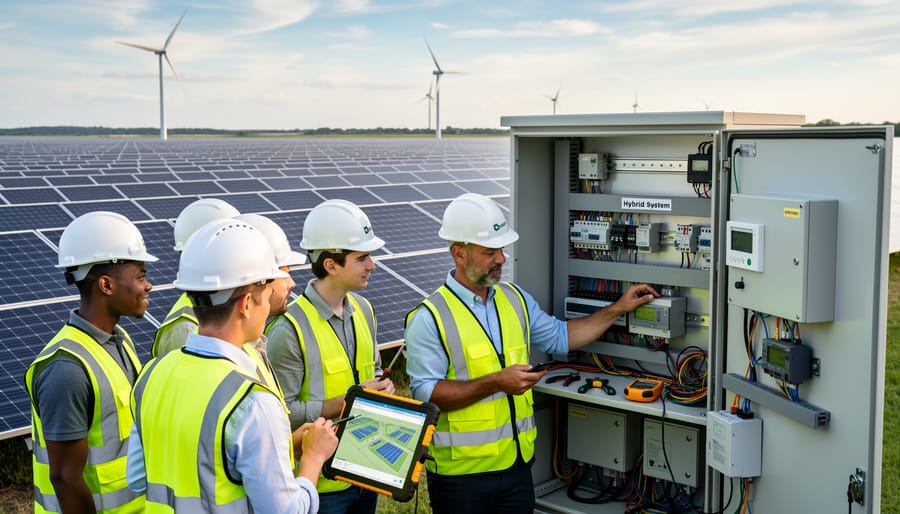
Many universities have developed partnerships with industry leaders to provide students with hands-on experience using actual hybrid controller systems and cloud-based monitoring platforms. These collaborations offer invaluable opportunities to work with real-world equipment, analyze performance data from operational installations, and troubleshoot integration challenges that arise when combining multiple renewable sources.
Professional development for those already working in the field can be achieved through continuing education programs, technical certifications, and manufacturer-specific training courses. These targeted learning opportunities focus on emerging technologies such as advanced forecasting algorithms, machine learning applications in energy prediction, and cybersecurity considerations for cloud-connected systems.
Online learning platforms have also democratized access to specialized knowledge, offering courses in data analytics, IoT device management, and renewable energy optimization. Aspiring professionals should prioritize programs that emphasize practical skills in configuring hybrid controllers, interpreting cloud-based performance metrics, and implementing predictive maintenance strategies. This comprehensive educational foundation prepares individuals to effectively design, deploy, and manage sophisticated hybrid renewable energy systems in an increasingly interconnected industry landscape.
The convergence of wind/solar hybrid controllers with cloud-based data management systems represents a pivotal advancement in renewable energy technology. As the photovoltaic industry continues its rapid evolution, understanding these integrated systems has become essential knowledge for next-generation professionals entering the field. The ability to coordinate multiple renewable sources through intelligent controllers while leveraging cloud infrastructure for real-time analytics and optimization creates unprecedented opportunities for system efficiency and grid stability.
For aspiring PV professionals, mastery of hybrid controller technology offers significant competitive advantages in an increasingly sophisticated marketplace. These systems demand interdisciplinary expertise spanning electrical engineering, data science, and cloud computing—skills that universities and educational institutions are now incorporating into renewable energy curricula. The collaborative efforts between industry leaders and academic institutions ensure that tomorrow’s workforce possesses both theoretical knowledge and practical application skills necessary for implementing these complex systems.
Looking forward, several trends will shape hybrid controller development: enhanced artificial intelligence integration for predictive maintenance, blockchain-enabled energy trading platforms, and improved interoperability standards across manufacturers. The ongoing refinement of communication protocols and cybersecurity measures will further strengthen system reliability and stakeholder confidence.
Industry stakeholders who invest in understanding and implementing hybrid cloud solutions position themselves at the forefront of renewable energy innovation. As grid modernization accelerates globally, the professionals equipped with comprehensive knowledge of these technologies will drive the transition toward more resilient, efficient, and sustainable energy infrastructures that benefit both economic and environmental objectives.