Verify your project’s climate zone classification through the International Energy Conservation Code (IECC) before specifying any insulation materials, as minimum R-values for walls, attics, and foundations vary dramatically between zones—ranging from R-13 wall insulation in Zone 1 to R-21 in Zone 7. Cross-reference these requirements with IRC Section N1102, which mandates specific thermal envelope performance standards that directly impact how building-integrated photovoltaics interface with roof assemblies and exterior walls.
Coordinate insulation installation with fire-rated assembly requirements under IRC Section R302, particularly when solar components penetrate thermal barriers or create concealed spaces where code-compliant air sealing becomes essential for both energy efficiency and fire safety. Document continuous insulation strategies that eliminate thermal bridging while maintaining the required fire resistance ratings—typically one or two hours depending on occupancy classification.
Review local amendments to the base IECC and IRC codes, as many jurisdictions adopt more stringent insulation standards or modify installation practices for renewable energy integration. Request pre-installation meetings with building officials to clarify expectations for vapor barrier placement, ventilation pathways around solar equipment, and inspection protocols that affect project timelines.
Understanding these code intersections prevents costly redesigns and ensures photovoltaic installations achieve both structural compliance and optimal energy performance. The convergence of thermal envelope requirements with solar integration demands precise knowledge of multiple code sections that govern modern residential construction.
The Relationship Between Insulation Requirements and BIPV Systems
How Building-Integrated PV Changes Traditional Insulation Dynamics
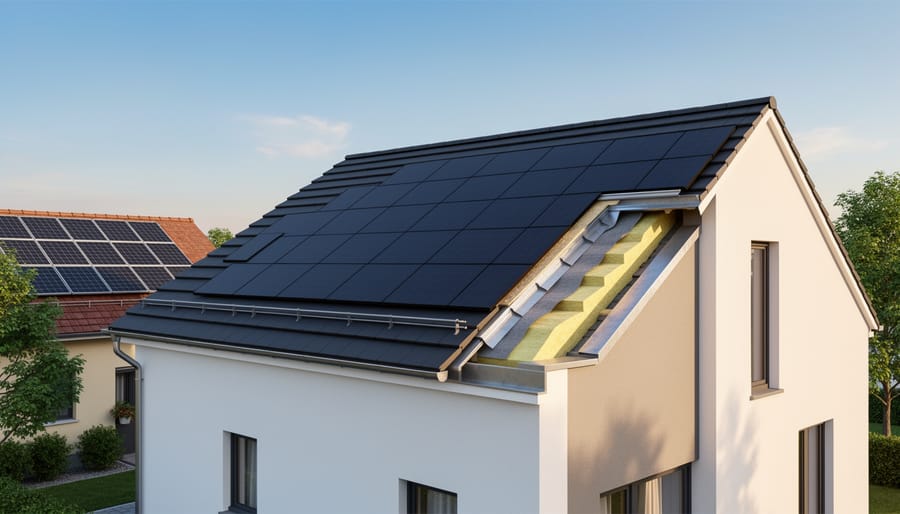
Building-integrated photovoltaic systems fundamentally alter the thermal dynamics of residential structures by serving dual functions as both power generators and envelope components. Unlike traditional roofing materials with standalone insulation layers, building-integrated PV insulation creates a composite assembly where solar modules become part of the building’s weatherproofing system.
Solar tiles and photovoltaic shingles introduce additional thermal mass and ventilation considerations that conventional insulation strategies do not account for. These systems generate heat during operation, with panel temperatures reaching 65-85 degrees Celsius under peak sunlight. This thermal energy transfer requires careful ventilation design between the photovoltaic layer and underlying insulation to prevent heat accumulation that could degrade insulation performance or reduce panel efficiency.
The integration also affects R-value calculations, as BIPV modules contribute to overall thermal resistance while potentially creating thermal bridging at mounting points. Code compliance requires evaluating the entire assembly rather than treating insulation and roofing as separate systems. Installers must consider how BIPV installation methods impact continuous insulation requirements, air barrier integrity, and moisture management.
Research partnerships between industry leaders and academic institutions continue advancing understanding of these interactions, developing testing protocols that accurately measure combined system performance under real-world conditions and informing updated code provisions for optimal building envelope design.
Thermal Bridging and Heat Transfer Considerations
When photovoltaic systems integrate with residential building envelopes, they create unique thermal bridging challenges that professionals must address to maintain energy efficiency and code compliance. Mounting hardware, including rails, brackets, and penetration points, can compromise the building’s thermal barrier by creating pathways for heat transfer through otherwise insulated roof assemblies.
Metal mounting components conduct heat significantly faster than insulation materials, potentially reducing the effective R-value of the roof system. During summer months, PV arrays absorb solar radiation, with temperatures reaching 140-180°F, transferring excess heat to the roof structure below. Conversely, winter conditions create reverse thermal bridging as cold mounting hardware draws heat outward from the conditioned space.
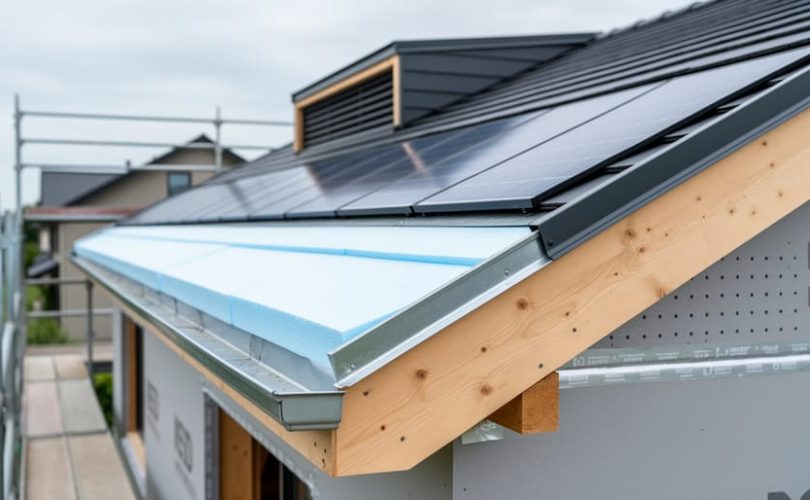
Building codes increasingly recognize these thermal considerations, requiring installers to minimize air leakage around roof penetrations and maintain continuous insulation where possible. Thermal breaks, specialized mounting hardware, and proper flashing details help mitigate these effects. Installing photovoltaic systems over ventilated cavities or using standoff mounting systems creates beneficial air gaps that reduce direct heat transfer.
Compliance requires careful coordination between insulation contractors and PV installers to ensure penetrations don’t compromise the building’s overall thermal performance. Documentation of thermal bridging calculations may be necessary during permitting, particularly for high-performance building certifications or when compensating for reduced insulation in specific roof areas.
Current Residential Insulation Code Requirements
International Energy Conservation Code (IECC) Standards
The International Energy Conservation Code establishes minimum insulation requirements based on eight distinct climate zones, ranging from the hot Zone 1 to the extremely cold Zone 8. These zones determine specific R-value thresholds that residential buildings must meet to ensure energy efficiency and thermal performance.
For wood-framed walls, IECC 2021 requirements range from R-13 in warmer Zone 1 to R-20 plus R-5 continuous insulation in colder zones. Ceiling insulation requirements are considerably higher, starting at R-30 in Zone 1 and reaching R-49 in Zones 6 through 8. Floor insulation over unconditioned spaces requires R-13 in Zone 1, increasing to R-30 in the coldest climates.
When integrating photovoltaic systems into residential construction, these insulation standards become particularly significant. Building-integrated photovoltaic installations must maintain code-compliant thermal barriers while accommodating electrical conduit pathways, ventilation requirements, and mounting systems. The challenge lies in preserving the building envelope’s integrity without creating thermal bridges that compromise energy performance.
Solar professionals should note that some jurisdictions adopt modified versions of IECC standards or maintain their own enhanced requirements. California’s Title 24, for example, exceeds base IECC minimums in many categories. Additionally, buildings pursuing above-code certifications like ENERGY STAR or passive house standards require substantially higher R-values.
Proper coordination between insulation contractors and solar installation teams ensures compliance with both thermal performance standards and electrical code requirements. This collaboration becomes essential when roof-mounted or facade-integrated systems affect insulation placement, particularly around penetrations and equipment mounting locations. Understanding these intersecting requirements enables photovoltaic professionals to design systems that enhance rather than compromise building energy efficiency.
IRC and IBC Insulation Provisions
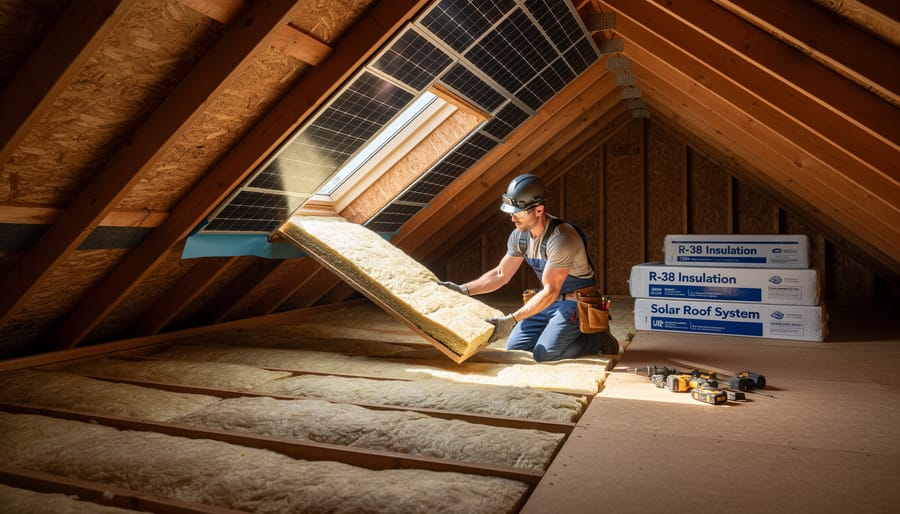
The International Residential Code (IRC) and International Building Code (IBC) establish comprehensive insulation standards that directly impact building-integrated photovoltaic (BIPV) installations. These model codes, adopted by most U.S. jurisdictions with local modifications, set minimum thermal performance requirements based on climate zones.
The IRC primarily governs one- and two-family dwellings, specifying R-values for various building components including roofs, walls, and foundations. For BIPV installations, IRC Chapter 11 outlines energy efficiency provisions that must be maintained when solar systems replace or integrate with traditional building envelope materials. The code requires continuous insulation in certain applications to minimize thermal bridging, which becomes particularly relevant when mounting hardware penetrates the building envelope.
The IBC applies to larger residential structures and commercial buildings, incorporating more stringent requirements for fire resistance ratings and thermal barriers. Section 1403 addresses exterior wall coverings, which encompasses BIPV modules serving as weather-resistant barriers. Both codes reference ASHRAE Standard 90.1 for energy performance calculations.
For photovoltaic professionals, understanding these provisions ensures compliance while maintaining the thermal integrity essential for building performance. Installation methods must account for insulation continuity, proper air sealing, and vapor barrier placement. Universities collaborating with industry partners increasingly incorporate these code requirements into renewable energy curricula, preparing professionals to navigate the intersection of traditional building science and innovative solar technologies effectively.
State and Local Code Variations
While the International Residential Code establishes baseline insulation requirements, individual states frequently adopt amendments that increase stringency based on regional climate conditions and energy efficiency goals. These state-level modifications can significantly impact building-integrated photovoltaic system design and installation practices. For instance, California’s Title 24 energy standards mandate higher insulation R-values than the IRC baseline, directly affecting how BIPV components integrate with building envelopes. Similarly, cold-climate states like Minnesota and Wisconsin often require enhanced thermal barriers that influence mounting strategies for solar roofing products. Local jurisdictions may further impose additional requirements through municipal ordinances, particularly in areas prioritizing net-zero construction or sustainability initiatives. Aspiring photovoltaic professionals must verify applicable state amendments and local code variations before designing BIPV systems to ensure compliance. Many jurisdictions now maintain online code databases, and state energy offices typically provide guidance on current requirements. Working with local building departments early in project planning helps identify specific insulation standards that will affect system specifications, installation methods, and weatherization details for successful code approval.
Fire Safety Standards Affecting Insulation and BIPV Integration
Fire-Rated Insulation Requirements for Solar Applications
When integrating Building-Integrated Photovoltaic (BIPV) systems with residential structures, insulation materials must meet stringent fire-resistance standards to ensure occupant safety and code compliance. The International Residential Code (IRC) and International Building Code (IBC) establish baseline requirements, while the National Fire Protection Association (NFPA) provides additional guidance specific to photovoltaic installations.
Insulation materials used near or beneath BIPV systems must typically achieve a Class A flame spread rating, with a flame spread index of 25 or less and a smoke-developed index not exceeding 450, as tested per ASTM E84. This classification is critical because solar arrays can complicate firefighting efforts and increase fire propagation risks if insulation materials fail to resist ignition.
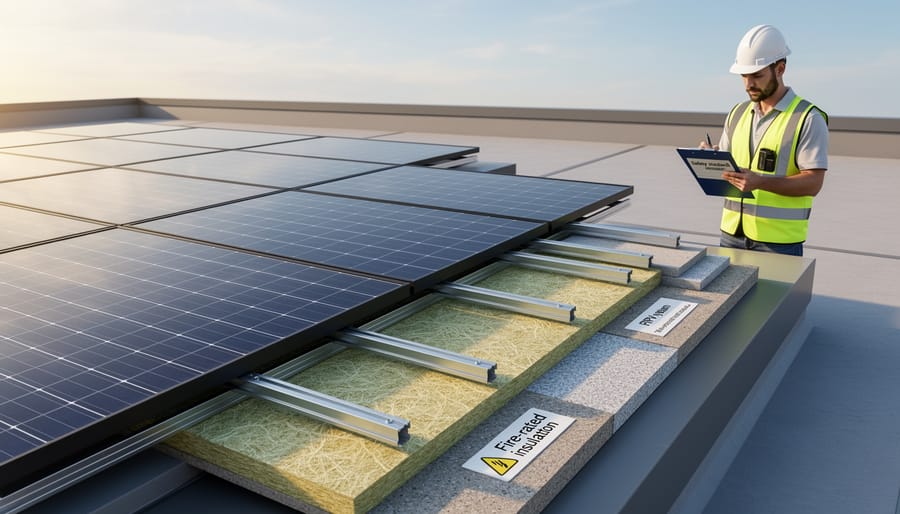
For roof assemblies incorporating BIPV technology, the insulation must contribute to the overall fire-resistance rating of the assembly, which commonly ranges from one to two hours depending on local jurisdiction requirements. Materials like mineral wool, fiberglass, and closed-cell spray foam polyurethane often meet these specifications when properly installed. However, installers must verify that manufacturer certifications align with the specific application conditions, including temperature exposure from solar panels.
The IRC Section R806 addresses attic ventilation and fire-resistance considerations that intersect with insulation performance. Additionally, NFPA 70 (National Electrical Code) Article 690 requires proper spacing and fire-resistant barriers between electrical components and combustible building materials, directly impacting insulation installation practices around junction boxes and wiring pathways. Collaboration between building officials, fire marshals, and solar contractors during the permitting process ensures all fire-rated insulation requirements are properly addressed before system activation.
UL 1703 and UL 7103 Standards for PV Modules
Underwriters Laboratories establishes critical fire safety benchmarks for photovoltaic modules through UL 1703 and the newer UL 7103 standards. UL 1703 addresses flat-plate PV modules and panels, evaluating their resistance to electrical shock, fire hazards, and structural integrity under various environmental conditions. This standard requires rigorous testing of module construction, including how components perform when exposed to heat and flame, which directly impacts the underlying insulation materials specified in residential installations.
UL 7103, introduced more recently, specifically targets building-integrated photovoltaic systems and their interface with building structures. This standard examines how PV modules interact with roofing assemblies and insulation layers, assessing fire propagation risks between the module and roof deck. For installers, understanding these standards means ensuring that insulation materials maintain their fire-resistance ratings when PV systems are added. The standards require that thermal insulation beneath modules does not compromise the overall fire classification of the roof assembly.
Compliance with these UL standards often necessitates coordination between insulation specifications and PV system design. Products certified under UL 7103 have undergone testing that validates their compatibility with specific insulation types and thicknesses, providing installers with verified configurations that meet both fire safety requirements and local building codes governing thermal performance.
Rapid Shutdown and Firefighter Safety Considerations
Insulation materials and configurations directly impact the implementation of rapid shutdown systems required by NEC Article 690.12, which mandates that PV systems reduce conductor voltage to safe levels within 30 seconds of emergency activation. Thick insulation layers in walls and roofs can complicate the installation of conductor pathways and module-level shutdown devices, potentially creating concealed spaces that obstruct emergency responder access during fire incidents.
Building-integrated photovoltaic systems installed over or within insulated assemblies must maintain clear identification of shutdown controls and emergency disconnect locations. Fire departments require immediate visual confirmation of these safety mechanisms, particularly when insulation obscures electrical components or creates thermal barriers that delay heat detection. Proper planning ensures that insulation installation doesn’t compromise the functionality of arc-fault detection devices or emergency shutdown switches mounted on exterior walls.
Coordination between insulation contractors and PV installers becomes essential to maintain code-compliant clearances around electrical equipment while preserving thermal envelope integrity. Many jurisdictions now mandate firefighter placards indicating PV system locations and rapid shutdown control points, which must remain visible despite insulation upgrades. Educational programs through university partnerships emphasize these integration challenges, training installers to document insulation configurations that facilitate both energy efficiency and emergency response protocols. Strategic planning during design phases prevents costly retrofits and ensures compliance with both insulation standards and electrical safety requirements.
Compliance Strategies for Installing BIPV With Proper Insulation
Design Phase Considerations
Successful integration of photovoltaic systems with residential insulation begins during the design phase, where careful planning prevents costly modifications and code violations later. Architects and solar designers should conduct early coordination meetings to review both electrical and building thermal envelope requirements, ensuring the proposed PV system layout accommodates necessary insulation R-values while maintaining proper ventilation pathways.
Critical design considerations include identifying roof penetration points for conduit runs, which must be sealed to preserve insulation continuity and prevent thermal bridging. When specifying building-integrated photovoltaic components, designers must verify that manufacturers provide documentation showing compliance with both fire-rated assembly requirements and thermal performance standards. This dual verification ensures the integrated system meets local building codes without compromising energy efficiency goals.
Load calculations should account for any insulation displacement caused by mounting hardware or electrical equipment, with designers specifying compensatory insulation measures where needed. Collaborative design reviews involving solar installers, electricians, and insulation contractors help identify potential conflicts before construction begins. Many universities now offer continuing education programs that address these interdisciplinary considerations, providing professionals with frameworks for integrated system design. Documentation of design decisions and code compliance strategies during this phase creates a clear roadmap for installation teams and building inspectors.
Material Selection and Compatibility
Selecting appropriate insulation materials for roofs incorporating photovoltaic systems requires careful consideration of thermal performance, fire ratings, and material compatibility. When integrating solar tiles, traditional roof shingles, or PV modules, insulation must maintain its R-value while accommodating the unique thermal dynamics created by solar installations.
Closed-cell spray foam and rigid foam boards offer excellent thermal resistance and moisture protection, making them suitable choices beneath solar arrays. However, installers must verify that selected materials meet Class A fire ratings and comply with local building codes, particularly when penetrations are required for electrical conduits or mounting hardware. Fiberglass batts remain popular due to their cost-effectiveness and proven performance, though proper air sealing becomes critical to prevent convective heat loss around mounting points.
Material compatibility extends beyond thermal properties to include chemical resistance and dimensional stability. Some foam insulations may degrade when exposed to certain sealants or mounting adhesives used in BIPV systems. Collaboration with universities has revealed that reflective barriers can enhance performance when properly installed with adequate air gaps, preventing heat buildup that could reduce PV module efficiency.
Always consult manufacturer specifications for both insulation and solar components to ensure compatibility. Educational program offerings through industry associations provide valuable training on proper material selection, helping professionals navigate the intersection of building envelope science and renewable energy integration while maintaining code compliance and system longevity.
Installation Best Practices
Proper insulation installation requires meticulous attention to sequencing and code adherence to ensure optimal thermal performance and structural integrity. Begin by verifying that the chosen insulation materials meet or exceed the R-values specified in your local building code for climate zones. Install insulation continuously across all building envelope surfaces, eliminating gaps or compression that compromise thermal efficiency.
When working with building-integrated photovoltaic systems, coordinate insulation placement with electrical conduit pathways and mounting structures to maintain continuous thermal barriers. Position vapor barriers on the warm side of the insulation assembly, typically the interior surface in heating-dominated climates, ensuring proper moisture management. Seal all penetrations and seams using approved tape or sealant to prevent air leakage.
Maintain adequate ventilation clearances between roofing materials and insulation, particularly in attic spaces where solar equipment may generate additional heat loads. Document installation procedures through photographs and material specifications to facilitate inspection approval. Ensure installers understand fire-resistance ratings and fire-stopping requirements where insulation meets electrical components.
Schedule inspections at appropriate construction phases, allowing building officials to verify insulation placement before concealment by finish materials. Collaborate with technical colleges offering training programs to stay current with evolving installation techniques and code interpretations that affect both thermal performance and renewable energy system integration.
Common Compliance Challenges and Solutions
Ventilation vs. Insulation Trade-offs
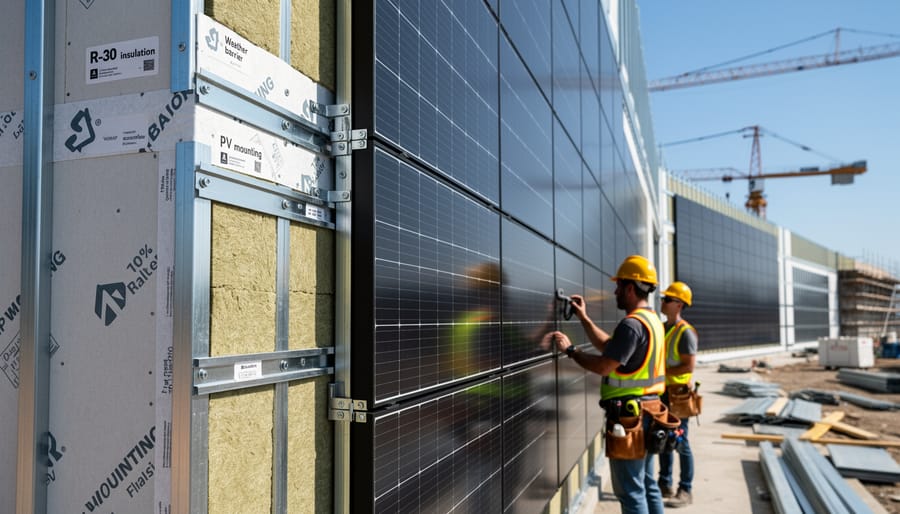
Building-integrated photovoltaic systems present a critical challenge when balancing code-required insulation with necessary ventilation for PV performance. Roof assemblies must meet thermal resistance values specified in the International Residential Code while maintaining adequate airflow to prevent module overheating, which can reduce system efficiency by 10-25 percent.
Traditional vented attic assemblies accommodate both requirements more easily, allowing insulation at the attic floor while preserving roof deck ventilation. However, unvented roof assemblies with continuous insulation create complications for PV installations. These assemblies trap heat between the roof deck and modules, potentially voiding manufacturer warranties and accelerating degradation.
The solution often involves hybrid approaches. Installing rigid foam insulation below the roof deck while maintaining a ventilated air gap above creates thermal performance without compromising PV cooling. Some jurisdictions permit reduced R-values in specific assembly sections when documented engineering analysis demonstrates equivalent performance. Research partnerships between industry stakeholders and universities have quantified these trade-offs, establishing that strategic ventilation channels can maintain 90 percent of insulation effectiveness while providing critical airflow. Professional training programs increasingly address these nuanced design considerations, equipping installers with strategies to satisfy both energy code requirements and PV system performance needs.
Retrofit Challenges in Existing Structures
Integrating BIPV retrofits into existing residential structures presents unique challenges when legacy insulation fails to meet current code requirements. Many older buildings contain outdated insulation materials with lower R-values or compromised thermal barriers that create compliance issues during solar integration projects. Before installing building-integrated photovoltaic systems, professionals must conduct comprehensive assessments to identify insulation deficiencies that could affect both energy performance and code compliance.
The primary challenge involves maintaining continuous insulation while penetrating existing building envelopes for electrical conduits and mounting systems. Installers must carefully seal all penetrations to prevent thermal bridging and moisture infiltration, which can degrade both insulation performance and system longevity. Additionally, older insulation materials may contain hazardous substances requiring special handling procedures during renovation work.
Strategic planning becomes essential when determining whether to upgrade insulation simultaneously with BIPV installation. While coordinating both improvements increases upfront costs, it maximizes long-term energy savings and ensures full code compliance. Collaboration with building inspectors early in the retrofit process helps identify specific requirements and streamline approvals, reducing project delays and ensuring installations meet contemporary safety and performance standards.
Educational Resources and Professional Development
Staying current with insulation codes and building-integrated photovoltaic (BIPV) standards requires ongoing professional development. As residential building codes evolve to accommodate renewable energy technologies, PV professionals must pursue structured educational opportunities to maintain compliance expertise and industry competitiveness.
Several pathways exist for professionals seeking specialized training in insulation code requirements as they relate to solar installations. The Interstate Renewable Energy Council (IREC) offers comprehensive certification programs that address code compliance, including modules on thermal envelope interactions with BIPV systems. These programs provide practical knowledge on navigating International Residential Code (IRC) requirements alongside National Electrical Code (NEC) standards specific to solar applications.
University partnerships have emerged as valuable resources for advanced learning. Institutions such as Arizona State University, North Carolina State University, and the University of Wisconsin offer certificate programs and continuing education courses that explore the intersection of building science and renewable energy systems. These programs typically cover thermal performance analysis, fire safety considerations, and code interpretation specific to solar installations that affect building envelopes.
Professional organizations including the North American Board of Certified Energy Practitioners (NABCEP) maintain rigorous certification standards requiring documented education in current code requirements. Maintaining these credentials necessitates continuing education credits, ensuring practitioners remain informed about updates to insulation standards and BIPV integration protocols.
Online platforms and webinar series provided by organizations like the Solar Energy Industries Association (SEIA) deliver accessible, timely updates on code changes and best practices. These resources often feature case studies demonstrating compliant installations and strategies for addressing common challenges at the insulation-BIPV interface.
Investing in professional development through these channels equips PV professionals with the technical knowledge and code fluency necessary to execute safe, compliant residential installations while advancing their careers in the expanding renewable energy sector.
Understanding residential building code insulation requirements is fundamental for professionals working with building-integrated photovoltaic systems. The intersection of thermal performance standards, fire safety protocols, and renewable energy integration creates a complex regulatory landscape that demands comprehensive knowledge and continuous attention. As building codes evolve to address energy efficiency goals and emerging technologies, professionals must remain current with amendments at international, national, and local levels.
The specialized nature of BIPV installations requires practitioners to navigate multiple code frameworks simultaneously, from International Energy Conservation Code provisions to National Fire Protection Association standards. This multifaceted compliance environment underscores the importance of ongoing professional education and training programs. Universities and industry organizations increasingly offer specialized coursework that addresses these intersections, preparing the next generation of photovoltaic professionals for the technical challenges they will encounter.
Successful implementation of residential BIPV systems depends not only on technical proficiency but also on maintaining awareness of code updates, participating in continuing education opportunities, and engaging with professional communities. The commitment to lifelong learning distinguishes competent practitioners in this rapidly advancing field, ensuring both regulatory compliance and optimal system performance.