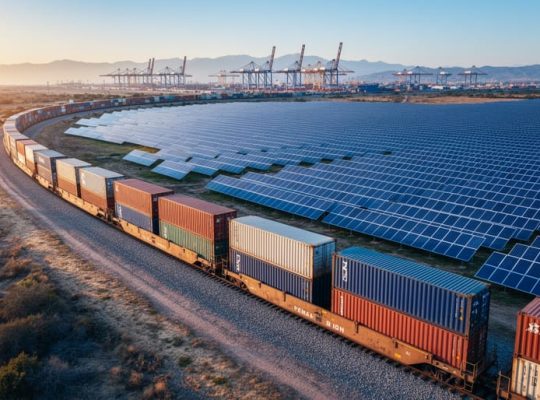
The grid connection stands as the single most critical regulatory checkpoint between solar project conception and commercial operation. An interconnection agreement establishes the technical, legal, and financial terms governing how a photovoltaic system connects to and operates within the electrical grid infrastructure. For developers, understanding this contractual framework determines project feasibility, timeline accuracy, and ultimately, return on investment.
Interconnection agreements function as binding contracts between solar system owners and utility companies, delineating responsibilities for equipment specifications, safety protocols, metering arrangements, and ongoing operational requirements. These agreements vary significantly across jurisdictions, with small residential installations typically following standardized procedures while utility-scale projects require extensive technical studies, grid impact assessments, and custom negotiations that can span multiple years.
The complexity escalates when considering queue positions, cost allocation for grid upgrades, and compliance with evolving technical standards such as IEEE 1547-2018. Recent regulatory reforms in multiple markets have attempted to streamline approval timelines, yet interconnection remains one of the primary bottlenecks constraining solar deployment rates globally. Projects frequently encounter unexpected upgrade costs, study delays, and changing requirements that can fundamentally alter project economics.
For aspiring photovoltaic professionals, mastery of interconnection processes represents essential career competency. The stakes are substantial: improper application submissions trigger costly delays, while failure to anticipate technical requirements can render projects financially unviable. This comprehensive examination addresses the interconnection landscape from initial application through commercial operation, equipping readers with practical frameworks to navigate utility relationships, technical specifications, regional variations, and common pitfalls that derail solar projects. Understanding these agreements transforms abstract regulatory requirements into actionable project development strategies.
What Is a Solar Interconnection Agreement?
The Basic Components Every Agreement Must Include
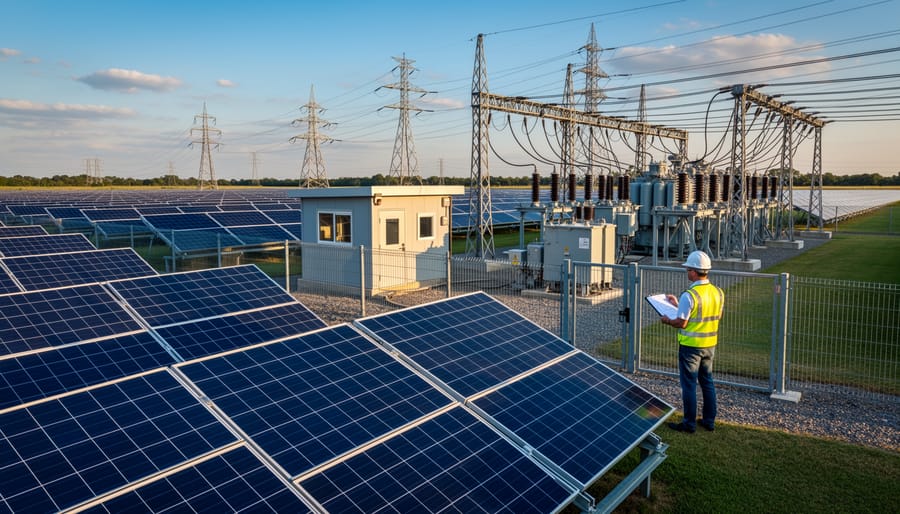
Every solar interconnection agreement, regardless of jurisdiction or system size, must contain several fundamental components to ensure safe, compliant grid integration. Understanding these elements helps stakeholders navigate the approval process effectively and establishes clear expectations between system owners and utilities.
Technical specifications form the foundation of any interconnection agreement. These clauses detail the system’s electrical characteristics, including capacity (measured in kilowatts or megawatts), voltage levels, inverter specifications, and equipment certifications. Utilities require this information to assess grid compatibility and ensure the solar installation meets IEEE 1547 standards for distributed energy resources. The agreement typically mandates that all equipment carries proper certifications from recognized testing laboratories.
Safety requirements constitute another critical component, outlining automatic disconnect mechanisms, ground fault protection, and anti-islanding provisions. These measures protect both utility workers and the public during grid maintenance or emergencies. Most agreements specify that the solar system must immediately cease energizing the grid when utility power fails.
Liability provisions allocate responsibility between parties. These clauses typically require system owners to maintain adequate insurance coverage and indemnify the utility against damages arising from the solar installation’s operation. Clear liability terms protect all stakeholders while encouraging responsible system ownership.
Metering arrangements define how energy production and consumption will be measured. The agreement specifies meter types, installation locations, and testing protocols. For net metering participants, these provisions establish credit mechanisms for excess generation.
Compensation structures vary considerably by jurisdiction but must be explicitly stated. Whether through net metering credits, feed-in tariffs, or other mechanisms, the agreement documents precisely how system owners receive value for exported electricity. These terms directly impact project economics and return on investment calculations, making them essential for financial planning.
Distributed vs. Utility-Scale Interconnection Requirements
The complexity and requirements of solar interconnection agreements differ substantially between distributed systems and utility-scale projects, reflecting the varying technical impacts on the electrical grid. Understanding these distinctions is essential for developers, installers, and solar professionals navigating the approval process.
Distributed solar systems, including residential installations (typically under 10 kW) and commercial projects (up to several megawatts), generally follow streamlined interconnection procedures. These smaller systems qualify for expedited review processes in most jurisdictions, often requiring minimal engineering studies. The agreement documentation remains relatively straightforward, focusing on basic safety protocols, equipment specifications, and net metering provisions. Many residential systems undergo automatic approval if they meet standardized technical requirements, significantly reducing approval timelines to weeks rather than months.
In contrast, utility-scale projects exceeding 20 MW face substantially more rigorous requirements. These large installations necessitate comprehensive impact studies, including system impact studies, facility studies, and sometimes cluster studies when multiple projects seek interconnection simultaneously. The agreement documentation becomes considerably more complex, addressing power quality standards, voltage regulation, fault contribution analysis, and grid stability considerations. Utility-scale developers must also secure transmission rights, potentially funding network upgrades costing millions of dollars to accommodate their generation capacity.
The financial implications differ dramatically as well. Distributed systems typically involve application fees ranging from hundreds to several thousand dollars, while utility-scale projects require deposits exceeding $100,000 and extensive legal review. Additionally, utility-scale agreements impose ongoing operational obligations, including participation in wholesale energy markets, compliance with NERC reliability standards, and coordination with transmission operators. These distinctions underscore the importance of understanding project-specific requirements early in development planning.
The Interconnection Process: From Application to Approval
Pre-Application Studies and Feasibility Assessment
Before submitting a formal interconnection application, solar project developers must conduct comprehensive pre-application studies to evaluate technical and economic viability. This preliminary assessment phase helps identify potential obstacles and ensures informed decision-making throughout the project lifecycle.
The initial step involves a grid capacity analysis, which examines the existing electrical infrastructure’s ability to accommodate the proposed solar installation. Utility companies typically provide preliminary screening tools or informal consultations to assess whether the local distribution system has adequate capacity. This analysis considers factors such as transformer ratings, voltage regulation capabilities, and existing load patterns on nearby circuits.
Impact studies represent a critical component of feasibility assessment. These evaluations determine how the solar system will affect grid stability, power quality, and existing customers. For smaller residential installations, simplified screens may suffice, while utility-scale projects require extensive power flow analyses, short-circuit studies, and voltage fluctuation assessments. Many universities collaborate with industry professionals to develop advanced modeling tools that simulate these grid interactions with increasing accuracy.
Technical feasibility evaluations also encompass site-specific considerations including available solar irradiance, land characteristics, and proximity to suitable interconnection points. Distance to the nearest viable connection significantly influences project costs, as longer transmission lines require additional infrastructure investments.
Educational programs increasingly emphasize these preliminary assessment skills, recognizing their importance in successful project development. Understanding pre-application requirements helps developers avoid costly redesigns and accelerates the overall interconnection timeline, ultimately supporting more efficient renewable energy deployment.
Technical Review and Grid Impact Studies
Before your solar installation can connect to the electrical grid, utilities conduct comprehensive technical review and grid impact studies to ensure system compatibility and network reliability. These engineering assessments form a critical checkpoint in the interconnection agreement process, evaluating how your photovoltaic system will interact with existing infrastructure.
The primary focus areas include voltage stability analysis, which determines whether your solar array might cause fluctuations that affect power quality for neighboring customers. Engineers examine how your system’s variable output during changing weather conditions or daily generation cycles might influence local voltage levels. Power quality assessments measure potential harmonic distortion and electromagnetic interference that inverter-based generation could introduce to the grid.
Protective relay coordination studies ensure that safety devices respond appropriately during fault conditions. Utilities must verify that your system’s protection equipment works harmoniously with existing grid protections, preventing false trips while maintaining quick response during genuine emergencies. This coordination becomes increasingly complex with higher concentrations of distributed generation in specific areas.
Grid upgrade requirements emerge when studies reveal that existing infrastructure cannot accommodate your proposed solar capacity without modifications. Common upgrades include transformer replacements, conductor upsizing, or voltage regulation equipment installations. These findings directly impact project economics, as developers may share costs for necessary improvements.
Academic institutions partnering with industry organizations now offer specialized training programs covering these technical studies, equipping aspiring professionals with skills to interpret study results and collaborate effectively with utility engineers. Understanding these evaluation processes enables project developers to anticipate challenges, budget appropriately, and expedite interconnection timelines.

Global Solar Grid Interconnection Partnerships: A New Paradigm
How International Agreements Differ from Domestic Interconnection
International interconnection agreements for solar projects introduce layers of complexity far beyond domestic arrangements. While domestic interconnection primarily involves navigating a single regulatory framework and utility structure, cross-border solar initiatives must reconcile divergent national standards, grid codes, and administrative procedures. This regulatory harmonization challenge requires careful analysis of each jurisdiction’s technical specifications, safety protocols, and compliance documentation.
Currency fluctuations and tariff structures present significant financial considerations in international agreements. Project developers must account for exchange rate volatility when calculating long-term revenue projections and power purchase agreement terms. Import duties on solar equipment, cross-border electricity pricing mechanisms, and international payment settlements add economic variables absent from domestic projects. These financial complexities necessitate sophisticated hedging strategies and contractual protections.
Multi-jurisdictional compliance demands expertise across multiple legal systems simultaneously. International projects must satisfy environmental impact assessments, labor regulations, and permitting requirements in each participating nation. Multilateral solar agreements exemplify how coordination between multiple countries requires extensive diplomatic frameworks to establish mutual recognition protocols and dispute resolution mechanisms.
Diplomatic considerations become paramount when sovereign nations negotiate energy interdependence. Political stability, bilateral relations, and treaty obligations influence project viability beyond purely technical factors. International interconnection agreements often incorporate governmental guarantees, sovereign risk assessments, and geopolitical contingency planning. Universities researching international renewable energy law emphasize that successful cross-border solar interconnection requires integrating technical engineering expertise with international relations proficiency. These agreements typically involve specialized international arbitration clauses and force majeure provisions addressing political risks unique to transnational infrastructure projects.
Case Studies: Successful Cross-Border Solar Interconnection Projects
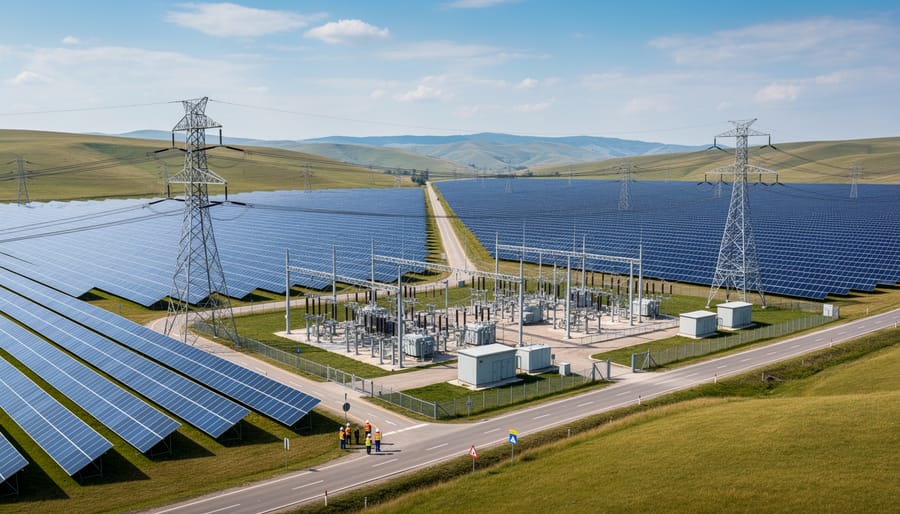
Examining real-world cross-border solar interconnection projects reveals valuable insights into how international collaboration advances renewable energy deployment and grid stability.
The Morocco-Spain interconnection represents one of the most significant cross-border renewable energy partnerships. Connected through high-voltage direct current submarine cables across the Strait of Gibraltar, this project enables bidirectional electricity flow between the two nations. Morocco’s extensive solar resources, particularly from the Noor Ouarzazate Solar Complex, can supplement Spain’s energy needs during peak demand periods. The interconnection agreement establishes clear protocols for capacity allocation, transmission pricing, and regulatory coordination between Moroccan and Spanish grid operators. This partnership demonstrates how solar power integration across borders can optimize resource utilization while maintaining grid reliability.
India’s One Sun One World One Grid initiative exemplifies ambitious multinational coordination. This framework envisions interconnecting solar resources across time zones and geographical boundaries, enabling continuous solar energy availability. The initiative focuses on establishing technical standards for cross-border power transmission, harmonizing regulatory frameworks among participating nations, and developing financial mechanisms to support infrastructure development. Initial pilot projects connecting South Asian and Middle Eastern grids provide practical testing grounds for these interconnection agreements, addressing challenges like voltage synchronization, settlement systems, and dispute resolution mechanisms.
Regional partnerships in Southeast Asia further illustrate successful implementation strategies. The ASEAN Power Grid initiative connects member nations through standardized interconnection protocols, facilitating renewable energy trading. These agreements specify technical requirements for frequency control, voltage regulation, and protection systems while establishing commercial frameworks for capacity markets and energy exchanges.
These case studies highlight essential elements for successful cross-border solar interconnection: robust technical specifications, transparent regulatory frameworks, equitable cost-sharing mechanisms, and strong political commitment. Academic institutions increasingly collaborate with project developers to document lessons learned, providing educational resources for aspiring photovoltaic professionals navigating international interconnection complexities.
Technical Standards and Grid Code Compliance
Inverter Requirements and Grid Support Functions
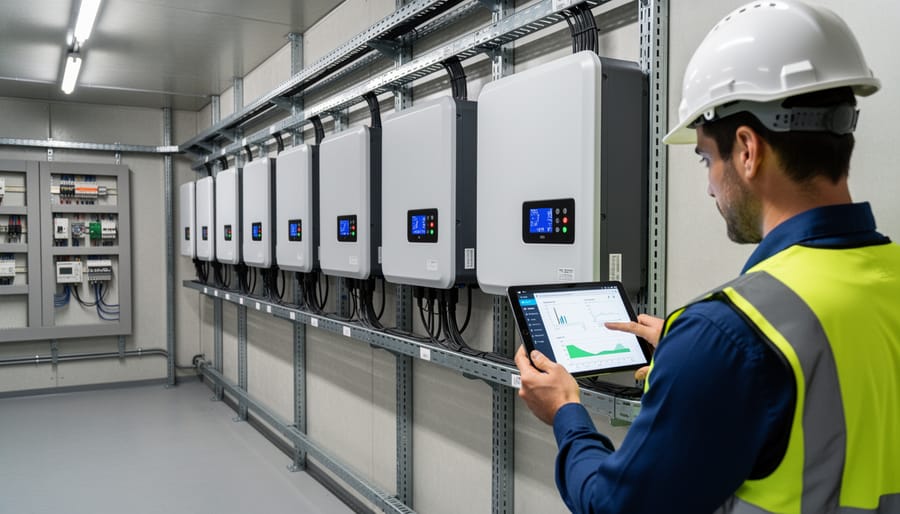
Modern solar inverters serve as sophisticated grid-interactive devices, extending far beyond simple DC-to-AC conversion. Interconnection agreements increasingly mandate advanced grid support functions that enable solar installations to actively contribute to power system stability and reliability.
Reactive power support stands as a fundamental requirement, where inverters must supply or absorb reactive power (measured in VARs) to help maintain grid voltage within acceptable parameters. Most utility agreements now require solar systems to operate at power factors ranging from 0.95 leading to 0.95 lagging, allowing voltage regulation without consuming real power. This capability proves particularly valuable during high solar generation periods when voltage levels may rise above nominal values.
Low-voltage ride-through (LVRT) functionality ensures that solar systems remain connected during brief voltage sags or disturbances, rather than immediately disconnecting and exacerbating grid instability. Modern interconnection standards typically require inverters to withstand voltage drops to 50% of nominal for several seconds, continuing to inject current that supports voltage recovery. This requirement mirrors capabilities long expected from conventional generators.
Frequency regulation capabilities enable inverters to respond to grid frequency deviations by adjusting their power output. When frequency drops below nominal values (indicating insufficient generation), inverters may reduce output momentarily to help stabilize the system. Conversely, some advanced systems can increase output during high-frequency events if headroom exists.
These technical capabilities represent a paradigm shift from passive energy sources to active grid participants, fundamentally reshaping how utilities view distributed solar resources within interconnection frameworks.
Common Challenges and How to Overcome Them
Queue Backlogs and Lengthy Approval Times
Interconnection queues across North America and globally face unprecedented backlogs, with average waiting times extending from several months to multiple years. The Federal Energy Regulatory Commission reports that processing times in some United States regional transmission organizations have reached 36 months or longer, creating substantial financial uncertainty for solar developers and delaying clean energy deployment targets. These systemic delays stem from inadequate staffing at utility companies, outdated study procedures, and the sheer volume of applications as renewable energy projects proliferate.
Several jurisdictions have initiated reform efforts to address these bottlenecks. FERC Order 2023, implemented in 2023, introduced significant process improvements including transition to a first-ready, first-served cluster study approach, stricter financial commitments from applicants to reduce speculative projects, and standardized timelines for utility responses. State-level initiatives complement federal reforms, with California, New York, and other leading markets establishing independent monitoring programs and penalty structures for utilities that miss processing deadlines.
Project developers can employ strategic approaches to expedite their applications. Submitting technically complete applications with comprehensive site control documentation and preliminary engineering studies reduces information requests and revision cycles. Engaging experienced interconnection consultants familiar with specific utility procedures proves valuable for navigating regional requirements efficiently. Additionally, pursuing interconnection at substations with available hosting capacity, identified through utility transparency portals and hosting capacity maps, significantly reduces study complexity and approval timeframes. Academic institutions partnering with industry stakeholders continue researching queue optimization methodologies to inform future policy improvements and streamline renewable energy integration.
Unexpected Upgrade Costs and Cost Allocation Disputes
One of the most significant challenges in solar interconnection involves unexpected infrastructure upgrade costs. When a solar installation exceeds the grid’s existing capacity, utilities may require substantial improvements to transformers, distribution lines, or substations. These upgrades can range from minor equipment modifications costing several thousand dollars to major system enhancements exceeding hundreds of thousands of dollars, potentially threatening project viability.
Cost allocation disputes frequently arise because interconnection agreements must clearly define financial responsibility. Under most regulatory frameworks, developers bear costs for facilities exclusively serving their project, while shared network upgrades may be allocated among multiple generators or recovered through utility rates. However, the distinction between direct connection facilities and system upgrades often becomes contentious, particularly when utilities cite reliability standards or capacity constraints.
Effective negotiation strategies begin with thorough impact studies during the application phase. Request detailed engineering assessments identifying specific upgrade requirements and cost justifications. Challenge assumptions by obtaining independent technical reviews, especially for disproportionately high estimates. Consider clustering projects with other developers to share network upgrade expenses, a strategy increasingly common in renewable energy zones.
Understanding precedent agreements in your jurisdiction provides valuable leverage. Many regulatory commissions have established cost-sharing methodologies or maximum cost thresholds that limit developer exposure. Academic researchers and industry stakeholders have documented successful appeals where utilities failed to demonstrate upgrade necessity or proposed economically inefficient solutions.
Proactive engagement with utilities early in project development, combined with comprehensive technical documentation and knowledge of regulatory frameworks, significantly improves outcomes when navigating upgrade cost negotiations and allocation disputes.
The Business and Financial Implications
Interconnection agreements fundamentally shape the economic landscape of solar projects, influencing everything from initial capital investment to long-term revenue generation. For solar developers, securing a favorable interconnection agreement is essential to project bankability—the ability to attract financing from investors and lenders who scrutinize grid connection certainty before committing funds.
The financial implications begin with upfront costs. Interconnection studies, application fees, and required grid upgrades can represent significant capital expenditures, sometimes reaching hundreds of thousands of dollars for utility-scale projects. These costs directly impact project return on investment calculations and must be factored into initial feasibility assessments. Developers often negotiate cost allocation methodologies with utilities, determining whether upgrade expenses will be borne entirely by the project or shared across multiple beneficiaries.
Power Purchase Agreements (PPAs) depend heavily on interconnection timelines and capacity allocation. A signed PPA means nothing without grid access, making the interconnection agreement a prerequisite for revenue certainty. Delays in interconnection approval can trigger force majeure clauses, potentially voiding PPAs or requiring renegotiation of terms. Moreover, curtailment provisions within interconnection agreements—which allow utilities to reduce solar output during grid congestion—directly diminish revenue streams and affect long-term financial projections.
Project viability assessments must account for interconnection queue position, as lengthy wait times can erode project economics through equipment price fluctuations and changing incentive structures. Understanding these dynamics is particularly crucial in public-private solar frameworks, where multiple stakeholders share financial risks and require transparent cost allocation mechanisms.
Universities partnering with solar developers increasingly incorporate interconnection economics into their renewable energy curricula, recognizing that aspiring PV professionals must understand these financial interdependencies to successfully navigate project development from conception through commercial operation.
Interconnection agreements represent far more than administrative paperwork—they constitute the essential framework enabling solar energy systems to deliver power reliably and safely to the electrical grid. As this article has explored, successful project deployment hinges on understanding technical specifications, navigating utility requirements, and addressing regulatory compliance throughout the interconnection process. The complexity of these agreements underscores why comprehensive preparation is indispensable for photovoltaic professionals entering this dynamic field.
The landscape continues evolving rapidly through initiatives like Global Solar Grid Interconnection Partnerships, which are reshaping how renewable energy integrates across borders and utility territories. These collaborative frameworks introduce new technical standards, cross-jurisdictional protocols, and innovative grid management strategies that tomorrow’s solar professionals must master. The transition toward increasingly sophisticated interconnection requirements demands that industry practitioners stay current with emerging technologies, policy developments, and international best practices.
Mose Solar’s educational mission directly addresses these challenges by equipping aspiring professionals with the knowledge and skills necessary to navigate interconnection complexities confidently. Through partnerships with universities and specialized solar training programs, we prepare the next generation of energy leaders to manage technical specifications, negotiate utility agreements, and implement solutions that accelerate solar adoption. Understanding interconnection agreements thoroughly positions professionals to overcome barriers, reduce project timelines, and contribute meaningfully to the global renewable energy transition.