Z-Wave technology revolutionizes home automation by creating a robust, low-power mesh network that enables seamless communication between smart devices, leading to enhanced smart home energy savings and improved efficiency. Operating on a dedicated frequency band around 900 MHz, this wireless protocol eliminates interference from Wi-Fi networks while providing superior range and reliability compared to traditional smart home solutions. As a cornerstone of modern home automation, Z-Wave’s interoperability standards ensure that over 3,300 certified products from different manufacturers work harmoniously together, creating a unified ecosystem that adapts to evolving technological needs.
The protocol’s mesh networking capability allows each device to act as a signal repeater, extending coverage throughout large homes and complex building layouts while maintaining consistent performance. This sophisticated yet user-friendly technology represents a significant advancement in residential automation, offering professional-grade control systems that were previously available only in commercial settings. For industry professionals and homeowners alike, understanding Z-Wave’s capabilities is essential for implementing effective, future-proof smart home solutions.
What Makes Z-Wave Technology Different
Mesh Network Architecture
Z-Wave’s mesh network architecture represents a sophisticated approach to home automation connectivity, enabling devices to communicate efficiently across the entire living space. In this network topology, each powered Z-Wave device acts as both a signal transmitter and a repeater, creating multiple pathways for commands to reach their destination.
The mesh network operates by identifying the most reliable route between the controller and the target device. If one path becomes unavailable or experiences interference, the network automatically reroutes communications through alternative paths, ensuring consistent performance. This self-healing capability significantly enhances system reliability and eliminates single points of failure.
Z-Wave devices can communicate up to 100 meters in open space, but the mesh network architecture extends this range considerably within buildings. Each device in the network can relay signals to others, creating a daisy-chain effect that effectively increases the overall coverage area. A single Z-Wave network can support up to 232 devices, making it suitable for both small apartments and large residential properties.
The mesh network’s dynamic routing capabilities also contribute to energy efficiency. By optimizing signal paths and reducing transmission power requirements, devices can operate more efficiently while maintaining reliable connectivity. This architecture proves particularly valuable in larger homes or buildings where traditional point-to-point wireless solutions might struggle to maintain consistent coverage.

Low-Power Operation
Z-Wave’s low-power operation is a fundamental aspect of its design, making it particularly suitable for battery-powered devices and energy-efficient home automation systems. The protocol utilizes short-duration radio frequency transmissions, typically operating at 908.42 MHz in North America and 868.42 MHz in Europe, which consumes minimal power during communication events.
The technology implements sophisticated power management strategies, including sleep modes where devices remain dormant until required to transmit or receive data. During these sleep periods, power consumption can be as low as a few microamps, extending battery life significantly. Devices only “wake up” periodically to check for messages or when triggered by specific events, such as sensor activation.
This energy-efficient communication protocol employs a mesh network topology, where each powered device can act as a signal repeater. This architecture not only extends network range but also optimizes power usage by allowing battery-operated devices to transmit signals through shorter distances to the nearest powered node, rather than attempting long-range communication directly to the central controller.
Z-Wave devices are designed to operate for extended periods on standard batteries, with many products achieving 2-5 years of operation on a single set of batteries under normal usage conditions. This long battery life is achieved through careful optimization of transmission power levels and communication intervals, making Z-Wave an ideal choice for sustainable home automation solutions.

Energy Management Applications
Smart Thermostats and HVAC Control
Z-Wave technology has revolutionized HVAC control systems by enabling precise, automated management of heating and cooling equipment. Smart thermostats integrated with Z-Wave protocols offer sophisticated temperature control while maximizing energy efficiency. The benefits of smart thermostats include remote accessibility, learning capabilities, and seamless integration with other Z-Wave devices.
These intelligent systems utilize Z-Wave’s mesh network architecture to maintain reliable communication between the thermostat and central HVAC components. The protocol’s low-power consumption characteristics make it ideal for continuous operation while minimizing energy usage. Advanced scheduling features allow users to create customized temperature profiles based on occupancy patterns and time-of-day preferences.
Z-Wave thermostats can also integrate with environmental sensors throughout the home, enabling zone-based temperature control for optimal comfort and efficiency. The system’s ability to respond to real-time conditions, such as humidity levels and outdoor temperatures, ensures precise climate management while reducing energy waste.
For commercial applications, Z-Wave HVAC controls offer comprehensive building automation capabilities, including occupancy-based conditioning and integration with energy management systems. The protocol’s secure encryption ensures protected operation of critical climate control functions while maintaining compatibility with existing building management infrastructure.
Automated Lighting Systems
Z-Wave automated lighting systems represent a significant advancement in energy-efficient home management, offering precise control over illumination while reducing unnecessary power consumption. These systems integrate seamlessly into the Z-Wave mesh network, allowing users to manage individual lights or groups of fixtures through centralized controllers or mobile applications.
The primary components include Z-Wave enabled smart bulbs, switches, and dimmers that communicate wirelessly within the network. These devices can be programmed to respond to various triggers, including motion detection, ambient light levels, time schedules, or manual commands. The system’s intelligent scheduling capabilities enable automatic adjustment of lighting intensity based on time of day, occupancy patterns, and natural light availability.
Energy savings are achieved through multiple mechanisms: automated shut-off when rooms are unoccupied, dimming capabilities that reduce power consumption while maintaining adequate illumination, and scheduling features that ensure lights operate only when needed. Studies have shown that automated lighting systems can reduce lighting-related energy consumption by 20-60%, depending on implementation and usage patterns.
Advanced features include scene creation, where multiple lights can be configured to specific brightness levels for different activities or times of day. Integration with other Z-Wave devices enables comprehensive automation scenarios, such as automatically adjusting lighting based on security system status or entertainment preferences. The system’s reliability is enhanced by Z-Wave’s mesh networking capabilities, ensuring consistent performance across larger spaces and multiple floors.
Solar PV Integration
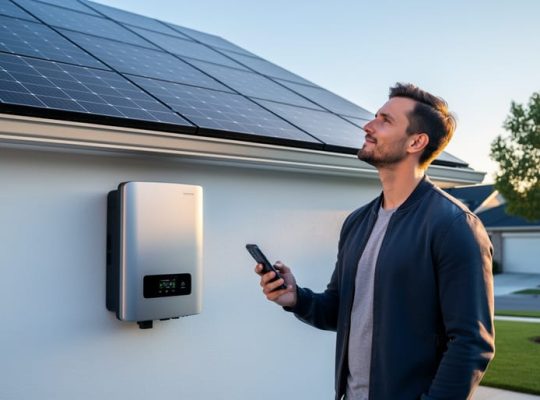
Z-Wave technology has emerged as a crucial component in modern solar photovoltaic (PV) systems, enabling smarter energy management and enhanced system performance. By integrating Z-Wave enabled devices with solar installations, property owners can maximize solar panel efficiency through automated monitoring and control systems.
The technology facilitates real-time communication between solar inverters, battery storage systems, and home energy management systems (HEMS). This seamless integration allows for intelligent load balancing, ensuring optimal energy distribution throughout the property. Z-Wave enabled smart meters and monitoring devices provide detailed insights into energy production and consumption patterns, helping system owners make informed decisions about their energy usage.
Key benefits of Z-Wave integration in solar PV systems include automated panel positioning for optimal sun exposure, smart inverter management for improved power conversion efficiency, and intelligent storage system control. The technology’s mesh network architecture ensures reliable communication between components, even in large installations with multiple monitoring points.
Furthermore, Z-Wave’s low-power consumption characteristics make it particularly suitable for solar applications, as it minimizes the energy overhead of the monitoring and control systems. The protocol’s standardized approach to device communication also ensures compatibility across different manufacturers’ components, simplifying system integration and future upgrades.
Implementation and Setup
Hardware Requirements
A Z-Wave smart home system requires several essential components to function effectively. At the core of every Z-Wave network is the primary controller, typically a smart home hub or gateway, which serves as the central command center for all connected devices. This controller manages network traffic, stores device configurations, and enables user interaction through mobile apps or web interfaces.
The network must include at least one Z-Wave certified device, such as sensors, switches, or actuators. These devices contain Z-Wave radio chips that enable wireless communication within the mesh network. Common Z-Wave devices include smart thermostats, door locks, lighting controls, motion sensors, and power meters.
To ensure optimal performance, Z-Wave systems require strategic device placement. Since Z-Wave operates on a mesh network topology, devices should be positioned within 100 feet of at least one other Z-Wave device indoors, though range can vary based on building materials and environmental factors.
Power requirements vary by device type. While some components, like light switches and outlets, connect directly to household power, others operate on batteries. Battery-powered devices typically use standard AA, AAA, or coin cell batteries, with life spans ranging from 6 months to 2 years depending on usage patterns.
For system expansion, users should verify compatibility between new devices and their existing controller, as different Z-Wave generations may have varying capabilities and security features.

Network Configuration
Setting up a Z-Wave network requires careful planning and execution to ensure optimal performance. Begin by selecting a primary controller, typically a smart home hub, which will serve as the network’s command center. Position this controller centrally within your home to maximize signal coverage and network reliability.
The initial network configuration involves including devices through a process called “pairing” or “inclusion.” This is accomplished by activating the controller’s inclusion mode and triggering the device’s pairing function, usually by pressing a designated button. Devices should be added sequentially, starting with those closest to the controller and gradually expanding outward.
To optimize network performance, consider the placement of Z-Wave devices to create effective signal paths. Each powered device acts as a network repeater, strengthening the mesh network. Strategic placement of repeating nodes can significantly improve network coverage and reliability. Maintain a minimum distance of 1 meter between devices to prevent signal interference while ensuring they remain within the recommended range of 30-100 feet.
Network optimization includes regular maintenance tasks such as updating device firmware, removing defunct devices, and conducting periodic network healing. The healing process reorganizes communication paths to ensure optimal routing efficiency. For larger installations, consider using a network analyzer tool to identify potential signal bottlenecks and optimize device placement accordingly.
Document your network configuration, including device locations and network topology, to facilitate future troubleshooting and expansion.
Integration with Existing Systems
Z-Wave technology’s ability to integrate with existing home automation systems and protocols enhances its value in comprehensive energy management solutions. Through gateway controllers and smart hubs, Z-Wave devices can communicate effectively with other prominent protocols such as Zigbee, Wi-Fi, and Bluetooth devices, creating a unified smart home ecosystem.
The protocol’s interoperability is achieved through certified gateway devices that act as translators between different communication standards. These gateways enable seamless integration with building management systems (BMS), energy monitoring platforms, and renewable energy installations, allowing for coordinated control of various home systems.
Modern energy management systems particularly benefit from Z-Wave integration, as the protocol enables real-time monitoring and automated responses to energy consumption patterns. For instance, Z-Wave-enabled smart thermostats can coordinate with solar inverters to optimize energy usage based on solar production levels, while smart plugs can automatically manage power distribution during peak demand periods.
Security systems also integrate well with Z-Wave networks, allowing for conditional automation based on security states. When paired with energy monitoring systems, this integration enables sophisticated scenarios such as automatically adjusting HVAC settings when security systems detect vacant rooms or managing lighting based on occupancy patterns.
For professional installations, Z-Wave’s certification process ensures reliable communication between different manufacturers’ devices, simplifying system integration and maintenance while providing consistent performance across various applications.
Z-Wave technology stands as a pivotal solution in advancing home energy efficiency, offering a robust framework for intelligent energy management and automated control systems. Through its mesh network architecture and standardized communication protocols, Z-Wave enables homeowners to achieve significant energy savings while maintaining optimal comfort levels throughout their living spaces.
The technology’s proven track record in reducing energy consumption through smart thermostats, automated lighting controls, and intelligent power management systems demonstrates its practical value in sustainable living. Research indicates that homes equipped with Z-Wave-enabled devices can achieve energy savings of up to 30% compared to conventional systems, making it a compelling choice for environmentally conscious consumers.
Looking ahead, Z-Wave technology is positioned for continued growth and innovation. The increasing focus on environmental sustainability and energy efficiency regulations worldwide will likely accelerate its adoption in both residential and commercial applications. Future developments are expected to include enhanced integration capabilities with renewable energy systems, more sophisticated energy monitoring tools, and improved battery efficiency for wireless devices.
As smart home technology evolves, Z-Wave’s commitment to backward compatibility and security ensures that current investments in Z-Wave devices will remain valuable and functional. This technological foundation, combined with ongoing advancements in energy management algorithms and device capabilities, positions Z-Wave as a cornerstone technology in the future of sustainable, energy-efficient homes.