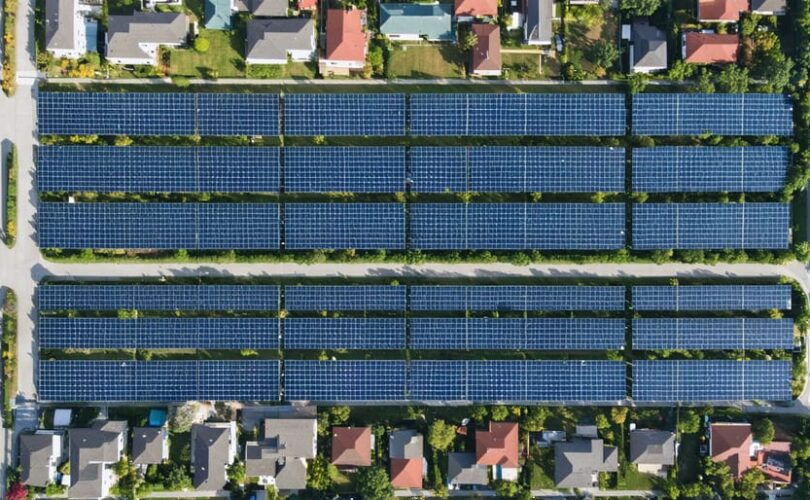
Community solar represents a groundbreaking shift in renewable energy accessibility, enabling multiple participants to share the benefits of a single solar installation without requiring individual rooftop systems. This innovative approach democratizes solar power by allowing residents, businesses, and organizations to subscribe to or own portions of centralized solar facilities, receiving credits on their electricity bills for their share of the generated power.
As utilities and policymakers increasingly recognize the potential of shared solar programs, these installations have emerged as a crucial solution for expanding clean energy access to previously excluded groups – including renters, apartment dwellers, and properties unsuitable for solar panels. The model addresses both environmental justice and energy equity by making solar benefits available regardless of home ownership status or income level.
The fundamental mechanics of community solar combine sophisticated energy distribution systems with streamlined subscription models, creating a framework where participants can support renewable energy development while potentially reducing their electricity costs. This arrangement provides a practical pathway for communities to accelerate their transition to sustainable energy sources while ensuring the economic advantages are distributed across diverse demographic groups.
The Core Mechanics of Community Solar Projects
Solar Farm Infrastructure
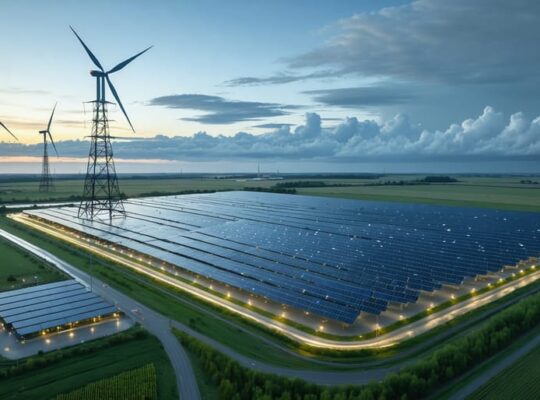
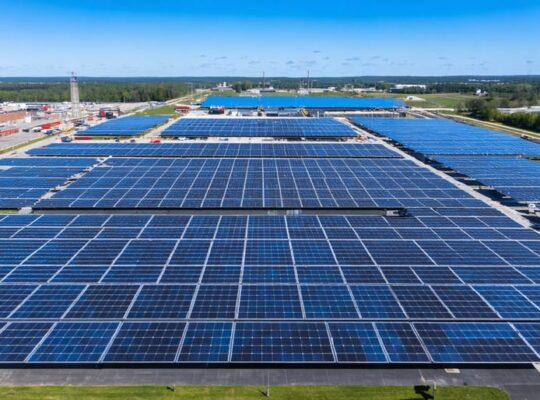
Community solar farms consist of sophisticated infrastructure designed to harness solar energy efficiently at scale. The foundation of these installations is an array of advanced solar panel technology, typically ground-mounted across several acres of land. These installations utilize industrial-grade photovoltaic modules arranged in organized rows to maximize sun exposure and energy generation potential.
The core infrastructure includes robust mounting systems, engineered to withstand various weather conditions while maintaining optimal panel orientation. Inverters convert the DC power generated by solar panels into grid-compatible AC power, while sophisticated monitoring systems track performance metrics in real-time. Smart meters measure electricity production and distribution among subscribers.
Essential support equipment includes transformers, switchgear, and protective devices that ensure safe power transmission to the utility grid. The site typically features access roads, security fencing, and vegetation management systems to maintain operational efficiency. Underground cabling connects array sections and carries power to the point of interconnection with the electrical grid.
Modern community solar installations often incorporate tracking systems that allow panels to follow the sun’s path, enhancing energy yield. Storm water management systems and ecological corridors are integrated to minimize environmental impact. Many facilities also include data acquisition systems that enable remote monitoring and maintenance scheduling, ensuring optimal performance throughout the system’s lifecycle.

Subscription Models and Credit Systems
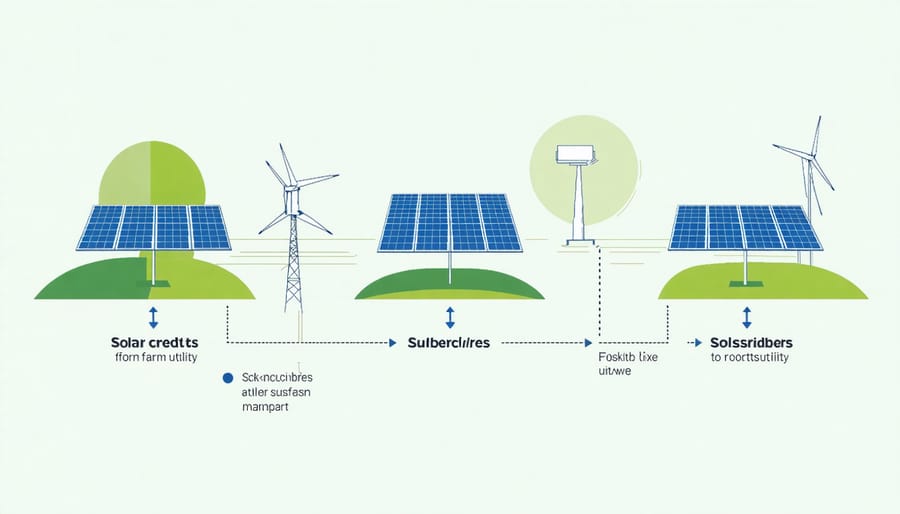
Community solar projects typically operate through two primary subscription models: ownership-based and subscription-based participation. In ownership-based models, participants purchase a specific portion of the solar array’s panels, while subscription-based models allow participants to subscribe to a portion of the system’s output without direct ownership.
The backbone of community solar operations is the renewable energy credit system, which enables the equitable distribution of solar benefits. When the solar array generates electricity, the utility company tracks this production and allocates credits to subscribers’ electricity bills based on their participation level. These credits directly reduce participants’ monthly utility costs.
Subscription terms typically range from 12 months to 20 years, with flexibility for participants to transfer or cancel their subscription if they relocate within the utility’s service territory. Credit allocation is usually proportional to the subscriber’s share size, which can be determined by either their historical energy consumption or a fixed capacity amount.
Most programs offer guaranteed savings compared to standard utility rates, typically ranging from 5% to 15%. The billing process remains streamlined, as participants continue to receive a single bill from their utility company, with the solar credits automatically applied. This integration ensures a seamless experience while maintaining transparency in energy accounting and savings calculations.
Policy Framework and Regulations
State-Level Policies
State-level policies governing community solar programs vary significantly across jurisdictions, creating a diverse regulatory landscape that shapes program implementation and accessibility. Many states have enacted specific legislation to enable community solar development, establishing frameworks for project capacity limits, subscriber eligibility, and compensation mechanisms.
Leading states like Minnesota and Massachusetts have implemented comprehensive community solar policies that serve as models for other regions. Minnesota’s program, for instance, requires utilities to purchase energy from community solar gardens at rates determined by the state’s Public Utilities Commission. Massachusetts incorporates community solar into its broader Solar Massachusetts Renewable Target (SMART) program, providing incentives for development while ensuring equitable access.
Key policy components typically address subscription requirements, project size limitations, and geographic restrictions. Some states mandate that subscribers must be located within the same utility service territory as the solar installation, while others allow broader participation. Project size caps range from hundreds of kilowatts to several megawatts, depending on state regulations.
Compensation structures also differ significantly. While some states employ virtual net metering, others use value-of-solar tariffs or bill credits based on retail rates. Many states require a minimum percentage of low-to-moderate income (LMI) subscribers, promoting energy equity and broader community participation.
Program oversight varies by state, with public utilities commissions typically responsible for regulation and implementation. States may also establish consumer protection measures, including standardized disclosure requirements and contract terms, to safeguard subscriber interests and ensure program transparency.
Federal Support and Incentives
Community solar projects benefit from various federal solar incentives and support mechanisms designed to accelerate renewable energy adoption. The Investment Tax Credit (ITC) stands as one of the most significant federal incentives, allowing project developers to claim up to 30% of the installation costs as a tax credit. This benefit can be transferred to subscribers through reduced subscription rates and lower overall project costs.
The Department of Energy’s Solar Energy Technologies Office (SETO) provides grants and technical assistance to community solar initiatives, particularly those serving low-income communities and implementing innovative deployment models. These programs often support feasibility studies, technical analysis, and community engagement efforts essential for project success.
Additionally, the Rural Energy for America Program (REAP) offers grants and loan guarantees specifically for rural community solar developments. These resources help agricultural producers and rural small businesses participate in renewable energy projects while reducing their operational costs.
Federal support extends to research and development through national laboratories and cooperative agreements with utilities. These partnerships advance technological innovations, improve project efficiency, and develop best practices for community solar implementation. The National Community Solar Partnership, launched by the Department of Energy, facilitates knowledge sharing and provides technical assistance to stakeholders across the country.
Recent federal legislation has enhanced these support mechanisms, introducing new provisions for energy storage integration and grid modernization that complement community solar installations. These comprehensive federal programs create a supportive framework for expanding community solar access while ensuring project viability and long-term sustainability.
Benefits and Implementation Challenges
Environmental and Economic Advantages
Community solar projects offer substantial environmental and economic advantages that benefit both participants and the broader community. These installations significantly reduce greenhouse gas emissions by replacing fossil fuel-based energy generation with clean, renewable power. A typical community solar array can offset thousands of metric tons of carbon dioxide annually, equivalent to removing hundreds of vehicles from the roads.
Participants experience direct solar energy cost savings through reduced electricity bills, often achieving 10-20% reductions in their monthly energy expenses. Unlike individual rooftop installations, community solar eliminates the need for substantial upfront investments and ongoing maintenance costs, making renewable energy accessible to a broader demographic, including renters and residents of multi-unit buildings.
These projects stimulate local economies by creating jobs in installation, maintenance, and administration. Studies indicate that community solar installations generate more local employment opportunities per megawatt than conventional power plants. Additionally, they increase property tax revenue for municipalities while utilizing land efficiently, often incorporating dual-use strategies such as agricultural production beneath solar panels.
Environmental benefits extend beyond carbon reduction. Community solar projects can enhance biodiversity through thoughtful land management practices, reduce water consumption compared to traditional power generation, and improve local air quality. They also strengthen grid resilience by diversifying energy sources and reducing transmission losses through localized generation.
Furthermore, these installations serve as educational platforms for communities, fostering environmental awareness and promoting sustainable energy practices among residents. This educational component creates long-term value by cultivating informed energy consumers and future sustainability advocates.
Development and Management Hurdles
Community solar projects face several significant development and management challenges that require careful planning and strategic solutions. Initial capital requirements often present the first major hurdle, as these projects demand substantial upfront investment for equipment, land acquisition, and infrastructure development. Project developers must secure financing through various channels, including private investors, grants, and financial institutions familiar with renewable energy initiatives.
Subscriber acquisition and retention pose ongoing challenges for project managers. Effective marketing strategies must be implemented to attract participants while maintaining clear communication about benefits and obligations. Long-term subscriber engagement requires robust customer service systems and transparent billing processes to ensure participant satisfaction and project sustainability.
Site selection presents another crucial consideration, as projects need suitable land with adequate solar exposure, proximity to electrical infrastructure, and appropriate zoning designations. Environmental impact assessments and local permitting processes can introduce delays and additional costs to development timelines.
Technical challenges include grid interconnection requirements, system maintenance, and performance monitoring. Project managers must establish reliable partnerships with qualified contractors and implement comprehensive maintenance protocols to ensure optimal system performance throughout the project’s lifecycle.
Policy and regulatory compliance add another layer of complexity. Projects must navigate varying state regulations, utility requirements, and incentive program guidelines. Successful development often requires collaboration with legal experts and regulatory consultants to ensure compliance while maximizing available benefits.
To address these challenges, successful community solar programs typically employ dedicated project management teams, maintain strong stakeholder relationships, and implement sophisticated software systems for subscriber management and performance tracking. Regular evaluation of operational procedures and adaptation to changing market conditions ensure long-term project viability.
Community solar represents a transformative approach to renewable energy adoption, offering a viable solution for those previously excluded from solar power benefits. As demonstrated throughout this discussion, these projects successfully bridge the gap between individual solar installations and utility-scale facilities, creating accessible clean energy opportunities for diverse participants.
The future outlook for community solar remains overwhelmingly positive, with projections indicating substantial growth in both project development and subscriber participation. Industry analysts forecast that community solar capacity could exceed 4.5 GW by 2025, representing a significant expansion from current levels. This growth is driven by continuing technological improvements, decreasing installation costs, and evolving policy frameworks that facilitate project development.
Several key factors will influence the continued evolution of community solar programs. State-level policies and regulatory frameworks will play a crucial role in determining market expansion. Additionally, innovations in project financing and subscription models will likely enhance accessibility and economic benefits for participants. The integration of energy storage solutions and smart grid technologies promises to further optimize community solar operations and grid integration.
For stakeholders considering involvement in community solar initiatives, whether as developers, subscribers, or policymakers, understanding these fundamentals proves essential. As the renewable energy landscape continues to evolve, community solar stands poised to play an increasingly vital role in achieving clean energy goals while fostering economic development and energy equity across communities.