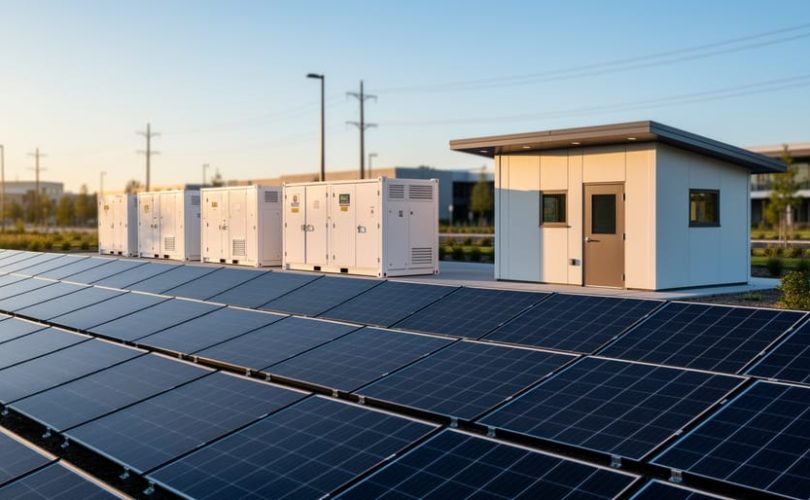
Solar photovoltaic microgrids represent a paradigm shift in energy distribution, combining distributed generation, intelligent controls, and energy storage to create self-sufficient power networks that operate independently or in conjunction with the central grid. Unlike conventional solar installations that simply feed electricity into existing infrastructure, microgrids integrate generation, storage, and load management into autonomous systems capable of islanding during grid disruptions while optimizing renewable energy utilization.
These systems address critical energy challenges in diverse applications—from remote communities lacking grid access to industrial facilities requiring uninterrupted power, campus environments seeking sustainability goals, and disaster-prone regions needing resilient infrastructure. The technology encompasses advanced components including photovoltaic arrays, battery energy storage systems, power conversion equipment, and sophisticated energy management software that coordinates generation with consumption patterns in real-time.
Understanding microgrid architecture requires examining three operational modes: grid-connected operation where systems exchange power bidirectionally with utilities, islanded mode enabling autonomous function during outages, and hybrid configurations that strategically leverage both capabilities. Design considerations extend beyond component selection to encompass load profiling, renewable resource assessment, storage sizing, protection coordination, and regulatory compliance—factors that distinguish professional microgrid development from basic solar installations.
The expanding microgrid sector creates substantial career opportunities for photovoltaic professionals equipped with interdisciplinary knowledge spanning electrical engineering, control systems, energy policy, and project management. Academic institutions and industry leaders increasingly collaborate to develop specialized training programs addressing this skills gap, offering pathways for aspiring professionals to gain comprehensive technical expertise. This article examines the technical foundations, practical applications, and design methodologies essential for anyone seeking to understand or contribute to this transformative energy solution.
What Makes a Microgrid Solar System Different
Core Components of a Solar Microgrid
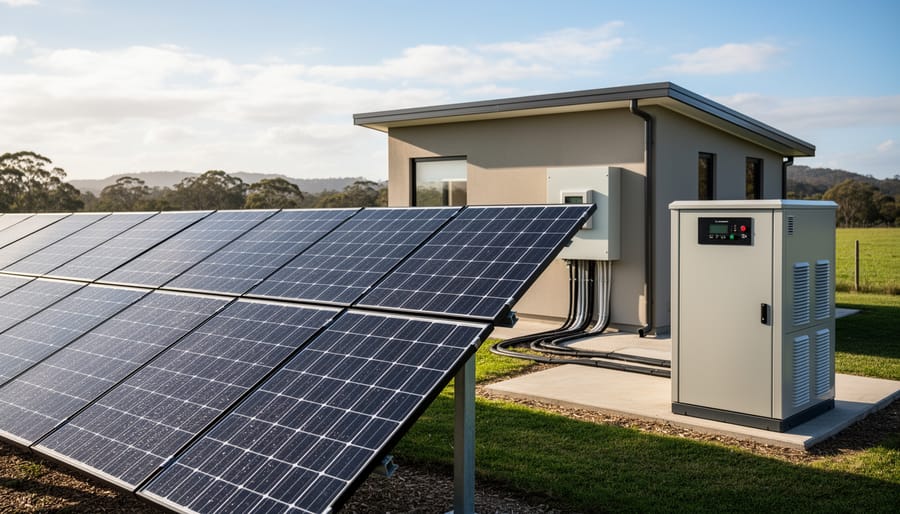
A solar microgrid comprises several interconnected components working in harmony to generate, store, and distribute renewable energy efficiently. Understanding these core elements is essential for professionals entering the photovoltaic sector and stakeholders evaluating microgrid implementations.
Photovoltaic arrays form the foundation of any solar microgrid, converting sunlight into direct current electricity. Modern installations typically employ one of three primary panel technologies. Monocrystalline panels offer superior efficiency rates of 18-22% and excellent performance in limited space applications, making them ideal for commercial and institutional microgrids. Multi-crystalline modules provide a cost-effective alternative with efficiency ranges of 15-17%, suitable for larger installations where space constraints are less critical. Mono PERC (Passivated Emitter and Rear Cell) panels represent the latest advancement, incorporating rear-side passivation technology that captures reflected light, achieving efficiency gains of 1-2% over standard monocrystalline options.
Battery energy storage systems enable microgrids to provide continuous power regardless of solar generation patterns. Lithium-ion batteries dominate current installations due to their high energy density, extended cycle life, and decreasing costs. These systems store excess solar generation during peak production hours and discharge during evening demand periods or grid outages, ensuring energy security and maximizing renewable energy utilization.
Inverters serve as the critical interface between DC solar generation and AC loads, converting electrical current while maintaining power quality standards. Advanced microgrid inverters support bidirectional power flow, enabling both grid-tied operation and islanded mode functionality.
Microgrid controllers represent the intelligent nerve center, orchestrating all system components through sophisticated algorithms. These controllers manage load balancing, optimize battery charging cycles, coordinate with utility grids, and execute seamless transitions between operating modes, ensuring reliable operation under diverse conditions.
Grid-Connected vs. Islanded Operation Modes
Microgrid solar systems distinguish themselves through their ability to operate in two fundamental modes: grid-connected and islanded. This dual-mode capability represents a critical advancement in distributed energy resource management, enabling resilience and continuous power availability regardless of utility grid status.
In grid-connected mode, the microgrid operates in parallel with the main electrical grid. Solar photovoltaic arrays generate electricity that can be consumed locally, stored in battery systems, or exported to the utility grid when production exceeds on-site demand. This configuration allows users to benefit from net metering programs, grid stability support, and backup power access when solar production is insufficient.
Islanded mode, conversely, occurs when the microgrid disconnects from the utility grid and operates autonomously. This transition happens automatically during grid outages through sophisticated control systems that detect voltage fluctuations or complete power loss. Within milliseconds, the microgrid’s controller activates island mode, seamlessly maintaining power supply to critical loads without interruption. This capability proves invaluable for facilities requiring uninterrupted power, such as hospitals, data centers, and emergency services.
The transition between these modes relies on advanced inverter technology and microgrid controllers that continuously monitor grid conditions. These systems employ automatic transfer switches and synchronization equipment to ensure safe, rapid mode switching. When grid power is restored, the controller verifies voltage and frequency parameters before reconnecting, preventing potential damage to equipment or utility infrastructure.
Understanding these operational modes is essential for professionals designing resilient energy systems. Through collaborative research initiatives with universities, institutions like Mose Solar are advancing microgrid control strategies and developing educational programs that prepare the next generation of photovoltaic professionals to implement these sophisticated systems effectively. This knowledge enables practitioners to specify appropriate equipment, configure control parameters, and optimize microgrid performance across both operational modes.
Real-World Applications of Solar PV Microgrids
Remote and Off-Grid Communities
Solar microgrids have emerged as transformative solutions for delivering reliable electricity to geographically isolated regions where traditional grid extension remains economically unfeasible. For off-grid communities in developing nations, these systems provide the first access to consistent power, enabling education, healthcare, and economic development opportunities previously unavailable.
Island communities particularly benefit from microgrid implementations, as submarine cable connections to mainland grids prove prohibitively expensive. Solar microgrids integrated with battery storage and diesel backup generators create hybrid systems that reduce fuel dependency while ensuring power availability during extended cloudy periods. Projects across Pacific islands and the Caribbean demonstrate how properly sized systems achieve 60-80% renewable energy penetration while maintaining grid stability.
Rural electrification programs worldwide increasingly adopt microgrid architectures rather than extending centralized transmission networks. The modular nature allows staged deployment matching community growth, with initial installations serving critical infrastructure like health clinics and schools before expanding to residential connections. Advanced monitoring capabilities enable remote diagnostics and performance optimization, reducing operational costs in areas with limited technical expertise.
Universities collaborating with development organizations have established research initiatives studying optimal microgrid configurations for various climate zones and usage patterns. These educational programs train local technicians in system maintenance, creating sustainable workforce development alongside infrastructure improvements. Performance data from deployed systems informs design standards that improve reliability and cost-effectiveness for future installations serving remote populations.
Critical Facilities and Infrastructure
In mission-critical environments where power interruptions can have life-threatening consequences or catastrophic economic impacts, microgrid solar systems have become essential infrastructure. These applications demand the highest levels of reliability, redundancy, and operational continuity that conventional grid connections cannot consistently guarantee.
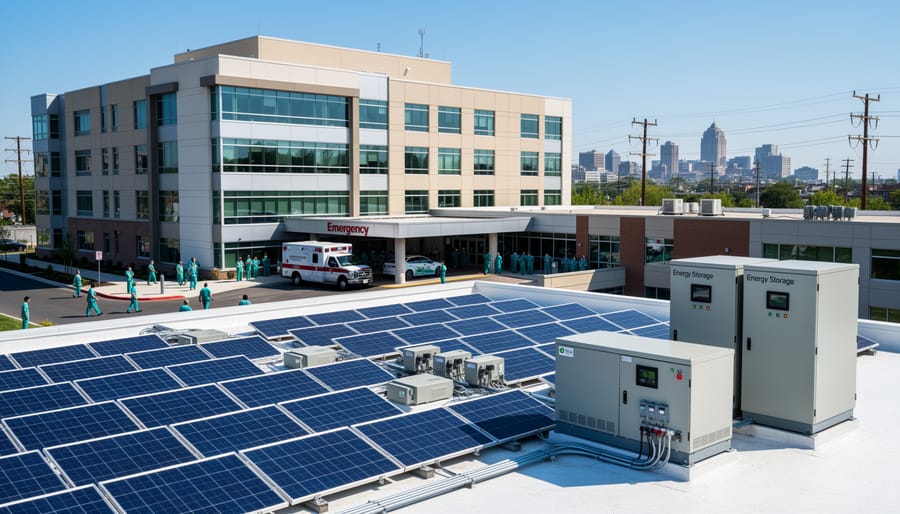
Hospitals represent one of the most compelling use cases for solar microgrids. Medical facilities require uninterrupted power for life-support systems, surgical equipment, refrigerated pharmaceuticals, and emergency lighting. A properly designed microgrid integrates solar generation with battery storage and backup generators to ensure seamless power availability during grid outages. Research from healthcare energy management studies shows that hospitals with microgrids maintain operational capacity during natural disasters when grid-dependent facilities fail.
Emergency services facilities, including fire stations, police departments, and dispatch centers, similarly rely on microgrid technology to maintain community safety during crises. These installations typically incorporate multiple energy sources and intelligent control systems that prioritize critical loads during extended outages.
Military installations have increasingly adopted solar microgrids to enhance energy security and operational independence. Defense facilities cannot risk supply chain vulnerabilities or grid dependencies that might compromise mission readiness. Advanced microgrid architectures provide tactical advantages through energy autonomy and resilience against physical or cyber threats.
Data centers, where even milliseconds of downtime translate to significant financial losses and service disruptions, implement sophisticated microgrid solutions with multiple redundancy layers. These systems integrate solar arrays with battery banks and traditional backup power to achieve industry-standard uptimes exceeding 99.99%. Universities partnering with industry leaders continue advancing microgrid control technologies specifically designed for these demanding applications, contributing to both academic research and practical implementation standards.
Commercial and Industrial Deployments
Commercial and industrial facilities represent one of the fastest-growing segments for microgrid solar deployments, driven by dual objectives of cost reduction and corporate sustainability commitments. Manufacturing plants benefit particularly from microgrids’ ability to provide reliable power during grid disturbances, preventing costly production shutdowns that can result in thousands of dollars of lost output per minute. These systems typically integrate 500 kW to several megawatt-scale solar arrays with battery storage and intelligent control systems that optimize energy usage based on time-of-use rates and production schedules.
University campuses have emerged as ideal testbeds for microgrid technology, combining educational opportunities with operational benefits. These installations serve both as functional infrastructure and living laboratories where students gain hands-on experience with solar energy systems and grid management. Campus microgrids can reduce energy costs by 20-40% while advancing institutional decarbonization goals, with many universities partnering with solar providers to develop comprehensive solar panel training programs around these installations.
Business parks and commercial developments increasingly adopt microgrids to attract environmentally conscious tenants and hedge against rising utility rates. These shared energy resources distribute costs across multiple occupants while providing enhanced reliability and resilience. Industrial facilities with high thermal demands often incorporate combined heat and power systems alongside solar components, maximizing overall energy efficiency. For professionals interested in this growing field, understanding solar installer training requirements is essential, as commercial-scale projects demand specialized expertise in system design, electrical integration, and regulatory compliance that exceeds residential installation knowledge.
Technical Advantages That Drive Adoption
Energy Resilience and Reliability
Microgrid solar systems deliver exceptional energy resilience through their inherent architectural advantages. Unlike conventional grid-tied installations that fail completely during utility outages, microgrids employ intelligent control systems that detect disturbances and seamlessly transition to island mode within milliseconds. This rapid response capability ensures continuous power delivery to critical loads, making them invaluable for healthcare facilities, emergency services, data centers, and industrial operations where downtime carries severe consequences.
The integration of battery energy storage systems within microgrids fundamentally transforms reliability performance. These storage components not only provide backup power during extended outages but actively smooth voltage fluctuations and frequency variations that compromise sensitive equipment. Research conducted in collaboration with leading universities demonstrates that properly designed microgrids achieve power quality metrics exceeding traditional grid standards, with total harmonic distortion levels often below 3% and voltage stability within ±2% tolerance.
Traditional solar installations cannot match these capabilities because they lack the sophisticated energy management systems that coordinate generation, storage, and consumption in real-time. Microgrids continuously monitor multiple parameters—solar production, battery state of charge, load demand, and grid conditions—making autonomous decisions that optimize both reliability and efficiency. This intelligence enables predictive maintenance protocols, identifying potential equipment failures before they cause service interruptions.
For organizations prioritizing operational continuity, microgrids represent a strategic infrastructure investment. Through Mose Solar’s educational program offerings, professionals can master the design principles and control strategies that distinguish high-performance resilient systems from basic solar installations, ensuring communities and enterprises maintain power during increasingly frequent grid disturbances.

Economic and Environmental Benefits
Microgrid solar systems deliver substantial economic advantages that extend well beyond initial installation costs. Organizations implementing these systems typically experience 30-50% reductions in electricity expenses, with actual savings varying based on local utility rates, system sizing, and consumption patterns. The integration of energy storage allows facility managers to strategically shift load consumption away from peak demand periods, effectively managing demand charges that often constitute 30-70% of commercial utility bills.
From an environmental perspective, microgrid solar installations significantly diminish carbon footprints by displacing fossil fuel-generated electricity. A typical 500 kW commercial microgrid can offset approximately 600-800 metric tons of CO2 annually, equivalent to removing 130-170 passenger vehicles from roads. This measurable environmental impact aligns with corporate sustainability goals and increasingly stringent regulatory requirements while demonstrating organizational commitment to climate action.
The long-term return on investment for microgrid systems continues improving as technology costs decline and energy prices rise. Current analysis indicates payback periods ranging from 5-10 years for commercial installations, with systems maintaining productive operation for 25-30 years. When factoring in federal Investment Tax Credits, accelerated depreciation through MACRS, and various state-level incentives, the financial proposition strengthens considerably.
Beyond direct cost savings, microgrids provide economic resilience through enhanced energy security. The ability to maintain critical operations during grid outages prevents costly downtime, with some industries reporting potential losses exceeding $10,000 per hour during power interruptions. This reliability translates to preserved revenue streams and protected business continuity.
Academic institutions and industry stakeholders seeking deeper understanding of microgrid economics can benefit from specialized educational programs that examine financial modeling, incentive structures, and lifecycle cost analysis methodologies essential for informed decision-making.
Design Considerations for Solar Microgrid Systems
Load Analysis and Energy Demand Profiling
Accurate load analysis forms the foundation of effective microgrid solar system design. This systematic process involves examining historical energy consumption data, identifying usage patterns across different time periods, and quantifying power requirements for all connected equipment.
Begin by collecting at least 12 months of utility billing data to establish baseline consumption trends. This reveals seasonal variations, typical daily profiles, and maximum demand periods. For existing facilities, deploying energy monitoring equipment for 2-4 weeks provides granular data on actual load curves, helping identify when energy demand peaks and which equipment contributes most significantly to overall consumption.
Categorizing loads into critical and non-critical classifications is essential for microgrid resilience. Critical loads—such as refrigeration, medical equipment, communications infrastructure, or security systems—require uninterrupted power during grid outages and must be prioritized in system sizing calculations. Non-critical loads can be shed during limited generation periods or battery reserve situations.
Peak demand analysis determines the maximum simultaneous power requirement, typically measured in kilowatts (kW). This differs from total energy consumption (kWh) and directly influences inverter capacity specifications. Understanding diversity factors—the reality that not all loads operate simultaneously at maximum capacity—prevents oversizing and reduces capital costs.
Professional load assessment often involves creating a detailed inventory of all electrical equipment, including nameplate ratings, operational schedules, and duty cycles. Many universities collaborating on renewable energy research programs emphasize this methodical approach in their curriculum, recognizing that precise load profiling directly correlates with system performance and economic viability. Educational programs increasingly incorporate simulation software training to model various demand scenarios and optimize system configurations before implementation.
Storage Capacity and Technology Selection
Determining appropriate storage capacity represents a critical decision in microgrid solar system design. The sizing process must account for load requirements during non-generating periods, desired autonomy hours, and economic considerations. Most systems target 4-8 hours of storage for daily cycling applications, though extended autonomy may require significantly larger capacity investments.
Battery energy storage systems come in several established technologies, each offering distinct performance characteristics. Selection criteria should evaluate discharge duration requirements, lifecycle economics, environmental conditions, and specific application demands.
| Technology | Discharge Duration | Cycle Life | Primary Applications |
|---|---|---|---|
| Lithium-Ion | 1-4 hours | 3,000-5,000 cycles | Residential, commercial microgrids |
| Flow Batteries | 4-10+ hours | 10,000+ cycles | Utility-scale, extended duration storage |
| Lead-Acid | 2-6 hours | 1,000-2,000 cycles | Budget-constrained projects, backup power |
Lithium-ion batteries currently dominate the market due to high energy density, declining costs, and proven performance in diverse conditions. Flow batteries excel in applications requiring longer discharge durations and superior cycle longevity, making them ideal for utility-scale installations. Academic institutions collaborating with industry leaders continue advancing next-generation technologies, including solid-state batteries and advanced electrolytes. Through educational programs and research partnerships, professionals gain hands-on experience evaluating these technologies for specific microgrid applications, ensuring optimal system performance and economic viability.
Control Systems and Smart Integration
Advanced microgrid controllers serve as the intelligent nerve center of solar PV microgrids, coordinating energy generation, storage, and distribution in real-time. These sophisticated energy management systems (EMS) continuously monitor system performance, predict energy demand patterns, and autonomously optimize power flows between solar arrays, battery storage, and connected loads. Modern smart integration platforms leverage machine learning algorithms to enhance forecasting accuracy, enabling predictive maintenance that identifies potential component failures before they occur. Through cloud-based monitoring dashboards, operators gain comprehensive visibility into system metrics, from inverter efficiency to battery health status. Universities collaborating with industry leaders are developing next-generation control algorithms that further improve microgrid resilience and economic performance, preparing professionals for careers in this rapidly evolving field.
Regulatory Framework and Interconnection Standards
Deploying microgrid solar systems requires navigating a complex regulatory landscape designed to ensure safety, reliability, and grid stability. Understanding these frameworks is essential for professionals entering the photovoltaic sector and organizations planning microgrid installations.
IEEE 1547 serves as the foundational standard for distributed energy resource interconnection in North America. This standard establishes technical specifications for voltage regulation, frequency response, and anti-islanding protection—critical safety features that prevent microgrids from energizing the main grid during outages. The 2018 revision introduced advanced grid support functions, enabling microgrids to provide ancillary services like voltage support and frequency regulation, fundamentally changing how these systems interact with utility infrastructure.
UL certifications complement IEEE standards by addressing equipment safety and performance. UL 1741, which incorporates IEEE 1547 requirements, certifies inverters and other grid-interactive equipment. UL 9540 specifically addresses energy storage systems, evaluating battery safety, thermal management, and fire hazard mitigation—particularly relevant as microgrids increasingly integrate battery storage for enhanced resilience.
Interconnection agreements with local utilities represent another critical regulatory component. These agreements outline technical requirements, metering arrangements, liability provisions, and operational protocols. The application process typically involves multiple stages: preliminary review, feasibility study, impact assessment, and final approval. Processing timelines vary significantly by jurisdiction, ranging from weeks to several months depending on system size and complexity.
State and local regulations further influence microgrid deployment. Many jurisdictions have adopted standardized interconnection procedures to streamline the approval process, while others maintain utility-specific requirements. Net metering policies, which govern how excess generation is credited, significantly impact project economics and design decisions.
Insurance and liability considerations also fall under the regulatory umbrella. Microgrid operators must maintain adequate coverage for equipment damage, business interruption, and third-party liability. Understanding these requirements early in the planning process prevents costly delays and ensures compliant, safe installations that meet both technical standards and regulatory expectations.
Future Trends in Solar Microgrid Technology
The solar microgrid landscape is experiencing rapid technological evolution, with innovations poised to reshape how distributed energy systems operate and integrate into broader power networks. These emerging trends promise enhanced efficiency, greater flexibility, and improved accessibility for diverse applications.
Advanced photovoltaic technologies are transforming the aesthetic and functional possibilities of solar installations. Building-integrated photovoltaics (BIPV), including solar tiles and roof shingles, are eliminating the visual distinction between traditional roofing materials and energy-generating surfaces. These products maintain architectural integrity while producing electricity, addressing a primary barrier to adoption in residential and commercial sectors. Tesla Solar Roof and CertainTeed Apollo systems exemplify this convergence of form and function, expanding deployment opportunities in preservation districts and design-conscious communities.
Artificial intelligence and machine learning algorithms are revolutionizing microgrid optimization and management. AI-driven systems analyze weather patterns, consumption behavior, and grid conditions to predict energy generation and demand with unprecedented accuracy. These predictive capabilities enable proactive load balancing, battery charge scheduling, and maintenance forecasting. Research collaborations between industry leaders and universities are advancing these technologies, developing adaptive control systems that continuously improve performance through operational learning.
Vehicle-to-grid (V2G) integration represents a transformative capability for solar microgrids, converting electric vehicles into mobile energy storage assets. This bidirectional power flow allows EVs to discharge electricity during peak demand periods or grid outages, effectively multiplying storage capacity without additional stationary batteries. Pilot programs in California and Europe demonstrate V2G’s potential to stabilize microgrids while providing economic benefits to vehicle owners through grid services compensation.
Blockchain technology is emerging as a solution for peer-to-peer energy trading within microgrid communities, enabling automated, transparent transactions between prosumers. This decentralized approach reduces administrative overhead while maximizing local energy utilization.
Educational institutions are expanding curriculum offerings to prepare professionals for these technological shifts, combining theoretical knowledge with hands-on experience in smart grid operations, energy analytics, and system integration. These programs ensure workforce readiness as solar microgrids transition from specialized applications to mainstream energy infrastructure components.
Educational Pathways for Aspiring PV Professionals
The expanding microgrid solar system sector requires well-trained professionals equipped with specialized knowledge in system design, implementation, and management. Educational pathways for aspiring photovoltaic professionals now encompass diverse learning formats, from traditional university programs to industry-specific certifications and online training platforms.
University partnerships have become instrumental in developing comprehensive curricula that address the technical complexities of microgrid systems. Leading institutions now offer dedicated courses and degree programs focusing on distributed energy resources, power electronics, and energy storage integration. These programs typically combine theoretical foundations with hands-on laboratory experiences, preparing students for real-world challenges in microgrid deployment.
Mose Solar has established collaborative relationships with several universities to bridge the gap between academic learning and industry practice. These partnerships provide students access to cutting-edge research facilities, case studies from actual installations, and mentorship opportunities with experienced professionals. Through these collaborations, students gain exposure to advanced topics including load forecasting, control system architecture, and grid synchronization protocols.
Online educational programs have democratized access to specialized training, enabling professionals to upskill without interrupting their careers. Mose Solar’s educational platform offers structured learning modules covering microgrid fundamentals, system sizing methodologies, and regulatory compliance frameworks. These programs incorporate interactive simulations and virtual design tools that allow learners to practice system configuration and troubleshooting in controlled environments.
Professional certifications in microgrid design and implementation provide credential validation for practitioners seeking career advancement. Industry-recognized certifications demonstrate proficiency in critical competencies such as feasibility analysis, component selection, and commissioning procedures. Aspiring professionals should prioritize programs that emphasize both technical expertise and practical application, ensuring they develop the comprehensive skill set demanded by this rapidly evolving sector.
Microgrid solar systems represent a transformative approach to energy generation and distribution, offering practical pathways toward energy independence, grid resilience, and sustainability objectives. As demonstrated throughout this exploration, these integrated systems combine photovoltaic technology, energy storage, intelligent controls, and advanced monitoring to create self-sufficient power networks capable of operating autonomously or in parallel with conventional grids. The applications span diverse sectors, from remote communities and military installations to commercial facilities and critical infrastructure, each benefiting from enhanced reliability and reduced carbon footprints.
For aspiring photovoltaic professionals and renewable energy enthusiasts, understanding microgrid architecture and operation opens significant career opportunities in a rapidly expanding field. The technical knowledge required encompasses electrical engineering principles, energy management strategies, regulatory frameworks, and practical installation considerations. Academic researchers continue advancing this technology through innovations in battery chemistry, power electronics, and artificial intelligence-driven optimization algorithms.
Mose Solar remains committed to advancing renewable energy education through collaborative partnerships with universities and comprehensive educational program offerings designed to equip the next generation of solar professionals with essential skills and knowledge. Whether you are an industry stakeholder evaluating implementation strategies, an environmentally conscious consumer exploring energy alternatives, or a student pursuing renewable energy studies, continued education and practical application remain fundamental to mastering this evolving technology. The transition to distributed, sustainable energy systems depends on informed professionals capable of designing, implementing, and maintaining these sophisticated networks that will power our collective future.