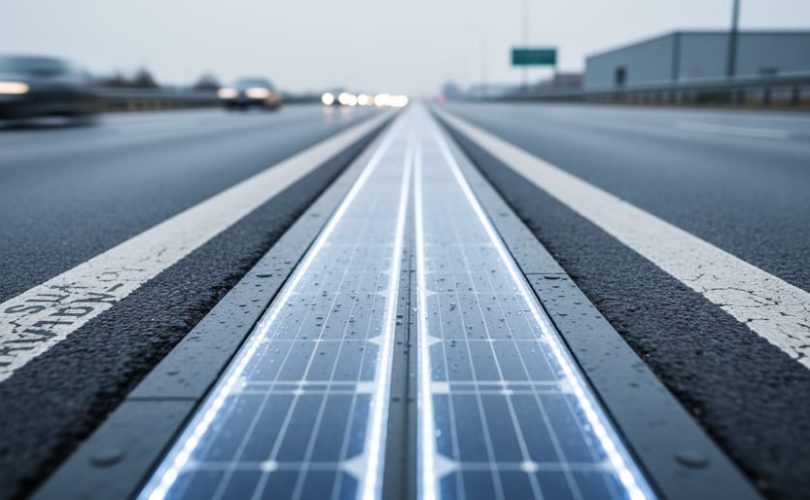
Solar-powered roads are roadway systems embedded with photovoltaic cells designed to generate electricity while serving as a driving surface. These installations integrate solar panels into the pavement itself, replacing traditional asphalt or concrete with reinforced transparent materials that allow sunlight to reach solar cells beneath the surface.
The concept addresses two critical infrastructure needs simultaneously: aging transportation networks and renewable energy capacity. As nations work to expand their clean energy portfolios, the idea of transforming millions of square meters of underutilized pavement into power-generating assets has captured attention from engineers, policymakers, and investors alike. Beyond electricity generation, proposed applications include integrated LED lighting, snow melting systems, and even wireless electric vehicle charging.
Yet solar-powered roads remain one of the most contested technologies in solar-powered transportation infrastructure. Early pilot projects launched between 2014 and 2022 revealed substantial gaps between theoretical potential and real-world performance. Cost overruns, durability failures, and disappointing energy output have forced the industry to confront difficult questions about viability.
This article examines how solar road technology actually functions, the components that make up these systems, where they’ve been implemented, and what data from operating installations tells us about their practical effectiveness. We’ll assess both the engineering innovations that have improved performance and the persistent challenges that continue to limit widespread adoption. For photovoltaic professionals and renewable energy stakeholders, understanding the current state of this technology requires separating proven capabilities from marketing promises. Whether solar roads represent a practical solution or a cautionary tale in infrastructure innovation depends entirely on application context, cost structure, and realistic performance expectations.
What Are Solar-Powered Roads?
Solar-powered roads represent a novel approach to renewable energy infrastructure that transforms traditional road surfaces into electricity-generating installations. At their core, these systems integrate photovoltaic cells directly into roadway surfaces, creating dual-purpose infrastructure that simultaneously supports vehicle traffic and produces solar electricity.
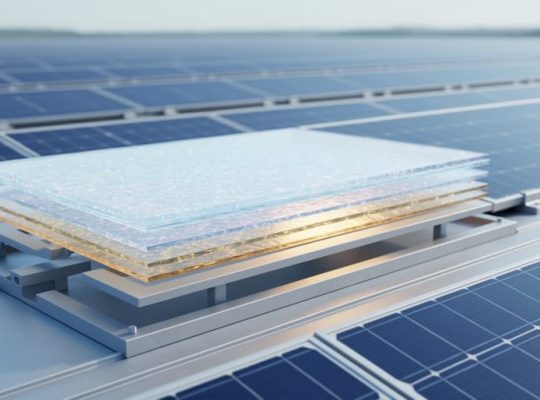
The fundamental concept involves embedding solar panels or photovoltaic materials beneath transparent, load-bearing protective layers that can withstand the weight and friction of vehicles while allowing sunlight to reach the energy-generating components below. Unlike rooftop or ground-mounted solar arrays that occupy dedicated space, solar roads aim to leverage existing infrastructure, the millions of kilometers of paved surfaces already exposed to sunlight, to generate clean energy without requiring additional land allocation.
Understanding the key components and terminology is essential to grasping how these systems function:
- Photovoltaic Pavement
- Road surface material integrated with solar cells capable of converting sunlight into electricity while bearing vehicle loads. These systems combine traditional pavement engineering with photovoltaic technology.
- Solar Road Panels
- Modular units containing photovoltaic cells, protective glass or polymer layers, and structural components designed specifically for road installation. Panels typically measure one to three meters square and interconnect to form continuous surfaces.
- Load-Bearing Capacity
- The structural ability of solar road surfaces to support vehicle weight, including heavy trucks, without compromising either the road integrity or the photovoltaic functionality beneath.
- Grid Integration
- The electrical connection system that channels generated solar electricity from road surfaces into the power grid or local infrastructure for immediate use or storage.
Solar-powered roads differ fundamentally from conventional solar installations in their dual-function requirement. Standard solar panels prioritize maximum energy efficiency with optimal tilt angles and unobstructed sun exposure. Solar roads must balance energy generation with structural demands, they lie flat, endure constant shading from vehicles, accumulate dirt and debris, and face substantially higher installation and maintenance complexity than traditional roadways or solar farms.
How Solar-Powered Roads Work
Energy Generation Process
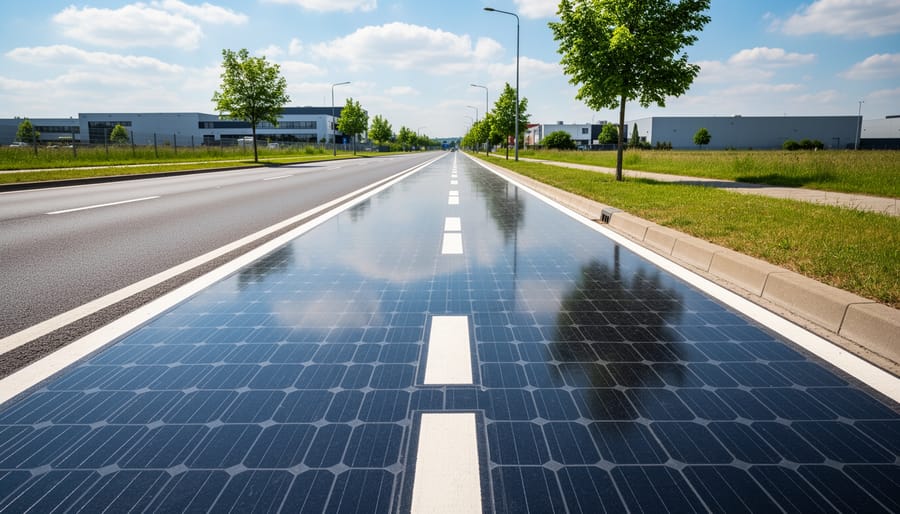
Solar-powered roads generate electricity through photovoltaic cells embedded beneath a transparent, ultra-durable surface layer. Unlike rooftop solar panels that can be angled toward the sun, these cells must lie flat to accommodate vehicle traffic, which immediately reduces their efficiency by 30-40% compared to optimally tilted installations. The protective surface, typically made of tempered glass or advanced polymer composites, must be transparent enough to allow sunlight penetration while strong enough to support vehicle loads exceeding 250,000 pounds per square foot.
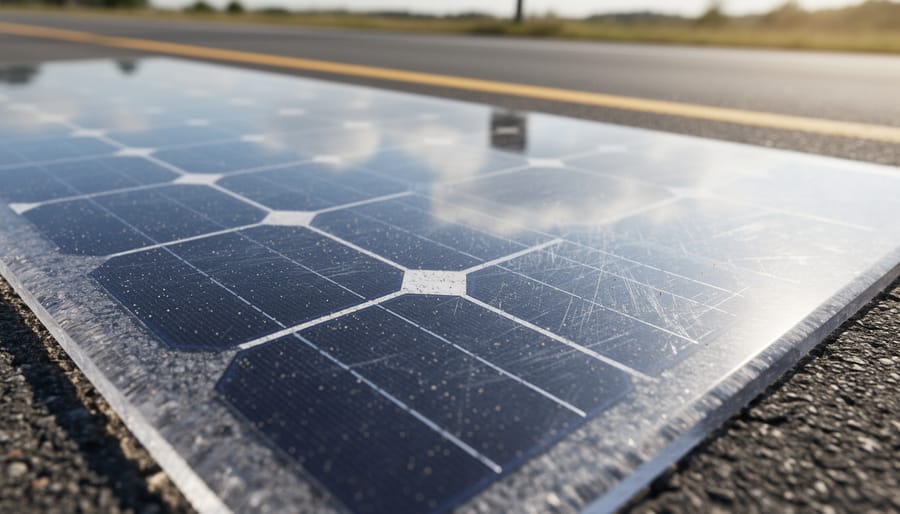
When sunlight passes through this protective layer, it reaches the photovoltaic cells, which convert photons into direct current electricity through the same semiconductor principles used in conventional solar panels. However, road-based systems face unique obstacles. Vehicles passing overhead create momentary shading that causes rapid fluctuations in power output. Dirt, tire marks, and road grime accumulate on the surface, blocking additional sunlight and degrading performance by 15-25% between cleanings.
The cells themselves must be thinner and more resilient than standard solar panels, often using monocrystalline silicon for better performance in suboptimal conditions. Despite these engineering adaptations, solar roads typically achieve only 4-6% overall efficiency in real-world conditions, a fraction of what rooftop installations deliver. This efficiency gap, combined with the hostile operating environment of constant vibration and temperature cycling, represents the fundamental challenge facing solar road technology’s practical viability.
Structural Engineering and Durability
Solar road systems face an extraordinary engineering challenge: they must support thousands of pounds of vehicle weight while functioning as delicate electronic devices. The structural design relies on multi-layer construction where a transparent, load-bearing surface made from tempered glass or advanced polymers protects photovoltaic cells beneath. This top layer typically exceeds 10mm thick and undergoes specialized treatment to achieve the compressive strength needed for heavy traffic, often 25,000 pounds per square foot or more.
Engineers incorporate reinforced substrates and shock-absorbing layers between the solar cells and the structural base to distribute loads and prevent stress fractures. These systems must also resist thermal expansion and contraction as temperatures fluctuate, maintain traction equivalent to traditional asphalt, and prevent water infiltration that could short-circuit electrical components. The protective surface requires anti-slip texturing while remaining transparent enough for adequate light transmission, a balance that affects both safety and energy output.
Continuous wear from tire friction and weather exposure degrades the transparent layer over time, reducing both traction and solar efficiency. Most pilot installations have shown accelerated surface degradation compared to conventional pavement, with protective coatings requiring maintenance every few years to maintain performance.
Energy Storage and Distribution
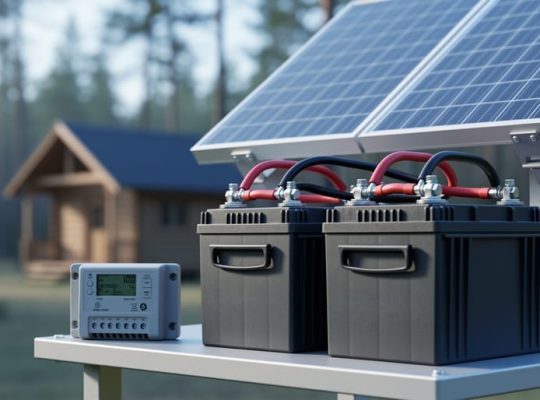
The electricity generated by solar road panels follows a path similar to conventional solar arrays but with infrastructure-specific priorities. Inverters convert the direct current from photovoltaic cells into alternating current compatible with the electrical grid or local systems. Some implementations feed power directly into the grid through net metering arrangements, offsetting energy consumption across the broader network.
More commonly, solar road projects incorporate battery storage systems to manage intermittent generation and power local infrastructure. Stored energy can operate LED road markings that display lane configurations or warnings, activate heating elements embedded beneath the surface to melt snow and ice, or supply nearby EV charging stations. This localized distribution model maximizes the practical value of captured energy, particularly in remote areas where grid connection proves costly. The control systems prioritize immediate infrastructure needs before exporting surplus electricity, creating a self-sustaining road ecosystem that reduces dependency on external power sources.
Types and Components of Solar Road Systems
Solar Road Panel Systems
Solar road panel systems represent the most common approach to integrating photovoltaic technology into roadways. These modular units typically measure between one and four square meters and consist of multiple layers engineered to balance energy production with structural demands.
The top layer uses tempered glass or polycarbonate materials designed to provide traction comparable to asphalt while maintaining transparency for light transmission. Beneath this protective surface sits the photovoltaic layer containing monocrystalline or polycrystalline solar cells optimized for angled sunlight exposure. A base layer distributes vehicle loads across the underlying roadbed and houses electrical connections.
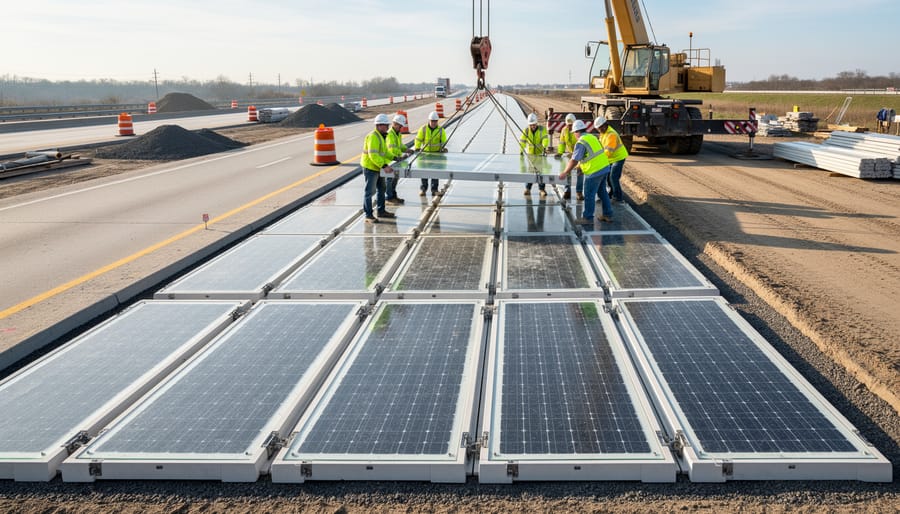
Installation methodology varies by manufacturer but generally involves preparing the roadbed to precise specifications, laying electrical conduit systems, positioning prefabricated panels in interlocking configurations, and connecting them to inverters and storage systems. Some designs incorporate heating elements within the panel structure to melt snow and ice, eliminating the need for chemical de-icers.
Most systems include LED arrays embedded below the glass surface for programmable road markings and signage that can change based on traffic conditions or weather alerts.
Integrated Solar Pavement
Integrated solar pavement represents a more seamless approach than modular panel systems, embedding photovoltaic materials directly into the road surface during construction rather than installing prefabricated units afterward. This method incorporates specialized solar-absorbing materials or thin-film photovoltaic compounds into the asphalt or concrete mixture itself, creating a unified surface where the energy-generating components are integral to the pavement structure.
The primary advantage lies in eliminating the distinct layers that characterize panel-based systems. By integrating photovoltaic materials at the molecular or substrate level, these pavements can achieve more uniform load distribution and potentially reduce installation complexity. Some approaches use transparent conductive coatings applied to specially formulated concrete, while others embed thin-film solar cells between layers of road material.
However, integrated pavement faces significant hurdles. The photovoltaic materials must withstand extreme mechanical stress, temperature fluctuations, and abrasive forces that traditional solar cells never encounter. Efficiency typically suffers compared to conventional panels because the materials must balance electrical generation with structural requirements. Repair and replacement become more complex since the solar components cannot be isolated from the road surface itself, and current manufacturing costs remain substantially higher than both traditional pavement and modular solar road systems.
Essential System Components
A functional solar-powered road system comprises several engineered layers working in concert to generate electricity while supporting vehicle loads. Each component serves a specific purpose in balancing energy production with structural integrity.
At the foundation, photovoltaic cells form the electricity-generating layer. Unlike rooftop solar panels, these cells must be configured in a thin, robust format that can withstand compression forces from above while maintaining electrical conductivity. Most designs use monocrystalline or polycrystalline silicon cells, though some experimental systems incorporate thin-film technologies for flexibility.
The core system components include:
- Transparent protective surface: Ultra-hard tempered glass or polycarbonate layer rated to support vehicle weight while allowing 85-90% light transmission to the cells beneath
- Anti-slip texture: Microstructured surface pattern or coating providing friction coefficients comparable to standard asphalt for vehicle traction and safety
- Load distribution substrate: Reinforced layer spreading vehicle weight evenly across photovoltaic cells to prevent point-stress damage
- Inverter systems: Power electronics converting DC electricity from solar cells to AC power compatible with grid connections or local infrastructure
- Weatherproof wiring: Sealed electrical conduits routing generated power from road sections to collection points
- Base foundation: Engineered concrete or composite base providing structural stability and drainage
Beyond these physical layers, connection infrastructure links individual road sections into a unified system. Junction boxes positioned at roadside collect power from multiple panels, while monitoring systems track performance, detect failures, and optimize energy distribution. The modular design allows damaged sections to be replaced without dismantling entire roadway segments, though repair costs remain significantly higher than conventional pavement maintenance.
Applications and Use Cases
Roadway and Highway Applications
Solar-powered roads installed on public highways and major roadways face the dual challenge of maintaining energy production under constant heavy vehicle traffic while justifying costs that typically run 10-15 times higher than conventional asphalt. Pilot projects in France, China, and the Netherlands have demonstrated that high-traffic installations generate significantly less electricity per square meter than rooftop solar due to dirt accumulation, shadows from passing vehicles, and suboptimal panel angles. The Jinan Expressway project in China, covering one kilometer of highway, produces approximately 1 million kWh annually, enough to power roughly 800 homes, while simultaneously testing LED lane markings and snow-melting capabilities.
Highway applications show the most promise when integrated with infrastructure functions beyond electricity generation. Solar road surfaces can power roadside lighting, traffic monitoring systems, and weather sensors without requiring separate grid connections. Some designs incorporate heating elements to prevent ice formation in winter climates, potentially reducing accidents and maintenance costs associated with snow removal. However, current economics favor conventional solar farms paired with traditional road construction, as this approach delivers five to ten times more energy per dollar invested while avoiding the engineering compromises inherent in dual-purpose surfaces designed for both power generation and vehicular loads.
Parking Lots and Low-Traffic Areas
Solar-powered roads show their greatest practical promise in parking lots and low-traffic environments where lighter loads and extended sun exposure create ideal conditions. Parking facilities receive consistent sunlight throughout the day with minimal shading from vehicles, making them prime candidates for energy generation. The reduced structural stress compared to highways allows for less robust, and less expensive, protective layers while maintaining durability.
Bike paths and pedestrian walkways present similar advantages. These applications experience minimal weight-bearing requirements, reducing wear on photovoltaic components and extending system lifespan. Several pilot projects have focused on these contexts precisely because they demonstrate feasibility without the extreme engineering challenges of highway implementation.
Parking lot installations offer the added benefit of generating electricity exactly where many facilities already consume significant power for lighting, security systems, and increasingly, electric vehicle charging stations. This proximity between generation and consumption reduces transmission losses and can offset peak demand charges, improving economic viability compared to utility-scale solar installations located miles away.
Smart Infrastructure Integration
Solar-powered roads become far more valuable when paired with intelligent infrastructure. These systems transform pavement into a multifunctional platform that generates electricity while actively managing road conditions and supporting connected transportation networks.
LED lighting integrated beneath the transparent surface enables dynamic road markings that can change based on traffic conditions, weather, or accidents. These programmable markings improve safety by adapting to real-time situations, warning of ice ahead, marking temporary detours, or highlighting pedestrian crossings during peak hours. Heated surfaces prevent ice and snow accumulation by channeling generated electricity through embedded resistive elements, eliminating the need for plowing or chemical de-icers in cold climates. EV charging lanes represent another promising application, where parked or slow-moving electric vehicles draw power directly from the road surface through inductive charging systems.
The convergence with smart energy systems extends beyond power generation. Solar roads incorporate sensors that monitor traffic flow, vehicle weight, road wear, and environmental conditions. This data feeds into centralized energy management platforms, optimizing electricity distribution and infrastructure maintenance schedules.
Smart features enabled by solar road systems include:
- Adaptive LED road markings responding to traffic and weather conditions
- Thermal heating elements preventing ice formation without chemicals
- Wireless EV charging through inductive power transfer
- Embedded sensors tracking traffic patterns and road condition data
- Grid-interactive systems balancing local energy supply and demand
However, coordinating these multiple functions increases system complexity and cost substantially compared to simple energy generation alone.
Advantages and Challenges
Solar-powered roads present compelling advantages alongside formidable obstacles that currently limit their viability. Understanding both sides clarifies why this technology remains largely experimental despite its conceptual appeal.
The primary benefit lies in dual-purpose infrastructure. Roads already occupy vast land areas exposed to sunlight; converting them into energy generators theoretically maximizes space efficiency without requiring additional real estate. A single mile of four-lane highway could generate substantial electricity if fully covered with functional photovoltaic surfaces. Beyond energy production, these systems enable integrated smart features: embedded LED lights can create dynamic lane markings that adjust for traffic conditions, heating elements can melt snow and ice without chemical treatments, and the infrastructure can power roadside EV charging stations directly.
Environmental advantages include reduced heat island effects compared to conventional asphalt, potential carbon footprint reduction through clean energy generation, and decreased reliance on separate solar installations. The distributed generation model places power sources exactly where consumption occurs, reducing transmission losses.
However, the challenges are substantial and currently outweigh the benefits for most applications. Cost represents the most significant barrier. Solar road installations run ten to fifteen times more expensive than conventional pavement per square meter, with pilot projects demonstrating costs that make traditional rooftop or ground-mounted solar arrays far more economical for equivalent energy output. The horizontal orientation and inability to angle toward optimal sun exposure reduce efficiency by 30 to 40 percent compared to tilted panels.
Durability concerns persist despite engineering advances. Constant vehicle loading, debris accumulation, tire friction, and weather exposure create harsh operating conditions. Protective surfaces must remain transparent while withstanding forces that would shatter conventional solar panels. Maintenance requirements exceed traditional roads, and repairs demand specialized equipment and expertise.
Performance data from existing projects reveals underwhelming results. Most installations generate considerably less electricity than projected, with some producing only a fraction of expected output due to shading, surface degradation, and soiling. The technology also introduces end-of-life concerns similar to conventional systems, requiring proper solar panel recycling protocols and generating solar waste management challenges magnified by integration with road materials.
Current technology makes solar roads practical only for niche applications where their unique features justify premium costs, not as replacements for conventional solar installations or standard roadways.
Economic Considerations and Viability
Solar-powered roads face substantial economic hurdles that currently limit their viability compared to traditional infrastructure and conventional solar installations. Installation costs range from $4,000 to $6,000 per square meter, roughly ten to fifteen times more expensive than standard asphalt paving, which typically costs $300 to $400 per square meter. Even when compared to rooftop or ground-mounted solar arrays, which cost approximately $1,000 to $1,500 per kilowatt of capacity, solar roads deliver significantly lower energy output per dollar invested due to their horizontal orientation, reduced efficiency under traffic loads, and complex engineering requirements.
Return on investment timelines stretch considerably longer than conventional solar projects. Standard solar installations typically achieve payback within six to twelve years, while solar road systems may require thirty to fifty years or more to recoup initial costs, assuming consistent performance and minimal maintenance expenses. These projections rarely account for the accelerated wear from vehicle traffic, weather degradation, and the need for specialized repairs that can interrupt energy generation.
Maintenance costs compound the economic challenges. Damaged panels require road closures for replacement, creating indirect costs through traffic disruption. Traditional asphalt repairs cost a fraction of solar panel replacement, and conventional solar arrays remain accessible without shutting down transportation corridors.
The technology does offer potential offsetting benefits. Generated electricity can power street lighting, traffic systems, and electric vehicle charging infrastructure, reducing grid dependence. Heated road surfaces in cold climates could eliminate snow removal costs. However, these advantages haven’t proven sufficient to justify the cost premium in most feasibility studies.
For the technology to achieve economic viability, manufacturing costs must decrease dramatically while efficiency and durability improve substantially. Current pilot projects serve educational purposes, advancing solar education and testing engineering solutions, rather than demonstrating immediate economic returns. Until these economic barriers shift, solar roads remain an experimental technology rather than a financially sound infrastructure investment.
Educational Opportunities in Solar Transportation Technologies
As solar-powered roads and other transportation energy systems move from concept to reality, demand grows for professionals who understand both photovoltaic fundamentals and innovative infrastructure applications. This emerging field requires expertise that bridges traditional solar engineering with civil infrastructure, materials science, and smart city integration.
Mose Solar addresses this educational need through comprehensive programs developed in collaboration with leading universities. These partnerships ensure curriculum stays aligned with industry evolution, covering not just established PV principles but emerging applications like transportation-integrated solar systems. Students gain exposure to the engineering challenges unique to solar roads, durability under mechanical stress, efficiency optimization in non-ideal orientations, and grid integration for distributed infrastructure systems.
Career opportunities in this space extend beyond solar road development itself. Professionals trained in advanced PV applications find roles in sustainable infrastructure planning, renewable energy consulting for transportation departments, research and development for next-generation materials, and technical evaluation of innovative solar projects. Understanding systems like solar-powered roads positions graduates to assess feasibility, design complementary installations, and contribute to the broader transition toward energy-generating infrastructure.
The field demands critical thinking about practical viability alongside technical knowledge. Educational programs that incorporate real-world case studies, including both successes and setbacks in solar road projects, prepare professionals to approach emerging technologies with informed optimism rather than uncritical enthusiasm. This balanced perspective proves essential as the industry navigates the gap between innovative concepts and economically viable implementation.
Frequently Asked Questions
Solar-powered roads spark curiosity and skepticism in equal measure, so it’s natural that people have questions about how these systems perform in real-world conditions. The gap between theoretical promise and practical reality is substantial, and understanding the current limitations helps set realistic expectations for this emerging technology.
How efficient are solar roads compared to rooftop solar panels?
Solar roads are significantly less efficient than rooftop installations, typically generating 30-50% less electricity due to suboptimal angles, vehicle shading, dirt accumulation, and the need for ultra-durable transparent surfaces that reduce light transmission. Most pilot projects have achieved only 2-4% conversion efficiency compared to 15-22% for conventional panels.
Can solar roads withstand heavy traffic and harsh weather?
Durability remains a major challenge, with many test installations experiencing surface degradation, delamination, and electrical failures within 1-3 years under normal traffic conditions. The transparent protective layers needed to bear vehicle loads often crack, yellow, or become scratched, further reducing efficiency and requiring costly repairs.
How long do solar road systems last?
Current systems have not demonstrated the 20-25 year lifespan typical of conventional solar panels, with most pilot projects experiencing significant performance degradation or complete failure within five years. The combination of mechanical stress, moisture infiltration, and thermal cycling creates conditions far more demanding than rooftop installations face.
Are solar roads cost-effective compared to traditional solar installations?
Solar roads cost 10-20 times more per watt of generating capacity than rooftop or ground-mounted solar arrays, making them economically unviable for pure energy generation. When installation, maintenance, and reduced efficiency are factored in, the payback period often exceeds the system’s functional lifespan.
Do any solar roads actually exist and operate successfully?
Several pilot projects have been built in France, the Netherlands, China, and the United States, but none have demonstrated long-term commercial viability. France’s Wattway project, once touted as revolutionary, has been largely discontinued due to excessive costs and poor performance, with many panels deteriorating rapidly.
How do snow, ice, and dirt affect solar road performance?
Accumulation of snow, ice, leaves, and road grime severely reduces energy generation, often dropping output to near-zero during winter months or between cleanings. While some designs include heating elements to melt snow, the energy required often exceeds what the panels generate, creating a net energy loss.
Could solar roads power electric vehicles while driving?
Dynamic wireless charging roads remain mostly theoretical, requiring entirely different technology than photovoltaic solar roads and facing enormous infrastructure costs and efficiency losses. Current solar road systems simply feed electricity to the grid and cannot directly charge moving vehicles.
The answers to these questions reveal why solar roads haven’t moved beyond the pilot stage despite years of development and substantial investment. The concept isn’t fundamentally impossible, but the engineering challenges compound in ways that make alternative approaches, like solar canopies over parking lots or roadside solar farms, far more practical and cost-effective for the same goal of integrating renewable energy with transportation infrastructure.
For professionals entering the solar industry, understanding why certain technologies remain impractical despite their appeal is just as valuable as learning about successful applications. The critical thinking required to evaluate emerging technologies objectively, weighing genuine innovation against hype, forms an essential skill for anyone working in renewable energy development and deployment.
how it works
Solar-powered roads function through a layered system designed to capture sunlight while supporting vehicle traffic. The top layer consists of a transparent, textured surface engineered for traction and durability, typically tempered glass or polycarbonate that transmits light while withstanding the weight and friction of moving vehicles. Beneath this protective layer sit photovoltaic cells that convert sunlight into direct current electricity.
The DC power flows through wiring embedded in the road structure to inverters, which convert it to alternating current suitable for grid connection or immediate use. A base layer provides structural support and houses the electrical components, distributing vehicle loads to prevent damage to the delicate photovoltaic elements.
Generated electricity can power adjacent infrastructure like street lighting and traffic signals, feed into the grid for broader distribution, or charge electric vehicle stations installed alongside the road. Some systems incorporate heating elements that use the captured energy to melt snow and ice, improving winter safety. The entire assembly must balance electrical efficiency with the mechanical demands of roadway use, a trade-off that remains central to the technology’s viability challenges.
uses
Solar-powered roads serve multiple practical functions beyond energy generation. Their primary use is producing renewable electricity from otherwise unutilized horizontal surfaces, feeding power back to the grid or supporting local infrastructure needs. In parking facilities and rest areas, they generate substantial energy from spaces that receive consistent sunlight throughout the day.
These systems function as active road infrastructure, powering LED road markings that can display dynamic traffic warnings, lane configurations, or pedestrian crossings. When equipped with heating elements, they prevent ice and snow accumulation, reducing winter maintenance costs and improving safety without chemical de-icers.
Solar roads can support electric vehicle charging networks, with generated electricity feeding nearby charging stations. Some installations integrate sensors that collect traffic data, monitor road conditions, or detect vehicle movements for smart city applications.
In remote locations, they provide off-grid power for road lighting, emergency call boxes, and communication equipment. Bike paths and pedestrian walkways represent ideal applications, combining lower structural requirements with high visibility to sunlight. These roads also serve educational purposes, demonstrating renewable energy integration in public infrastructure and raising awareness about clean energy possibilities.
Solar-powered roads remain in the experimental and pilot phase, with significant technical and economic hurdles preventing widespread adoption. While the concept demonstrates innovative thinking about dual-purpose infrastructure, combining transportation surfaces with renewable energy generation, current implementations struggle to match the cost-effectiveness and efficiency of conventional rooftop or ground-mounted solar arrays. Projects in France, China, the Netherlands, and the United States have provided valuable data, but most have underperformed expectations or faced maintenance challenges that highlight the gap between concept and practical viability.
Despite these obstacles, solar road technology continues to evolve as part of the broader solar-powered transportation ecosystem. Advances in durable photovoltaic materials, improved transparent load-bearing surfaces, and better integration with smart infrastructure systems may eventually address current limitations. The technology shows particular promise in specialized applications like parking facilities, bike paths, and low-traffic areas where installation costs can be justified by space constraints or secondary benefits like integrated EV charging and heated surfaces.
The future of solar-powered roads depends on sustained research, rigorous engineering development, and honest assessment of where this technology fits within the renewable energy landscape. Rather than replacing conventional solar installations, solar roads may find their niche as complementary infrastructure in specific contexts. For photovoltaic professionals entering the field, understanding emerging technologies, including their limitations, provides essential perspective on how innovation occurs in renewable energy. Critical thinking, technical expertise, and realistic evaluation of new approaches will remain crucial as the industry explores every avenue for expanding solar energy generation.