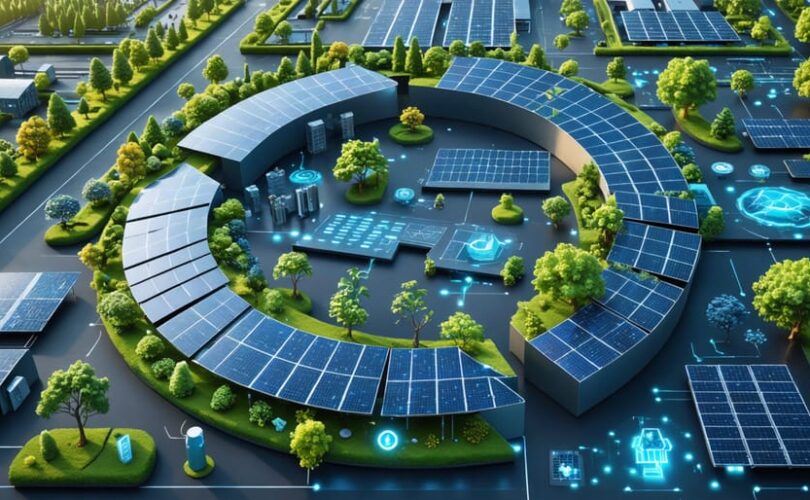
Manufacturing’s intersection with sustainability represents one of the most critical challenges and opportunities in modern industry. As global resource consumption continues to accelerate, manufacturers face mounting pressure to transform their operations from linear production models to circular, sustainable systems that minimize environmental impact while maximizing economic value.
The integration of sustainable practices into manufacturing processes has evolved from a corporate responsibility initiative to a fundamental business imperative. Companies that successfully implement sustainable manufacturing strategies not only reduce their environmental footprint but also achieve significant cost savings, enhanced operational efficiency, and improved market competitiveness. From renewable energy adoption and waste reduction protocols to innovative material recycling programs and smart factory technologies, sustainable manufacturing encompasses a comprehensive approach to industrial production that considers environmental, social, and economic impacts throughout the entire product lifecycle.
This transformation requires a delicate balance between maintaining productivity and implementing environmentally conscious practices. As technology advances and regulatory frameworks evolve, manufacturers must adapt their processes, invest in new technologies, and reimagine their supply chains to meet the growing demands for sustainable production while ensuring continued profitability and market leadership.
Current Challenges in PV Manufacturing
Resource Intensity
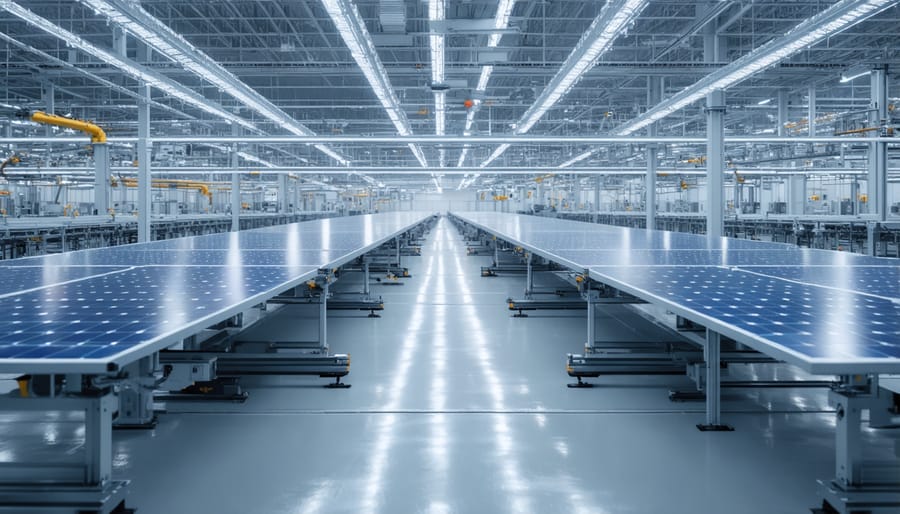
Manufacturing processes in the photovoltaic industry are notably resource-intensive, with significant implications for both environmental sustainability and operational costs. The environmental impacts of PV manufacturing are primarily driven by high energy consumption during production and substantial raw material requirements. Silicon purification, for instance, demands temperatures exceeding 1,400°C, consuming approximately 1,200 kWh of electricity per kilogram of produced silicon.
Raw material usage presents additional challenges, with a typical 60-cell solar panel requiring about 18 kg of silicon, 2 kg of aluminum for framing, and various precious metals including silver for electrical contacts. Water consumption is also substantial, with estimates suggesting that producing a single solar panel requires between 200-300 liters of water, primarily for cooling and cleaning processes.
Energy efficiency improvements and material optimization strategies have become crucial focus areas for manufacturers. Advanced recycling programs, closed-loop manufacturing systems, and the implementation of energy-efficient production technologies are helping reduce resource intensity while maintaining product quality. These initiatives not only lower production costs but also enhance the industry’s overall sustainability profile.
Waste Management Issues
Manufacturing waste management presents significant challenges in photovoltaic production, with both hazardous and non-hazardous materials requiring careful handling and disposal. Chemical waste from cell production, including acidic solutions and heavy metals, demands specialized treatment protocols to prevent environmental contamination. Silicon wafer manufacturing generates substantial silicon dust and slurry waste, while module assembly produces adhesive residues and packaging materials.
Effective waste management strategies incorporate waste reduction, recycling, and proper disposal methods. Companies increasingly implement closed-loop systems to recycle valuable materials like silver and silicon, reducing both environmental impact and production costs. Modern facilities utilize advanced filtration systems and waste treatment technologies to minimize harmful emissions and ensure compliance with environmental regulations.
The industry faces ongoing challenges in developing cost-effective recycling methods for end-of-life solar panels, which contain various materials including glass, aluminum, and semiconductor compounds. Manufacturers are investing in research and development to improve recycling technologies and design products with easier end-of-life material recovery. This commitment to sustainable waste management practices is essential for maintaining the renewable energy sector’s environmental credentials.
Innovative Sustainable Manufacturing Solutions
Circular Economy Integration
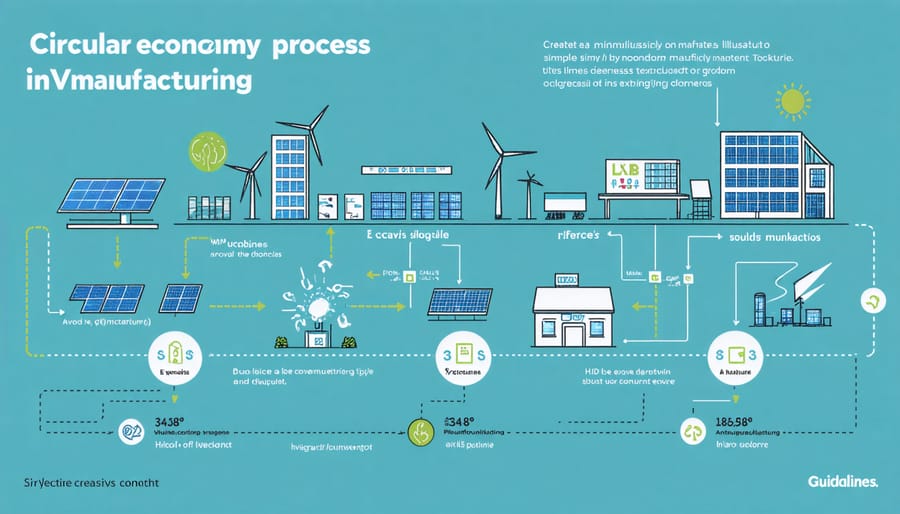
The integration of circular economy principles into manufacturing processes represents a fundamental shift in how photovoltaic companies approach resource management and waste reduction. Closed-loop manufacturing systems have emerged as a cornerstone of sustainable production, enabling manufacturers to recover and reuse valuable materials throughout the product lifecycle.
Modern recycling systems in PV manufacturing facilities now incorporate advanced material separation technologies, allowing for the efficient recovery of silicon, glass, and precious metals. These systems typically achieve recovery rates exceeding 95% for silicon wafers and 90% for metal components, significantly reducing raw material demands and environmental impact.
Material recovery processes have evolved to include automated sorting mechanisms, chemical treatment facilities, and specialized equipment for separating composite materials. Implementation of these systems requires strategic facility planning, specialized training programs, and robust quality control measures to ensure recovered materials meet production standards.
Key components of successful circular economy integration include:
– Automated material sorting and classification systems
– Chemical recovery processes for semiconductor materials
– Specialized handling procedures for hazardous substances
– Quality control protocols for recovered materials
– Supply chain partnerships for material reprocessing
– Documentation and tracking systems for material flows
These integrated systems not only reduce environmental impact but also offer significant cost advantages through reduced raw material requirements and waste disposal expenses.
Energy-Efficient Production
Modern manufacturing facilities are increasingly adopting energy-efficient production techniques to reduce their environmental impact while optimizing operational costs. Advanced automation systems and smart factory solutions now incorporate real-time energy monitoring and adaptive control mechanisms that automatically adjust power consumption based on production demands.
Variable frequency drives (VFDs) in manufacturing equipment have revolutionized energy management by optimizing motor speeds and reducing unnecessary power usage during partial load operations. Combined with intelligent building management systems, these innovations can achieve energy savings of up to 30% compared to traditional manufacturing processes.
Heat recovery systems play a crucial role in energy conservation by capturing and repurposing waste heat from industrial processes. This recovered energy can be utilized for facility heating, preheating materials, or converting to electrical power through technologies like organic Rankine cycle systems.
LED lighting systems with motion sensors and daylight harvesting capabilities have become standard in modern facilities, while advanced compressed air systems with leak detection and pressure optimization contribute to significant energy savings. Implementation of Industry 4.0 technologies, including IoT sensors and artificial intelligence, enables predictive maintenance and energy optimization across the entire production line.
Companies are also investing in on-site renewable energy generation, such as solar panels and wind turbines, to further reduce their carbon footprint and achieve energy independence. These initiatives, combined with energy storage solutions, create more resilient and sustainable manufacturing operations.
Water Conservation Methods
Water conservation in manufacturing processes has become increasingly critical for sustainable operations. Modern facilities employ closed-loop water systems that capture, treat, and reuse process water multiple times before discharge. These systems typically reduce water consumption by 60-80% compared to traditional open-loop systems.
Advanced filtration technologies, including reverse osmosis and ultrafiltration systems, enable manufacturers to purify and recycle wastewater effectively. Implementation of real-time monitoring systems with smart sensors helps detect leaks, optimize water usage, and maintain water quality throughout the production cycle.
Manufacturing facilities are adopting water-efficient cleaning processes, such as dry cleaning methods and high-pressure low-volume washing systems. These innovations significantly reduce water consumption while maintaining necessary cleanliness standards. Additionally, rainwater harvesting systems and greywater recycling programs provide alternative water sources for non-critical operations.
Process optimization plays a crucial role in water conservation. Manufacturers are implementing water mapping techniques to identify high-consumption areas and opportunities for reduction. This includes upgrading to water-efficient equipment, optimizing cleaning cycles, and implementing automated dosing systems for precise water usage.
Regular maintenance schedules and employee training programs ensure the effectiveness of water conservation measures. Many facilities have established water management teams responsible for monitoring consumption patterns, implementing conservation strategies, and setting reduction targets aligned with sustainability goals.
Quality Control in Sustainable Manufacturing

Testing and Certification
Quality assurance in sustainable manufacturing requires rigorous testing protocols and internationally recognized certifications to ensure products meet environmental and performance standards. Modern facilities employ comprehensive testing regimes, including accelerated lifecycle testing, environmental stress screening, and performance validation under various conditions. AI-powered quality control systems enhance accuracy and consistency throughout the production process, significantly reducing defect rates and material waste.
Key certifications such as ISO 14001 for environmental management systems and ISO 50001 for energy management demonstrate commitment to sustainable practices. Manufacturing facilities must also comply with industry-specific standards like IEC 61215 for photovoltaic modules and RoHS guidelines for hazardous substance restrictions. Regular third-party audits verify compliance and maintain certification validity.
Testing laboratories collaborate with universities and research institutions to develop innovative assessment methodologies that address emerging sustainability challenges. These partnerships ensure testing protocols evolve alongside technological advancements and environmental requirements, maintaining the highest quality standards while minimizing environmental impact.
Performance Metrics
Manufacturing sustainability performance is measured through several key indicators that provide comprehensive insights into environmental impact and operational efficiency. Energy consumption per unit of production serves as a primary metric, tracking both direct and indirect energy usage throughout the manufacturing process. Material efficiency ratios calculate the percentage of raw materials effectively utilized versus waste generated, while water consumption metrics monitor usage and recycling rates.
Carbon footprint measurements track greenhouse gas emissions across the entire production chain, including scope 1, 2, and 3 emissions. Waste reduction indicators assess the effectiveness of recycling programs and circular economy initiatives. The Overall Equipment Effectiveness (OEE) metric combines availability, performance, and quality to evaluate production efficiency while considering environmental impact.
Product lifecycle assessments provide crucial data on environmental impacts from raw material extraction through end-of-life disposal. Worker health and safety metrics, including incident rates and exposure levels, ensure sustainable practices extend to human factors. These indicators are typically monitored through automated systems and regular audits, enabling manufacturers to identify improvement opportunities and demonstrate compliance with environmental standards.
Future Directions
Emerging Technologies
The landscape of sustainable manufacturing is rapidly evolving with next-generation solar manufacturing technologies leading the charge. Advanced robotics and automation systems are revolutionizing production lines, significantly reducing energy consumption while improving precision and efficiency. Smart sensors and Internet of Things (IoT) devices enable real-time monitoring of resource usage, allowing manufacturers to optimize processes and minimize waste.
Additive manufacturing, or 3D printing, has emerged as a game-changing technology for sustainable production. This approach reduces material waste by up to 90% compared to traditional subtractive manufacturing methods, while enabling the creation of complex, lightweight components that were previously impossible to produce.
Artificial Intelligence (AI) and machine learning algorithms are being deployed to optimize production schedules, predict maintenance needs, and enhance quality control processes. These systems can identify inefficiencies in real-time and automatically adjust parameters to reduce energy consumption and material waste.
Bio-based materials and green chemistry innovations are transforming raw material sourcing. Manufacturers are increasingly utilizing biodegradable polymers and recycled materials in their production processes, significantly reducing their environmental footprint. Advanced recycling technologies, including chemical recycling and molecular sorting, are making it possible to recover and reuse materials that were previously considered waste.
These technological advancements are not just improving sustainability metrics; they’re also driving economic benefits through reduced operational costs and improved product quality.
Industry Standards Evolution
The manufacturing industry is witnessing a significant transformation in sustainability standards, driven by increasing environmental awareness and regulatory pressures. ISO 14001 certification, once considered optional, is becoming a fundamental requirement for manufacturers worldwide. Organizations are now expected to demonstrate comprehensive environmental management systems that go beyond basic compliance.
New sustainability frameworks are emerging, focusing on circular economy principles and lifecycle assessment methodologies. The International Sustainability Standards Board (ISSB) is developing unified reporting standards that will require manufacturers to provide detailed environmental impact disclosures and carbon footprint measurements.
Industry-specific certifications are evolving to include more stringent criteria for energy efficiency, waste reduction, and resource conservation. The upcoming revisions to environmental product declarations (EPDs) will demand more detailed documentation of manufacturing processes and their environmental impacts. Companies will need to demonstrate continuous improvement in their sustainability metrics to maintain certifications.
Supply chain transparency is becoming increasingly important, with new standards requiring manufacturers to verify the sustainability practices of their suppliers. This includes requirements for responsible sourcing of raw materials and documentation of scope 3 emissions throughout the value chain.
Looking ahead, manufacturers can expect the integration of digital tracking systems for real-time sustainability monitoring and reporting. These emerging standards will emphasize data-driven approaches to environmental management, requiring companies to invest in advanced monitoring technologies and sustainability management systems.
The intersection of manufacturing and sustainability in the photovoltaic industry represents a critical frontier in renewable energy development. Throughout this analysis, we’ve explored how innovative manufacturing processes, quality control measures, and sustainable practices are reshaping the solar industry landscape. The implementation of advanced automation, smart manufacturing systems, and circular economy principles has demonstrated significant potential for reducing environmental impact while maintaining high production standards.
Looking ahead, the industry faces both challenges and opportunities. The continued development of more efficient recycling technologies and sustainable material alternatives will be crucial for long-term sustainability. Emerging technologies such as artificial intelligence and machine learning are expected to further optimize manufacturing processes, reduce waste, and improve quality control measures.
The collaboration between industry stakeholders, research institutions, and regulatory bodies will play a vital role in driving innovation and establishing standardized sustainability practices. Investment in workforce development and training programs will ensure the industry has the expertise needed to implement and maintain sustainable manufacturing processes.
As global demand for solar energy continues to grow, the importance of sustainable manufacturing practices becomes increasingly significant. The industry’s commitment to reducing environmental impact while improving efficiency and quality will be essential for meeting future energy needs sustainably. Success will depend on maintaining a balance between technological advancement, environmental responsibility, and economic viability.