Climate modeling stands at the intersection of atmospheric science, advanced computing, and predictive analytics, serving as our primary tool for understanding and forecasting global climate patterns. As Earth’s climate system undergoes unprecedented changes, sophisticated modeling techniques have become essential for projecting future scenarios and informing critical policy decisions. These models integrate vast datasets from satellite observations, weather stations, and historical records, processing them through complex mathematical equations that simulate the interactions between Earth’s atmosphere, oceans, land surfaces, and ice sheets.
Modern climate models have evolved from simple mathematical representations to sophisticated, multi-dimensional simulations capable of processing petabytes of data. They incorporate numerous variables including greenhouse gas emissions, solar radiation, aerosol distributions, and ocean circulation patterns, providing increasingly accurate projections of temperature changes, precipitation patterns, and extreme weather events. These projections serve as crucial tools for policymakers, researchers, and industries adapting to climate change, particularly in the renewable energy sector where long-term climate patterns directly impact infrastructure planning and energy production capabilities.
This systematic approach to modeling climate change combines rigorous scientific methodology with cutting-edge computational power, enabling us to better understand and prepare for our changing climate future.
Understanding Interactive Climate Modeling in Solar Energy
Key Components of Solar Industry Climate Models
Climate impact modeling in the solar industry relies on several critical components that work together to create accurate predictions and assessments. The primary elements include solar radiation models, which analyze both direct and diffuse radiation patterns across different geographical locations and timeframes. These models incorporate atmospheric data, including cloud cover patterns, aerosol concentrations, and atmospheric transparency factors.
Temperature modeling forms another crucial component, as it directly affects solar panel efficiency and long-term performance. These models account for ambient temperature variations, panel operating temperatures, and heat dissipation patterns. Wind speed and direction data are integrated to calculate cooling effects and potential structural impacts on solar installations.
Precipitation patterns and humidity levels are also essential factors, as they influence panel soiling rates and cleaning requirements. Advanced models incorporate historical weather data alongside projected climate scenarios to predict future operating conditions and system degradation rates.
The integration of these components allows for comprehensive performance forecasting, helping stakeholders optimize system designs, predict maintenance needs, and estimate long-term energy yields under changing climate conditions. Modern modeling systems increasingly utilize machine learning algorithms to improve prediction accuracy and adapt to emerging climate patterns.
Real-time Data Integration Systems
Modern climate modeling systems integrate real-time data from diverse sources to create dynamic and accurate predictions. These systems continuously collect information from weather stations, satellites, ocean buoys, and atmospheric sensors, processing thousands of data points per second to update climate projections.
Advanced integration platforms combine environmental measurements with industrial emissions data, allowing researchers to track the immediate impact of human activities on climate patterns. This includes real-time monitoring of greenhouse gas emissions from power plants, transportation networks, and industrial facilities.
Machine learning algorithms process this continuous data stream, identifying patterns and correlations that might be missed by traditional analytical methods. These systems can adjust their predictions based on emerging trends, making them particularly valuable for climate adaptation strategies and mitigation planning.
The integration of Internet of Things (IoT) devices has further enhanced data collection capabilities, with smart sensors providing granular information about local climate conditions. This networked approach enables scientists to validate theoretical models against observed changes, improving the accuracy of long-term climate projections and helping policymakers make informed decisions about environmental regulations and renewable energy initiatives.
Environmental Impact Assessment Tools
Life Cycle Assessment Models
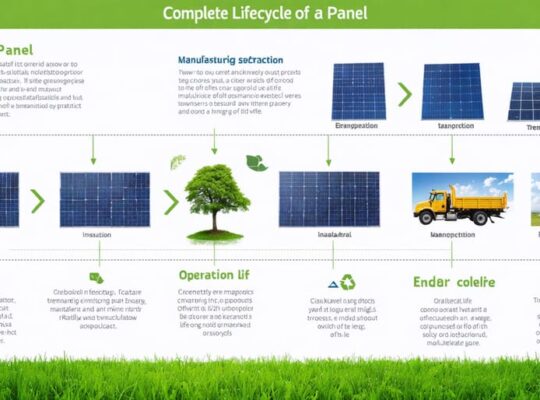
Life Cycle Assessment (LCA) models play a crucial role in evaluating the environmental impacts of photovoltaic systems throughout their entire lifespan. These comprehensive analyses examine everything from raw material extraction to end-of-life disposal, providing valuable insights for sustainable development in the solar industry. A thorough manufacturing carbon footprint analysis reveals that the production phase typically accounts for 60-70% of a solar panel’s lifetime environmental impact.
The assessment process encompasses several key phases: material sourcing, manufacturing, transportation, installation, operational lifetime, and eventual disposal or recycling. Modern LCA tools utilize sophisticated algorithms to calculate energy payback periods, greenhouse gas emissions, and resource depletion metrics. These calculations factor in variables such as manufacturing location, transportation distances, installation methods, and local energy mix compositions.
During the operational phase, LCA models track performance degradation rates and maintenance requirements, providing accurate estimations of long-term environmental benefits. End-of-life considerations have become increasingly important, with current models incorporating recycling potential and waste management strategies. This holistic approach helps manufacturers optimize production processes, installers improve deployment methods, and operators maximize system efficiency while minimizing environmental impact.
Recent developments in LCA modeling have introduced dynamic assessment capabilities, allowing for real-time adjustments based on changing environmental conditions and technological improvements. This advancement enables more accurate predictions of long-term environmental impacts and helps guide sustainable development strategies in the solar industry.
Carbon Footprint Calculation Systems
Carbon footprint calculation systems specific to solar production employ sophisticated algorithms and data analytics to quantify the environmental impact throughout the photovoltaic lifecycle. These systems analyze multiple parameters, including raw material extraction, manufacturing processes, transportation, installation, operational efficiency, and end-of-life disposal.
Modern calculation frameworks incorporate both direct and indirect emissions sources. Direct emissions primarily focus on manufacturing processes and transportation, while indirect emissions account for factors such as grid electricity consumption during production and auxiliary operations. Advanced modeling tools utilize life cycle assessment (LCA) methodologies to provide comprehensive emissions data across the entire solar panel value chain.
Industry-standard calculation systems typically feature:
– Material input-output analysis
– Energy consumption metrics
– Transportation emission factors
– Installation phase calculations
– Performance degradation assessments
– End-of-life recycling impacts
These tools enable manufacturers and developers to optimize their production processes for minimal environmental impact. Real-time monitoring capabilities allow for continuous assessment and adjustment of manufacturing parameters to reduce carbon emissions. The data generated helps identify hotspots in the production chain where emissions can be effectively reduced.
Integration with smart manufacturing systems enables automated data collection and analysis, improving the accuracy of carbon footprint calculations. This integration supports better decision-making in production planning and helps companies meet increasingly stringent environmental regulations while maintaining operational efficiency.
Practical Applications in Solar PV Development
Manufacturing Process Optimization
Climate modeling plays a crucial role in optimizing manufacturing processes within the solar industry, particularly in addressing resource consumption in solar production and minimizing environmental impact. Advanced simulation tools enable manufacturers to analyze and predict energy usage patterns, material efficiency, and waste generation throughout the production cycle.
By implementing data-driven climate models, manufacturers can identify areas of inefficiency and potential improvements in their production lines. These models consider factors such as energy consumption, water usage, raw material utilization, and emissions output. The resulting insights help optimize production schedules, reduce waste, and lower the overall carbon footprint of manufacturing operations.
Climate modeling also supports the development of more sustainable manufacturing processes by simulating the environmental impact of different production scenarios. This allows manufacturers to test and validate process improvements before implementation, reducing both financial risk and environmental impact. The models can predict how changes in production parameters affect energy consumption, emissions, and resource utilization.
Furthermore, these modeling techniques enable manufacturers to adapt their processes to varying environmental conditions and regulatory requirements. By incorporating climate data and environmental metrics into production planning, companies can maintain optimal efficiency while meeting sustainability goals and compliance standards. This proactive approach to manufacturing optimization helps ensure long-term operational sustainability and environmental responsibility.
Future Technology Planning
Climate modeling plays a crucial role in shaping the future of solar photovoltaic technology by helping developers anticipate and adapt to changing environmental conditions. Advanced climate models enable researchers to predict how various atmospheric parameters will affect solar panel performance over the coming decades, informing the development of more resilient and efficient PV systems.
These predictive models are particularly valuable when addressing environmental challenges in solar development, allowing engineers to optimize panel designs for future climate scenarios. By incorporating data on temperature variations, precipitation patterns, and extreme weather events, manufacturers can develop solar technologies that maintain high performance despite changing environmental conditions.
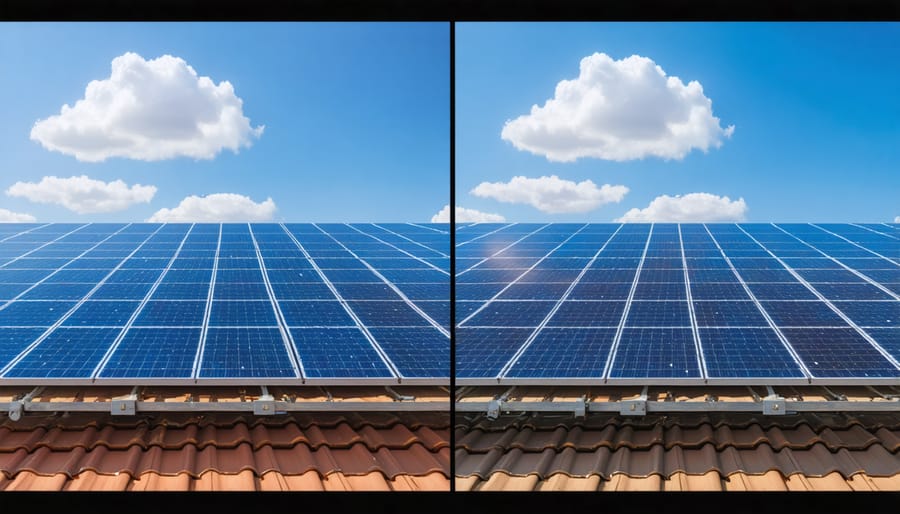
Machine learning algorithms are increasingly being integrated into these climate models, enabling more accurate predictions of solar resource availability and potential system degradation. This information guides the development of adaptive solar technologies, including self-cleaning surfaces, temperature-resistant materials, and smart tracking systems that can better withstand future climate challenges.
Research institutions are using these models to pioneer next-generation solar materials that offer enhanced durability and efficiency under projected climate conditions. This includes the development of bifacial panels that can capture reflected light, perovskite solar cells with improved stability, and hybrid systems that combine multiple technologies for optimal performance across varying weather conditions.

Educational Integration and Professional Development
Interactive climate modeling tools have become integral to modern solar industry education and professional development programs. Leading institutions and training centers incorporate sophisticated simulation software that allows students and professionals to understand the complex relationships between atmospheric conditions, solar radiation, and photovoltaic system performance.
Many universities now offer specialized courses that combine theoretical knowledge with hands-on experience using industry-standard modeling platforms. These programs enable students to analyze historical climate data, project future scenarios, and assess their impact on solar energy systems. Through practical exercises, learners develop crucial skills in data interpretation, system optimization, and risk assessment.
Professional certification programs have also evolved to include modules focused on climate modeling competencies. These courses typically feature interactive workshops where participants work with real-world datasets, learning to make informed decisions about solar installations based on projected climate patterns. The integration of virtual laboratories and remote learning platforms has made these educational resources more accessible to professionals worldwide.
Industry partnerships play a vital role in educational development, with leading solar companies collaborating with academic institutions to provide current tools and methodologies. These partnerships ensure that training programs remain aligned with industry needs and technological advances. Regular workshops and seminars facilitate knowledge transfer between experienced practitioners and emerging professionals, creating a dynamic learning environment.
Continuing education programs frequently update their curricula to incorporate the latest climate modeling developments. These programs often include case studies that demonstrate how accurate climate predictions influence project planning, system design, and long-term performance estimates. Professional development courses emphasize practical applications, helping practitioners apply modeling insights to real-world challenges in solar energy deployment.
The educational integration of climate modeling tools has significantly enhanced the preparation of solar industry professionals, enabling them to make more informed decisions and deliver more reliable renewable energy solutions. This comprehensive approach to training ensures that the workforce remains current with evolving climate science and its implications for solar energy systems.
Interactive climate modeling has emerged as a cornerstone in advancing sustainable practices within the solar industry. By providing detailed insights into environmental impacts and future climate scenarios, these models enable stakeholders to make informed decisions about solar infrastructure development and optimization. The integration of climate modeling tools has revolutionized our approach to photovoltaic system design, allowing for more precise predictions of system performance under varying environmental conditions.
The significance of climate modeling extends beyond immediate operational benefits. It serves as a crucial bridge between theoretical research and practical applications, enabling solar professionals to anticipate and adapt to changing environmental conditions. This proactive approach has proven invaluable in developing resilient solar installations that can withstand future climate challenges while maintaining optimal efficiency.
Furthermore, the collaborative nature of climate modeling has fostered unprecedented cooperation between industry professionals, researchers, and educational institutions. This synergy has accelerated innovation in sustainable solar practices and contributed to the development of more effective environmental impact assessment methodologies. As we continue to face growing environmental challenges, the role of interactive climate modeling becomes increasingly vital in shaping the future of renewable energy solutions.
By embracing these advanced modeling capabilities, the solar industry demonstrates its commitment to environmental stewardship while ensuring the long-term viability of renewable energy investments. The continued evolution of climate modeling tools will remain essential in driving sustainable practices and technological advancement in the solar sector.