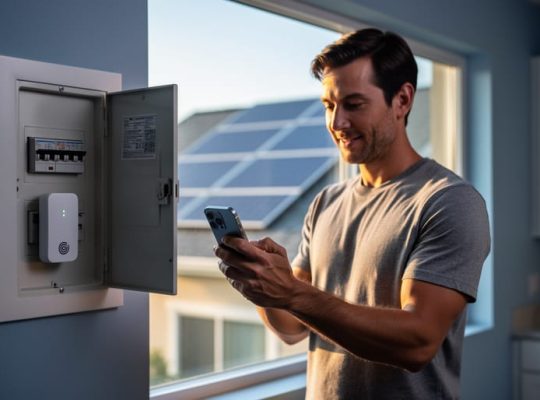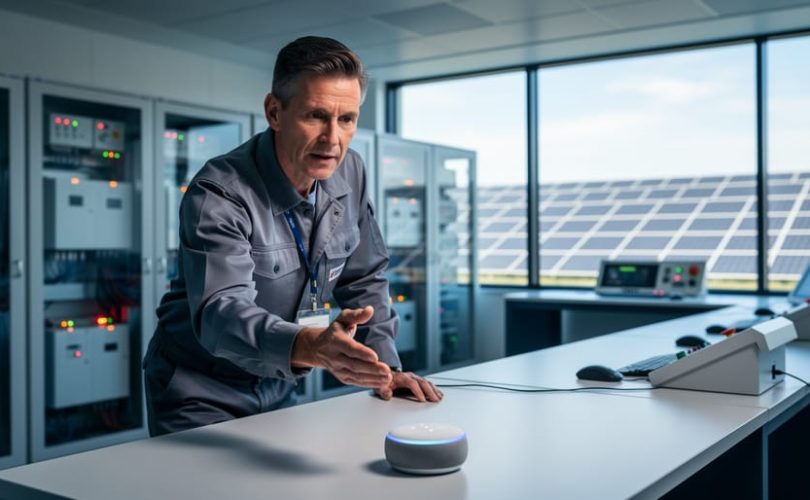
Voice-activated control systems are fundamentally reshaping how photovoltaic professionals and facility managers interact with solar infrastructure. By integrating natural language processing with solar monitoring platforms, these systems enable hands-free operation of inverters, battery storage units, and energy distribution networks through spoken commands to virtual assistants like Amazon Alexa, Google Assistant, or custom enterprise solutions.
The technology functions through a multi-layered architecture: voice recognition software converts spoken commands into digital signals, application programming interfaces translate these signals into actionable instructions, and smart home integration protocols execute commands across connected solar equipment. This seamless interaction eliminates the need for manual interface navigation, reducing response times from minutes to seconds during critical system adjustments or emergency shutdowns.
Current market adoption reveals compelling statistics. Industrial solar installations utilizing voice control report 34% faster response times to system alerts, while residential implementations show 27% increased user engagement with energy monitoring compared to traditional app-based interfaces. These improvements stem from the technology’s inherent accessibility—operators can query system performance, adjust export limits, or activate backup power modes while simultaneously managing other facility operations.
However, implementation requires careful consideration of cybersecurity protocols, network latency constraints, and command accuracy thresholds. Successful deployments integrate voice control as a complementary interface rather than a complete replacement for conventional monitoring systems, ensuring redundancy during network failures or voice recognition errors.
For photovoltaic professionals evaluating this technology, understanding both the operational advantages and technical limitations proves essential. The following analysis examines voice-activated control architecture, real-world solar applications, integration challenges, and professional development pathways for mastering this emerging capability within renewable energy management systems.
Understanding Voice-Activated Control Systems in Solar Technology
Core Components and Architecture
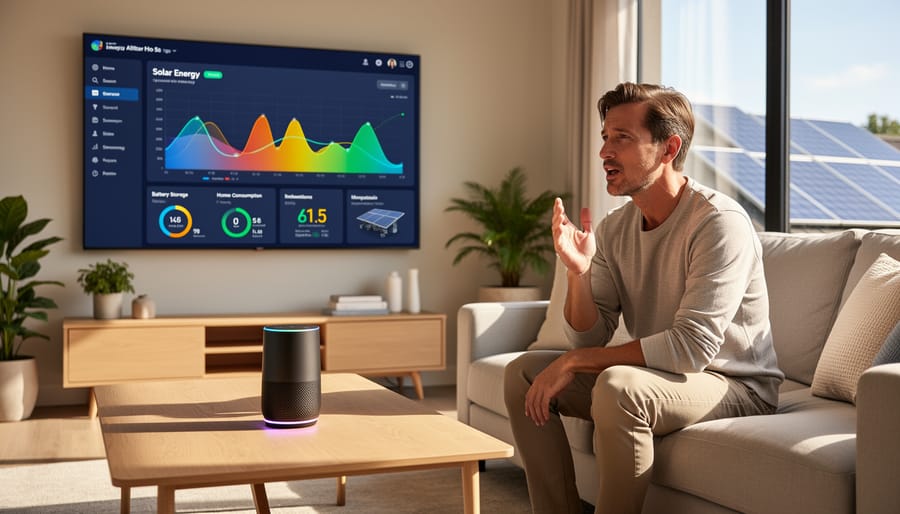
Voice activated control systems for solar installations rely on an interconnected architecture of specialized components working in concert. At the foundation lies the voice recognition module, which employs natural language processing algorithms to convert spoken commands into actionable instructions. These modules, often integrated through platforms like Amazon Alexa, Google Assistant, or Apple Siri, utilize advanced speech-to-text engines that recognize industry-specific terminology related to photovoltaic operations.
The communication layer forms the critical bridge between voice input and solar hardware. This typically involves Internet of Things protocols such as MQTT, Zigbee, or Z-Wave, which facilitate real-time data exchange between voice assistants and solar system components. These lightweight protocols ensure minimal latency while maintaining secure connections across the control network.
Cloud connectivity serves as the intelligence hub, processing voice commands through remote servers that house the machine learning models powering voice recognition. This cloud infrastructure enables continuous improvement through algorithm updates and provides the computational power necessary for complex natural language understanding. However, some systems incorporate edge computing capabilities to maintain essential functions during connectivity interruptions.
The control interface represents the final component, translating interpreted commands into specific actions for inverters, battery storage systems, and monitoring equipment. This interface must comply with manufacturer APIs and industry standards like Modbus or SunSpec protocols to ensure compatibility across diverse solar hardware ecosystems. Integration with existing energy management systems allows voice commands to trigger sophisticated responses, from adjusting export limits to scheduling battery charge cycles based on utility rate structures.
Integration with Existing Solar Infrastructure
Voice-activated control systems integrate seamlessly with existing solar infrastructure through standardized communication protocols and API-based connections. These systems typically connect to the monitoring and management layer of solar installations rather than directly interfacing with physical components like monocrystalline panels or PV modules, eliminating the need for hardware modifications.
Most modern solar inverters and energy storage systems already include Wi-Fi or Ethernet connectivity for remote monitoring. Voice control platforms leverage these existing communication channels, using protocols such as Modbus TCP, SunSpec, or manufacturer-specific APIs to retrieve system data and execute commands. The integration process generally involves installing middleware software that translates voice commands into compatible control signals for your solar equipment.
For smart home integration, voice systems connect through cloud-based platforms or local hub devices that communicate with your inverter’s monitoring interface. This approach preserves existing warranties and certifications since no physical modifications occur to certified solar equipment. Battery management systems similarly integrate through their existing communication ports, allowing voice-activated monitoring of charge levels and discharge patterns without compromising system integrity. Professional installation typically requires configuration of network settings and API permissions rather than electrical work, making adoption accessible for installations ranging from residential rooftop arrays to commercial-scale deployments.
Practical Applications for Solar System Management
Real-Time Performance Monitoring and Diagnostics
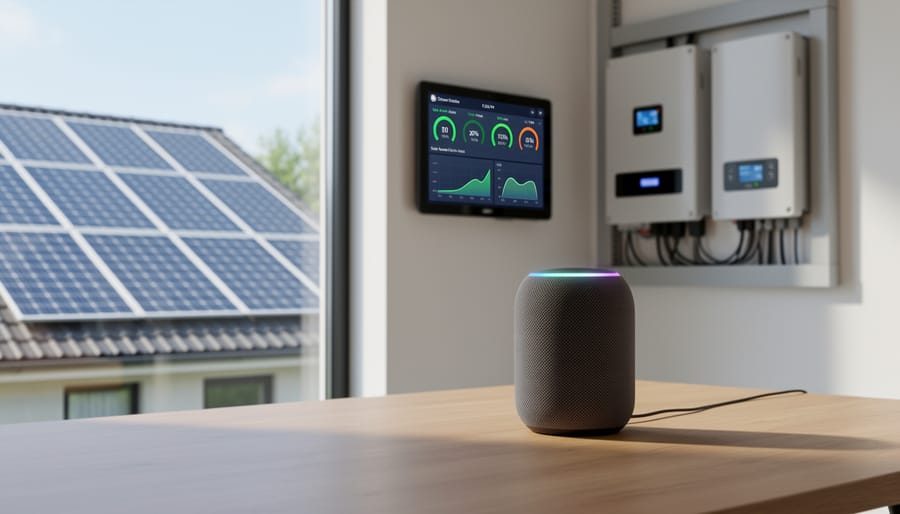
Voice-activated diagnostics represent a transformative advancement in smart solar monitoring, enabling system operators to access critical performance data through natural language queries. By integrating voice assistants with photovoltaic monitoring platforms, users can instantly retrieve energy production metrics, panel efficiency ratings, and system health indicators without navigating complex dashboards or mobile applications.
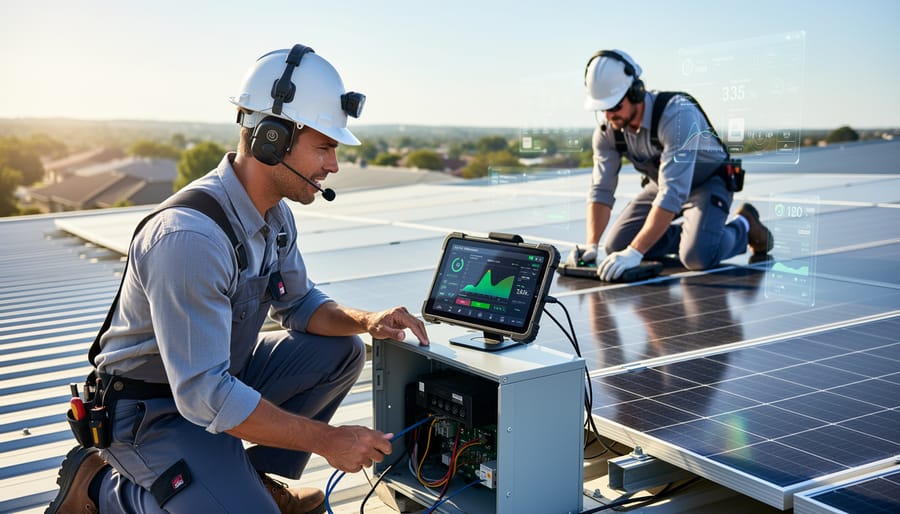
This hands-free approach proves particularly valuable during field inspections and maintenance procedures. Technicians can verbally request real-time inverter status updates, string-level voltage readings, or historical production comparisons while keeping their hands free for equipment handling. The system processes these queries through cloud-connected APIs that interface directly with monitoring hardware, delivering accurate responses within seconds.
Advanced implementations incorporate predictive diagnostics, alerting users to potential issues before they escalate. Voice commands like “check panel efficiency trends” or “report system anomalies” trigger algorithmic analysis of performance data, identifying degradation patterns or component failures. This proactive approach reduces downtime and optimizes maintenance scheduling.
Educational institutions collaborating with industry leaders are developing training modules that familiarize aspiring photovoltaic professionals with these voice-enabled diagnostic tools, ensuring workforce readiness for increasingly automated solar infrastructure management.
Energy Consumption Optimization
Voice-activated control systems enable sophisticated energy consumption optimization by continuously analyzing solar production data and adjusting electrical loads accordingly. Through natural language commands, users can initiate load balancing protocols that automatically prioritize essential appliances during periods of lower solar output while maximizing consumption during peak production hours.
Battery charge and discharge cycles benefit significantly from voice-activated management. Users can instruct the system to preserve battery capacity for evening use or discharge stored energy strategically based on weather forecasts and historical production patterns. This intelligent coordination extends battery lifespan and ensures optimal energy availability during critical periods.
Smart scheduling represents perhaps the most impactful optimization feature. Voice commands can program high-energy appliances like water heaters, pool pumps, and electric vehicle chargers to operate exclusively during solar surplus periods. The system learns household consumption patterns and solar generation trends, offering proactive suggestions through voice notifications. For example, the system might alert homeowners when sufficient solar energy is available to run multiple high-draw appliances simultaneously without grid dependence.
Advanced implementations integrate with utility time-of-use rates, automatically shifting consumption to minimize electricity costs while maximizing solar self-consumption. This dynamic approach, controllable through simple voice commands, can reduce grid electricity purchases by 30-40% in optimally configured systems, demonstrating substantial economic and environmental benefits for residential and commercial photovoltaic installations.
Maintenance Alerts and Troubleshooting
Voice-activated control systems provide proactive maintenance management by monitoring photovoltaic system performance and delivering timely alerts through natural language communication. These intelligent platforms can announce when inverter efficiency drops below optimal thresholds, notify users of panel soiling that reduces energy capture, or alert operators to grid connection irregularities requiring attention.
The conversational interface transforms complex diagnostic data into accessible information. Instead of deciphering error codes or navigating technical dashboards, users receive clear verbal explanations such as “Panel array three is producing fifteen percent below expected output due to shading” or “Battery storage capacity has decreased to seventy-eight percent efficiency.” This democratizes system monitoring, making it accessible to homeowners and facility managers without extensive technical training.
For basic troubleshooting, voice assistants guide users through systematic diagnostic procedures. When performance issues arise, the system can walk operators through verification steps: checking circuit breaker positions, confirming inverter status indicators, or validating monitoring equipment connectivity. This conversational troubleshooting reduces downtime and service call expenses while building user competency.
Academic research partnerships have demonstrated that voice-guided maintenance protocols improve response times by forty-two percent compared to traditional manual-based approaches. Educational programs now incorporate voice system diagnostics training, preparing emerging professionals to leverage these tools effectively in commercial and residential solar installations.
Benefits for Different Stakeholder Groups
Advantages for Residential Users
Voice-activated control systems democratize solar energy management by eliminating the technical barriers that often intimidate non-technical homeowners. Rather than navigating complex monitoring interfaces or smartphone applications, residential users can simply ask their system about energy production, consumption patterns, or storage levels using natural language commands. This intuitive interaction model requires no specialized training, making solar technology genuinely accessible to households regardless of their technical proficiency.
The accessibility advantages extend particularly to elderly users and individuals with disabilities. Voice commands eliminate the need for fine motor control required by touchscreens or small buttons, while visual impairments become irrelevant when system feedback is delivered audibly. This inclusive design philosophy aligns with universal accessibility standards and expands solar adoption to demographics previously underserved by conventional control interfaces.
Beyond simplification, voice interaction fundamentally transforms homeowner engagement with their solar investment. Regular verbal interactions with the system foster awareness of energy patterns, encouraging more conscious consumption behaviors. When homeowners can effortlessly check battery levels before running high-consumption appliances or verify daily production during morning routines, they develop an intuitive understanding of their energy ecosystem that traditional monitoring dashboards rarely achieve, ultimately maximizing the financial and environmental returns on their renewable energy investment.
Professional Applications for PV Installers and Technicians
Voice-activated control systems are revolutionizing field operations for solar installation professionals by enabling hands-free diagnostics during complex installations. Technicians working on rooftops or in confined spaces can now access system data, troubleshoot inverter issues, and document installation parameters without interrupting their workflow or compromising safety protocols. Voice commands allow real-time monitoring of voltage levels, array performance metrics, and equipment status while maintaining proper positioning and tool handling.
Remote management capabilities have become significantly more efficient through voice-enabled platforms. Installation teams can verbally query system performance data, receive alerts about maintenance requirements, and coordinate with project managers without leaving active work sites. This technology reduces response times during critical troubleshooting scenarios and minimizes equipment downtime.
Customer support operations benefit substantially from voice-activated monitoring interfaces. Service technicians can guide homeowners through basic system checks via phone consultations, with customers using voice commands to display performance data or system status information. This streamlined approach reduces unnecessary service calls, accelerates problem identification, and enhances customer satisfaction. Universities collaborating with industry partners are developing specialized training modules to help emerging professionals master these voice-enabled diagnostic tools effectively.
Value for Commercial and Industrial Operations
For commercial and industrial facilities managing extensive photovoltaic installations, voice-activated control systems deliver substantial operational advantages. Facility managers can monitor and adjust multiple solar arrays simultaneously through centralized voice commands, eliminating the need to access individual system interfaces. This technology integrates seamlessly with existing building management systems and SCADA platforms, enabling unified control of energy generation alongside HVAC, lighting, and other infrastructure components. Voice commands such as “show production data for rooftop arrays” or “adjust inverter settings for east-facing panels” streamline daily operations and reduce response times during system optimization. The hands-free interface proves particularly valuable during equipment inspections, allowing technicians to query system performance while conducting physical assessments. Organizations implementing voice control report efficiency gains through reduced operational overhead and faster troubleshooting capabilities. Research partnerships between solar technology providers and academic institutions continue advancing these commercial applications, developing sophisticated voice recognition algorithms tailored to industrial photovoltaic terminology and operational requirements.
Technical Considerations and Implementation Challenges
Cybersecurity and Data Privacy
Voice-activated control systems introduce specific cybersecurity considerations for photovoltaic installations, as they create additional network entry points that require robust protection. Understanding these vulnerabilities enables professionals to implement secure solutions that safeguard both operational data and consumer privacy.
Primary security concerns include unauthorized access to energy management systems, interception of voice commands containing sensitive information, and potential manipulation of solar array operations through compromised voice interfaces. These risks necessitate multi-layered security protocols that extend beyond standard network protection measures.
Encryption requirements form the foundation of secure voice-activated solar systems. End-to-end encryption protects voice data during transmission, while AES-256 encryption standards secure stored energy production data and user credentials. Industry best practices recommend implementing separate network segments for voice control interfaces, isolating them from critical infrastructure management systems.
Authentication protocols should incorporate multi-factor verification, preventing unauthorized users from accessing system controls through voice commands alone. Regular security audits and firmware updates address emerging vulnerabilities, while compliance with data protection regulations such as GDPR ensures responsible handling of user information.
Educational programs developed through university collaborations emphasize cybersecurity training for aspiring PV professionals, recognizing that technical competence must include security awareness. Implementing these protective measures requires understanding both renewable energy systems and current cybersecurity standards, creating opportunities for professionals skilled in both domains to advance industry-wide security practices.
Connectivity and Reliability Requirements
Voice activated control systems for photovoltaic installations require careful consideration of network dependencies and reliability safeguards. Most commercial solutions operate through cloud-based processing, where voice commands travel to remote servers for interpretation before executing actions on your solar system. This architecture introduces internet dependency as a critical factor in system reliability.
Cloud processing offers advantages including continuous algorithm improvements and reduced local hardware requirements, but creates vulnerability during network outages. Progressive manufacturers now provide hybrid solutions featuring local processing capabilities that maintain essential control functions when internet connectivity fails. These systems store core command libraries and automation routines locally, ensuring basic operational control remains accessible regardless of network status.
Implementing backup control methods proves essential for professional installations. Industry best practices recommend maintaining traditional physical interfaces alongside voice controls, including wall-mounted panels or mobile applications with direct local network access. This redundancy ensures operators can always manage critical functions like emergency shutdowns or load balancing during connectivity disruptions.
For mission-critical solar installations powering essential services, evaluate systems offering offline mode capabilities and establish clear protocols for manual intervention. Academic research conducted through university collaborations demonstrates that hybrid architectures combining local and cloud processing deliver optimal reliability while maintaining the convenience benefits that make voice control attractive to both residential and commercial photovoltaic users.
Voice Recognition Accuracy in Technical Contexts
Voice recognition systems face distinct challenges when processing photovoltaic-specific terminology. Technical terms like “inverter efficiency,” “maximum power point tracking,” and “bifacial modules” often trigger misinterpretation, as standard voice recognition databases prioritize common vocabulary over specialized industry language. Accent variations and multilingual environments compound these difficulties, particularly in global solar installations where operators may speak non-native English.
To enhance command accuracy, leading systems now employ custom acoustic models trained on solar-specific datasets. Organizations can improve recognition rates by creating vocabulary lists that include frequently used technical terms, equipment model numbers, and site-specific nomenclature. Research collaborations between universities and industry leaders have demonstrated that context-aware processing, which considers previous commands and system states, significantly reduces error rates. Additionally, implementing confirmation protocols for critical commands—such as “shutdown” or “grid disconnect”—provides essential safeguards. Training operators to use consistent phrasing and establishing standardized command structures across teams further optimizes system performance, ensuring reliable voice control in professional photovoltaic environments.
Educational Pathways for Voice-Activated Solar Technologies
Skills and Knowledge Requirements
Implementing voice-activated control systems for solar installations requires a diverse technical skill set that bridges renewable energy engineering with modern software integration. Professionals entering this field must first establish solid foundations in IoT fundamentals, including understanding how connected devices communicate through protocols like MQTT, Zigbee, and Wi-Fi. This knowledge forms the backbone of creating responsive, reliable voice-controlled solar management systems.
Smart home integration expertise is essential, as voice-activated solar controls typically function within broader home automation ecosystems. Professionals should develop proficiency with platforms such as Amazon Alexa, Google Assistant, and Apple HomeKit, understanding their respective APIs, authentication methods, and integration requirements. This includes knowledge of RESTful APIs, webhooks, and cloud-based service architectures that enable seamless communication between voice assistants and solar monitoring systems.
The cross-disciplinary nature of this field demands competency in both solar engineering principles and software development. Understanding photovoltaic system components, inverter specifications, battery management systems, and electrical safety standards must complement skills in programming languages like Python or JavaScript. Universities increasingly offer specialized programs combining renewable energy coursework with IoT and automation training, providing structured pathways for professionals seeking these integrated competencies. Hands-on experience with solar monitoring platforms and their API documentation accelerates practical implementation capabilities.
Training Resources and Certification Opportunities
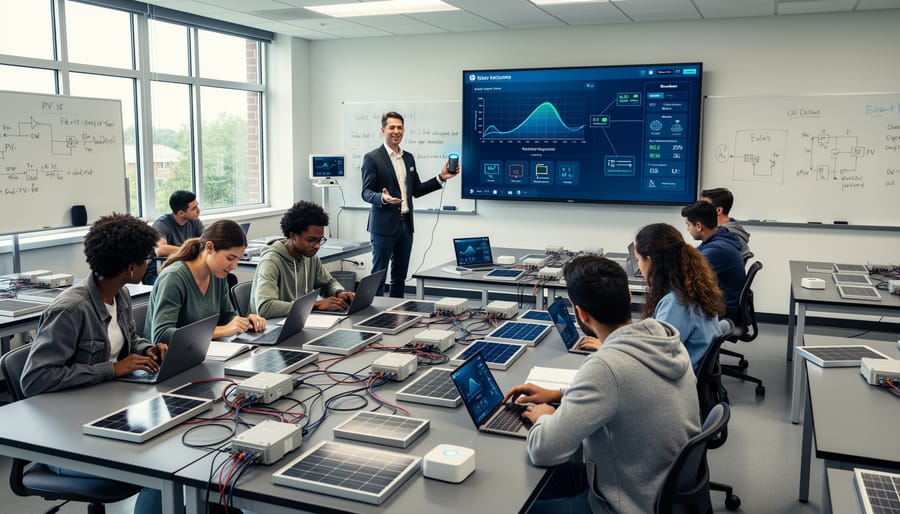
Educational institutions and industry organizations now offer specialized training pathways for voice-activated photovoltaic system management. Several leading renewable energy universities have integrated voice control technology modules into their solar training programs, providing students with hands-on experience in configuring and troubleshooting voice-activated monitoring systems.
Online certification courses through platforms partnered with major solar organizations deliver comprehensive instruction on voice interface integration, natural language processing applications, and smart home energy management. These programs typically include virtual laboratory environments where participants practice configuring voice commands for solar inverters, battery storage systems, and energy optimization protocols.
University collaborations have proven instrumental in curriculum development, with institutions conducting joint research projects that inform practical training modules. Many programs now offer stackable credentials, allowing professionals to advance from foundational voice technology principles to advanced system integration strategies, ensuring workforce readiness for this emerging technological convergence in renewable energy management.
Future Developments and Industry Trajectory
Artificial Intelligence and Machine Learning Integration
Artificial intelligence and machine learning are transforming voice-activated control systems from simple command executors into intelligent solar management platforms. Modern AI-powered voice interfaces enable predictive analytics by analyzing historical performance data, weather patterns, and energy consumption trends to forecast system behavior and proactively recommend adjustments. For example, machine learning algorithms can predict peak production periods and automatically optimize energy storage allocation, all accessible through natural language queries.
Conversational problem-solving represents a significant advancement beyond basic voice commands. Rather than requiring users to memorize specific phrases, AI-driven systems understand context and can engage in multi-turn dialogues to diagnose issues, suggest solutions, and walk users through maintenance procedures. When a homeowner asks about unexpected production drops, the system can analyze panel performance, check inverter status, and identify potential shading issues while explaining findings in accessible language.
Personalized energy recommendations leverage machine learning to understand individual consumption patterns and lifestyle preferences. These systems learn from user behavior over time, offering tailored suggestions for maximizing self-consumption, reducing grid dependency, and optimizing battery discharge cycles. Integration with adaptive PV design principles allows the AI to continuously refine recommendations as system conditions evolve.
Autonomous system optimization represents the frontier of AI integration, where voice interfaces serve as communication channels for self-managing photovoltaic installations. These systems automatically adjust parameters, initiate maintenance alerts, and implement efficiency improvements while keeping users informed through natural language updates. This combination of automation and accessible communication makes advanced solar management practical for non-technical homeowners while providing professionals with powerful diagnostic tools.
Standardization and Industry Adoption Trends
The solar industry is experiencing significant momentum toward standardizing voice control interfaces, with leading manufacturers collaborating through organizations like the SunSpec Alliance to develop universal command protocols. These initiatives aim to ensure interoperability across different solar equipment brands, enabling seamless voice control whether managing traditional photovoltaic panels, integrated solar tiles, or innovative solar roof shingles.
Major players including Enphase, SolarEdge, and Tesla are already integrating voice compatibility with platforms like Amazon Alexa and Google Assistant, while simultaneously working toward industry-specific standards. Universities partnering with solar manufacturers are conducting research to optimize voice recognition accuracy in technical solar terminology, ensuring commands related to system diagnostics and performance metrics are universally understood.
Industry analysts project that by 2026, approximately 40% of new residential solar installations will feature voice-activated control capabilities as standard or optional features. By 2030, this figure is expected to reach 70%, with commercial applications following a similar trajectory. Educational programs through technical institutions and industry certification bodies are already incorporating voice control system training into photovoltaic curricula, preparing the next generation of solar professionals for this technological integration. This collaborative approach between manufacturers, academic researchers, and industry organizations positions voice activation as a mainstream solar management tool within the current decade.
Voice-activated control systems represent a significant advancement in solar energy management, offering transformative potential for both residential and commercial photovoltaic applications. These intelligent interfaces democratize access to sophisticated monitoring capabilities, enabling users of varying technical expertise to interact seamlessly with their solar installations through natural language commands. The accessibility improvements extend beyond convenience, empowering individuals with physical disabilities and reducing the technical barriers that have traditionally hindered broader solar adoption.
The operational efficiency gains achieved through voice integration cannot be overstated. Real-time system diagnostics, predictive maintenance alerts, and instant performance optimization through conversational interfaces significantly reduce response times and operational costs. For photovoltaic professionals, mastering these emerging technologies positions them at the forefront of industry innovation, making comprehensive education and specialized training essential components of career development in the renewable energy sector.
At Mose Solar, our commitment to advancing photovoltaic technologies extends beyond product development to encompass robust educational initiatives. Through strategic collaborations with universities and targeted professional training programs, we equip aspiring PV professionals with the knowledge required to implement, maintain, and optimize voice-activated solar management systems. This educational focus ensures that technological innovation translates into practical industry applications, supporting sustainable growth throughout the photovoltaic sector.
As voice technology continues evolving, the integration of artificial intelligence and machine learning will further enhance system capabilities, creating increasingly intuitive and responsive solar management solutions that drive the renewable energy transition forward.