
Procurement digital transformation in the photovoltaic industry addresses critical inefficiencies that cost solar companies 15-30% in unnecessary spending annually. Manual purchase orders, fragmented supplier communication, and limited spend visibility create bottlenecks that slow project timelines and erode profit margins in an increasingly competitive renewable energy market.
Digital procurement platforms integrate Supplier Relationship Management (SRM) systems, spend analytics tools, and automated workflow solutions to streamline solar component sourcing. These technologies enable real-time tracking of module purchases, inverter specifications, and mounting hardware across multiple suppliers while maintaining quality standards and compliance requirements. Companies implementing comprehensive digital procurement reduce processing time by 60% and achieve 20-25% cost savings within the first year.
The transformation extends beyond software adoption. Successful digital procurement requires restructuring approval hierarchies, establishing data governance protocols, and training teams to interpret analytics dashboards. For photovoltaic manufacturers and EPC contractors, this means connecting procurement data directly to project management systems, enabling accurate forecasting of component availability and pricing fluctuations in volatile silicon and semiconductor markets.
Three core components drive effective procurement digitalization: centralized vendor databases that consolidate supplier performance metrics, automated request-for-proposal (RFP) systems that accelerate bidding cycles, and predictive analytics that identify supply chain risks before they impact installation schedules. These tools prove particularly valuable when managing complex multi-site solar farms requiring coordination across equipment suppliers, logistics providers, and installation contractors.
Organizations pursuing digital transformation must prioritize interoperability between procurement platforms and existing enterprise resource planning (ERP) systems. This integration ensures seamless data flow from initial supplier selection through final payment processing, creating end-to-end transparency that supports strategic decision-making in renewable energy deployment.
The Current State of PV Procurement: Why Traditional Methods Fall Short

Supply Chain Complexity in Solar Manufacturing
Solar photovoltaic manufacturing operates through intricate, geographically dispersed supply networks that present unique procurement challenges. A typical PV module contains components from multiple tiers of suppliers across different continents—polysilicon from specialized chemical processors, wafers from ingot manufacturers, cells from fabrication facilities, and glass, backsheets, and frames from various specialized suppliers. This multi-tiered structure creates visibility gaps that traditional procurement methods struggle to address.
Geographic concentration adds another layer of complexity. Over 80% of global polysilicon production originates from specific Asian regions, creating single-point dependencies that amplify vulnerability to supply chain disruptions. Silver paste for cell metallization, aluminum frames, and ethylene vinyl acetate encapsulants each have their own supplier ecosystems with distinct lead times and price dynamics.
Material sourcing presents additional challenges. Critical raw materials like high-purity silicon require energy-intensive processing, while silver availability directly impacts cell efficiency choices. Price volatility in these materials can significantly affect project economics, making real-time visibility and predictive analytics essential for effective procurement management.
Digital transformation tools address these complexities by providing end-to-end supply chain visibility, enabling risk assessment across supplier tiers, and facilitating data-driven sourcing decisions that account for the solar industry’s unique material dependencies and geographic realities.
The Price Volatility Problem
Photovoltaic procurement teams face unprecedented challenges from commodity price fluctuations that can dramatically impact project economics. Silicon, silver, aluminum, and other critical materials experience volatile price swings driven by global supply-demand imbalances, geopolitical tensions, and manufacturing capacity constraints. Without real-time market intelligence, procurement professionals often rely on outdated pricing information, leading to suboptimal purchasing decisions and budget overruns.
Traditional procurement approaches depend on quarterly reports and manual market research, creating significant information lag. By the time procurement teams analyze pricing trends and make purchasing decisions, market conditions may have shifted substantially. This disconnect becomes particularly problematic when securing multi-year supply agreements for large-scale solar installations, where price variations of even 5-10% can translate to millions in cost differences.
Digital transformation addresses this uncertainty through integrated data platforms that aggregate real-time commodity pricing, supplier quotations, and market forecasts. Advanced analytics tools enable procurement professionals to identify optimal purchasing windows, hedge against price increases, and negotiate more effectively with suppliers. Academic research partnerships have demonstrated that organizations implementing real-time pricing dashboards reduce procurement costs by 8-15% while improving forecast accuracy. For aspiring photovoltaic professionals, understanding these digital tools represents essential knowledge for navigating modern solar supply chain management effectively.
Understanding Procurement Digital Transformation in the PV Context
Core Components of PV Procurement Digitalization
Digital transformation in photovoltaic procurement relies on several interconnected technological components that streamline operations and enhance decision-making capabilities. At the foundation sits the e-procurement system, which serves as the centralized platform for managing purchase requisitions, purchase orders, and supplier interactions. These systems enable procurement teams to track solar panel specifications, inverter requirements, and mounting hardware needs in real-time, reducing manual errors and accelerating approval cycles.
Supplier portals represent another critical component, providing manufacturers and distributors with direct access to submit quotes, update product certifications, and share technical documentation. For PV procurement, these portals prove particularly valuable when managing the complex certification requirements for solar modules, including IEC standards and safety compliance documents. Suppliers can upload updated datasheets and performance specifications instantly, ensuring procurement teams work with current information.
Automated workflows eliminate bottlenecks in approval processes, routing requests based on predefined rules considering project size, budget thresholds, and equipment specifications. This automation proves essential when managing multiple solar installations simultaneously, each requiring different component specifications and delivery schedules.
Digital documentation management systems consolidate technical specifications, quality certifications, warranty documents, and performance data sheets in searchable repositories. This capability becomes invaluable when verifying module efficiency ratings, reviewing inverter compatibility documentation, or accessing historical supplier performance records. Many leading educational programs now incorporate training on these platforms, recognizing their importance in modern renewable energy procurement operations.
The Technology Stack for Modern PV Procurement
Modern procurement digital transformation in the photovoltaic sector relies on sophisticated technology infrastructure designed specifically for the renewable energy supply chain. Cloud-based procurement platforms form the foundation, offering scalability and accessibility that traditional on-premise systems cannot match. These platforms enable procurement teams to manage supplier relationships, track polysilicon pricing fluctuations, and monitor module specifications from any location, essential for global PV supply chains spanning multiple continents.
API integrations connect procurement systems with enterprise resource planning software, inventory management tools, and financial systems, creating seamless data flow across the organization. For PV companies, this integration allows real-time visibility into silicon wafer availability, module production schedules, and inverter lead times, enabling more informed purchasing decisions. Third-party data providers can be integrated to deliver market intelligence on crystalline silicon prices, shipping costs, and regulatory changes affecting component availability.
Mobile accessibility has become non-negotiable for procurement professionals managing time-sensitive solar projects. Mobile applications allow procurement managers to approve purchase orders, review supplier quotations, and respond to supply chain disruptions while on-site at solar installations or during project commissioning.
Data security remains paramount when managing sensitive supplier contracts, proprietary pricing agreements, and intellectual property related to emerging PV technologies like bifacial modules or perovskite cells. Enterprise-grade encryption, role-based access controls, and compliance with international data protection standards protect competitive advantages. Regular security audits and vendor assessments ensure that cloud providers maintain the stringent security protocols necessary for protecting confidential procurement information in this highly competitive industry.
Supplier Relationship Management (SRM) for PV Procurement Excellence
Supplier Performance Tracking and Scorecarding
Digital Supplier Relationship Management platforms revolutionize how photovoltaic companies monitor and evaluate supplier performance through automated, real-time scorecarding systems. These platforms continuously track multiple dimensions of supplier excellence, creating comprehensive performance profiles that inform strategic sourcing decisions.
Modern SRM systems automatically collect and analyze key performance indicators specific to PV procurement. Delivery performance metrics track on-time shipment rates, lead time accuracy, and order fulfillment completeness—critical factors when coordinating complex module assembly schedules. Quality metrics encompass defect rates, warranty claims, and field failure data, providing objective evidence of component reliability. Advanced quality metrics tracking systems integrate laboratory test results and production line data, enabling early identification of quality trends.
Compliance monitoring represents another essential dimension, particularly for supplier compliance requirements regarding IEC 61215, IEC 61730, and UL certification standards. Digital platforms automatically verify certificate validity, track expiration dates, and flag compliance gaps before they disrupt procurement operations. This automated oversight ensures that only certified components enter your supply chain.
Innovation capability scoring adds strategic value by assessing suppliers’ research and development investments, patent portfolios, and technology roadmap alignment with emerging PV trends. University partnerships and participation in industry research consortia become quantifiable factors in supplier selection.
Automated scorecards aggregate these diverse metrics into weighted rankings, enabling data-driven comparisons across your supplier base. This transparency facilitates constructive performance dialogues, identifies improvement opportunities, and supports objective decisions about supplier development, contract renewals, or strategic partnerships essential for competitive advantage.
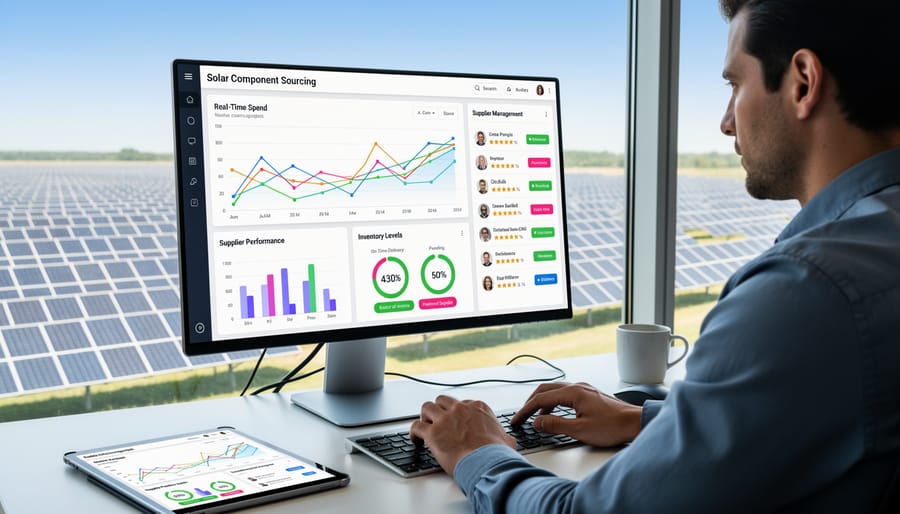
Risk Management and Supplier Diversification
Modern Supplier Relationship Management platforms have become essential risk mitigation tools in photovoltaic procurement, where supply chain vulnerabilities can significantly impact project timelines and profitability. These digital systems excel at identifying concentration risks by analyzing procurement data to reveal over-reliance on single suppliers for critical components like solar cells, junction boxes, or inverters. When procurement teams discover that 70% of their module supply comes from one manufacturer, the platform triggers alerts and recommends diversification strategies.
Multi-sourcing capabilities within SRM platforms enable procurement professionals to maintain qualified alternative suppliers across different geographic regions. This proves particularly valuable in the solar industry, where geopolitical tensions, trade policies, and regional manufacturing disruptions frequently affect supply availability. The systems facilitate comparison of technical specifications, quality certifications, and pricing across multiple vendors simultaneously, streamlining the evaluation process for backup suppliers.
Perhaps most critically, advanced SRM platforms incorporate early warning systems that monitor supplier financial health through credit ratings, payment history analysis, and public financial disclosures. These tools also track production capacity indicators, alerting procurement teams to potential shortfalls before they impact project schedules. For PV projects with strict completion deadlines tied to incentive programs or power purchase agreements, such predictive intelligence allows proactive adjustment of sourcing strategies. Academic institutions collaborating with industry partners have documented how these digital risk management approaches reduce supply disruptions by up to 40%, demonstrating measurable value for organizations navigating the complex photovoltaic supply ecosystem.
Collaborative Innovation with Technology Partners
Digital supplier relationship management platforms have revolutionized collaborative innovation between photovoltaic manufacturers and their technology partners. These systems create shared digital workspaces where engineering teams can jointly develop next-generation products such as solar tiles, bifacial modules, and advanced passivated emitter rear cell (PERC) panels. Through centralized specification management tools, procurement teams coordinate technical requirements across multiple stakeholders, ensuring alignment from initial concept through production.
Modern SRM platforms facilitate real-time document sharing, version control, and automated approval workflows that accelerate product development cycles. For instance, when developing innovative solar tile solutions, manufacturers can share performance specifications, material requirements, and testing protocols with suppliers through secure digital channels. This transparency reduces miscommunication and enables faster iteration cycles.
Research institutions and universities increasingly participate in these collaborative ecosystems, contributing cutting-edge research findings that inform product innovation. Academic partnerships through digital platforms allow suppliers to access emerging technologies in areas like perovskite cells or tandem solar architectures before they reach commercial maturity.
The co-innovation workflow functionality within advanced SRM systems tracks joint development milestones, manages intellectual property agreements, and documents each partner’s contributions. This structured approach has proven particularly valuable in the photovoltaic sector, where rapid technological advancement demands agile collaboration between manufacturers, material suppliers, equipment providers, and research organizations to maintain competitive positioning in global markets.
Spend Analytics: Turning Procurement Data into Strategic Insights

Data Collection and Categorization in PV Procurement
Effective data collection forms the foundation of procurement digital transformation in the photovoltaic sector. Organizations must begin by aggregating historical spending data across all PV component categories, including solar modules, inverters, mounting systems, balance of system (BOS) components, and installation services. This consolidation process often reveals fragmented purchasing patterns and hidden cost opportunities that manual tracking systems typically miss.
Creating a meaningful classification taxonomy requires understanding the technical specifications and interdependencies of PV components. Solar modules should be categorized by technology type (monocrystalline, polycrystalline, thin-film), power output ranges, and efficiency ratings. Inverters merit classification by type (string, central, microinverter), capacity, and compatibility requirements. Mounting systems and racking components need categorization based on installation environment (ground-mount, rooftop, carport) and structural specifications.
Modern spend analytics platforms enable procurement teams to standardize supplier names, normalize product descriptions, and identify duplicate entries that inflate apparent costs. Many organizations collaborate with universities and research institutions to develop industry-specific classification frameworks that reflect evolving technology standards and market dynamics.
This structured approach transforms raw transactional data into actionable intelligence, revealing supplier concentration risks, price variance opportunities, and category-specific trends. Educational programs focusing on data management best practices help procurement professionals develop the analytical skills necessary to maintain these taxonomies as the industry evolves and new technologies emerge.
Identifying Cost Reduction Opportunities
Digital procurement platforms enable photovoltaic procurement teams to identify substantial cost reduction opportunities through sophisticated analytical techniques. Spend analytics tools aggregate purchasing data across suppliers, components, and time periods, revealing pricing anomalies that manual processes might overlook. For instance, algorithms can detect when similar solar modules are purchased at different price points from multiple suppliers, highlighting immediate consolidation opportunities.
Volume consolidation represents a particularly powerful strategy in PV procurement. By analyzing historical purchasing patterns, digital systems can identify fragmented buying behaviors across project sites or business units. When solar panel purchases, inverter acquisitions, or mounting system orders are consolidated with fewer strategic suppliers, organizations typically achieve 8-15% cost reductions through improved negotiating leverage and economies of scale.
Market benchmarking capabilities within digital platforms provide procurement professionals with real-time comparison data against industry indices and competitor pricing. These systems track polysilicon prices, wafer costs, and finished module rates across global markets, ensuring procurement teams negotiate from informed positions. Universities collaborating on renewable energy research often contribute to these benchmarking databases, enhancing data accuracy.
Advanced analytics also reveal total cost of ownership insights beyond unit pricing. Digital tools calculate factors like supplier reliability, warranty performance, logistics efficiency, and quality metrics, enabling procurement decisions based on comprehensive value rather than purchase price alone. This data-driven approach transforms negotiations from adversarial discussions to collaborative partnerships, where both parties optimize outcomes using objective performance metrics and transparent market intelligence.
Forecasting and Demand Planning
Accurate demand forecasting represents a critical capability enabled by digital procurement platforms in the photovoltaic industry. By aggregating historical spend data across multiple procurement cycles, organizations can identify consumption patterns for various PV technologies, including monocrystalline and polycrystalline silicon modules, inverters, and balance-of-system components. Advanced analytics tools process this historical information alongside external market intelligence—such as regulatory changes, incentive program timelines, and seasonal installation trends—to generate predictive models that anticipate future material requirements.
These forecasting capabilities directly support inventory optimization strategies, helping procurement teams maintain appropriate stock levels without excessive capital tied up in warehousing. For project-based operations common in solar installations, demand planning tools can align component procurement with project pipelines, reducing the risk of material shortages that delay commissioning or excess inventory that becomes obsolete as technology evolves rapidly.
Production planning also benefits significantly from enhanced forecasting accuracy. Manufacturers and system integrators can coordinate their procurement schedules with production capacity, ensuring materials arrive precisely when needed for assembly operations. Many universities collaborating with industry partners have developed machine learning algorithms specifically designed for renewable energy supply chain forecasting, incorporating variables unique to the solar sector such as policy shifts and technology adoption curves. Educational programs increasingly emphasize these digital forecasting competencies, preparing the next generation of procurement professionals to leverage data-driven decision-making effectively.
Implementation Roadmap for PV Procurement Digital Transformation
Assessment and Readiness Evaluation
Before embarking on a digital transformation journey, photovoltaic procurement teams must conduct a comprehensive assessment of their current capabilities. Begin by evaluating your procurement maturity across key dimensions: process standardization, technology infrastructure, data quality, and team competencies. For PV-specific procurement, assess how effectively you manage supplier relationships across global solar component markets, track material certifications, and monitor supply chain sustainability metrics.
Identify critical gaps by benchmarking against industry standards. Common deficiencies in solar procurement include fragmented supplier data, manual purchase order processing, limited spend visibility across module categories, and inadequate risk monitoring for silicon and rare material suppliers. Document these gaps with quantifiable metrics such as processing time per purchase order, error rates in component specifications, and delayed project timelines due to procurement bottlenecks.
Define clear, measurable objectives aligned with organizational goals. These might include reducing procurement cycle times by 40 percent, achieving 95 percent supplier compliance with quality certifications, or improving forecast accuracy for seasonal demand fluctuations in solar installations.
Build a compelling business case by calculating potential cost savings, efficiency gains, and risk mitigation benefits. Include implementation costs, training investments, and expected return on investment timelines. Engage stakeholders from operations, finance, and project management early to ensure alignment and secure executive sponsorship for the transformation initiative.
Selecting the Right Digital Solutions
Selecting appropriate digital procurement solutions requires careful evaluation against solar industry-specific criteria. Begin by assessing platforms for photovoltaic module procurement capabilities, including specifications management for polycrystalline versus monocrystalline technologies, inverter compatibility tracking, and balance-of-system component cataloging. Integration capabilities prove essential—your chosen solution must seamlessly connect with existing enterprise resource planning systems, quality management databases, and installation scheduling tools commonly used in solar project deployment.
Scalability considerations matter significantly as renewable energy markets expand rapidly. Evaluate whether platforms can accommodate growing supplier networks across multiple geographic regions and handle increasing transaction volumes as your solar portfolio grows. Cloud-based solutions typically offer superior scalability compared to on-premise alternatives.
Vendor support specifically tailored to renewable energy procurement distinguishes exceptional platforms. Seek providers offering dedicated solar industry training modules, regulatory compliance updates for evolving sustainability standards, and consultative assistance for unique challenges like tariff classification for imported modules or carbon footprint tracking. Many leading educational institutions collaborate with technology vendors to develop specialized training programs for procurement professionals entering the photovoltaic sector. Request vendor references from similar-sized solar organizations and conduct pilot testing with actual procurement scenarios before final selection to ensure alignment with your operational requirements.
Change Management and Skills Development
Successfully navigating procurement digital transformation requires addressing the human dimension alongside technology implementation. Even the most sophisticated digital tools deliver limited value without adequately trained personnel and organizational buy-in.
Training procurement teams begins with building foundational digital literacy—ensuring staff understand data analytics principles, software interfaces, and automated workflow management. For photovoltaic procurement specifically, professionals must learn to leverage supplier relationship management platforms, interpret spend analytics dashboards, and utilize digital tools for component traceability and compliance verification. This specialized knowledge extends beyond general procurement skills to encompass solar industry specifics like module certification tracking and supply chain sustainability metrics.
Organizational resistance often stems from fear of job displacement or comfort with established processes. Successful change management strategies emphasize how digital tools augment rather than replace human expertise, freeing procurement professionals from repetitive tasks to focus on strategic supplier negotiations and risk assessment.
Educational programs play an increasingly vital role in preparing the workforce for this evolution. Collaboration with universities has produced specialized curricula combining procurement fundamentals with digital competencies and renewable energy sector knowledge. These programs offer certificates and degree pathways that equip aspiring PV professionals with both technical understanding and practical digital skills. Industry partnerships ensure training remains current with emerging technologies, creating a pipeline of digitally-savvy procurement specialists ready to drive solar industry growth through optimized supply chain management.
Measuring Success: KPIs for Digital Procurement in Solar PV
Establishing robust measurement frameworks ensures procurement digital transformation delivers quantifiable business value in solar PV operations. Key performance indicators provide concrete evidence of return on investment and identify areas requiring further optimization.
Cost savings percentages serve as primary indicators of procurement digitalization success. Leading solar manufacturers report 15-25% reduction in total procurement costs through automated sourcing processes, enhanced supplier negotiations enabled by data analytics, and elimination of maverick spending. These savings directly impact project economics and competitive positioning in increasingly price-sensitive markets.
Cycle time reduction metrics demonstrate operational efficiency gains. Digital procurement platforms typically reduce purchase order processing time by 40-60%, while supplier onboarding accelerates by 30-50%. For time-sensitive solar installations, faster procurement cycles translate to quicker project completion and improved cash flow management.
Supplier defect rates measure quality improvements from better vendor management. Digital supplier scorecards and automated quality monitoring help maintain defect rates below 2% for critical components like solar cells and inverters, compared to industry averages of 5-8% with manual processes. Lower defect rates reduce warranty costs and protect brand reputation.
Procurement efficiency metrics track operational productivity. Process automation enables procurement teams to handle 35-50% more transactions without additional headcount, while contract compliance rates improve from 60-70% to over 90% through digital enforcement mechanisms.
Strategic sourcing effectiveness measures how well digitalization supports broader business objectives. Track metrics including supplier diversity achievement, local content requirement compliance, and sustainability goal alignment. Digital tools provide visibility into sourcing patterns, enabling proactive adjustments that balance cost optimization with regulatory compliance and environmental commitments. Regular KPI monitoring ensures procurement digitalization continues delivering measurable value throughout the transformation journey.
The solar industry’s trajectory toward global energy dominance hinges not only on photovoltaic technology innovation but equally on operational excellence achieved through digital transformation. As this examination has demonstrated, procurement digitalization, supplier relationship management platforms, and spend analytics collectively form the foundation for competitive advantage in an increasingly complex market environment. Organizations that embrace these digital tools position themselves to navigate supply chain volatility, optimize working capital, secure critical materials, and accelerate project delivery timelines—capabilities that directly translate to market leadership.
For aspiring photovoltaic professionals entering this dynamic field, proficiency in digital procurement tools has transitioned from advantageous to essential. The industry demands practitioners who can leverage data analytics to drive strategic decisions, implement SRM systems to strengthen supplier ecosystems, and utilize automation to enhance efficiency. Academic institutions and industry training programs increasingly recognize this reality, integrating digital procurement competencies into renewable energy curricula and professional development pathways.
The broader mission of advancing photovoltaic technology adoption depends fundamentally on operational frameworks that support scalability, cost-effectiveness, and reliability. Digital transformation in procurement directly enables these objectives by reducing transaction costs, improving supply chain transparency, and facilitating collaboration across the value chain. Industry stakeholders—from manufacturers to project developers—must prioritize investment in both technology infrastructure and workforce development.
The imperative is clear: pursue continuous education in digital procurement methodologies, embrace emerging technologies, and develop the analytical capabilities that will define procurement excellence in the renewable energy sector’s next chapter.