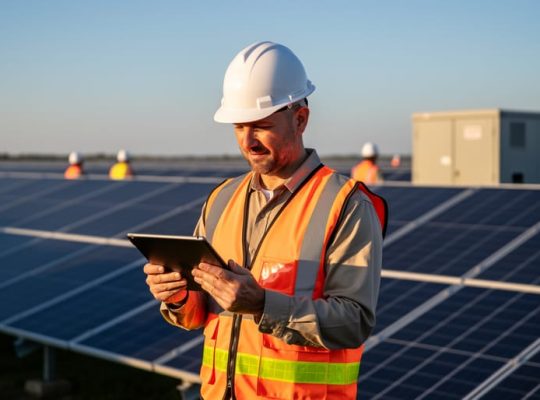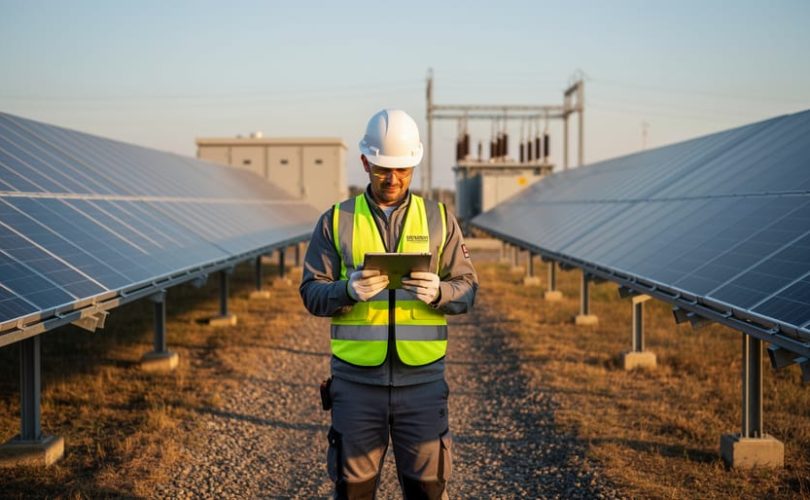
The solar energy sector’s rapid expansion has created unprecedented demand for qualified power plant operators capable of managing increasingly sophisticated photovoltaic facilities. As utility-scale solar installations proliferate across the nation, operators must demonstrate comprehensive technical knowledge, safety protocols, and system optimization skills that extend far beyond traditional power generation expertise.
Professional certification programs now provide structured pathways for aspiring solar professionals to acquire these specialized competencies. These programs combine theoretical foundations in photovoltaic system design, electrical engineering principles, and grid integration with hands-on training in monitoring, troubleshooting, and maintaining large-scale solar arrays. Participants learn to interpret performance metrics, respond to system anomalies, implement preventive maintenance schedules, and ensure compliance with regulatory standards governing renewable energy facilities.
The certification process typically requires candidates to complete coursework covering inverter operations, energy storage integration, weather pattern analysis, and remote monitoring technologies specific to solar installations. Many programs collaborate with universities to offer accredited credentials that meet industry standards established by organizations such as the North American Board of Certified Energy Practitioners. This academic partnership ensures training remains current with technological advancements while providing students access to cutting-edge research facilities and industry connections.
Successful completion of these programs opens diverse career opportunities ranging from entry-level technician positions to senior operations management roles. Certified operators command competitive salaries reflecting their specialized skill sets, with career advancement potential aligned to the renewable energy sector’s projected growth trajectory. Understanding the comprehensive nature of these training programs enables prospective operators to make informed decisions about their professional development while contributing meaningfully to the clean energy transition.
Understanding Power Plant Operator Roles in Solar Energy
Core Responsibilities and Daily Operations
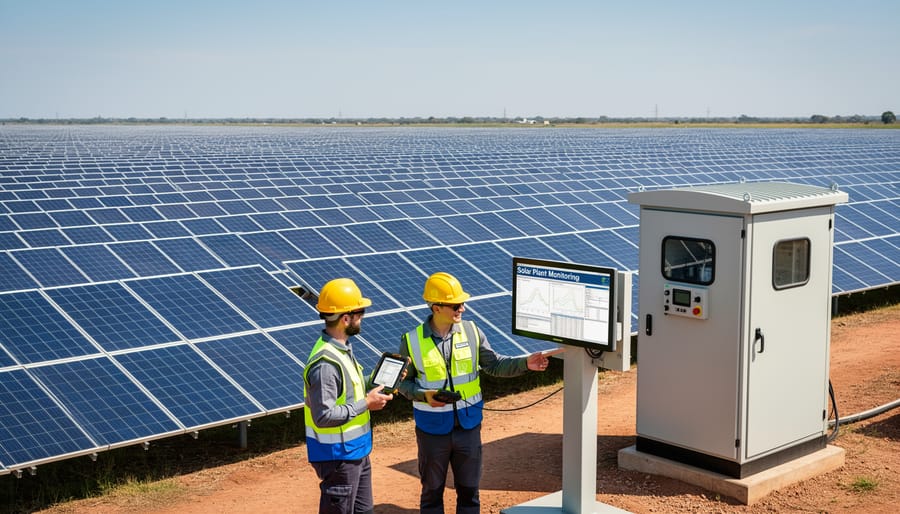
Solar power plant operators serve as the frontline professionals responsible for ensuring optimal performance and safety of photovoltaic facilities. Their daily responsibilities encompass comprehensive system monitoring through advanced supervisory control and data acquisition (SCADA) systems, which provide real-time data on energy production, equipment status, and environmental conditions. Operators continuously analyze performance metrics to identify deviations from expected output, enabling swift corrective action when issues arise.
Performance optimization represents a critical component of daily operations. Operators adjust tracking systems to maximize solar exposure, manage inverter operations for optimal power conversion, and coordinate cleaning schedules to maintain panel efficiency. They work closely with maintenance teams to schedule preventive maintenance activities during periods of lower solar irradiance, minimizing production losses.
Safety protocols remain paramount in operational duties. Operators conduct regular safety inspections, verify lockout-tagout procedures before maintenance activities, and ensure compliance with National Electric Code standards and Occupational Safety and Health Administration regulations. They maintain detailed logs of all safety incidents and operational anomalies, contributing to continuous improvement initiatives.
Grid integration management demands sophisticated technical knowledge. Operators coordinate with utility companies to ensure smooth power delivery, manage voltage regulation, and respond to grid events such as frequency fluctuations or curtailment requests. They monitor weather forecasts to anticipate production variations and communicate capacity expectations to grid operators, ensuring reliable integration of solar energy into the broader electrical infrastructure while maintaining system stability and regulatory compliance.
The Shift from Traditional to Renewable Energy Operations
The transition from conventional power generation to solar facilities presents both opportunities and challenges for experienced operators. Traditional power plant operators possess valuable foundational skills that remain relevant in photovoltaic operations, including electrical system monitoring, safety protocol implementation, equipment maintenance scheduling, and regulatory compliance management. These competencies provide a strong baseline for transitioning to renewable energy roles.
However, solar facilities require distinct technical knowledge that differs substantially from fossil fuel or nuclear operations. Unlike conventional plants with continuous baseload generation, PV systems operators must understand intermittent power generation patterns, weather-dependent output fluctuations, and grid integration challenges unique to distributed energy resources. Essential new competencies include inverter technology management, maximum power point tracking optimization, battery energy storage system operation, and photovoltaic array troubleshooting.
Modern training programs address this skills gap through comprehensive curricula developed in collaboration with universities and industry partners. These educational offerings combine traditional power systems knowledge with solar-specific technical instruction, covering topics such as module degradation analysis, performance ratio calculations, and predictive maintenance using advanced monitoring software. Operators must also develop proficiency in digital monitoring platforms and data analytics tools that enable real-time system optimization. This hybrid skill set positions experienced power plant operators for successful career transitions while preparing new professionals for the evolving demands of utility-scale solar operations.
Essential Components of PV Operations and Maintenance Certification
Technical Knowledge Requirements
Successful power plant operators must master a comprehensive technical curriculum that forms the foundation of photovoltaic facility management. Comprehensive training programs typically encompass five critical knowledge domains essential for effective solar plant operations.
Electrical systems fundamentals constitute the cornerstone of operator education, covering direct current and alternating current principles, voltage regulation, circuit protection mechanisms, and electrical safety protocols specific to high-voltage solar installations. Participants learn to interpret single-line diagrams, calculate power losses, and understand transformer operations within utility-scale facilities.
Inverter technology represents another vital component, as these devices convert solar-generated DC power into grid-compatible AC electricity. Training modules address inverter configurations, maximum power point tracking algorithms, harmonic distortion management, and troubleshooting common inverter malfunctions that can significantly impact energy production.
Module performance analysis equips operators with skills to assess photovoltaic panel efficiency, identify degradation patterns, recognize hot spots through thermal imaging, and understand temperature coefficients affecting output. This knowledge enables proactive maintenance scheduling and performance optimization.
Energy storage integration has become increasingly important as battery systems enhance grid stability and revenue opportunities. Operators study lithium-ion technology, charge-discharge cycles, battery management systems, and safety considerations for co-located storage facilities.
Grid interconnection principles round out the technical curriculum, covering utility requirements, power quality standards, reactive power management, and compliance with interconnection agreements. Universities collaborating with industry partners ensure these programs reflect current grid integration challenges and regulatory frameworks governing renewable energy facilities.
Safety Standards and Compliance Training
Safety standards and compliance training forms the cornerstone of any comprehensive power plant operator program, particularly in photovoltaic installations where unique hazards demand specialized knowledge. Operators must demonstrate proficiency in OSHA regulations governing renewable energy facilities, including requirements for personal protective equipment, hazard communication, and emergency response protocols.
Electrical safety protocols receive extensive coverage, addressing the specific challenges of direct current systems common in solar arrays. Training emphasizes proper handling of high-voltage components, understanding electrical system design, and implementing safe maintenance procedures. Lockout/tagout procedures are critical competencies, ensuring operators can safely de-energize systems before conducting maintenance or repairs, preventing potentially fatal electrical incidents.
Arc flash protection training equips operators to recognize arc flash hazards, interpret hazard labels, and utilize appropriate protective equipment when working on energized electrical systems. Given that many solar installations involve rooftop or elevated mounting systems, working at heights training addresses fall protection, ladder safety, and proper use of harness systems. University partnerships enhance this training component by providing access to specialized safety laboratories and experienced industrial safety instructors, ensuring operators receive both theoretical knowledge and practical application skills necessary for maintaining safe working environments in photovoltaic facilities.
Troubleshooting and Diagnostic Skills
Comprehensive troubleshooting capabilities form the backbone of effective power plant operations, particularly in photovoltaic facilities where system performance directly impacts energy output and revenue generation. Training programs emphasize systematic fault identification methodologies, teaching operators to recognize anomalies in inverter performance, module degradation patterns, and balance-of-system component failures. Participants gain proficiency with specialized diagnostic equipment including thermal imaging cameras, I-V curve tracers, and advanced monitoring software platforms that track real-time performance metrics across array configurations.
The curriculum incorporates hands-on analysis of historical performance data, enabling trainees to identify trends, detect efficiency losses, and pinpoint underperforming system components. Through university collaborations, programs integrate case study reviews of actual system failures, providing practical context for applying theoretical knowledge. Operators learn to interpret diagnostic readings, correlate environmental factors with production variations, and distinguish between equipment malfunctions and normal operational deviations.
Corrective measure implementation training encompasses both immediate response protocols and long-term optimization strategies. Educational program offerings include simulation exercises where trainees diagnose simulated faults under time constraints, developing the critical thinking skills necessary for rapid problem resolution. This comprehensive approach ensures operators can maintain optimal facility performance while minimizing downtime and maximizing renewable energy generation efficiency.
Certification Pathways and Program Structures
University-Industry Collaborative Programs
University-industry collaborative programs represent a transformative approach to solar power plant operator training, bridging the gap between academic knowledge and real-world application. Leading photovoltaic companies partner with accredited institutions to develop curriculum that addresses both theoretical foundations and practical operational competencies required in modern solar facilities.
These partnerships typically involve companies providing expertise in current industry practices, equipment access, and internship opportunities, while universities contribute structured learning frameworks, qualified instructors, and research capabilities. Students benefit from hands-on experience with commercial-grade solar equipment, exposure to actual plant operations, and mentorship from industry professionals who understand the evolving demands of the photovoltaic sector.
Collaborative programs often feature hybrid learning models combining classroom instruction with on-site training at operational solar installations. This approach ensures students gain familiarity with monitoring systems, maintenance protocols, safety procedures, and performance optimization techniques used in professional settings. Many programs also incorporate capstone projects where students work directly with industry partners to solve real operational challenges.
The credential recognition resulting from these partnerships enhances graduate employability, as employers value training programs developed in consultation with active solar companies. Furthermore, these collaborations facilitate continuous curriculum updates, ensuring training content remains aligned with technological advancements, regulatory changes, and emerging best practices in photovoltaic plant operation and management.
Online Learning Platforms and Accessibility
Online learning platforms have revolutionized power plant operator training, offering unprecedented accessibility for working professionals pursuing careers in solar energy. These online certification programs provide flexible scheduling options that allow students to balance their current employment with educational advancement, eliminating the need for career interruptions.
Modern platforms deliver comprehensive training through virtual simulations that replicate real-world solar facility operations, enabling students to practice equipment monitoring, grid integration procedures, and emergency response protocols in safe, controlled environments. Remote access to digital resources, including technical manuals, video tutorials, and interactive modules, ensures students can study from any location with internet connectivity.
These programs typically feature asynchronous learning components, allowing participants to complete coursework during convenient hours while maintaining synchronous sessions for instructor-led demonstrations and peer collaboration. Virtual laboratories and simulation software provide hands-on experience with photovoltaic system operations, SCADA interfaces, and troubleshooting scenarios. Many universities partnering with solar industry leaders offer hybrid models combining online theoretical instruction with periodic on-site practical training sessions, ensuring students develop both knowledge and competency required for certification success.
Hands-On Training and Field Experience
Practical training forms the cornerstone of effective power plant operator certification programs, bridging theoretical knowledge with real-world applications. Certification candidates must complete substantial hands-on laboratory work where they interact with actual photovoltaic components, inverters, monitoring systems, and grid integration equipment. These controlled environments allow aspiring operators to develop troubleshooting skills, practice safety protocols, and understand system responses without risking operational disruptions.
Leading programs incorporate field experience at operational solar facilities, where trainees work alongside licensed operators to observe daily procedures, maintenance routines, and emergency response protocols. This exposure to functioning power plants provides invaluable context for classroom learning, helping students understand performance optimization, weather-related challenges, and regulatory compliance requirements.
Many certification programs collaborate with universities to establish state-of-the-art training laboratories equipped with industry-standard technology. These partnerships ensure training curricula remain current with technological advances and industry best practices. Simulation software complements physical training, allowing operators to practice complex scenarios including equipment failures, grid fluctuations, and extreme weather events in risk-free virtual environments, preparing them thoroughly for certification examinations and professional responsibilities.
Key Skills Developed Through Certification Training
System Performance Monitoring and Analysis
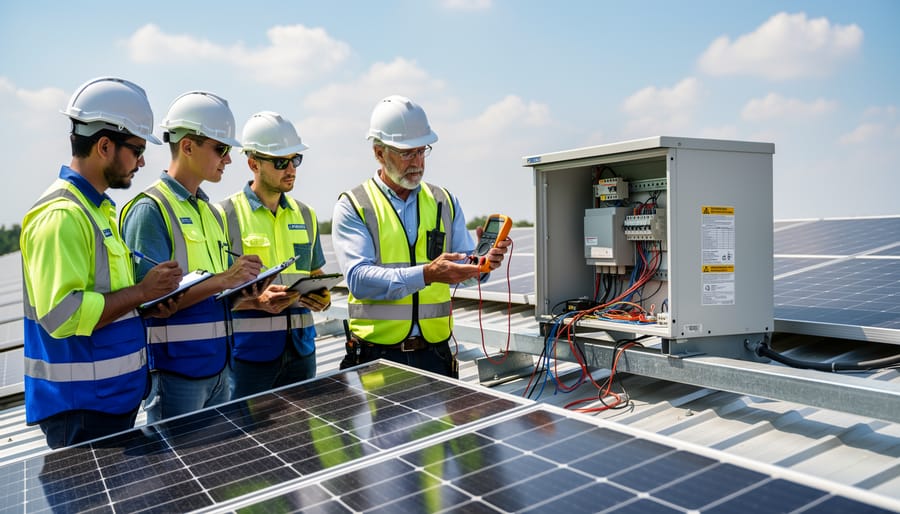
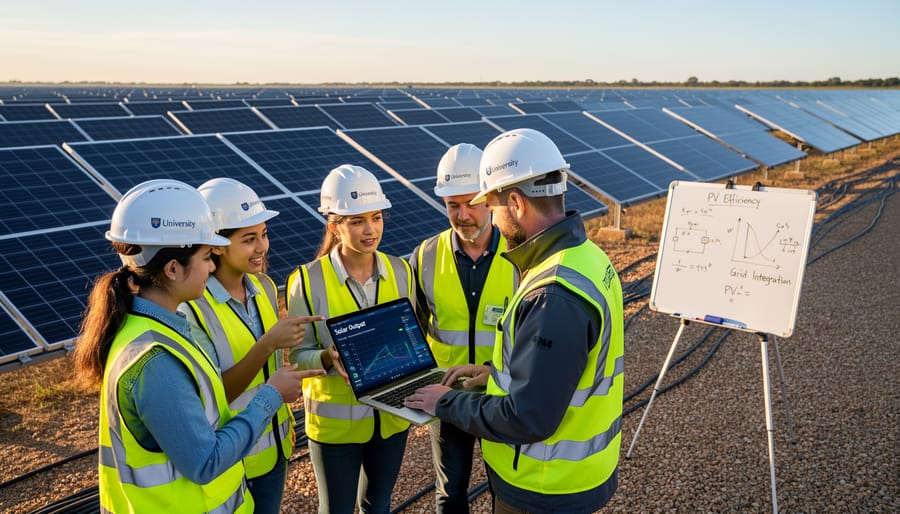
Modern power plant operators must develop proficiency in sophisticated monitoring technologies that enable real-time assessment of facility performance. Training programs emphasize hands-on experience with Supervisory Control and Data Acquisition (SCADA) systems, which serve as the central nervous system for solar installations. Operators learn to interpret live data streams, configure alarm parameters, and respond to system anomalies before they impact energy production.
Data analytics platforms constitute another critical component, teaching trainees to process vast quantities of operational data and extract actionable insights. Participants master performance ratio calculations, the industry-standard metric comparing actual energy output to theoretical maximum production under identical conditions. This knowledge proves essential for identifying underperforming arrays and optimizing plant-wide efficiency.
University collaborations enhance these technical programs by incorporating advanced analytical methodologies and research-based approaches to degradation pattern recognition. Trainees learn to detect subtle indicators of module deterioration, soiling accumulation, and inverter efficiency decline through systematic data review. These diagnostic capabilities enable proactive maintenance scheduling, minimizing downtime and maximizing return on investment. Educational institutions provide access to simulation software and real-world case studies, preparing operators to manage increasingly complex solar facilities with confidence and precision.
Preventive and Corrective Maintenance
Effective maintenance strategies form a cornerstone of photovoltaic power plant operations, requiring operators to master both preventive and corrective approaches. Training programs emphasize developing comprehensive maintenance schedules that account for seasonal variations, equipment lifecycles, and manufacturer specifications. Operators learn systematic inspection techniques for solar panels, inverters, mounting structures, and electrical connections, identifying potential issues before they escalate into costly failures.
Essential cleaning protocols address dust accumulation, bird droppings, and environmental contaminants that reduce panel efficiency. Participants gain hands-on experience with proper cleaning equipment, water management techniques, and safety procedures for working at heights. Component replacement training covers troubleshooting degraded modules, replacing faulty inverters, and upgrading monitoring equipment while maintaining system integrity.
University-partnered programs integrate theoretical maintenance planning with practical field exercises, ensuring graduates understand warranty requirements and documentation standards. Earning a PV maintenance certification validates expertise in these critical operational areas, demonstrating proficiency in maintaining optimal plant performance throughout extended operational lifespans.
Emergency Response and Problem Resolution
Effective emergency response training equips solar power plant operators to maintain system stability and safety during critical incidents. Comprehensive certification programs include simulation-based exercises covering photovoltaic-specific emergencies such as inverter failures, rapid irradiance changes, and grid interconnection disruptions. Operators learn systematic troubleshooting protocols for addressing DC arc faults, module hotspots, and string-level performance anomalies that can escalate if unaddressed.
Training modules emphasize coordination with utility dispatch centers during grid disturbances, including frequency deviations and voltage fluctuations that require immediate response. Participants master emergency shutdown procedures, protective equipment operation, and restoration sequences specific to solar installations. Weather-related scenarios address hail damage assessment, high-wind component securing, and lightning strike aftermath protocols.
University-partnered programs incorporate incident command system frameworks and real-world case studies from operational solar facilities. Operators develop decision-making skills for prioritizing safety while minimizing generation losses. Hands-on drills using modern SCADA systems prepare professionals to recognize early warning indicators and implement corrective actions swiftly. This rigorous preparation ensures certified operators can protect personnel, equipment, and power delivery reliability under diverse emergency conditions.
Industry Standards and Regulatory Requirements
National and Regional Certification Bodies
The North American Board of Certified Energy Practitioners (NABCEP) serves as the gold standard for photovoltaic professional credentialing in the United States. This independent organization administers rigorous examinations and maintains certification standards for PV Installation Professionals, PV Technical Sales Professionals, and PV System Inspectors. NABCEP certification requires candidates to demonstrate substantial field experience, complete approved training hours, and pass comprehensive examinations covering system design, installation practices, and safety protocols.
The Interstate Renewable Energy Council (IREC) complements NABCEP’s work by accrediting training programs and developing national skill standards for renewable energy careers. IREC ensures educational institutions meet quality benchmarks and align curricula with industry needs. Their accreditation helps aspiring professionals identify reputable training programs that prepare them for utility operator certification and other credentials.
Regional certification bodies also maintain specialized standards for local markets. Organizations like the California Solar Energy Industries Association and state-level licensing boards establish additional requirements addressing regional building codes, interconnection standards, and utility regulations. These complementary credentialing pathways ensure PV professionals possess both nationally recognized competencies and location-specific expertise necessary for successful solar facility operation and management.

Code Compliance and Utility Interconnection
Photovoltaic power plant operators must navigate a complex regulatory landscape to ensure safe, compliant facility operations. The National Electrical Code (NEC) establishes fundamental safety standards for electrical installations, with Article 690 specifically addressing solar photovoltaic systems. Comprehensive training programs incorporate these requirements, covering proper wiring methods, equipment grounding, disconnecting means, and overcurrent protection.
Utility interconnection represents a critical operational component, governed by agreements that define grid connection parameters, power quality standards, and safety protocols. Operators must understand IEEE 1547 standards, which specify technical requirements for interconnecting distributed energy resources with electric power systems. These standards address voltage regulation, frequency response, and anti-islanding protection measures essential for grid stability.
Local jurisdiction regulations add another compliance layer, with permitting requirements, inspection protocols, and operational reporting obligations varying by location. Training programs developed through university collaborations integrate region-specific regulatory frameworks, preparing operators for real-world compliance challenges. Educational offerings typically include case studies examining successful interconnection projects, utility agreement negotiations, and regulatory approval processes. This comprehensive regulatory education ensures operators can maintain facility compliance while optimizing system performance and maintaining positive utility relationships throughout the project lifecycle.
Career Advancement and Industry Opportunities
Job Market Outlook and Demand Trends
The solar energy sector continues to experience robust growth, creating substantial opportunities for certified power plant operators. According to the U.S. Bureau of Labor Statistics, employment for power plant operators in renewable energy facilities is projected to grow steadily through 2032, driven by aggressive clean energy targets and increasing solar installations nationwide. The solar photovoltaic market alone has expanded by over 20% annually in recent years, translating to heightened demand for qualified operational personnel.
Regional variations significantly influence employment prospects. States like California, Texas, Arizona, and Nevada lead in solar capacity installations, offering the most abundant opportunities for certified operators. The Southeast and Midwest regions are emerging markets, with utility-scale solar projects multiplying rapidly as these areas diversify their energy portfolios. Coastal states continue investing in solar infrastructure to meet renewable portfolio standards, further expanding the job market.
Industry analysts estimate that thousands of new solar operator positions will become available as existing fossil fuel facilities transition to renewable sources and new solar plants come online. Professionals completing comprehensive training and certification programs position themselves advantageously in this competitive landscape. Universities collaborating with solar energy organizations now offer specialized curricula that align with industry needs, ensuring graduates possess relevant competencies employers actively seek in this dynamic field.
Professional Development and Specialization Paths
Solar power plant operators pursuing career advancement have multiple specialization pathways available. Advanced certifications include NABCEP PV Technical Sales Professional credentials and specialized training in battery energy storage systems (BESS), which are increasingly integrated with solar installations. Operators can pursue expertise in microgrid operations, learning to manage complex distributed energy resources that combine solar generation with storage and load management systems.
Universities collaborating with industry leaders offer specialized programs in renewable energy management and grid integration technologies. These educational partnerships provide operators with theoretical knowledge complementing their practical experience, preparing them for senior technical roles. Specialized certifications in areas such as inverter technology, power quality analysis, and predictive maintenance using IoT sensors distinguish operators in competitive job markets.
Career progression typically follows several tracks. Technical specialists may advance to roles as system engineers or commissioning managers, overseeing new facility installations. Those pursuing leadership can transition to plant manager positions, operations directors, or regional management roles overseeing multiple facilities. Some operators leverage their field experience to move into training and development positions, shaping the next generation of solar professionals.
Continuous professional development remains essential as photovoltaic technology evolves. Operators who advance your solar career through ongoing education position themselves for emerging opportunities in hydrogen production integration, vehicle-to-grid systems, and virtual power plant coordination.
Selecting the Right Training Program
Accreditation and Program Recognition
When evaluating power plant operator training programs for photovoltaic facilities, accreditation serves as a critical quality indicator. Prospective students should prioritize programs accredited by recognized bodies such as the North American Board of Certified Energy Practitioners (NABCEP), which maintains rigorous standards for solar training curricula. Additionally, partnerships with accredited universities and technical colleges enhance program credibility and often facilitate credit transfer opportunities for those pursuing advanced degrees.
Industry acceptance varies significantly among certifications. Employers in the solar sector typically value credentials that demonstrate both theoretical knowledge and practical competency. Programs offering hands-on training with commercial-grade photovoltaic equipment and real-world operational scenarios generally receive stronger recognition from hiring managers. Look for certifications that align with Interstate Renewable Energy Council (IREC) standards, as these demonstrate adherence to nationally recognized competency frameworks.
Employer recognition extends beyond formal accreditation. Many leading solar companies maintain preferred training provider lists and may offer tuition assistance for specific programs. Research prospective employers’ certification requirements and seek programs with documented graduate placement rates exceeding 75 percent. Programs featuring industry advisory boards composed of current solar facility operators and managers typically maintain stronger alignment with current workforce needs and technological developments, ensuring graduates possess immediately applicable skills.
Cost Considerations and Return on Investment
Investing in power plant operator training and certification programs requires careful financial planning, though the long-term returns typically justify the initial expenditure. Program costs vary significantly based on institution type and program length. Community college certificate programs generally range from $3,000 to $8,000, while comprehensive associate degree programs through university partnerships may cost between $10,000 and $25,000. Specialized photovoltaic operator certifications typically fall within the $1,500 to $5,000 range.
Numerous financial assistance pathways exist for aspiring solar professionals. Federal Pell Grants and state-specific renewable energy workforce development grants can substantially reduce out-of-pocket expenses. The Workforce Innovation and Opportunity Act provides funding for qualifying candidates pursuing clean energy careers. Additionally, many community colleges collaborating with universities offer need-based scholarships specifically designated for renewable energy students.
Employer sponsorship represents another viable funding avenue. Solar facility operators and engineering firms increasingly invest in workforce development by sponsoring employee training, often covering full tuition in exchange for service commitments. Some organizations offer apprenticeship programs that combine paid work experience with subsidized education.
The financial investment demonstrates measurable returns. Entry-level photovoltaic plant operators typically earn between $45,000 and $55,000 annually. Upon certification completion and gaining two to three years of experience, professionals commonly see salary increases of 20 to 35 percent, with certified senior operators earning $65,000 to $85,000 or more. This positions the certification as a strategic career investment with relatively short payback periods, particularly when combined with the renewable energy sector’s projected growth and job security.
The solar industry’s continued expansion hinges fundamentally on the availability of properly trained and certified power plant operators who can ensure safe, efficient, and reliable facility operations. As photovoltaic installations grow increasingly sophisticated and interconnected with existing grid infrastructure, the demand for qualified professionals possessing both theoretical knowledge and practical expertise will only intensify. Comprehensive training and certification programs serve as the essential bridge between academic preparation and industry readiness, equipping operators with the competencies required to navigate complex operational challenges while maintaining optimal system performance.
University-industry collaborations represent a particularly valuable approach to developing this qualified workforce. These partnerships create synergistic relationships where academic institutions contribute rigorous curriculum development and theoretical foundations, while industry partners provide real-world insights, equipment access, and practical training opportunities. This integrated model produces graduates who enter the workforce already familiar with industry standards, operational protocols, and the latest technological innovations, significantly reducing employer onboarding time and accelerating career advancement.
For aspiring photovoltaic professionals, pursuing comprehensive certification programs offers substantial benefits beyond mere credential acquisition. These programs develop critical thinking skills, foster professional networks, and demonstrate commitment to industry excellence that employers actively seek. The investment in proper training translates directly into enhanced career prospects, increased earning potential, and greater job security within a rapidly expanding sector.
The path forward is clear: proper training and certification are not optional luxuries but essential requirements for anyone serious about contributing to solar energy’s growth. By committing to rigorous educational programs and obtaining recognized certifications, you position yourself at the forefront of the renewable energy revolution while simultaneously advancing the broader mission of sustainable energy adoption. Your professional development directly contributes to a cleaner, more sustainable energy future for all.