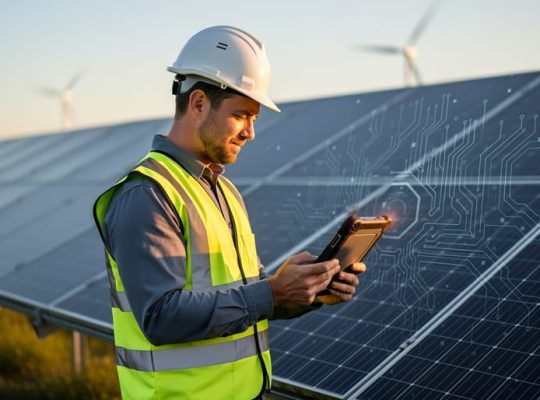
The solar industry faces an emerging crisis that few anticipated: what happens when the first generation of photovoltaic panels reaches end-of-life? With over 78 million metric tons of solar waste projected globally by 2050, the question is no longer if we need advanced dismantling systems, but how quickly we can implement them at scale.
Advanced solar systems in the dismantling context represent a fundamental shift from traditional disposal methods. Unlike conventional recycling that often recovers less than 50% of materials, modern dismantling techniques employ precision robotics, thermal separation technology, and chemical extraction processes to reclaim up to 95% of valuable components including high-purity silicon, silver, copper, and rare earth elements. These innovations transform what was once considered waste into a circular resource stream, directly addressing both environmental imperatives and economic opportunities within the renewable energy sector.
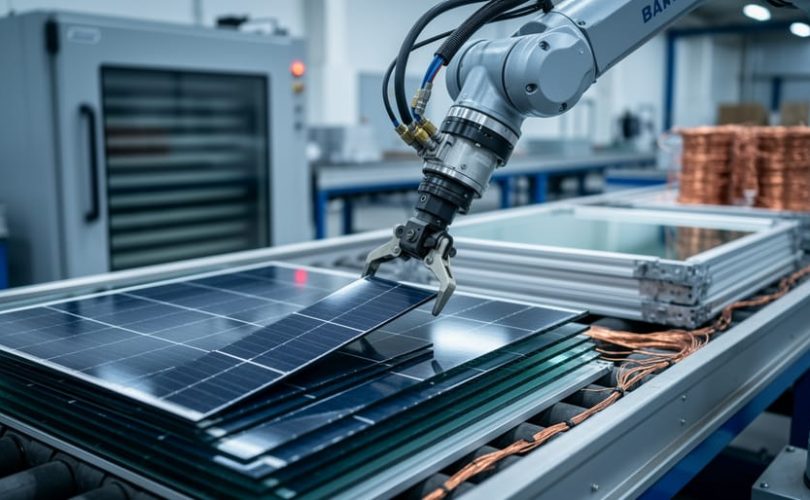
The advancement lies not merely in recovering materials, but in the sophistication of separation methods. Automated disassembly lines now utilize machine vision systems to identify panel types and construction methods, enabling customized processing routes. Thermal delamination chambers operate at precisely controlled temperatures to separate glass from encapsulants without material degradation. Hydrometallurgical processes extract precious metals with minimal chemical waste, while mechanical shearing systems handle aluminum frames with unprecedented efficiency.
For professionals entering this field, understanding these technologies is essential. The dismantling sector represents one of the fastest-growing segments in renewable energy, requiring specialized knowledge that bridges manufacturing expertise with environmental engineering. As regulatory frameworks increasingly mandate responsible end-of-life management, organizations that master advanced dismantling systems position themselves at the forefront of the industry’s next evolution, turning the challenge of solar waste into the foundation of truly sustainable energy infrastructure.
The Rising Wave of Solar Panel Retirement
The global solar energy revolution that began in earnest during the early 2000s is now approaching a critical inflection point. As photovoltaic installations worldwide reach maturity, the industry faces an unprecedented challenge: managing the retirement and disposal of millions of aging solar panels. Understanding solar panel lifespans has become essential for anticipating the scale of this emerging crisis.
Most solar panels carry warranties guaranteeing 80-90% efficiency after 25 years, with typical operational lifespans ranging from 25 to 30 years. This means that installations commissioned during solar energy’s first major growth phase between 2000 and 2010 are now entering their retirement years. The International Renewable Energy Agency projects that global solar panel waste could reach 78 million metric tons by 2050, with volumes accelerating dramatically after 2030. By 2035 alone, annual decommissioning volumes may exceed 4 million metric tons.
The magnitude of this challenge extends beyond simple quantity. Early-generation panels were manufactured before comprehensive end-of-life planning became standard industry practice. Many first-generation installations lack detailed material composition records, complicating recovery efforts. Additionally, the sheer diversity of panel types, manufacturers, and construction methods from different eras creates substantial technical complexity for dismantling operations.
Geographic concentration amplifies the urgency in pioneer solar markets. Countries like Germany, Italy, Japan, and certain U.S. states that led early adoption now face disproportionate near-term decommissioning demands. Without advanced dismantling infrastructure and methodologies, these panels risk becoming environmental liabilities in landfills rather than sources of recovered materials.
This looming wave of solar panel retirement presents both challenge and opportunity. While the waste volumes are substantial, panels contain valuable materials including silicon, silver, copper, and aluminum worth recovering. Developing advanced dismantling systems now is essential for transforming this potential environmental burden into a sustainable materials recovery stream that supports circular economy principles within the renewable energy sector.
What Makes Modern Solar Systems ‘Advanced’ for Dismantling
Design for Disassembly Principles
The evolution of solar panel manufacturing has shifted significantly toward end-of-life considerations, with design for disassembly emerging as a fundamental principle in advanced photovoltaic systems. This approach prioritizes material recovery from the initial design phase, fundamentally changing how panels are constructed and assembled.
Modern panels increasingly feature modular architectures that separate distinct components—glass, aluminum frames, junction boxes, and photovoltaic cells—into easily detachable units. Unlike conventional panels that rely heavily on permanent bonding methods, these advanced designs utilize mechanical fasteners, snap-fit connections, and reversible attachment systems. This modification allows technicians to systematically deconstruct panels without damaging valuable materials, preserving component integrity for potential reuse or high-quality recycling.
Adhesive reduction represents another critical advancement. Traditional encapsulants like ethylene-vinyl acetate create molecular bonds that resist separation, complicating material recovery. Newer systems employ thermoplastic materials or reduced-adhesive lamination techniques that respond to controlled heating or mechanical stress, enabling clean separation of glass from semiconductor materials. Research collaborations between manufacturers and universities have accelerated development of these innovative bonding alternatives, balancing operational durability with recyclability requirements.
Standardization of components across product lines further enhances dismantling efficiency. When junction boxes, connectors, and mounting hardware follow universal specifications, recycling facilities can streamline their processing procedures and invest in specialized equipment without concern for compatibility issues. This standardization also supports the development of comprehensive training programs that prepare technicians for systematic disassembly protocols, ensuring consistent material recovery rates across the industry while reducing contamination during the separation process.
Material Composition Considerations
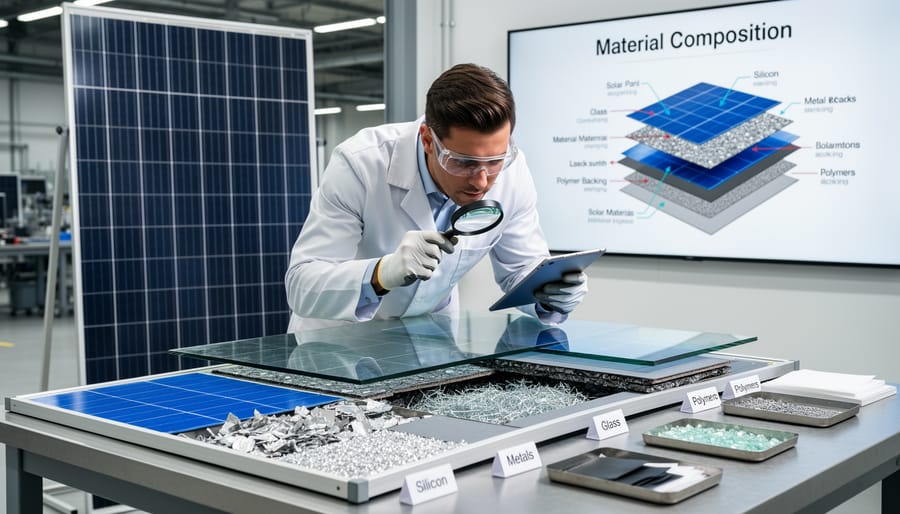
Understanding the material composition of solar panels is fundamental to developing effective dismantling strategies. Modern photovoltaic modules contain a complex mixture of recoverable resources and potentially hazardous substances that require careful management.
Crystalline silicon panels, which dominate the market, typically consist of approximately 76% glass, 10% polymer materials, 8% aluminum, 5% silicon, 1% copper, and trace amounts of silver, tin, and lead. The silicon wafers and silver contacts represent significant economic value, with silver alone accounting for up to 10% of a panel’s manufacturing cost. Aluminum frames provide another substantial recovery opportunity, as this metal maintains high recyclability rates and market demand.
However, certain panel types introduce environmental concerns. Thin-film technologies, particularly cadmium telluride modules, contain cadmium, a toxic heavy metal requiring specialized handling protocols. Similarly, lead-based solder connections in older crystalline panels pose disposal challenges if not properly extracted.
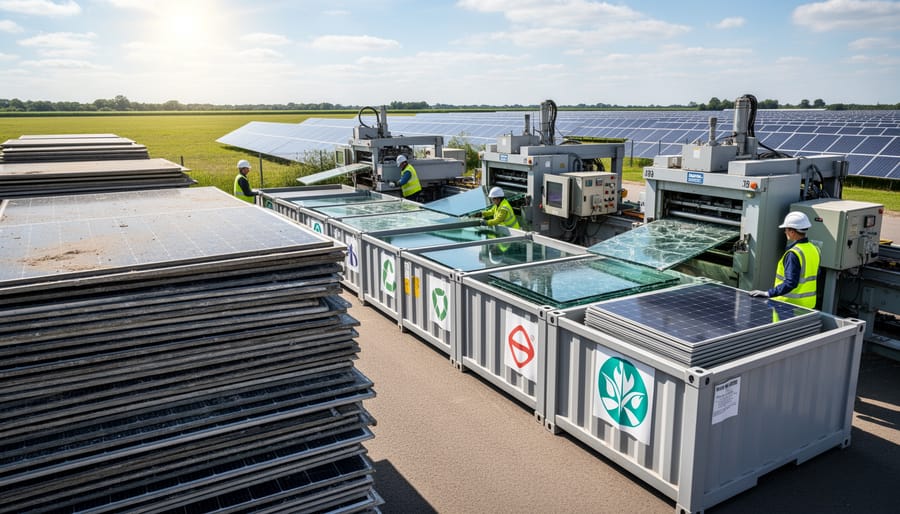
Advanced dismantling systems address these dual imperatives through selective separation techniques. Automated processes can segregate high-value materials like silicon and silver while isolating hazardous components for compliant disposal. Thermal and chemical treatments enable the recovery of semiconductor-grade silicon, potentially returning it to manufacturing supply chains.
Modern facilities employ real-time material identification systems using spectroscopy and X-ray fluorescence to optimize sorting accuracy. This precision ensures valuable materials reach appropriate recycling streams while contaminated elements undergo safe neutralization, maximizing both environmental protection and resource recovery efficiency.
Core Advanced Dismantling Techniques
Thermal and Chemical Delamination Methods
Thermal and chemical delamination methods represent precision-engineered approaches to solar panel disassembly that preserve valuable material integrity throughout the recovery process. These techniques target the polymeric adhesives binding photovoltaic layers, enabling clean separation of silicon cells, glass, and metallic components.
Pyrolysis stands as the predominant thermal method, employing controlled heating between 400-600°C in oxygen-limited environments. This process decomposes the ethylene-vinyl acetate encapsulant that bonds panel layers, converting it into recoverable hydrocarbons while leaving silicon wafers and metal contacts intact. The controlled atmosphere prevents oxidation damage to semiconductor materials, maintaining their potential for refurbishment or reprocessing into new cells.
Lower-temperature thermal delamination operates at 200-300°C, softening adhesive layers sufficiently for mechanical separation without complete polymer decomposition. This approach reduces energy consumption and minimizes emission formation, though it requires more sophisticated separation equipment.
Chemical delamination employs selective solvents such as trichloroethylene or acetone-based formulations to dissolve encapsulant materials at ambient or slightly elevated temperatures. This method excels at preserving delicate components and operates with minimal thermal stress, though solvent recovery systems become essential for environmental compliance and economic viability.
Research partnerships between recycling facilities and universities continue advancing these technologies, optimizing temperature profiles, residence times, and solvent formulations. Educational programs now incorporate hands-on training with delamination equipment, preparing the next generation of photovoltaic professionals to implement these sophisticated recovery techniques as panel retirement volumes accelerate through the 2030s.
Mechanical Separation Technologies
Physical dismantling represents the critical first stage in advanced solar panel recycling, where sophisticated mechanical separation technologies systematically break down photovoltaic modules while maintaining material integrity. These approaches have evolved significantly from rudimentary crushing methods to precision-engineered systems that maximize material recovery rates.
Modern mechanical separation begins with automated feed systems that position panels for initial processing. Industrial shredders equipped with specially designed blades fragment modules into manageable pieces, separating the aluminum frame from laminated components. These shredders operate at controlled speeds to prevent excessive heat generation, which could compromise material quality or create safety hazards.
Crushing equipment follows a staged approach, progressively reducing particle size while employing screening mechanisms to sort materials by dimension. Advanced crushers incorporate adjustable gap settings that allow operators to fine-tune fragment sizes based on downstream processing requirements. This precision proves essential for liberating valuable materials like silicon, silver, and copper without excessive contamination.
Precision cutting technologies offer an alternative pathway, particularly valuable for high-value panel recovery. Laser cutting systems and water jet equipment enable selective separation of junction boxes, bypass diodes, and intact glass sheets. These methods preserve material purity by avoiding the mixing that occurs during traditional crushing operations.
Research collaborations between industry leaders and universities continue advancing these technologies, developing sensor-based sorting systems that identify material composition in real-time. Educational programs now incorporate hands-on training with these mechanical systems, preparing the next generation of recycling professionals to optimize separation efficiency while meeting stringent environmental standards.
Robotic and Automated Disassembly
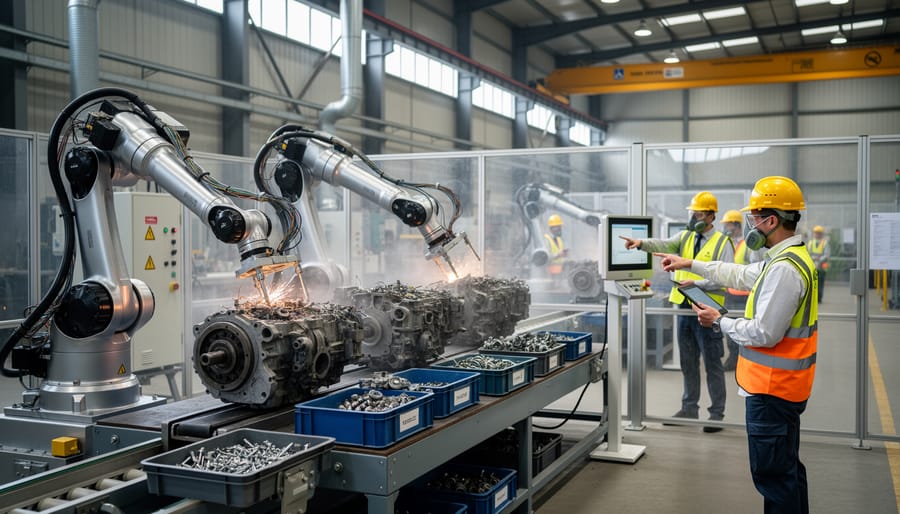
Automation represents a transformative advancement in solar panel dismantling, addressing the dual challenges of processing efficiency and workplace safety. Robotic systems equipped with artificial intelligence and machine vision capabilities can identify panel types, assess structural conditions, and execute precise disassembly sequences that maximize material recovery while minimizing contamination risks.
These AI-guided systems utilize advanced sensors to detect hazardous materials such as cadmium or lead in thin-film panels, automatically adjusting handling protocols to ensure proper containment. Robotic arms with specialized grippers can remove junction boxes, separate aluminum frames, and extract silicon wafers with significantly higher precision than manual methods, achieving material recovery rates exceeding 95 percent in controlled environments.
The safety benefits prove equally compelling. Automated dismantling eliminates worker exposure to glass shards, sharp metal edges, and potentially toxic compounds. Research conducted through university partnerships has demonstrated that facilities implementing robotic systems experience 60 percent fewer workplace injuries while processing 40 percent more panels per operational hour.
Current automation technologies range from semi-automated workstations that assist human operators with specific tasks to fully autonomous production lines capable of processing diverse panel configurations. Machine learning algorithms continuously improve dismantling protocols by analyzing thousands of disassembly operations, identifying optimal separation techniques for different manufacturer designs and degradation patterns.
As the solar recycling industry scales to meet growing decommissioning demands, investment in automation infrastructure becomes increasingly critical. Educational programs now incorporate robotics training to prepare the next generation of technicians for these technology-enhanced facilities, ensuring the workforce can effectively operate and maintain sophisticated dismantling systems.
Hybrid Dismantling Approaches
The recycling industry has discovered that no single dismantling technique works optimally for all solar panel types and conditions. Hybrid approaches that strategically combine multiple methods deliver superior results compared to standalone techniques, particularly when handling diverse panel inventories from different manufacturers and vintages.
Thermal-mechanical combinations represent one of the most effective hybrid approaches currently deployed. The process begins with controlled heating to soften encapsulant materials like ethylene vinyl acetate, which bonds the various panel layers together. This thermal preprocessing significantly reduces the mechanical force required for subsequent separation, minimizing glass breakage and preserving silicon cell integrity. Research partnerships between recycling facilities and universities have demonstrated that this approach can increase material recovery rates by up to 30 percent compared to purely mechanical methods.
Chemical-robotic integration offers another promising hybrid pathway, particularly for premium panel recovery where preserving cell functionality matters economically. Robotic systems equipped with precision chemical dispensers apply targeted solvents to specific junction points, allowing automated separation without bulk chemical submersion. This selective approach reduces chemical waste while enabling recovery of components suitable for refurbishment rather than mere material extraction.
Industry facilities are increasingly adopting modular systems that allow operators to customize the dismantling sequence based on incoming panel characteristics. Crystalline silicon panels might undergo thermal-mechanical processing, while thin-film technologies receive chemical-physical treatment protocols. This flexibility proves essential as panel technologies continue evolving and aging solar farms contain increasingly mixed inventories. Training programs now emphasize understanding these hybrid methodologies, recognizing that tomorrow’s recycling professionals must master multiple techniques and know when to deploy each approach for maximum economic and environmental benefit.
Economic and Environmental Benefits
Advanced solar dismantling systems deliver substantial economic and environmental value through optimized material recovery and strategic end-of-life solar management. Modern automated separation technologies achieve material recovery rates exceeding 95%, extracting high-purity silicon, silver, copper, aluminum, and glass for reintegration into manufacturing supply chains. These recovery rates represent significant improvements over conventional recycling methods, which typically recover only 60-70% of materials.
The economic proposition strengthens as panel volumes increase. Industry analyses indicate that mechanized thermal and chemical processing facilities can reduce per-panel recycling costs by 40-60% compared to manual dismantling operations. For solar operators managing large-scale decommissioning projects, this translates to substantial savings while simultaneously generating revenue from recovered materials. Silver recovery alone, valued at approximately $3-5 per panel, can offset significant portions of dismantling expenses.
Environmental benefits extend beyond raw material conservation. Advanced dismantling reduces landfill burden by diverting hazardous materials including lead and cadmium from waste streams, preventing potential soil and groundwater contamination. Each ton of silicon recovered through proper dismantling eliminates the need for energy-intensive virgin silicon production, which consumes approximately 200-300 kWh per kilogram. This energy savings compounds across millions of panels, creating measurable carbon footprint reductions.
The circular economy contributions prove particularly significant as photovoltaic manufacturing increasingly incorporates recycled feedstocks. Glass and aluminum recovered through advanced processes meet quality specifications for new panel production, closing material loops and reducing dependence on primary resource extraction. Research collaborations with universities demonstrate that recycled silicon maintains comparable photovoltaic efficiency to virgin material while requiring fraction of the processing energy.
For solar operators, investment in certified dismantling partnerships mitigates regulatory compliance risks while positioning organizations as environmental stewards. As extended producer responsibility legislation expands globally, proactive engagement with advanced dismantling infrastructure transforms end-of-life obligations from liabilities into strategic advantages within increasingly sustainability-focused markets.
Challenges and Barriers to Implementation
Despite the promising potential of advanced solar panel dismantling systems, several significant barriers impede widespread adoption across the photovoltaic industry. Understanding these challenges is essential for professionals preparing to navigate this evolving landscape.
Economic viability remains the primary obstacle. Advanced dismantling equipment requires substantial capital investment, often ranging from hundreds of thousands to millions of dollars depending on automation levels and processing capacity. For smaller recycling operations and regional facilities, these upfront costs create prohibitive entry barriers. Additionally, the current market value of recovered materials doesn’t always justify the sophisticated recovery processes, particularly when virgin materials remain competitively priced. This economic imbalance becomes more pronounced in regions lacking established collection networks or sufficient panel volumes to achieve economies of scale.
Infrastructure gaps present another critical challenge. The specialized facilities required for advanced dismantling are geographically concentrated, forcing long-distance transportation of decommissioned panels. This transportation burden increases both costs and carbon footprints, potentially undermining the environmental benefits these technologies aim to deliver. Many regions lack the integrated collection, sorting, and processing infrastructure necessary to support efficient panel-to-material recovery chains.
Technical limitations persist despite technological advances. Certain panel designs, particularly older models and specialized installations, resist standardized dismantling approaches. The adhesive bonding techniques used in many photovoltaic modules continue to challenge even advanced thermal and chemical separation methods, occasionally resulting in material degradation that limits recyclability.
Regulatory uncertainties further complicate implementation. Inconsistent classification of solar waste across jurisdictions creates compliance complexities, while the absence of standardized dismantling protocols makes quality assurance difficult. Universities collaborating with industry leaders are actively researching solutions to these regulatory gaps, but comprehensive frameworks remain under development. Educational programs addressing these multifaceted challenges will prove crucial for preparing the next generation of renewable energy professionals to overcome these implementation barriers.
The Educational Imperative for PV Professionals
The photovoltaic industry stands at a critical juncture where technical expertise in installation must now expand to include comprehensive end-of-life management capabilities. As the first generation of solar panels approaches retirement, the demand for professionals skilled in advanced dismantling techniques will intensify dramatically. Current estimates suggest that by 2030, approximately 8 million metric tons of solar panels will require proper decommissioning globally, creating both an urgent challenge and significant career opportunities for trained specialists.
Educational institutions play a pivotal role in preparing the workforce for this emerging sector. Universities collaborating with industry leaders are developing specialized curricula that integrate solar panel lifecycle management into renewable energy programs. These academic partnerships ensure that theoretical knowledge aligns with practical industry requirements, covering topics from hazardous material handling to automated disassembly protocols. Students gain hands-on experience with actual decommissioning equipment and learn to navigate regulatory frameworks governing solar waste management.
Comprehensive training programs address multiple competency levels, from foundational awareness for technicians to advanced engineering courses for system designers. Aspiring professionals benefit from understanding material recovery processes, safety protocols specific to photovoltaic systems, and environmental impact assessment methodologies. These educational pathways prepare graduates to implement sustainable practices throughout the solar lifecycle rather than focusing solely on installation and maintenance.
Mose Solar actively contributes to this educational imperative through partnerships with leading universities and dedicated training initiatives. By bridging the gap between academic instruction and industry practice, these programs cultivate a workforce capable of maximizing resource recovery while minimizing environmental impact. This investment in human capital development ensures the photovoltaic sector can sustainably manage its growth trajectory while maintaining environmental stewardship commitments that define the renewable energy mission.
Preparing Your Solar Installation for Future Dismantling
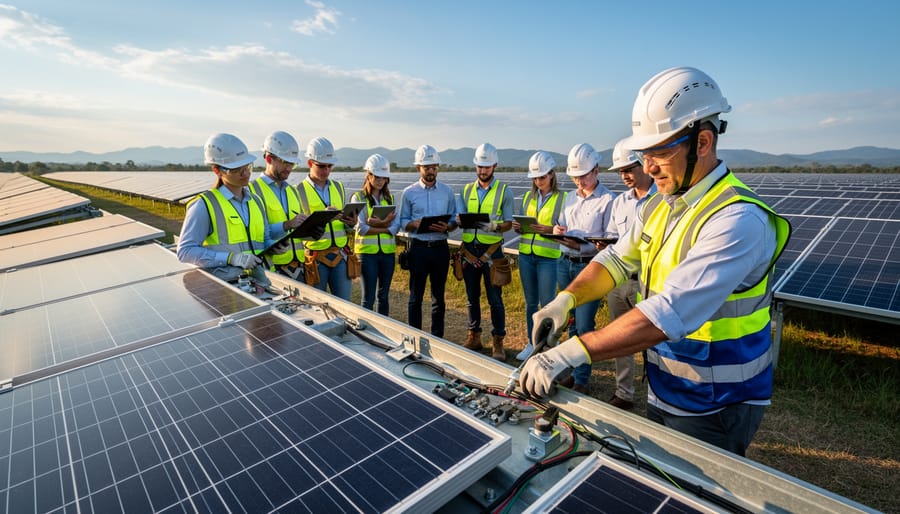
Planning for end-of-life management during the initial installation phase significantly reduces future dismantling complexity and costs. Solar operators and installers can implement several strategic practices to ensure efficient material recovery decades from now.
Comprehensive documentation forms the foundation of successful future dismantling. Maintain detailed records of all system components, including manufacturer specifications, material compositions, installation dates, and precise layout diagrams. Digital asset management systems should track panel serial numbers, inverter models, mounting hardware specifications, and wiring configurations. This information proves invaluable when dismantling teams assess material recovery potential and develop removal strategies.
Design choices during installation directly impact dismantling efficiency. Select modular mounting systems with standardized fasteners rather than permanent adhesive bonds or welded connections. Choose racking systems designed for disassembly, with clearly labeled connection points and accessible fasteners. When possible, specify components from manufacturers participating in take-back programs or those committed to design-for-recycling principles.
Material separation considerations should influence installation decisions. Avoid mixing incompatible materials in junction boxes and ensure clear labeling of all electrical components. Document any modifications to standard configurations, as these variations complicate automated dismantling processes.
Regular maintenance practices contribute to future recovery success. Periodic inspections should verify that mounting hardware remains accessible and document any component replacements. Update digital records throughout the system lifecycle to reflect configuration changes, repairs, or upgrades. This ongoing attention to documentation and accessibility transforms dismantling from a challenging deconstruction project into a streamlined material recovery operation, maximizing environmental benefits and economic returns.
The transition to advanced solar dismantling techniques represents far more than an operational consideration—it is fundamental to the long-term viability and environmental credibility of the entire photovoltaic industry. As solar installations from the early 2000s reach their end-of-life phase, the convergence of specialized technology, comprehensive education, and circular economy principles becomes not optional, but essential.
The industry stands at a critical juncture. Without systematic implementation of advanced dismantling methods, the environmental benefits gained from decades of solar energy production risk being undermined by improper disposal practices. Conversely, embracing these techniques transforms potential waste streams into valuable resource recovery opportunities, closing the loop on solar’s sustainability promise.
For professionals entering or advancing within the renewable energy sector, proficiency in these emerging techniques will increasingly differentiate qualified candidates. Academic institutions and industry leaders are responding by developing specialized training programs that address both technical competencies and environmental stewardship principles. These educational initiatives, often developed through university collaborations, provide structured pathways for acquiring certified expertise in advanced dismantling protocols.
The message for current solar decision-makers is equally clear: end-of-life planning must begin at the installation phase. System documentation, component tracking, and decommissioning budgets should be integral to every project from inception. As technology evolves and regulatory frameworks mature, those prepared with proper training and forward-thinking strategies will lead the industry toward genuine sustainability—one where solar energy systems contribute positively throughout their entire lifecycle, from production through responsible reclamation.