Optimize solar panel positioning through precise angle adjustments based on seasonal sun paths, maximizing direct sunlight exposure and reducing efficiency losses from oblique angles. Strategic panel placement and regular recalibration address critical durability challenges affecting performance, particularly in regions with variable weather patterns.
Implement advanced cleaning protocols utilizing deionized water and specialized photovoltaic cleaning solutions to eliminate performance-degrading contaminants while preserving the anti-reflective coating. Professional-grade maintenance schedules extend panel lifespan and maintain peak conversion efficiency.
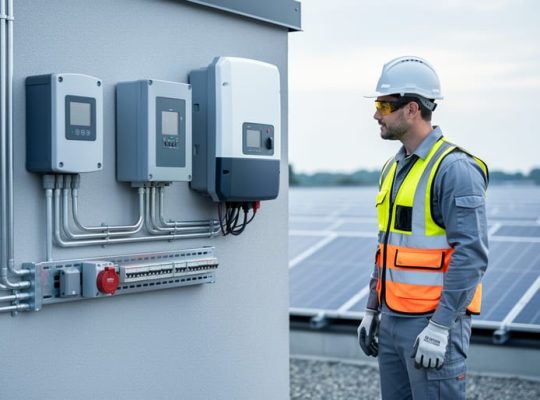
Install smart monitoring systems equipped with real-time performance analytics to detect potential issues before they impact output. Modern monitoring solutions integrate weather data, panel temperature metrics, and conversion efficiency tracking to optimize system performance continuously.
Upgrade existing installations with micro-inverter technology and power optimizers to minimize the impact of partial shading and panel mismatch, ensuring each module operates at maximum potential regardless of environmental conditions. These technological enhancements can increase overall system yield by 5-25% while improving system reliability and longevity.
The Impact of Physical Durability on Solar Output
Surface Protection Technologies
Surface protection technologies play a crucial role in helping to boost panel efficiency and extend the operational lifespan of photovoltaic systems. Anti-reflective coatings (ARC) significantly reduce light reflection on panel surfaces, allowing more photons to reach the semiconductor material and increasing energy conversion rates by up to 5%. These specialized coatings typically consist of multiple layers of silicon dioxide or titanium dioxide, engineered to minimize reflection across the solar spectrum.
Self-cleaning surfaces incorporate hydrophobic materials and nano-structured coatings that prevent dust and debris accumulation. These surfaces utilize biomimetic designs inspired by natural phenomena, such as the lotus leaf effect, enabling water droplets to efficiently remove contaminants while rolling off the panel surface. This technology maintains optimal light transmission and reduces maintenance requirements.
Protective layers, including advanced polymer films and tempered glass treatments, shield panels from environmental stressors such as UV radiation, moisture, and physical impacts. These materials are designed to maintain their optical clarity while providing robust protection against degradation factors that could otherwise diminish panel performance over time.
Structural Reinforcement Strategies
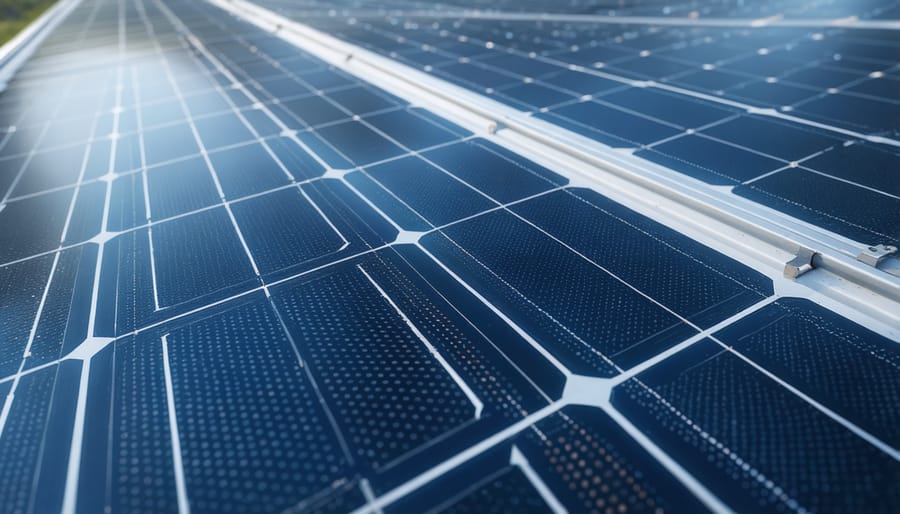
Robust structural reinforcement is crucial for maximizing solar panel performance and longevity. Advanced aluminum frame designs incorporating double-wall construction provide superior rigidity while minimizing weight, enabling optimal panel positioning for maximum sun exposure. Modern mounting systems utilize corrosion-resistant stainless steel components with integrated stress distribution features, reducing localized pressure points that could compromise panel integrity.
Wind load considerations play a vital role in structural design, with aerodynamic mounting solutions now incorporating wind deflectors and reinforced corner supports. These elements work together to reduce uplift forces while maintaining panel stability during adverse weather conditions. Temperature-compensating mounting rails with expansion joints accommodate thermal cycling, preventing warping and maintaining proper panel alignment throughout seasonal changes.
For enhanced durability, manufacturers are implementing micro-crack prevention systems through flexible mounting points and shock-absorbing components. These innovations, combined with advanced frame-to-glass bonding techniques, significantly extend panel lifespan while maintaining optimal performance. Regular structural integrity assessments using ultrasonic testing ensure mounting systems continue to provide adequate support throughout the installation’s operational life.
Environmental Resistance Mechanisms
Weather-Proofing Solutions
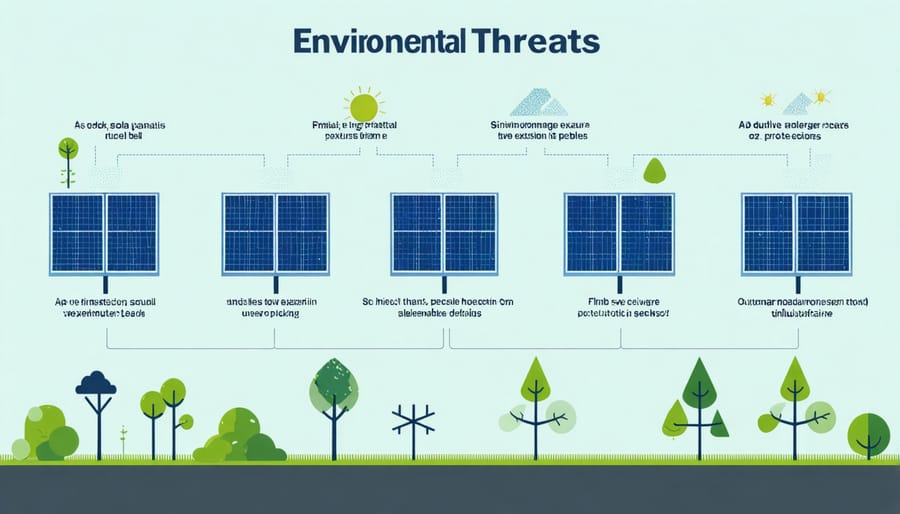
Modern solar installations require robust weather-proofing solutions to maintain optimal performance under challenging environmental conditions. Advanced protective measures begin with comprehensive weather resistance testing to ensure durability against various climate challenges.
High-quality tempered glass coatings with anti-reflective properties serve as the first line of defense against hail and severe weather impacts. These specialized coatings typically incorporate hydrophobic properties, enabling water to roll off easily while preventing dirt accumulation. This self-cleaning feature maintains maximum light transmission even during adverse weather conditions.
Temperature regulation systems play a crucial role in maintaining efficiency. Advanced thermal management solutions include phase-change materials integrated into panel backing sheets, which absorb excess heat during peak temperatures and release it gradually during cooler periods. This helps maintain optimal operating temperatures and prevents performance degradation.
For regions prone to extreme weather, reinforced mounting systems with wind-resistant designs provide additional protection. These systems incorporate dynamic load distribution technology and flexible mounting points that adjust to wind patterns while maintaining structural integrity.
Modern encapsulation techniques using enhanced EVA (ethylene-vinyl acetate) or polyolefin materials provide superior moisture protection and prevent delamination, extending panel lifespan and maintaining consistent performance across varying weather conditions. These materials are specifically engineered to withstand UV exposure while maintaining optical clarity for maximum energy conversion efficiency.
UV and Heat Management
Managing UV radiation and heat exposure is crucial for maintaining optimal solar panel performance. High temperatures can significantly reduce photovoltaic cell efficiency, typically decreasing power output by 0.3% to 0.5% for every degree Celsius increase above standard testing conditions (25°C).
Several effective techniques help mitigate these challenges. Temperature-regulated mounting systems create air gaps between panels and mounting surfaces, facilitating natural convection cooling. Advanced thermal management solutions include phase change materials (PCMs) that absorb excess heat during peak temperatures and release it gradually during cooler periods.
Reflective coatings and anti-soiling surfaces help manage UV exposure while reducing heat absorption. These specialized materials reflect non-convertible radiation while maintaining high absorption of usable wavelengths. Modern glass encapsulation systems incorporate UV-filtering properties that protect the underlying solar cells from degradation while optimizing light transmission.
Active cooling systems, though less common in residential installations, offer significant benefits for commercial applications. These include water-cooling circuits and forced-air ventilation systems that can maintain panel temperatures closer to optimal operating conditions.
Regular monitoring of panel temperature and performance metrics enables proactive management of heat-related efficiency losses. Installing temperature sensors and implementing automated response systems can help maintain optimal operating conditions throughout varying weather conditions.
Maintenance Protocols for Maximum Output
Preventive Maintenance Schedule
Regular maintenance is crucial for maximizing solar panel output and ensuring long-term system performance. Implement this comprehensive maintenance schedule to optimize your solar installation’s efficiency:
Monthly Tasks:
– Visual inspection for physical damage, debris, and dirt accumulation
– Monitor system performance through data logging
– Check inverter display for error messages
– Clear vegetation that may cause shading
– Document energy production metrics
Quarterly Tasks:
– Thorough panel cleaning using appropriate cleaning solutions
– Inspect mounting hardware and tighten loose connections
– Check electrical connections and wiring for signs of wear
– Review system performance data for efficiency trends
– Assess weather sealing integrity
Bi-Annual Tasks:
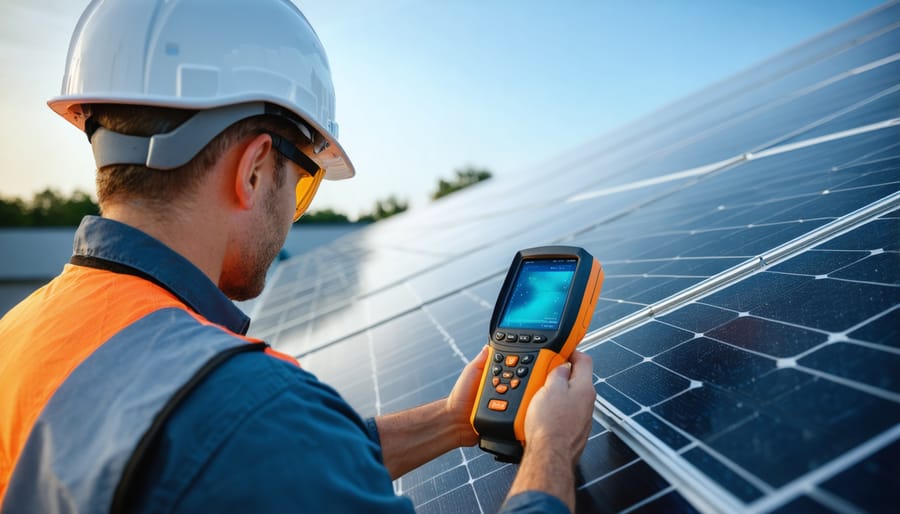
– Detailed infrared scanning to identify hot spots
– Verification of grounding connections
– Testing of surge protection devices
– Evaluation of panel degradation rates
– Inspection of junction boxes and cable connections
Annual Tasks:
– Professional system audit
– Comprehensive performance analysis
– Calibration of monitoring equipment
– Assessment of structural integrity
– Update maintenance documentation
Emergency Checks (After Severe Weather):
– Immediate inspection for storm damage
– Debris removal
– Verification of electrical safety
– Assessment of mounting system stability
– Documentation of any damage for insurance purposes
Maintain detailed records of all maintenance activities, including dates, observations, and actions taken. This documentation helps track system performance over time and identify patterns that may require attention.
Performance Monitoring Systems
Performance monitoring systems play a crucial role in maximizing solar panel output by providing real-time data analysis and early problem detection capabilities. Modern monitoring solutions combine advanced sensors, data logging equipment, and sophisticated software to track key performance indicators continuously.
These systems typically measure voltage, current, power output, and environmental conditions such as temperature and irradiance levels. By analyzing this data, system operators can identify performance degradation, electrical faults, or mechanical issues before they significantly impact energy production.
Remote monitoring capabilities enable technicians to assess system performance from anywhere, reducing response times and maintenance costs. Advanced monitoring platforms often incorporate machine learning algorithms that can predict potential failures and optimize maintenance schedules based on historical performance data.
Key monitoring components include:
– String-level current sensors
– Power optimizers with built-in monitoring
– Weather stations for environmental data collection
– Data acquisition systems (DAS)
– Cloud-based monitoring platforms
Most modern monitoring systems also feature automated alert systems that notify operators when performance falls below expected thresholds. These alerts can indicate issues such as partial shading, dust accumulation, or component malfunctions, allowing for prompt corrective action.
For large-scale installations, thermal imaging and drone inspections complement traditional monitoring systems, providing detailed visual data about panel condition and identifying hot spots or physical damage that might not be detected through electrical monitoring alone.
Advanced Materials and Innovation
Next-Generation Materials
Recent advancements in material science have revolutionized solar panel technology, introducing innovative compounds that significantly maximize power generation while extending operational lifespans. Perovskite solar cells represent a breakthrough, achieving conversion efficiencies exceeding 29% when combined with traditional silicon in tandem configurations. These hybrid systems leverage the complementary absorption spectrums of both materials to capture a broader range of solar radiation.
Multi-junction cells incorporating gallium arsenide and indium phosphide compounds have demonstrated unprecedented efficiency levels, approaching theoretical limits. Researchers are also developing self-healing polymers that protect panels from environmental damage, while quantum dot technology enables better performance in low-light conditions.
Carbon-based materials, including graphene and carbon nanotubes, are emerging as promising alternatives for transparent electrodes, offering superior conductivity and durability compared to traditional materials. Additionally, new anti-reflective coatings and surface treatments minimize light loss while providing enhanced protection against dust accumulation and UV degradation, ensuring sustained performance throughout the panel’s lifecycle.
Future-Proofing Technologies
The landscape of solar panel technology continues to evolve with groundbreaking innovations focused on durability and longevity. Advanced nanotechnology coatings are being developed to create self-cleaning surfaces that reduce maintenance requirements while maintaining optimal light absorption. These hydrophobic coatings prevent dust accumulation and water spots, ensuring consistent performance over time.
Researchers are also making significant progress in developing next-generation photovoltaic materials that demonstrate enhanced resistance to environmental stressors. New encapsulation techniques using modified polymer compositions offer superior protection against UV degradation and moisture intrusion, potentially extending panel lifespan by up to 40%.
Smart monitoring systems incorporating artificial intelligence are emerging as powerful tools for predictive maintenance. These systems can detect potential degradation issues before they impact performance, allowing for proactive interventions that preserve panel efficiency. Additionally, innovative frame designs utilizing advanced composites are showing promise in improving structural integrity while reducing weight and material costs.
Quantum dot technology is another promising development, offering the potential to capture a broader spectrum of light and maintain higher efficiency levels even as panels age. These advancements, combined with ongoing research into perovskite-silicon tandem cells, suggest a future where solar panels will be more durable and efficient than ever before.
The optimization of solar panel output requires a multifaceted approach that combines preventive maintenance, technological upgrades, and strategic implementation of enhancement techniques. Through proper cleaning protocols, advanced monitoring systems, and optimal positioning, solar installations can achieve significant improvements in energy generation efficiency. The implementation of anti-reflective coatings and micro-inverter technology has demonstrated potential increases in output ranging from 3% to 10%, while proper thermal management systems can prevent performance losses of up to 15% during peak temperature conditions.
Regular maintenance schedules, combined with data-driven monitoring, create a robust framework for sustained performance optimization. The integration of smart tracking systems has shown consistent improvements in energy capture, with dual-axis tracking systems demonstrating up to 40% increased efficiency in optimal conditions. Moreover, the adoption of bifacial panels and advanced surface treatments has proven essential for maximizing energy harvest in various environmental conditions.
Looking ahead, the continued development of nano-materials and smart grid integration promises even greater potential for output enhancement. Organizations implementing these comprehensive strategies have reported sustained performance improvements averaging 20-25% over traditional installations. By maintaining a holistic approach to solar panel optimization, facility managers and technicians can ensure their installations operate at peak efficiency while extending their operational lifespan and maintaining reliable energy production throughout the system’s lifetime.