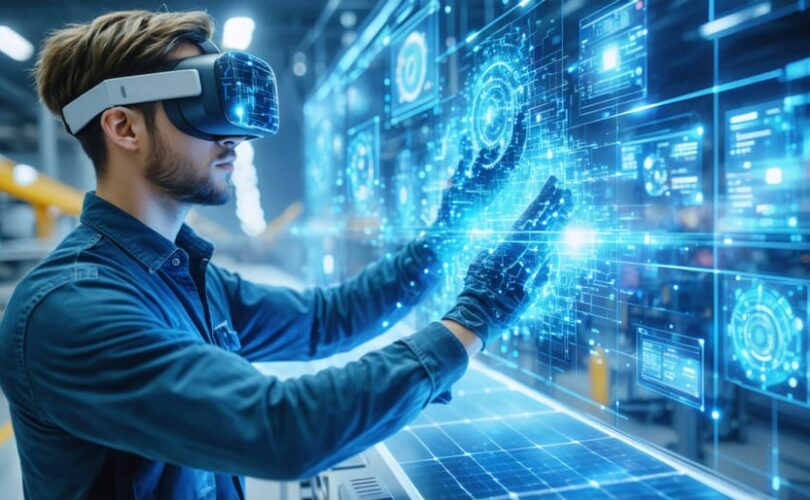
Augmented reality (AR) training platforms are revolutionizing assembly and maintenance education in photovoltaic manufacturing, delivering up to 40% faster skill acquisition and 90% higher retention rates compared to traditional methods. By projecting step-by-step digital overlays onto physical equipment, AR technology transforms complex maintenance procedures into intuitive, interactive learning experiences. Manufacturing facilities implementing AR-based training programs report significant reductions in assembly errors, shortened training periods, and enhanced worker confidence across critical maintenance operations.
This technological advancement addresses the persistent challenges of standardizing technical training across multiple facilities while accommodating diverse learning styles and experience levels. Real-time visualization of assembly sequences, coupled with immediate feedback mechanisms, enables trainees to master intricate procedures without risking damage to valuable equipment. The platform’s ability to simulate various fault scenarios and maintenance challenges provides hands-on experience without operational disruption, making it an invaluable tool for both novice technicians and experienced professionals seeking to upgrade their skills.
As the photovoltaic industry continues to evolve with increasingly sophisticated equipment and maintenance protocols, AR training platforms emerge as essential tools for maintaining workforce competency and operational excellence. These systems not only accelerate skill development but also ensure consistent quality standards across manufacturing operations, positioning organizations at the forefront of technical innovation and educational advancement.
The Evolution of AR Training in Solar Manufacturing
Traditional vs. AR-Enhanced Training Methods
Traditional training methods in PV manufacturing rely heavily on printed manuals, in-person demonstrations, and hands-on practice sessions. While these approaches have served the industry well, they often require significant time investment, physical resources, and experienced trainers. In contrast, AR-enhanced training platforms represent a significant leap forward in digital manufacturing innovations, offering interactive, real-time guidance and visualization.
AR-based training provides step-by-step visual overlays directly in the worker’s field of view, eliminating the need to constantly reference manuals or seek supervisor assistance. This immediate feedback loop accelerates learning and reduces errors significantly. While traditional methods typically achieve a 40-60% retention rate, AR-enhanced training has demonstrated retention rates of up to 80%.
The cost implications also favor AR solutions in the long term. Although initial implementation requires investment in hardware and software, the reduced need for physical training materials, decreased error rates, and shortened training periods often result in substantial cost savings within the first year of deployment. Additionally, AR platforms allow for standardized training delivery across multiple locations, ensuring consistency in assembly and maintenance procedures throughout the organization.
Key Benefits of AR Training Platforms
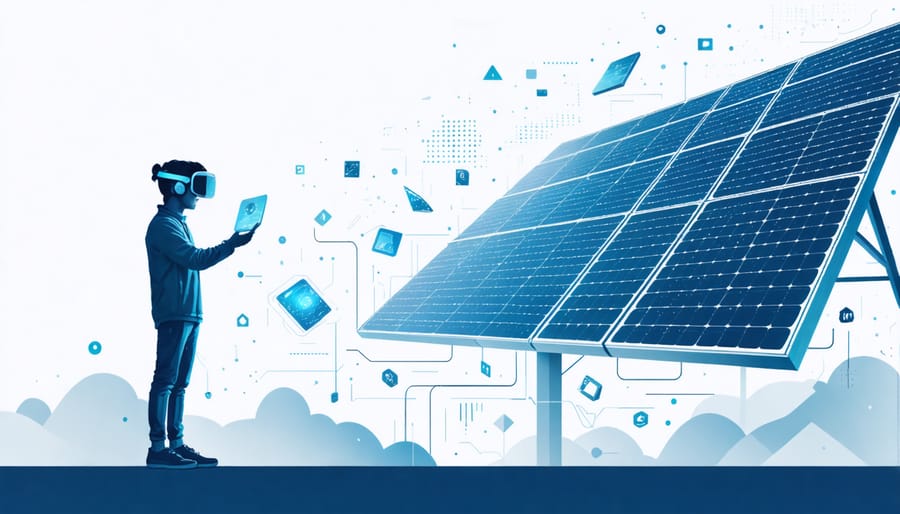
AR training platforms offer substantial advantages in photovoltaic assembly and maintenance training, delivering measurable benefits across multiple operational aspects. The most significant advantage is cost reduction, as organizations can eliminate expensive physical training equipment and minimize material waste during the learning process. Virtual simulations allow trainees to practice complex procedures repeatedly without consuming actual components or risking damage to valuable equipment.
Safety improvements represent another crucial benefit, as learners can practice potentially hazardous procedures in a risk-free virtual environment. This approach enables them to build confidence and competency before handling live electrical components or working at heights during actual installations.
The efficiency gains are particularly noteworthy, with studies showing up to 40% faster learning rates compared to traditional training methods. AR platforms enable simultaneous training of multiple employees across different locations, reducing travel costs and training time. The technology also provides immediate feedback and performance tracking, allowing instructors to identify areas requiring additional focus and adjust training programs accordingly.
Furthermore, AR platforms ensure consistent training delivery and standardized procedures across all learning sessions, maintaining high-quality educational outcomes while accommodating different learning paces and styles.
Core Features of AR Training Platforms

Interactive 3D Assembly Guides
The interactive 3D assembly guides represent a cornerstone of modern AR-based training platforms, seamlessly integrating with smart factory automation systems. These sophisticated guides provide trainees with detailed, step-by-step visual instructions that appear directly in their field of view through AR headsets or mobile devices.
Each assembly procedure is broken down into clearly defined stages, with holographic overlays highlighting specific components and connection points. The system tracks user movements in real-time, offering immediate feedback on assembly accuracy and technique. Visual cues, such as green indicators for correct actions and red warnings for potential errors, help users develop proper muscle memory and maintain quality standards.
The platform incorporates precision tracking sensors that monitor tool positioning and component alignment, ensuring adherence to manufacturing specifications. Interactive checkpoints throughout the assembly process verify successful completion of critical steps before allowing progression to subsequent tasks. This systematic approach significantly reduces the likelihood of assembly errors while accelerating the learning curve.
Additionally, the system features dynamic viewing angles, allowing trainees to examine complex assemblies from multiple perspectives. Users can rotate, zoom, and interact with 3D models to better understand spatial relationships between components. The platform also maintains detailed performance metrics, enabling instructors to identify areas where additional training may be required and adjust the curriculum accordingly.
Performance Tracking and Assessment Tools
The augmented reality training platform incorporates sophisticated performance tracking and assessment tools that enable comprehensive monitoring of trainee progress and skill development. Real-time analytics measure key performance indicators such as task completion time, accuracy rates, and procedural adherence during assembly and maintenance exercises.
The system employs multi-dimensional evaluation metrics, including gesture recognition technology to assess proper tool handling and component manipulation. Motion tracking algorithms analyze trainee movements, comparing them against standardized best practices to identify areas requiring improvement. Error detection mechanisms immediately flag incorrect assembly sequences or maintenance procedures, allowing for instant feedback and correction.
Progress monitoring dashboards provide trainers with detailed insights into individual and group performance trends. These analytics help identify common challenges across training cohorts and enable targeted intervention strategies. The platform automatically generates detailed performance reports documenting competency achievements, skill progression, and certification readiness.
Assessment tools include customizable evaluation parameters that align with specific industry standards and organizational requirements. Interactive quizzes and knowledge checks are seamlessly integrated into the training modules, ensuring comprehensive understanding of both theoretical concepts and practical applications. The system also maintains detailed training histories for compliance documentation and professional development tracking.
This data-driven approach to skills assessment ensures consistent quality standards while providing objective evidence of competency development throughout the training process.
Implementation Strategies
Technical Requirements and Setup
The implementation of an effective AR training platform requires careful consideration of both hardware and software components. Essential hardware includes AR-capable devices such as Microsoft HoloLens 2, Magic Leap, or tablet-based solutions, depending on the specific training requirements. Each trainee workstation needs a minimum of one AR display device and adequate space for physical movement during assembly exercises.
The software infrastructure must include a robust AR development platform, typically built on Unity or Unreal Engine, with custom modules for assembly sequence visualization and real-time feedback. The system requires high-performance servers capable of handling simultaneous user connections and processing complex 3D models with minimal latency.
Network requirements include a dedicated high-speed internet connection with minimum speeds of 50 Mbps download and 20 Mbps upload to ensure smooth data transmission and real-time tracking. A secure local area network (LAN) is essential for maintaining data integrity and protecting proprietary assembly procedures.
Storage solutions must accommodate large databases of 3D models, training modules, and user progress data. The platform should support standard file formats (STEP, STL, FBX) for easy integration with existing CAD systems. Regular software updates and security patches are necessary to maintain system reliability and protect against potential vulnerabilities.
Training Program Development
Developing effective AR-based training modules requires a systematic approach that combines pedagogical principles with technological capabilities. The process begins with a thorough analysis of PV module assembly basics and maintenance procedures to identify critical learning objectives.
Training content should be structured in progressive difficulty levels, starting with fundamental concepts and advancing to complex assembly sequences. Each module must incorporate clear visual guides, step-by-step instructions, and interactive elements that engage learners through hands-on practice.
Key considerations include:
– Creating detailed 3D models of components with accurate spatial relationships
– Implementing gesture recognition for natural interaction
– Designing clear visual indicators for correct assembly sequences
– Incorporating real-time feedback mechanisms
– Establishing performance metrics for skill assessment
Quality assurance protocols should validate the accuracy of AR content against manufacturer specifications. Regular updates ensure training materials remain current with evolving industry standards and equipment modifications.
The development process should involve subject matter experts, instructional designers, and AR developers working collaboratively to create cohesive, practical training experiences that effectively transfer skills to real-world applications.
Real-World Applications and Success Stories
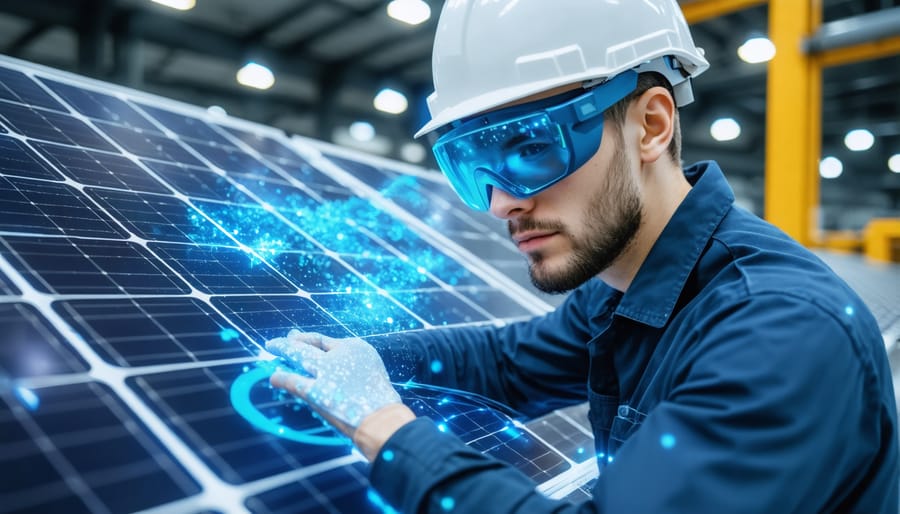
The implementation of augmented reality training platforms in photovoltaic manufacturing has yielded remarkable results across multiple organizations. A notable success story comes from SolarTech Industries, where the introduction of AR-based assembly training reduced error rates by 47% and decreased training time by 35% within the first six months of deployment.
Manufacturing giant GreenPanel Corporation integrated an AR training platform for their maintenance teams in 2022, resulting in a 40% improvement in first-time fix rates and a significant reduction in equipment downtime. The platform’s step-by-step visualization capabilities enabled technicians to diagnose and repair complex issues more efficiently, while maintaining consistency with quality control automation standards.
The Solar Institute of Technology collaborated with leading manufacturers to implement AR training for their student certification programs. The results showed that students using AR-based learning achieved 30% higher practical assessment scores compared to traditional training methods. This success led to the program’s adoption by five additional technical institutes across the region.
Another compelling example comes from EcoSolar Manufacturing, which deployed AR training for their production line workers. The company reported a 25% increase in assembly accuracy and a 50% reduction in training-related costs. The platform’s ability to provide real-time feedback and performance metrics helped supervisors identify areas for improvement and optimize training protocols.
Maintenance teams at RenewTech Solutions utilized AR training to master complex repair procedures for advanced solar panel technologies. The immersive training environment allowed technicians to practice intricate maintenance tasks without risk to actual equipment, resulting in a 60% decrease in maintenance-related incidents and a 45% improvement in procedure completion times.
These success stories demonstrate the transformative impact of AR training platforms in PV manufacturing. The technology not only enhances learning outcomes but also contributes to operational efficiency, cost reduction, and quality improvement across the solar manufacturing sector. As these platforms continue to evolve, their integration into training programs becomes increasingly vital for maintaining competitive advantage in the rapidly advancing PV industry.
Augmented reality training platforms have revolutionized the way assembly and maintenance skills are taught and developed in the photovoltaic industry. By combining immersive technology with hands-on learning experiences, these platforms have demonstrated significant improvements in training efficiency, knowledge retention, and worker confidence. The reduced training costs, increased safety, and ability to simulate complex scenarios without risking equipment damage have made AR training an invaluable tool for manufacturing facilities and educational institutions alike.
The impact of AR training extends beyond immediate skill acquisition. Organizations implementing these platforms have reported shorter learning curves, decreased error rates, and improved workforce adaptability. The data-driven approach to skills assessment and progress tracking has enabled more personalized learning paths and better-targeted improvement strategies.
Looking ahead, the future of AR training platforms appears promising, with several technological advancements on the horizon. Machine learning integration is expected to enhance the platforms’ ability to adapt to individual learning styles and provide more sophisticated feedback mechanisms. The development of more advanced haptic feedback systems will further bridge the gap between virtual and physical training experiences.
Industry trends suggest increased adoption of AR training platforms across the renewable energy sector, particularly in photovoltaic manufacturing and maintenance operations. As hardware becomes more affordable and software more sophisticated, smaller organizations will have greater access to these training solutions. This democratization of AR technology will likely lead to standardized training protocols and improved industry-wide skill levels.
The ongoing collaboration between technology developers, educational institutions, and industry stakeholders will continue to refine these platforms, ensuring they remain aligned with evolving industry needs and technological capabilities. As sustainability becomes increasingly crucial, AR training platforms will play a vital role in preparing the workforce for the growing demands of the renewable energy sector, while maintaining the high standards required for quality solar installation and maintenance.