Connecting two solar panels in series creates a fundamental building block for efficient photovoltaic systems, doubling the voltage output while maintaining consistent current flow. This configuration proves essential in meeting higher voltage requirements for grid-tied inverters and maximizing power transmission efficiency across longer cable runs. By understanding the principles of series connections, solar professionals can optimize system design, reduce power losses, and enhance overall energy production. Whether implementing residential installations or developing commercial solar arrays, mastering series connections enables precise voltage control and improved system performance. This introductory exploration will examine the technical considerations, advantages, and practical applications of connecting two solar panels in series, providing essential knowledge for both seasoned professionals and emerging practitioners in the renewable energy sector.
Understanding Series Connection in Solar PV Systems
Voltage and Current Characteristics
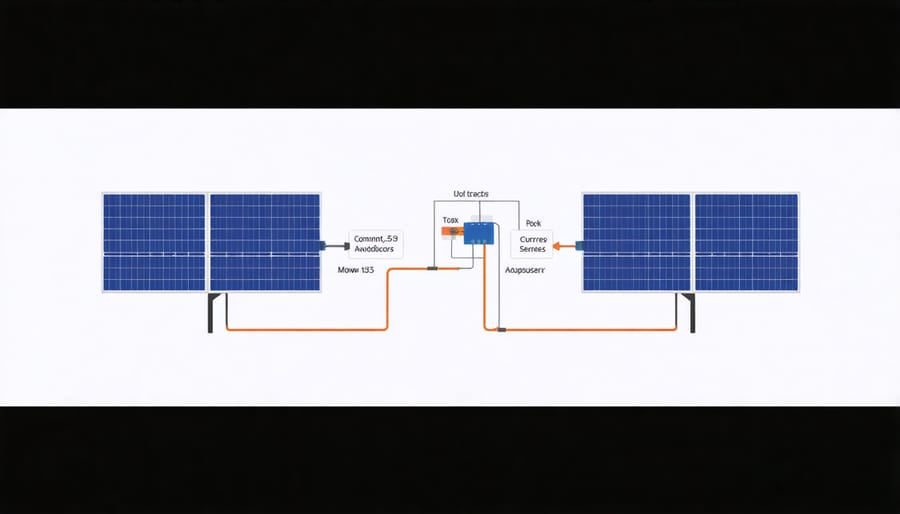
When connecting two solar panels in series, the voltage characteristics follow fundamental electrical principles crucial to effective solar PV system design. The total voltage becomes the sum of individual panel voltages, while the current remains constant throughout the circuit. For example, if each panel produces 24V and 5A, the series configuration yields 48V total while maintaining 5A current flow.
This voltage addition property makes series connections particularly valuable for meeting higher voltage requirements in grid-tied systems and charge controllers. However, it’s essential to consider that both panels must be identical in specifications to achieve optimal performance. The current output in a series connection is limited by the lowest-performing panel, making proper panel matching crucial.
Temperature variations and shading effects can significantly impact series-connected panels. When one panel experiences reduced performance, it affects the entire string’s output. Modern bypass diodes help mitigate these effects by providing alternative current paths during partial shading conditions.
Power Output Optimization
Connecting two solar panels in series significantly impacts the system’s power output characteristics and overall generation efficiency. When panels are wired in series, their voltages add together while the current remains constant, allowing for higher voltage configurations that can better match inverter specifications. This arrangement optimizes power transmission by reducing resistive losses in the cables, particularly beneficial in systems where panels are located far from the inverter.
However, power output optimization in series connections requires careful consideration of panel matching. Both panels should have similar electrical characteristics to prevent the weaker panel from limiting the entire string’s performance. Under optimal conditions, the total power output equals the sum of each panel’s individual power rating, though real-world factors like shading, temperature variations, and panel degradation can affect this theoretical maximum.
To maximize power generation, implementing bypass diodes and maintaining proper panel orientation becomes crucial. These measures help mitigate potential power losses from partial shading and ensure consistent energy production throughout the day. Regular monitoring of voltage and current outputs helps identify and address any performance issues promptly.
Smart Grid Integration Benefits
Enhanced Grid Stability
Series-connected solar panels play a crucial role in enhancing grid stability through improved voltage regulation and power quality management. When two solar panels are connected in series, their combined voltage output aligns more closely with grid voltage requirements, reducing the need for extensive power conditioning and conversion steps.
This configuration contributes to grid stability in several ways. First, the higher voltage output from series-connected panels reduces transmission losses, making power delivery more efficient. Second, the increased voltage allows for better synchronization with grid-tied inverters, enabling smoother integration of solar power into the existing electrical infrastructure.
The series arrangement also provides better voltage stability during partial shading conditions. While individual panel output may fluctuate, the cumulative voltage remains more consistent, helping maintain grid power quality. This stability is particularly important in micro-grid applications and smart grid systems where voltage regulation is critical for system reliability.
Modern grid-tied inverters are designed to optimize the performance of series-connected panels, incorporating maximum power point tracking (MPPT) technology to maintain optimal voltage levels. This ensures that the power generated by the solar array remains compatible with grid requirements while maximizing energy yield.
For utility-scale installations, series connections of solar panels help achieve the necessary voltage levels for efficient power transmission while minimizing the complexity of balance-of-system components.
System Efficiency Improvements
Connecting two solar panels in series significantly enhances system efficiency through multiple mechanisms. The increased voltage output from series connections enables more effective inverter performance optimization, particularly in grid-tied systems. When panels are connected in series, the total system voltage rises while maintaining the same current, reducing resistive losses in cables and improving overall power transmission efficiency.
This configuration allows inverters to operate within their optimal voltage range more consistently, resulting in higher conversion efficiency rates. Modern inverters typically achieve peak efficiency when processing higher voltage inputs, making series connections particularly advantageous. The reduced current flow also minimizes heat generation in system components, extending their operational lifespan and maintaining performance over time.
Series connections contribute to better Maximum Power Point Tracking (MPPT) functionality, as the higher voltage enables more precise control over power optimization. This leads to improved energy harvest, especially during varying environmental conditions. The configuration also reduces the number of parallel strings required, simplifying system design and potentially lowering balance-of-system costs.
For grid-connected applications, the higher voltage output from series-connected panels better matches typical inverter input requirements, reducing the need for additional voltage step-up components and their associated losses.
Installation and Configuration Considerations
Wiring Requirements
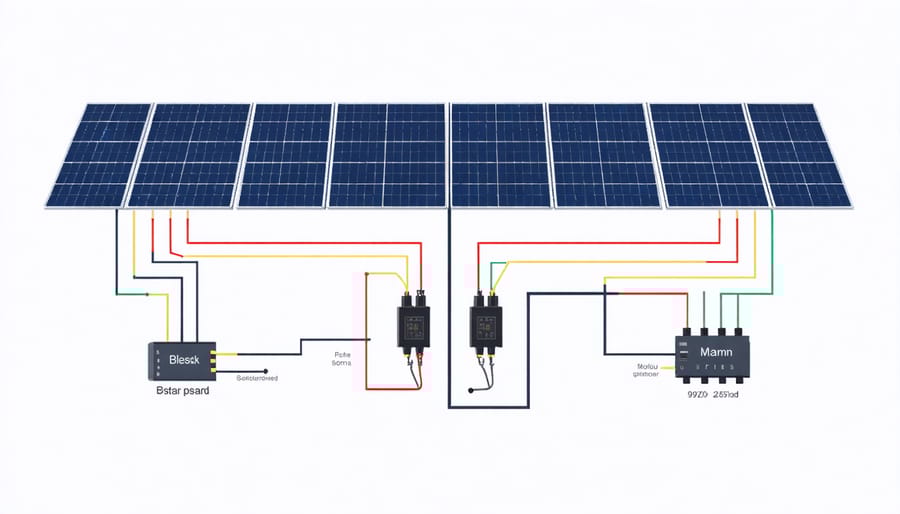
When connecting two solar panels in series, proper wiring is essential for system safety and performance. The positive terminal of the first panel must connect to the negative terminal of the second panel, while the remaining positive and negative terminals serve as the circuit endpoints. Use solar-rated cables with appropriate ampacity ratings that match or exceed the panels’ short-circuit current (Isc).
For outdoor installations, select UV-resistant cables with double insulation rated for a minimum of 600V DC. The recommended wire gauge typically ranges from 10 AWG to 12 AWG for residential installations, depending on the panels’ current output and distance to the charge controller or inverter.
Include properly rated MC4 connectors for secure connections between panels, ensuring they’re fully sealed against moisture. Install blocking diodes to prevent reverse current flow during low-light conditions. All connections must be housed in weather-resistant junction boxes with appropriate strain relief.
Implement proper grounding techniques by connecting the panel frames to a grounding conductor, adhering to local electrical codes and National Electrical Code (NEC) requirements for photovoltaic installations.
Safety Measures
When connecting two solar panels in series, adherence to proper safety protocols is paramount to prevent electrical hazards and ensure system longevity. Always wear appropriate personal protective equipment (PPE), including insulated gloves and safety glasses. Before making any connections, verify that both panels are completely covered and not generating power.
Ensure all equipment meets relevant electrical codes and standards, and use properly rated connectors and cables designed specifically for photovoltaic applications. Install appropriate overcurrent protection devices and disconnect switches to safeguard against potential electrical faults.
Never attempt series connections during adverse weather conditions, and maintain proper workspace organization to prevent accidental short circuits. Regular inspection of connection points for signs of corrosion or damage is essential. Keep detailed documentation of the installation, including voltage ratings and connection diagrams.
When troubleshooting, always use a properly calibrated multimeter and follow the manufacturer’s safety guidelines. Remember that series connections increase voltage, so exercise extra caution when working with the combined output of both panels. If unsure about any aspect of the installation, consult a qualified solar professional.
Troubleshooting and Maintenance
Performance Monitoring
Effective monitoring of two solar panels connected in series requires specialized performance monitoring systems to ensure optimal operation and early detection of potential issues. Key monitoring tools include digital multimeters for voltage measurements across individual panels, clamp meters for current readings, and data loggers for continuous performance tracking.
Modern monitoring solutions incorporate remote sensing capabilities, allowing real-time observation of crucial parameters such as voltage output, current flow, and power production. These systems typically feature integrated sensors that measure both environmental conditions (temperature, irradiance) and electrical parameters, providing comprehensive performance data.
For precise analysis, it’s essential to monitor both panels individually and as a combined unit. This approach helps identify any mismatch issues or degradation in either panel that could affect the overall system efficiency. Professional monitoring equipment should include:
– Voltage and current monitoring devices
– Temperature sensors for both panels
– Solar irradiance meters
– Power quality analyzers
– Data acquisition systems with storage capabilities
Regular performance assessment through these tools enables system operators to maintain optimal energy production, verify system health, and implement preventive maintenance measures when necessary. This systematic approach to monitoring ensures the longevity and efficiency of series-connected solar installations while maximizing return on investment.
Problem Resolution
When encountering issues with solar panels connected in series, systematic troubleshooting is essential for optimal system performance. Common problems include voltage inconsistencies, reduced power output, and circuit interruptions. To resolve these issues, first verify proper polarity connections between panels, ensuring positive terminals connect to negative terminals throughout the string.
If output voltage is lower than expected, inspect individual panel voltages using a multimeter. A significant variation between panels may indicate shading problems or panel degradation. Remove any objects causing partial shading and clean panels thoroughly to restore optimal performance. For persistent voltage discrepancies, bypass diodes should be tested and replaced if faulty.
Connection points require particular attention, as loose or corroded terminals can cause resistance and reduce system efficiency. Inspect all wiring connections, ensuring they are properly tightened and protected from environmental factors. Apply appropriate anti-corrosion measures at connection points to prevent degradation over time.
When one panel in the series shows signs of failure, temporarily bypass it using appropriate connectors while maintaining circuit integrity. This solution allows continued system operation until the faulty panel can be replaced. Remember that replacing panels requires matching voltage specifications to maintain series string compatibility.
Regular maintenance inspections can prevent many common issues. Document all troubleshooting steps and solutions for future reference, creating a maintenance history that aids in long-term system optimization.
Connecting two solar panels in series represents a fundamental configuration in photovoltaic system design, offering significant advantages for voltage optimization and power delivery. Throughout this discussion, we’ve explored how series connections double the voltage while maintaining constant current, making them particularly valuable for grid-tied systems and applications requiring higher voltage outputs.
The implementation of series connections in solar arrays continues to evolve with advancing technology. Modern smart inverters and power optimizers are increasingly incorporating sophisticated monitoring and control features, enabling more efficient management of series-connected panels. This integration is particularly crucial as distributed energy resources become more prevalent in smart grid applications.
Looking ahead, the role of series-connected solar panels in renewable energy systems is expected to grow. Emerging technologies, such as bifacial panels and higher-efficiency cells, will further enhance the benefits of series connections. Additionally, the development of more advanced maximum power point tracking (MPPT) algorithms will improve the performance of series-connected panels under partial shading conditions.
For system designers and installers, understanding series connections remains essential for optimizing solar array performance. As the industry moves toward more sophisticated grid integration and energy storage solutions, the careful consideration of voltage requirements and system architecture will continue to drive the strategic use of series-connected panels in both residential and commercial applications.