Photovoltaic (PV) manufacturing education stands at the forefront of renewable energy’s industrial revolution, offering career-defining opportunities for professionals seeking to shape the future of solar technology. As global solar installations continue to surge, reaching unprecedented levels, the demand for skilled PV manufacturing specialists has created a critical need for comprehensive, industry-aligned education programs. These specialized courses combine theoretical foundations with hands-on manufacturing experience, preparing students to tackle real-world challenges in solar panel production, quality control, and process optimization.
Leading universities and technical institutions now offer structured PV manufacturing curricula that integrate cutting-edge research with practical manufacturing methodologies. From fundamental material science to advanced automation techniques, these programs provide the essential knowledge base required for success in the rapidly evolving solar industry. Students gain expertise in crystalline silicon processing, thin-film technology, and emerging photovoltaic materials, while developing crucial skills in production line management and efficiency optimization.
The convergence of environmental sustainability goals and technological advancement has transformed PV manufacturing education from a specialized niche into a cornerstone of renewable energy workforce development. Through strategic partnerships with industry leaders, these educational programs ensure graduates possess the precise skill set demanded by modern solar manufacturing facilities.
Fundamental PV Manufacturing Classes
Silicon Processing and Wafer Production
The foundation of photovoltaic cell production lies in the meticulous refinement of silicon and the precise silicon wafer manufacturing processes. This crucial phase begins with the extraction of silicon from quartz sand through carbothermic reduction, yielding metallurgical-grade silicon. The material then undergoes multiple purification steps to achieve solar-grade silicon with 99.9999% purity.
In wafer production, the purified silicon is melted and carefully crystallized using either the Czochralski method for monocrystalline wafers or directional solidification for polycrystalline variants. The resulting silicon ingots are precisely sliced into thin wafers using diamond wire saws, typically achieving thicknesses between 150-180 micrometers.
The wafers undergo rigorous surface treatments, including texturing and cleaning processes, to optimize their light-capturing properties. These treatments create microscopic pyramids on the wafer surface, reducing reflection and increasing light absorption efficiency. Quality control measures throughout these processes ensure consistency and reliability in the final product.
Understanding these fundamental processes is essential for professionals in the photovoltaic industry, as they directly impact solar cell efficiency and manufacturing costs. Modern production facilities employ automated systems and advanced monitoring techniques to maintain precise control over these critical manufacturing steps.
Cell Technology and Fabrication
The Cell Technology and Fabrication module provides comprehensive training in solar cell manufacturing techniques, focusing on both crystalline and thin-film technologies. Students learn essential processes including wafer production, surface texturing, and anti-reflection coating application. The curriculum covers advanced concepts such as dopant diffusion, metallization, and cell interconnection methods.
Hands-on laboratory sessions allow participants to gain practical experience with industrial-grade manufacturing equipment. Through these sessions, students master quality control procedures, process optimization, and yield management strategies. The module emphasizes understanding the relationship between fabrication parameters and cell efficiency, enabling future professionals to make informed decisions in production environments.
Industry-standard testing protocols and characterization methods form a crucial component of the training. Students learn to operate sophisticated measurement equipment and interpret performance data. Special attention is given to emerging technologies like heterojunction cells and perovskite solar cells, preparing participants for future innovations in the field.
Environmental considerations and safety protocols in manufacturing environments are thoroughly covered, ensuring responsible and sustainable production practices. The module concludes with practical projects that simulate real-world manufacturing challenges, allowing students to apply their knowledge in meaningful ways.
Advanced PV Manufacturing Courses
PERC Technology Manufacturing
PERC (Passivated Emitter and Rear Cell) technology represents a significant advancement in solar cell manufacturing, offering enhanced efficiency through sophisticated processing techniques. The manufacturing process begins with the standard p-type silicon wafer preparation, followed by surface texturing to reduce reflection losses. A critical distinction of PERC technology is the addition of a dielectric passivation layer on the rear surface of the cell.
The passivation process involves depositing aluminum oxide and silicon nitride layers using advanced thermal atomic layer deposition (ALD) or plasma-enhanced chemical vapor deposition (PECVD) methods. This rear passivation layer serves two crucial functions: reducing electron recombination and improving internal light reflection.
Local contact openings are created through laser ablation, allowing for selective metal contacts while maintaining the passivation benefits across most of the rear surface. The metallization process typically employs screen printing techniques for both front and rear contacts, with precise alignment crucial for optimal performance.
Quality control measures include in-line monitoring of wafer thickness, surface uniformity, and electrical characteristics. Advanced imaging techniques such as electroluminescence testing help identify potential defects before final assembly. The entire manufacturing process requires strict environmental controls, including cleanroom conditions and precise temperature regulation, to ensure consistent cell quality and performance.
Modern PERC manufacturing facilities typically achieve conversion efficiencies exceeding 22%, representing a significant improvement over traditional cell architectures. This enhanced performance justifies the additional processing steps and equipment investment required for PERC production.
Module Assembly and Integration
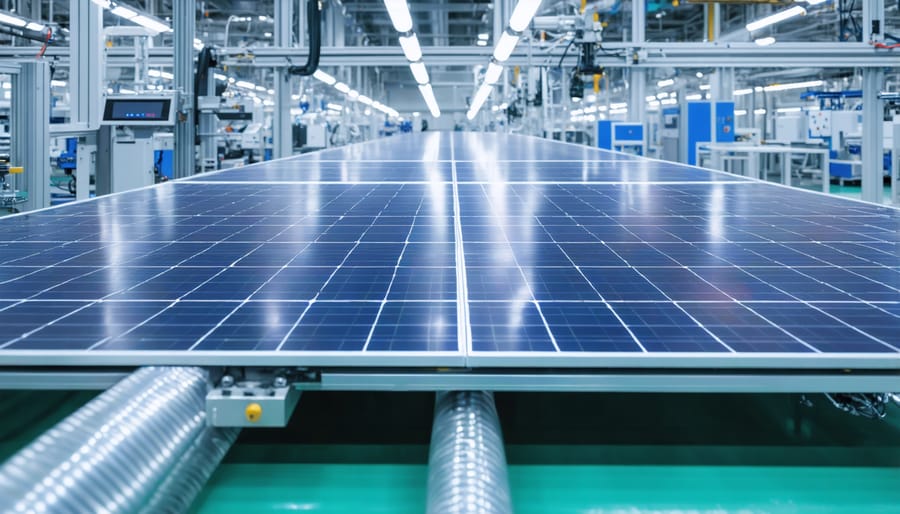
Module assembly and integration represents a critical phase in photovoltaic manufacturing, where individual components come together to form functional solar panels. The process begins with careful inspection of solar cells for quality assurance, followed by precise stringing and tabbing operations that connect cells into series circuits. These circuits are then arranged in predetermined configurations to achieve desired voltage and current specifications.
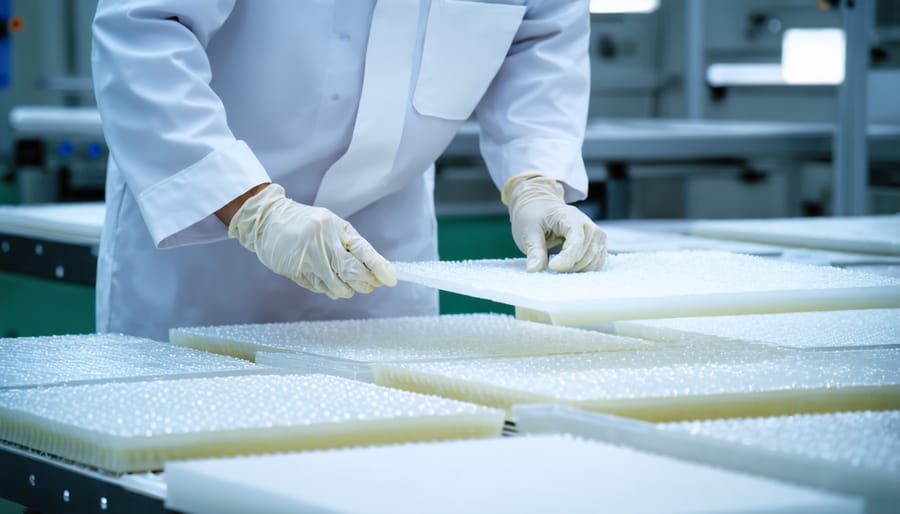
Quality control measures are implemented at every stage, including electroluminescence testing to detect micro-cracks and visual inspections for proper cell alignment. The layered assembly process involves positioning the cell matrix between specially treated glass, EVA (ethylene-vinyl acetate) sheets, and backsheet materials. These layers are carefully aligned and processed through lamination equipment under controlled temperature and pressure conditions.
Advanced automation systems ensure consistent placement and spacing while reducing human error. The laminated modules undergo edge trimming and frame installation, where aluminum frames are precisely fitted and sealed to protect against environmental factors. Junction boxes are attached and thoroughly tested for proper electrical connections and insulation.
Final quality assurance includes flash testing to verify power output, mechanical load testing for durability, and insulation resistance measurements. Each module receives a unique identification number for traceability and warranty purposes. The entire assembly process adheres to strict industry standards and certification requirements, ensuring the finished modules meet performance and safety specifications.
Specialized Product Manufacturing
Specialized product manufacturing courses focus on the intricate processes involved in producing solar tiles and roof-integrated photovoltaic systems. Students learn comprehensive manufacturing techniques specific to building-integrated photovoltaic (BIPV) products, combining traditional roofing materials with solar technology.
The curriculum covers essential aspects such as material selection, lamination processes, and quality control specific to solar tiles. Participants gain hands-on experience with specialized equipment and tools used in the production of these innovative solar products. The training emphasizes the importance of maintaining precise specifications while ensuring aesthetic appeal and structural integrity.
Course modules include advanced manufacturing processes such as glass tempering, cell encapsulation, and weatherproofing techniques specific to roof-integrated solar products. Students learn about automated production lines, testing procedures, and quality assurance protocols that meet international standards and certification requirements.
The training also addresses critical factors such as thermal management, moisture resistance, and long-term durability considerations in solar tile manufacturing. Participants study various assembly techniques, connection systems, and integration methods that ensure seamless incorporation with existing roof structures.
Special attention is given to safety protocols, manufacturing efficiency, and waste reduction strategies. The courses typically conclude with practical assessments where students demonstrate their ability to produce solar tiles that meet both technical specifications and aesthetic requirements.
Quality Control and Certification Classes
Manufacturing Quality Standards
Manufacturing quality standards in photovoltaic production are governed by rigorous protocols that ensure consistency, reliability, and optimal performance of solar modules. The International Electrotechnical Commission (IEC) establishes the primary standards, with IEC 61215 and IEC 61730 serving as fundamental benchmarks for crystalline silicon modules.
Quality control begins at the material inspection stage, where silicon wafers undergo thorough testing for structural integrity, electrical properties, and surface uniformity. During cell production, manufacturers implement in-line monitoring systems that assess parameters such as conversion efficiency, series resistance, and quantum efficiency at multiple checkpoints.
Module assembly requires strict adherence to environmental controls, including cleanroom conditions and precise temperature regulation. Each stage of production undergoes statistical process control (SPC) to maintain consistency and identify potential defects early in the manufacturing cycle.
Key quality assurance tests include:
– Flash testing for power output verification
– Electroluminescence imaging for micro-crack detection
– Thermal cycling for durability assessment
– Humidity-freeze testing for environmental resilience
– Visual inspection for physical defects
Manufacturers must maintain ISO 9001 certification and frequently undergo third-party audits to verify compliance with industry standards. Documentation and traceability systems track each component from raw material to finished product, ensuring accountability throughout the production process.
Testing and Certification Procedures
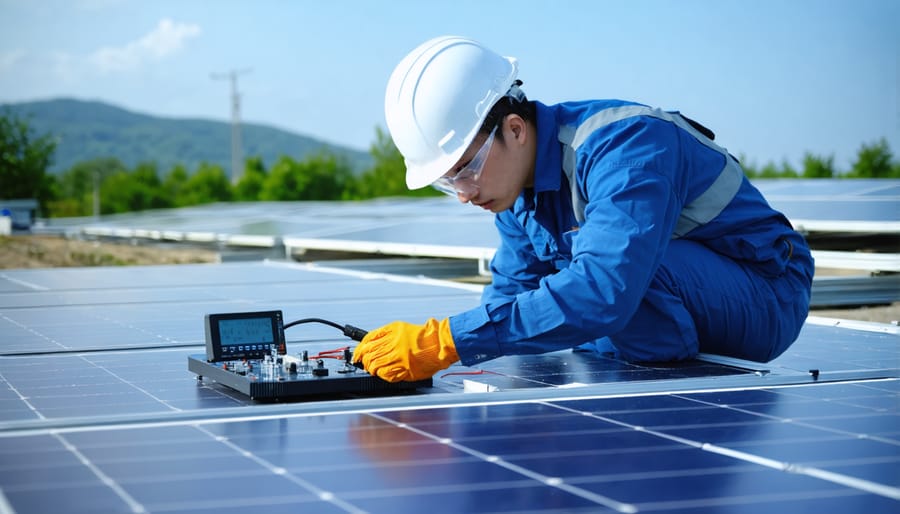
PV class testing and certification follows rigorous international standards to ensure quality, safety, and performance. Manufacturers must subject their photovoltaic modules to comprehensive testing procedures that evaluate durability, electrical performance, and environmental resistance. These tests include thermal cycling, humidity-freeze exposure, mechanical load assessment, and hot-spot endurance testing.
The International Electrotechnical Commission (IEC) establishes standardized testing protocols, with IEC 61215 and IEC 61730 being primary standards for crystalline silicon modules. Products must meet specific certification requirements through accredited testing laboratories before market entry.
Key testing procedures include:
– Power output measurement under standard test conditions (STC)
– Insulation resistance testing
– Wet leakage current testing
– UV exposure testing
– Salt mist corrosion testing
– Dynamic mechanical load testing
Certification involves third-party verification of test results and manufacturing processes. Regular factory inspections ensure consistent quality control. Manufacturers must maintain detailed documentation of testing procedures, results, and quality management systems. Successful certification leads to product labeling that indicates compliance with relevant standards and safety requirements.
Industry Integration and Career Development
PV classes serve as a vital bridge between theoretical knowledge and real-world industry applications, offering students direct pathways to meaningful careers in the solar energy sector. Many programs incorporate hands-on training with industry-standard equipment and software, ensuring graduates are well-prepared for immediate entry into the workforce.
Leading photovoltaic training programs maintain strong partnerships with solar manufacturers, installation companies, and research institutions. These collaborations often result in internship opportunities, allowing students to gain practical experience while building professional networks. Industry experts frequently participate as guest lecturers, sharing current market insights and emerging trends in solar technology.
Career opportunities for PV class graduates span various sectors, including solar panel manufacturing, system design, installation management, quality control, and research and development. Many graduates find positions as PV system designers, solar project managers, technical sales representatives, or quality assurance specialists. The growing demand for renewable energy professionals has created numerous opportunities in both traditional energy companies transitioning to solar and innovative solar startups.
Professional certification preparation is often integrated into PV course curricula, helping students obtain industry-recognized credentials such as NABCEP (North American Board of Certified Energy Practitioners) certification. These certifications significantly enhance employment prospects and demonstrate competency to potential employers.
The curriculum typically includes modules on project management, business development, and communication skills, preparing students for leadership roles in the solar industry. Many programs also emphasize entrepreneurship, enabling graduates to start their own solar installation or consulting businesses.
Continuing education opportunities are readily available through advanced courses and specialized workshops, allowing professionals to stay current with evolving technology and industry standards. This ongoing learning pathway supports career advancement and helps maintain expertise in this rapidly developing field.
The evolving landscape of photovoltaic manufacturing demands well-trained professionals equipped with comprehensive knowledge and practical skills. PV manufacturing education serves as a crucial bridge between theoretical understanding and industry requirements, preparing the next generation of solar energy experts. As renewable energy adoption continues to accelerate globally, the demand for qualified PV manufacturing professionals is expected to grow significantly. Educational programs that combine hands-on training with theoretical foundations will remain essential for workforce development. The future of PV manufacturing education lies in adaptive learning approaches, integration of emerging technologies, and strong industry partnerships. These educational initiatives will continue to play a vital role in advancing solar technology innovation, improving manufacturing efficiency, and supporting the global transition to sustainable energy solutions.