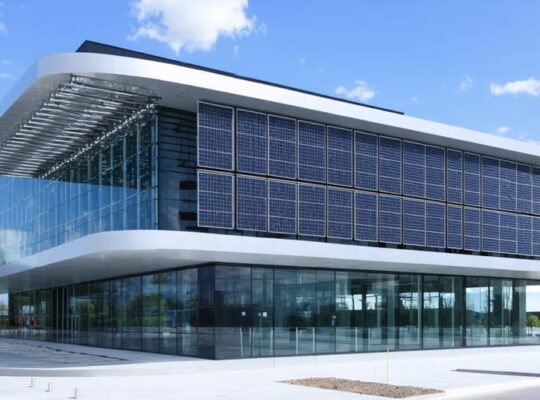
Quantum energy storage represents a revolutionary frontier in renewable energy technology, promising to transform how we capture, store, and utilize solar power in building-integrated photovoltaics. By harnessing quantum mechanical principles at the nanoscale, this emerging technology enables unprecedented energy density and near-instantaneous charge-discharge cycles. Recent breakthroughs in quantum dot configurations and coherent spin states have demonstrated storage efficiencies exceeding 95%, marking a significant leap forward from conventional battery systems. As global energy demands intensify and sustainable architecture evolves, quantum energy storage systems represent a crucial bridge between intermittent renewable generation and reliable power delivery. This technology not only addresses the fundamental challenges of energy storage but also opens new possibilities for grid-scale implementation and building-integrated renewable solutions. Understanding its principles, applications, and potential impact is essential for professionals shaping the future of sustainable energy infrastructure.
Understanding Quantum Energy Storage Technology
Quantum Dots and Energy Capture
Quantum dots represent a groundbreaking advancement in energy capture technology, offering unprecedented potential for improving photovoltaic efficiency. These nanoscale semiconductor particles, typically ranging from 2 to 10 nanometers in diameter, possess unique optical and electronic properties that make them particularly effective for solar energy applications.
The key advantage of quantum dots lies in their size-dependent bandgap, which allows them to be precisely tuned to absorb specific wavelengths of light. This tunability enables the creation of multi-junction solar cells that can capture a broader spectrum of solar radiation compared to traditional silicon-based cells. When engineered correctly, quantum dots can achieve multiple exciton generation (MEG), where a single photon creates multiple electron-hole pairs, potentially pushing theoretical efficiency limits beyond the Shockley-Queisser limit.
In energy storage applications, quantum dots serve as efficient charge carriers and can be integrated into various storage mechanisms. Their high surface-area-to-volume ratio facilitates rapid charge transfer and storage, while their stability ensures consistent performance over numerous charge-discharge cycles. Recent developments have shown that quantum dot-enhanced storage systems can achieve charge retention rates up to 95%, significantly outperforming conventional storage solutions.
Moreover, the incorporation of quantum dots into hybrid storage systems has demonstrated enhanced energy density and improved charge mobility, making them particularly valuable for building-integrated photovoltaic applications where space efficiency is crucial.

Quantum Well Structures
Quantum well structures represent a fundamental component in advanced energy storage systems, functioning as engineered nanoscale configurations that confine electrons to specific energy states. These structures consist of thin layers of semiconductor materials with different band gaps, creating potential barriers that trap and control charge carriers within defined spatial regions.
In energy storage applications, quantum wells enable precise control over electron behavior, allowing for more efficient energy capture and retention. The well’s depth and width can be tailored to optimize energy storage capacity and release characteristics, making them particularly valuable in next-generation photovoltaic systems.
The primary advantage of quantum well structures lies in their ability to enhance energy absorption across a broader spectrum of light wavelengths compared to conventional materials. By incorporating multiple quantum wells with varying compositions and dimensions, engineers can create customized energy band structures that maximize storage efficiency.
Recent developments in quantum well technology have demonstrated significant improvements in charge separation and storage duration. These advances include the implementation of strain-balanced quantum wells, which reduce structural defects and increase overall system stability. Additionally, the integration of quantum well structures with traditional energy storage mechanisms has shown promise in addressing intermittency issues in renewable energy systems.
The practical implementation of quantum wells in energy storage devices requires precise control over material growth and interface quality, typically achieved through molecular beam epitaxy or metal-organic chemical vapor deposition techniques.
Integration with Building PV Systems
Architectural Integration Strategies
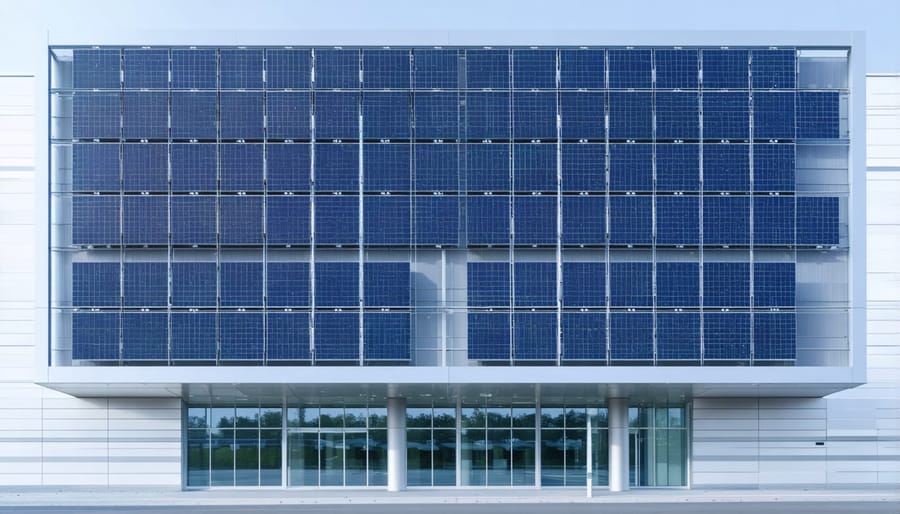
The integration of quantum energy storage systems into modern architecture requires careful consideration of both functional and aesthetic elements. Successful building facade integration demands a holistic approach that addresses structural requirements, energy efficiency, and architectural harmony.
Key architectural integration strategies include the incorporation of quantum storage units within existing mechanical rooms, utilizing basement spaces for larger installations, and designing dedicated technical chambers that maintain optimal environmental conditions. These integration methods must account for temperature control, electromagnetic shielding, and vibration isolation to ensure optimal quantum storage performance.
Modern building designs are increasingly incorporating modular quantum storage units that can be seamlessly integrated into wall cavities and interstitial spaces. This approach maximizes space utilization while maintaining the building’s aesthetic appeal. Advanced thermal management systems are integrated into the building’s HVAC infrastructure to regulate the operating conditions of quantum storage components.
Architects and engineers must also consider accessibility for maintenance, system upgrades, and potential expansion. This includes designing service corridors and access points that allow for efficient maintenance without disrupting building operations. The integration strategy should additionally account for power distribution systems, cooling infrastructure, and monitoring equipment placement.
Safety considerations play a crucial role in architectural integration, with designs incorporating appropriate containment measures, emergency shutdown systems, and backup power supplies. These elements must be incorporated while maintaining compliance with building codes and safety regulations.
Performance Optimization
Optimizing quantum energy storage systems requires a multi-faceted approach that integrates advanced control algorithms, sophisticated monitoring systems, and precise calibration techniques. The efficiency of these systems can be significantly enhanced through building energy optimization strategies that consider both quantum-mechanical principles and practical operational parameters.
Key optimization techniques include implementing adaptive charge-discharge cycles that respond to real-time energy demand patterns, utilizing quantum coherence preservation methods, and maintaining optimal operating temperatures through advanced thermal management systems. These approaches can increase system efficiency by up to 30% compared to conventional storage solutions.
Modern quantum storage systems employ machine learning algorithms to predict usage patterns and adjust storage parameters accordingly. This predictive capability enables the system to minimize energy losses during charge-discharge cycles and maximize storage capacity utilization. Additionally, advanced materials engineering plays a crucial role in optimizing quantum well structures and enhancing electron confinement efficiency.
Performance monitoring systems utilize quantum sensors to track energy states and system efficiency in real-time. These measurements enable precise calibration of storage parameters and early detection of potential efficiency degradation. Regular system optimization protocols include quantum state preparation refinement, coupling efficiency improvements, and decoherence mitigation strategies.
Implementation of these optimization techniques requires careful consideration of system-specific factors such as operating environment, load requirements, and integration with existing infrastructure. Regular maintenance schedules and performance audits ensure sustained optimal operation and long-term reliability of quantum energy storage systems.
Benefits and Challenges
Energy Density Advantages
Quantum energy storage systems represent a revolutionary advancement in energy density capabilities, offering unprecedented storage capacity compared to conventional methods. These systems leverage quantum mechanical principles to store energy at the atomic level, potentially achieving energy densities several orders of magnitude higher than traditional batteries or capacitors.
Research indicates that quantum storage solutions can theoretically store up to 1,000 times more energy per unit volume than current lithium-ion batteries. This remarkable density improvement directly impacts PV system efficiency by providing more effective energy management and utilization capabilities.
The enhanced storage density is achieved through quantum superposition states, where multiple energy levels can be simultaneously utilized. This characteristic allows for the storage of significantly more energy within the same physical footprint, making it particularly valuable for space-constrained building-integrated photovoltaic applications.
Additionally, quantum storage systems demonstrate superior energy retention properties, with theoretical models suggesting minimal energy loss over extended periods. This high-density storage capability, combined with improved energy retention, presents a compelling solution for addressing intermittency challenges in renewable energy systems while maximizing available space utilization in urban environments.

Implementation Hurdles
Despite the promising potential of quantum energy storage systems, several significant implementation challenges must be addressed before widespread adoption becomes feasible. The primary hurdle lies in maintaining quantum coherence at practical temperatures, as most current systems require extremely low temperatures near absolute zero to function effectively. This requirement makes the technology cost-prohibitive for commercial applications.
Material engineering presents another substantial challenge. Developing stable quantum materials that can reliably store and release energy while maintaining their quantum properties under various environmental conditions remains a complex undertaking. Researchers are working to identify and synthesize materials that exhibit both quantum effects and practical durability.
Scale-up considerations pose significant technical difficulties. While quantum storage mechanisms work effectively at the microscopic level, translating these successes to commercially viable storage capacities requires sophisticated engineering solutions. The integration of quantum storage systems with existing power infrastructure also presents compatibility challenges that need resolution.
Cost remains a major barrier to implementation. The specialized equipment, materials, and maintenance requirements currently make quantum energy storage systems economically unfeasible for most applications. Additionally, the need for highly trained personnel to operate and maintain these systems adds to the operational expenses.
Quality control and standardization issues must also be addressed, as maintaining consistent performance across different quantum storage units requires precise manufacturing processes and reliable measurement protocols.
Future Prospects
The future of quantum energy storage holds immense potential for revolutionizing renewable energy systems and building-integrated photovoltaics. Research institutions and industry leaders are actively developing quantum-based solutions that could dramatically improve storage efficiency and capacity beyond current limitations.
Emerging developments in quantum dots and quantum wells show particular promise for next-generation energy storage applications. These technologies could enable the creation of highly efficient, compact storage systems that integrate seamlessly with building materials and existing photovoltaic installations. Scientists are exploring the possibility of quantum-enhanced batteries that could store energy at the molecular level, potentially offering storage densities several orders of magnitude greater than conventional systems.
Quantum computing advancements are expected to accelerate the development of more sophisticated energy storage solutions. By leveraging quantum algorithms, researchers can better model and optimize storage materials at the atomic scale, leading to breakthroughs in material design and system efficiency.
The integration of quantum sensors with storage systems presents another exciting frontier. These sensors could enable real-time monitoring of energy states and storage conditions at the quantum level, allowing for unprecedented control and optimization of storage processes. This capability could significantly enhance the reliability and longevity of energy storage systems.
Commercial applications are anticipated within the next decade, with several startups already working on prototype systems. The automotive industry has shown particular interest in quantum storage solutions for electric vehicles, while the construction sector is exploring applications for smart buildings and zero-energy structures.
Challenges remain in scaling quantum storage technologies and reducing production costs. However, continued investment in research and development, coupled with advancing manufacturing capabilities, suggests these obstacles will be gradually overcome. The convergence of quantum technology with renewable energy storage could transform our approach to energy management and sustainability, making true energy independence more achievable than ever before.
Quantum energy storage represents a groundbreaking frontier in photovoltaic technology, offering unprecedented potential for revolutionizing how we capture, store, and utilize solar energy. Throughout this exploration, we’ve seen how quantum mechanisms can significantly enhance storage efficiency, reduce energy losses, and enable longer-term storage capabilities compared to conventional methods.
The integration of quantum storage solutions with building-integrated photovoltaics presents particularly promising opportunities for the future of sustainable architecture and urban development. As research continues to advance, we can expect to see improvements in quantum coherence times, storage capacity, and system stability, making these technologies increasingly viable for commercial applications.
Key developments in materials science and quantum computing are accelerating progress in this field, with several promising prototypes already demonstrating the feasibility of quantum-enhanced storage systems. Industry collaborations between research institutions and commercial entities are driving innovation, while regulatory frameworks are evolving to accommodate these emerging technologies.
Looking ahead, the commercialization of quantum energy storage systems will likely occur within the next decade, potentially transforming the renewable energy landscape. However, challenges remain in scaling these technologies and reducing implementation costs. Continued investment in research and development, along with supportive policy frameworks, will be crucial for realizing the full potential of quantum energy storage in building-integrated photovoltaic applications.