
# Understanding PV Performance Ratio: The Essential Metric for Solar System Success
**Performance Ratio (PR) quantifies how effectively a photovoltaic system converts available solar radiation into usable electricity compared to its theoretical maximum output.** This single percentage reveals whether your solar installation operates at peak efficiency or suffers from losses due to shading, soiling, inverter inefficiencies, temperature effects, or system design flaws. For solar professionals, PR serves as the industry-standard benchmark for system health—typically ranging from 75% to 85% for well-designed installations—making it indispensable for performance monitoring, warranty validation, and client reporting.
Unlike simple efficiency metrics that ignore site-specific conditions, Performance Ratio accounts for irradiance levels and temperature variations, enabling meaningful comparisons between systems in different climates and locations. A rooftop installation in Phoenix and a ground-mount array in Berlin can be evaluated on equal footing when PR standardizes for their respective solar resources. This normalized measurement transforms raw production data into actionable intelligence, immediately flagging underperformance that might otherwise go unnoticed until energy yields drop significantly.
The practical applications extend beyond troubleshooting. Financial stakeholders rely on PR for investment analysis, O&M contracts specify minimum PR thresholds for performance guarantees, and system designers use historical PR data to refine future installations. Understanding how to calculate, interpret, and monitor Performance Ratio elevates solar professionals from basic system installers to data-driven optimization specialists capable of maximizing asset value throughout a project’s 25-year lifespan.
This comprehensive guide demystifies PR calculations, establishes industry benchmarks, identifies common loss factors, and provides proven monitoring strategies that transform this critical metric into your most powerful diagnostic tool.
What Performance Ratio Actually Measures
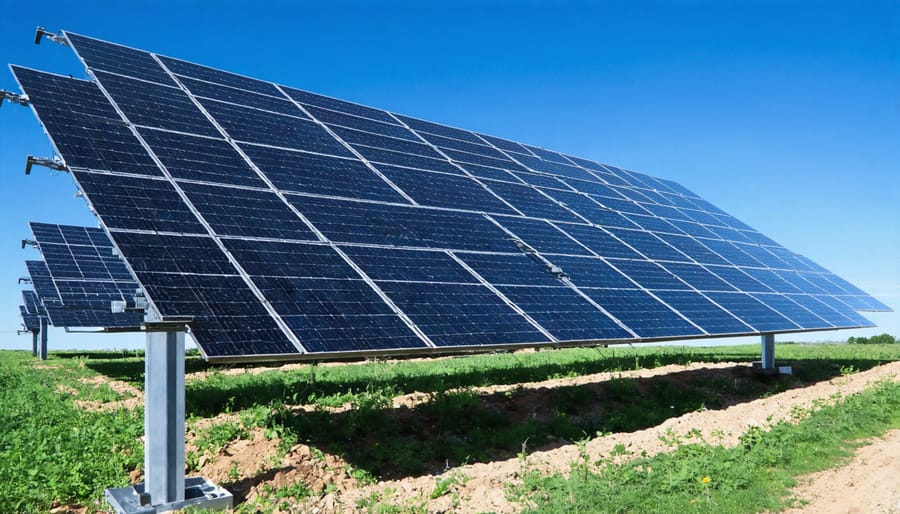
The Difference Between Nameplate Capacity and Real-World Performance
Photovoltaic modules receive ratings under Standard Test Conditions (STC), which specify a cell temperature of 25°C, solar irradiance of 1000 W/m², and an air mass of 1.5. These laboratory conditions represent the ideal scenario under which manufacturers determine nameplate capacity—the maximum power output listed on a module’s specification sheet.
However, real-world operating conditions rarely align with these standards. In actual installations, modules experience varying temperatures, often significantly higher than 25°C, which reduces voltage and overall efficiency. Module surfaces accumulate dust, pollen, and atmospheric deposits that block incoming light. Irradiance levels fluctuate throughout the day based on cloud cover, atmospheric conditions, and the sun’s angle relative to the module surface. Additionally, factors like cable losses, inverter inefficiencies, shading from nearby structures or vegetation, and module degradation over time further reduce system output.
This discrepancy between laboratory ratings and field performance explains why photovoltaic systems typically operate at 75-85% of their theoretical maximum output under optimal conditions. The performance ratio quantifies this gap, serving as the primary metric for evaluating how effectively a system converts available solar energy into usable electricity. Understanding this difference proves essential for accurate energy yield predictions, realistic financial modeling, and effective system monitoring. When aspiring solar professionals grasp why nameplate capacity represents a theoretical ceiling rather than an operational expectation, they can better design systems, set appropriate client expectations, and identify genuine performance issues requiring intervention.
Why Performance Ratio Matters More Than Efficiency
While panel efficiency—the percentage of sunlight a solar module converts into electricity—often dominates marketing conversations, the performance ratio provides a far more comprehensive assessment of your photovoltaic system’s actual operation. Panel efficiency represents only the theoretical potential under laboratory conditions, whereas PR captures the complete picture of real-world performance.
Consider this distinction: a system equipped with premium 22% efficient panels might deliver disappointing results if plagued by shading issues, inverter malfunctions, or excessive soiling. Conversely, a system with 19% efficient panels could outperform expectations when properly designed, installed, and maintained. The performance ratio reveals these truths by accounting for every loss factor between incoming solar radiation and usable AC electricity output.
PR serves as the ultimate diagnostic metric because it normalizes performance across different locations, climates, and system sizes. A 75% PR in Phoenix indicates the same level of system health as a 75% PR in Berlin, despite vastly different irradiance levels. This standardization enables meaningful comparisons and benchmarking against industry standards—typically 75-85% for well-designed systems.
For system operators and investors, PR directly correlates with financial returns and energy production guarantees. When performance monitoring reveals declining PR values, it signals actionable problems requiring investigation, from component failures to maintenance needs. Unlike efficiency ratings fixed at manufacturing, PR continuously reflects your system’s operational integrity, making it indispensable for long-term asset management and optimization strategies.
What Counts as a Good Performance Ratio
Typical PR Values for Modern Solar Systems
Understanding what constitutes a strong Performance Ratio helps you assess system health and identify improvement opportunities. Modern solar installations typically fall into distinct performance categories based on their PR values.
**Excellent Performance (>85%):** Systems achieving PR values above 85% represent optimal operation with minimal losses. These installations feature high-quality components, precise system design, effective maintenance protocols, and favorable environmental conditions. Many well-managed commercial systems and research facilities consistently operate in this range.
**Good Performance (80-85%):** This range indicates solid system operation with typical losses from temperature effects, inverter efficiency, and minor soiling. Most professionally installed residential and commercial systems fall into this category under normal operating conditions. Performance within this band suggests the system meets design expectations.
**Acceptable Performance (75-80%):** Systems in this range experience higher-than-optimal losses but remain economically viable. Factors may include partial shading, moderate soiling accumulation, or aging components. While functional, these systems benefit from performance audits to identify optimization opportunities.
**Problematic Performance (<75%):** PR values below 75% signal significant issues requiring immediate attention. Common causes include equipment malfunctions, severe shading, excessive soiling, design flaws, or component degradation. Professional diagnostics become essential to restore performance and protect investment returns.
How Location and Climate Affect Your Baseline
Geographic location fundamentally shapes your solar system’s baseline Performance Ratio, making regional benchmarking essential for accurate assessment. Systems in cooler climates typically achieve higher PR values—often exceeding 85%—because photovoltaic modules operate more efficiently at lower temperatures. Conversely, installations in hot, arid regions may see baseline PR values between 75-82% due to temperature-related losses, even under otherwise ideal conditions.
Humidity and air quality introduce additional regional variations. Coastal installations contend with salt-laden air that accelerates soiling, while urban or industrial areas face particulate pollution that reduces irradiance reaching the panels. Desert environments present unique challenges: extreme temperature swings and fine dust accumulation can depress PR by 3-5% compared to temperate locations with similar irradiance levels.
Seasonal fluctuations further complicate baseline expectations. High-latitude locations experience dramatic summer-winter PR variations due to changing sun angles and snow coverage, while equatorial systems maintain more consistent year-round performance. Understanding these location-specific factors enables you to establish realistic PR targets and distinguish between normal environmental impacts and genuine system underperformance requiring intervention.
The Hidden Factors That Drag Down Performance Ratio

Temperature Losses: The Silent Performance Killer
Operating temperatures significantly impact photovoltaic performance, making thermal losses a critical factor in determining your system’s Performance Ratio. As solar panels absorb sunlight, they heat up—often reaching temperatures 20-30°C above ambient conditions. This temperature rise directly reduces electrical output.
Every solar panel has a temperature coefficient, typically expressed as a percentage per degree Celsius (%/°C), which quantifies power loss as temperatures exceed Standard Test Conditions (25°C). Modern monocrystalline PERC panels demonstrate superior thermal performance with temperature coefficients around -0.35%/°C to -0.37%/°C, while traditional multi-crystalline panels typically range from -0.40%/°C to -0.45%/°C.
Consider a practical scenario: on a hot summer day with panel temperatures reaching 65°C, a multi-crystalline module with a -0.43%/°C coefficient would experience approximately 17% power reduction compared to rated capacity. In contrast, a mono PERC panel with -0.36%/°C would lose only 14.4% under identical conditions—a meaningful difference when calculating annual energy yield.
Understanding these thermal dynamics proves essential for accurate PR calculations and system design. Proper installation techniques promoting airflow beneath panels, combined with selecting technology appropriate for your climate zone, help mitigate temperature-related losses and maintain optimal Performance Ratios throughout your system’s operational lifetime.
Soiling and Shading: The Variable Enemies
Environmental soiling and shading represent two of the most variable yet impactful factors affecting PV performance ratios. Dust accumulation, pollen deposits, bird droppings, and atmospheric pollutants create an opaque layer on module surfaces that blocks incoming irradiance, potentially reducing PR by 2-8% in typical conditions and exceeding 15% in arid, high-pollution environments. The impact varies significantly with geographic location, seasonal weather patterns, and installation tilt angles—horizontal or low-tilt installations accumulate debris faster than steeply angled systems that benefit from natural rain cleaning.
Partial shading from nearby structures, vegetation growth, or passing clouds introduces additional complexity. Even minor shading on a single cell can disproportionately affect string output due to bypass diode activation, causing PR drops that far exceed the shaded area percentage. Seasonal variations compound these challenges: spring pollen seasons, autumn leaf fall, and winter snow accumulation each present distinct soiling patterns requiring monitoring adjustments.
Understanding these variable enemies enables operators to distinguish between expected seasonal fluctuations and genuine system issues. Regular maintenance practices, including strategic cleaning schedules and vegetation management, become essential tools for maintaining optimal PR values throughout operational lifecycles.
System Component Losses: Inverters, Wiring, and Connections
System component losses represent unavoidable efficiency reductions as electricity flows from solar panels to the grid or consumption point. Understanding these losses helps photovoltaic professionals identify improvement opportunities and set realistic performance expectations.
**Inverter Efficiency** constitutes the largest component loss, typically ranging from 2-5%. Modern inverters convert DC electricity to AC at 96-98% efficiency, though performance varies with load conditions. Inverters operate most efficiently at 30-70% of rated capacity, experiencing higher losses during low-irradiance periods or when significantly oversized.
**DC Cable Resistance** causes voltage drops as current travels from panels to the inverter. Proper cable sizing minimizes these losses to under 2%, but undersized conductors or excessive run lengths can substantially degrade performance. Temperature also affects cable resistance, with losses increasing during hot operating conditions.
**AC Wiring Losses** occur between the inverter and grid connection point, typically accounting for 1-2% efficiency reduction when properly designed.
**Connection Point Losses** arise at junction boxes, combiner boxes, and terminal connections. While individual connection losses seem negligible, they accumulate throughout the system, potentially contributing 0.5-1.5% total losses. Regular maintenance and thermal imaging inspections help identify degraded connections before they significantly impact the performance ratio.
Degradation: The Long-Term Performance Decline
Solar panels gradually lose efficiency over time through natural system degradation, directly impacting Performance Ratio measurements throughout the system’s operational lifetime. Understanding degradation rates is essential for accurate long-term performance forecasting and realistic PR expectations.
Most crystalline silicon modules degrade at approximately 0.5-0.7% annually, meaning a system with an initial PR of 85% might decline to around 75-78% after 25 years. Thin-film technologies typically experience higher first-year degradation (2-3%) before stabilizing at 0.4-0.6% annually. Modern high-efficiency modules often feature improved degradation warranties, with premium manufacturers guaranteeing less than 0.45% annual decline.
Several factors accelerate degradation beyond normal aging. Prolonged exposure to high temperatures, humidity, and UV radiation contribute to encapsulant discoloration and cell deterioration. Potential-induced degradation (PID) and light-induced degradation (LID) can cause rapid early-life performance losses if not properly mitigated through system design.
When monitoring PR trends, distinguish between temporary fluctuations from soiling or shading and permanent degradation-related decline. Establishing baseline PR values during the first year enables accurate degradation tracking. Annual PR analysis, adjusted for environmental variations, provides reliable degradation rate confirmation and helps identify underperforming systems requiring intervention beyond normal aging expectations.
How to Calculate Performance Ratio for Your System
Required Data and Measurement Points
Accurate Performance Ratio calculations depend on collecting four essential data points with precision. **Actual energy production** represents the total kilowatt-hours (kWh) your system delivers to the grid or load, measured by production meters or inverter monitoring systems. **Irradiance data** quantifies solar radiation reaching your panels, typically expressed in kWh/m², obtained from on-site pyranometers or verified satellite databases. **System capacity** refers to your installation’s nameplate DC rating under standard test conditions, specified in kilowatts-peak (kWp). Finally, define a clear **time period** for analysis—daily, monthly, or annually—ensuring all measurements align temporally.
Data collection accuracy significantly impacts PR reliability. On-site meteorological stations provide superior irradiance measurements compared to distant weather stations, reducing uncertainty by 2-5%. Revenue-grade meters deliver production data within ±2% accuracy, essential for performance verification. When direct irradiance monitoring isn’t feasible, satellite-derived data from services like NASA’s SSE or PVGIS offers acceptable alternatives for most applications. Academic research partnerships, including those with university solar programs, often enhance measurement protocols through calibrated equipment and standardized methodologies, elevating data quality beyond typical commercial installations.

Working Through a Calculation Example
To illustrate how Performance Ratio calculations work in practice, let’s walk through a real-world example using data from a typical residential solar installation.
Consider a 5 kW rooftop system in Phoenix, Arizona, monitored over one month. The system’s actual energy output measured 750 kWh. Using solar resource data, we determine the plane-of-array irradiation received was 210 kWh/m² for that period.
**Step 1: Calculate Theoretical Maximum Output**
First, establish the system’s rated power under Standard Test Conditions: 5 kW. Next, determine the total irradiation in standard sun-hours by dividing plane-of-array irradiation by 1 kW/m² (STC irradiance):
210 kWh/m² ÷ 1 kW/m² = 210 hours
Theoretical energy production = System size × Standard sun-hours
= 5 kW × 210 hours = 1,050 kWh
**Step 2: Apply the PR Formula**
Performance Ratio = (Actual Energy Output ÷ Theoretical Energy Output) × 100
= (750 kWh ÷ 1,050 kWh) × 100 = **71.4%**
**Step 3: Interpret the Result**
This 71.4% PR indicates the system operates within acceptable parameters for residential installations, where PRs typically range from 70-80%. The 28.6% energy loss accounts for inverter efficiency, cable losses, temperature effects, soiling, and shading—all unavoidable real-world factors. This baseline measurement becomes invaluable for ongoing monitoring, as any significant PR decline signals potential maintenance issues requiring investigation.
Using Performance Ratio for Effective System Monitoring
Setting Up a PR Monitoring Dashboard
Establishing a comprehensive PR monitoring dashboard requires integration with reliable monitoring systems that capture real-time performance data. Begin by configuring your dashboard to calculate and display PR values at multiple intervals—daily, weekly, and monthly—to identify both immediate issues and longer-term degradation trends.
Set baseline PR thresholds based on manufacturer specifications and system design parameters. Most well-maintained systems should maintain PR values above 75-80%, though this varies by location and equipment. Configure automated alerts when PR drops below predetermined thresholds, typically 5-10% below expected values, enabling rapid response to performance anomalies.
Integrate PR tracking with complementary parameters including irradiance levels, module temperature, inverter efficiency, and string-level production data. This holistic approach facilitates root cause analysis when PR deviations occur. For instance, declining PR coupled with elevated module temperatures may indicate soiling issues, while PR drops with normal temperature readings could suggest equipment malfunction.
Utilize visualization tools that overlay PR trends against weather data and maintenance schedules. This contextual information helps distinguish between expected performance variations and genuine system problems. Many modern monitoring platforms offer customizable dashboards that can be tailored to specific operational needs, supporting both technical staff oversight and stakeholder reporting requirements.
Diagnosing Problems Through PR Patterns
Understanding PR patterns is essential for effective system diagnostics and maintenance planning. Modern real-time analytics platforms enable operators to identify specific issues through characteristic PR signatures.
**Sudden PR Drops** typically indicate acute system failures requiring immediate attention. A sharp decline of 10% or more often signals inverter malfunctions, string disconnections, or grid integration issues. For instance, if your PR drops from 82% to 68% overnight, investigate inverter logs and electrical connections first. These events demand rapid response to minimize energy losses.
**Gradual PR Decline** reveals progressive system degradation. A steady decrease of 0.5-1% annually aligns with normal module degradation rates specified by manufacturers. However, steeper declines—particularly 2-3% over several months—suggest soiling accumulation, module defects, or developing electrical issues. Regular cleaning schedules and performance benchmarking help distinguish between normal aging and actionable problems.
**Seasonal Variations** reflect environmental impacts on system performance. Winter months often show lower PR values due to snow coverage, increased reflection losses, and temperature coefficient effects. Summer performance may decline from elevated operating temperatures despite higher irradiance levels. Establishing seasonal PR baselines for your specific location enables accurate performance assessment and helps differentiate between normal fluctuations and genuine system issues.
By systematically analyzing these patterns, operators can transition from reactive maintenance to predictive strategies, optimizing both system uptime and long-term energy yield.
Advanced Performance Ratio Analysis Techniques

Temperature-Corrected Performance Ratio
Standard Performance Ratio calculations can be misleading when comparing systems across different climates or seasons, as photovoltaic module efficiency inherently decreases with rising temperatures. Temperature-corrected Performance Ratio addresses this limitation by normalizing temperature effects, typically adjusting actual energy yield to Standard Test Conditions (STC) of 25°C.
This correction applies a temperature coefficient—usually between -0.3% to -0.5% per degree Celsius for crystalline silicon modules—to account for temperature-induced efficiency variations. By removing temperature’s influence, the corrected PR reveals losses truly attributable to system design, component quality, soiling, shading, or operational issues rather than unavoidable thermal effects.
For solar professionals, temperature-corrected PR enables fairer comparisons between installations in different geographical locations or seasonal performance analysis. A system in Arizona operating at 35°C ambient temperatures shouldn’t be penalized against one in Germany at 15°C when evaluating overall system quality. This normalization is particularly valuable for warranty assessments, performance guarantees, and identifying underperforming arrays where non-temperature factors require investigation. Universities and research institutions increasingly adopt temperature-corrected metrics in comparative studies, recognizing its superior accuracy for isolating controllable performance variables from environmental inevitabilities.
Comparing PR Across Multiple Sites
When managing multiple PV installations across a portfolio, comparing performance ratios requires careful consideration of site-specific variables. Geographic location significantly impacts PR benchmarks—a system in Arizona will naturally perform differently than one in Germany due to irradiance levels, temperature coefficients, and seasonal variations. Rather than expecting uniform PR values, establish location-adjusted baselines using historical climate data and system specifications.
Design differences also necessitate normalized comparisons. Fixed-tilt systems typically achieve different PR ranges compared to tracking systems, while rooftop installations face different loss factors than ground-mount arrays. Module technology matters too—monocrystalline, polycrystalline, and thin-film panels each have distinct temperature coefficients and degradation patterns affecting long-term PR trends.
Effective benchmarking strategies include grouping similar systems by climate zone, mounting configuration, and technology type. Many portfolio managers utilize quartile analysis, identifying top and bottom performers within each category to focus maintenance resources. Academic research collaborations have developed sophisticated normalization methods that account for these variables, enabling meaningful cross-site comparisons. This data-driven approach transforms PR from a simple metric into a powerful portfolio optimization tool, helping stakeholders identify underperforming assets and replicate best practices across their installations.
Understanding and actively monitoring Performance Ratio isn’t just another technical skill—it’s the fundamental competency that separates passive solar system ownership from proactive, informed management. As we’ve explored throughout this article, PR serves as the single most comprehensive health indicator for photovoltaic installations, distilling complex operational data into one actionable metric that reveals how efficiently your system converts available solar energy into usable electricity.
The transformation from observer to manager begins the moment you start calculating and tracking your system’s PR. Armed with this knowledge, you can identify underperformance before it becomes costly, validate warranty claims with confidence, benchmark your installation against industry standards, and make data-driven decisions about maintenance interventions. Whether you’re an aspiring solar professional building foundational competencies, a system operator responsible for fleet performance, or an investor protecting your renewable energy assets, PR monitoring provides the clarity needed to maximize your solar investment’s financial and environmental returns.
We encourage you to implement PR calculations for your systems immediately. Begin with monthly assessments using the methodologies outlined in this article, establish your baseline performance expectations, and develop protocols for investigating deviations. For those seeking deeper expertise in photovoltaic performance analysis and system optimization, Mose Solar offers comprehensive educational programs developed in collaboration with leading universities, designed to advance your professional capabilities in this rapidly evolving field.