The solar photovoltaic industry faces a mounting crisis: by 2050, an estimated 78 million metric tons of solar panel waste will require processing, yet fewer than 10% of decommissioned panels currently enter specialized recycling streams. This looming environmental challenge threatens to undermine solar energy’s sustainability credentials precisely when global renewable capacity must triple to meet climate targets.
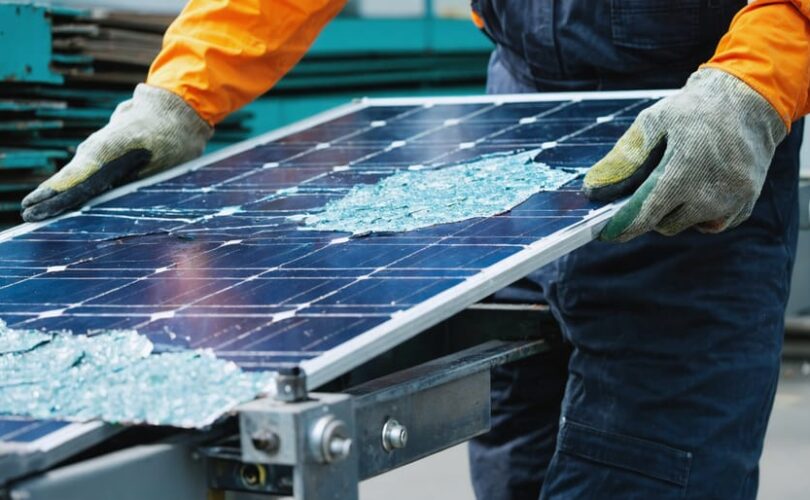
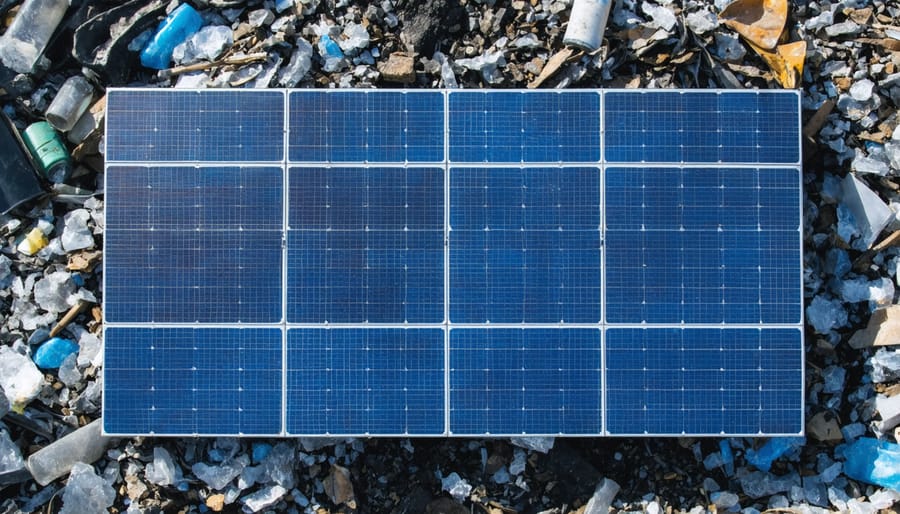
Traditional waste management approaches—landfilling intact panels or crude dismantling—recover minimal value while releasing hazardous materials including lead, cadmium, and selenium into soil and groundwater. The economic loss is equally staggering: each discarded panel contains approximately $15 worth of recoverable silver, copper, silicon, and glass that conventional disposal methods fail to capture.
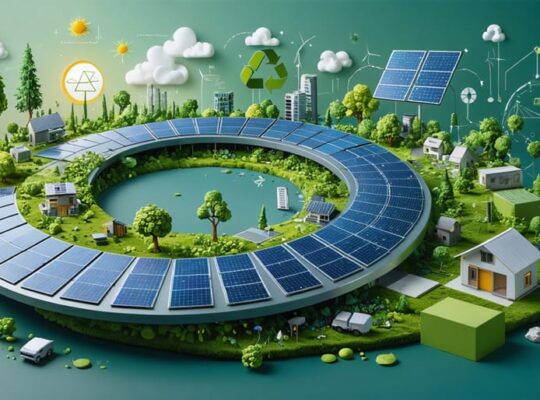
Innovative waste management technologies are revolutionizing this landscape through advanced mechanical separation, chemical purification, and thermal processing techniques that achieve recovery rates exceeding 95%. These breakthroughs transform end-of-life panels from environmental liabilities into valuable secondary raw materials, creating circular economy opportunities that reduce manufacturing costs while eliminating mining dependencies.
The implications extend beyond environmental stewardship. Forward-thinking organizations recognize that waste management expertise represents a competitive differentiator as regulatory frameworks tighten and extended producer responsibility mandates expand globally. The European Union’s WEEE Directive already requires manufacturers to finance collection and recycling, with similar legislation emerging across Asia and North America.
For aspiring professionals, researchers, and industry stakeholders, understanding these innovative approaches is no longer optional—it’s essential. This article examines proven technologies, assesses economic viability, explores emerging business models, and provides actionable insights for integrating waste management considerations into solar project planning and career development strategies.
The Solar Waste Challenge: Understanding What We’re Dealing With
What Makes Solar Panel Waste Different
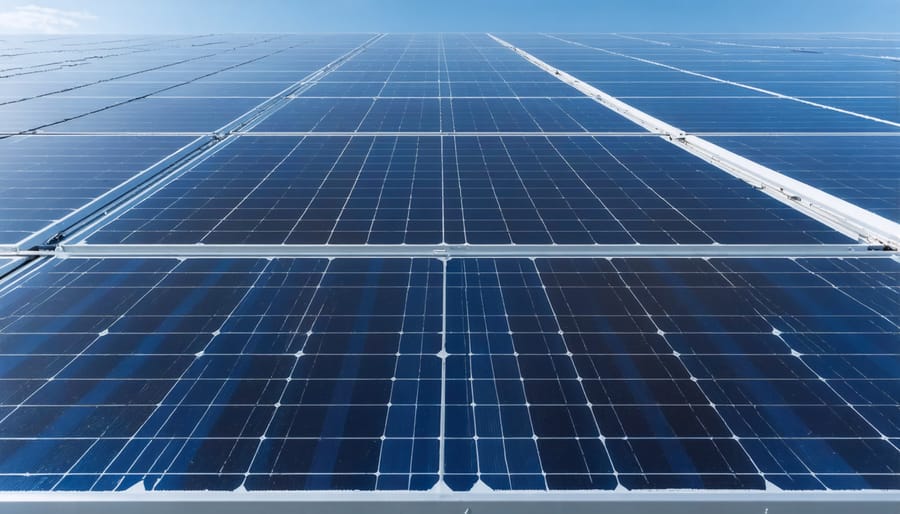
Solar panels represent a unique challenge in waste management due to their sophisticated multi-layer construction. Unlike conventional electronic waste, photovoltaic modules contain a complex amalgamation of materials engineered for decades of outdoor exposure. A typical crystalline silicon panel comprises tempered glass (approximately 75% by weight), aluminum frames, polymer encapsulants, copper wiring, silicon wafers, and various metallic conductors including silver and tin.
This intricate composition creates both opportunities and obstacles for recycling operations. Embedded within each panel are valuable materials worth recovering—silver contacts can constitute up to 0.2% of panel weight, while high-purity silicon, copper, and aluminum represent significant economic value. A single metric ton of decommissioned panels may contain materials valued at several hundred dollars, making recovery economically compelling when processed at scale.
However, the same durable design that enables 25-30 year operational lifespans complicates end-of-life processing. The laminated layers require specialized separation techniques to preserve material purity and value. Standard recycling methods often result in downcycling—glass crushed for low-grade applications rather than returned to solar manufacturing.
The environmental concerns with landfill disposal extend beyond resource waste. While solar panels don’t typically qualify as hazardous waste, certain technologies contain trace amounts of lead, cadmium, or other substances requiring careful management. Additionally, landfilling permanently removes valuable materials from the circular economy, undermining renewable energy’s sustainability promise. These factors collectively necessitate innovative approaches that transcend traditional waste management paradigms.
The Scale of the Coming Wave
The solar photovoltaic industry faces an unprecedented waste management challenge that will intensify dramatically in the coming decades. According to the International Renewable Energy Agency (IRENA), global solar panel waste could reach 78 million metric tons by 2050, with cumulative waste volumes potentially exceeding 60 million tons by 2030 if early equipment replacements accelerate.
Current waste generation remains modest at approximately 250,000 metric tons annually, but projections indicate exponential growth as first-generation installations from the early 2000s reach their 25-30 year operational lifespan. Regional disparities are significant: China is expected to account for nearly 40% of global solar waste by 2050, followed by the United States at 10% and Japan at 7%, reflecting their historical deployment patterns.
The peak waste generation period is anticipated between 2035 and 2045, creating an urgent window for developing robust recycling infrastructure and establishing circular economy frameworks. Without proactive intervention, landfill disposal could predominate, wasting valuable materials including silver, silicon, and rare earth elements while posing environmental risks from hazardous components like lead and cadmium.
Breakthrough Recycling Technologies Transforming Solar PV Waste
Mechanical Separation and Material Recovery
Mechanical separation serves as the foundation of solar panel recycling, employing physical processes to disassemble end-of-life photovoltaic modules into recoverable material streams. This approach addresses the complex multilayer construction of solar panels, which typically consist of aluminum frames, tempered glass, polymer encapsulants, silicon cells, copper wiring, and junction boxes.
The process begins with manual dismantling, where workers remove aluminum frames and junction boxes—components that can be directly channeled into existing metal recycling systems. These materials represent immediate value recovery, with aluminum frames alone accounting for approximately 10% of a panel’s total weight. Junction boxes, containing copper and sometimes silver, provide additional economic incentive for careful extraction.
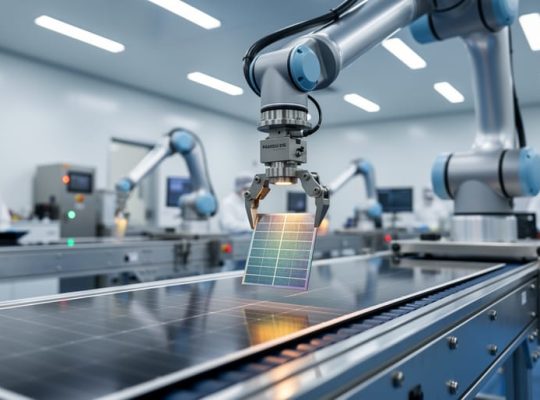
Following initial disassembly, automated systems employ industrial shredders and crushers to reduce the remaining panel structure into manageable fragments. Advanced facilities utilize multi-stage crushing sequences that progressively decrease particle size while preserving material integrity. This mechanical reduction facilitates subsequent separation processes.
Separation techniques then isolate distinct material fractions through various physical properties. Magnetic separation extracts ferrous metals, while eddy current separators remove non-ferrous metals like copper and aluminum remnants. Air classification systems separate lighter polymer materials from heavier glass and silicon particles based on density differences. Optical sorting technology, increasingly integrated into modern facilities, enhances separation precision by identifying materials through spectral analysis.
These mechanical methods typically recover 85-95% of panel mass, predominantly glass and aluminum, establishing a crucial foundation for more advanced chemical and thermal recovery processes targeting high-value materials like silicon and precious metals.
Thermal and Chemical Processing for High-Value Materials
Thermal and chemical processing represents a critical frontier in recovering high-value materials from end-of-life solar panels. These advanced recycling methods employ sophisticated techniques to extract precious materials with remarkable purity rates, creating economic incentives for comprehensive recycling programs.
Thermal processing, particularly pyrolysis, involves heating delaminated solar panels in controlled, oxygen-limited environments at temperatures between 400°C and 600°C. This process effectively separates the ethylene-vinyl acetate (EVA) encapsulant from silicon cells and metallic components without damaging the underlying materials. The result is clean silicon wafers suitable for reprocessing and intact metal contacts ready for refining. Leading facilities report silicon recovery rates exceeding 95%, demonstrating the technique’s efficiency.
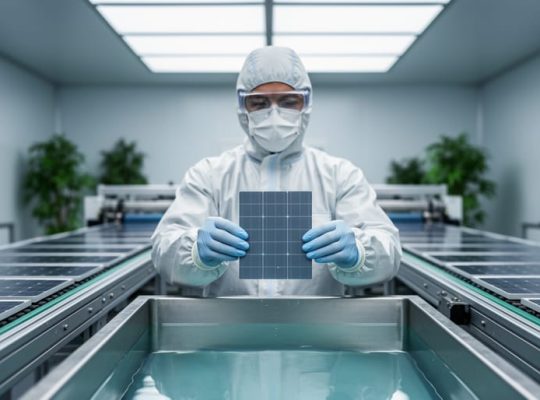
Chemical processing complements thermal methods through selective dissolution and precipitation. Acid leaching processes, using combinations of nitric and hydrochloric acids, efficiently extract silver from electrical contacts and copper from interconnects. Advanced facilities have achieved silver recovery purities above 99.9%, making recycled silver comparable to virgin material in quality. Meanwhile, alkaline treatments can separate aluminum frames and recover silicon through controlled etching processes.
The economic case for these technologies strengthens as material values increase. With each panel containing approximately 15-20 grams of silver and significant quantities of high-purity silicon, the recovered materials often offset processing costs. Research collaborations between recycling facilities and universities continue refining these processes, exploring novel solvent systems and lower-temperature approaches that reduce energy consumption while maintaining recovery rates. These innovations position thermal and chemical processing as essential components of circular economy models within the photovoltaic industry.
Emerging Delamination Technologies
Delamination represents a critical breakthrough in solar panel recycling, enabling the separation of valuable materials while maintaining their integrity for reuse. Traditional recycling methods often damaged or contaminated materials during extraction, significantly reducing recovery rates and economic viability. Modern delamination technologies address these limitations through sophisticated separation processes.
Organic solvent-based delamination has emerged as a particularly promising approach. This method uses carefully selected chemical agents to dissolve the ethylene-vinyl acetate (EVA) encapsulant that binds solar cells to glass and backing materials. By targeting the polymer bonds specifically, organic solvents enable clean separation without damaging the silicon cells or glass substrates. Research conducted in collaboration with leading universities has demonstrated recovery rates exceeding 95% for both silicon and glass components, dramatically improving the economics of solar recycling.
High-temperature delamination offers an alternative pathway, utilizing controlled thermal processes to soften or decompose binding materials. Advanced pyrolysis systems operate at precisely calibrated temperatures—typically between 400-600°C—to break down encapsulants while preserving underlying materials. This approach proves especially effective for panels with degraded adhesives that resist chemical treatment. The recovered materials can then feed directly into closed-loop manufacturing systems, creating truly circular production cycles.
Recent innovations combine both methodologies, employing thermal pre-treatment followed by solvent extraction. This hybrid approach maximizes material purity while minimizing processing time and energy consumption. Early pilot programs report material recovery rates approaching 98%, with recovered silicon maintaining 92-96% of its original photovoltaic efficiency. These advances transform end-of-life solar panels from waste liabilities into valuable material resources, fundamentally reshaping the industry’s sustainability profile.
Recovery Rates and Economic Viability: The Business Case for Recycling
What Can Actually Be Recovered
Modern recycling technologies have achieved remarkable recovery rates for key materials found in solar panels, demonstrating the technical feasibility of comprehensive waste management solutions. Glass, which comprises approximately 75% of a standard photovoltaic module by weight, can be recovered at rates reaching 95% using current mechanical separation techniques. This recovered glass meets quality standards for reintegration into new panel production or alternative applications in construction materials.
Aluminum frames achieve nearly 100% recovery rates through straightforward mechanical disassembly and separation processes. The material retains its full value through recycling, making it economically attractive for recovery operations. Silicon, the semiconductor material central to most solar cells, presents a more complex challenge but still achieves recovery rates of approximately 85% through advanced thermal and chemical processing methods. This recovered silicon can be refined and reintroduced into solar cell manufacturing, closing the material loop.
Copper extraction from electrical components and wiring typically achieves recovery rates between 90-95%, while precious metals including silver, used in cell contacts and connections, can be recovered at rates exceeding 95% through specialized chemical processes. These high-value materials significantly improve the economic viability of recycling operations.
However, recovery rates represent only part of the equation. The purity of recovered materials, energy consumption during processing, and economic scalability all influence whether these technical capabilities translate into practical, widespread implementation. Current research, including collaborative efforts with universities, continues advancing both recovery efficiency and process economics.
Making the Economics Work
The economic viability of solar panel recycling depends on several interconnected factors that determine whether operations can achieve profitability. Collection logistics represent a primary cost driver, as panels are bulky, geographically dispersed, and expensive to transport. Successful programs require strategic collection points and sufficient processing volumes—typically tens of thousands of panels annually—to achieve economies of scale that offset operational expenses.
Material market prices significantly influence revenue potential. While recovered silicon, silver, and copper provide valuable revenue streams, price volatility in commodity markets creates financial uncertainty. High-purity silicon recovery, for instance, can generate substantial returns when market prices are favorable, but margins tighten during downturns.
Regulatory frameworks increasingly tip the economic balance through extended producer responsibility policies and landfill restrictions. The European Union’s WEEE Directive mandates manufacturer-funded recycling, effectively subsidizing collection infrastructure. Similar policies in California and Washington State create compliance-driven demand that supports processing facilities. Academic research collaborations with universities are advancing cost-reduction technologies, including automated disassembly systems and chemical recovery processes that improve extraction efficiency. These innovations, combined with growing waste volumes and strengthening regulations, suggest improving economics for well-positioned recycling operations over the coming decade.
Industry Leaders and Pilot Programs Showing the Way Forward
European Union’s PV Cycle Model
The European Union established PV Cycle in 2007 as the world’s first comprehensive photovoltaic waste management system, transitioning from a voluntary initiative to a mandatory framework under the Waste Electrical and Electronic Equipment (WEEE) Directive in 2012. This legislative approach requires manufacturers to finance the collection, transport, and recycling of solar panels, implementing an extended producer responsibility model that has proven highly effective.
PV Cycle’s network spans all EU member states, operating numerous collection points that facilitate convenient panel disposal for installers and system owners. The program has achieved remarkable results, collecting over 130,000 tonnes of photovoltaic waste and maintaining recovery rates exceeding 95% for crystalline silicon panels and 90% for thin-film technologies. These figures surpass EU minimum requirements of 80% recovery and 70% recycling rates.
Key lessons from PV Cycle’s success include the importance of manufacturer accountability, robust logistics infrastructure, and transparent reporting mechanisms. The model demonstrates that regulatory frameworks combined with industry cooperation can create economically viable recycling ecosystems. European universities collaborating with PV Cycle contribute valuable research on improving separation techniques and material recovery efficiency, advancing both practical operations and academic understanding of circular economy principles in renewable energy sectors.
Innovation Hubs in North America and Asia
North America and Asia are establishing themselves as frontrunners in solar panel recycling innovation through strategic academic-industry collaborations. The National Renewable Energy Laboratory (NREL) in Colorado partners with leading universities to develop advanced thermal and chemical separation processes that achieve recovery rates exceeding 95% for silicon, silver, and rare metals. These pilot programs test scalable solutions before commercial deployment, reducing implementation risks for the industry.
In Asia, the Solar Energy Research Institute of Singapore (SERIS) operates a demonstration facility that processes end-of-life modules using hybrid recycling techniques combining mechanical shredding with hydrometallurgical extraction. This facility serves as a training ground for engineers and researchers, offering hands-on experience with next-generation equipment.
Canada’s Renewable Energy Innovation Centre at the University of Toronto has established a consortium with solar manufacturers to address transportation logistics and pre-processing challenges—critical factors for economic viability in geographically dispersed markets. Meanwhile, Japan’s New Energy and Industrial Technology Development Organization (NEDO) funds multi-institutional research projects focused on developing closed-loop manufacturing systems where recovered materials directly re-enter production lines, minimizing waste and reducing dependence on virgin materials.
Design for Recyclability: How Modern Solar Panels Are Being Built Differently
The solar photovoltaic industry is undergoing a fundamental transformation in how panels are designed and manufactured, with circular economy principles now driving innovation from the ground up. Rather than treating recyclability as an afterthought, manufacturers are increasingly integrating end-of-life considerations into initial product design.
Modern solar panels incorporate several key design improvements that facilitate recycling. Modular construction methods allow for easier disassembly, enabling recyclers to separate valuable materials more efficiently. Manufacturers are replacing traditional encapsulation methods with advanced polymers that can be removed without damaging underlying silicon cells. This preservation of intact cells creates opportunities for refurbishment and second-life applications, extending the functional lifespan of expensive photovoltaic materials.
Component standardization represents another critical advancement. By establishing common frame dimensions, junction box specifications, and mounting systems across product lines, manufacturers reduce complexity in both installation and decommissioning processes. This standardization enables more streamlined collection and processing workflows, lowering the economic barriers to recycling.
The reduction of hazardous substances marks a parallel priority. New panel designs minimize or eliminate lead-based solders, replacing them with tin-silver alternatives. Manufacturers are also developing cadmium-free thin-film technologies and reducing the use of fluorinated polymers in backsheets. These material substitutions not only decrease environmental toxicity but also simplify regulatory compliance during disposal.
Universities collaborating with industry leaders are advancing design-for-recyclability research, developing frameworks that manufacturers can implement immediately. These partnerships yield practical methodologies that balance performance requirements with end-of-life considerations, demonstrating that sustainable design and technical excellence are complementary rather than competing objectives. As these innovations mature, they establish a foundation for truly circular solar manufacturing ecosystems.

What PV Professionals Need to Know About Waste Management
Regulatory Landscape and Compliance
The regulatory landscape for solar photovoltaic waste management is rapidly evolving to address the anticipated surge in end-of-life panels. The European Union’s Waste Electrical and Electronic Equipment (WEEE) Directive mandates manufacturers to finance collection, treatment, and recovery of solar panels, establishing a comprehensive extended producer responsibility (EPR) framework. Similar regulations are emerging globally, with several U.S. states implementing or considering EPR schemes for solar equipment.
These regulations require detailed documentation throughout the product lifecycle, including materials composition, treatment protocols, and recycling rates. Manufacturers must maintain records demonstrating compliance with collection targets—typically 85% by weight—and recovery rates exceeding 80%. Emerging requirements also address hazardous substance restrictions under frameworks like RoHS (Restriction of Hazardous Substances), compelling manufacturers to design for recyclability from inception.
For professionals entering the renewable energy sector, understanding these compliance requirements is essential. Academic researchers and industry stakeholders must stay informed about jurisdiction-specific regulations, as non-compliance can result in substantial penalties and market access restrictions. The regulatory trend clearly favors circular economy principles, incentivizing innovation in design-for-recycling and establishing infrastructure for responsible end-of-life management.
Career Pathways in Solar Recycling
The solar recycling sector is creating diverse employment opportunities across technical, engineering, and management roles. Industry projections indicate that photovoltaic waste management could generate thousands of specialized positions globally by 2030, spanning materials recovery technicians, recycling process engineers, sustainability consultants, and circular economy strategists.
Success in this emerging field requires a multidisciplinary skill set combining knowledge of photovoltaic technology, materials science, environmental regulations, and logistics management. Professionals must understand semiconductor properties, hazardous material handling protocols, and lifecycle assessment methodologies while staying current with evolving recycling technologies and policy frameworks.
Educational institutions are responding by integrating waste management modules into renewable energy curricula. Universities now offer specialized courses covering end-of-life PV management, circular economy principles, and sustainable materials recovery. Professional certification programs increasingly include training on decommissioning procedures and recycling best practices, preparing the workforce for the anticipated surge in solar panel retirements.
Industry collaborations with academic institutions are establishing hands-on training facilities where students gain practical experience with dismantling techniques and material separation processes. These partnerships ensure that aspiring professionals develop competencies aligned with real-world industry needs, positioning them to drive innovation in sustainable solar energy management.
The convergence of solar photovoltaic expansion and innovative recycling techniques represents a defining challenge for our industry’s environmental credibility and long-term viability. As we’ve explored throughout this article, the projected influx of end-of-life solar panels demands proactive solutions—from advanced mechanical separation and thermal processing to hydrometallurgical recovery and emerging chemical recycling methods. These technologies are not merely supplementary considerations; they are fundamental pillars supporting the circular economy principles that must underpin sustainable solar energy deployment.
Significant progress has been achieved through pilot programs, university research partnerships, and regulatory frameworks that incentivize responsible decommissioning. However, substantial challenges persist: scaling economically viable recovery operations, standardizing panel designs for easier disassembly, and establishing comprehensive collection infrastructure remain critical priorities. The integration of future solar technologies must incorporate end-of-life considerations from the design phase forward.
Education and cross-sector collaboration are essential accelerants for these solutions. Academic institutions, industry leaders, and policymakers must work synergistically to develop skilled professionals equipped with both technical expertise and circular economy thinking. For PV professionals, engaging with these principles is no longer optional—it’s an ethical and economic imperative. We encourage industry stakeholders to actively participate in educational programs, support research initiatives, and advocate for policies that prioritize material recovery, ensuring solar energy fulfills its promise as a truly sustainable energy solution.