
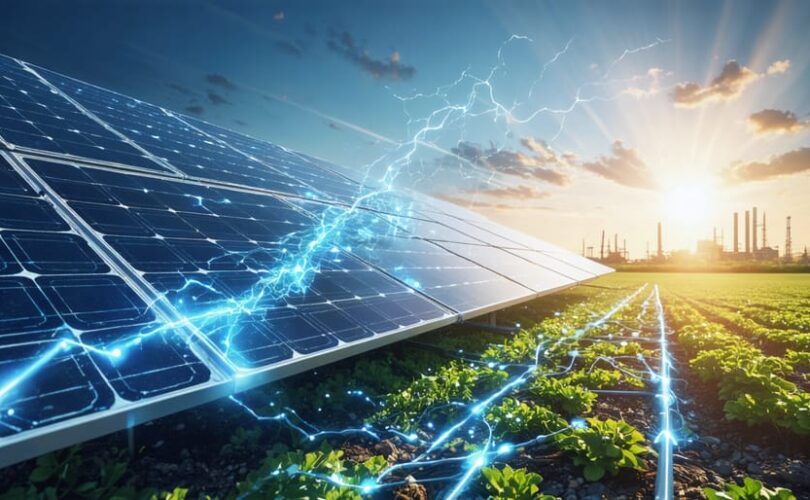
Photovoltaic systems represent a groundbreaking technological achievement in renewable energy, converting sunlight directly into electricity through a sophisticated interplay of physics and engineering. At its core, this technology harnesses the photoelectric effect, discovered by Einstein, where photons striking specialized semiconductor materials generate an electric current. Modern photovoltaic systems have evolved from simple solar cells into complex, integrated power generation networks that can power everything from residential homes to industrial facilities. This remarkable technology achieves conversion efficiencies of up to 23% in commercial applications, making it an increasingly viable alternative to fossil fuels. Understanding how photovoltaic systems work is crucial for anyone interested in renewable energy, as these systems form the backbone of solar power generation and play a pivotal role in our transition to sustainable energy sources. Through careful engineering and ongoing technological advancements, photovoltaic systems continue to become more efficient, cost-effective, and accessible, revolutionizing how we generate and consume electricity in the 21st century.
The Fundamental Components of a Photovoltaic System
Solar Panels and Cells
Solar panels consist of multiple photovoltaic (PV) cells interconnected to form a unified power-generating unit. These cells are made primarily from semiconductor materials, most commonly silicon, which is specially treated to create an electric field. The two main types of silicon-based cells are monocrystalline and polycrystalline, each offering distinct advantages in terms of efficiency and cost-effectiveness.
Monocrystalline cells are manufactured from a single crystal structure, resulting in higher efficiency rates typically ranging from 15% to 22%. Their uniform dark appearance and superior performance in low-light conditions make them ideal for installations where space is limited. However, this advanced manufacturing process contributes to higher production costs.
Polycrystalline cells, created by melting multiple silicon fragments together, feature a distinctive blue, speckled appearance due to their varied crystal structure. While slightly less efficient than monocrystalline cells (13-17% efficiency), they offer a more cost-effective solution for larger installations. These cells perform optimally in consistent, high-temperature conditions.
Each PV cell consists of two layers of silicon: one positively charged and one negatively charged. When sunlight strikes the cell, photons are absorbed by the semiconductor material, causing electrons to become excited and move from the negative layer to the positive layer. This movement of electrons creates an electric current, which is then captured by metal contacts on the cell’s surface and converted into usable electricity.
Inverters and Power Electronics
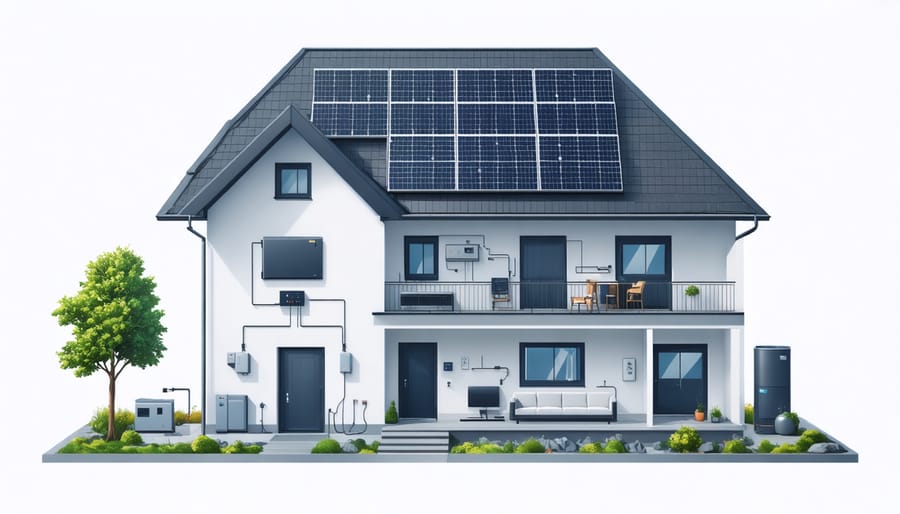
Inverters play a crucial role in photovoltaic systems by converting the direct current (DC) electricity generated by solar panels into alternating current (AC) electricity used by household appliances and the power grid. Modern inverters achieve conversion efficiencies of up to 98%, minimizing energy losses during this essential transformation process.
These sophisticated power electronics devices perform several critical functions beyond DC to AC conversion. They monitor and optimize system performance through Maximum Power Point Tracking (MPPT), which continuously adjusts the operating conditions to extract the highest possible power output from the solar array under varying environmental conditions.
String inverters, microinverters, and power optimizers represent the main types of inverter technologies available. String inverters are cost-effective for installations with consistent sun exposure, while microinverters and power optimizers offer advantages for systems affected by partial shading or complex roof configurations. These devices provide panel-level optimization and monitoring capabilities, enabling better system performance and easier maintenance.
Advanced inverter features include grid integration capabilities, allowing two-way communication with utility networks and supporting grid stability through reactive power control and voltage regulation. Many modern inverters also incorporate smart monitoring systems that enable real-time performance tracking, fault detection, and remote diagnostics through web-based platforms or mobile applications, providing system owners with detailed insights into their energy production and consumption patterns.
The Energy Conversion Process

Photovoltaic Effect
The photovoltaic effect is the fundamental physical process that enables solar cells to convert sunlight into electrical energy. This phenomenon occurs when photons from sunlight strike a semiconductor material, typically silicon, creating an electron-hole pair through the transfer of energy. The photon’s energy excites electrons in the material’s atomic structure, enabling them to break free from their bonds and become mobile charge carriers.
To harness this effect, solar cells are constructed with two layers of semiconductor material: one n-type layer with excess electrons and one p-type layer with electron deficiencies (holes). The junction between these layers creates an electric field that drives the separated electrons through an external circuit, generating usable electrical current.
The efficiency of this conversion process depends on several factors, including the semiconductor material’s bandgap energy, which determines the range of light wavelengths that can be effectively absorbed. Silicon, the most common photovoltaic material, has a bandgap of approximately 1.1 electron volts, making it well-suited for capturing the visible light spectrum.
Modern solar cells incorporate various engineering solutions to enhance this natural process, such as anti-reflective coatings to minimize light loss, textured surfaces to increase light absorption, and sophisticated contact designs to maximize electron collection. These improvements have led to commercial solar cells achieving conversion efficiencies exceeding 20%.
Power Generation and Collection
In photovoltaic systems, individual solar cells work collaboratively to generate meaningful power output through strategic arrangement and interconnection. These cells are typically connected in series to form modules, which are then combined in parallel to create arrays, allowing for scalable power generation based on specific energy requirements.
The configuration of cells within modules follows precise engineering principles to optimize solar panel longevity and power output. When cells are connected in series, their voltages add up while maintaining consistent current flow. Parallel connections, conversely, increase current capacity while maintaining voltage levels, enabling system designers to achieve desired voltage and current specifications.
Modern photovoltaic systems employ bypass diodes and blocking diodes to protect cells from reverse current and potential damage from shading. These protective components ensure consistent power generation even when individual cells experience reduced performance. Additionally, string inverters or microinverters convert the DC power generated by cell arrays into grid-compatible AC power.
The collective output of these interconnected components is monitored and optimized through sophisticated power management systems. These systems track performance metrics, identify potential issues, and adjust operation parameters to maintain optimal generation efficiency. This integrated approach ensures reliable power generation while maximizing the system’s energy yield throughout its operational lifetime.
Grid Integration and Storage
Grid integration in photovoltaic systems enables bidirectional power flow between solar installations and the utility grid, allowing for efficient energy distribution and management. This integration is facilitated through grid-tie inverters, which synchronize the solar-generated electricity with the grid’s voltage and frequency parameters.
The process begins with the inverter converting DC power from solar panels into grid-compatible AC power. Smart meters monitor both the energy consumed from the grid and excess power fed back into it, enabling net metering arrangements where surplus solar production can offset utility costs.
Energy storage systems, typically comprising lithium-ion batteries, play a crucial role in managing intermittent solar generation. These systems store excess energy during peak production hours for use during low-production periods or nighttime. Modern battery management systems optimize charging cycles and protect against overcharging or deep discharging, extending battery life and maintaining system efficiency.
Grid integration also incorporates safety mechanisms like anti-islanding protection, which automatically disconnects the solar system during grid outages to protect utility workers. Advanced monitoring systems track system performance, grid stability, and storage capacity in real-time, allowing for automated responses to changing energy demands and grid conditions.
For optimal grid integration, photovoltaic systems must comply with local utility requirements and technical standards, ensuring seamless interaction between solar installations and the existing power infrastructure.
System Efficiency and Performance Factors
Environmental Influences
Environmental factors significantly influence the performance of photovoltaic systems, making it crucial to understand these impacts to optimize system performance. Temperature plays a vital role, as solar panels become less efficient as they heat up. For every degree Celsius above their rated temperature (typically 25°C), panels lose approximately 0.3-0.5% of their power output capacity.
Shading presents another critical challenge, even partial shade on a single panel can disproportionately affect the entire system’s output. When shadows from trees, buildings, or clouds cover solar cells, they create high-resistance points that impede current flow, potentially reducing power generation by 25-100% in affected areas.
Weather conditions directly impact energy production. While solar panels operate most efficiently on clear, sunny days, they still generate electricity under cloudy conditions, typically at 10-25% of their rated capacity. Seasonal variations in sunlight hours and sun angle also affect daily energy yield. Rain can actually benefit system performance by naturally cleaning the panels, though extended periods of overcast weather will reduce generation capacity.
Snow accumulation temporarily blocks light absorption, though panels’ tilted installation and dark surface usually promote snow sliding. Additionally, high winds can affect panel stability, making proper mounting crucial for long-term reliability.

Maintenance Requirements
Regular maintenance is crucial for ensuring the optimal performance and longevity of photovoltaic systems. Following essential maintenance practices can significantly enhance system efficiency and prevent potential issues. Solar panels require periodic cleaning to remove dust, debris, and bird droppings that can reduce energy absorption. This cleaning should typically be performed every 3-6 months, depending on local environmental conditions.
System monitoring is another vital aspect of maintenance, involving regular checks of inverter performance, electrical connections, and power output metrics. Professional inspection of wiring and mounting structures should be conducted annually to identify and address any signs of wear or damage. Additionally, vegetation management around ground-mounted systems prevents shading and ensures unrestricted solar access.
Documentation of maintenance activities, including performance data and inspection results, helps track system efficiency over time and anticipates potential problems before they become critical. For optimal results, system owners should establish a maintenance schedule that includes both routine tasks and comprehensive annual inspections by qualified technicians.
During winter months in colder regions, snow removal may be necessary to maintain system productivity. However, this should be done carefully to avoid damaging the panels. It’s also important to regularly verify that monitoring systems and safety equipment are functioning correctly to ensure both system performance and operational safety.
Looking Ahead: Future Innovations
The photovoltaic industry continues to evolve rapidly, with several groundbreaking innovations poised to revolutionize solar energy generation. Perovskite solar cells represent one of the most promising developments, offering the potential for higher efficiency rates while reducing manufacturing costs. These next-generation cells have already achieved laboratory efficiency rates exceeding 29%, suggesting a significant leap forward in solar technology capabilities.
Bifacial solar panels are gaining traction, capable of harvesting light from both sides of the panel, potentially increasing energy yield by 5-30% compared to traditional modules. Integration of smart PV systems utilizing artificial intelligence and Internet of Things (IoT) technology is enhancing system monitoring and maintenance efficiency.
Researchers are also developing transparent solar cells that could transform windows into power-generating surfaces, opening new possibilities for building-integrated photovoltaics. Advanced energy storage solutions, including solid-state batteries and hydrogen storage systems, are being developed to address intermittency challenges.
Quantum dot solar cells represent another frontier, promising cheaper manufacturing processes and improved efficiency through better light absorption. Meanwhile, concentrated photovoltaic (CPV) systems are evolving to capture more energy using specialized lenses and advanced tracking systems.
These innovations, combined with improvements in manufacturing processes and materials science, are expected to drive down costs while increasing system efficiency. Industry experts project that solar panel efficiency could reach 40% in commercial applications within the next decade, making photovoltaic systems an increasingly attractive option for sustainable energy generation.
Understanding the operation of photovoltaic systems is crucial for harnessing solar energy efficiently and sustainably. Throughout this exploration, we’ve examined how PV systems convert sunlight into usable electricity through the photovoltaic effect, the essential components that make up a complete system, and the intricate processes involved in power generation and distribution.
The seamless integration of solar panels, inverters, mounting structures, and monitoring systems demonstrates the sophisticated engineering behind modern solar technology. By comprehending these fundamental principles, stakeholders can make informed decisions about system design, installation, and maintenance, ultimately maximizing energy production and system longevity.
As renewable energy continues to play a pivotal role in our transition to a sustainable future, the importance of photovoltaic systems cannot be overstated. Whether for residential, commercial, or utility-scale applications, a thorough understanding of PV system operation enables better system optimization, troubleshooting, and performance monitoring.
For professionals and enthusiasts alike, this knowledge forms the foundation for advancing solar technology and contributing to a cleaner, more sustainable energy landscape. The continuous evolution of PV technology promises even greater efficiency and reliability in the years to come.


