
R-value measurements in glass windows represent a critical performance metric that directly impacts energy efficiency and solar integration potential in modern building-integrated PV systems. This thermal resistance rating, measured in ft²·°F·h/BTU, determines how effectively window assemblies resist heat flow and maintain optimal interior temperatures. Advanced multi-pane configurations with low-emissivity coatings can achieve R-values up to 5.0, significantly outperforming traditional single-pane windows that typically rate at R-1.0. Understanding these values becomes particularly crucial when integrating photovoltaic elements into window systems, as thermal management directly affects both energy generation efficiency and overall building performance. Recent technological advances in vacuum-sealed units and aerogel-filled cavities have pushed theoretical R-values even higher, promising enhanced energy savings while maintaining optimal conditions for integrated solar collection.
Understanding R-Value in Window-Integrated PV Systems
What Is R-Value?
R-value represents a material’s thermal resistance, measuring its ability to resist heat flow. In the context of glass windows, R-value indicates how effectively the window assembly prevents heat transfer between indoor and outdoor environments. This measurement is expressed in units of ft²·°F·h/BTU (square feet times degrees Fahrenheit times hours per British thermal unit) in the United States, with higher values indicating better insulation properties.
The concept is particularly important for energy-efficient building design, as windows typically represent a significant source of heat loss or gain. A single-pane glass window typically has an R-value of around 0.9, while double-pane windows can achieve R-values between 2.0 and 3.0. Advanced technologies, such as low-emissivity coatings, gas fills, and triple-pane constructions, can further increase a window’s R-value to 5.0 or higher.
Understanding R-value is crucial for architects, builders, and property owners when selecting windows that optimize energy performance while maintaining desired aesthetic and functional properties. This metric directly impacts heating and cooling costs, making it a key consideration in sustainable building design.
R-Value’s Impact on PV Performance
The thermal resistance (R-value) of window-integrated PV glass significantly influences photovoltaic performance. Higher R-values reduce heat transfer through the glazing system, which helps maintain more stable operating temperatures for solar cells. This thermal regulation is crucial because PV efficiency typically decreases by 0.4-0.5% for every degree Celsius rise above optimal operating temperature.
When solar cells operate at lower temperatures due to enhanced thermal resistance, they maintain higher conversion efficiency rates. The relationship between R-value and PV performance is particularly notable in extreme climate conditions. During summer months, effective thermal resistance prevents excessive heat gain, while in winter, it reduces heat loss from the building interior, contributing to more consistent energy generation year-round.
Research indicates that optimizing R-values in PV windows can improve overall system efficiency by 5-8% compared to standard installations. This improvement stems from both better temperature management and reduced energy losses through conduction, making R-value optimization a critical factor in PV window design and implementation.
R-Value Optimization in PV Glass Design
Material Selection and Layering
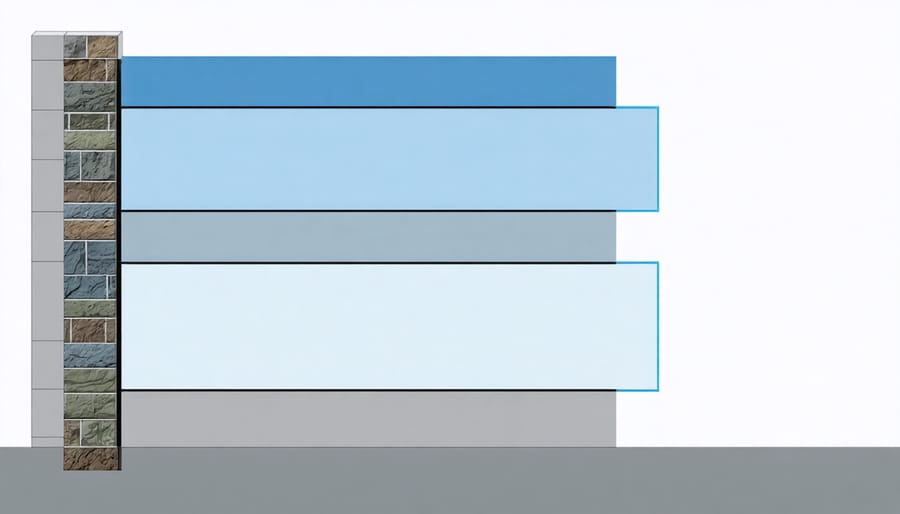
The effectiveness of window insulation largely depends on the strategic selection and arrangement of materials. Modern insulated glass units (IGUs) combine multiple layers of glass with specific coatings and gas-filled spaces to optimize thermal performance metrics. Low-emissivity (low-E) coatings, typically consisting of microscopic metal or metallic oxide layers, play a crucial role in reducing heat transfer through radiation.
The standard double-pane configuration utilizes two glass panels separated by an insulating spacer and sealed with inert gases like argon or krypton. These gases, having lower thermal conductivity than air, significantly enhance the window’s R-value. Triple-pane systems incorporate an additional glass layer, creating two insulating cavities that further improve thermal resistance.
Advanced materials such as aerogel-filled cavities and vacuum-insulated glazing (VIG) represent the cutting edge of window insulation technology. Aerogels, ultra-light materials with exceptional insulating properties, can increase R-values substantially when incorporated into the spacing between panes. VIG systems eliminate gas fill entirely, creating a vacuum between panes that minimizes conductive and convective heat transfer.
The thickness and quality of each material layer significantly impact overall performance. Standard configurations typically employ 3-4mm glass thickness per pane, while the optimal gap width between panes ranges from 12-16mm for argon-filled units. Proper edge sealing and spacer materials are equally important, as they prevent thermal bridging and maintain the integrity of the insulating system over time.
Advanced Coating Technologies
Advanced coating technologies have revolutionized the thermal performance of glass windows while maintaining optimal visible light transmission. Modern low-emissivity (low-e) coatings consist of microscopically thin metallic layers that selectively filter different wavelengths of light and heat. These coatings are applied through sophisticated physical vapor deposition (PVD) or chemical vapor deposition (CVD) processes under carefully controlled conditions.
Spectrally selective coatings represent the latest advancement in window technology, capable of blocking up to 70% of heat transfer while allowing over 90% of visible light to pass through. These coatings typically incorporate multiple layers of silver and dielectric materials, each serving a specific function in managing solar heat gain and thermal radiation.
Recent developments in sol-gel coating technology have introduced self-cleaning properties alongside enhanced thermal resistance. These coatings utilize titanium dioxide nanoparticles that break down organic matter when exposed to UV light, keeping windows cleaner while maintaining their thermal properties.
Vacuum-deposited oxide coatings have emerged as another breakthrough, offering superior durability and consistent performance throughout the window’s lifetime. These coatings can be engineered to provide different levels of solar control for various climate zones and building orientations.
The integration of smart coating technologies has enabled dynamic control over solar heat gain. Thermochromic and electrochromic coatings can adjust their optical properties in response to environmental conditions or user preferences, providing optimal thermal performance throughout changing seasons.
These advanced coating technologies have significantly contributed to achieving higher R-values in modern windows, with some triple-pane systems featuring multiple low-e coatings reaching R-values of up to 5.0, compared to traditional single-pane windows with R-values around 1.0.
Energy Efficiency Benefits

Heating and Cooling Cost Reduction
High-performance windows with superior R-values significantly impact a building’s heating and cooling costs through enhanced thermal insulation. Studies indicate that windows typically account for 25-30% of a building’s heating and cooling energy consumption. By implementing windows with higher R-values, buildings can reduce their HVAC energy requirements by 15-40%, depending on climate conditions and existing window specifications.
The relationship between R-value and energy savings is particularly pronounced in extreme climates. During winter months, windows with higher R-values minimize heat loss, reducing the burden on heating systems. In summer, these same windows help maintain indoor temperatures by preventing unwanted heat gain, leading to decreased cooling costs. This dual benefit makes R-value optimization a crucial component of comprehensive building insulation optimization.
Financial analysis reveals that upgrading to high R-value windows typically results in annual energy cost savings of $200-600 per 1,000 square feet of window area in commercial buildings. The exact savings depend on factors such as local energy rates, climate zone, and building usage patterns. While the initial investment in high R-value windows may be higher, the cumulative cost savings often justify the expenditure within 3-7 years, making them an economically sound choice for both new construction and renovation projects.
Year-Round Performance Metrics
The thermal performance of glass windows varies significantly throughout the year, making year-round assessment crucial for understanding their true effectiveness. During winter months, high R-value windows demonstrate superior insulation properties, reducing heat loss by up to 40% compared to standard double-pane windows. This translates to considerable energy savings during cold seasons when heating demands peak.
Summer performance metrics show that properly rated windows can block up to 75% of solar heat gain while maintaining optimal visible light transmission. This dual functionality ensures comfortable indoor temperatures without compromising natural daylight. Long-term monitoring studies indicate that high R-value windows maintain their thermal resistance properties for 15-20 years under normal conditions.
Annual energy performance calculations reveal that buildings equipped with high R-value windows typically achieve 20-30% reduction in HVAC energy consumption. This efficiency remains consistent across varying climate zones, though the specific benefits may shift between heating and cooling seasons. Performance degradation studies show minimal R-value reduction over time, with most quality windows retaining 90% of their initial thermal resistance after a decade of use.
Temperature differential testing across seasons demonstrates that these windows maintain consistent interior surface temperatures within ±3°F of room temperature, regardless of extreme external conditions. This stability contributes to improved occupant comfort and reduced condensation risk throughout the year.
Implementation Considerations
Installation Requirements
Proper installation of high R-value glass windows requires careful attention to technical specifications and environmental conditions. The installation process begins with accurate measurements of the rough opening, allowing for a 1/2-inch clearance on all sides. The window frame must be level, plumb, and square, with a maximum deviation tolerance of 1/8 inch.
For optimal thermal performance, installers must ensure a continuous thermal barrier around the window perimeter. This includes applying a complete bead of low-expansion foam insulation between the frame and rough opening, maintaining careful control of foam depth to prevent frame distortion. Weather-resistant barriers should extend at least 9 inches from the window edges, with proper overlapping to prevent moisture intrusion.
Installation temperature conditions significantly impact performance, with recommended ambient temperatures between 40°F and 90°F (4°C to 32°C). Humidity levels should not exceed 80% during installation to prevent condensation issues. Professional installers should verify that the window’s National Fenestration Rating Council (NFRC) label matches specified R-values before installation.
Critical fastener requirements include corrosion-resistant screws placed 4 inches from corners and at 16-inch intervals along the frame. Proper shimming at quarter points supports weight distribution and prevents frame warping. A final air infiltration test using a blower door can verify installation quality and ensure the window achieves its rated R-value performance.

Maintenance and Longevity
Proper maintenance of R-value glass windows is crucial for maintaining their thermal performance and extending their operational lifespan. Regular inspection of window seals, gaskets, and frame conditions should be conducted bi-annually to prevent thermal bridging and air infiltration. Any compromised seals or weatherstripping should be promptly replaced to maintain optimal insulation properties.
These high-performance windows typically feature multiple glass panes with specialized coatings and gas fills, which require careful cleaning procedures. Use pH-neutral, non-abrasive cleaners and soft microfiber cloths to avoid damaging the surface treatments that contribute to the window’s thermal resistance properties. Avoid pressure washing or harsh chemical cleaners that could compromise the window’s protective coatings.
The longevity of R-value glass windows largely depends on environmental conditions and maintenance practices. When properly maintained, these windows can maintain their thermal performance for 15-20 years or more. Factors affecting durability include exposure to extreme temperatures, humidity levels, and direct sunlight. Installing external shading devices can help protect the windows and extend their service life.
Regular professional assessments can identify potential issues before they impact performance. Monitor for signs of seal failure, such as condensation between panes or decreased thermal efficiency. Addressing these issues promptly helps preserve the window’s R-value and ensures continued energy savings throughout its lifecycle.
The R-value of glass windows plays a pivotal role in shaping the future of building-integrated photovoltaic systems. As the construction industry moves toward more sustainable and energy-efficient solutions, understanding and optimizing thermal resistance properties becomes increasingly critical for maximizing both energy generation and insulation performance.
Research indicates that higher R-values in window-integrated PV systems contribute significantly to building energy efficiency by reducing heat transfer while maintaining optimal conditions for photovoltaic power generation. This dual functionality represents a crucial advancement in sustainable building technology, offering both energy production and thermal management benefits.
Looking ahead, emerging technologies promise even greater improvements in R-value ratings for PV windows. Innovations in materials science, including advanced low-emissivity coatings and novel insulating materials, are expected to enhance thermal resistance without compromising solar conversion efficiency. These developments will likely lead to more cost-effective and efficient window-integrated PV solutions.
The industry continues to work closely with research institutions and manufacturers to establish new standards and best practices for R-value optimization in PV windows. As global energy demands rise and climate concerns intensify, the role of high-performance window systems becomes increasingly vital in achieving net-zero building goals and reducing carbon footprints.
For building professionals and energy consultants, staying informed about R-value developments in window-integrated PV technology remains essential for delivering optimal solutions that meet both environmental and economic objectives.