As the global solar industry grapples with an unprecedented solar panel waste challenge, innovative startups are revolutionizing photovoltaic (PV) recycling technology to transform end-of-life panels from environmental liability into valuable resources. With projections indicating 78 million tonnes of solar panel waste by 2050, these emerging companies are developing automated dismantling systems and advanced material recovery processes that achieve recovery rates exceeding 95% for critical materials like silver, silicon, and aluminum.
By implementing cutting-edge recycling technologies and circular economy principles, these startups are not only addressing urgent waste management needs but also creating new revenue streams within the renewable energy sector. Their solutions range from robotic disassembly systems and chemical separation processes to innovative logistics networks that optimize collection and processing of decommissioned panels.
The emergence of these specialized recycling ventures marks a crucial turning point in solar energy’s sustainability journey, offering both environmental and economic benefits while establishing the foundation for a truly circular solar economy. As government regulations tighten and end-of-life panel volumes increase, these companies are positioned to play a pivotal role in ensuring solar power’s long-term environmental credentials.
The Solar Panel Recycling Crisis

Current Recycling Challenges
The solar panel recycling industry faces several significant technical and economic hurdles that impact widespread adoption. Current recycling processes struggle with the complex composition of photovoltaic panels, which contain multiple layers of glass, silicon, metals, and polymers bonded together. Separating these materials efficiently while maintaining their purity and value remains technically challenging.
Cost-effectiveness presents another major obstacle. Traditional recycling methods often require substantial energy input and manual labor, making the process expensive compared to the value of recovered materials. The lack of standardization in panel design across manufacturers further complicates automated recycling solutions and increases processing costs.
Market-related challenges include insufficient recycling infrastructure and limited collection networks. With most installed panels still within their operational lifespan, recycling facilities face irregular supply volumes, making it difficult to achieve economies of scale. Additionally, the absence of comprehensive regulations and incentives in many regions leaves recyclers without clear guidance or financial support.
Transportation costs and logistics pose additional barriers, particularly in regions where recycling facilities are scarce. These challenges collectively impact the economic viability of recycling operations and highlight the need for innovative technological solutions and supportive policy frameworks.
Environmental Implications
The improper disposal of solar panels poses significant environmental challenges, as these modules contain potentially harmful materials such as lead, copper, and silver that can leach into soil and groundwater. Understanding the complete lifecycle of solar panels is crucial for implementing effective recycling solutions. When panels end up in landfills, they not only waste valuable resources but also contribute to environmental degradation.
Recycling solar panels can recover up to 95% of glass and 90% of semiconductor materials, significantly reducing the need for raw material extraction. This process prevents toxic elements from contaminating ecosystems while conserving natural resources. Furthermore, recycled materials require less energy to process compared to virgin materials, resulting in reduced carbon emissions during manufacturing.
The environmental benefits extend beyond waste reduction. Recycling one metric ton of solar panels can prevent the emission of approximately 1.2 tons of CO2 equivalent, supporting global climate goals. Additionally, proper recycling helps maintain the renewable energy industry’s sustainability credentials and strengthens its position as a truly clean energy solution.
Innovative Technology Platform
Advanced Material Recovery Process
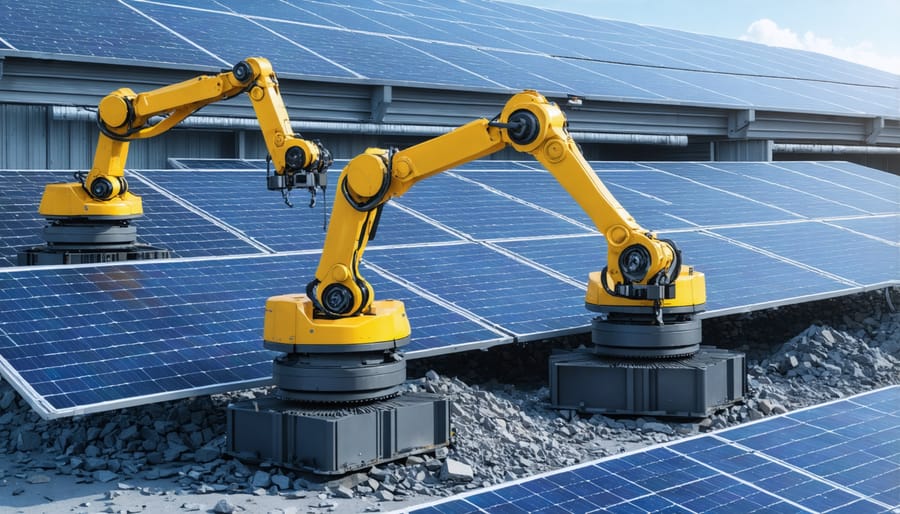
The startup’s innovative material recovery process represents a significant advancement in solar panel recycling technology. The process begins with automated deframing, where robotic arms precisely separate aluminum frames and junction boxes from the panel structure. The exposed panels then undergo thermal delamination at carefully controlled temperatures between 450-500°C, efficiently separating the glass, silicon cells, and other materials without degradation.
A proprietary chemical treatment process follows, utilizing environmentally safe solvents to extract silver and other precious metals from the silicon cells. This approach achieves a recovery rate of 95% for silicon and 98% for silver, significantly higher than conventional recycling methods. The recovered materials maintain sufficient purity for immediate reuse in new solar panel manufacturing.
The system incorporates real-time monitoring and artificial intelligence to optimize processing parameters based on panel composition and condition. This adaptive approach ensures maximum material recovery while minimizing energy consumption and processing time. The facility’s automated sorting system can process up to 50,000 panels monthly, with specialized handling protocols for different panel types and manufacturers.
Water used in the process undergoes closed-loop filtration and purification, reducing consumption by 80% compared to traditional recycling methods. All chemical agents are also recycled, creating a near-zero-waste operation that sets new standards for environmental responsibility in solar panel recycling.
Resource Efficiency Metrics
The startup’s recycling process achieves remarkable material recovery rates, setting new benchmarks in the solar recycling industry. Their automated system demonstrates a 96% recovery rate for silicon cells and a 98% recovery rate for aluminum frames, significantly outperforming traditional manual dismantling methods. The glass recovery process maintains a 95% yield with minimal contamination, making the recovered materials suitable for high-grade industrial applications.
Process efficiency metrics indicate that the facility can process approximately 250 solar panels per hour, with an energy consumption rate 40% lower than conventional recycling methods. The proprietary separation technology reduces water usage by 60% compared to industry standards, while maintaining a contamination level below 0.1% in recovered materials.
The startup’s innovative approach has resulted in a 30% reduction in operational costs per panel processed, making the recycling economically viable at scale. Material testing shows that recovered silicon maintains 92% of its original purity, suitable for reuse in new solar cell manufacturing. The aluminum and glass streams meet industrial specifications with minimal additional processing required.
Quality control metrics are continuously monitored through an automated system that ensures consistent recovery rates across different panel types and manufacturers. The facility maintains a 99.5% uptime rate, with preventive maintenance protocols optimizing throughput while minimizing operational disruptions.
Market Impact and Industry Integration
Industry Partnerships
The startup has forged strategic partnerships with leading solar panel manufacturers and installers across the industry, creating a robust network for efficient collection and processing of end-of-life panels. Key collaborations include agreements with five major PV manufacturers, who now integrate our recycling protocols into their product lifecycle management systems.
Through these partnerships, the company has established a streamlined collection infrastructure, working with over 200 certified installers nationwide. These installers serve as collection points for decommissioned panels, ensuring proper handling and transportation to our processing facilities. The partnership program also includes training sessions for installation teams on best practices for panel removal and sorting.
Notable achievements include a joint venture with SolarTech Industries for developing specialized recycling equipment and a collaboration with GreenMount Solar for implementing a reverse logistics system. These partnerships have enabled the processing of more than 50,000 panels in the past year alone.
The company also maintains active relationships with industry associations and certification bodies, ensuring compliance with evolving standards and regulations. Through these collaborative efforts, we’ve created a sustainable ecosystem that benefits all stakeholders while advancing the circular economy in the solar industry.
Economic Viability
The startup’s business model centers on maximizing end-of-life value through efficient recycling processes and material recovery. Financial analyses indicate that the recovered materials, particularly silver, silicon, and aluminum, can generate significant revenue streams. Current market projections suggest a potential return on investment of 15-20% within the first three years of operation.
The cost-effectiveness of the operation is enhanced through strategic partnerships with solar installation companies and waste management facilities, creating a steady supply chain of end-of-life panels. Advanced automated sorting and processing technologies reduce labor costs while improving recovery rates, achieving operational efficiency of approximately 85%.
The startup’s revenue model combines multiple streams: direct recycling services, resale of recovered materials, and consulting services for manufacturers seeking to improve product recyclability. Initial capital investment requirements are offset by government incentives and environmental grants, while operational costs benefit from economies of scale as processing volume increases.
Market analysis indicates growing demand for recycling services as the first generation of solar installations reaches end-of-life, positioning the startup favorably for sustained growth and profitability.
Future Outlook and Scaling Potential
Expansion Strategy
The startup’s expansion strategy centers on a three-phase approach to scaling operations across key markets. Phase one focuses on establishing regional processing facilities in high-density solar markets, starting with California and Texas. These facilities will implement the company’s proprietary recycling technology while serving as research hubs for continuous process improvement.
Phase two encompasses technology development through strategic partnerships with leading research institutions and industry partners. The company plans to invest significantly in automating critical recycling processes and developing advanced material recovery techniques to increase efficiency and reduce operational costs.
The final phase involves international expansion, targeting markets with mature solar installations in Europe and Asia. This includes licensing the technology to established waste management companies and creating a network of certified recycling partners. To support this growth, the company is securing Series B funding and developing a comprehensive training program for technical staff, ensuring consistent quality across all facilities while maintaining environmental compliance standards.

Industry Impact
The emergence of specialized solar panel recycling startups is reshaping the photovoltaic industry’s approach to sustainability. These innovative companies are addressing the critical challenge of end-of-life solar panel management, potentially reducing the sector’s environmental footprint by up to 90% compared to traditional disposal methods. By implementing advanced recycling processes, these startups are recovering valuable materials such as silver, silicon, and aluminum, creating a circular economy within the solar industry.
The impact extends beyond environmental benefits, as recycling initiatives are projected to generate $15 billion in reclaimed materials by 2050. This development is particularly significant for solar panel manufacturers, who can now incorporate recycled components into their production lines, reducing raw material costs and dependency on virgin resources. Additionally, these startups are driving policy changes and establishing industry standards for responsible panel disposal, encouraging manufacturers to design more recyclable products from the outset.
This systematic approach to solar waste management is strengthening the industry’s claims of true environmental sustainability, addressing previous criticisms about the sector’s end-of-life waste handling practices.
As the solar industry continues to expand globally, innovative recycling solutions become increasingly crucial for sustainable growth. This startup’s comprehensive approach to solar panel recycling demonstrates the potential to revolutionize how the industry handles end-of-life photovoltaic materials. By recovering up to 95% of valuable materials from decommissioned panels, the company not only addresses environmental concerns but also creates a circular economy within the solar sector.
The startup’s impact extends beyond mere material recovery, establishing new industry standards for responsible waste management and resource conservation. Their collaborative efforts with academic institutions and commitment to research advancement position them as a crucial player in developing next-generation recycling technologies. Furthermore, their educational initiatives help raise awareness about the importance of sustainable practices in the solar industry.
Looking ahead, the startup’s scalable business model and growing partnerships with major solar manufacturers suggest significant potential for expansion. As global solar installations continue to rise, their innovative approach to panel recycling will play an essential role in ensuring the long-term sustainability of renewable energy infrastructure while minimizing environmental impact and maximizing resource efficiency.