# Quantum Computers: Revolutionizing Predictive Maintenance in Solar Energy
The photovoltaic industry faces an increasingly complex challenge: how to maintain thousands of solar installations efficiently while predicting failures before they occur. Traditional computing methods struggle with the sheer volume of variables—weather patterns, component degradation rates, thermal stress factors, and electrical performance data—that must be analyzed simultaneously. Quantum computers offer a fundamentally different approach, one that could transform solar maintenance from reactive troubleshooting into precise, predictive science.
Unlike classical computers that process information as binary bits, quantum computers leverage quantum mechanical phenomena to perform calculations exponentially faster for specific problem types. This distinction matters profoundly for PV system maintenance, where optimization problems involve analyzing millions of potential scenarios simultaneously. A quantum computer can evaluate every possible maintenance schedule, equipment failure pattern, and environmental condition combination in parallel—a task that would take classical supercomputers centuries to complete.
The implications extend beyond mere speed. Quantum algorithms can identify subtle correlations between seemingly unrelated factors: how morning dew interacts with micro-cracking in solar cells, or how specific wind patterns accelerate inverter component wear in certain geographic locations. These insights enable maintenance teams to shift from calendar-based servicing to condition-based interventions, reducing downtime while extending system lifespans.
Current quantum systems remain in early development stages, with limited qubit counts and high error rates. However, pilot programs at research institutions—including several university collaborations—are already demonstrating proof-of-concept applications in renewable energy optimization. For PV professionals, understanding quantum computing’s capabilities today means preparing to leverage tomorrow’s breakthrough technology. This article explores how quantum computers work, their specific applications in solar maintenance, and practical steps your organization can take to position itself at the forefront of this technological revolution.
The Current State of PV System Maintenance and Its Limitations
Traditional Maintenance Approaches in Solar Systems
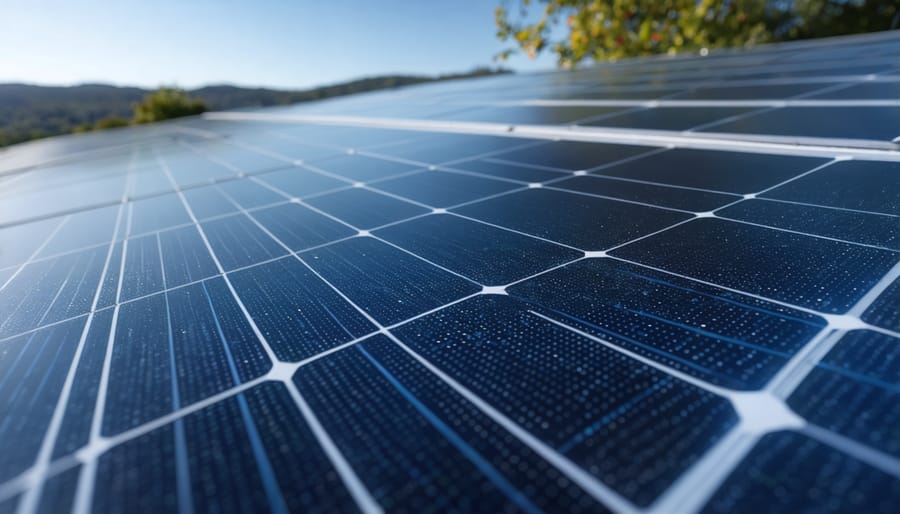
The photovoltaic industry currently relies on established maintenance protocols that have served the sector reliably for decades. Traditional predictive maintenance approaches center on scheduled inspections, typically conducted quarterly or semi-annually, where technicians physically examine solar panels, inverters, and mounting systems for visible damage, corrosion, or degradation.
Visual inspections remain fundamental, identifying issues like micro-cracks, delamination, or soiling accumulation. Basic monitoring systems track voltage, current, and power output, triggering alerts when performance drops below predetermined thresholds. These SCADA (Supervisory Control and Data Acquisition) systems provide valuable real-time data but operate within limited analytical capabilities.
However, these conventional methods face significant constraints. Scheduled maintenance operates on fixed intervals rather than actual system needs, potentially missing emerging issues between inspections. Visual assessments cannot detect internal component degradation or predict imminent failures. Current monitoring systems analyze historical patterns using classical algorithms, which struggle with the complex, multivariable interactions affecting solar performance—weather patterns, equipment degradation rates, grid fluctuations, and seasonal variations simultaneously influencing system behavior. This reactive rather than truly predictive approach creates maintenance inefficiencies and unexpected downtime across solar installations.
The Economic Impact of Unplanned PV System Downtime
Unplanned photovoltaic system downtime creates substantial financial consequences that extend beyond immediate repair expenses. When PV systems fail unexpectedly, operators face direct revenue losses from interrupted energy generation, with studies indicating that extended outages can result in thousands of dollars in lost production per megawatt of installed capacity. These losses compound during peak generation periods when energy prices are highest and grid demand is greatest.
Reactive maintenance approaches—addressing issues only after failures occur—typically incur repair costs 3-5 times higher than planned interventions. Emergency service calls, expedited component shipping, and extended labor hours significantly inflate expenses. Meanwhile, fixed-schedule maintenance often proves economically inefficient, conducting unnecessary inspections while missing developing issues between intervals.
Efficiency degradation represents another critical economic factor. Gradually declining performance from undetected soiling, connection deterioration, or partial cell failures can reduce system output by 10-25% before triggering alerts. For commercial installations, this translates to substantial cumulative revenue losses over months of suboptimal operation. Academic research in collaboration with universities has quantified these impacts, demonstrating that early fault detection through advanced monitoring reduces total maintenance costs by 30-40% while maximizing generation uptime. Educational program offerings increasingly emphasize understanding these economic relationships to prepare aspiring photovoltaic professionals for optimizing system performance and financial returns.
What Makes a Quantum Computer Different
Quantum Bits vs. Classical Bits: Processing Power That Changes Everything
Traditional computers process information using bits—binary units that exist in one of two states: 0 or 1. Every calculation, from basic spreadsheets to complex simulations, relies on processing these bits sequentially or in parallel through millions of transistors. While powerful, this approach faces fundamental limitations when tackling exponentially complex problems.
Quantum computers operate fundamentally differently through quantum bits, or qubits. Unlike classical bits, qubits leverage quantum superposition, allowing them to exist in multiple states simultaneously until measured. A single qubit can represent both 0 and 1 at once, and when you combine multiple qubits, the computational possibilities multiply exponentially. Two qubits can represent four states simultaneously, three qubits represent eight states, and so forth.
This quantum advantage transforms predictive maintenance modeling for photovoltaic systems. Consider forecasting panel degradation across a solar installation with thousands of variables: weather patterns, shading variations, temperature fluctuations, electrical stress points, and manufacturing variances. Classical computers must evaluate these scenarios sequentially or in limited parallel batches. Quantum computers can process vast combinations simultaneously, exploring multiple degradation pathways and failure scenarios in a single computational cycle.
For PV professionals, this means moving from reactive maintenance to truly predictive strategies. Quantum algorithms can identify subtle correlations between environmental factors and system performance that classical analysis might miss, potentially detecting micro-failures weeks before they impact energy production. While commercially viable quantum computers for PV applications remain in development through university partnerships and research initiatives, understanding this foundational difference prepares professionals for the transformative maintenance capabilities approaching the renewable energy sector.

Why Quantum Computers Excel at Pattern Recognition
Quantum computers possess inherent capabilities that make them exceptionally suited for pattern recognition tasks in photovoltaic system maintenance. Unlike classical computers that process information sequentially, quantum systems leverage superposition to evaluate multiple data scenarios simultaneously. This parallel processing power becomes transformative when analyzing the complex sensor data generated by modern PV installations, where thousands of variables interact continuously.
The quantum advantage becomes particularly evident when dealing with non-linear patterns that characterize solar panel degradation. Traditional machine learning algorithms struggle to identify subtle correlations between environmental factors, electrical performance metrics, and equipment wear patterns. Quantum algorithms, however, can explore the entire solution space of these multivariate relationships simultaneously, uncovering hidden dependencies that classical approaches might miss entirely.
Photovoltaic systems generate massive datasets from voltage sensors, current monitors, temperature probes, irradiance meters, and environmental monitoring equipment. A typical commercial installation produces terabytes of data annually, containing patterns that signal impending failures weeks or months in advance. Quantum entanglement allows these computers to maintain correlations between disparate data points, enabling recognition of failure signatures across multiple system components simultaneously.
Research collaborations between universities and industry partners have demonstrated quantum pattern recognition’s potential to identify degradation patterns up to 40% earlier than classical methods. This capability stems from quantum computing’s natural affinity for optimization problems, where finding optimal maintenance schedules requires evaluating countless variable combinations—a task perfectly aligned with quantum computational strengths.
Quantum Computing Applications in Predictive PV Maintenance
Advanced Degradation Modeling and Lifespan Prediction
Solar panel degradation results from complex, interconnected environmental stressors that traditional computational models struggle to analyze simultaneously. Quantum computers leverage superposition and entanglement to evaluate multiple degradation pathways concurrently—including temperature cycling effects, humidity-induced delamination, UV radiation damage, and potential-induced degradation—creating comprehensive predictive models that capture real-world complexity.
Traditional algorithms typically assess these factors sequentially or through simplified approximations, potentially missing critical interaction effects. For instance, humidity combined with thermal stress accelerates encapsulant degradation at rates that linear models cannot accurately predict. Quantum algorithms process these multivariable relationships simultaneously, identifying subtle correlations between environmental conditions and performance decline patterns across diverse geographic locations and installation types.
Research collaborations between quantum computing laboratories and universities specializing in photovoltaic technology have demonstrated improved prediction accuracy for long-term panel performance. These quantum-enhanced models incorporate historical weather data, material composition specifications, and real-time monitoring inputs to forecast degradation curves with unprecedented precision. This capability enables maintenance teams to anticipate performance thresholds before they impact energy production, optimizing replacement schedules and extending system economic viability.
While still in developmental stages, these quantum modeling approaches represent a significant advancement over conventional statistical methods, particularly for large-scale solar installations where prediction accuracy directly influences financial planning and operational efficiency.
Real-Time Anomaly Detection Across Large Solar Installations
Large-scale solar installations comprising thousands of panels generate massive amounts of performance data simultaneously, making traditional monitoring systems struggle to identify subtle anomalies that signal impending failures. Quantum computers excel at processing these complex, multi-dimensional datasets through quantum superposition and entanglement, enabling them to analyze variables across entire installations instantaneously.
Unlike classical systems that monitor panels sequentially or in batches, quantum-enhanced real-time anomaly detection evaluates correlations between thousands of data points—including voltage fluctuations, temperature variations, current output, and environmental conditions—across all panels simultaneously. This parallel processing capability identifies pattern deviations that might indicate developing hot spots, microcracks, or connection degradation before they manifest as critical failures.
Research collaborations between universities and solar industry partners are currently developing quantum algorithms specifically designed for photovoltaic anomaly detection. These systems can distinguish between normal performance variations caused by cloud coverage or seasonal changes and genuine equipment degradation requiring intervention. Early pilot programs have demonstrated quantum systems detecting subtle efficiency losses up to three weeks earlier than conventional monitoring platforms, potentially preventing costly downtime and equipment damage across utility-scale installations.
Optimizing Maintenance Scheduling Through Quantum Algorithms
Quantum computers excel at optimization problems involving multiple variables—precisely what’s needed for maintenance scheduling in photovoltaic systems. Traditional scheduling software struggles when simultaneously analyzing weather forecasts, regional energy demand patterns, equipment degradation rates, and technician availability. Quantum algorithms process these interconnected factors simultaneously through superposition, identifying optimal maintenance windows that minimize production losses while maximizing return on investment.
For example, a quantum system might analyze six-month weather predictions alongside historical performance data from thousands of inverters, determining that servicing specific equipment during an upcoming cloudy week would reduce downtime impact by 40% compared to arbitrary scheduling. These algorithms also factor in seasonal energy demand peaks, ensuring critical maintenance occurs during low-production periods rather than high-revenue summer months.
Current implementations through cloud-based quantum services show promising results in pilot programs conducted through university research partnerships. Early adopters report 15-25% improvements in maintenance efficiency metrics, though these benefits currently apply primarily to large-scale installations where the complexity justifies quantum processing overhead. As quantum hardware matures and becomes more accessible, even mid-sized operations will benefit from this sophisticated scheduling capability, fundamentally transforming how the solar industry approaches preventive maintenance planning.
The Data Infrastructure That Powers Quantum-Enhanced Maintenance
Sensor Technologies and IoT Integration in Modern PV Systems
Modern photovoltaic systems rely on sophisticated monitoring technologies that generate the data quantum computers will analyze. Temperature sensors embedded within solar panels track thermal variations that affect efficiency, while current monitors measure electrical output in real-time across individual strings or entire arrays. Irradiance meters capture incoming solar radiation levels, providing crucial context for performance evaluation. Voltage monitors and power analyzers complete the sensor suite, documenting system behavior under varying conditions.
These monitoring devices function as part of comprehensive IoT sensor networks that continuously transmit data to centralized platforms. Current systems typically process this information using conventional computing methods, identifying obvious failures or significant deviations from expected performance. However, the sheer volume and complexity of data—encompassing weather patterns, electrical characteristics, thermal profiles, and historical performance—exceeds traditional analytical capabilities for predictive maintenance.
Quantum computing integration will transform how this sensor data drives maintenance decisions. Where classical systems analyze linear relationships between individual variables, quantum processors can simultaneously evaluate countless interdependencies, detecting subtle patterns that precede equipment failures. Universities collaborating on quantum-PV research are developing protocols that prepare IoT data for quantum analysis, establishing the infrastructure that will eventually enable real-time predictive maintenance across solar installations.
Data Volume Requirements and Quality Considerations
Training quantum algorithms for predictive maintenance in photovoltaic systems demands substantial, high-quality datasets that capture the full spectrum of operational conditions. Current quantum machine learning models require thousands of labeled examples per failure mode, encompassing normal operation, degradation patterns, and fault conditions across diverse environmental scenarios. Data collection must include time-series measurements of voltage, current, temperature, irradiance levels, and environmental factors sampled at sufficient frequency—typically ranging from one-minute to hourly intervals depending on the monitored parameter.
Quality considerations are paramount, as quantum algorithms can amplify the impact of noisy or incomplete data. Training datasets should maintain measurement accuracy within industry-standard tolerances (±1% for electrical parameters, ±2°C for temperature sensors) and minimize missing data points through redundant sensor deployment. Universities collaborating on quantum computing research emphasize the importance of standardized data formats and comprehensive metadata documentation to ensure model reproducibility.
Additionally, datasets must represent geographical diversity and various system configurations—residential, commercial, and utility-scale installations—to develop robust quantum models. Educational programs increasingly focus on proper data governance practices, teaching professionals to implement quality assurance protocols that verify sensor calibration, eliminate outliers systematically, and maintain secure data repositories. This foundation ensures quantum algorithms receive the structured, reliable information necessary for accurate predictive capabilities as the technology matures.
Current Limitations and the Roadmap to Practical Implementation
Quantum Hardware Accessibility and Cost Considerations
While building a quantum computer remains extraordinarily expensive, access to quantum computing capabilities has become increasingly democratized through cloud-based platforms. Major technology providers including IBM Quantum, Amazon Braket, Microsoft Azure Quantum, and Google’s Quantum AI now offer quantum computing services accessible via standard internet connections. These platforms operate on pay-per-use models, with costs ranging from free educational tiers to several dollars per quantum processing unit (QPU) minute for commercial applications.
For smaller solar operations, the most practical entry point involves collaboration with universities that maintain quantum computing research programs and educational partnerships. Many academic institutions receive preferential access to quantum hardware and can facilitate pilot projects exploring predictive maintenance algorithms. Additionally, some renewable energy consortiums are establishing shared quantum computing resources, distributing costs across multiple member organizations.
Current quantum applications for PV maintenance remain largely experimental, meaning immediate financial investment isn’t necessary. However, forward-thinking solar professionals should monitor cloud platform offerings and explore educational resources to build foundational quantum literacy. As the technology matures and costs decrease, early knowledge will position organizations to rapidly implement quantum-enhanced predictive maintenance when commercially viable solutions emerge.
Hybrid Quantum-Classical Approaches for Near-Term Benefits
While fully fault-tolerant quantum computers remain years away, hybrid quantum-classical architectures offer immediate practical benefits for photovoltaic system management. These systems leverage quantum processors for specific computational bottlenecks—such as optimizing maintenance schedules across large solar arrays or analyzing complex degradation patterns—while classical computers handle data preprocessing, user interfaces, and routine calculations.
Current implementations demonstrate measurable advantages in processing efficiency. For instance, quantum algorithms can rapidly evaluate millions of potential maintenance scenarios simultaneously, identifying optimal resource allocation strategies that would take classical systems considerably longer to compute. The quantum processor tackles the combinatorial optimization challenge, then passes refined solutions to classical systems for validation and implementation.
This approach integrates seamlessly with existing AI-powered predictive maintenance frameworks, enhancing rather than replacing proven technologies. Universities collaborating with industry partners are developing accessible hybrid platforms that PV professionals can begin testing today. These near-term quantum advantages reduce computational costs and improve prediction accuracy without requiring complete infrastructure overhauls, making quantum-enhanced maintenance economically viable as the technology matures.
Preparing Your PV Organization for Quantum-Enhanced Maintenance
Building a Data-Ready Foundation Today
While quantum-powered predictive maintenance remains on the technological horizon, photovoltaic professionals can take meaningful steps today to prepare their operations for this transformative capability. The foundation begins with establishing robust data infrastructure that quantum algorithms will eventually leverage.
Start by implementing comprehensive monitoring systems that capture granular performance metrics across all system components. This includes real-time voltage, current, temperature readings, and environmental factors at the module level. Standardized data collection protocols ensure consistency and compatibility with future quantum applications.
Organizations should prioritize data quality over quantity, establishing validation processes that eliminate noise and ensure accuracy. Partner with universities researching quantum applications in renewable energy to stay informed about emerging data requirements and formatting standards.
Document all system maintenance activities, component specifications, and historical performance trends meticulously. This historical dataset becomes invaluable training data for quantum machine learning models. Consider participating in industry consortiums developing quantum-ready data standards for the photovoltaic sector.
By building this data-ready foundation now, your organization positions itself to seamlessly integrate quantum computing capabilities as they mature, ensuring competitive advantage in predictive maintenance excellence.

Educational Resources and Skill Development for PV Professionals
As quantum computing transitions from theoretical promise to practical application in renewable energy, educational institutions and industry organizations are developing specialized training programs to prepare PV professionals for this technological shift. Leading universities, including MIT, Stanford, and the Technical University of Munich, have established quantum computing curricula with dedicated modules addressing energy sector applications. These programs cover quantum mechanics fundamentals, quantum algorithm development, and specific use cases in predictive maintenance and grid optimization.
Professional development opportunities are emerging through partnerships between quantum computing companies like IBM and D-Wave and renewable energy organizations. IBM’s Quantum Network offers accessible online courses that introduce PV professionals to quantum programming languages such as Qiskit, while providing hands-on experience with cloud-based quantum systems. The Solar Energy Industries Association (SEIA) has begun incorporating quantum computing awareness sessions into their technical training programs, recognizing the technology’s growing relevance to system optimization and maintenance.
For aspiring photovoltaic professionals, building foundational knowledge in classical machine learning, data analytics, and basic quantum principles positions them advantageously for future applications. Several universities now offer certificate programs specifically designed for renewable energy professionals seeking to understand quantum computing’s practical implications without requiring advanced physics backgrounds. These programs emphasize real-world problem-solving approaches, ensuring participants can evaluate quantum solutions critically and identify appropriate applications within their organizations.
Quantum computing represents a transformative frontier for photovoltaic system maintenance, promising to revolutionize how we predict failures, optimize performance, and extend asset lifespans. While fully operational, fault-tolerant quantum computers remain years away from widespread commercial deployment, the trajectory is clear: organizations that begin preparing today will gain significant competitive advantages tomorrow.
The integration of quantum algorithms into predictive maintenance frameworks will enable solar professionals to analyze vast datasets with unprecedented speed and accuracy. Complex pattern recognition across thousands of interconnected systems, real-time optimization of maintenance schedules, and precise degradation forecasting will become standard capabilities rather than aspirational goals. These advances will directly translate to reduced downtime, lower operational costs, and maximized energy production across solar installations of all scales.
For aspiring PV professionals and industry stakeholders, the time to act is now. Building foundational knowledge in data analytics, machine learning, and computational methods creates essential stepping stones toward quantum readiness. We encourage solar professionals to engage with educational programs that bridge traditional PV expertise with emerging computational technologies. Universities and industry leaders are increasingly collaborating to develop curricula specifically designed for this convergence.
Stay informed about quantum developments through industry publications, participate in professional networks exploring advanced technologies, and consider partnerships with research institutions pioneering quantum applications in renewable energy. By investing in continuous learning and fostering cross-disciplinary collaboration today, the solar industry can position itself to fully leverage quantum computing’s potential as it matures, ensuring more resilient, efficient, and sustainable photovoltaic systems for generations to come.