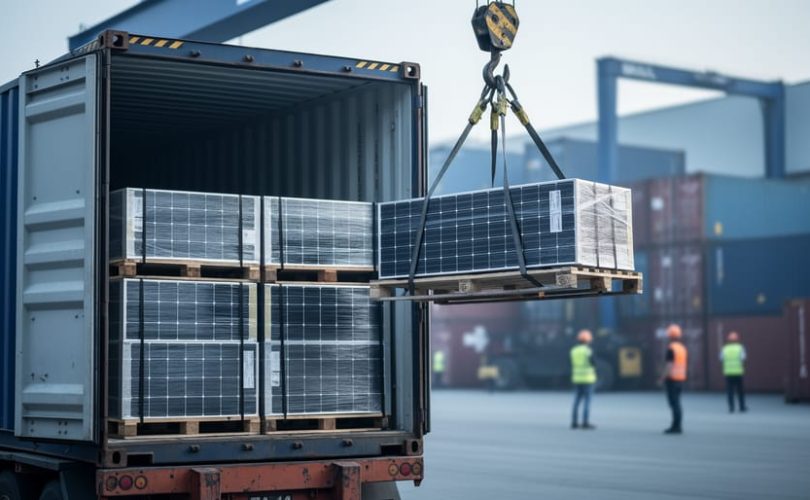
Fourth-party logistics (4PL) is a comprehensive supply chain management model in which a single service provider assumes end-to-end responsibility for coordinating all aspects of a client’s logistics operations, from sourcing and transportation to customs clearance and final delivery. For photovoltaic professionals importing solar panels and components in 2026, this means partnering with a logistics integrator who manages multiple third-party logistics providers (3PLs), freight forwarders, and customs brokers on your behalf, creating a unified supply chain strategy rather than juggling individual service contracts.
Unlike traditional 3PL providers who execute specific logistics tasks such as warehousing or freight forwarding, a 4PL acts as your strategic logistics partner. They design the entire supply chain architecture, select and manage subcontractors, implement tracking systems, and optimize routes while you retain control over core business decisions. This distinction matters significantly in the solar industry, where supply chains often span multiple continents, involve specialized handling requirements for fragile photovoltaic modules, and demand strict compliance with evolving import regulations and tariff classifications.
The 4PL model emerged as global supply chains grew increasingly complex, requiring expertise beyond what most renewable energy companies could develop in-house. For solar importers managing shipments from manufacturing hubs in Asia to installation sites across North America or Europe, a 4PL partnership consolidates vendor relationships, reduces administrative overhead, and provides transparency through integrated technology platforms. Understanding whether this model suits your operation requires evaluating your import volume, supply chain complexity, and capacity for logistics management. Research partnerships between universities and industry leaders continue to refine best practices for 4PL implementation in renewable energy sectors, offering evidence-based frameworks for companies transitioning from fragmented logistics arrangements to integrated solutions.
What Is 4PL Logistics in Solar PV Supply Chains
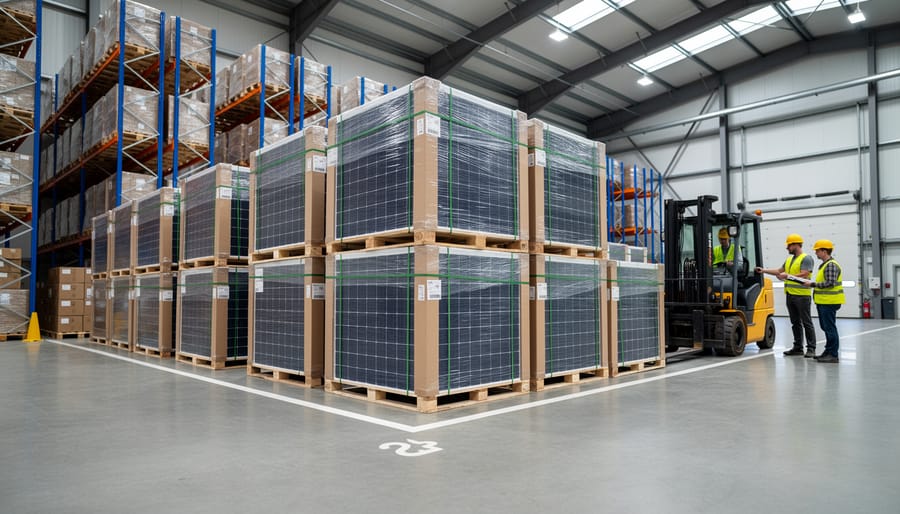
How 4PL Differs from 3PL in PV Logistics
A 3PL (third-party logistics) provider executes specific logistics functions, moving containers from the port, warehousing solar panels, arranging final delivery to installation sites. The relationship is transactional. You tell the 3PL what needs to happen, and they handle the physical work. If you’re importing 500 kilowatts of monocrystalline modules from Vietnam, the 3PL books the ocean freight, clears customs using a broker you selected, stores the pallets in their warehouse, and delivers panels to your project sites on your schedule.
A 4PL provider operates at a strategic level. They design your entire PV supply chain, select and manage the 3PL vendors, coordinate customs brokers, oversee compliance documentation, and continuously optimize the network. The 4PL acts as your external logistics department. Instead of managing five different service providers yourself, freight forwarder, customs broker, drayage carrier, warehouse operator, last-mile delivery, you manage one 4PL relationship, and they orchestrate all the moving parts.
| Feature | 3PL Provider | 4PL Provider |
|---|---|---|
| Scope | Executes specific tasks: freight, warehousing, delivery | Designs and manages entire supply chain strategy |
| Control | You direct operations and select vendors | 4PL selects, contracts, and supervises all vendors |
| Technology | Uses their own TMS for their services | Integrates platform across all providers and your ERP |
| Customs/Compliance | May offer brokerage as add-on service | Coordinates classification, duty mitigation, and documentation compliance |
For solar imports, this distinction matters because PV logistics involves layered complexity: Harmonized Tariff classifications for cells versus modules, country-of-origin rules affecting Section 201 safeguard duties, antidumping orders on Chinese-origin crystalline silicon cells, and tight delivery windows tied to interconnection dates. A 3PL moves your shipment. A 4PL ensures the right products ship at the right time, clear customs correctly, avoid duty penalties, and arrive when your EPC contractor needs them, all while monitoring cost, compliance, and carrier performance across the supply base.
Eligibility and When 4PL Makes Sense for PV Importers
Fourth-party logistics proves most effective for solar companies facing complex import scenarios that overwhelm internal resources or strain the capabilities of traditional freight forwarders. The decision to engage a 4PL provider hinges on several operational and strategic factors rather than a simple revenue threshold or shipment count.
Import volume alone does not dictate 4PL suitability. A company importing 500 containers annually from a single Vietnamese manufacturer through one US port may manage effectively with a competent 3PL provider, while another firm importing just 150 containers from six different countries across three continents likely needs the orchestration layer a 4PL provides. The complexity multiplier matters more than raw volume.
Certain operational characteristics signal that a PV importer has reached the point where 4PL partnership delivers measurable value:
- Sourcing from three or more origin countries with varying tariff treatments and compliance requirements
- Recurring classification disputes or complexity managing Harmonized Tariff Schedule codes across diverse product portfolios (modules, inverters, mounting systems, balance-of-system components)
- Persistent landed cost optimization challenges, including duty drawback opportunities or free trade agreement eligibility across multiple shipments
- No dedicated logistics manager or customs compliance specialist on staff, forcing procurement or operations teams to handle import coordination
- Inability to track shipments in real time across ocean, air, and ground segments, leading to installation delays or inventory uncertainty
Regulatory burden represents a particularly strong indicator. Solar importers navigating Section 201 safeguard tariffs, Section 301 China tariffs, antidumping and countervailing duty orders on cells from Southeast Asia, and Uyghur Forced Labor Prevention Act compliance face exponentially greater risk than companies importing non-sensitive commodities. When customs documentation errors can trigger six-figure penalty assessments or project-killing shipment holds, the cost-benefit calculation for 4PL expertise shifts dramatically.
Organizational maturity also plays a role. Startups with lean teams and established developers scaling into new markets both benefit from 4PL support, but for different reasons. Early-stage companies gain immediate access to enterprise-level logistics infrastructure without capital investment in systems or staff, while mature firms use 4PL providers to standardize processes across business units or rationalize fragmented vendor networks after acquisitions.
Geographic reach compounds complexity. A PV installer serving three states can typically manage logistics internally or with regional 3PL support, but a national EPC contractor coordinating module deliveries to 40 simultaneous project sites across the country confronts network optimization problems that justify 4PL engagement.
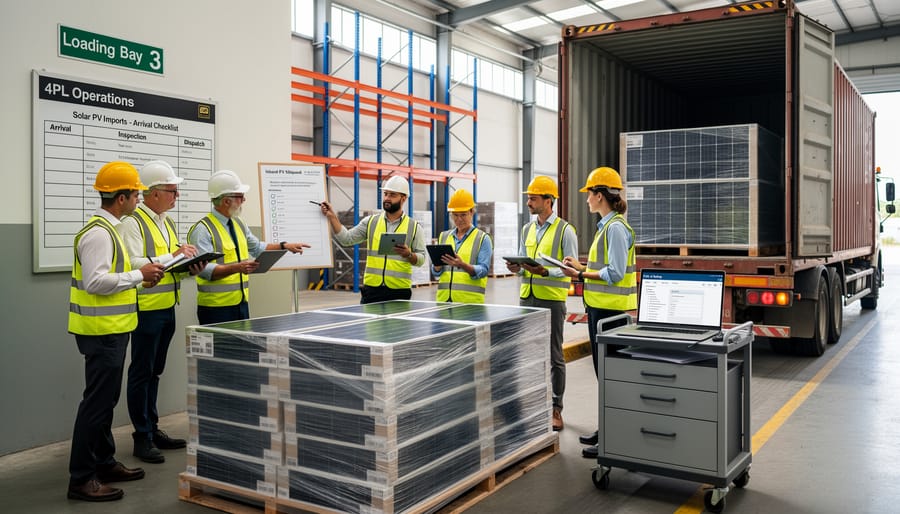
How to Implement a 4PL Partnership for Solar Imports
Vendor Selection Criteria for PV-Focused 4PL Providers
Choosing a 4PL provider for solar component imports requires evaluating five core competencies that directly impact compliance, cost, and delivery reliability.
Solar industry experience stands paramount. The provider should demonstrate a documented track record managing photovoltaic module shipments, including familiarity with fragile handling requirements, temperature-controlled storage for inverters, and the logistical challenges of oversized component deliveries to remote installation sites. Ask for case studies showing successful management of solar panel imports exceeding 10 MW capacity.
Tariff classification expertise separates competent providers from generalists. Your 4PL partner must accurately classify solar cells under HTS 8541.40, modules under 8541.43, and correctly distinguish between crystalline silicon and thin-film technologies for duty calculation. Request evidence of successful customs rulings or advance classification decisions they’ve obtained for PV products.
Trade remedy knowledge proves critical given the complex antidumping and countervailing duty orders affecting Chinese, Vietnamese, Malaysian, Thai, and Cambodian solar imports. The provider should understand UFLPA compliance for Xinjiang-origin polysilicon, Section 301 tariff implications, and how local content rules interact with country-of-origin determinations for duty assessment.
Technology platform capabilities enable visibility and control. Evaluate whether their transportation management system offers real-time shipment tracking, automated customs documentation generation, duty drawback tracking, and integration capabilities with your ERP system. Cloud-based platforms with API connectivity streamline data exchange and reduce manual processing errors.
Carrier and broker networks determine execution quality. The 4PL should maintain established relationships with ocean carriers serving major PV manufacturing hubs (Shanghai, Shenzhen, Ho Chi Minh City), air freight partners for expedited component deliveries, and licensed customs brokers at key U.S. ports (Los Angeles, Long Beach, Houston, Savannah) handling solar imports.
Integrating Systems and Data Flows
Successful 4PL integration requires connecting your enterprise resource planning (ERP), procurement software, and compliance systems directly to the provider’s transportation management system. This technical link enables real-time visibility across your solar panel supply chain without manual data entry or duplicated records.
Start by establishing Electronic Data Interchange (EDI) protocols or API connections between platforms. Most 4PL providers support EDI 856 (advance ship notice), EDI 214 (shipment status), and EDI 210 (freight invoice) transactions, which automatically populate your systems with shipment milestones, container loading at the manufacturer, port departure, customs clearance, and warehouse receipt. For smaller importers, cloud-based API integrations offer simpler implementation than traditional EDI.
Data synchronization must cover three critical flows. Purchase order details (product codes, quantities, Harmonized Tariff classifications, supplier information) flow from your ERP to the 4PL’s TMS to initiate freight booking and customs documentation. Shipment tracking updates flow back from the TMS to your procurement dashboard, updating expected delivery dates for production planning. Customs filing data, commercial invoices, packing lists, certificates of origin, flows bidirectionally to ensure accuracy and regulatory compliance.
Documentation management shifts to centralized digital repositories accessible to both parties. The 4PL’s platform stores bills of lading, ISF filings, entry summaries, and duty payment records, which your compliance team can audit through secure portals. Automated customs filing replaces manual broker communication: product classifications, declared values, and country-of-origin determinations pre-populate entry forms, reducing errors and accelerating clearance at U.S. ports receiving photovoltaic modules.
Rights, Obligations, and Compliance Responsibilities

Customs and Import Compliance Oversight
A 4PL provider’s compliance oversight begins with Harmonized System classification accuracy. For photovoltaic imports, most finished modules fall under heading 8541.40, though components like inverters and racking systems require different classifications. The 4PL assigns trained specialists to review technical specifications, manufacturer data sheets, and assembly details to ensure proper tariff treatment, reducing the risk of misclassification penalties or unexpected duty assessments.
Country of origin determination demands particular attention given the complex supply chains spanning multiple jurisdictions. The 4PL tracks where silicon ingots originate, where wafers are sliced, where cells are fabricated, and where modules are assembled. This documentation trail proves critical for antidumping and countervailing duty compliance, especially when tariff orders target specific countries. The provider verifies certificates of origin against production records and maintains audit files showing the substantial transformation analysis that establishes final origin.
For Section 301 exclusions and other trade remedy scenarios, the 4PL monitors Federal Register notices, tracks exclusion request deadlines, and coordinates supporting documentation with customs brokers. They apply KPIV and KPOV principles to identify which input variables affect duty liability and which output variables signal compliance gaps.
Documentary management encompasses the commercial invoice showing correct product descriptions and values, the packing list detailing piece counts and weights, the bill of lading establishing shipment routing, and origin certificates proving manufacture location. The 4PL coordinates these documents across suppliers, freight forwarders, and customs brokers, ensuring consistency and completeness before cargo arrival. This proactive approach helps avoid customs delays that arise from missing or contradictory paperwork.
Where to Get Help and Resources
Navigating 4PL logistics for solar PV imports requires access to authoritative compliance guidance, industry intelligence, and specialized expertise. Several government agencies, trade organizations, and educational resources provide the support photovoltaic professionals need to evaluate, implement, and manage fourth-party logistics partnerships effectively.
U.S. Customs and Border Protection (CBP) serves as the primary regulatory authority for import compliance questions. The agency’s Informed Compliance Publications, available through, explain classification requirements under the Harmonized Tariff Schedule, country of origin rules, and trade remedy enforcement for photovoltaic products. CBP’s Center for Excellence and Expertise for electronics handles specialized queries about solar panel imports under HTS 8541.40. For binding rulings on classification or duty treatment, importers can submit requests through CBP’s eRulings system, valuable when establishing baseline compliance frameworks before engaging a 4PL provider.
The Solar Energy Industries Association (SEIA) monitors trade policy developments affecting PV supply chains, including Section 201 safeguard tariffs, antidumping and countervailing duty orders, and Uyghur Forced Labor Prevention Act enforcement. SEIA’s member resources track regulatory changes that impact logistics planning and landed costs. The National Customs Brokers & Forwarders Association of America (NCBFAA) maintains directories of licensed customs brokers and freight forwarders with solar industry experience, useful for vetting potential 4PL partners or understanding service benchmarks.
Additional support includes:
- U.S. Customs and Border Protection (CBP) for regulatory guidance on tariff classification, trade remedies, and documentation requirements
- Solar Energy Industries Association (SEIA) for trade policy updates and advocacy on PV import issues
- Licensed customs brokers specializing in renewable energy imports for compliance reviews
- Freight forwarder directories through NCBFAA and International Federation of Freight Forwarders Associations (FIATA)
- Mose Solar’s educational program modules on supply chain management and import compliance, developed in collaboration with universities
For organizations building internal supply chain expertise, Mose Solar offers university-affiliated training programs addressing PV logistics strategy, customs compliance, and vendor management. These programs equip aspiring professionals with the technical knowledge to oversee 4PL relationships, interpret regulatory requirements, and optimize international solar component procurement. Trade consultants and law firms specializing in customs and international trade provide tailored guidance for complex scenarios involving trade remedy orders or classification disputes that affect 4PL partnership terms.
How to Apply or Complete the Process
There is no formal “application” to use fourth-party logistics for solar PV imports. The process is commercial, not regulatory, you negotiate a contract with a qualified provider rather than submitting forms to a government agency.
Begin by issuing a request for proposal (RFP) to shortlisted 4PL candidates. Provide import volume forecasts, origin countries, destination facilities, product classifications (typically HS 8541.40 for PV cells and modules), and compliance requirements including applicable tariffs and trade remedy orders.
Evaluate responses against your selection criteria. Request client references specific to solar component imports and verify the provider’s customs broker network holds active licenses in your entry ports.
Negotiate contract terms covering scope of services, liability allocation, performance metrics, technology integration requirements, and audit rights. Legal counsel familiar with logistics contracts should review liability caps and force majeure provisions.
Execute a master service agreement. The 4PL will then onboard your account: map your supply chain, integrate systems, establish carrier relationships, and assign a dedicated account team.
Transition begins with a pilot program, typically one origin country or product line, before expanding to full supply chain management. Maintain importer of record status and compliance oversight throughout; the 4PL executes logistics strategy but cannot transfer your legal import responsibilities.
Frequently Asked Questions About 4PL for Solar PV Logistics
Most aspiring PV professionals transitioning into supply chain roles encounter the same practical concerns when evaluating 4PL partnerships. These questions reflect real operational anxieties: whether the investment justifies the cost, how quickly they can stand up a new logistics model, and what capabilities their organization needs internally to make it work. Understanding the financial and operational realities helps importers set realistic expectations and avoid costly missteps during implementation.
How much do 4PL providers charge for managing solar panel imports?
Fee structures typically combine a percentage of logistics spend (often 3-8%) with performance-based incentives tied to cost reduction targets or on-time delivery rates. Some providers charge flat monthly retainers for smaller operations or project-based fees for specific initiatives like network redesign or compliance audits.
How long does it take to fully implement a 4PL partnership?
Expect 90 to 180 days from contract signing to full operational handoff, depending on the complexity of your existing supply chain and the degree of system integration required. Initial shipments can often move within 30-45 days under 4PL management while backend processes stabilize.
What minimum import volume makes 4PL economically viable?
Most 4PL providers target clients spending at least $2-5 million annually on international logistics, though some specialized firms serve smaller importers with complex compliance needs or multi-country sourcing strategies that justify the management overhead.
How should I measure my 4PL provider’s performance?
Track on-time delivery rates, customs clearance speed, landed cost per watt, inventory turns, and compliance accuracy (zero penalties or duty assessments). Quarterly business reviews should compare these metrics against baseline performance and contractual service-level agreements.
Another frequent concern centers on geographic scope. If your company sources exclusively from domestic manufacturers or operates entirely within one country, a 4PL partnership typically adds unnecessary expense without commensurate value. The orchestration benefits emerge when coordinating cross-border movements, managing multiple freight modes, or navigating the tariff classifications and trade remedy orders that accompany international solar component imports. Domestic-only operations usually find greater efficiency with a capable 3PL handling execution tasks.
Technology readiness also surfaces repeatedly. Your organization doesn’t need a cutting-edge ERP system to work with a 4PL provider, but you should have reliable order data, shipment visibility requirements, and a willingness to adopt the 4PL’s tracking and reporting platforms. Providers supply the transportation management and compliance tools; you contribute clean purchase order information, delivery schedules, and stakeholder communication protocols. Companies still relying on email and spreadsheets for logistics coordination often experience friction during the integration phase, though many 4PL providers will help digitize those workflows as part of onboarding.
Fourth-party logistics delivers the most value when your solar import operations involve multi-country sourcing, high shipment volumes, or regulatory complexity that stretches internal resources thin. If you’re managing dozens of container loads monthly, navigating Section 201 tariffs and antidumping duties, or coordinating delivery across multiple installation sites, a 4PL provider can centralize strategy, reduce landed costs, and ensure compliance consistency that’s difficult to achieve with internal teams or fragmented 3PL relationships.
The critical balance lies in understanding that outsourcing execution doesn’t transfer legal responsibility. You remain the importer of record, accountable for accurate classifications, duty payments, and regulatory filings. The 4PL becomes your operational extension, not your compliance shield. Choose partners who transparently share documentation, maintain audit trails, and align their systems with your oversight requirements.
For professionals building expertise in photovoltaic supply chain management, Mose Solar offers educational programs developed in collaboration with universities. These courses cover import compliance fundamentals, logistics optimization strategies, and the technical knowledge needed to evaluate and manage 4PL partnerships effectively. Whether you’re considering this model or already working with a provider, deepening your understanding of the frameworks governing international solar trade strengthens both your operational decisions and your career trajectory in renewable energy.