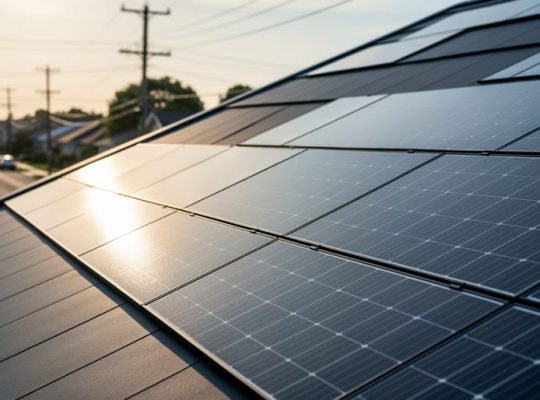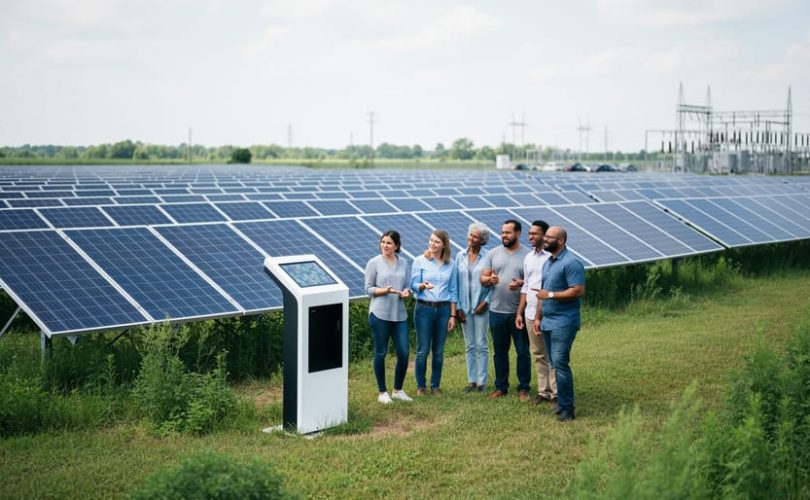
Community solar is a shared renewable energy model that allows multiple subscribers to receive credits on their electricity bills from a portion of a jointly funded solar array, typically located off-site. These programs enable renters, homeowners with unsuitable roofs, and businesses to access solar savings without installing panels on their own property.
Yes, community solar is legitimate. The model operates under state regulations and utility oversight in more than 40 U.S. states as of 2026, with subscriber agreements governed by consumer protection laws. However, the industry’s rapid growth has attracted both reputable developers and a small number of predatory operators who use misleading marketing tactics or bury unfavorable terms in contracts.
The question of legitimacy reflects justified caution. Community solar involves long-term financial commitments, often 20 years or more, and savings claims vary widely based on program structure, local electricity rates, and subscription fees. Some programs deliver consistent 10-15% savings on electricity costs, while others fail to meet projections due to undisclosed fees or inflated baseline assumptions.
This article clarifies how community solar functions at the operational and regulatory levels, identifies the markers that distinguish credible programs from questionable ones, and examines the types of community solar models currently deployed. You’ll learn what red flags signal potential problems, how savings calculations work in practice, and why workforce training and industry certification programs have become essential safeguards. Understanding these mechanics equips you to evaluate specific offers with the rigor they deserve, particularly as the sector continues to expand and professionalize through collaboration between utilities, developers, and academic institutions developing curriculum standards for solar professionals.
What Community Solar Actually Is
Community solar is a subscription-based renewable energy model that allows households and businesses to access solar power without installing panels on their own property. Instead, subscribers purchase or lease a share of a centrally located solar array, often called a solar garden, and receive credits on their electricity bills proportional to their share of the energy produced.
Unlike rooftop solar, you don’t physically receive electrons from the array. The solar installation feeds power into the local grid, and your utility company applies virtual net metering bill credits to your account based on your subscription allocation. Your participation is financial, not physical: you pay a subscription fee and receive monthly bill credits that typically offset 5% to 15% of your electricity costs, though savings vary by program structure and local rates.
- Community Solar
- A shared solar power plant where multiple subscribers receive bill credits for their portion of the electricity generated, eliminating the need for individual rooftop installations.
- Subscriber
- An individual or organization that purchases or leases a share of a community solar array and receives corresponding energy credits on their utility bill.
- Virtual Net Metering
- A billing mechanism that allocates solar energy credits from a shared array to subscribers’ utility accounts without physically routing electricity to their properties.
- Solar Garden
- Another term for a community solar array, emphasizing the shared, cultivated nature of the renewable energy resource.
- Off-Site Solar
- Solar panels installed at a location separate from the subscriber’s property, with benefits delivered through financial credits rather than direct power connection.
This model opens solar access to renters, condo residents, and homeowners with shaded roofs or historic properties where panel installation isn’t feasible. It also serves businesses seeking renewable energy commitments without capital expenditure for on-site systems. The key distinction: you’re subscribing to the output of a solar facility, not owning panels yourself, which simplifies participation but requires careful evaluation of contract terms and program legitimacy.
How Community Solar Programs Work
The Subscription Model Explained
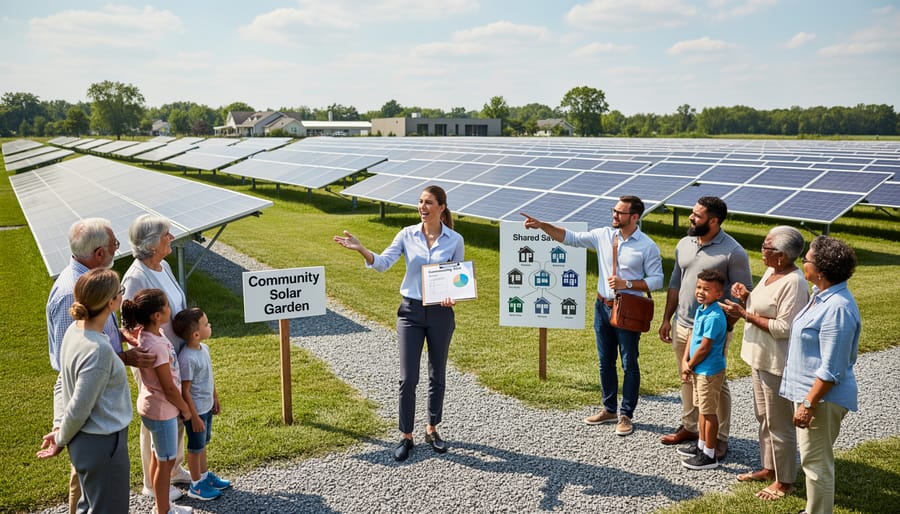
Subscribers typically enroll through a developer’s online portal or direct contact, selecting a subscription size, often expressed in kilowatts (kW) of capacity or as a percentage of the array’s total output. A 2 kW subscription, for example, entitles you to credits generated by that portion of the installation, while a 10% share allocates a tenth of the project’s production to your account. Contracts specify the subscription term (commonly one to twenty years), the credit rate per kilowatt-hour, cancellation policies, and any upfront or recurring fees. Some programs offer month-to-month flexibility; others require multi-year commitments in exchange for locked-in discount rates. The developer or utility calculates your allocated subscriber generation each billing cycle and applies corresponding credits to your utility bill. Read the contract closely: confirm how credits adjust if the array underperforms, whether fees escalate annually, and what penalties apply if you move or exit early. Transparent agreements spell out these terms in plain language rather than burying them in fine print.
How Billing Credits Are Applied
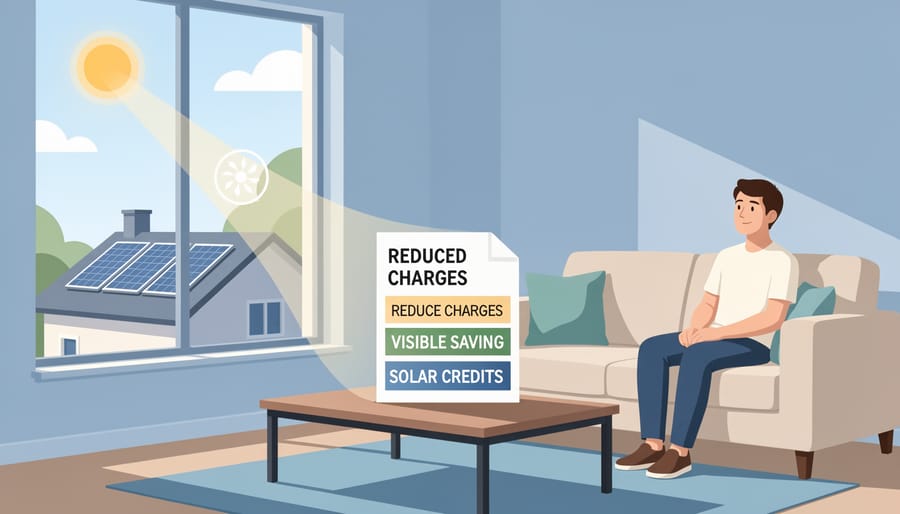
Community solar subscribers receive credits for off-site solar production through virtual net metering, which allocates a portion of the array’s energy generation to each participant’s utility bill. When the shared solar facility produces electricity, the utility calculates your subscription share and applies it as a monetary credit, typically appearing as a line item labeled “Community Solar Credit” or “Solar Garden Adjustment” on your monthly statement.
The credit rate usually ranges from 10% to 20% below the retail electricity rate, though this varies by state regulation and program structure. Your subscription fee then appears as a separate charge, also itemized on the bill. The net effect should be a reduction in your total payment.
Some programs apply credits as kilowatt-hour offsets rather than dollar amounts, reducing your metered consumption before rate calculations. Either way, the math is straightforward: total credit minus subscription cost equals your monthly savings. You remain a regular utility customer, with community solar functioning as an additional billing layer rather than a replacement service.
Different Models of Community Solar
Utility-Sponsored Programs
Utility-sponsored community solar programs are owned and operated directly by electric utilities, offering subscribers a streamlined path to solar participation. These programs typically feature straightforward enrollment processes through the utility’s existing customer portal, fixed subscription terms, and standardized billing credit structures. Because utilities manage all aspects, from array development to credit allocation, subscribers face minimal administrative complexity and benefit from the utility’s regulatory oversight and financial stability.
However, this convenience comes with trade-offs. Utility-sponsored programs generally offer less contract flexibility, limited choice in subscription size, and savings rates set by utility tariffs rather than competitive market pricing. Exit terms are predetermined and non-negotiable. Subscribers also have no say in array location or technology specifications. For customers prioritizing simplicity and risk avoidance over maximized savings or customization, utility programs provide a legitimate, low-barrier entry to community solar with transparent governance under state public utility commission regulations.
Third-Party Developer Programs
Third-party developers represent the most common community solar model in deregulated markets. Private solar companies finance, build, and maintain solar arrays on leased land or commercial rooftops, then sell subscriptions directly to residential and commercial customers. Unlike utility-sponsored programs, these developers compete on contract terms, pricing structures, and customer service.
Subscription agreements vary significantly. Some developers lock in fixed monthly fees with guaranteed percentage savings, while others tie payments to actual energy production with variable credits. Contract lengths typically range from one to twenty years. Exit clauses differ, some allow cancellation with 30-60 days’ notice, others impose early termination fees or require full contract buyouts.
Legitimate third-party programs operate under state renewable energy credits and must comply with public utility commission regulations. They handle all interconnection agreements, maintenance, and performance monitoring. Subscribers receive monthly statements showing energy allocation and bill credits without managing any physical infrastructure.
Nonprofit and Community-Owned Models
Nonprofit and community-owned models prioritize local control and equitable access over profit maximization. Solar co-ops and community-led solar gardens pool member investments to build shared arrays, with subscribers often holding ownership stakes or membership rights. These programs typically reinvest revenue into the community, offer income-qualified discounts, and involve residents in governance decisions. They tend to have longer development timelines but deliver stronger local benefits, transparent pricing, and alignment with community values. Because they operate as nonprofits or cooperatives rather than commercial ventures, these models emphasize education, participation, and social equity alongside energy savings.
Legitimacy Indicators: What to Look For
Evaluating a community solar program’s legitimacy requires scrutiny of several concrete markers. Start with regulatory status: reputable programs operate under state public utility commission approval and comply with local renewable energy mandates. Verify that the program is registered with your state’s community solar registry or appears on your utility’s list of approved projects. Programs tied to government incentives like federal tax credits or state renewable energy credits typically undergo stricter vetting and transparency requirements.
Contract transparency separates credible offerings from predatory schemes. A legitimate program provides written agreements detailing subscription terms, savings calculations, billing credit rates, contract duration, early exit clauses, and any fees upfront. The contract should specify exactly how credits appear on your utility bill and what happens if you move or the array underperforms. Red flags include verbal-only agreements, pressure to sign immediately, or documents that obscure key terms in dense legal language.
Assess the developer’s track record and financial stability. Established companies have completed projects you can verify through state databases, customer testimonials, and utility partnerships. Check for:
- State community solar program registration or public utility commission approval
- Contract terms clearly defining subscription costs, credit rates, duration, and exit conditions
- Developer history with completed, operational solar arrays and verifiable references
- No upfront fees (legitimate programs are typically no-cost to join, or clearly justify any enrollment charges)
- Third-party financing from recognized banks or solar investment firms, not opaque funding sources
- Customer reviews and complaints accessible through Better Business Bureau or state attorney general records
Realistic savings claims matter. Credible programs quote modest, achievable bill reductions based on actual energy production data and local utility rates, not inflated promises of 50% savings with no substantiation. Ask for sample bills showing how credits are applied, and compare the subscription rate to your current electricity cost. If savings projections seem too generous or lack supporting calculations, proceed cautiously. Legitimate developers welcome questions and provide detailed financial modeling to back their estimates.
Real-World Uses and Benefits
Community solar removes the barriers that keep millions of Americans from accessing solar energy directly. Renters and apartment residents, who comprise roughly one-third of U.S. households, cannot install rooftop panels on properties they don’t own, yet they can subscribe to a community array and receive monthly bill credits without any physical installation. Homeowners with shaded lots, north-facing roofs, or aging structures unsuitable for panel mounting gain the same opportunity to participate in solar generation through off-site subscriptions.
Low-to-moderate income households benefit significantly from targeted community solar programs designed to prioritize equity and affordability. Many states mandate that a percentage of community solar capacity be reserved for income-qualified subscribers, often with discounted rates or no upfront fees. This structure addresses why communities join forces to expand solar access beyond affluent homeowners with ideal roof conditions.
Businesses and municipalities use community solar to meet sustainability goals without dedicating land or roof space. A small business leasing office space can subscribe to a portion of a community array to offset electricity costs and demonstrate environmental commitment. Local governments subscribe to support renewable energy targets while reducing operational expenses across multiple facilities. Schools, nonprofits, and houses of worship similarly participate, aligning budgets with climate action.
The democratizing effect of solar power sharing extends beyond individual savings. By aggregating demand across diverse subscriber groups, community solar projects achieve economies of scale that lower per-kilowatt costs and accelerate renewable energy deployment in regions where distributed rooftop solar alone cannot meet clean energy adoption goals.
The Role of Education and Training in Community Solar
Building credible community solar programs requires trained professionals who understand both technical systems and community engagement. Education bridges the gap between policy frameworks and on-the-ground implementation, ensuring programs operate transparently and deliver promised benefits.
Community-Driven Solar Education and Training equips aspiring photovoltaic professionals with specialized skills in program design, regulatory compliance, and subscriber management. These programs teach participants how to structure fair subscription agreements, calculate accurate savings projections, navigate state-specific virtual net metering rules, and communicate complex billing mechanisms in plain language. Professionals trained in community solar administration become the front line of program legitimacy, preventing misleading claims and building trust with subscribers.
Mose Solar’s collaboration with universities demonstrates this approach by integrating community solar coursework into renewable energy curricula. Students learn to evaluate site feasibility for shared arrays, model subscriber allocation scenarios, and design outreach strategies that prioritize equity and accessibility. This academic foundation prepares graduates to work as program developers, policy advocates, or utility liaisons who can shepherd community solar projects from concept to reality while maintaining ethical standards and regulatory compliance.
Training also addresses customer engagement challenges unique to community solar. Unlike rooftop installations, these programs require ongoing subscriber communication about credit application, contract terms, and program performance. Educated professionals know how to explain these elements clearly, handle questions about early termination, and ensure subscribers understand exactly what they’re receiving. This transparency directly counters the confusion that fuels skepticism about community solar legitimacy.
As the sector expands, workforce development becomes critical infrastructure. Well-trained administrators and advocates protect program integrity and expand access to reliable renewable energy options.
Common Concerns and Red Flags
Most legitimate community solar programs operate transparently under state regulations, but the market does attract bad actors. Recognizing red flags protects you from scams and ensures you subscribe to a credible program that delivers real savings.
Warning Signs of Illegitimate Programs
High-pressure sales tactics are an immediate red flag. Legitimate developers give you time to review contracts and ask questions. If a sales rep insists you must sign today to lock in savings or claims limited slots that will disappear, walk away. Similarly, avoid programs that request large upfront payments or enrollment fees, most established community solar subscriptions have minimal or no joining costs, with savings appearing as monthly bill credits.
Exaggerated savings claims deserve scrutiny. A program promising you’ll cut your electric bill by 50% or eliminate it entirely is almost certainly misleading. Realistic community solar discounts typically range from 5% to 15% on the portion of your bill covered by solar credits. Ask for a sample bill illustration and verify the math yourself.
Unclear or missing exit clauses trap subscribers in unfavorable terms. Before signing, confirm the cancellation policy in writing: how much notice you must give, whether early termination fees apply, and under what circumstances you can leave without penalty. Reputable programs specify these details upfront.
Vague contract language about fees is another concern. Read the fine print for administrative fees, transmission charges, or escalating subscription rates that erode savings over time. A trustworthy program itemizes all costs and explains how credits are calculated, leaving no room for surprise charges.
Finally, unverified developers operating without regulatory oversight pose risks. Check whether the program is registered with your state’s public utility commission or authorized under a community solar statute. Search the developer’s name for complaints with the Better Business Bureau or state consumer protection offices.
Are community solar scams common?
Outright scams are rare in regulated markets, but misleading sales practices and unfavorable contracts do occur. Verify the developer’s credentials and regulatory status before subscribing.
What fees should I expect in a legitimate program?
Most programs charge no upfront enrollment fee. Monthly subscription costs appear as a line item on your bill, offset by solar credits. Administrative fees above a few dollars per month are uncommon.
Can I cancel my community solar subscription?
Yes, but terms vary. Look for contracts allowing cancellation with 30 to 60 days’ notice and minimal or no early termination fees. Avoid programs that lock you in for years without an exit option.
How do I verify a developer is legitimate?
Check the developer’s registration with your state’s utility commission, review their track record with existing projects, and search for customer complaints or regulatory actions.
If your utility bill doesn’t show expected credits within the first billing cycle or two, contact both the program administrator and your utility immediately. Delays can result from enrollment processing, but persistent missing credits indicate a problem requiring resolution. Document all communications and escalate to your state’s public utility commission if the issue isn’t resolved promptly.
Trust your instincts. If a program’s promises sound too good, its contract feels opaque, or the sales approach feels coercive, move on. Dozens of reputable community solar options exist in most states with active markets, so you don’t need to settle for a questionable offer.
Community solar is unquestionably legitimate when you choose programs that meet clear regulatory standards and transparency benchmarks. State-regulated frameworks, verifiable developers, and straightforward billing agreements distinguish credible offerings from questionable schemes. The subscription model has proven itself across thousands of installations nationwide, delivering measurable savings to renters, homeowners, and businesses who lack viable rooftop options.
Your confidence in community solar grows with knowledge. Understanding how virtual net metering works, recognizing standard contract terms, and evaluating developer credentials transform you from a skeptical prospect into an informed participant. Education matters equally for professionals entering this field, rigorous training in program design, policy frameworks, and customer engagement ensures the industry maintains high standards and expands access responsibly.
Mose Solar’s collaboration with universities exemplifies how education strengthens the entire ecosystem. Aspiring photovoltaic professionals trained in community solar administration and advocacy become the architects of transparent, equitable programs that serve diverse communities effectively.
Approach community solar with informed optimism rather than blanket skepticism. Verify credentials, read contracts carefully, confirm regulatory approval, and ask pointed questions about savings calculations and exit terms. When programs meet these standards, community solar delivers on its promise: democratized access to clean energy and tangible financial benefits without the barriers of ownership.