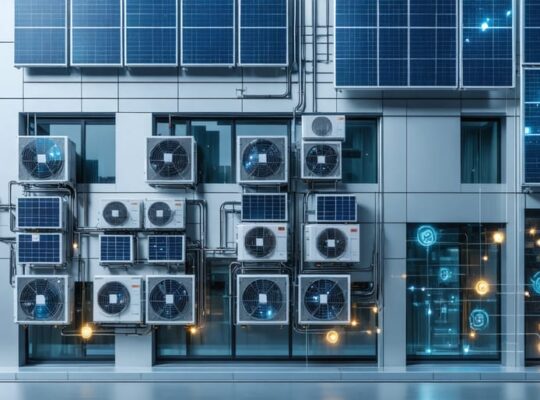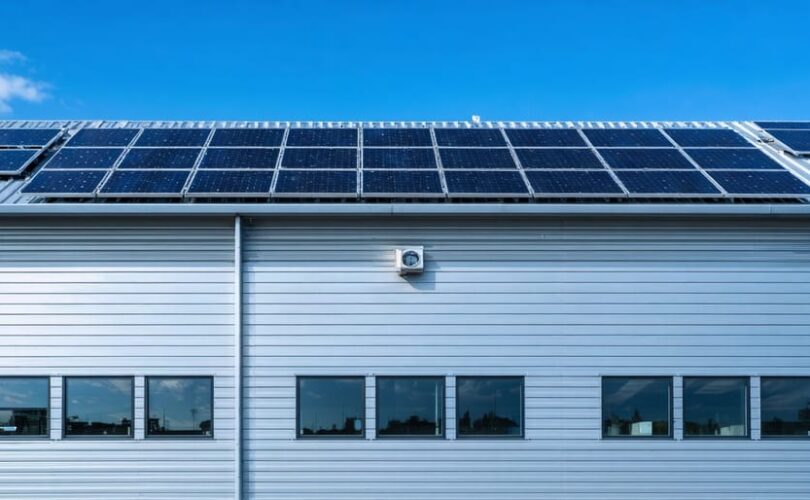
Modernizing metal buildings with retrofit insulation delivers critical energy efficiency gains and optimal conditions for solar PV retrofits. Advanced insulation systems, when properly integrated during building upgrades, reduce HVAC loads by up to 40% while extending the structural lifespan of metal facilities. This dual-benefit approach not only maximizes return on investment through decreased energy consumption but also creates ideal temperature conditions for photovoltaic system performance. Recent advances in retrofit insulation materials, including reflective barriers and spray-applied solutions, have revolutionized the upgrade process for existing metal structures, making it possible to achieve modern energy efficiency standards without complete rebuilding. For facility managers and building owners pursuing sustainable improvements, understanding the synergy between proper insulation and renewable energy integration has become essential for maximizing both immediate cost savings and long-term environmental benefits.
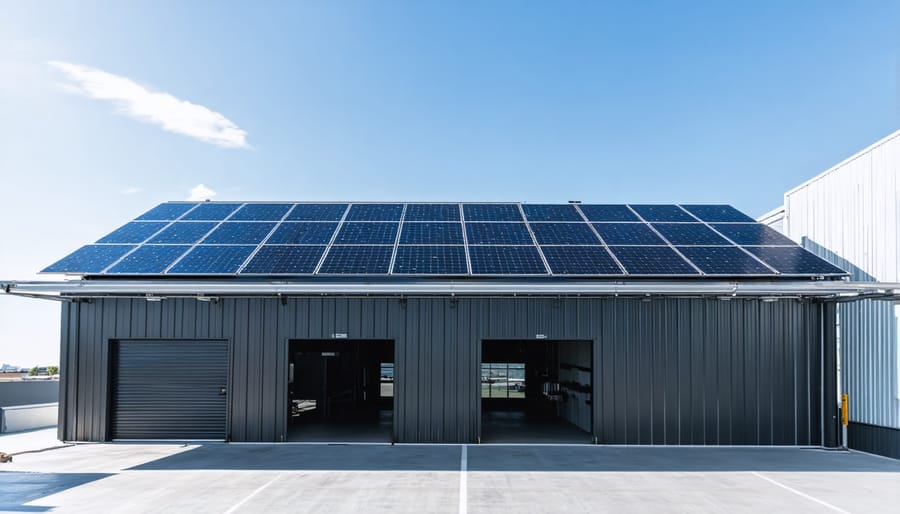
Understanding Metal Building Retrofit Challenges
Thermal Performance Barriers
Metal buildings present unique thermal performance challenges that directly impact photovoltaic system efficiency. The primary concern stems from the high thermal conductivity of metal structures, which can lead to significant heat transfer between the exterior and interior environments. This thermal bridging occurs when metal fasteners, purlins, and structural components create direct pathways for heat movement, bypassing traditional insulation materials.
During summer months, metal surfaces can reach temperatures exceeding 180°F (82°C), dramatically increasing the operating temperature of roof-mounted PV panels. This elevated temperature reduces solar panel efficiency by approximately 0.4% for every degree Celsius rise above optimal operating conditions. Conversely, winter heat loss through metal structures can create condensation issues that potentially damage both insulation materials and electrical components.
Effective thermal barriers must address both conductive and radiative heat transfer. Advanced insulation solutions incorporating thermal breaks, reflective surfaces, and proper air gaps can significantly reduce these thermal performance issues. When properly implemented, these barriers can help maintain more stable temperatures, ultimately preserving PV system efficiency and extending equipment lifespan.
Structural Considerations
When retrofitting metal buildings with insulation for PV integration, careful assessment of the structure’s load-bearing capacity is essential. The additional weight of insulation materials and potential snow loads must be evaluated to ensure the building can safely support these modifications. Structural engineers should verify that the existing purlins, rafters, and columns can accommodate the combined weight of both the insulation system and solar panels.
Key structural considerations include the evaluation of connection points between existing metal panels and new insulation materials. These connections must maintain their integrity while allowing for thermal expansion and contraction. The installation method should not compromise the building’s vapor barrier or create thermal bridges that could reduce insulation effectiveness.
Wind uplift resistance is another critical factor, particularly for buildings in high-wind zones. The insulation system must be properly secured to prevent displacement or damage during adverse weather conditions. Additionally, fire resistance ratings and building code compliance must be maintained throughout the retrofit process. Regular structural inspections during and after installation ensure long-term safety and performance of both the insulation system and the integrated PV components.
Insulation Solutions for PV Retrofits
Modern Insulation Materials
Modern metal building retrofits benefit from a range of advanced insulation materials designed for superior thermal performance optimization. Closed-cell spray polyurethane foam (ccSPF) leads the market with its exceptional R-value per inch and ability to create an air-tight barrier. This material effectively seals gaps and penetrations while providing structural reinforcement to the building envelope.
Multi-layer reflective insulation systems combine multiple layers of reflective films with enclosed air spaces, offering excellent thermal resistance in a compact profile. These systems are particularly effective in metal buildings where space constraints exist between the exterior cladding and interior finish.
Vacuum insulated panels (VIPs) represent the cutting edge of insulation technology, achieving R-values up to R-50 per inch. While their cost currently limits widespread adoption, VIPs are ideal for specific applications where maximum thermal resistance is required in minimal thickness.
Aerogel-based blankets and boards provide superior thermal performance in thin profiles, making them suitable for retrofit applications with limited space. Their hydrophobic nature and flexibility make them particularly valuable in metal building applications where condensation control is crucial.
Phase change materials (PCMs) integrated into traditional insulation offer dynamic thermal management, absorbing excess heat during peak temperatures and releasing it when needed, contributing to more stable interior environments and improved energy efficiency.
Installation Methods
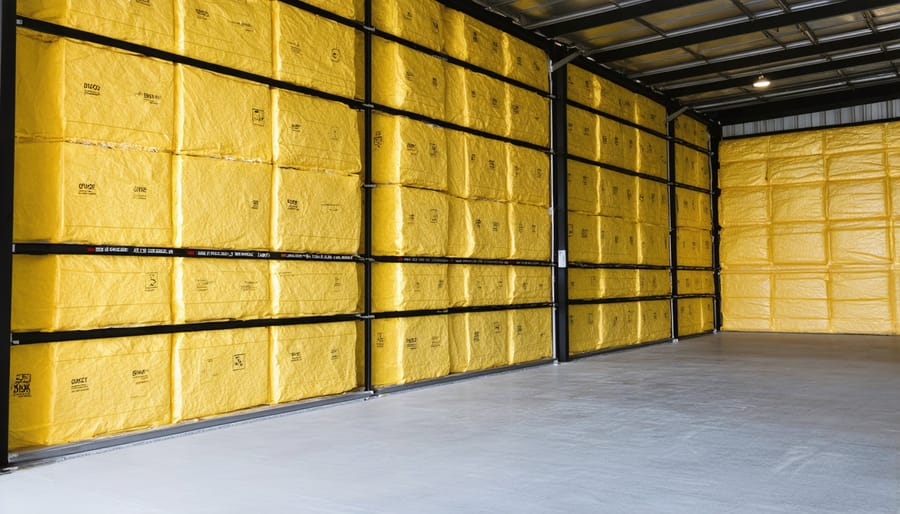
The installation of retrofit insulation in metal buildings requires careful attention to detail and proper sequencing. Begin by thoroughly inspecting the existing structure, identifying any damage or moisture issues that need addressing before installation. Clear the interior space and ensure proper safety equipment is in place, including fall protection when working at heights.
Start the installation from the roof purlins, working downward. First, install the proper support systems, such as banding or straps, running perpendicular to the purlins at specified intervals. These will hold the insulation in place and provide the necessary tension for proper installation.
Next, roll out the insulation material between the purlins, ensuring it maintains consistent thickness and complete coverage. Pay special attention to areas around penetrations, such as pipes or electrical conduits, using proper sealing techniques to maintain the vapor barrier’s integrity.
Install the facing material (typically white vinyl) below the insulation, pulling it taut to create a smooth appearance. Secure the facing using appropriate fasteners and trim pieces, ensuring all seams are properly sealed. For wall installations, follow a similar process, working from top to bottom while maintaining proper alignment.
Critical attention must be paid to thermal breaks and vapor barriers throughout the installation process. Proper sealing at all joints and penetrations is essential to prevent air leakage and maintain insulation effectiveness. Complete the installation by adding any necessary trim pieces and conducting a final inspection to ensure all components are properly secured.
Performance Metrics
The effectiveness of metal building retrofit insulation is primarily measured through R-value performance metrics, which indicate the material’s thermal resistance capabilities. For metal building applications, retrofit insulation typically achieves R-values ranging from R-11 to R-30, depending on the installation method and materials selected. Higher R-values correlate directly with improved thermal performance and enhanced energy efficiency.
Beyond thermal resistance, key performance indicators include air infiltration reduction, typically measured in air changes per hour (ACH). Quality retrofit installations can reduce air infiltration by 30-50%, significantly improving building envelope performance. Moisture control effectiveness is quantified through vapor permeance ratings, with successful installations maintaining levels below 1.0 perms to prevent condensation issues.
Temperature differential measurements across the building envelope provide concrete evidence of insulation effectiveness. Well-executed retrofit installations commonly demonstrate a 15-20°F reduction in temperature fluctuation between interior and exterior surfaces. This stabilization directly impacts HVAC efficiency and creates optimal conditions for Building-Integrated PV system operation.
Sound transmission class (STC) ratings often improve by 5-10 points post-retrofit, offering additional benefits beyond thermal performance. When evaluated alongside energy consumption data, properly installed retrofit insulation systems typically deliver 20-30% reductions in heating and cooling costs, establishing clear performance benchmarks for project success.
Integration with Solar PV Systems
Temperature Management
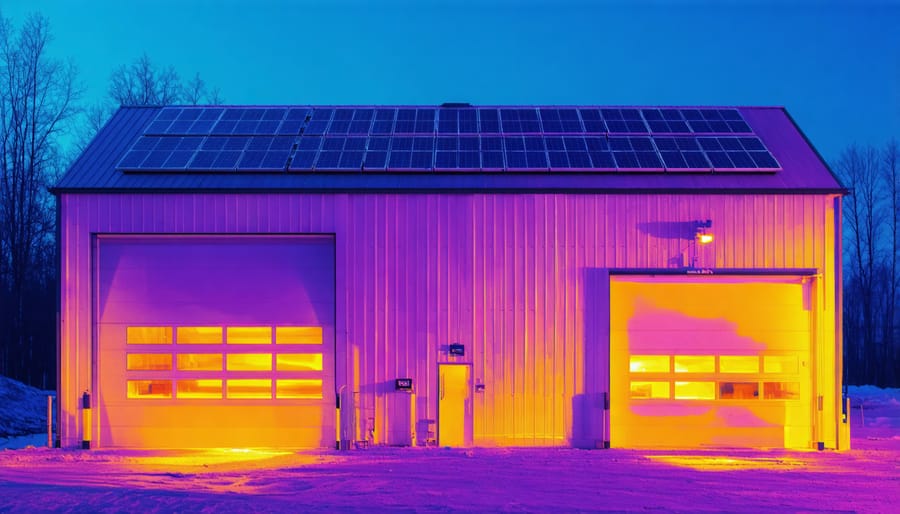
Proper insulation plays a crucial role in maintaining optimal operating temperatures for photovoltaic systems installed on metal buildings. PV panels experience a significant decrease in efficiency when operating at elevated temperatures, typically losing 0.3% to 0.5% in power output for every degree Celsius increase above their rated temperature.
Retrofit insulation helps regulate temperature by creating a thermal barrier between the metal building’s exterior and interior environments. This barrier reduces heat transfer through the building envelope, preventing excessive heat buildup in the space where PV components are installed. The insulation’s thermal resistance (R-value) directly impacts its ability to maintain stable temperatures, with higher R-values providing better temperature control.
During summer months, properly installed retrofit insulation can reduce roof surface temperatures by up to 30°C compared to uninsulated metal roofs. This temperature reduction helps maintain PV cell efficiency and extends the lifespan of system components. In winter, the insulation prevents heat loss and reduces the risk of condensation, which could otherwise compromise electrical connections and system performance.
The type and thickness of insulation material should be selected based on local climate conditions and specific temperature management requirements. Materials like fiberglass, mineral wool, or spray foam can be effectively utilized, with each offering different temperature control characteristics and installation considerations for optimal PV system performance.
Energy Efficiency Synergies
The integration of proper insulation with photovoltaic systems creates a powerful synergy that maximizes both energy efficiency and renewable energy generation. When metal buildings are retrofitted with high-performance insulation, the reduced thermal load directly impacts the effectiveness of rooftop solar installations. This complementary relationship manifests in several key ways.
First, improved insulation reduces the building’s overall energy demand, allowing a smaller PV system to meet a larger percentage of the facility’s energy needs. The decreased cooling load in summer months particularly benefits PV performance, as solar panels operate more efficiently at lower temperatures. The insulation helps maintain stable interior temperatures, reducing the heat transfer that can diminish PV output.
From an investment perspective, combining insulation retrofits with PV installations often leads to better financial returns than implementing either solution independently. The reduced energy consumption from proper insulation means shorter payback periods for solar installations, while the renewable energy generation further enhances the building’s overall energy cost savings.
Studies have shown that buildings with both optimized insulation and PV systems can achieve energy reductions of 40-60% compared to standard construction. This dual approach also provides year-round benefits: insulation offers consistent energy savings regardless of weather conditions, while PV systems generate maximum output during peak cooling seasons when buildings typically consume the most energy.
Furthermore, the combination supports green building certification requirements and demonstrates a comprehensive commitment to sustainability, often qualifying projects for additional incentives and tax benefits.
Cost-Benefit Analysis
ROI Calculations
Calculating the ROI for metal building retrofit insulation involves analyzing both initial costs and long-term savings. The basic formula is: ROI = (Net Energy Savings – Installation Cost) / Installation Cost × 100%. For a typical 10,000-square-foot metal building, installation costs range from $2-4 per square foot, depending on insulation type and labor rates.
Energy savings calculations should consider:
– Annual heating/cooling cost reduction (typically 20-30%)
– Reduced HVAC maintenance expenses
– Increased solar PV system efficiency (3-5% improvement)
– Utility rebates and tax incentives
– Extended equipment lifespan
Example calculation:
Initial cost: $30,000
Annual energy savings: $7,500
HVAC maintenance reduction: $1,000/year
PV efficiency gains: $1,200/year
Total annual benefit: $9,700
With these figures, the simple payback period is approximately 3.1 years, with an ROI of 32.3% annually. Most metal building retrofit insulation projects achieve complete return on investment within 2-4 years, making them highly cost-effective improvements for building owners considering integrated solar solutions.
Energy Savings Projections
Recent studies indicate that metal building retrofit insulation can yield significant energy savings, with documented reductions in heating and cooling costs ranging from 25% to 40% annually. According to Department of Energy data, properly installed retrofit insulation systems can decrease energy consumption by an average of 30 kWh per square foot per year in commercial metal buildings.
Financial projections demonstrate that facility owners can expect ROI within 3-5 years through reduced HVAC operating costs. A comprehensive analysis of 50 retrofitted industrial facilities showed average annual energy savings of $0.75-$1.25 per square foot, with variations based on climate zone and building usage patterns.
Temperature regulation improvements from retrofit insulation directly impact HVAC efficiency, with documented reductions in peak cooling loads by 20-30% and heating loads by 30-45%. This translates to approximately $2-$3 per square foot in cumulative savings over a 10-year period, accounting for current energy prices and typical inflation rates.
For buildings integrating solar PV systems, enhanced insulation contributes to optimal panel performance by maintaining more stable internal temperatures, potentially increasing overall system efficiency by 5-8%.
Retrofitting metal buildings with proper insulation plays a crucial role in optimizing Building-Integrated Photovoltaic systems while enhancing overall energy efficiency. Through careful consideration of materials, installation methods, and system integration, facility managers can significantly improve their building’s performance and PV system output.
The key takeaways from this analysis demonstrate that successful metal building retrofit insulation requires a systematic approach, beginning with a comprehensive building assessment and ending with proper maintenance protocols. The combination of appropriate insulation materials, professional installation, and integration with existing building systems creates a foundation for maximized energy savings and improved PV system efficiency.
To implement these solutions effectively, building owners should:
1. Conduct a thorough energy audit and building envelope assessment
2. Consult with qualified insulation contractors and solar professionals
3. Develop a detailed implementation plan that accounts for budget constraints
4. Choose appropriate insulation materials based on climate and building requirements
5. Schedule installation during optimal weather conditions
6. Establish a maintenance and monitoring program
By following these guidelines and working with experienced professionals, facility managers can ensure their metal building retrofit insulation project delivers optimal results. Remember that proper insulation not only enhances PV system performance but also contributes to significant long-term energy savings and improved occupant comfort. Consider consulting with certified energy professionals to develop a customized solution that addresses your specific building requirements and performance goals.