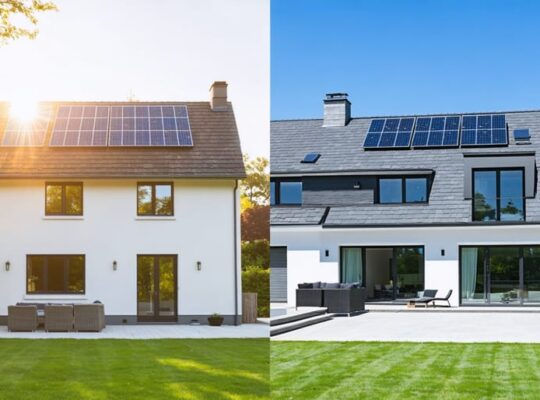
Structural Insulated Panels (SIPs) revolutionize modern construction by delivering exceptional R-values ranging from R-14 to R-28 per inch, significantly outperforming traditional frame construction methods. When integrated with building-integrated photovoltaic systems, these high-performance panels create an energy-efficient envelope that optimizes both insulation and power generation capabilities. The expanded polystyrene (EPS) core, sandwiched between oriented strand board (OSB) facing, creates a continuous insulation barrier that eliminates thermal bridging—a common efficiency loss point in conventional building methods. This advanced building technology not only meets but exceeds increasingly stringent energy codes while providing structural integrity and reducing construction time by up to 50% compared to traditional framing methods. Understanding SIP R-values is crucial for architects, builders, and energy consultants seeking to maximize building performance and achieve net-zero energy goals through innovative construction solutions.
Understanding R-Values in Structural Insulated Panels

What R-Value Means for BIPV
The R-value plays a crucial role in determining the effectiveness of building-integrated PV insulation systems. Higher R-values contribute to better thermal resistance, which directly impacts photovoltaic cell performance and overall system efficiency. When BIPV panels are properly insulated, they maintain more stable operating temperatures, leading to improved energy conversion rates and extended system longevity.
Research indicates that optimal R-values help regulate temperature fluctuations that can affect solar cell efficiency. For every degree Celsius increase above optimal operating temperature, photovoltaic efficiency typically decreases by 0.4-0.5%. By incorporating appropriate insulation values, BIPV systems can maintain peak performance even during extreme weather conditions.
The relationship between R-value and BIPV performance also extends to the building’s overall energy profile. Proper insulation reduces the cooling load during summer months and heat loss during winter, creating a synergistic effect where both the building’s energy efficiency and solar power generation are optimized. This dual benefit makes R-value consideration essential for maximizing return on investment in BIPV installations.
Common R-Values in SIP Construction
Structural Insulated Panels (SIPs) typically offer R-values ranging from R-14 to R-58, depending on the panel thickness and core material composition. Standard 4.5-inch SIP walls with expanded polystyrene (EPS) cores provide R-values of approximately R-15 to R-16, while 6.5-inch panels achieve R-23 to R-24. Thicker 8.25-inch and 10.25-inch panels can reach R-32 and R-40 respectively.
Panels utilizing polyisocyanurate or extruded polystyrene cores generally deliver higher R-values per inch compared to EPS. For instance, a 6.5-inch polyisocyanurate-core SIP can achieve R-26 to R-28. Roof applications often require higher insulation values, with common configurations ranging from R-29 to R-58 using panels between 8.25 and 12.25 inches thick.
These R-values remain stable over time due to the continuous insulation design of SIPs, unlike traditional fiberglass insulation which can settle or compress. The consistent thermal performance makes SIPs particularly effective for building-integrated photovoltaic applications, where temperature management directly impacts system efficiency.
SIP Integration with Photovoltaic Systems
Mounting Systems and Thermal Bridges
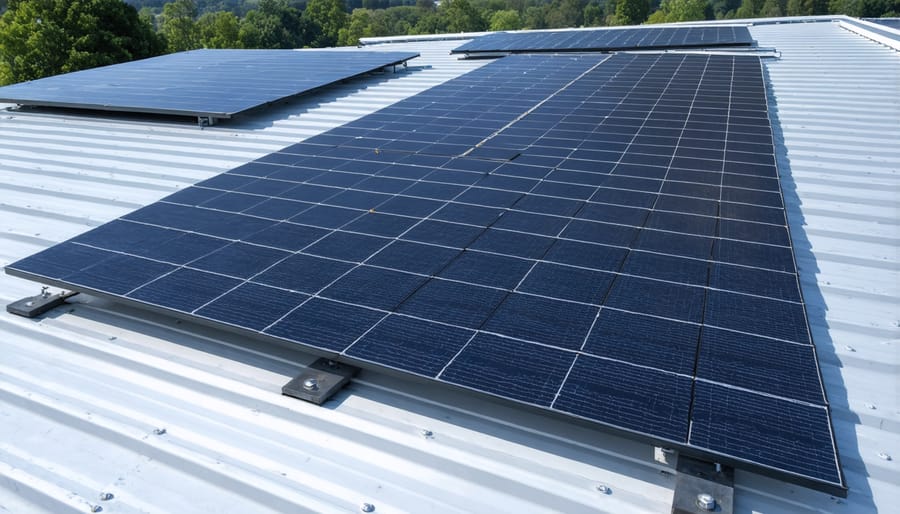
Proper mounting systems for structural insulated panels are crucial for maintaining their intended R-value and preventing thermal bridging. When installing metal SIPs, particular attention must be given to connection points and fastening methods to preserve the thermal envelope integrity.
To minimize thermal bridges, installers should implement continuous insulation at panel joints and utilize thermal breaks at mounting points. Strategic placement of vapor barriers and proper sealing techniques prevent moisture infiltration that could compromise insulation performance. Specialized mounting brackets designed specifically for SIPs help maintain the thermal barrier while providing secure attachment points.
Common thermal bridge prevention methods include:
– Using thermally broken fasteners
– Implementing continuous insulation at panel joints
– Installing compression gaskets at connection points
– Utilizing specialized SIP tape at seams
– Incorporating structural thermal breaks at load-bearing points
Modern mounting systems often feature innovative designs that distribute loads evenly while minimizing penetrations through the insulation layer. This approach helps maintain the panel’s high R-value performance while ensuring structural integrity. Regular thermal imaging inspections can verify the effectiveness of these mounting solutions and identify any potential weak points in the thermal envelope.
Temperature Management Benefits
Structural Insulated Panels (SIPs) play a crucial role in managing temperatures for photovoltaic (PV) systems, offering significant benefits for overall system performance and longevity. The superior insulation properties of SIPs help maintain optimal operating temperatures for PV modules by reducing heat transfer between the exterior and interior environments.
PV systems operate most efficiently within specific temperature ranges, typically between 15-35°C (59-95°F). When temperatures exceed these parameters, module efficiency can decrease by 0.3-0.5% per degree Celsius increase. SIPs help mitigate this issue by providing consistent thermal regulation, preventing excessive heat buildup in summer and heat loss in winter.
The high R-value of SIPs contributes to temperature stability in several ways. First, the continuous insulation layer minimizes thermal bridging, reducing hot spots that can affect PV performance. Second, the panels’ airtight construction prevents unwanted air infiltration, which could otherwise create temperature fluctuations. Third, the foam core’s thermal mass properties help dampen temperature swings throughout the day.
This temperature management capability extends beyond immediate PV performance benefits. By maintaining more stable temperatures, SIPs help reduce thermal stress on system components, potentially extending the operational lifespan of PV modules and associated equipment. Additionally, the improved thermal environment can lead to reduced cooling loads in summer and heating requirements in winter, further enhancing the overall energy efficiency of the building-integrated PV system.
Performance Optimization
Climate-Specific Considerations
The effectiveness of structural insulated panels’ R-value varies significantly across different climate zones, requiring careful consideration during the design phase. In cold climates, higher R-values are essential to prevent heat loss and maintain comfortable indoor temperatures. Northern regions typically require SIPs with R-values ranging from R-40 to R-60 for optimal performance, particularly in areas experiencing prolonged sub-zero temperatures.
Conversely, in hot climates, SIPs play a crucial role in preventing heat gain and reducing cooling costs. Regions with high solar exposure benefit from panels rated between R-30 and R-40, which effectively maintain thermal stability while supporting building-integrated photovoltaic systems.
Coastal areas present unique challenges due to high humidity levels and salt exposure. In these environments, SIPs must not only provide adequate insulation but also resist moisture penetration. Manufacturers often recommend specialized moisture barriers and higher-density core materials for coastal applications.
Temperature fluctuations in transitional climate zones require balanced R-values, typically ranging from R-35 to R-45. These values offer year-round performance by providing sufficient insulation during both heating and cooling seasons. Local building codes and energy efficiency standards often specify minimum R-value requirements based on climate zone classifications, ensuring appropriate insulation levels for specific geographical locations.

Energy Efficiency Calculations
The energy efficiency of structural insulated panels can be calculated using several established methods that consider both thermal resistance and overall system performance. The primary calculation involves determining the effective R-value by analyzing the panel’s core material thickness, facing materials, and thermal bridging effects. The formula R = L/k, where L represents thickness and k represents thermal conductivity, serves as the foundation for these calculations.
For comprehensive system evaluation, practitioners must account for the parallel path method, which considers heat flow through different panel components. This includes factoring in the isothermal planes method for more accurate results in complex assemblies. When integrating with building-integrated photovoltaic systems, additional considerations for maximizing PV panel efficiency become crucial.
The overall thermal performance calculation must include:
– Core material R-value per inch
– Facing material contribution
– Air film resistances
– Joint and connection effects
– Temperature differential factors
Industry professionals typically use specialized software tools that incorporate these variables while adhering to ASTM C1363 standards for thermal performance testing. These calculations provide the basis for determining energy savings and system optimization in real-world applications.
Structural Insulated Panels (SIPs) represent a significant advancement in building envelope technology, offering exceptional R-values that contribute to superior energy efficiency and sustainable construction practices. Through our comprehensive analysis, we’ve established that SIPs typically provide R-values ranging from R-14 to R-40, depending on panel thickness and composition, substantially outperforming many traditional insulation methods.
For optimal results in building-integrated photovoltaic (BIPV) applications, we recommend selecting SIPs with R-values of R-25 or higher for walls and R-40 or higher for roofing systems. This ensures maximum thermal efficiency while supporting the integration of solar technologies. When implementing SIPs in your construction project, consider working with certified manufacturers who can provide detailed performance documentation and installation guidance.
To maximize the benefits of SIP installation, we advise:
– Conducting thorough energy modeling during the design phase
– Ensuring proper sealing at all panel joints and connections
– Implementing regular maintenance inspections
– Coordinating with BIPV system designers for optimal integration
The evidence clearly demonstrates that SIPs offer a superior solution for achieving high-performance building envelopes. By combining excellent R-values with structural integrity and ease of installation, SIPs provide an ideal foundation for energy-efficient buildings and renewable energy systems. When properly specified and installed, these panels contribute significantly to reduced energy consumption, improved comfort, and enhanced building sustainability.