Unlock the power of renewable energy with our comprehensive textbook, guiding you from fundamental concepts to practical applications. Whether you’re an aspiring photovoltaic professional, a renewable energy enthusiast, or an industry stakeholder, this authoritative resource provides the in-depth knowledge you need to excel in the field. Collaborating with leading universities and offering educational programs, Mose Solar brings together cutting-edge research and real-world expertise to deliver a clear, concise, and informative learning experience. Dive into the fascinating world of solar PV and discover how you can contribute to a cleaner, greener future. Empower yourself with the tools to make a difference as you explore the limitless potential of renewable energy.
Solar PV Fundamentals
Solar Radiation
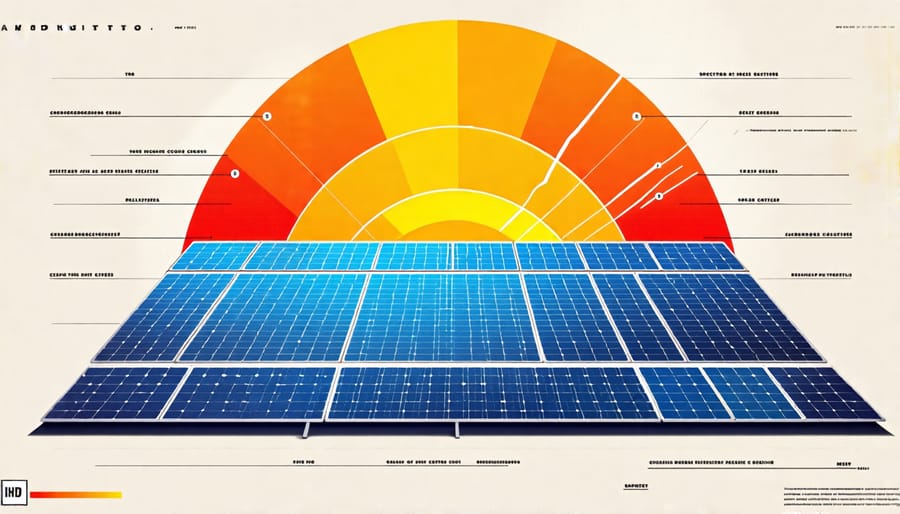
Solar radiation, the energy emitted by the sun, is the cornerstone of photovoltaic (PV) energy production. The amount of solar radiation reaching the Earth’s surface varies depending on factors such as geographic location, time of day, and weather conditions. PV systems harness this radiation using solar panels, which convert sunlight directly into electricity through the photovoltaic effect. The intensity and duration of solar radiation significantly impact the efficiency and output of PV systems. Understanding the characteristics and patterns of solar radiation is crucial for designing, installing, and maintaining effective PV systems. By carefully considering solar radiation data, PV professionals can optimize system performance, maximize energy yield, and contribute to the growth of renewable energy solutions. As the demand for clean energy increases, knowledge of solar radiation and its role in PV energy production becomes increasingly valuable for aspiring professionals and stakeholders in the renewable energy sector.
Semiconductors and the PV Effect
Semiconductors, such as silicon, play a crucial role in the operation of photovoltaic (PV) cells. These materials possess unique electrical properties that enable the photovoltaic effect, which is the foundation of solar energy conversion. When light strikes a semiconductor, it can excite electrons from the valence band to the conduction band, creating electron-hole pairs. This process generates an electrical current that can be harnessed as usable energy.
In a PV cell, the semiconductor material is typically doped with impurities to create a p-n junction. The p-type region contains an excess of holes (positive charges), while the n-type region has an excess of electrons (negative charges). When light photons with sufficient energy are absorbed by the semiconductor, electrons are freed from their atomic bonds and can flow through an external circuit, generating electricity.
The efficiency of a PV cell depends on various factors, including the semiconductor material’s bandgap, which determines the range of light wavelengths that can be effectively absorbed. Silicon, the most commonly used semiconductor in PV cells, has a bandgap that allows it to absorb a significant portion of the solar spectrum. However, researchers are continually exploring new materials and techniques to improve the efficiency and cost-effectiveness of PV cells.
By understanding the role of semiconductors and the photovoltaic effect, professionals in the solar energy industry can optimize the design and performance of PV systems. This knowledge is essential for developing more efficient and affordable solar energy solutions that can contribute to a sustainable future.
Solar PV Cell Technologies
Monocrystalline and Polycrystalline Cells
Monocrystalline and polycrystalline PV cells are two primary types of silicon-based solar cells used in photovoltaic panels. While both convert sunlight into electricity, they differ in their manufacturing process, appearance, and performance characteristics. Monocrystalline PV cells are made from a single, continuous crystal of silicon, resulting in a uniform dark color and rounded edges. They typically exhibit higher efficiency rates, ranging from 17-22%, due to their purer silicon composition. However, the complex manufacturing process makes them more expensive than their polycrystalline counterparts.
On the other hand, polycrystalline PV cells are composed of multiple silicon fragments melted together, giving them a distinctive blue hue and a speckled appearance. Although they have slightly lower efficiency rates of 13-16%, they are more affordable and have a lower heat tolerance than monocrystalline PV cells. The choice between monocrystalline and polycrystalline PV cells depends on factors such as budget, available space, and desired efficiency. Monocrystalline cells are ideal for limited-space applications that demand high efficiency, while polycrystalline cells offer a cost-effective solution for larger installations where space is less constrained.
Thin-Film and Emerging PV Technologies
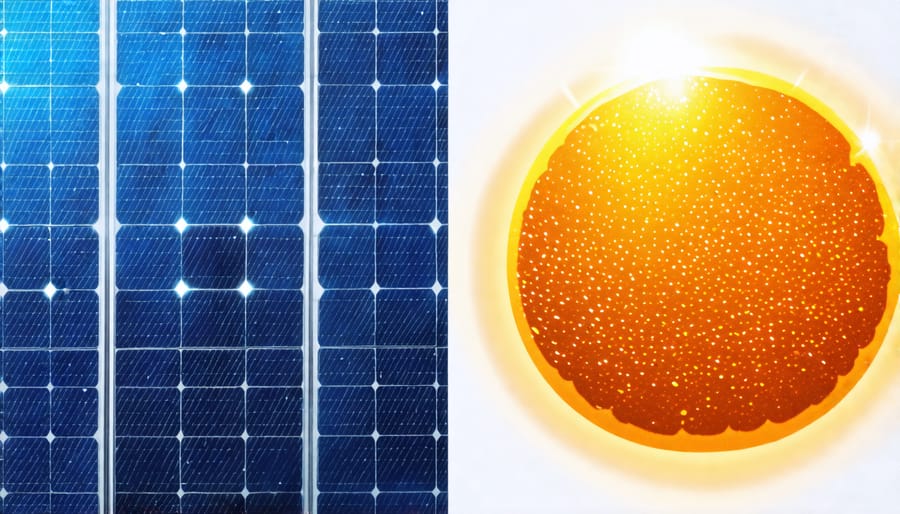
Thin-film photovoltaic (PV) cells are an emerging technology that offers several advantages over traditional crystalline silicon PV cells. These cells are made by depositing one or more thin layers of photovoltaic material on a substrate, such as glass, plastic, or metal. The thickness of these layers ranges from a few nanometers to tens of micrometers, which is much thinner than conventional silicon wafers. This reduction in material usage leads to lower production costs and allows for more flexible and lightweight PV modules.
Several types of thin-film PV technologies exist, including amorphous silicon (a-Si), cadmium telluride (CdTe), and copper indium gallium selenide (CIGS). While the efficiency of thin-film PV cells is generally lower than that of crystalline silicon cells, they perform better under low light conditions and high temperatures. This makes them suitable for applications such as building-integrated photovoltaics (BIPV), where solar cells are incorporated into building elements like windows, skylights, and facades.
Promising emerging PV technologies include perovskite solar cells, organic photovoltaics (OPV), and quantum dot solar cells. Perovskite cells have shown rapid efficiency improvements in recent years, with some lab-scale devices achieving efficiencies comparable to crystalline silicon. OPV cells use conductive organic polymers or small organic molecules to absorb light and generate electricity. They offer the potential for low-cost, eco-friendly production and can be made into flexible, semi-transparent modules. Quantum dot solar cells utilize nanoscale semiconductor crystals to capture a wider range of the solar spectrum, potentially boosting efficiency. As research continues, these emerging technologies may soon compete with established PV solutions, driving further innovation in the solar energy sector.
PV Modules and Systems
PV Modules and Arrays
Photovoltaic (PV) cells are the fundamental building blocks of solar power systems. To harness solar energy effectively, these cells are interconnected and assembled into larger units called PV modules. The process begins by connecting individual cells in series to increase the voltage output, while parallel connections are used to increase current. These cell strings are then laminated between layers of glass, encapsulant, and backsheet materials to form a weather-resistant and durable module. The number of cells and their arrangement within the module determine its power output and size. Multiple PV modules can be further connected in series and parallel configurations to create arrays, allowing for scalable power generation to meet specific energy demands. The array design considers factors such as shading, orientation, and electrical compatibility to optimize performance. Proper installation and wiring of modules and arrays ensure reliable and efficient operation of the PV system. As technology advances, innovations in cell efficiency, module materials, and array design continue to improve the cost-effectiveness and performance of solar power installations.
Balance of System Components
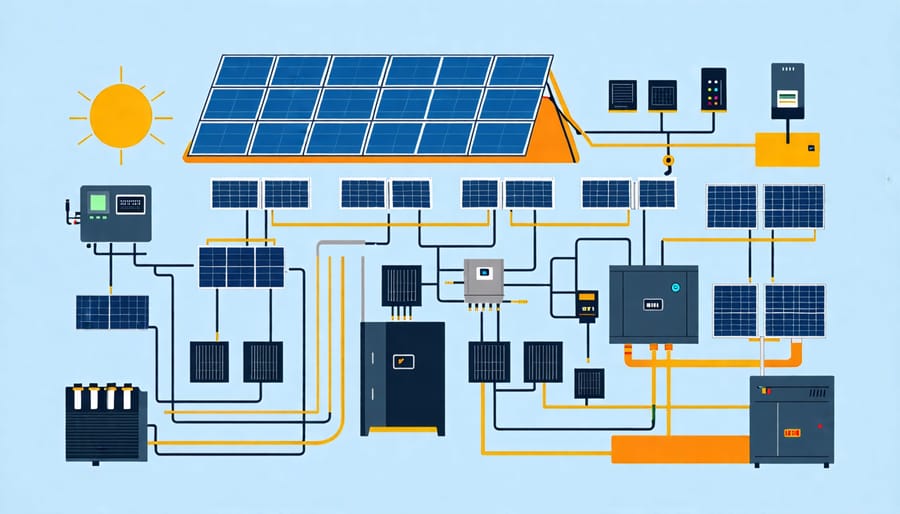
In addition to the core photovoltaic modules, a solar PV system relies on essential Balance of System (BOS) components to ensure efficient power conversion, secure installation, and reliable energy storage. Inverters play a crucial role in converting the direct current (DC) electricity generated by the PV modules into alternating current (AC) electricity, which is compatible with the electrical grid and most household appliances. String inverters and microinverters are two common types, each with their own advantages in terms of system design, performance monitoring, and shading tolerance.
Mounting structures provide a stable foundation for the PV modules, ensuring optimal orientation and tilt for maximum energy production. Rooftop mounting systems, ground-mounted arrays, and tracking systems are designed to withstand various environmental factors while maintaining the structural integrity of the PV installation. The choice of mounting system depends on factors such as available space, roof type, and desired performance.
Energy storage solutions, such as batteries, are increasingly becoming an integral part of solar PV systems. They allow for the storage of excess energy generated during peak sunlight hours, enabling the use of solar power even when the sun is not shining. Lithium-ion batteries are the most common type due to their high energy density, long lifespan, and declining costs. Battery management systems ensure safe and efficient operation, optimizing charging and discharging cycles to maximize battery life.
Other BOS components include wiring, combiner boxes, disconnects, and monitoring systems. These elements ensure the safe and efficient transmission of electricity, protection against electrical faults, and real-time performance monitoring. As technology advances, BOS components continue to evolve, offering improved efficiency, reliability, and integration with smart home systems. Understanding the role and importance of each BOS component is essential for designing, installing, and maintaining high-performance solar PV systems.
PV System Design and Installation
Designing and installing a photovoltaic (PV) system requires careful planning and execution. The first step is to conduct a site assessment, evaluating factors such as solar irradiance, shading, available space, and local regulations. This information helps determine the optimal location for the PV array and any necessary modifications to the site.
Next, system sizing is crucial to ensure the PV installation meets the desired energy production goals. Designers must consider the client’s energy consumption patterns, available roof or ground space, and budget constraints. Sizing calculations involve determining the number and type of PV modules, inverters, and other components needed to achieve the target energy output.
When selecting components, it is essential to choose high-quality, reliable products from reputable manufacturers. PV modules should have high efficiency ratings and be certified to withstand the environmental conditions at the installation site. Inverters should be appropriately matched to the array size and have necessary safety features and grid-integration capabilities.
Proper installation practices are critical for the long-term performance and safety of the PV system. Installers must follow manufacturer guidelines, local building codes, and industry standards. This includes securely mounting the PV modules, properly wiring the electrical components, and implementing appropriate grounding and surge protection measures.
Commissioning and testing are the final steps before the PV system is operational. This process involves verifying the system’s electrical integrity, ensuring proper functioning of safety devices, and confirming the system performs as designed. Detailed documentation, including as-built drawings and operation and maintenance manuals, should be provided to the client upon completion.
Regular maintenance is essential to keep the PV system operating at peak performance. This includes cleaning the modules to prevent soiling, inspecting electrical connections, and monitoring system output. Establishing a maintenance schedule and educating the client on basic troubleshooting can help identify and address any issues promptly.
By following best practices in PV system design and installation, professionals can deliver high-quality, reliable solar energy solutions that meet clients’ needs and contribute to a sustainable future.
Conclusion
In conclusion, a comprehensive renewable energy textbook is an invaluable resource for anyone seeking to deepen their understanding of solar PV and other clean energy technologies. By covering fundamental concepts, practical applications, and the latest industry trends, such a textbook equips readers with the knowledge and skills needed to succeed in the rapidly evolving renewable energy sector. As the demand for clean energy continues to grow, staying informed and up-to-date is crucial for professionals, researchers, and environmentally conscious individuals alike. To further your education and advance your career in this exciting field, we encourage you to explore Mose Solar’s educational offerings, which provide top-quality instruction and hands-on experience in solar PV and renewable energy technologies.