The solar permitting process is the formal sequence of applications, inspections, and approvals required from local authorities and utilities before a photovoltaic system can be legally installed and connected to the grid. This regulatory framework ensures that every solar installation meets building codes, electrical standards, fire safety requirements, and zoning regulations while protecting both property owners and the broader electrical infrastructure.
For aspiring PV professionals and installers, mastering this process is non-negotiable. Permitting delays account for a significant portion of total project timelines and costs in 2026, with approval periods ranging from a few days in streamlined jurisdictions to several months in areas with complex requirements. A single missing document or code violation can stall a project, erode client confidence, and compress already tight profit margins. Property owners considering solar face similar stakes: understanding permit requirements upfront prevents costly redesigns and helps set realistic installation timelines.
The challenge lies in variability. While the International Residential Code and National Electrical Code provide baseline standards, each jurisdiction interprets and supplements these frameworks differently. A roof-mounted residential array in Phoenix follows a different permitting path than an identical system in Portland. Some cities have adopted expedited solar permitting programs that promise same-day approvals for compliant applications, while others require multiple site visits and planning commission hearings.
This article walks through the complete permitting lifecycle, from initial application preparation through final inspection and utility interconnection. You’ll learn which permits are required at each project stage, how to prepare documentation that passes review on the first submission, and how to troubleshoot the most common approval obstacles. Whether you’re launching a career in solar installation or managing your first residential project, this guide provides the practical framework you need to navigate permitting efficiently and compliantly.
What the Solar Permitting Process Means
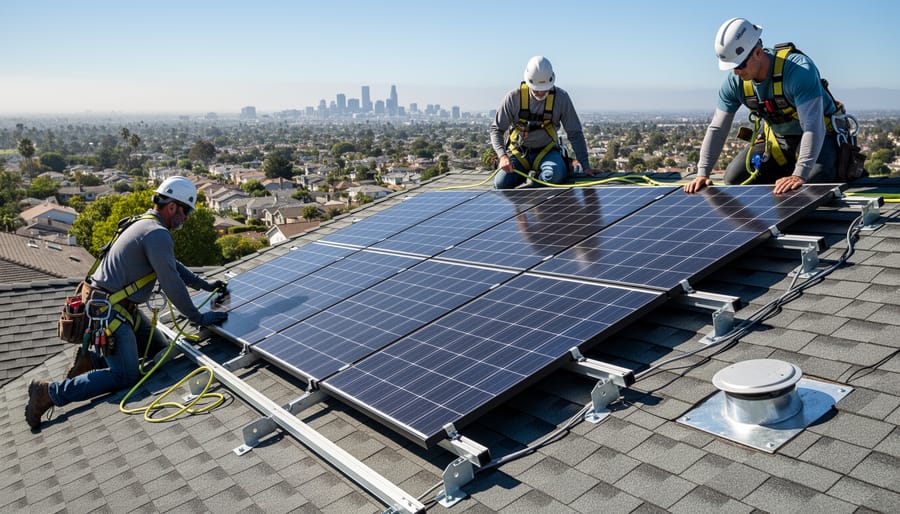
The solar permitting process is the formal regulatory approval pathway that property owners, installers, and developers must navigate before a photovoltaic system can be legally installed and connected to the electrical grid. This mandatory administrative procedure ensures that every solar installation meets local building codes, electrical safety standards, zoning ordinances, and utility interconnection requirements. Far from mere bureaucratic hurdle, permitting serves three fundamental purposes: protecting public safety by verifying that systems are structurally sound and electrically compliant, ensuring land-use compatibility through zoning review, and coordinating grid integration to maintain power quality and system reliability.
Multiple agencies and entities participate in the permitting process, each with distinct responsibilities. Local building departments evaluate structural integrity and code compliance. Fire marshals review fire safety access and setback requirements. Electrical inspectors verify adherence to the National Electrical Code. Utilities assess grid interconnection impacts and technical specifications. Overseeing this multi-agency coordination is the Authority Having Jurisdiction, or AHJ, typically the municipal or county government entity with final approval authority. Depending on project location and scale, additional parties such as historic preservation boards, environmental agencies, or homeowners associations may also weigh in.
Understanding these core terms is essential for navigating the process effectively:
- Authority Having Jurisdiction (AHJ)
- The governmental body responsible for enforcing building codes and issuing permits, typically a city or county building department. The AHJ coordinates reviews across multiple agencies and grants final approval for installation.
- Interconnection Agreement
- A contract between the system owner and the utility that establishes technical and operational terms for connecting the solar installation to the electrical grid. This agreement specifies metering arrangements, liability, and grid safety requirements.
- Site Plan Review
- An evaluation of the proposed system’s physical layout, including panel placement, equipment location, setbacks from property lines, and compliance with zoning regulations. Site plans often require detailed drawings showing dimensions, elevations, and equipment specifications.
- Building Permit
- Authorization to construct or modify a structure, verifying that the installation meets applicable building codes for structural integrity, wind and snow loads, and attachment methods. Required for most rooftop and ground-mounted solar systems.
- Electrical Permit
- Approval to perform electrical work, ensuring the system’s wiring, inverters, disconnects, and grid connection comply with the National Electrical Code and local amendments. Electrical permits typically require detailed single-line diagrams and equipment specifications.
- Structural Review
- An engineering assessment confirming that the building or mounting structure can support the additional weight and wind loads imposed by solar equipment. Structural calculations and stamped engineer drawings may be required for certain installations.
The permitting pathway varies significantly by project scale. Residential rooftop installations, typically under 10 kilowatts, follow a relatively streamlined process focused on building and electrical permits, often completed within weeks in jurisdictions with established solar programs. Commercial projects, ranging from 10 kilowatts to several megawatts, require more extensive documentation including structural engineering stamps, fire safety plans, and coordination with multiple departments, extending timelines to several months. Utility-scale solar farms exceeding one megawatt trigger the most comprehensive review, often involving environmental impact statements, land-use hearings, state-level approvals, and utility transmission studies that can span a year or longer.
How the Solar Permitting Process Works
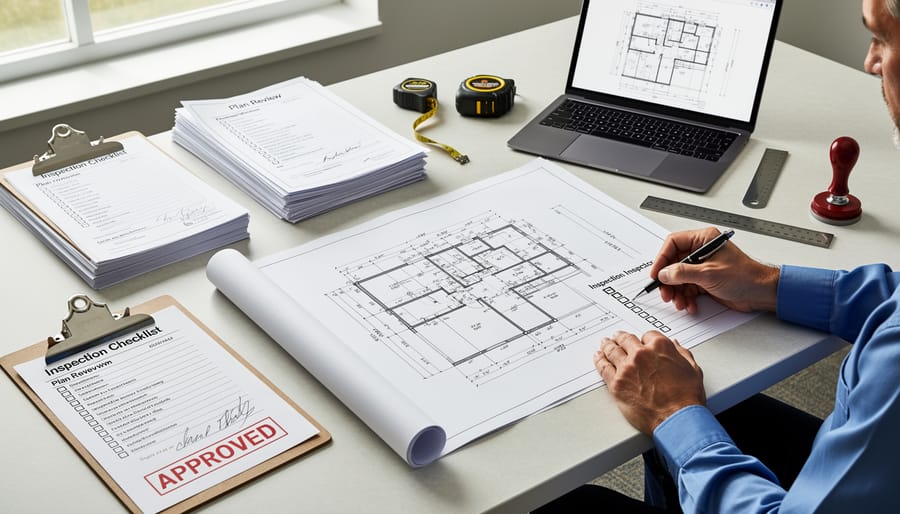
Pre-Application and Site Assessment
Before submitting a formal permit application, installers and developers must complete essential due diligence to verify a site’s suitability and avoid costly rejections. This pre-application phase establishes whether the proposed solar installation can legally and physically proceed.
Zoning verification is the first step. Check local zoning ordinances to confirm that solar installations are permitted in the property’s zone classification. Some jurisdictions restrict rooftop arrays in historic districts or impose ground-mount prohibitions in residential zones.
Setback and clearance requirements define minimum distances from property lines, fire access pathways, and roof edges. Fire codes often mandate perimeter pathways on commercial rooftops; residential setbacks vary by municipality. Document these measurements on preliminary site plans.
Structural capacity assessment determines whether existing roofs can support added equipment loads. For commercial buildings or older structures, this typically requires a structural engineer’s stamp certifying load-bearing adequacy. Ground-mount projects need soil testing and foundation design.
Finally, gather baseline documentation: property surveys, utility bills, roof dimensions, electrical panel specifications, and photographs. Assembling these materials before application speeds plan review and demonstrates professional preparedness to the AHJ.
Permit Submission and Plan Review
Submitting a complete, accurate permit application is the cornerstone of a smooth review process. Most jurisdictions require a comprehensive document package that includes detailed site plans showing the array location, setbacks, and orientation; single-line electrical diagrams illustrating system configuration, inverter placement, and interconnection points; structural calculations confirming roof load capacity or foundation design for ground-mount systems; and full equipment specifications for modules, inverters, racking, and balance-of-system components. Many AHJs also request a completed permit application form, proof of property ownership or authorization, and copies of contractor licenses and insurance certificates.
Once submitted, the AHJ assigns the application to plan reviewers who verify compliance with building codes, electrical standards, zoning ordinances, and fire safety requirements. Reviewers check calculations, confirm code references match current editions, and assess whether the design meets all jurisdiction-specific rules. Review timelines vary widely: streamlined jurisdictions may approve straightforward residential applications in one to two weeks, while more complex commercial or utility-scale projects can take four to twelve weeks or longer.
Common rejection triggers include incomplete documentation, incorrect or outdated code citations, missing structural engineer stamps where required, unclear electrical diagrams, inadequate fire setback buffers, and equipment listed as incompatible with local standards. Resubmissions delay the timeline, so installers benefit from pre-application consultations with the AHJ to clarify expectations and avoid preventable errors.
Inspections and Final Approval
Once the AHJ approves your permit application and you complete the installation, the inspection phase begins. Inspectors verify that the system meets all code requirements, safety standards, and design specifications before granting final approval. This step is non-negotiable: operating without inspection sign-off violates building codes and can void warranties, insurance coverage, and utility interconnection agreements.
Inspectors examine several critical areas. They check electrical connections for proper wire sizing, grounding, overcurrent protection, and NEC compliance. They verify conduit routing, labeling requirements, and disconnect placement. Structural inspectors assess mounting hardware, roof penetrations, and load calculations. Fire marshals review access pathways, setbacks, and rapid shutdown systems. Workmanship matters: loose connections, exposed wiring, or improper grounding will fail inspection immediately.
Common issues that trigger re-inspection include missing labels, incorrect wire gauges, inadequate grounding, improper array spacing, and incomplete rapid shutdown signage. To pass solar inspection on the first attempt, installers must follow approved plans precisely and complete all required documentation before scheduling the visit.
After successful inspection, the AHJ issues final approval and the utility grants permission to operate (PTO), allowing the system to energize and interconnect with the grid.
Components of Solar Permitting Requirements
Building and Electrical Permits
Building and electrical permits form the foundation of solar permitting compliance. These approvals verify that your installation adheres to the National Electrical Code (NEC), International Building Code (IBC), and International Fire Code (IFC), safeguarding both installers and occupants.
The building permit ensures structural integrity. Inspectors confirm that roofs can support panel weight, mounting systems are properly anchored, and installations won’t compromise the building envelope. For ground-mount systems, this permit covers foundation design and structural calculations.
The electrical permit focuses on system wiring, inverter placement, disconnects, and grid connection points. Reviewers check that circuit sizing matches equipment specifications, grounding meets NEC standards, and emergency shutoff mechanisms are accessible. Most jurisdictions require stamped electrical drawings from a licensed professional engineer or certified installer.
These permits are typically issued together by the local building department, though some jurisdictions separate them into distinct applications. Fees vary widely, from under $100 for small residential systems to thousands for commercial projects. Inspectors perform multiple site visits: rough-in inspections before covering wiring, and final inspections before authorizing energization. Passing these reviews is mandatory before the utility grants permission to operate.
Zoning, Land Use, and Siting Approvals
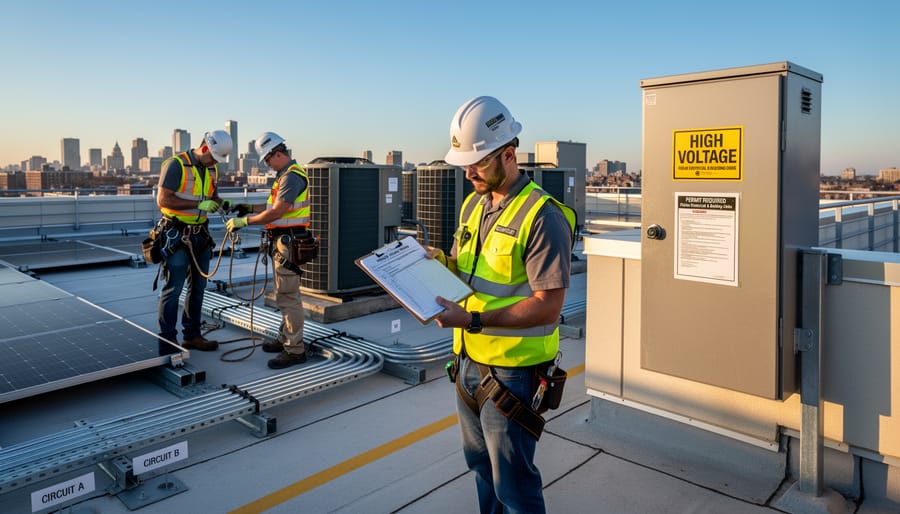
Zoning and land-use approvals determine where and how solar installations can be sited on a property. Local zoning ordinances classify land by use, residential, commercial, agricultural, industrial, and establish rules for structures within each zone. Solar systems must comply with these classifications, which may require conditional use permits or variances for non-conforming applications.
Setback requirements mandate minimum distances between solar arrays and property lines, roads, or neighboring structures. Ground-mount systems often face stricter setbacks than rooftop installations, with distances ranging from five to fifty feet depending on jurisdiction and system size. Height restrictions limit how tall ground-mount frames or tracking systems can rise, typically capping residential installations at ten to fifteen feet and varying widely for commercial projects.
Aesthetic requirements address visual impact concerns. Some municipalities regulate panel reflectivity, impose screening or landscaping buffers, or restrict installation visibility from public roads. Historic districts and homeowners’ associations may enforce additional design standards that influence panel placement, color, or mounting methods.
Utility-scale projects encounter complex siting reviews involving environmental impact assessments, agricultural preservation laws, and wildlife habitat protections. Large installations may trigger comprehensive plan amendments, public hearings, and multi-agency coordination before receiving final land-use approval. Understanding these jurisdiction-specific rules early prevents costly redesigns and project delays.
Utility Interconnection and Grid Compliance
Beyond local building and electrical permits, every grid-tied solar system requires formal approval from the utility company to ensure safe, compliant connection to the distribution network. This grid interconnection process begins with submitting an interconnection application to the utility, typically including system size, equipment specifications, single-line electrical diagrams, and proof of AHJ permit approval. Utilities review these applications to verify that the proposed system meets technical standards, most notably IEEE 1547 interconnection requirements which govern voltage regulation, anti-islanding protection, and power quality. Depending on system size and grid conditions, the utility may require additional studies, upgraded protection equipment, or witness testing before issuing permission to operate. Coordination between the AHJ and the utility is essential: final inspection sign-off from the building department often cannot occur until the utility has approved the interconnection design, and PTO cannot be granted until both agencies confirm compliance. Understanding DG solar standards and utility-specific requirements upfront prevents costly delays and ensures seamless project commissioning.
How the Solar Permitting Process Is Used in Practice

In practice, the solar permitting process varies dramatically depending on project type and location. A residential rooftop installer in a jurisdiction using SolarAPP+ can receive instant automated approval if the design meets pre-validated criteria, submitting plans digitally and moving directly to scheduling inspections within days. By contrast, that same installer working one county over may face a 4-to-8-week plan review, multiple trips to the building department, and manual coordination between electrical, structural, and zoning officials. Commercial installations add layers of complexity: a 500-kW system on a warehouse roof typically requires engineers to stamp structural calculations, fire department approval for rooftop access and setbacks, and utility interconnection studies that can take months to complete. Developers tackling community solar projects must often navigate special-use permits, public hearings, and neighborhood notification requirements before construction permits are even considered.
Utility-scale solar farms present the most complex permitting landscape. A 50-MW ground-mount facility may require environmental impact statements, agricultural zoning variances, county planning commission approval, state-level environmental review, transmission upgrade agreements, and federal permitting if on public lands or near protected habitats. These projects often involve 12-to-24-month permitting timelines before construction can start. Aspiring PV professionals entering this field quickly learn that early engagement is critical: pre-application meetings with the AHJ, utility interconnection queue positioning, and proactive coordination with fire marshals and planning departments can shave months off the schedule.
Professional certification plays a pivotal role in navigating these varied processes. Installers with NABCEP credentials, engineers licensed in the jurisdiction, and designers familiar with local code amendments gain faster traction with plan reviewers who trust their work. Jurisdictions participating in the national community solar partnership or adopting expedited review protocols for certified installers reduce friction, but these programs remain inconsistent across states. A developer working across multiple markets must maintain jurisdiction-specific checklists, track evolving local ordinances, and often hire local expediters or attorneys to manage submission nuances. The practical reality is that permitting expertise, knowing which documents to prepare, whom to contact first, and how to structure submittals for quick approval, becomes as valuable as technical installation skills in determining project success and profitability.
Variations in Solar Permitting by Jurisdiction
Solar permitting is not a one-size-fits-all process. Requirements, timelines, and complexity vary dramatically depending on where you install. States, counties, and even neighboring cities can impose radically different rules, fees, and review procedures, making jurisdiction-specific knowledge essential for professionals navigating the approval landscape.
At the state level, some jurisdictions have embraced streamlined, standardized permitting to accelerate solar PV adoption. California, for example, mandates expedited solar permitting under AB 2188, requiring most residential applications to be processed same-day or next-day if submitted online with complete documentation. Massachusetts and New Jersey have adopted similar fast-track protocols, often paired with online portals that reduce paperwork and review cycles. These states typically publish model permit checklists, standardized application forms, and clear fee schedules, creating predictability for installers and developers.
Contrast this with jurisdictions where permitting remains fragmented and opaque. In some Southern and Midwestern states, permitting authority rests entirely with individual counties or municipalities, each setting its own requirements, fees, and review timelines. One county might approve a residential rooftop installation in two weeks with minimal documentation, while a neighboring county demands structural engineer sign-off, multiple inspections, and a six-week review. Developers working across multiple jurisdictions must navigate a patchwork of codes, often hiring local expediters or consultants familiar with each AHJ’s idiosyncrasies.
Local political and regulatory environments shape permitting culture as much as formal rules. Jurisdictions with strong renewable energy commitments tend to train staff, adopt modern codes, and invest in digital infrastructure. In contrast, communities with limited solar experience or ambivalent local leadership may lack trained inspectors, rely on outdated code interpretations, or impose unnecessarily conservative structural or electrical requirements. This regulatory friction translates directly into project delays and higher soft costs, sometimes adding weeks or months to timelines and thousands of dollars in fees, revisions, and professional services.
Common Challenges and How to Navigate Them
Solar professionals and installers frequently encounter a cluster of procedural and bureaucratic hurdles that slow approvals and inflate costs. Recognizing these obstacles and developing mitigation strategies is essential for anyone entering the solar industry or managing projects across multiple jurisdictions.
One of the most persistent problems is regulatory inconsistency. Even neighboring municipalities can impose vastly different requirements for identical system configurations, forcing installers to maintain separate checklists, documentation templates, and design standards for each jurisdiction. This fragmentation compounds when codes lag behind current technology, some AHJs still reference outdated electrical standards that don’t account for rapid-shutdown devices or microinverters, triggering unnecessary plan revisions.
Review timelines represent another major friction point. While some jurisdictions process straightforward residential permits within days, others leave applications languishing for weeks or months due to understaffing, backlogged queues, or simply inefficient workflows. Multi-agency coordination adds complexity, especially when building, electrical, fire, and zoning departments each maintain separate review cycles with no internal communication, leading to conflicting requirements discovered only after multiple rounds of resubmission.
The most common obstacles include:
- Unclear or outdated building and electrical codes that don’t reflect modern solar equipment
- Slow plan review cycles caused by understaffed departments or inefficient workflows
- Inter-agency coordination gaps where building, fire, zoning, and utility teams work in silos
- High permit fees that disproportionately impact smaller residential projects
- Lack of online submission options, requiring in-person document delivery during limited office hours
- Insufficient AHJ solar training, resulting in reviewers flagging non-issues or missing genuine code violations
To navigate these challenges, experienced installers prioritize early engagement. Meeting with plan reviewers before submission, even informally, can clarify expectations, identify jurisdiction-specific quirks, and surface potential objections while designs are still flexible. Building long-term relationships with local AHJs pays dividends, as familiarity breeds trust and smoother approvals.
Documentation discipline also matters. Submitting complete, meticulously organized application packages with all required drawings, calculations, and equipment specifications reduces back-and-forth exchanges. Using jurisdiction-specific checklists, even if they’re informal, ensures nothing is overlooked. When feasible, leveraging expedited review tracks like SolarAPP+ or similar streamlined programs eliminates much of the manual review burden and cuts weeks off approval timelines.
Finally, investing in staff training ensures installers understand the rationale behind code requirements rather than treating them as arbitrary hoops. This knowledge enables proactive design choices that preempt common objections, reducing costly re-submissions and keeping projects on schedule.
Frequently Asked Questions
Navigating the solar permitting process raises recurring questions among new installers and aspiring PV professionals. Understanding the answers helps you avoid costly mistakes, manage client expectations, and streamline your workflow.
How long does the solar permitting process typically take?
Timelines vary widely by jurisdiction, ranging from a few days in municipalities using SolarAPP+ to several weeks or even months in areas with manual review processes and multiple agency coordination requirements. Average review times for residential projects fall between two and six weeks, while commercial and utility-scale installations often require three to six months or longer.
Can I start installation work before receiving permit approval?
No. Beginning work without an approved permit violates building codes, voids warranties and insurance coverage, and can result in stop-work orders, fines, mandatory system removal, and legal liability. Always wait for written approval from the AHJ before mobilizing crews or ordering equipment.
Who is responsible for paying permitting fees?
Fee responsibility is typically negotiated in the installation contract. Most residential installers build permit costs into their project pricing, while commercial developers often handle fees directly as part of soft costs. Fees vary by jurisdiction and project size, ranging from a few hundred dollars for small residential systems to thousands for large commercial arrays.
What happens if my permit application is denied or requires resubmission?
The AHJ will issue a correction notice listing deficiencies, code violations, or missing documentation. You must address each item, revise your plans accordingly, and resubmit for another review cycle. Most jurisdictions do not charge additional fees for resubmissions within a specified timeframe, but repeated rejections add delays and may trigger re-application fees.
Licensed contractors play a central role in many jurisdictions. Most states require solar installations to be performed by or under the supervision of a licensed electrical contractor, general contractor, or solar-specific contractor holding appropriate credentials. A few states allow unlicensed work under certain conditions, but professional licensing protects both the installer and the client by demonstrating competency and accountability.
Streamlined programs like SolarAPP+ have transformed permitting in adopting jurisdictions. This automated online platform reviews residential solar applications instantly against codified rulesets, issuing approvals in minutes rather than weeks when submissions meet all requirements. Developed by the National Renewable Energy Laboratory and deployed in partnership with local governments, SolarAPP+ eliminates manual plan review for qualifying projects, reduces soft costs, and accelerates deployment without compromising safety or code compliance. As of 2026, adoption continues to expand, particularly in states committed to reducing regulatory friction for distributed solar.
Understanding these fundamentals equips you to manage client timelines, budget accurately, and troubleshoot issues before they escalate into project delays.
Mastering the solar permitting process is non-negotiable for anyone building a career in photovoltaics. From initial zoning checks to final inspection sign-off, each step in the permitting workflow exists to ensure that solar installations meet safety codes, protect public interests, and integrate reliably with the electrical grid. Navigating this landscape successfully requires more than technical skill, it demands a working knowledge of building codes, utility requirements, and the regulatory nuances that vary from one jurisdiction to the next.
For aspiring PV professionals, understanding Solar PV Permitting and Siting Policies and Regulations is foundational. The ability to prepare complete, code-compliant applications, anticipate common objections, and coordinate effectively with authorities having jurisdiction directly impacts project timelines, profitability, and client satisfaction. As permitting frameworks continue to evolve, with streamlined programs emerging in some regions and persistent complexity in others, staying informed is a competitive advantage.
Mose Solar offers an educational program, developed in collaboration with universities, designed to equip students and early-career professionals with the regulatory literacy needed to navigate permitting challenges confidently. The curriculum emphasizes practical application of current codes, case studies reflecting real-world jurisdictional variation, and best practices for managing the approval process from start to finish. By investing in structured learning, aspiring installers, designers, and project managers position themselves to deliver projects that are safe, compliant, and built to last.