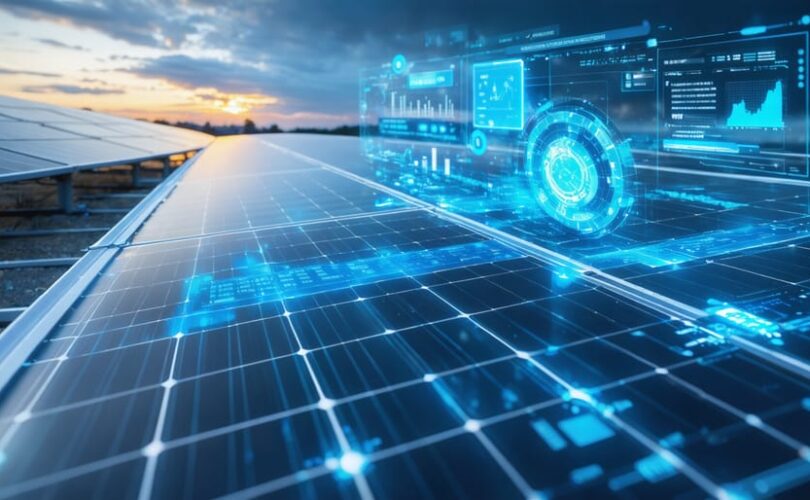
GE Digital Twins represent a revolutionary leap in industrial asset management, creating virtual replicas of physical systems that transform how we monitor, analyze, and optimize photovoltaic operations. By combining real-time sensor data, advanced analytics, and machine learning algorithms, these sophisticated digital models enable operators to predict maintenance needs, simulate performance scenarios, and maximize system efficiency with unprecedented accuracy. As renewable energy installations grow increasingly complex, GE’s digital twin technology offers a powerful solution for reducing operational costs, extending equipment lifetime, and ensuring optimal energy production. This innovative approach has already demonstrated up to 20% reduction in maintenance costs and 15% improvement in asset reliability across various industrial applications, making it a crucial tool for modern PV system operators seeking to maintain competitive advantage in the rapidly evolving renewable energy landscape.
Understanding GE Digital Twins in Solar PV Systems
Core Components of GE Digital Twin Technology
GE’s digital twin technology comprises several interconnected components that work together to create accurate virtual representations of physical assets. At its foundation lies the Advanced Sensor Network, which continuously collects real-time data from multiple points across physical equipment. These sensors monitor critical parameters such as temperature, pressure, vibration, and electrical performance.
The Data Integration Layer serves as the bridge between physical sensors and digital models, processing and standardizing incoming data streams. This component ensures data quality and maintains consistent communication protocols across different systems and equipment types.
The Physics-Based Modeling Engine forms the core analytical component, utilizing complex mathematical models and engineering principles to simulate equipment behavior. This engine incorporates material properties, operational parameters, and environmental conditions to create accurate behavioral predictions.
The Artificial Intelligence and Machine Learning Framework enhances the system’s predictive capabilities by analyzing historical data patterns and identifying potential issues before they occur. This component continuously learns from operational data to improve its accuracy over time.
The Visualization Interface provides stakeholders with intuitive dashboards and 3D models, enabling real-time monitoring and interaction with the digital twin. This component includes advanced features such as augmented reality overlays and remote collaboration tools.
Finally, the Analytics Platform processes accumulated data to generate actionable insights, maintenance recommendations, and performance optimization strategies, supporting informed decision-making for operators and maintenance teams.
Real-time Data Integration and Analysis
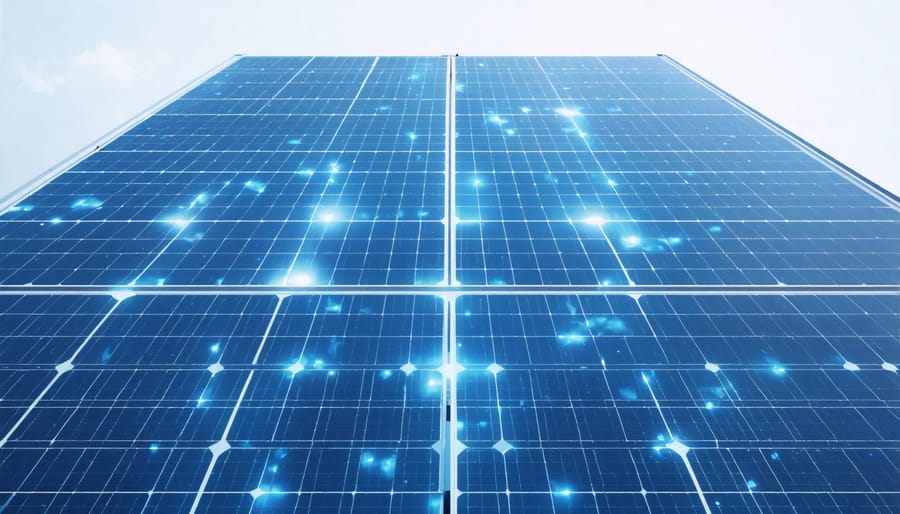
GE’s digital twin technology employs a sophisticated network of sensors and monitoring devices to continuously collect data from photovoltaic systems. These sensors measure critical parameters including voltage, current, temperature, irradiance, and environmental conditions. The collected data streams are processed through advanced algorithms that enable real-time analytics and performance assessment.
The integration system utilizes secure cloud computing infrastructure to process vast amounts of operational data. Multiple data points are synchronized and analyzed simultaneously, creating a comprehensive virtual representation of the physical PV system. This dynamic model updates continuously, reflecting real-world conditions and system behavior with minimal latency.
Advanced machine learning algorithms process this data to identify patterns, predict potential issues, and optimize system performance. The platform employs artificial intelligence to compare actual performance against expected outputs, detecting anomalies that might indicate maintenance requirements or efficiency losses.
The analysis capabilities extend beyond basic monitoring, incorporating weather forecasting, historical performance data, and equipment specifications to provide actionable insights. System operators can access detailed visualizations and reports through intuitive dashboards, enabling informed decision-making for maintenance scheduling and performance optimization.
This integrated approach to data collection and analysis ensures that PV system operators can maintain optimal efficiency while minimizing downtime and maintenance costs. The platform’s predictive capabilities help prevent failures before they occur, significantly improving system reliability and longevity.
Predictive Maintenance Capabilities
Early Fault Detection and Diagnosis
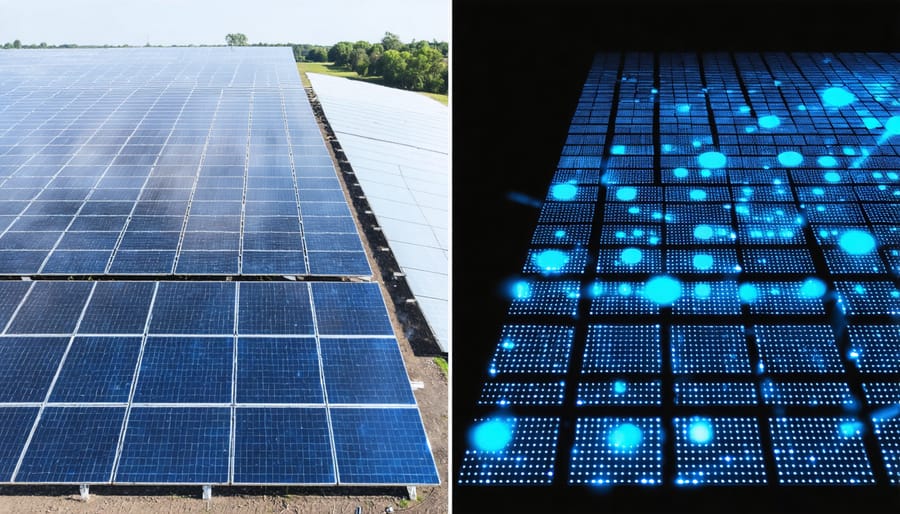
Digital twins in GE’s ecosystem excel at identifying potential system failures and performance issues before they manifest into critical problems. By continuously analyzing real-time data streams against historical performance patterns, these virtual replicas can detect subtle deviations that might indicate emerging faults or deteriorating components.
The system employs advanced machine learning algorithms to process multiple data points simultaneously, including temperature variations, voltage fluctuations, and performance metrics. This comprehensive analysis enables the detection of anomalies that might be imperceptible through traditional monitoring methods. When potential issues are identified, the digital twin generates early warning alerts, allowing maintenance teams to investigate and address problems proactively.
The fault detection capabilities extend beyond simple anomaly detection. Digital twins can predict component failure probabilities by analyzing wear patterns and operational stress factors. This predictive approach helps maintenance teams optimize their scheduling and resource allocation, reducing both planned and unplanned downtime.
Furthermore, the diagnostic capabilities of GE’s digital twins include root cause analysis tools that help technicians pinpoint the exact source of potential failures. The system provides detailed insights into system behavior, component interactions, and environmental influences, enabling maintenance teams to make informed decisions about repair strategies and replacement schedules.
This early detection and diagnosis system has demonstrated significant impact on maintenance efficiency, with some implementations reporting up to 40% reduction in unexpected failures and substantial cost savings through optimized maintenance planning.
Performance Optimization Strategies
Digital twins enable sophisticated performance optimization through real-time monitoring and predictive analytics. By creating a virtual replica of the PV system, operators can analyze system behavior under various conditions and implement targeted improvements. The technology continuously collects data from sensors, weather stations, and operational metrics to identify performance bottlenecks and optimization opportunities.
These virtual models allow for scenario testing without risking actual system disruption. Operators can simulate different operational parameters, environmental conditions, and maintenance schedules to determine optimal settings for maximum energy yield. The system’s machine learning algorithms analyze historical performance data to predict future behavior and recommend preemptive adjustments.
Performance optimization strategies enabled by digital twins include:
– Dynamic panel angle adjustment based on solar irradiance patterns
– Intelligent inverter loading for maximum power point tracking
– Automated dust detection and cleaning schedule optimization
– Real-time shading analysis and mitigation
– Predictive maintenance scheduling to minimize downtime
The technology also enables comparative analysis across multiple installations, helping identify best practices and performance benchmarks. By analyzing data from high-performing systems, operators can replicate successful strategies across their entire fleet of PV installations.
Advanced analytics capabilities help quantify the impact of various optimization measures, allowing operators to prioritize improvements based on potential ROI. This data-driven approach ensures that optimization efforts focus on areas that will deliver the greatest performance gains while maintaining cost-effectiveness.
Implementation and ROI
Integration Process and Requirements
The implementation of GE digital twins follows a systematic process that begins with comprehensive data collection from the physical PV system. This includes installing sensors and monitoring equipment to capture real-time performance metrics, environmental conditions, and component status data.
The second phase involves creating accurate 3D models of the physical assets, incorporating detailed specifications and operational parameters. These models are then enhanced with physics-based algorithms and historical performance data to ensure accurate representation of system behavior.
Integration requires establishing robust connectivity infrastructure between physical assets and the digital platform. This includes setting up secure data transmission protocols, implementing edge computing capabilities, and configuring cloud storage solutions for data management.
Key requirements include:
– High-quality sensor networks for real-time data collection
– Reliable internet connectivity for continuous data transmission
– Sufficient computational resources for model processing
– Trained personnel for system operation and maintenance
– Cybersecurity measures to protect sensitive data
– Integration with existing SCADA and asset management systems
The final stage involves validation and calibration, where the digital twin’s predictions are compared against actual system performance to ensure accuracy. Regular updates and maintenance ensure the digital twin evolves alongside physical system modifications and improvements.
Cost-Benefit Analysis
The implementation of GE digital twins in photovoltaic systems presents a compelling return on investment through multiple value streams. Initial deployment costs, including software licensing, sensor installation, and training, are typically offset within 12-24 months through operational improvements. Studies indicate that facilities utilizing digital twin technology can maximize solar ROI through a 15-25% reduction in maintenance costs and a 10-15% increase in system availability.
Operational benefits include predictive maintenance capabilities that reduce unplanned downtime by up to 40%, extending equipment lifecycle by 20%. Real-time performance monitoring and optimization have demonstrated energy yield improvements of 3-5% annually. The technology enables precise fault detection and diagnosis, reducing troubleshooting time by 60% and cutting maintenance labor costs significantly.
Additional financial advantages emerge through reduced insurance premiums, as digital twins provide enhanced risk management and documentation. The technology also supports warranty compliance and verification, potentially saving substantial costs in dispute resolution. When factoring in the reduction in physical site visits and improved resource allocation, organizations typically achieve a positive ROI within the first year of implementation, with continued benefits scaling as the system matures and data analytics capabilities expand.
Future Developments and Industry Impact
Emerging Technologies and Integration
Digital twin technology continues to evolve rapidly, incorporating advanced capabilities that enhance their utility in photovoltaic system management. Recent developments include the integration of machine learning in solar maintenance, enabling more sophisticated predictive analytics and automated decision-making processes.
Edge computing integration has revolutionized how digital twins process and analyze data, allowing for real-time monitoring and faster response times. This advancement particularly benefits remote solar installations, where immediate data processing and decision-making are crucial for optimal performance.
Augmented reality (AR) and virtual reality (VR) interfaces are becoming standard features in modern digital twin implementations, offering maintenance technicians intuitive ways to interact with virtual system representations. These interfaces enable personnel to visualize complex system dynamics and troubleshoot issues more effectively.
The emergence of blockchain technology in digital twin platforms has enhanced data security and traceability, crucial for maintaining accurate historical records of system performance and maintenance activities. This integration ensures data integrity while facilitating secure information sharing among stakeholders.
Cloud-native architectures are enabling more scalable and flexible digital twin deployments, allowing solar facility operators to adapt their monitoring and maintenance strategies as their installations grow. These developments, combined with improved sensor technology and IoT connectivity, are making digital twins more accessible and valuable for solar energy applications.
Industry-Wide Adoption Trends
Digital twin technology has experienced significant growth across various industries, with GE leading the charge in implementation and innovation. Recent market analyses indicate that over 60% of industrial companies are either implementing or planning to implement digital twin solutions within the next two years. The energy sector, particularly renewable energy and photovoltaic systems, shows particularly strong adoption rates.
Manufacturing facilities have been early adopters, reporting efficiency improvements of 15-30% through digital twin implementation. The utility sector follows closely, with major power generation facilities increasingly utilizing digital twins for predictive maintenance and operational optimization. GE’s success stories in power generation have become influential case studies, driving adoption across the industry.
Looking ahead, experts project the digital twin market to grow at a CAGR of 58% through 2025, with the energy sector representing a significant portion of this growth. This rapid expansion is fueled by decreasing implementation costs, improved cloud computing capabilities, and growing evidence of ROI benefits. Small and medium-sized enterprises are beginning to embrace digital twin technology, particularly as scalable solutions become more accessible.
The integration of artificial intelligence and machine learning capabilities with digital twins is emerging as a key trend, enabling more sophisticated predictive analytics and autonomous decision-making capabilities. This convergence is expected to accelerate adoption rates further, especially in complex industrial applications where real-time monitoring and optimization are critical.
GE’s digital twin technology represents a transformative approach to photovoltaic system maintenance, offering a comprehensive solution that combines real-time monitoring, predictive analytics, and advanced simulation capabilities. The implementation of digital twins in PV installations has demonstrated significant advantages, including reduced downtime, optimized performance, and substantial cost savings through preventive maintenance.
The technology’s ability to create virtual replicas of physical assets enables operators to monitor, analyze, and optimize their solar installations with unprecedented precision. By leveraging machine learning algorithms and real-time data analysis, digital twins provide actionable insights that help maintenance teams address potential issues before they escalate into costly problems.
The adoption of GE digital twins has shown remarkable results across various solar installations, with many facilities reporting increased energy yield, extended equipment lifespan, and improved operational efficiency. The return on investment is particularly compelling, as organizations typically experience reduced maintenance costs and enhanced system reliability within the first year of implementation.
As the renewable energy sector continues to grow, the integration of digital twin technology becomes increasingly crucial for maintaining competitive advantage and ensuring optimal system performance. Forward-thinking organizations are encouraged to explore GE’s digital twin solutions as a strategic investment in their PV maintenance operations. The technology’s proven track record, combined with its potential for future innovations, makes it an essential tool for modern solar facility management.