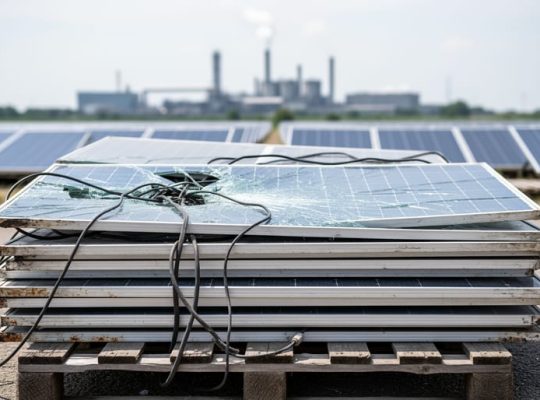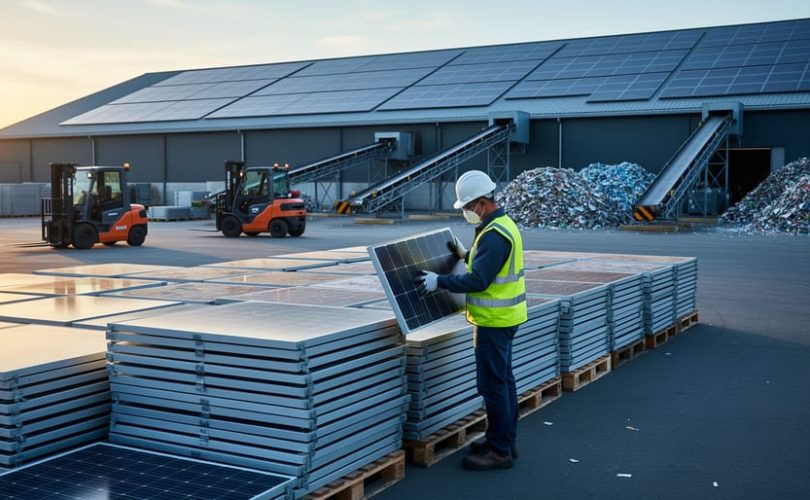
The global transition to renewable energy has created an unexpected paradox: solar panels designed to reduce environmental impact are generating a mounting waste crisis. As photovoltaic installations proliferate worldwide, with over 114 million metric tons of solar panel waste projected by 2050, the industry faces a critical challenge in managing end-of-life modules, manufacturing byproducts, and operational debris.
Solar power waste encompasses three distinct categories that demand immediate attention. Manufacturing waste includes silicon dust, chemical residues, and defective cells produced during panel fabrication. Operational waste consists of damaged panels from extreme weather, failed installations, and routine maintenance replacements. End-of-life waste represents the most significant concern, as first-generation solar panels installed during the early 2000s renewable energy boom are now reaching their 25-30 year lifespan limits and requiring systematic decommissioning.
The economic implications extend beyond environmental concerns. Valuable materials including silver, copper, silicon, and aluminum remain locked within discarded panels, representing billions in recoverable resources. Current recycling infrastructure processes less than 10 percent of available solar waste, with conventional disposal methods sending toxic materials to landfills where cadmium, lead, and other hazardous substances threaten groundwater systems.
Forward-thinking solutions are emerging at the intersection of photovoltaic technology and waste management. Innovative applications now power recycling facilities with solar energy, creating closed-loop systems that address both renewable energy adoption and waste processing efficiency. Understanding these applications requires examining how solar installations transform waste management operations, the technical requirements for implementation, and the professional expertise driving this convergence of sustainability priorities.
The Intersection of Solar Energy and Waste Management
Energy Demands of Modern Waste Management
Modern waste management operations consume substantial amounts of electricity, creating significant opportunities for solar power integration. Collection vehicles, processing equipment, and facility operations collectively represent one of the most energy-intensive sectors in municipal infrastructure.
Waste sorting facilities exemplify these energy demands through their reliance on conveyor systems, optical scanners, and air separation technologies. A typical material recovery facility processing 100 tons of recyclables daily requires between 150-250 kilowatt-hours of electricity, translating to annual consumption exceeding 50,000 kWh. Larger operations serving metropolitan areas can demand upwards of 500 kWh during peak sorting periods.
Processing facilities demonstrate even higher consumption patterns. Composting operations utilize aeration blowers, moisture control systems, and temperature regulation equipment that operate continuously. A mid-sized composting facility managing 50 tons of organic waste daily typically consumes 300-400 kWh, with annual requirements reaching 120,000 kWh or more.
Recycling centers add specialized equipment demands including glass crushers, plastic shredders, and baling machines. These facilities often operate high-capacity motors drawing 50-75 kW simultaneously, with total facility loads ranging from 200-500 kW during operational hours.
Transfer stations and landfill operations contribute additional energy burdens through lighting systems, compaction equipment, and leachate management systems. Many facilities operate 12-24 hours daily, creating consistent baseload power requirements ideal for solar photovoltaic systems. Research conducted in collaboration with universities has documented that waste facilities with suitable roof space or adjacent land can offset 40-70 percent of their annual electricity consumption through properly designed solar installations.
Why Solar Power Makes Strategic Sense
Waste management facilities present an ideal convergence of operational requirements and solar photovoltaic capabilities, creating a compelling case for renewable energy integration. These facilities typically operate during daylight hours when solar generation peaks, establishing natural alignment between energy production and consumption patterns. This synchronization maximizes the immediate utilization of generated electricity, reducing reliance on grid power during the most expensive peak-demand periods.
The infrastructure characteristics of waste management operations provide significant advantages for solar deployment. Large roof surfaces on processing buildings and sorting facilities offer extensive mounting areas without requiring additional land acquisition. Ground-mounted arrays can utilize buffer zones and peripheral areas that remain undeveloped due to setback requirements or operational constraints. Many facilities span 10 to 50 acres, providing ample space for utility-scale photovoltaic installations capable of meeting substantial portions of their energy demands.
Long-term financial benefits strengthen the strategic rationale for solar adoption. Waste management operations consume considerable electricity for material handling equipment, compactors, conveyors, and ventilation systems. By generating on-site power, facilities can stabilize energy costs against utility rate fluctuations while reducing operational expenses over the 25-30 year lifespan of solar systems. Additionally, many jurisdictions offer renewable energy incentives specifically targeting industrial and commercial applications, further improving project economics. Universities collaborating with industry leaders have documented internal rates of return exceeding 12-15 percent for waste facility solar installations, demonstrating robust financial performance alongside environmental stewardship.
Solar-Powered Waste Collection Systems
Smart Solar Waste Bins
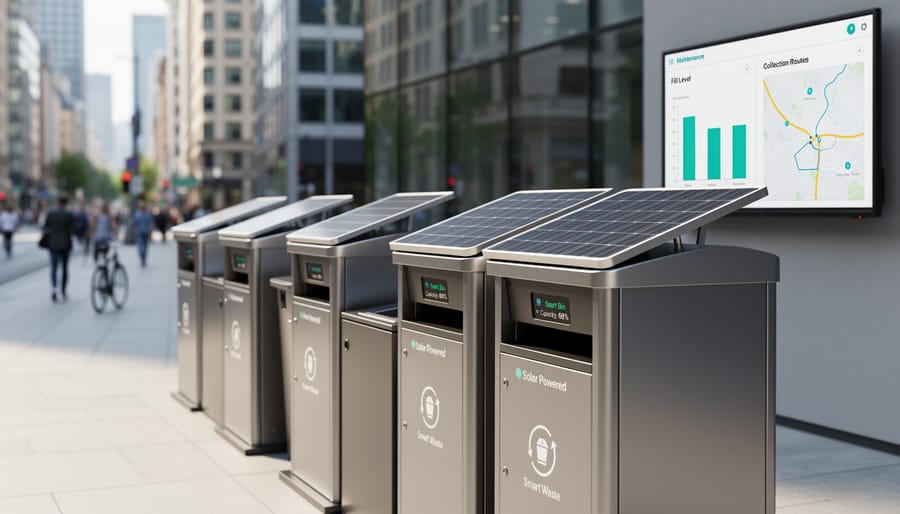
Solar-powered waste bins represent a convergence of photovoltaic technology and smart energy management, revolutionizing municipal waste collection operations. These intelligent systems integrate compact photovoltaic panels, typically ranging from 20 to 50 watts, to power internal compaction mechanisms that compress waste up to five times its original volume. This solar-driven compression capability significantly extends bin capacity while reducing collection frequency by up to 80 percent.
The technological infrastructure includes ultrasonic or infrared fill-level sensors that continuously monitor waste accumulation and transmit real-time data through cellular or LoRaWAN communication networks. Fleet management systems process this information to optimize collection routes, dispatching trucks only when bins reach predetermined capacity thresholds. Research conducted in partnership with European universities demonstrates fuel consumption reductions of 60 to 70 percent compared to traditional fixed-schedule collections.
Advanced models incorporate temperature sensors for fire detection, odor control systems, and user-facing touchscreens displaying environmental impact metrics. The photovoltaic systems maintain operational independence for 5 to 7 days without direct sunlight, ensuring continuous functionality across diverse climate conditions. Battery management systems, typically employing lithium iron phosphate technology, regulate charge cycles and extend component lifespan to 8 to 10 years. These installations generate measurable environmental benefits including reduced carbon emissions, decreased traffic congestion, and lower operational costs, making them increasingly attractive for municipalities pursuing sustainable infrastructure development.
Off-Grid Collection Points
Remote and underserved communities face significant challenges in waste management infrastructure, particularly where electrical grid access remains limited or economically unfeasible. Solar-powered waste collection stations offer a practical solution by providing autonomous operation in these locations. These systems typically integrate photovoltaic panels with compacting mechanisms, sensors, and communication devices to optimize collection efficiency without relying on conventional power sources.
In developing regions, off-grid collection points have demonstrated remarkable success. Similar to solar-powered water systems, these installations operate independently while reducing operational costs by up to 60% compared to traditional diesel-powered alternatives. The technology employs battery storage to ensure continuous operation during low-sunlight periods, maintaining consistent waste management services.
Universities collaborating on field research have documented significant improvements in public health outcomes within communities utilizing these systems. The stations often feature fill-level sensors that transmit data wirelessly, enabling optimized collection routes and reducing unnecessary vehicle trips. This approach proves particularly valuable in island communities, rural townships, and disaster-relief scenarios where infrastructure damage or geographical isolation complicates conventional waste management operations.
Real-World Implementation Examples
San Diego’s Environmental Services Department pioneered solar-powered waste compactors in 2019, reducing collection frequency by 80% across 150 high-traffic locations. The municipality partnered with UC San Diego’s Renewable Energy Laboratory to monitor system performance, documenting 12,000 kWh of annual energy generation while decreasing operational costs by $340,000 yearly.
Amsterdam’s Circular Innovation Program deployed 400 solar waste bins throughout the city center, integrating real-time fill-level sensors powered entirely by photovoltaic panels. This implementation achieved a 65% reduction in collection truck emissions and provided data for optimizing waste management routes. The city collaborated with Delft University of Technology to develop educational modules training waste management professionals in solar integration techniques.
Philadelphia’s Zero Waste Initiative installed solar compacting stations at 75 parks and recreation areas, generating enough surplus energy to power adjacent lighting systems. The program includes workforce development components, offering certification courses for municipal employees in photovoltaic system maintenance and waste technology operations, demonstrating the convergence of renewable energy expertise with sustainable waste management practices.
Solar-Powered Recycling Facilities
Material Recovery Facilities (MRFs) and Solar Integration
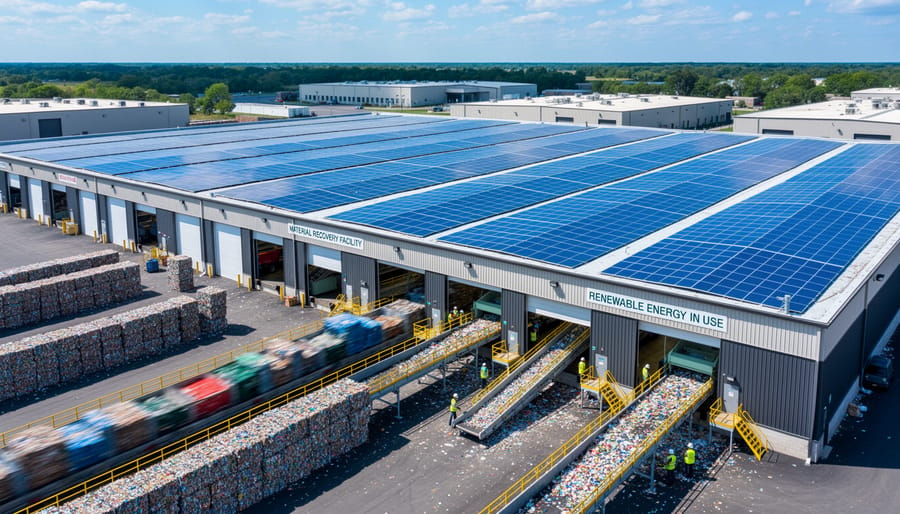
Material Recovery Facilities represent some of the most energy-intensive operations in the waste management sector, with sorting equipment, optical scanners, conveyor systems, and air classifiers consuming substantial electricity throughout extended operational hours. Progressive MRFs are increasingly turning to solar integration as a strategic solution to reduce operating costs and environmental impact while demonstrating leadership in sustainable practices.
Large-scale recycling facilities offer ideal conditions for solar deployment. Their expansive roof structures and adjacent land provide ample space for photovoltaic arrays, while their daytime-heavy operational schedules align well with peak solar generation periods. A typical single-stream MRF processing 500 tons daily can consume between 200-400 kilowatts continuously, creating significant demand that solar installations can effectively offset.
Ground-mounted solar arrays installed on buffer zones or unused portions of facility property complement rooftop systems, collectively generating substantial power without compromising operational space. Advanced MRFs incorporate battery storage systems to capture excess solar generation for use during evening sorting shifts or cloudy periods, maximizing energy independence and cost savings.
Universities have partnered with MRF operators to study solar integration effectiveness, providing valuable data on system performance, energy offset percentages, and return on investment timelines. These collaborations have informed educational programs that train the next generation of facility managers in renewable energy implementation strategies specific to waste processing operations. The financial benefits are compelling, with many facilities achieving 40-60% energy cost reductions and payback periods of 5-8 years, while simultaneously reducing their carbon footprint and positioning themselves as environmental innovators within their communities.
Specialized Recycling Operations
Specialized recycling facilities face substantial energy challenges due to their intensive processing requirements. Solar photovoltaic systems are increasingly deployed to power these operations, reducing both operational costs and carbon footprints while supporting the circular economy.
Plastic recycling plants utilize solar arrays to energize sorting equipment, shredding machinery, and thermal processing units. These facilities often consume significant electricity during pelletization and extrusion processes, where solar power can offset 40-60% of grid dependency during peak production hours. Advanced installations incorporate battery storage to maintain continuous operations during evening shifts.
E-waste processing centers represent another critical application area. These facilities require substantial power for dismantling electronics, separating precious metals, and safely handling hazardous materials. The integration of rooftop and ground-mounted solar installations enables these operations to process materials more sustainably. Notably, solar panel recycling facilities themselves benefit from this approach, creating a closed-loop system where solar technology powers its own end-of-life processing.
University collaborations have demonstrated that textile recycling and organic waste composting facilities can achieve energy independence through properly sized solar systems, while educational programs train technicians in designing and maintaining these specialized installations for optimal performance.
Economic and Environmental Benefits
Solar-powered waste management facilities demonstrate compelling financial returns alongside substantial environmental advantages. Industry data indicates that photovoltaic systems integrated into recycling operations typically achieve payback periods of 5-8 years, depending on facility size and local energy costs. Once operational, these installations can reduce electricity expenses by 40-70%, generating significant long-term savings over the 25-30 year lifespan of quality solar panels.
From an environmental perspective, a mid-sized solar-powered recycling facility can offset approximately 150-300 metric tons of carbon dioxide annually, equivalent to removing 30-60 passenger vehicles from roadways. The dual benefit of processing waste while generating clean energy creates a multiplicative positive impact on carbon reduction metrics.
Universities collaborating with industry leaders have documented that solar installations on waste management sites often generate surplus energy during peak production hours. This excess capacity can be fed back into the grid, creating additional revenue streams through net metering agreements. Return on investment calculations must consider not only direct energy savings but also enhanced operational resilience, reduced dependence on volatile energy markets, and potential eligibility for renewable energy credits and government incentives that further improve financial outcomes.
Innovative Solar PV Applications in Waste Processing
Solar-Powered Waste-to-Energy Systems
Solar-powered waste-to-energy systems represent an innovative convergence of renewable energy technologies that maximize resource efficiency while minimizing environmental impact. These hybrid configurations integrate photovoltaic arrays with established waste conversion processes, creating synergistic operations that address both energy generation and waste management challenges simultaneously.
In anaerobic digestion facilities, solar PV installations provide the electrical power necessary to maintain optimal temperatures in digesters, operate pumping systems, and run monitoring equipment. This integration significantly reduces the facility’s reliance on grid electricity, with some installations achieving complete energy independence during peak sunlight hours. The biogas produced through anaerobic digestion can be stored and utilized during periods of low solar generation, creating a complementary energy supply system that ensures continuous operation.
Pyrolysis plants benefit substantially from solar integration, as these thermal decomposition processes require consistent electrical input for heating elements, conveyor systems, and emission control equipment. Modern PV technology applications in pyrolysis facilities can offset 30-60% of operational electricity costs, depending on system sizing and geographic location. The resulting bio-oil and syngas products provide additional energy streams that complement solar generation.
Universities and research institutions are actively developing next-generation hybrid systems that optimize energy flows between solar arrays and waste conversion equipment. These collaborative efforts focus on smart grid integration, energy storage solutions, and process automation that responds dynamically to available solar resources, establishing new benchmarks for sustainable waste management infrastructure.
Composting and Organic Waste Management
Solar energy is revolutionizing organic waste management by powering critical composting infrastructure that traditionally relied on grid electricity or diesel generators. Photovoltaic systems integrated into composting facilities provide sustainable, cost-effective solutions for operations requiring consistent energy inputs.
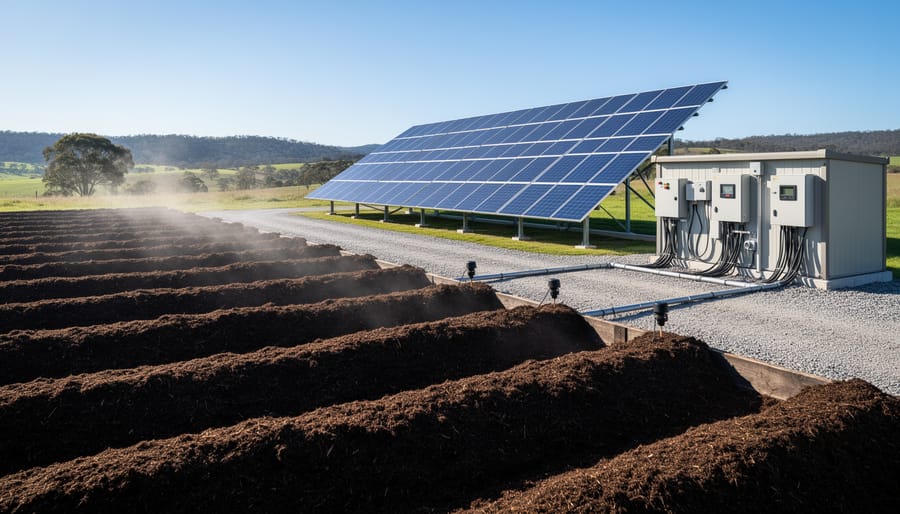
Solar-powered aeration systems represent one of the most significant applications in modern composting operations. These systems utilize PV panels to drive blowers and fans that deliver oxygen throughout compost piles, accelerating decomposition and preventing anaerobic conditions that produce methane and unpleasant odors. Commercial facilities typically install 5-15 kW solar arrays to power automated aeration schedules, reducing operational costs by 40-60% compared to conventional grid-powered systems while maintaining optimal oxygen levels between 5-15% throughout the composting mass.
Temperature monitoring and control systems powered by solar energy enable precise management of thermophilic composting processes. Wireless sensor networks drawing power from small PV modules track temperature profiles across multiple zones, transmitting real-time data to operators. These systems ensure temperatures remain within the critical 55-65°C range necessary for pathogen elimination and efficient organic matter breakdown. Advanced installations incorporate solar-powered automated turners that activate based on temperature thresholds, optimizing the composting cycle without manual intervention.
Research collaborations between composting facilities and universities have demonstrated that integrated solar solutions can achieve energy independence for small to medium-scale operations processing 50-500 tons annually. These partnerships provide valuable training opportunities for renewable energy professionals while advancing practical applications of photovoltaic technology in waste management sectors.
Technical Considerations for Solar-Powered Waste Facilities
System Sizing and Energy Storage
Designing an appropriately sized solar power system for waste management facilities requires careful analysis of energy consumption patterns and operational requirements. Unlike residential installations, waste processing operations demand consistent power delivery, making accurate system sizing critical for uninterrupted service.
Begin by conducting a comprehensive energy audit that documents power consumption across all waste processing equipment, conveyor systems, compactors, sorting machinery, and facility lighting. Most waste operations experience peak demand during daylight hours, which aligns favorably with solar generation profiles. Calculate your facility’s average daily kilowatt-hour consumption and identify any seasonal variations in energy use.
For solar array sizing, apply a derating factor of 0.75 to 0.80 to account for system losses, temperature effects, and equipment degradation. A facility consuming 500 kWh daily would require approximately 625-670 kWh of rated solar capacity to meet its needs reliably. Geographic location significantly impacts this calculation, as solar irradiance varies by region.
Battery storage systems provide essential backup power during low-light conditions and nighttime operations. Lithium-ion batteries offer the best performance-to-cost ratio for commercial applications, with typical sizing requiring 4-8 hours of storage capacity to maintain critical operations. For the example above, a 2,000-3,000 kWh battery bank would ensure continuous processing capability.
Consider hybrid configurations incorporating grid connection or diesel generators as secondary backup systems. This redundancy approach minimizes the risk of operational downtime while optimizing overall system costs. Universities collaborating with solar technology providers regularly publish case studies demonstrating optimal sizing methodologies for various waste management scenarios, providing valuable reference data for system designers.
Module Selection and Installation Challenges
Waste facility environments present distinct challenges for solar module selection that differ significantly from conventional installations. Exposure to corrosive gases, airborne particulates, and elevated temperatures from waste processing operations demands panels with enhanced contamination resistance and structural integrity.
Monocrystalline modules typically offer superior performance in space-constrained waste facility settings due to their higher efficiency ratings, ranging from 19-22%. This advantage proves particularly valuable when rooftop areas are limited by ventilation systems and processing equipment. Multi-crystalline panels, while offering lower upfront costs, may require more installation area to achieve equivalent power output.
PERC (Passivated Emitter and Rear Cell) technology has emerged as an optimal choice for waste management applications, demonstrating improved performance in high-temperature environments commonly found near thermal processing facilities. These modules incorporate an additional reflective layer that captures previously lost light, enhancing energy yield by 5-7% compared to standard cells.
Anti-reflective coatings and hydrophobic surface treatments minimize particulate accumulation, reducing maintenance frequency in dusty waste sorting environments. Modules rated for higher operating temperatures, typically with temperature coefficients below -0.40%/°C, maintain productivity during peak processing hours. Academic research partnerships continue advancing module durability standards specifically for industrial waste applications, informing selection criteria for photovoltaic professionals entering this growing sector.
Maintenance and Operational Best Practices
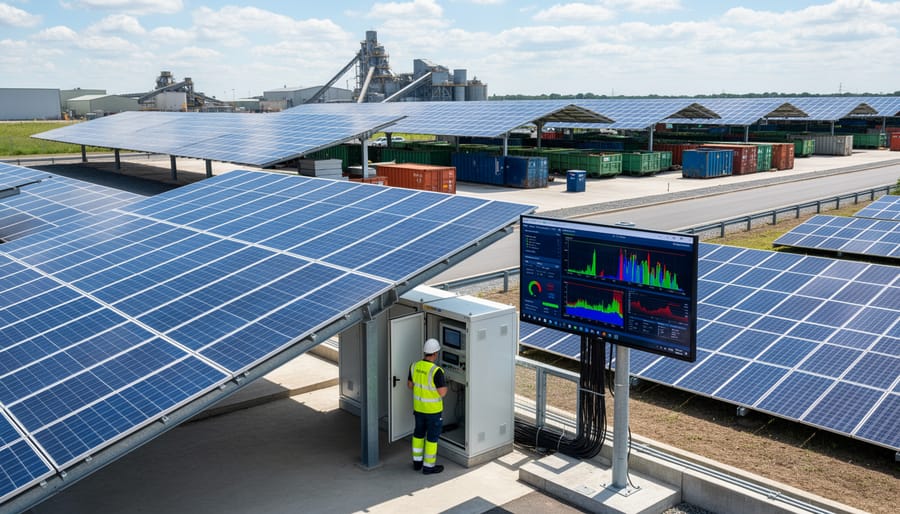
Solar installations at waste management facilities require specialized maintenance protocols to address the unique environmental challenges of these locations. Regular cleaning schedules should account for increased particulate accumulation from dust, debris, and airborne contaminants typical of waste processing operations. Implementing bi-weekly panel inspections and monthly deep cleaning procedures helps maintain optimal energy generation efficiency, with particular attention to junction boxes and mounting hardware that may corrode faster in these environments.
Performance monitoring systems tailored to waste facilities should track real-time output metrics and establish baseline comparisons against manufacturer specifications. Installing remote monitoring equipment enables facility managers to identify degradation patterns early and schedule preventive maintenance before significant efficiency losses occur. Integration of monitoring data with existing facility management systems creates comprehensive operational visibility.
Maintenance teams should receive specialized training on safety protocols specific to waste management environments, including proper personal protective equipment and contamination prevention measures. Establishing clear documentation procedures for all maintenance activities supports regulatory compliance and helps identify recurring issues. Partnering with university research programs can provide access to emerging best practices and innovative maintenance technologies designed specifically for challenging industrial applications.
Educational Pathways for PV Professionals in Waste Management
Skills and Knowledge Requirements
Professionals working at the intersection of solar power and waste management require a unique skill set combining photovoltaic system expertise with environmental engineering principles. Essential technical competencies include understanding PV module specifications, inverter technologies, energy storage solutions, and grid integration methods specific to industrial waste facilities. Knowledge of waste-to-energy processes, landfill gas composition, and recycling operations proves equally important for effective system design.
Contamination mitigation represents a critical competency area, as waste management environments present challenges like airborne particulates, corrosive gases, and moisture exposure that can compromise solar panel performance. Professionals must understand protective coatings, optimal mounting configurations, and maintenance protocols that address these harsh operating conditions.
Regulatory expertise spans multiple domains, including environmental compliance standards, electrical codes, building regulations, and renewable energy incentive programs. Familiarity with OSHA safety requirements for both solar installations and waste facilities ensures proper implementation.
Many universities now offer specialized programs combining renewable energy technology with environmental science coursework, providing aspiring professionals with integrated training. Industry certifications in photovoltaic installation, coupled with waste management credentials, create competitive advantages in this growing field. Continuous education remains essential as technologies evolve and new applications emerge in sustainable waste operations.
University Partnerships and Online Programs
As the solar waste management sector expands, specialized training becomes essential for professionals entering this emerging field. Universities worldwide are developing curriculum focused on photovoltaic recycling technologies, sustainable energy systems, and circular economy principles specific to solar infrastructure.
Mose Solar actively collaborates with academic institutions to create comprehensive training programs that address the technical and environmental challenges of solar panel end-of-life management. These partnerships combine theoretical knowledge with practical applications, ensuring graduates understand both collection logistics and advanced material recovery processes.
Online certification programs offer flexible learning pathways for working professionals seeking to transition into solar waste management roles. Courses cover essential topics including hazardous material handling, photovoltaic component separation, and regulatory compliance frameworks. Through integration with solar energy education initiatives, these programs prepare a skilled workforce capable of implementing sustainable recycling solutions at waste facilities and municipal operations, ultimately supporting the industry’s long-term environmental objectives.
Future Trends and Market Outlook
Emerging Technologies
Artificial intelligence is revolutionizing solar waste management through advanced sorting systems that identify photovoltaic module components with unprecedented accuracy. Machine learning algorithms analyze material composition, degradation patterns, and recycling potential in real-time, optimizing recovery processes and reducing contamination rates. These AI-powered systems can distinguish between various silicon types, metal contacts, and encapsulation materials, enabling more efficient separation and higher-quality secondary materials.
Internet of Things integration enables comprehensive tracking of solar panel lifecycles from installation through end-of-life processing. Smart sensors monitor panel performance degradation, predict failure points, and schedule optimal decommissioning timelines. This data-driven approach allows waste management facilities to prepare appropriate recycling infrastructure and capacity planning. Universities collaborating on IoT research are developing blockchain-based tracking systems that maintain transparent records of materials throughout the circular economy chain.
Next-generation photovoltaic technologies are being designed with recyclability as a core principle. Perovskite solar cells and organic photovoltaics incorporate materials that simplify disassembly and recovery processes. Research institutions are pioneering modular panel designs featuring easily separable components, reducing processing complexity and energy requirements during recycling. These innovations represent a fundamental shift toward sustainable manufacturing practices that address waste challenges before panels reach their operational phase.
Policy and Investment Landscape
Government policies worldwide increasingly recognize photovoltaic waste as both an environmental challenge and economic opportunity. The European Union’s Waste Electrical and Electronic Equipment (WEEE) Directive mandates producer responsibility for solar panel collection and recycling, requiring manufacturers to finance end-of-life management. This regulatory framework has catalyzed investment in recycling infrastructure across member states.
In the United States, several states including California and Washington have implemented extended producer responsibility legislation specific to solar panels. Federal investment tax credits now extend to recycling facilities that recover materials from decommissioned systems, creating financial incentives for circular economy development.
Circular economy initiatives are gaining momentum through public-private partnerships. The Solar Energy Industries Association has established voluntary recycling programs, while research institutions collaborate with universities to develop advanced recovery technologies. These partnerships often include educational program offerings that train the next generation of recycling specialists.
International funding opportunities include the Clean Energy Ministerial’s initiatives and World Bank projects supporting developing nations in establishing PV waste management systems. Innovation grants from agencies like the Department of Energy specifically target breakthrough recycling methods, reducing costs and improving material recovery rates. These investments collectively aim to transform solar waste from liability into valuable resource streams.
The convergence of solar photovoltaic technology and waste management represents a significant advancement in sustainable infrastructure development. As demonstrated through numerous real-world applications, from solar-powered compactors to grid-independent recycling facilities, this integration delivers dual environmental benefits: reducing greenhouse gas emissions while simultaneously improving waste processing efficiency. These systems demonstrate remarkable versatility across urban, rural, and remote environments, proving that renewable energy solutions can transform even the most energy-intensive municipal operations.
For aspiring photovoltaic professionals, this expanding field offers compelling career opportunities at the intersection of renewable energy and environmental services. The technical complexity of designing, installing, and maintaining solar-powered waste management systems requires specialized knowledge in PV system optimization, battery storage management, and load calculation specific to waste processing equipment. Professionals who develop expertise in these applications position themselves at the forefront of a growing sustainability sector that municipalities and private waste management companies increasingly prioritize.
The rapid evolution of both photovoltaic technology and waste management practices underscores the critical importance of ongoing education. Universities and technical institutions continue developing specialized programs addressing these integrated systems, ensuring that the next generation of renewable energy professionals possesses the interdisciplinary skills necessary for effective implementation. Collaboration between academic institutions, industry stakeholders, and technology providers facilitates knowledge transfer and innovation acceleration.
As climate action commitments intensify globally and municipalities seek cost-effective solutions for essential services, solar-powered waste management systems will transition from innovative pilot projects to standard infrastructure components. Success in this sector demands commitment to continuous learning, practical application of photovoltaic principles, and recognition that sustainable waste management represents not merely an environmental imperative but an economic opportunity with measurable returns on investment and lasting community benefits.