# Understanding Solar System Life Cycle: From Installation to Innovation
Solar photovoltaic systems represent a 25-30 year investment journey that extends far beyond initial installation. Modern solar panels now achieve 0.25-0.5% annual degradation rates—a remarkable improvement from the 1% degradation seen in first-generation systems—directly impacting long-term energy production and return on investment calculations.
The solar system lifecycle encompasses five critical phases: manufacturing and material sourcing, installation and commissioning, operational performance optimization, maintenance and monitoring, and end-of-life recycling. Each stage presents unique considerations that determine system efficiency, economic viability, and environmental impact. Recent innovations in bifacial technology, anti-reflective coatings, and passivated emitter rear contact (PERC) cells have fundamentally transformed performance expectations throughout the operational lifespan.
For professionals entering the photovoltaic industry, investors evaluating renewable energy portfolios, or consumers making long-term energy decisions, understanding lifecycle dynamics proves essential. Performance warranties now guarantee 85-90% output at year 25, while emerging recycling technologies recover up to 95% of panel materials, addressing circular economy concerns. Advanced monitoring systems using artificial intelligence detect micro-degradation patterns before they impact production, extending system longevity through predictive maintenance.
This comprehensive examination explores how lifecycle innovations reduce levelized cost of energy (LCOE), what technical advancements maximize energy yield across decades of operation, and how end-of-life strategies align with sustainability goals—equipping you with knowledge to make informed decisions in an rapidly evolving solar landscape.
The Five Stages of Solar PV System Life
Manufacturing: Where Efficiency Begins
The efficiency of solar panel manufacturing has undergone remarkable transformation in recent years, fundamentally shaping the environmental footprint and economic viability of photovoltaic systems from their very inception. Modern production facilities have achieved unprecedented reductions in energy consumption and material waste, establishing manufacturing as a critical leverage point for lifecycle optimization.
Monocrystalline panel production has benefited from advanced Czochralski crystal growing techniques that minimize silicon waste during ingot formation. Contemporary manufacturers now recover up to 95% of silicon sawing dust through recycling processes, dramatically reducing raw material consumption compared to earlier production methods. This recovered silicon re-enters the manufacturing stream, creating a closed-loop system that significantly lowers the energy payback time for finished panels.
Multi-crystalline production has similarly evolved, with directional solidification furnaces achieving faster crystallization cycles while maintaining crystal quality. These innovations reduce energy consumption per wafer by approximately 30% compared to traditional methods, while automated quality control systems identify defects at microscopic levels before they reach panel assembly stages.
Mono PERC (Passivated Emitter and Rear Cell) technology represents the current pinnacle of manufacturing innovation, incorporating laser-based rear surface passivation that enhances electron flow without substantially increasing production complexity. Manufacturing facilities producing PERC panels have integrated real-time monitoring systems that adjust parameters dynamically, ensuring consistent cell efficiency across production runs.
Quality control improvements extend throughout the manufacturing chain, from automated optical inspection systems detecting microcracks in wafers to electroluminescence imaging revealing electrical defects invisible to conventional testing. These advancements reduce defect rates to below 0.5% in leading facilities, ensuring panels enter service with maximum performance potential and extended operational lifespans that directly benefit long-term energy production calculations.
Installation and Early Performance
Proper installation serves as the foundation for decades of optimal solar system performance, directly influencing energy generation efficiency, structural integrity, and overall return on investment. The installation phase represents a critical junction where product quality meets execution precision, establishing baseline performance metrics that will persist throughout the system’s operational life.
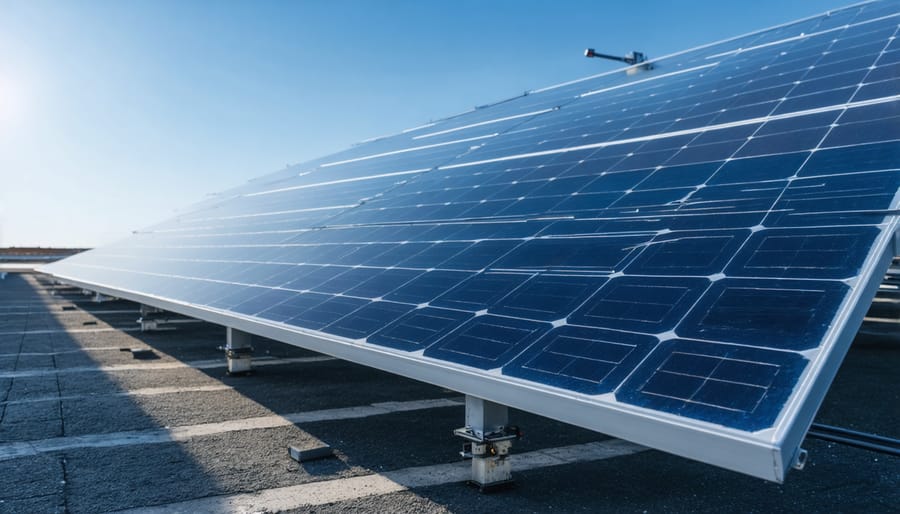
Modern mounting innovations have revolutionized installation practices across diverse applications. Fixed-tilt and adjustable racking systems now incorporate aerodynamic designs that reduce wind loading while optimizing angle of incidence for maximum solar capture. For residential applications, rail-less mounting systems minimize roof penetrations and installation time, while shared-rail configurations reduce material costs without compromising structural stability. Advanced mounting hardware utilizes corrosion-resistant materials such as anodized aluminum and stainless steel fasteners, ensuring long-term durability in varied environmental conditions.
Installation techniques vary significantly across product types. Traditional crystalline silicon modules require careful electrical planning, proper wire management, and precise torque specifications to prevent micro-cracking during mounting. Solar roof tiles and shingles demand specialized expertise, integrating directly into the building envelope with weatherproofing considerations paramount. These building-integrated photovoltaic (BIPV) products require coordination between roofing and electrical trades, with installers trained in both disciplines.
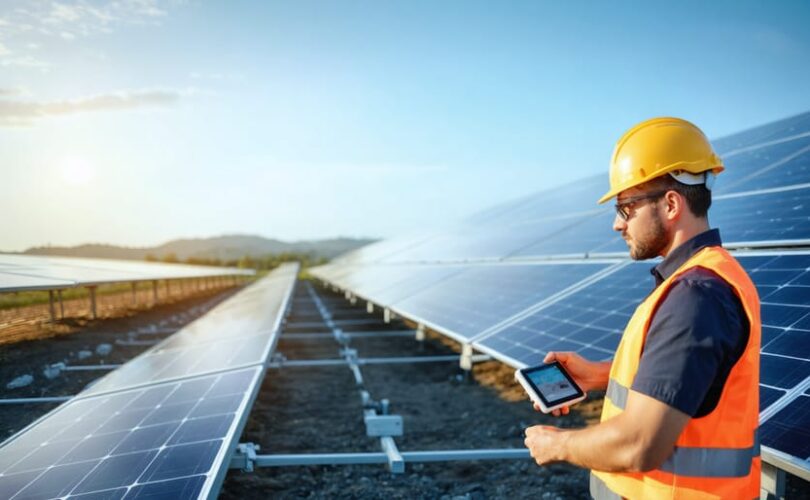
Initial system optimization through professional commissioning verifies design specifications and identifies potential issues before they impact performance. This process includes IV curve tracing, thermal imaging for hotspot detection, and electrical testing to ensure compliance with safety standards. University research collaborations have demonstrated that professionally commissioned systems consistently outperform those without proper validation, delivering 5-7% higher annual energy yields through optimized inverter settings and eliminating installation-related defects.
Performance Degradation: What Really Happens Over Time
Understanding Degradation Rates
Solar photovoltaic systems experience gradual performance decline over their operational lifetime, making degradation rates a critical metric for lifecycle analysis and investment planning. Industry data indicates that conventional crystalline silicon panels typically degrade at 0.5-0.8% annually, while thin-film technologies may experience slightly higher rates of 0.8-1.0% per year. This means a quality solar panel operating at 100% efficiency in year one will retain approximately 90% of its original capacity after twenty years under normal conditions.
Multiple environmental and operational factors influence degradation velocity. Extreme temperature cycling, particularly in desert climates, accelerates mechanical stress on cell interconnections and encapsulation materials. High ultraviolinity exposure causes polymer degradation in backsheets and encapsulants, while humidity ingress compromises electrical isolation. Mechanical stress from wind loading, thermal expansion, and potential-induced degradation (PID) in high-voltage systems further contribute to performance decline.
Modern innovations are substantially reducing these degradation rates through advanced materials engineering. Next-generation encapsulants with enhanced UV stability, improved cell metallization techniques, and anti-PID coatings have enabled premium monocrystalline PERC panels to achieve degradation rates below 0.4% annually. Bifacial modules with dual-glass construction demonstrate exceptional durability, while passivated contact technologies like TOPCon and heterojunction cells show promise for even lower degradation profiles.
Comparative performance analysis reveals significant variations across panel types. Monocrystalline panels consistently outperform polycrystalline alternatives in degradation resistance, while advanced heterojunction modules demonstrate the lowest documented degradation rates. Through collaborative research with academic institutions, manufacturers continue refining materials and manufacturing processes, extending effective system lifespans and improving long-term energy yield predictions for stakeholders across the renewable energy sector.
Environmental Stressors and Resilience
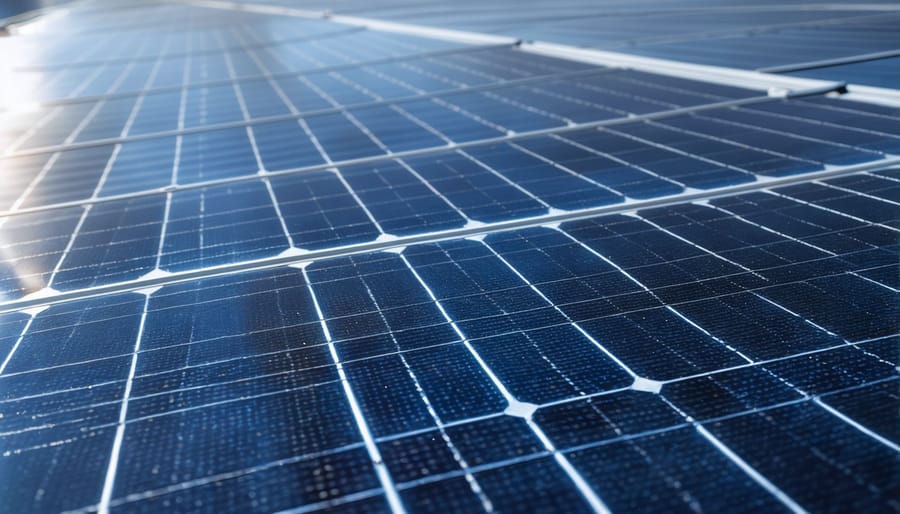
Photovoltaic panels endure relentless environmental challenges throughout their operational lifespan, making resilience engineering critical to system longevity. Temperature cycling subjects modules to thermal expansion and contraction, potentially weakening solder bonds and laminate adhesion. During field operation, panels may experience temperature fluctuations exceeding 100°C between day and night cycles, particularly in desert installations. This thermal stress accelerates material degradation and can compromise electrical connections over time.
Ultraviolet radiation presents another significant challenge, with high-energy photons gradually breaking down encapsulant materials and backsheet polymers. Research conducted in collaboration with leading universities has demonstrated that prolonged UV exposure can cause discoloration and reduced light transmission, directly impacting energy yield. Humidity ingress compounds these effects by enabling electrochemical corrosion of metallic components and potential-induced degradation of cell structures.
Mechanical stresses from wind loads, snow accumulation, and hail impact require robust module construction. Modern panels undergo rigorous testing protocols, including dynamic mechanical load testing and hail impact resistance verification at velocities exceeding 23 meters per second.
Material science innovations are dramatically improving panel resilience. Advanced encapsulants incorporating UV stabilizers and moisture barriers extend protection capabilities beyond traditional EVA formulations. Multi-layer backsheet designs with fluoropolymer compositions provide superior weathering resistance. Anti-reflective coatings now integrate self-cleaning properties and enhanced scratch resistance, maintaining optimal light capture while reducing maintenance requirements. These protective technologies, combined with improved frame designs and enhanced edge sealing, enable manufacturers to confidently offer 25-30 year performance warranties.
Breakthrough Innovations Extending System Longevity
Advanced Cell Technologies and Materials
Modern solar panels incorporate sophisticated technologies that significantly extend their operational lifespan and maintain higher efficiency levels throughout decades of service. Passivated Emitter and Rear Cell (PERC) technology represents a fundamental advancement in cell design, utilizing specialized passivation layers on the cell’s rear surface to reduce electron recombination and reflect unused photons back into the silicon wafer. This innovation typically increases panel efficiency by 1-2 percentage points compared to conventional cells, translating to enhanced energy production over the system’s lifetime.
Bifacial modules further optimize energy capture by generating electricity from both front and rear surfaces, absorbing reflected light from surrounding surfaces. Field studies demonstrate that bifacial systems can produce 5-30% additional energy depending on ground albedo and installation configuration, directly impacting the long-term return on investment.
Advanced passivation techniques, including aluminum oxide and silicon nitride layers, minimize surface defects that accelerate degradation. These materials create protective barriers against moisture infiltration and potential-induced degradation (PID), common causes of premature performance loss.
Next-generation encapsulation materials, such as polyolefin elastomers and thermoplastic polyurethane, offer superior resistance to ultraviolet exposure and temperature cycling compared to traditional EVA encapsulants. Universities collaborating with industry partners continue researching novel materials like perovskite-silicon tandem cells, which promise efficiency rates exceeding 30% while maintaining stability throughout extended operational periods. These technological refinements collectively ensure that contemporary solar systems deliver consistent, reliable performance across their 25-30 year lifespan while supporting recyclability objectives.
Smart Monitoring and Predictive Maintenance
Modern photovoltaic systems increasingly leverage advanced technologies to optimize performance throughout their operational lifespan. IoT integration has revolutionized how solar installations communicate real-time data, enabling continuous monitoring of voltage, current, temperature, and energy production across individual panels or entire arrays. These connected devices transmit performance metrics to centralized platforms where AI-powered analytics identify anomalies, degradation patterns, and potential failures before they impact system output.
Thermal imaging diagnostics have become essential tools for detecting hotspots, cell damage, and connection issues invisible to the naked eye. Drone-mounted infrared cameras can survey large-scale installations rapidly, pinpointing underperforming modules that require attention. This non-invasive approach significantly reduces inspection time while improving diagnostic accuracy.
Data analytics platforms now process historical performance data alongside environmental variables to predict maintenance needs with remarkable precision. Machine learning algorithms recognize subtle efficiency declines that signal imminent component failures, allowing operators to schedule interventions during optimal weather windows. This predictive maintenance approach minimizes downtime and extends system longevity by addressing issues proactively rather than reactively.
Universities collaborating with solar industry leaders are developing increasingly sophisticated monitoring algorithms that account for seasonal variations, soiling patterns, and aging characteristics specific to different panel technologies. These research partnerships advance our understanding of long-term performance optimization, translating academic insights into practical maintenance strategies. Educational programs now incorporate these monitoring technologies, preparing professionals to maximize solar system value throughout the complete lifecycle.
Design Innovations for Longevity
Modern photovoltaic systems incorporate sophisticated design innovations that significantly extend operational lifespans beyond traditional expectations. Advanced encapsulation technologies now employ multi-layer protection systems, utilizing ethylene vinyl acetate (EVA) or polyolefin elastomer (POE) materials that provide superior moisture resistance and UV stability, reducing degradation rates to below 0.5% annually.
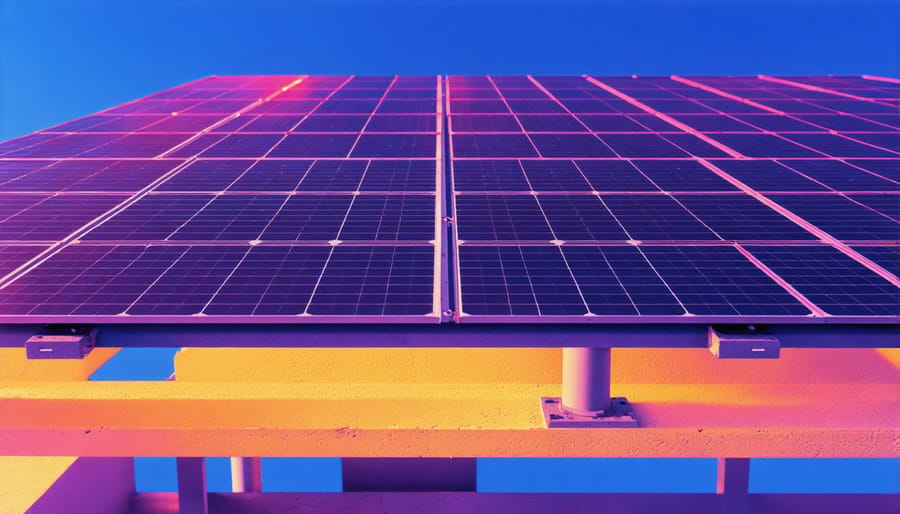
Frame engineering has evolved to address thermal expansion challenges and mechanical stress. Anodized aluminum frames with reinforced corner joints and integrated drainage channels prevent water accumulation and corrosion, while frameless designs eliminate potential failure points altogether. These improvements contribute substantially to maintaining structural integrity throughout 30-year operational periods.
Junction box technology has advanced with improved sealing mechanisms and bypass diode configurations that minimize hotspot formation and electrical failures. Contemporary designs incorporate thermal management features and enhanced potting compounds that withstand temperature cycling and environmental exposure.
Building-integrated photovoltaic products, including solar tiles and architectural shingles, integrate durability features directly into roofing materials. These systems employ impact-resistant tempered glass, weather-sealed electrical connections, and mounting systems designed for decades of exposure. Through collaborative research with universities, manufacturers continue refining material compositions and manufacturing processes, developing next-generation products that balance aesthetic integration with extended performance warranties reaching 30-40 years.
End-of-Life Management and the Circular Economy
Current Recycling Technologies
As photovoltaic systems reach their operational end-of-life after 25-30 years, recovering valuable materials becomes essential for environmental sustainability and resource conservation. Current recycling processes employ two primary methodologies: mechanical and chemical separation.
Mechanical recycling begins with disassembly, removing aluminum frames and junction boxes, which can be recycled through conventional metal recovery channels. The remaining panel undergoes crushing and separation techniques including screening, magnetic separation, and eddy current systems to isolate different material streams. This approach typically recovers 85-90% of glass content and aluminum, though silicon cell recovery remains limited.
Chemical recycling methods offer superior material recovery rates by utilizing thermal, solvent-based, or acid treatments to separate encapsulant materials and extract high-purity components. These processes can recover up to 95% of glass, 85-90% of silicon, and nearly all copper and silver content—critical given silver’s role as a valuable conductor in cell metallization.
Industry standards for PV recycling are evolving globally. The European Union’s WEEE Directive mandates 85% collection and 80% recovery rates for solar panels. In the United States, several states have implemented extended producer responsibility programs requiring manufacturers to finance end-of-life management.
Research collaborations between universities and industry leaders continue advancing these technologies, developing more efficient separation techniques and exploring opportunities to refine recovered silicon into solar-grade material for new panel production.
Second-Life Applications and Repurposing
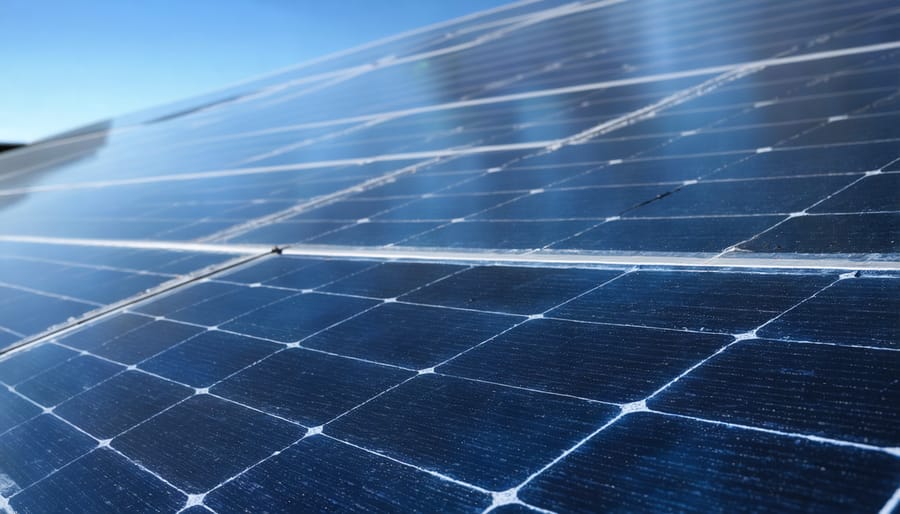
Solar panels that no longer meet peak performance standards for primary energy generation can still deliver significant value through second-life applications. Modules operating at 70-80% capacity remain viable for less demanding applications, effectively extending their functional lifespan by 10-15 years while diverting material from waste streams.
Emerging markets for degraded panels include off-grid installations in developing regions, agricultural applications such as solar-powered irrigation systems, and backup power for telecommunications infrastructure. Educational institutions increasingly partner with refurbishment programs to acquire cost-effective panels for training facilities, allowing students to gain hands-on experience with photovoltaic technology. These collaborations support workforce development while maximizing resource utilization.
Refurbishment processes involve comprehensive testing to assess remaining capacity, replacement of junction boxes or bypass diodes when necessary, and reframing for continued structural integrity. Third-party certification programs are developing standards to verify performance specifications for repurposed modules, building market confidence and facilitating transactions.
The economic benefits are substantial: secondary markets reduce initial investment barriers for small-scale adopters while providing revenue streams that improve the overall financial return for original system owners. Environmental advantages include decreased demand for virgin materials and reduced landfill burden. As circular economy principles gain traction, standardized protocols for testing, grading, and reselling degraded panels will likely accelerate market growth, transforming end-of-life management from a disposal challenge into an opportunity for extended value creation.
Economic Impact of Lifecycle Innovations
Levelized Cost of Energy (LCOE) Improvements
The Levelized Cost of Energy (LCOE) represents the average cost per kilowatt-hour generated over a solar system’s entire operational lifespan, making it a critical metric for investment evaluation. Extended system lifespans directly reduce LCOE by spreading initial capital costs across more years of energy production. When modern PV systems operate efficiently for 30-35 years instead of the traditional 25-year benchmark, the cost per unit of electricity decreases substantially.
Reduced degradation rates further enhance this economic advantage. Systems maintaining 90% capacity after 25 years versus 80% generate significantly more cumulative energy from the same initial investment. This improvement, combined with declining equipment costs and improved manufacturing efficiencies, has driven LCOE reductions of over 85% in the past decade.
For investors and facility managers, comprehensive lifecycle cost analysis incorporating performance warranties, maintenance requirements, and realistic degradation projections provides accurate financial modeling. Modern bifacial modules, advanced inverters, and robust mounting systems contribute to lower LCOE through enhanced energy yield and reduced replacement frequency. These factors collectively strengthen the business case for solar adoption across residential, commercial, and utility-scale applications.
Warranty Evolution and Risk Reduction
As solar panel technology advances and real-world performance data accumulates, manufacturers are confidently extending warranty periods—a development that fundamentally reshapes investment calculations. Modern photovoltaic systems now commonly feature 25-year performance warranties guaranteeing 80-85% of original output, with some premium manufacturers offering 30-year coverage based on documented lifecycle durability.
Companies like Mose Solar leverage decades of field testing and collaboration with university research programs to validate long-term degradation rates below 0.5% annually. This empirical evidence enables extended warranty offerings that directly translate to reduced financial risk for commercial and residential investors. The warranty evolution reflects genuine technological improvements rather than marketing tactics—advanced encapsulation materials, bifacial cell designs, and superior manufacturing quality control contribute to measurably longer service lives.
For investors and project developers, these extended warranties provide bankable assurances that facilitate financing and improve project economics. Insurance underwriters increasingly recognize comprehensive warranties as risk mitigation tools, potentially lowering premiums. This warranty-backed confidence is accelerating market adoption, particularly in emerging markets where perceived technology risk previously hindered investment. The transparent performance guarantees establish clear accountability and strengthen consumer trust throughout the solar industry.
Educational Pathways for PV Professionals
Understanding the complete solar system lifecycle has become essential knowledge for anyone entering the photovoltaic industry. As the sector matures and systems installed during the early boom years approach their end-of-life phase, professionals must grasp not only installation techniques but also long-term performance optimization, maintenance strategies, and responsible decommissioning practices.
Today’s PV professionals require comprehensive training that spans the entire lifecycle continuum—from initial system design considerations that affect 25-year performance trajectories to emerging recycling technologies that recover valuable materials. This holistic understanding enables professionals to make informed decisions that maximize both economic returns and environmental benefits throughout a system’s operational life.
Recognizing this educational imperative, forward-thinking organizations are partnering with academic institutions to develop curriculum that addresses real-world lifecycle challenges. Mose Solar’s university-collaboration initiative exemplifies this approach, bridging the gap between theoretical knowledge and practical application. These partnerships provide students with hands-on experience in lifecycle assessment, performance monitoring, degradation analysis, and emerging innovations such as bifacial modules and advanced inverter technologies.
Such programs prepare graduates to tackle critical industry questions: How do material choices during manufacturing impact 30-year performance? What maintenance protocols optimize energy yield while controlling costs? How can predictive analytics extend system lifespan? What circular economy principles should guide end-of-life management?
By equipping the next generation with comprehensive lifecycle expertise, these educational pathways ensure that future industry leaders can implement cutting-edge innovations while maintaining the sustainability principles that drive the renewable energy transition. This knowledge foundation proves invaluable as professionals navigate an increasingly sophisticated industry where lifecycle optimization directly impacts project viability and environmental outcomes.
Understanding the complete lifecycle of solar photovoltaic systems represents far more than an academic exercise—it stands as a fundamental requirement for anyone making informed decisions in the renewable energy sector. From manufacturing innovations that reduce carbon footprints to advanced monitoring systems that optimize performance throughout operational decades, and finally to sophisticated recycling processes that recover valuable materials, every lifecycle stage presents opportunities to enhance sustainability and economic value.
The solar industry’s maturation has brought remarkable advances in lifecycle thinking. Modern panels now deliver performance ratios exceeding 80% over 25-30 year warranties, while emerging technologies promise even greater longevity. These improvements translate directly into stronger returns on investment, reduced levelized costs of energy, and substantially lower environmental impacts per kilowatt-hour generated.
For aspiring photovoltaic professionals, integrating lifecycle analysis into project planning distinguishes competent practitioners from exceptional ones. Academic researchers continue uncovering innovations that extend system viability and reduce end-of-life waste. Environmentally conscious consumers increasingly recognize that the greenest solar installation considers not just immediate energy production, but decades of performance and responsible material stewardship.
As you evaluate solar technologies—whether for professional projects, research initiatives, or personal installations—prioritize systems designed with lifecycle excellence. Examine manufacturer commitments to sustainable production, seek robust performance guarantees, and verify end-of-life recycling partnerships. Through collaboration between universities, industry leaders, and informed consumers, lifecycle-optimized solar systems will continue driving the transition toward genuinely sustainable energy infrastructure.