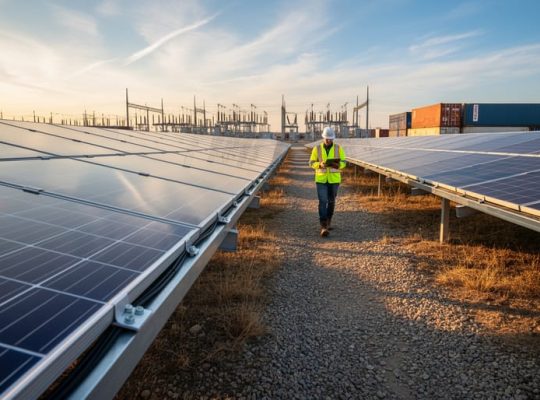
Solar energy stands at the forefront of our global transition to sustainable power, representing one of the most promising solutions to our growing energy demands and environmental challenges. As photovoltaic technology advances rapidly and production costs continue to decline, the solar industry is experiencing unprecedented growth, with global installed capacity projected to triple by 2027.
The convergence of technological innovation, declining manufacturing costs, and increasing environmental awareness has created a pivotal moment in solar energy’s evolution. Modern solar panels now achieve efficiency rates exceeding 23% in commercial applications, while emerging technologies like perovskite cells promise even higher performance benchmarks. This technical progress, combined with supportive policy frameworks and growing corporate commitments to renewable energy, has transformed solar power from an alternative energy source into a mainstream power generation solution.
The economic case for solar energy has never been stronger. With levelized cost of electricity (LCOE) dropping below traditional fossil fuels in many markets, solar installations are increasingly attractive to both utility-scale developers and individual consumers. This cost-effectiveness, coupled with enhanced energy storage solutions and smart grid integration, positions solar power as a cornerstone of future energy systems.
As we look toward 2030 and beyond, solar energy’s potential extends far beyond current applications. Emerging technologies in building-integrated photovoltaics, solar thermal storage, and advanced materials promise to revolutionize how we harness and utilize solar power, creating new opportunities for innovation and investment in this rapidly evolving sector.
Current Solar Energy Landscape in Emerging Markets
Market Size and Growth Trends
The global solar energy market has experienced remarkable growth, reaching a valuation of $184.03 billion in 2021 and demonstrating a compound annual growth rate (CAGR) of 20.5%. According to industry analysts, this trajectory is expected to continue, with projections indicating a market value exceeding $300 billion by 2028.
Utility-scale solar installations have dominated market share, accounting for approximately 55% of total installations in 2021. Commercial and residential sectors follow, with increasing adoption rates driven by falling technology costs and supportive government policies. China leads global solar capacity with over 300 GW installed, followed by the United States and Japan.
Emerging markets, particularly in Southeast Asia and Latin America, are showing substantial growth potential, with annual installation rates increasing by 40-50% in these regions. India’s ambitious solar targets and Africa’s untapped solar resources present significant opportunities for market expansion.
The distributed solar segment is experiencing particularly robust growth, with a CAGR of 27.8%. This trend is supported by increasing energy independence demands and the integration of smart grid technologies. Additionally, the solar-plus-storage market is expanding rapidly, with annual deployments doubling since 2019, indicating a shift toward more comprehensive energy solutions.
Key Players and Investment Patterns
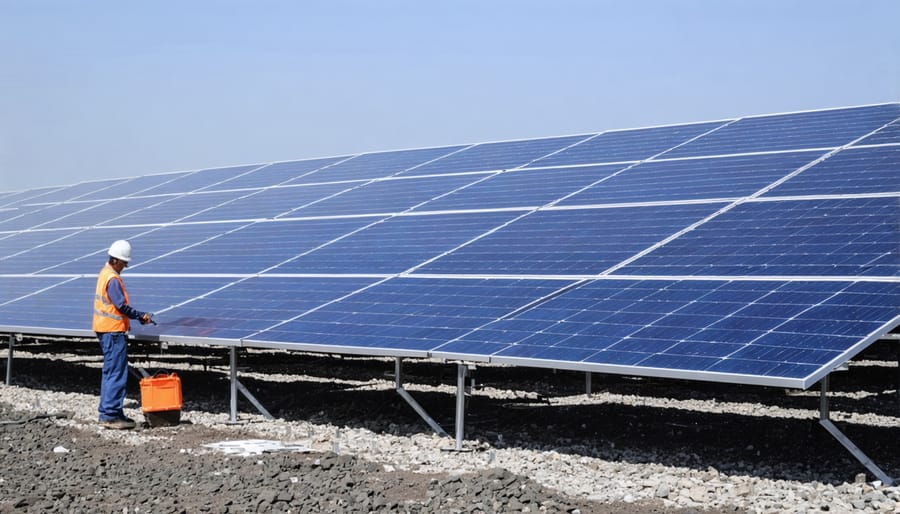
The solar energy landscape is dominated by major corporations and government entities driving significant investment into renewable technologies. Industry leaders like First Solar, SunPower, and Tesla’s solar division continue to shape market dynamics through technological innovation and large-scale project development. Chinese manufacturers, including LONGi Solar and JinkoSolar, maintain their position as global leaders in solar panel production and distribution.
Investment patterns show a clear upward trend, with global solar energy investments reaching $272 billion in 2022. Institutional investors and private equity firms are increasingly allocating capital to utility-scale solar projects, while venture capital focuses on emerging technologies like perovskite cells and advanced energy storage solutions.
Government initiatives play a crucial role, with the U.S. Investment Tax Credit (ITC) program providing substantial incentives for solar adoption. The European Union’s Green Deal and China’s renewable energy policies continue to facilitate market growth through targeted subsidies and regulatory support.
Corporate investments through Power Purchase Agreements (PPAs) have become increasingly prevalent, with tech giants like Google, Amazon, and Microsoft leading the way in renewable energy procurement. These agreements provide stable revenue streams for project developers while helping corporations meet their sustainability goals.
Emerging markets are attracting significant attention, with India’s National Solar Mission and various African nations’ renewable energy programs creating new investment opportunities. International development banks and climate funds are providing crucial financing support for solar projects in developing regions.
Technological Advancements Driving Growth
Innovation in PV Module Efficiency
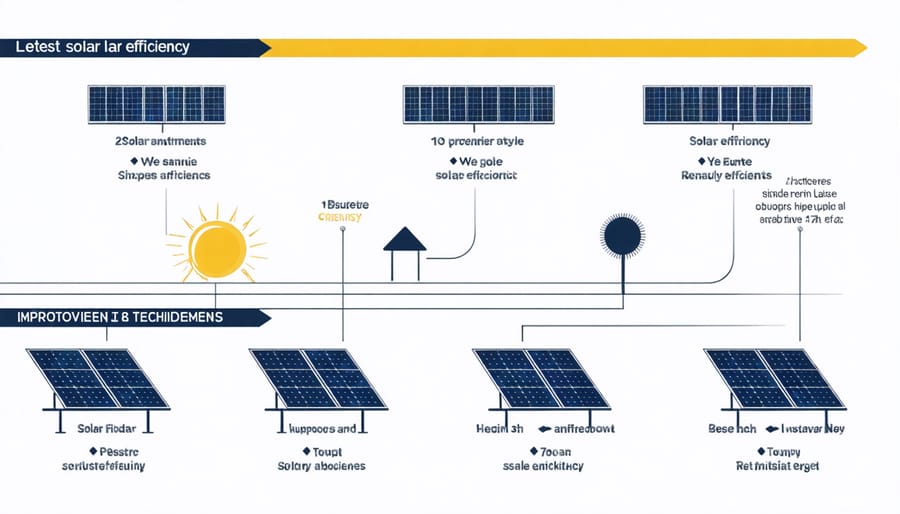
Recent advancements in photovoltaic technology have significantly improved module efficiency while driving down production costs. Modern commercial solar panels routinely achieve efficiency rates of 15-20%, with premium modules reaching up to 23%. Laboratory prototypes using multi-junction cells have demonstrated efficiencies exceeding 47%, indicating substantial potential for future improvements.
Key innovations driving these efficiency gains include the development of PERC (Passivated Emitter and Rear Cell) technology, which enhances light absorption and reduces electron recombination. Bifacial modules, capable of capturing reflected light on both sides, can increase energy yield by 5-30% compared to traditional panels, depending on installation conditions.
Heterojunction technology (HJT) combines different semiconductor materials to improve light capture across the solar spectrum, while tandem cells stack multiple light-absorbing layers to maximize energy conversion. These advances, coupled with improvements in manufacturing processes, have contributed to a remarkable 85% reduction in module costs over the past decade.
Material innovations are equally crucial, with researchers developing new semiconductors and exploring perovskite-silicon tandems. These next-generation materials promise higher efficiencies at lower production costs. Additionally, advanced surface texturing and anti-reflective coatings minimize light loss, while improved encapsulation techniques extend module lifespan and durability.
The integration of smart monitoring systems and optimization algorithms further enhances overall system performance. Machine learning applications are increasingly used to predict maintenance needs and optimize power output under varying environmental conditions, ensuring maximum efficiency throughout the module’s operational lifetime.
Storage Solutions and Grid Integration
Energy storage solutions and grid integration are crucial components in maximizing solar energy’s potential and ensuring reliable power supply. As solar installations continue to grow, advanced storage technologies are becoming increasingly vital for managing intermittency issues and optimizing energy distribution.
Battery storage systems, particularly lithium-ion technologies, have emerged as the primary solution for both utility-scale installations and decentralized solar solutions. These systems offer high energy density, improved cycle life, and declining costs, making them increasingly attractive for commercial applications. Alternative storage technologies, such as flow batteries and thermal storage systems, are also showing promise for specific use cases.
Grid integration challenges are being addressed through smart grid technologies and advanced power electronics. Modern inverters with grid-support functions help maintain stability and power quality, while sophisticated energy management systems optimize the flow between solar generation, storage, and consumption points.
Recent developments in virtual power plants (VPPs) and demand response programs are enabling better coordination between distributed solar resources and the grid. These innovations allow for more efficient use of solar generation while providing grid operators with greater flexibility in managing power flow.
Looking ahead, emerging technologies such as artificial intelligence-driven forecasting and blockchain-based energy trading platforms are set to revolutionize how solar energy is integrated into power systems. These advancements, combined with continuing improvements in storage technology, will be essential in achieving higher penetration rates of solar power in electricity markets worldwide.
Economic Benefits and Investment Opportunities
Cost Analysis and Financial Returns
Understanding the financial aspects of solar energy installations is crucial for making informed investment decisions. Initial installation costs typically range from $15,000 to $25,000 for residential systems and $50,000 to several million dollars for commercial installations, depending on system size and complexity. However, solar financing options have become increasingly accessible, making adoption more feasible for various stakeholders.
The cost breakdown generally follows this structure: solar panels (30%), inverters (10%), mounting equipment (10%), labor (25%), and permits/overhead (25%). Operating expenses remain relatively low, primarily involving periodic maintenance and occasional component replacement, typically accounting for 1-2% of the initial investment annually.
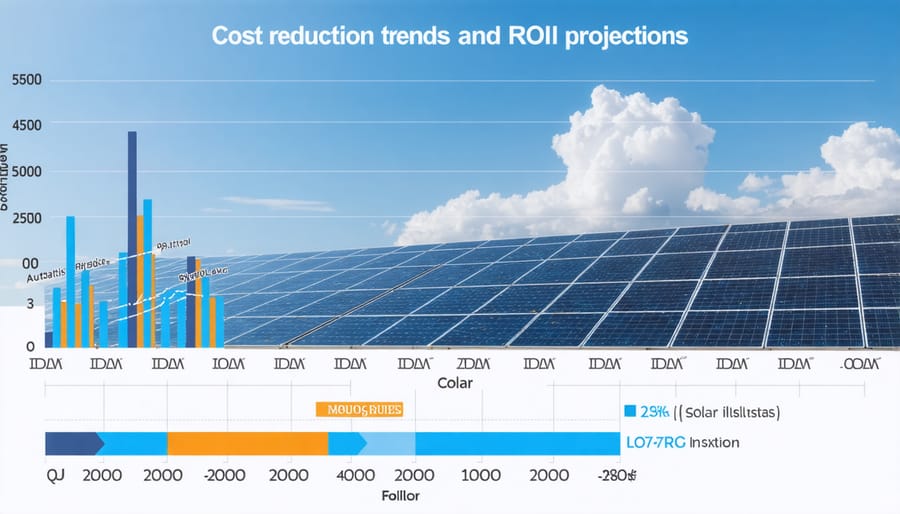
Solar power investment returns have shown remarkable improvement, with payback periods decreasing from 10+ years to 5-7 years in many regions. This acceleration is attributed to technological advancements, declining equipment costs, and increased efficiency ratings of modern solar panels.
Key financial benefits include:
– Electricity bill reduction (50-90%)
– Federal and state tax incentives
– Renewable energy credits
– Property value appreciation (3-4%)
Maximizing solar ROI depends on various factors, including geographic location, local electricity rates, and system optimization. Current market analysis indicates an average return on investment of 10-12% annually, with some installations achieving higher returns in areas with premium electricity rates or favorable solar conditions.
The long-term financial outlook remains positive, supported by continuing technological improvements and increasing grid electricity costs. When factoring in the 25-30 year lifespan of modern solar installations, the cumulative returns often exceed 200% of the initial investment.
Job Creation and Economic Growth
The solar energy sector has emerged as a significant driver of economic growth and employment opportunities worldwide. Recent industry analyses indicate that the solar power industry creates more jobs per unit of electricity generated than any other energy sector. As of 2023, the solar industry employs over 3.4 million people globally, with projections suggesting this number could reach 5 million by 2030.
The employment benefits of solar energy extend across various skill levels and sectors. Job creation spans the entire value chain, from manufacturing and distribution to installation and maintenance. Solar panel manufacturing facilities provide stable industrial employment, while installation and maintenance services create numerous local technical positions. Project development and engineering roles offer high-skilled employment opportunities for professionals with advanced degrees.
Local economies benefit substantially from solar energy projects. When communities invest in solar installations, they experience increased economic activity through direct job creation and indirect effects on supporting industries. Small businesses particularly benefit from the growth of the solar sector, as they often provide specialized services such as site assessment, electrical work, and maintenance support.
The economic impact extends beyond direct employment. Solar projects contribute to local tax revenues, which can fund essential community services and infrastructure improvements. Additionally, workforce development programs and technical training initiatives prepare local residents for careers in the renewable energy sector, creating pathways to sustainable employment.
Research indicates that regions with strong solar energy presence experience enhanced economic resilience. The stable nature of solar energy jobs, combined with competitive wages and benefits, contributes to community stability and growth. Furthermore, the localized nature of solar installation and maintenance work means these jobs cannot be easily outsourced, ensuring long-term employment security for local communities.
The industry’s growth also stimulates innovation and entrepreneurship, creating opportunities for new business ventures in technology development, energy storage solutions, and smart grid integration. This ecosystem of innovation further strengthens local economies and establishes foundations for sustainable economic development.
Challenges and Solutions
Infrastructure and Technical Barriers
The widespread adoption of solar energy faces several significant infrastructure and technical barriers that require strategic solutions. Grid integration remains a primary challenge, as existing power networks often lack the flexibility to accommodate intermittent solar power generation. This necessitates substantial upgrades to transmission and distribution systems, including smart grid technologies and advanced monitoring systems.
Energy storage limitations continue to impact solar power reliability. While battery technology is advancing rapidly, current storage solutions struggle to provide cost-effective, long-term energy storage at utility scale. This challenge becomes particularly acute during peak demand periods and in regions with variable weather conditions.
Physical infrastructure requirements pose additional obstacles. Large-scale solar installations demand extensive land use, which can be problematic in densely populated areas or regions with competing land interests. The development of transmission corridors and interconnection facilities often faces regulatory hurdles and community opposition.
Technical efficiency barriers persist despite ongoing improvements in photovoltaic technology. Current commercial solar panels typically achieve conversion efficiencies between 15-20%, though laboratory prototypes have demonstrated higher rates. Material degradation and performance losses due to environmental factors such as dust, temperature variations, and weather exposure continue to affect long-term system reliability.
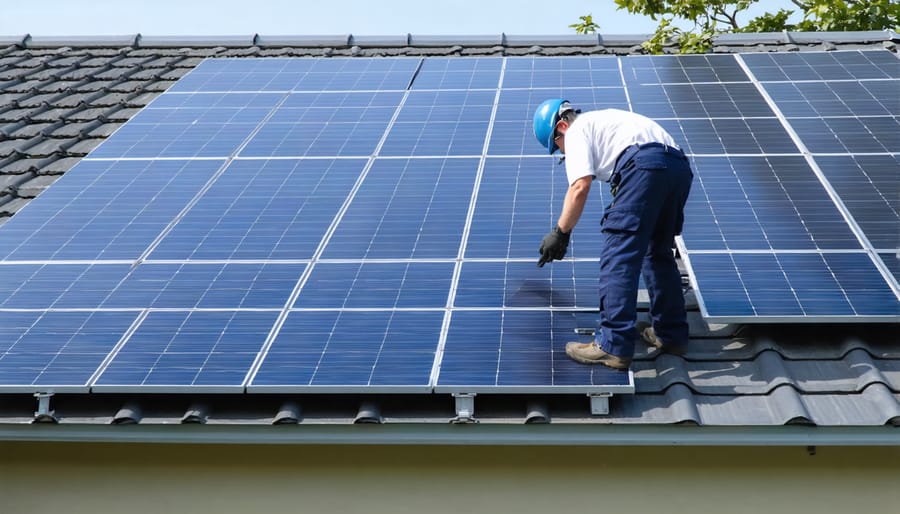
Maintenance infrastructure presents another significant challenge. Solar installations require regular cleaning, component replacement, and performance monitoring, necessitating skilled technicians and sophisticated maintenance protocols. The shortage of qualified personnel and specialized equipment in many regions can impact system optimization and longevity.
These challenges underscore the importance of continued research and development, infrastructure investment, and workforce training to advance solar energy implementation. Industry stakeholders must collaborate to develop innovative solutions that address these barriers while maintaining cost-effectiveness and operational efficiency.
Policy and Regulatory Framework
The evolution of the solar energy policy framework has become increasingly sophisticated, with governments worldwide implementing comprehensive regulations to accelerate solar adoption. Feed-in tariffs, renewable portfolio standards, and investment tax credits have emerged as primary policy instruments driving market growth. These mechanisms provide financial incentives for both residential and commercial solar installations while ensuring grid stability and fair market competition.
Key regulatory developments include streamlined permitting processes, standardized interconnection requirements, and updated building codes that mandate solar-ready construction. Many jurisdictions have also introduced net metering policies, allowing solar energy producers to receive credits for excess power fed back into the grid. This has significantly improved the economic proposition for distributed solar generation.
Environmental regulations supporting carbon reduction targets have further strengthened the case for solar energy deployment. International agreements, such as the Paris Accord, have prompted nations to establish ambitious renewable energy goals, often backed by specific solar capacity targets and implementation timelines.
At the local level, municipalities are developing zoning regulations and land-use policies that facilitate solar project development while protecting community interests. These frameworks address critical aspects such as visual impact, environmental preservation, and agricultural land conservation. Additionally, utility regulations are evolving to accommodate higher penetration of solar power, with updated grid codes and interconnection standards ensuring system reliability and power quality.
Moving forward, policy frameworks are expected to focus on energy storage integration, grid modernization, and community solar programs, creating a more inclusive and resilient energy system.
The trajectory of solar energy development presents compelling evidence for its pivotal role in shaping our energy future. Throughout this analysis, we’ve explored the remarkable technological advances, declining costs, and increasing efficiency of photovoltaic systems that continue to drive industry growth. The integration of smart grid technologies and energy storage solutions has significantly enhanced the viability of solar power as a mainstream energy source.
Market trends indicate that solar energy adoption will accelerate dramatically over the next decade, with projections suggesting a threefold increase in global installed capacity by 2030. This growth is supported by favorable policy frameworks, increased corporate commitments to renewable energy, and growing public awareness of environmental sustainability.
Key challenges remain, including grid integration complexities, intermittency issues, and the need for continued technological innovation. However, emerging solutions such as advanced battery storage systems, artificial intelligence-driven energy management, and improved solar cell efficiency are actively addressing these obstacles.
The future outlook is particularly promising in developing markets, where solar energy offers both environmental benefits and economic opportunities. Investment in research and development continues to yield breakthrough technologies, while decreasing installation costs make solar increasingly accessible to a broader range of consumers and businesses.
As we move forward, the success of solar energy implementation will depend on sustained collaboration between industry stakeholders, government bodies, and research institutions. With continued technological advancement and supportive policy frameworks, solar energy is well-positioned to play a central role in the global transition to renewable energy sources, offering both environmental sustainability and economic viability for future generations.