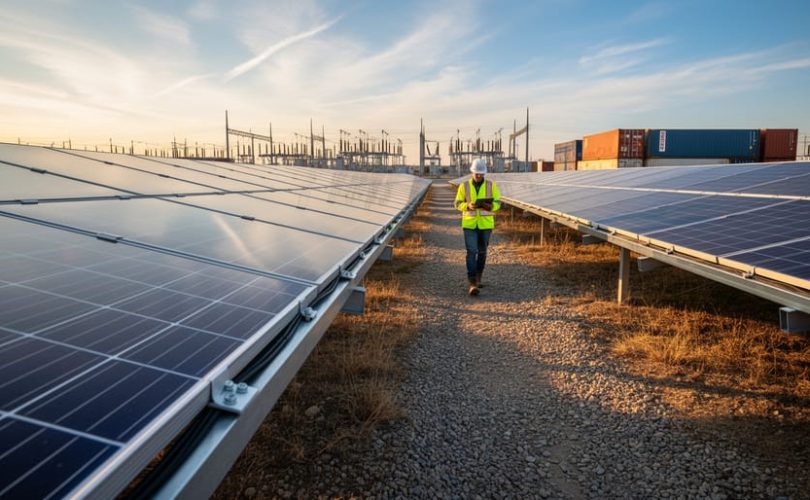
Understand that solar energy has fundamentally transformed from an expensive alternative to the most economically competitive power source globally, with levelized costs declining by 90% over the past decade through unprecedented supply chain optimization and manufacturing scale. The photovoltaic industry now represents a $200 billion annual market where polysilicon refinement, wafer production, cell fabrication, and module assembly each contribute distinct economic pressures that determine final electricity pricing.
Examine how raw material costs—particularly high-purity polysilicon and silver metallization—comprise approximately 35-40% of module expenses, while manufacturing efficiency gains through PERC, TOPCon, and heterojunction technologies continuously reduce the cost per watt. Geographic concentration in supply chains creates both economies of scale and vulnerability points, with over 80% of global production capacity located in specific regions that leverage vertical integration and automated production lines.
Recognize that solar investment returns now compete favorably with traditional energy sources across most markets, driven by declining capital expenditure, improved module efficiency exceeding 22% commercially, and extended operational lifespans reaching 30-35 years. Balance-of-system components—inverters, mounting structures, and installation labor—represent the remaining cost frontier where innovation opportunities persist.
Anticipate that emerging technologies including bifacial modules, half-cut cells, and multi-busbar designs will further compress costs while increasing energy yield per installation. Policy mechanisms, trade regulations, and carbon pricing frameworks interact dynamically with supply chain economics to shape regional competitiveness and deployment velocity. Understanding these interconnected economic factors enables informed decision-making whether you are evaluating project feasibility, pursuing industry careers, or analyzing renewable energy transitions from academic or investment perspectives.
The Supply Chain Architecture Behind Solar Economics
Raw Material Sourcing and Processing
The economics of solar energy begin with polysilicon production, a highly energy-intensive process that significantly influences overall module costs. Polysilicon, refined to 99.9999% purity, serves as the foundational material for crystalline silicon solar cells, which dominate approximately 95% of the photovoltaic market. Production costs for polysilicon have declined dramatically from over $400 per kilogram in 2008 to below $10 per kilogram in recent years, driven by technological improvements and manufacturing scale.
Wafer manufacturing represents the next critical stage, where polysilicon ingots are sliced into thin wafers measuring 160-200 micrometers. This process involves substantial capital investment in specialized equipment, with modern facilities requiring hundreds of millions of dollars in infrastructure. Material costs at this stage account for roughly 30-40% of final module prices, making efficiency in polysilicon utilization economically paramount.
Geographic concentration presents both opportunities and vulnerabilities in solar supply chains. China currently produces over 80% of global polysilicon and dominates wafer manufacturing, creating economies of scale that reduce costs but also concentrate supply chain risk. This concentration emerged through strategic industrial policy, low-cost energy access, and substantial government support for domestic manufacturing capacity.
The flow of material costs through the supply chain demonstrates clear economic patterns. Upstream improvements in polysilicon production efficiency directly impact downstream costs, with each 10% reduction in material consumption potentially lowering module prices by 3-4%. Understanding these interdependencies enables industry stakeholders to identify optimization opportunities and anticipate price fluctuations based on raw material market conditions.

Manufacturing and Assembly Economies
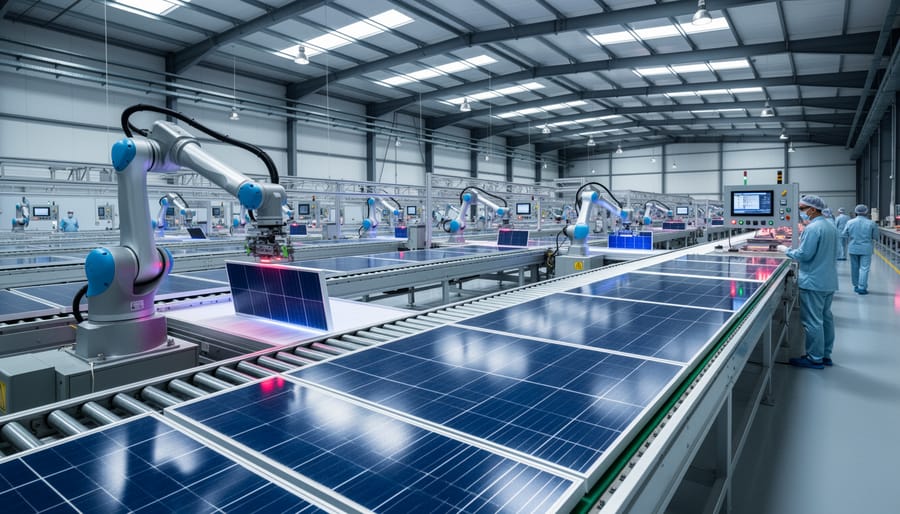
Photovoltaic module manufacturing has achieved remarkable cost reductions through economies of scale, fundamentally transforming solar energy economics. As production volumes expanded globally from 25 gigawatts in 2010 to over 400 gigawatts annually by 2023, manufacturers realized dramatic efficiency gains across procurement, production, and distribution processes.
Manufacturing scale economies manifest differently across PV technologies. Monocrystalline silicon modules, which utilize single-crystal wafers for higher efficiency, initially commanded premium prices due to complex production requirements. However, as leading manufacturers automated ingot growth and wafer slicing operations, per-unit costs declined substantially. Multi-crystalline technology, while offering slightly lower conversion efficiency, achieved earlier cost advantages through simpler manufacturing processes and lower material waste rates.
The emergence of PERC (Passivated Emitter and Rear Cell) technology exemplifies how innovation amplifies scale benefits. PERC adds a rear-side passivation layer that improves light capture and reduces electron recombination, boosting module efficiency by 1-2 percentage points. While requiring additional manufacturing steps, PERC equipment integrates readily into existing production lines, enabling manufacturers to upgrade capacity without complete facility overhauls. This compatibility accelerated PERC adoption, which now represents over 75 percent of global crystalline silicon production.
Large-scale manufacturers benefit from purchasing power advantages when procuring polysilicon, silver paste, glass, and aluminum frames. Facilities producing 5-10 gigawatts annually negotiate contracts 15-25 percent below prices available to smaller competitors. These consolidated supply relationships create formidable barriers to entry while continuously driving module prices downward, directly benefiting downstream project developers and end consumers.
Scale Economics: How Volume Transforms Pricing
The Learning Curve Effect
Solar photovoltaic technology has demonstrated one of the most consistent and predictable cost reduction patterns in industrial history, governed by what industry experts call Swanson’s Law. Named after Richard Swanson, founder of SunPower Corporation, this principle states that the price of solar photovoltaic modules drops approximately 20 percent for every doubling of cumulative shipped volume. This learning curve effect has proven remarkably reliable since the 1970s, transforming solar energy from a niche technology into a mainstream electricity source.
The mechanism behind this phenomenon involves multiple interconnected factors. As manufacturers produce more solar panels, they develop streamlined processes, identify inefficiencies, and implement automation that reduces labor costs per unit. Material usage becomes more efficient through better cutting techniques and thinner wafer production. Equipment suppliers simultaneously improve their machinery, creating a cascading effect throughout the supply chain. Research institutions and universities collaborate with industry partners to advance cell architectures and manufacturing methods, accelerating the learning curve beyond what individual companies could achieve alone.
Historical data validates this trend with striking consistency. In 1977, solar modules cost approximately 76 dollars per watt. By 2020, prices had plummeted to below 0.30 dollars per watt, representing a 99.6 percent reduction over four decades. This decline corresponded precisely with cumulative production increases from megawatts to hundreds of gigawatts globally. The International Renewable Energy Agency documents that between 2010 and 2020 alone, solar module prices fell 90 percent while global installed capacity grew from 40 gigawatts to over 700 gigawatts.
Projections suggest this learning curve will continue, though potentially at a moderating rate as certain technological limits approach. Understanding Swanson’s Law enables stakeholders to forecast future pricing, plan investments strategically, and recognize solar energy’s competitive trajectory within broader electricity markets.
Geographic Manufacturing Advantages
Regional manufacturing hubs have fundamentally reshaped solar energy economics through strategic exploitation of local advantages. China dominates global photovoltaic production, controlling approximately 80% of module manufacturing capacity, primarily through its Jiangsu, Zhejiang, and Anhui provinces. This concentration stems from interconnected advantages including significantly lower labor costs, abundant coal-based electricity for energy-intensive polysilicon production, and substantial government incentives that have channeled billions into manufacturing infrastructure.
The cost differential proves substantial. Chinese manufacturers benefit from vertically integrated supply chains that minimize transportation expenses and coordination costs. Labor rates in these manufacturing centers remain 40-60% below those in Western nations, while industrial electricity prices—critical for polysilicon refinement requiring temperatures exceeding 1000°C—average 30% lower than European equivalents.
Southeast Asian nations, particularly Vietnam, Malaysia, and Thailand, have emerged as secondary hubs. These countries offer competitive labor markets while providing manufacturers pathways to circumvent trade restrictions. Their strategic positioning combines duty-free access to major markets with developing renewable energy infrastructure.
Meanwhile, emerging manufacturing initiatives in the United States and Europe emphasize automation and technological innovation to offset higher operational costs. These regions focus on advanced cell technologies and specialized applications where premium quality justifies price premiums. Recent policy frameworks including the U.S. Inflation Reduction Act and European Green Deal have allocated substantial funding to rebuild domestic manufacturing capacity, though achieving cost parity with Asian producers remains challenging without continued subsidization.
Technology Innovation as an Economic Driver
Efficiency Gains and Cost Reduction
The transition from standard multi-crystalline silicon panels to monocrystalline PERC (Passivated Emitter and Rear Cell) technology represents a pivotal advancement in solar energy economics, delivering efficiency gains that cascade through the entire system cost structure. Modern mono PERC panels achieve conversion efficiencies of 20-22%, compared to 15-17% for traditional multi-crystalline modules. This seemingly modest improvement translates into substantial economic benefits that extend far beyond the module itself.
Higher efficiency panels generate more electricity per square meter, directly reducing balance-of-system costs—the expenses associated with racking, wiring, labor, and installation. When fewer panels are required to achieve a target power output, projects benefit from reduced structural mounting needs, shorter installation times, and lower land acquisition costs. For utility-scale installations, this efficiency advantage can reduce total system costs by 8-12%, even when premium panels carry higher per-watt pricing.
The economic implications become particularly compelling in space-constrained residential and commercial applications. Rooftop installations benefit from maximizing power output within limited available area, often eliminating the need for expensive roof reinforcements or dual-array configurations. Additionally, reduced panel counts decrease inverter sizing requirements and simplify electrical design, further lowering balance-of-system expenditures.
These efficiency improvements also enhance long-term financial returns through superior energy yield over system lifetimes. Higher conversion efficiency means better performance during suboptimal conditions—cloudy days, early morning, or late afternoon—when lower-efficiency panels struggle. This translates to improved capacity factors and accelerated payback periods, making solar investments increasingly attractive to both residential consumers and commercial developers.
Research collaborations between industry manufacturers and universities continue advancing cell architectures, promising further efficiency gains that will drive additional cost reductions throughout the solar value chain.
Emerging Technologies and Market Disruption
The solar industry continues to evolve beyond traditional rigid panels, introducing innovative technologies that reshape market dynamics and economic structures. Bifacial solar modules represent a significant advancement, capturing sunlight from both front and rear surfaces to increase energy yield by 10-30% depending on installation conditions. While these modules command a 5-10% price premium over monofacial alternatives, their enhanced power generation delivers superior levelized cost of energy, particularly in ground-mounted utility-scale installations with reflective surfaces. This technology has rapidly gained market share, accounting for over 40% of module shipments in recent years as manufacturers optimize production processes to minimize cost differentials.
Building-integrated photovoltaic products, including solar roof tiles and facade systems, create entirely new market segments with distinct pricing structures. These aesthetically designed solutions address residential solar economics differently than conventional panels, positioning solar as an architectural element rather than an add-on system. Despite higher upfront costs per watt, solar tiles appeal to premium homebuilders and renovation projects where aesthetic integration justifies price premiums of 50-100% above standard rooftop systems.
Transparent solar cells, flexible thin-film modules, and concentrated photovoltaic systems further diversify the technological landscape. Each innovation targets specific applications where traditional panels face limitations, from window integration to portable power solutions. These emerging products create niche markets with specialized supply chains and pricing mechanisms, expanding solar adoption into previously untapped sectors. Academic partnerships between industry leaders and universities accelerate development cycles, translating research breakthroughs into commercial products while educational programs prepare professionals to navigate increasingly complex technological choices. This diversification strengthens overall market resilience while providing customers varied economic pathways to solar adoption.

Supply Chain Vulnerabilities and Price Volatility
Material Dependencies and Bottlenecks
Solar panel manufacturing relies heavily on several critical materials whose availability and pricing significantly influence overall project economics. Polysilicon, the foundation of crystalline silicon solar cells, represents approximately 10-15% of module costs and has historically experienced dramatic price volatility. Supply constraints in 2021-2022 pushed polysilicon prices from $6 per kilogram to over $35, directly impacting module costs and project feasibility. The concentration of polysilicon production in specific geographic regions creates vulnerability to geopolitical tensions, trade policies, and regulatory changes.
Silver paste, essential for conducting electricity in solar cells, accounts for roughly 10% of cell manufacturing costs despite being used in minute quantities. With each standard solar cell containing approximately 110-130 milligrams of silver, industry-wide consumption exceeds 3,000 metric tons annually. Rising silver prices or supply disruptions could necessitate accelerated adoption of copper-based alternatives or silver-thrifting technologies, though these transitions require substantial research investment and manufacturing adjustments.
Aluminum frames and mounting structures constitute another critical dependency, representing 10-20% of total module costs. Aluminum pricing correlates closely with energy costs, as production is energy-intensive. Recent volatility in energy markets has translated directly into aluminum price fluctuations, affecting solar project budgets.
These material bottlenecks underscore the importance of supply chain diversification, strategic stockpiling, and continued material science innovation. Universities collaborating with industry partners are actively researching alternative materials and more efficient manufacturing processes to reduce these dependencies and enhance economic resilience in the solar sector.
Trade Policy and Tariff Impacts
International trade policies and tariffs significantly influence solar panel economics by altering cost structures throughout the supply chain. Countries implement protective measures to support domestic manufacturing, creating regional price variations that affect market competitiveness and investment decisions.
Recent tariff implementations, particularly on imported solar cells and modules, have increased costs for installers and developers in certain markets while stimulating local production capacity. The United States Section 201 tariffs and anti-dumping duties on Chinese solar products exemplify how trade barriers reshape supply chain economics. These measures typically add 10-30% to import costs, directly impacting project economics and return on investment calculations.
Trade policies also affect raw material flows, with restrictions on polysilicon exports or ingot imports creating supply bottlenecks and price fluctuations. Regional trade agreements like the European Union’s renewable energy directives or Asia-Pacific partnerships establish preferential treatment zones, encouraging manufacturers to relocate facilities strategically.
The economic implications extend beyond immediate pricing. Tariffs incentivize vertical integration, prompting companies to establish complete manufacturing operations within protected markets rather than importing finished products. This restructuring influences employment patterns, technological transfer, and regional expertise development.
For aspiring photovoltaic professionals, understanding these trade dynamics proves essential for career planning and project development. Educational programs increasingly incorporate trade policy analysis into curricula, recognizing its importance in solar economics. Industry stakeholders must continually monitor evolving regulations to optimize supply chain strategies and maintain competitive positioning in this policy-sensitive marketplace.
The Economics of Vertical Integration
Vertical integration has emerged as a transformative strategy in solar manufacturing, fundamentally reshaping the industry’s competitive landscape and cost structure. Companies that control multiple stages of the photovoltaic supply chain—from polysilicon production through wafer manufacturing, cell fabrication, and module assembly—consistently demonstrate substantial economic advantages over competitors relying on fragmented supply networks.
The primary driver of vertical integration benefits centers on cost reduction through economies of scope and enhanced operational efficiency. Integrated manufacturers eliminate intermediary markups that typically add 10-15% at each supply chain transition point. By internalizing these stages, companies capture margins that would otherwise flow to independent suppliers while simultaneously reducing transaction costs, logistics expenses, and quality assurance complexities. Leading vertically integrated producers have reported manufacturing cost advantages of 15-25% compared to non-integrated competitors, directly translating to superior market positioning.
Quality control represents another critical advantage. When companies oversee the entire production continuum, they maintain stringent specifications from raw material selection through final testing. This end-to-end visibility minimizes defect rates, reduces warranty claims, and ensures consistent product performance—factors increasingly valued as module efficiency and durability become primary purchasing criteria. Research collaboration with universities has demonstrated that integrated quality management systems reduce cell defect rates by up to 40% compared to multi-vendor supply chains.
Vertical integration also provides strategic agility during supply disruptions. Companies with internal production capacity can adjust operations dynamically, reallocating resources and modifying production schedules without renegotiating supplier contracts or facing allocation constraints. This resilience proved invaluable during recent polysilicon shortages and logistics disruptions.
However, vertical integration demands substantial capital investment and technical expertise across diverse manufacturing domains. The strategy works optimally at scale, typically requiring production volumes exceeding 5-10 gigawatts annually to justify infrastructure investments. This reality has contributed to market consolidation, with a handful of highly integrated manufacturers capturing growing market share while smaller specialized producers face mounting competitive pressure. Educational program offerings increasingly emphasize multi-disciplinary competencies to prepare professionals for this integrated manufacturing environment.
Financial Mechanisms and Investment Economics
Levelized Cost of Energy (LCOE) Analysis
The Levelized Cost of Energy (LCOE) represents the average net present cost of electricity generation over a system’s lifetime, expressed per unit of energy produced. For solar photovoltaics, LCOE serves as the definitive metric for assessing economic competitiveness against fossil fuels and other renewable sources. This calculation incorporates initial capital expenditures, ongoing operational costs, maintenance expenses, financing charges, and total energy output throughout the project lifespan.
Supply chain efficiencies have dramatically transformed solar LCOE over the past decade. Industry data shows that global weighted-average LCOE for utility-scale solar has declined by approximately 89% since 2010, primarily driven by manufacturing scale economies, vertical integration strategies, and streamlined logistics. Polysilicon production costs have dropped substantially through improved Siemens process refinement and emerging fluidized bed reactor technologies, while module manufacturers benefit from gigawatt-scale facilities that reduce per-unit manufacturing expenses.
Transportation optimization and regional manufacturing clusters further compress costs by minimizing freight expenses and import duties. Academic research collaborations with universities continue advancing techniques for predictive modeling of LCOE trends, enabling stakeholders to make informed investment decisions. Educational programs now emphasize LCOE analysis as fundamental training for photovoltaic professionals entering the industry.
Critical factors influencing solar LCOE include panel efficiency improvements, balance-of-system cost reductions, and extended operational lifespans now exceeding 30 years for premium modules. These supply chain advancements position solar energy as increasingly cost-competitive, with many markets achieving grid parity or below, fundamentally altering energy economics globally.
Subsidy Dependence and Market Maturation
The solar industry has undergone a remarkable transformation from heavy subsidy dependence to market competitiveness. Early photovoltaic deployment required substantial government incentives, including feed-in tariffs, tax credits, and renewable energy certificates, to offset higher costs compared to conventional energy sources. However, dramatic cost reductions exceeding 90% since 2010 have fundamentally altered this dynamic.
Today, solar energy achieves grid parity in many markets without subsidies, driven by manufacturing scale economies, technological improvements, and optimized supply chains. This transition toward subsidy independence strengthens the industry’s resilience and attracts private capital investment, reducing vulnerability to policy changes. Markets in regions with high solar irradiance now see unsubsidized solar as the lowest-cost electricity generation option.
The shift toward market maturation has significant supply chain implications. Manufacturers must prioritize efficiency and cost optimization rather than relying on policy-driven demand. This competitive pressure accelerates innovation in materials, production processes, and logistics. Simultaneously, the subsidy-independent model enables geographic diversification of manufacturing, as projects become economically viable based purely on resource quality and market fundamentals. Academic researchers collaborating with universities continue developing next-generation technologies that further reduce costs and enhance performance, ensuring solar economics remain attractive as the industry matures and scales globally.
Future Economic Trajectories for Solar Supply Chains
The solar photovoltaic industry stands at an inflection point where emerging technologies and business models will fundamentally reshape supply chain economics over the next decade. Automation and artificial intelligence are poised to reduce manufacturing costs by 20-30% as facilities adopt smart production systems that optimize material usage, minimize defects, and accelerate throughput. Advanced robotics in cell assembly and module manufacturing will decrease labor costs while improving consistency, particularly benefiting high-wage markets seeking domestic production capabilities.
Circular economy principles are transitioning from conceptual frameworks to operational imperatives as the first generation of solar installations approaches end-of-life. Industry analysts project that by 2030, recoverable materials from decommissioned panels could represent a $450 million market annually. The recycling economics of photovoltaic systems present compelling opportunities, with silicon, silver, copper, and glass recovery potentially offsetting 15-20% of new module production costs. Companies investing in advanced separation technologies and closed-loop manufacturing systems will gain competitive advantages through reduced raw material dependencies and enhanced sustainability credentials.
Supply chain diversification strategies will accelerate as geopolitical considerations and resilience requirements reshape manufacturing geography. Emerging production hubs in Southeast Asia, India, and potentially North America will challenge current concentration patterns, creating regional economic ecosystems with distinct cost structures and specialized capabilities. This geographic redistribution will generate new career pathways and investment opportunities throughout the value chain.
For aspiring PV professionals, these transformations demand multidisciplinary expertise combining materials science, data analytics, supply chain management, and sustainability principles. Leading educational institutions are responding by developing specialized programs that integrate technical photovoltaic knowledge with circular economy design, lifecycle analysis, and advanced manufacturing systems. Partnerships between universities and industry leaders provide students with practical exposure to emerging technologies and real-world challenges.
Professional development should emphasize adaptability and systems thinking, as successful careers will require understanding interconnections between technical innovation, economic viability, and environmental stewardship. Certifications in renewable energy project management, sustainable supply chain operations, and materials recovery technologies will become increasingly valuable. The industry’s evolution toward automated, circular, and geographically distributed supply chains creates unprecedented opportunities for professionals who combine technical competence with economic literacy and sustainability awareness, positioning them to drive the next generation of solar energy innovation.
The economics of solar energy have undergone a remarkable transformation over the past two decades, fundamentally reshaping global energy markets and establishing photovoltaics as the most cost-competitive electricity generation technology in many regions. This economic revolution stems directly from strategic supply chain optimization, technological innovation, and unprecedented scaling of manufacturing capacity. From polysilicon production through wafer manufacturing, cell fabrication, and module assembly, each supply chain segment has contributed to dramatic cost reductions that have driven solar levelized cost of energy below conventional fossil fuel alternatives in numerous markets worldwide.
The integration of advanced automation, materials science breakthroughs, and economies of scale has created a virtuous cycle where increased deployment drives further cost reductions, which in turn accelerates adoption. However, the industry’s geographic concentration and resource dependencies present ongoing challenges that demand continued innovation in supply chain resilience, diversification strategies, and circular economy implementation. The emergence of alternative technologies, enhanced recycling infrastructure, and regional manufacturing hubs signals a maturing industry prepared to meet ambitious global decarbonization targets.
For aspiring photovoltaic professionals, renewable energy enthusiasts, and industry stakeholders, understanding these economic dynamics is essential for informed participation in this transformative sector. Educational institutions and industry organizations increasingly offer specialized programs designed to develop expertise in solar economics, supply chain management, and technological innovation. These resources provide pathways for individuals seeking to contribute professionally to sustainable energy transitions while building rewarding careers in one of the fastest-growing industries globally.
The solar energy sector continues evolving rapidly, presenting abundant opportunities for those equipped with comprehensive knowledge of its economic foundations and committed to advancing clean energy solutions at scale.