Power transmission systems for photovoltaic (PV) installations represent a critical bridge between solar energy generation and practical electricity distribution. As global solar capacity continues to expand exponentially, reaching 713 GW in 2020, the efficiency and reliability of PV transmission infrastructure have become paramount concerns for the renewable energy sector. The integration of advanced power electronics, smart grid technologies, and innovative transmission solutions enables modern PV systems to deliver clean energy with unprecedented effectiveness.
This comprehensive examination explores the fundamental components, technical specifications, and emerging technologies that define contemporary PV transmission systems. From DC-to-AC conversion mechanisms to grid interconnection protocols, understanding these essential elements is crucial for maximizing system performance and ensuring seamless integration with existing power infrastructure. Whether designing utility-scale solar farms or optimizing residential installations, mastering PV transmission principles remains essential for achieving optimal energy delivery and system reliability.
Recent technological advances, particularly in power electronic devices and control systems, have revolutionized how solar-generated electricity is transmitted, distributed, and integrated into the broader energy landscape. These developments not only enhance system efficiency but also address critical challenges such as voltage regulation, power quality, and grid stability.
Core Components of PV Transmission Systems
Inverter Technologies
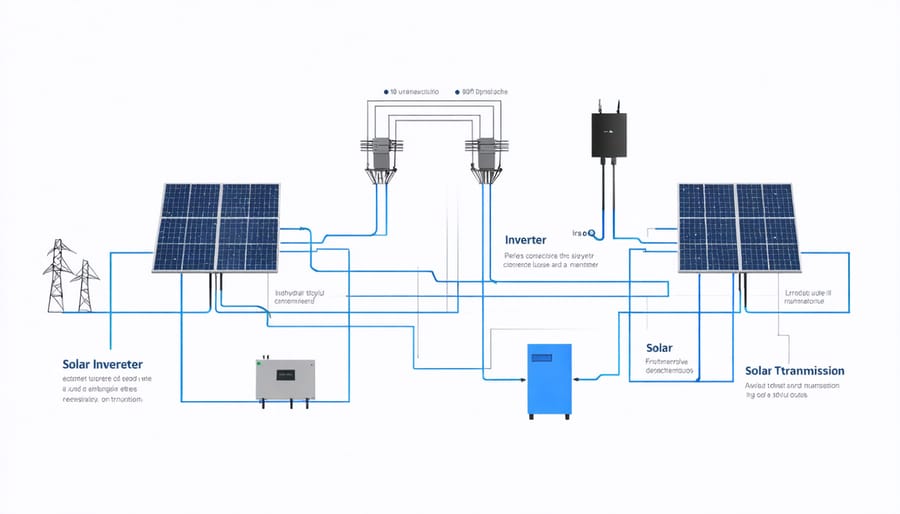
Inverter technologies play a crucial role in photovoltaic systems by converting direct current (DC) generated by solar panels into alternating current (AC) suitable for grid integration. Modern utility interactive inverters employ sophisticated power electronics and control systems to maintain optimal power quality and grid stability.
These conversion systems utilize advanced semiconductor devices, such as insulated-gate bipolar transistors (IGBTs) and metal-oxide-semiconductor field-effect transistors (MOSFETs), to perform high-frequency switching operations. This enables efficient DC to AC conversion while minimizing power losses and harmonics.
Modern inverters incorporate maximum power point tracking (MPPT) algorithms to optimize energy harvest under varying environmental conditions. They also feature built-in protection mechanisms against overcurrent, overvoltage, and islanding scenarios, ensuring safe and reliable operation.
The latest inverter designs achieve conversion efficiencies exceeding 98%, thanks to innovations in power semiconductor technology and improved thermal management systems. Many units now offer smart grid capabilities, including reactive power support, voltage regulation, and frequency response services.
Communication interfaces enable remote monitoring and control, allowing system operators to optimize performance and respond quickly to grid requirements. Advanced data analytics capabilities help predict maintenance needs and identify potential issues before they affect system performance.
Transmission Lines and Cables
Transmission lines and cables serve as crucial components in photovoltaic systems, facilitating the efficient transfer of generated power from solar arrays to distribution networks. The selection of appropriate transmission mediums depends on various factors, including distance, power capacity, and environmental conditions.
DC cables are predominantly used for shorter distances within the solar installation, particularly between individual panels and inverters. These cables feature specialized insulation and UV resistance to withstand harsh outdoor conditions. For medium-voltage applications, aluminum conductors with cross-linked polyethylene (XLPE) insulation offer a cost-effective solution while maintaining operational efficiency.
High-voltage transmission lines become necessary when connecting large-scale solar farms to the grid over considerable distances. These typically employ aluminum conductor steel-reinforced (ACSR) cables, which combine mechanical strength with excellent conductivity. Underground cables, while more expensive, offer advantages in urban areas and locations where overhead lines are impractical or restricted.
Modern transmission systems increasingly incorporate smart monitoring capabilities, enabling real-time performance assessment and predictive maintenance. Fiber-optic cables are often integrated alongside power cables to facilitate communication and system control.
The choice of transmission medium significantly impacts system losses and overall efficiency. Engineers must carefully consider factors such as voltage drop, thermal ratings, and electromagnetic interference when designing PV transmission networks. Regular maintenance and inspection protocols ensure optimal performance and longevity of these critical infrastructure components.
Grid Integration Strategies
Smart Grid Technologies
Smart grid technologies have revolutionized the way we manage and monitor photovoltaic power transmission systems. These advanced solutions integrate sophisticated communication networks, intelligent control systems, and automated monitoring capabilities to optimize solar panel grid integration and overall system performance.
Modern grid management systems employ real-time data analytics and artificial intelligence to balance power supply and demand effectively. Advanced metering infrastructure (AMI) enables two-way communication between utilities and consumers, facilitating dynamic load management and improved grid stability. These systems can automatically detect and respond to fluctuations in power generation and consumption, ensuring seamless operation of the PV network.
Grid monitoring technologies utilize sophisticated sensors and communication protocols to track system performance, identify potential issues, and optimize maintenance schedules. Advanced supervisory control and data acquisition (SCADA) systems provide operators with comprehensive visibility into grid operations, enabling quick response to system anomalies and enhanced decision-making capabilities.
Power quality management systems play a crucial role in maintaining grid stability by monitoring and controlling voltage levels, frequency variations, and harmonic distortion. These systems employ advanced power electronics and control algorithms to ensure compliance with grid codes and maintain reliable power delivery.
The implementation of distributed energy resource management systems (DERMS) allows utilities to effectively coordinate multiple renewable energy sources, energy storage systems, and demand response programs. This integration enables more efficient utilization of PV resources while maintaining grid reliability and power quality standards.

Load Balancing Techniques
Load balancing techniques play a crucial role in managing the variable nature of solar power generation and ensuring grid stability. Modern PV transmission systems employ several sophisticated methods to maintain consistent power flow and system reliability.
Active power management systems continuously monitor solar input variations and adjust power distribution accordingly. These systems utilize advanced algorithms to predict short-term fluctuations in solar generation based on weather patterns and historical data, enabling proactive load adjustment rather than reactive responses.
Energy storage integration serves as a primary stabilization mechanism, where excess power during peak generation periods is stored for use during low generation or high demand periods. Battery systems, when strategically placed throughout the distribution network, help smooth out power fluctuations and maintain grid frequency within acceptable ranges.
Smart inverter technology provides real-time voltage and frequency regulation capabilities. These devices can automatically adjust their operating parameters to compensate for sudden changes in power output, helping maintain grid stability. Modern inverters also offer reactive power support, which is essential for voltage regulation and power factor correction.
Geographic diversification of PV installations across different locations helps mitigate the impact of localized weather conditions on overall system performance. This approach, combined with sophisticated forecasting tools, enables grid operators to better predict and manage power flow variations.
Demand response programs complement these technical solutions by allowing utilities to adjust power consumption patterns in response to generation availability. These programs, often implemented through smart grid infrastructure, help balance supply and demand while maintaining system reliability.
Transmission Loss Prevention
Modern Efficiency Solutions
Recent advancements in photovoltaic transmission technology have introduced several innovative solutions to enhance solar transmission efficiency. Modern power electronics, including advanced inverters with maximum power point tracking (MPPT) capabilities, now achieve conversion efficiencies exceeding 98%. These systems continuously optimize power output by adjusting to varying environmental conditions and load requirements.
Smart grid integration technologies have revolutionized transmission management through real-time monitoring and automated control systems. These solutions incorporate artificial intelligence algorithms to predict and respond to grid demands, significantly reducing transmission losses and improving overall system reliability.
High-voltage DC (HVDC) transmission systems have emerged as a preferred solution for long-distance power transfer, offering superior efficiency compared to traditional AC transmission. Modern HVDC systems utilize advanced semiconductor devices and sophisticated control strategies to minimize conversion losses and maintain stable power flow.
Implementation of wide-bandgap semiconductors, particularly silicon carbide (SiC) and gallium nitride (GaN) devices, has enabled the development of more compact and efficient power conversion equipment. These materials demonstrate superior thermal properties and switching characteristics, resulting in reduced energy losses and improved system performance.
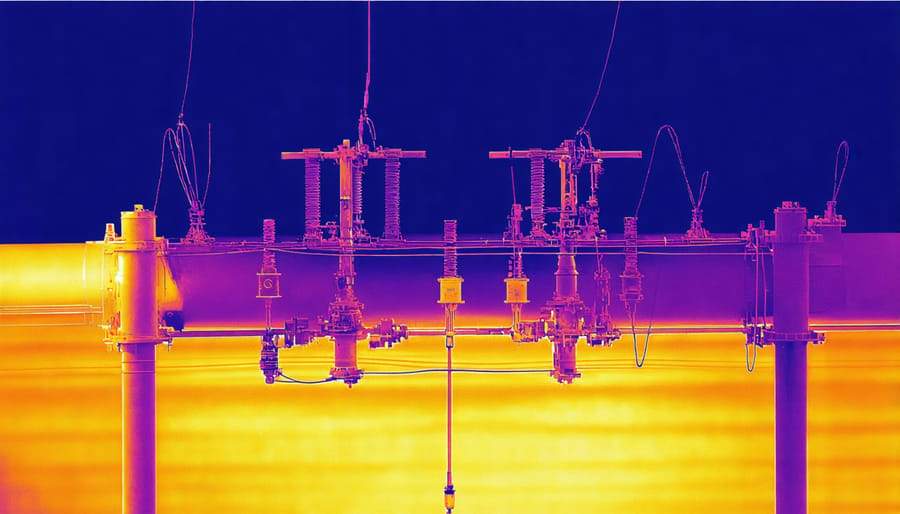
Additionally, advanced monitoring systems equipped with thermal imaging and predictive maintenance capabilities help identify potential issues before they impact transmission efficiency, ensuring optimal system operation and minimizing downtime.
Monitoring and Maintenance
Regular monitoring and maintenance of PV transmission systems are crucial for ensuring optimal performance and longevity. A comprehensive maintenance strategy includes both preventive and corrective measures, implemented through scheduled inspections and real-time monitoring systems.
Key monitoring practices involve continuous assessment of voltage levels, current flow, and power quality parameters. Advanced monitoring systems utilize data logging equipment to track performance metrics, enabling early detection of potential issues. These systems should be calibrated regularly to maintain accuracy and reliability.
Maintenance protocols typically encompass:
– Monthly visual inspections of transmission components
– Quarterly thermal imaging surveys to identify hot spots
– Semi-annual testing of protection systems
– Annual comprehensive system evaluation
– Regular cleaning of insulators and conductors
System operators should maintain detailed maintenance logs and implement predictive maintenance strategies using artificial intelligence and machine learning algorithms. These technologies help forecast potential failures and optimize maintenance schedules.
Environmental factors such as temperature variations, humidity levels, and dust accumulation require particular attention. Protective measures, including surge protection devices and grounding systems, need regular verification to ensure proper functioning.
Cost-effective maintenance strategies should balance preventive measures with operational requirements. This approach helps minimize downtime while maximizing system efficiency and extending equipment lifespan. Regular training of maintenance personnel ensures they stay current with evolving technologies and safety protocols.
Future Developments
The future of PV transmission is poised for significant advancement through several emerging technologies and innovative approaches. High-temperature superconducting (HTS) cables represent a promising development, potentially revolutionizing power transmission by reducing losses to near-zero levels when operating at optimal temperatures. These systems could dramatically improve the efficiency of long-distance solar power transmission.
Smart grid integration is evolving with advanced power electronics and artificial intelligence systems that can optimize power flow in real-time. These technologies enable better management of intermittent solar generation and improve grid stability through predictive analytics and automated load balancing.
Energy storage integration is becoming increasingly sophisticated, with new battery technologies and hybrid storage solutions being developed specifically for PV systems. Flow batteries and solid-state batteries show particular promise for grid-scale storage, potentially offering longer lifespans and improved safety compared to current lithium-ion systems.
Advanced power conversion technologies are emerging, including next-generation inverters with silicon carbide (SiC) and gallium nitride (GaN) semiconductors. These materials enable higher switching frequencies, greater power density, and improved efficiency in power conversion processes.
Researchers are also developing innovative transmission line materials that could increase current-carrying capacity while reducing transmission losses. Carbon nanotube conductors and advanced composite materials are being tested for potential implementation in future transmission infrastructure.
Digital twin technology is gaining traction in PV transmission system design and operation. These virtual replicas enable operators to simulate and optimize system performance, predict maintenance needs, and test new configurations without risking actual infrastructure.
The integration of blockchain technology for peer-to-peer energy trading and grid management is another emerging trend, potentially revolutionizing how solar power is distributed and traded among consumers. This could lead to more efficient utilization of transmission infrastructure and better matching of supply with demand.
These developments collectively point toward a more efficient, reliable, and flexible PV transmission infrastructure that will better serve the growing demands of renewable energy integration.
The evolution of PV transmission systems has transformed the solar energy landscape, making photovoltaic power an increasingly viable and efficient energy solution. Through technological advancements in power electronics, grid integration strategies, and smart monitoring systems, modern PV transmission capabilities have significantly improved system reliability and performance while reducing transmission losses.
Looking ahead, several promising developments are poised to further revolutionize PV transmission. The integration of artificial intelligence and machine learning algorithms will enhance predictive maintenance and optimization of transmission systems. Advanced storage solutions and hybrid systems will address intermittency challenges, while improvements in HVDC technology will enable more efficient long-distance transmission of solar power.
The industry continues to move toward standardization of transmission protocols and equipment specifications, facilitating better interoperability and reduced implementation costs. Research initiatives focused on developing more efficient semiconductors and novel materials for transmission components will likely yield breakthrough improvements in system efficiency and durability.
As global energy demands grow and climate change concerns intensify, PV transmission systems will play an increasingly crucial role in our energy infrastructure. The continued collaboration between industry stakeholders, research institutions, and regulatory bodies will be essential in overcoming current limitations and advancing the technology further. With ongoing investments in research and development, PV transmission systems are expected to become more efficient, cost-effective, and reliable, supporting the worldwide transition to renewable energy sources.