
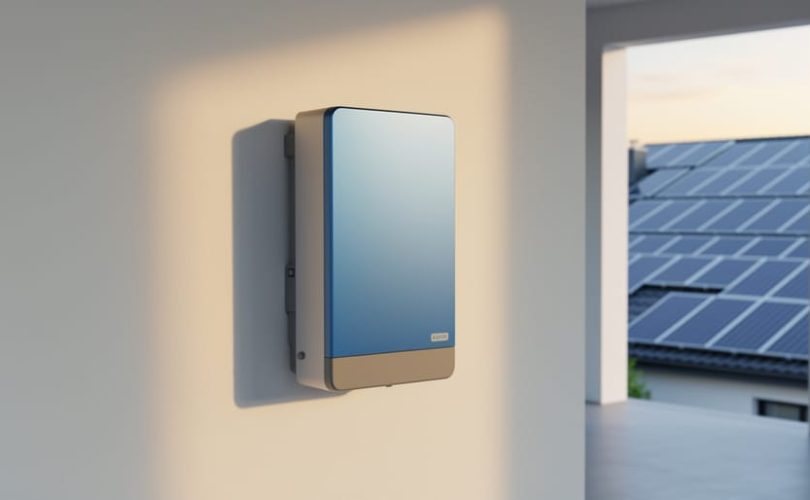
Lithium solid-state batteries represent a transformative leap in solar energy storage, replacing conventional liquid electrolytes with solid materials to deliver unprecedented safety, energy density, and longevity for photovoltaic systems.
Unlike traditional lithium-ion batteries that pose thermal runaway risks and gradual capacity degradation, solid-state configurations eliminate flammable liquid components while achieving energy densities exceeding 400 Wh/kg—nearly double that of current solar storage solutions. This advancement directly addresses the solar industry’s most pressing challenge: storing intermittent renewable energy efficiently and safely for extended periods.
For aspiring PV professionals and industry stakeholders, understanding solid-state battery technology is no longer optional. These systems promise to extend solar storage lifecycles beyond 20 years with minimal degradation, operate across wider temperature ranges without thermal management systems, and occupy significantly less space per kilowatt-hour stored. Recent pilot projects have demonstrated round-trip efficiencies approaching 95 percent, substantially improving solar system economics.
However, commercial deployment faces genuine obstacles. Manufacturing costs remain three to five times higher than lithium-ion alternatives, while scaling production to grid-level capacities presents unresolved engineering challenges. Current market availability centers on small-scale applications, with widespread solar integration projected for 2028-2030.
This article examines the fundamental technology principles, evaluates practical advantages for solar applications, addresses current limitations transparently, and provides realistic adoption timelines. Understanding these dynamics enables informed decision-making about future PV system investments and positions professionals at the forefront of renewable energy innovation.
What Makes Lithium Solid-State Batteries Different

The Core Technology Behind Solid Electrolytes
The fundamental innovation distinguishing solid-state batteries from conventional lithium-ion technology lies in the solid electrolyte material that replaces traditional liquid electrolytes. These solid electrolytes must facilitate lithium-ion movement between electrodes while maintaining structural integrity and preventing dendrite formation—a critical failure mode in liquid systems.
Three primary material classes dominate solid electrolyte research and development. Polymer electrolytes, typically based on polyethylene oxide compounds, offer flexibility and ease of manufacturing but generally require elevated temperatures for optimal ion conductivity. Ceramic electrolytes, including materials like lithium lanthanum zirconate (LLZO) and NASICON-type structures, provide excellent ionic conductivity at room temperature and superior electrochemical stability. However, their brittleness and high processing temperatures present manufacturing challenges.
Sulfide-based electrolytes have emerged as particularly promising candidates for commercial applications. Materials such as lithium thiophosphates demonstrate ionic conductivities comparable to liquid electrolytes while maintaining solid-state advantages. These compounds enable ion transport through crystal lattice structures where lithium ions migrate between sites, creating pathways for electrical current without requiring liquid components.
The ion transport mechanism in solid electrolytes depends on carefully engineered crystal structures and controlled defect chemistry. Universities collaborating with industry researchers continue advancing these materials through computational modeling and experimental optimization. For solar energy storage applications, solid electrolytes must balance conductivity, stability, and cost-effectiveness—a challenge driving ongoing innovation in materials science and electrochemistry.
How They Compare to Traditional Lithium-Ion Storage
Solid-state batteries represent a significant technological advancement over traditional lithium-ion storage systems currently deployed in solar installations. The fundamental structural difference lies in the electrolyte: solid-state variants replace the liquid or gel electrolyte with a solid ceramic, polymer, or glass material, eliminating leakage risks and reducing fire hazards substantially.
From a performance perspective, solid-state batteries deliver 30-50% higher energy density, translating to more compact storage footprints for photovoltaic systems. They maintain stable operation across wider temperature ranges (-20°C to 60°C), reducing thermal management requirements in solar installations. Cycle life typically exceeds 5,000 full charge-discharge cycles compared to 3,000-4,000 for conventional lithium-ion cells.
Safety profiles differ markedly. The solid electrolyte is non-flammable and mechanically robust, virtually eliminating thermal runaway incidents that plague liquid electrolyte systems. This characteristic permits closer integration with inverters and simpler installation protocols.
However, current limitations include higher manufacturing costs, lower power output rates, and limited commercial availability. These factors currently restrict widespread deployment in residential and commercial solar applications, though ongoing research initiatives—including collaborations with universities—are addressing these challenges systematically.
Game-Changing Advantages for Solar PV Storage
Superior Energy Density Means Smaller Footprints
One of the most compelling advantages of lithium solid-state batteries for solar installations is their superior energy density, typically ranging from 300 to 500 Wh/kg compared to 150-250 Wh/kg for conventional lithium-ion batteries. This improvement in both gravimetric (Wh/kg) and volumetric (Wh/L) energy density directly translates to more compact storage systems that occupy significantly less physical space.
For residential solar installations where available space is often limited, this enhanced energy density allows homeowners to store the same amount of energy in approximately half the footprint. A 10 kWh solid-state battery system might require only 40-50 liters of volume compared to 80-100 liters for traditional lithium-ion alternatives. This spatial efficiency proves particularly valuable in urban environments, apartment buildings with shared battery rooms, or retrofit applications where existing infrastructure constrains expansion options.
Commercial and utility-scale solar projects benefit equally from reduced land requirements and simplified installation logistics. Research collaborations between industry partners and universities continue to optimize cell architecture and electrode materials, pushing energy density boundaries even further. For aspiring photovoltaic professionals, understanding these spatial advantages is essential when designing space-constrained systems or proposing storage upgrades to clients with limited installation areas.
Enhanced Safety Without Thermal Runaway Risks
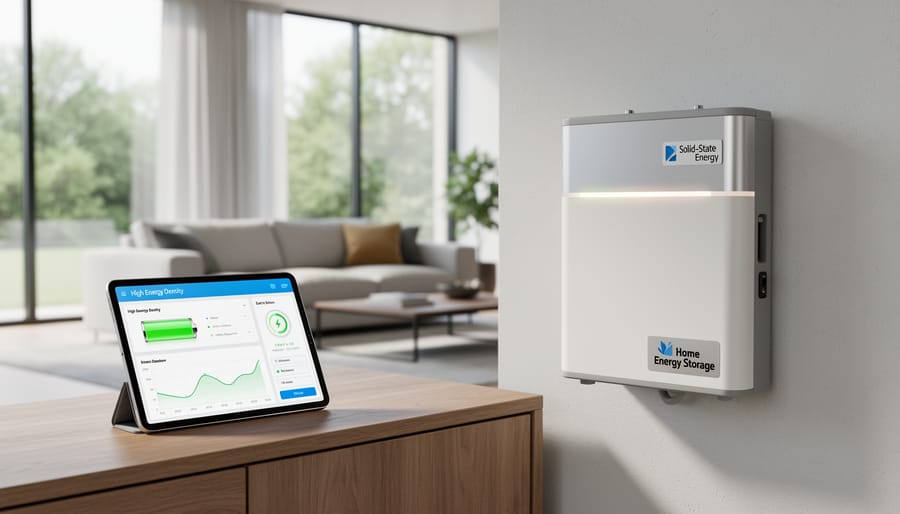
One of the most significant advantages of lithium solid state batteries for solar energy storage is the dramatic improvement in safety profiles. Traditional lithium-ion batteries contain flammable liquid electrolytes that pose fire and thermal runaway risks—particularly concerning for residential rooftop installations and indoor battery storage environments. When damaged or improperly managed, conventional batteries can experience cascading failures where internal temperatures rapidly escalate, potentially leading to fires or explosions.
Solid state batteries eliminate this vulnerability by replacing liquid electrolytes with solid ceramic, polymer, or glass-based materials that are inherently non-flammable. This fundamental design change prevents the chemical reactions that trigger thermal runaway events in liquid-based systems. For homeowners integrating battery storage with their photovoltaic arrays, this translates to substantially reduced insurance concerns and greater peace of mind when storing energy systems in garages, basements, or utility rooms.
The enhanced safety characteristics also simplify regulatory compliance and installation requirements. Many jurisdictions impose strict fire safety codes on battery installations, often requiring expensive ventilation systems, fire suppression equipment, or outdoor placement. Solid state technology’s superior thermal stability may enable more flexible installation options while reducing the infrastructure costs traditionally associated with safe battery deployment in residential and commercial solar applications.
Extended Cycle Life and Calendar Longevity
Lithium solid-state batteries represent a significant advancement in energy storage technology, particularly regarding longevity metrics critical for solar photovoltaic applications. Laboratory testing and early commercial prototypes demonstrate charge-discharge cycle capabilities ranging from 3,000 to over 10,000 cycles while maintaining 80% capacity retention—a substantial improvement over conventional lithium-ion batteries, which typically deliver 1,000-3,000 cycles under similar conditions.
This enhanced cycle life directly addresses a persistent challenge in solar energy systems: matching battery lifespan to solar panel longevity. Modern photovoltaic modules carry performance warranties of 25-30 years, creating a compelling case for pairing them with solid-state batteries capable of enduring decades of daily cycling. Research conducted in collaboration with universities has validated that solid-state architectures minimize degradation mechanisms such as dendrite formation and electrolyte decomposition, which traditionally limit battery calendar life.
The practical implication for system designers is noteworthy: a single battery installation could potentially serve the entire operational lifetime of a residential or commercial solar array, eliminating costly mid-life replacements and improving overall system economics while reducing electronic waste generation.
Wider Operating Temperature Range
Solid-state lithium batteries demonstrate superior thermal stability compared to conventional lithium-ion designs, operating effectively across temperature ranges from -30°C to 100°C without significant performance degradation. This extended operational window stems from the solid electrolyte’s inherent stability, which eliminates the evaporation, freezing, and thermal runaway risks associated with liquid electrolytes. For solar energy storage installations, this capability substantially reduces or eliminates the need for expensive climate control systems traditionally required to maintain battery banks within optimal temperature ranges. Desert photovoltaic facilities and cold-climate installations particularly benefit from this characteristic, as equipment can function reliably without heating or cooling infrastructure. The reduced dependency on thermal management systems translates to lower installation costs, decreased ongoing energy consumption for battery maintenance, and improved system efficiency. Research conducted in collaboration with universities has validated that solid-state batteries maintain over 90% capacity retention across extreme temperature cycling, making them especially promising for off-grid solar applications in challenging environmental conditions where traditional battery technologies struggle.
Current Challenges Holding Back Widespread Adoption
Manufacturing Scalability and Production Costs
Manufacturing solid-state batteries at commercial scale presents substantial economic challenges that currently limit widespread adoption in solar energy storage applications. Production costs remain three to five times higher than conventional lithium-ion batteries, primarily due to complex manufacturing processes, specialized materials, and limited production volumes. The solid electrolyte layer requires precise deposition techniques and controlled atmospheric conditions, significantly increasing capital equipment investments and operational expenses.
Material costs contribute substantially to the price premium. Solid electrolytes, particularly sulfide and polymer-based compounds, demand high-purity raw materials and sophisticated synthesis methods. Additionally, current manufacturing yields are lower than lithium-ion production lines, as interface engineering between electrodes and solid electrolytes requires exacting tolerances to prevent performance degradation.
Industry analysts project cost parity with lithium-ion technology between 2030 and 2035, contingent on achieving gigawatt-hour scale production and continued materials innovation. Several manufacturers are collaborating with universities to develop cost-effective manufacturing techniques and alternative electrolyte formulations. Educational program offerings focused on advanced battery manufacturing are preparing the workforce needed to support this transition. As production automation improves and supply chains mature, solid-state batteries are expected to become economically viable for residential and commercial solar installations, though premium applications may adopt the technology sooner.
Interface Resistance and Power Output Limitations
Despite their safety advantages, lithium solid-state batteries face significant technical challenges at solid-solid interfaces that directly impact performance in solar energy storage applications. Unlike conventional batteries where liquid electrolytes easily maintain contact with electrodes, solid electrolytes require intimate physical contact across interfaces to facilitate ion transport. Manufacturing imperfections, thermal expansion mismatches, and mechanical stresses during charge-discharge cycles create microscopic gaps that substantially increase interface resistance.
This elevated resistance limits charge and discharge rates, creating bottlenecks for high-demand solar applications. During peak solar production periods, photovoltaic systems may generate rapid charging requirements that solid-state batteries currently struggle to accommodate efficiently. Similarly, evening demand peaks requiring high discharge rates expose these limitations. Research indicates interface resistance can account for 50-70% of total battery resistance in some solid-state designs.
Universities collaborating with industry partners are developing solutions including buffer layers, surface coatings, and advanced manufacturing techniques to improve interface contact. However, achieving consistently low interface resistance at commercial scale remains an engineering challenge. For solar installations requiring rapid response to fluctuating generation and consumption patterns, these power output limitations represent a critical consideration when evaluating solid-state battery deployment timelines.
Dendrite Formation and Material Compatibility
One of the primary technical challenges confronting solid-state battery commercialization involves lithium metal dendrite formation at the anode-electrolyte interface. During charging cycles, lithium ions can accumulate unevenly, creating needle-like structures that penetrate the solid electrolyte, potentially causing short circuits and capacity degradation. Leading manufacturers are addressing this through innovative approaches including interface engineering, compositional modifications to electrolytes, and protective coating technologies.
Research institutions collaborating with industry partners have identified that applying external pressure and optimizing current density during operation can significantly mitigate dendrite growth. Additionally, hybrid electrolyte designs combining ceramic and polymer materials show promise in accommodating the volume changes that occur during lithium plating and stripping cycles.
Material compatibility between the solid electrolyte and electrode materials remains another critical focus area. Chemical reactions at interfaces can form resistive layers that impede ion transport, reducing overall cell performance. Universities working alongside battery manufacturers are developing buffer layers and surface treatments that maintain electrochemical stability across thousands of charge-discharge cycles. These collaborative efforts between academic researchers and industry are essential for translating laboratory successes into manufacturing-ready solutions that will enable solid-state batteries to achieve their full potential in solar energy storage applications.
Breakthrough Innovations Accelerating Market Readiness
Novel Electrolyte Materials and Composite Designs
Recent advancements in solid electrolyte chemistry are addressing the traditional limitations of ionic conductivity and manufacturing scalability. Sulfide-based electrolytes, particularly lithium argyrodite (Li6PS5Cl) and LGPS (Li10GeP2S12) compositions, have achieved room-temperature conductivities exceeding 10 mS/cm, rivaling liquid electrolytes. These materials demonstrate excellent interface compatibility with lithium metal anodes, though moisture sensitivity remains a manufacturing challenge.
Oxide-based electrolytes, including garnet-type Li7La3Zr2O12 (LLZO) and NASICON structures, offer superior chemical stability and wider electrochemical windows. Universities collaborating with industry partners have developed innovative doping strategies using aluminum and tantalum to stabilize cubic phases, improving grain boundary conductivity. Recent ceramic processing techniques enable thinner membranes below 50 micrometers, reducing overall cell resistance.
Hybrid composite designs represent promising battery storage innovations, combining polymer matrices with ceramic fillers to balance conductivity with mechanical flexibility. These composites simplify manufacturing while maintaining adequate performance for solar energy storage applications. The integration of nanoscale oxide particles within sulfide frameworks has shown particular promise in reducing interfacial resistance, a critical factor for long-term cycling stability in photovoltaic storage systems.
Advanced Manufacturing Techniques Reducing Costs
The manufacturing landscape for lithium solid-state batteries is rapidly evolving through innovations that promise to overcome historical cost barriers. Roll-to-roll processing, adapted from thin-film solar manufacturing, enables continuous production of solid electrolyte layers at significantly reduced costs compared to batch processing methods. This technique allows manufacturers to deposit thin, uniform electrolyte films onto flexible substrates, dramatically increasing throughput while maintaining precise thickness control essential for battery performance.
Advanced thin-film deposition technologies, including atomic layer deposition and pulsed laser deposition, have improved material utilization rates to over 90%, minimizing waste of expensive lithium compounds. These methods create dense, pinhole-free electrolyte layers as thin as 10-20 micrometers, reducing material costs while improving ionic conductivity.
Several manufacturers are collaborating with universities to develop hybrid manufacturing approaches that combine printing technologies with conventional battery assembly lines. These partnerships have yielded automated stacking systems that align electrode and electrolyte layers with micron-level precision, reducing defect rates below 1%. Laser welding techniques now enable hermetic sealing without thermal degradation of solid electrolytes, addressing a critical production challenge. As production volumes scale from pilot lines to gigawatt-scale facilities, industry projections indicate manufacturing costs could decrease by 60-70% by 2030, approaching parity with conventional lithium-ion batteries.
Industry Partnerships and Pilot Programs
Major automotive manufacturers including Toyota, Volkswagen, and BMW have committed substantial investments to solid-state battery development, recognizing the technology’s potential to revolutionize electric vehicles and energy storage systems. Toyota plans to commercialize solid-state batteries by the mid-2020s, while QuantumScape has partnered with Volkswagen to advance ceramic electrolyte technology. In the stationary storage sector, Samsung SDI and Panasonic are actively developing solid-state solutions for grid-scale applications. Collaborative pilot programs between battery manufacturers and research institutions, including partnerships with Stanford University and MIT, are accelerating development timelines. For solar energy storage, companies like Solid Power are exploring applications beyond automotive use, testing prototypes for residential and commercial photovoltaic systems. These industry partnerships demonstrate growing confidence in solid-state technology’s viability for diverse energy storage applications, though widespread deployment in solar installations remains several years away pending further cost reduction and manufacturing scalability improvements.
Practical Considerations for PV System Integration
Sizing and Configuration for Solar Applications
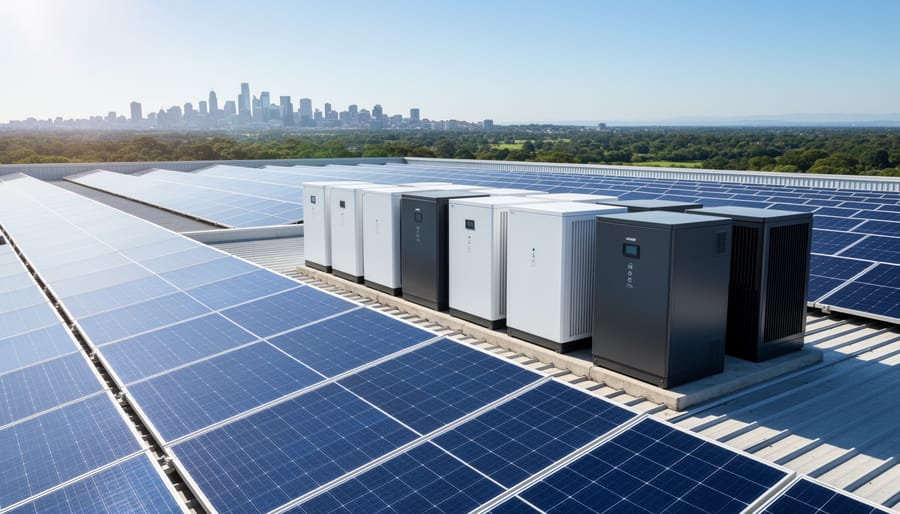
Solid-state lithium batteries present unique considerations for solar system design that differ significantly from conventional lithium-ion configurations. Their higher energy density allows for more compact battery banks, reducing installation footprint by up to 30-40% compared to traditional systems. This space efficiency proves particularly valuable in residential applications where available area is limited.
When sizing battery banks, designers must account for the distinct charge-discharge characteristics of solid-state cells. These batteries typically demonstrate flatter voltage curves throughout their discharge cycle, which simplifies inverter compatibility but requires careful matching with charge controller specifications. Most modern hybrid inverters accommodate this behavior, though verification with manufacturers remains essential during the planning phase.
System architecture benefits from solid-state technology’s improved thermal stability, potentially eliminating complex cooling systems required by liquid electrolyte batteries. This simplification reduces balance-of-system costs and maintenance requirements. However, current solid-state batteries may exhibit reduced performance at extreme temperatures, necessitating careful consideration of local climate conditions.
The modular nature of emerging solid-state products enables scalable configurations, allowing systems to expand as energy needs grow. Universities collaborating on solid-state research continue developing standardized sizing protocols, though widespread industry adoption awaits commercial availability. Photovoltaic professionals should monitor these evolving guidelines as solid-state technology transitions from laboratory to field deployment.
Installation and Safety Protocol Differences
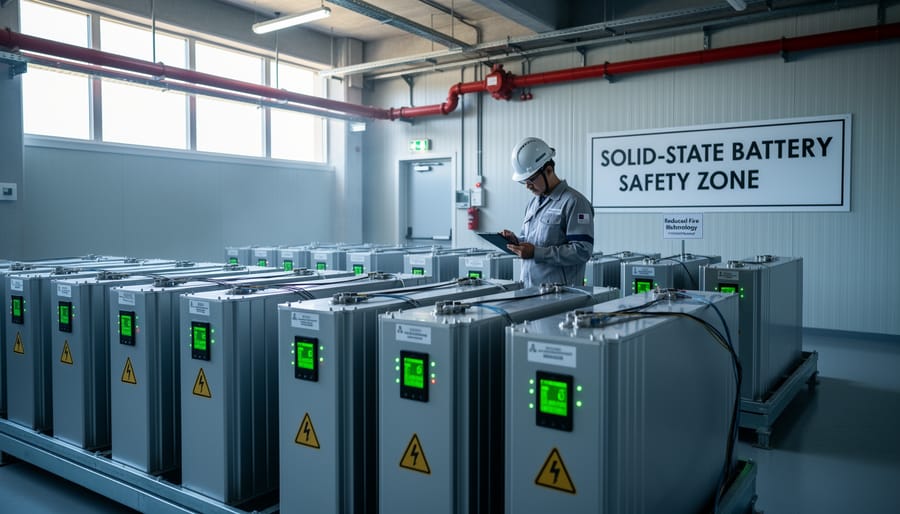
Lithium solid-state batteries introduce significant changes to installation and safety protocols compared to conventional lithium-ion systems. The elimination of flammable liquid electrolytes fundamentally reduces fire risk, allowing for relaxed ventilation requirements in many applications. Traditional battery rooms requiring extensive exhaust systems and gas detection equipment may transition to simpler installations, reducing infrastructure costs for solar energy storage facilities.
Installation procedures benefit from the enhanced thermal stability of solid electrolytes. While lithium-ion batteries typically require temperature-controlled environments and thermal runaway mitigation systems, solid-state units tolerate wider operating temperature ranges without elaborate cooling infrastructure. This flexibility enables deployment in varied climates with reduced HVAC demands.
Safety protocols shift focus from thermal event prevention to mechanical protection. Solid-state cells remain sensitive to physical damage that could compromise the solid electrolyte interface, necessitating careful handling during installation. However, the absence of corrosive liquid electrolytes simplifies containment requirements and eliminates concerns about electrolyte leakage.
Fire suppression systems may be downsized or reconfigured, as solid-state technology presents minimal combustion risk under normal fault conditions. This represents a substantial advantage for residential and commercial solar installations where space and safety margins are critical considerations. Training programs for photovoltaic professionals must evolve to address these new installation paradigms while maintaining rigorous quality standards.
Maintenance and Monitoring Requirements
Solid-state lithium batteries promise significantly reduced maintenance requirements compared to conventional lithium-ion cells. The elimination of liquid electrolytes removes concerns about electrolyte degradation, leakage, and thermal runaway risks that necessitate frequent monitoring in current systems. Advanced battery management systems for solid-state technology will focus primarily on state-of-charge estimation and temperature regulation rather than complex safety protocols.
Performance monitoring will shift from reactive safety management to predictive analytics. Solid-state batteries exhibit more stable voltage curves and minimal capacity fade over extended cycles, enabling simpler diagnostic algorithms. Maintenance schedules may extend from quarterly inspections to annual reviews, reducing operational costs for solar installations.
However, early-generation solid-state systems will require careful interface monitoring between solid electrolyte and electrodes, as contact degradation remains a technical challenge. Universities collaborating on battery research continue developing enhanced monitoring protocols specifically designed for solid-state architectures in renewable energy applications.
Timeline and Market Outlook for Solar Applications
Near-Term Expectations (2025-2027)
Between 2025 and 2027, lithium solid-state batteries will remain primarily in premium demonstration projects and specialized applications rather than mainstream solar storage installations. Early commercial deployments will likely focus on high-value scenarios where the technology’s superior safety profile and energy density justify premium costs—such as research facilities, university pilot programs, and corporate sustainability showcases. Manufacturing capacity during this period will be limited, with production costs remaining 2-3 times higher than conventional lithium-ion systems. Several automotive manufacturers partnering with battery developers will begin field-testing solid-state technology in electric vehicles, creating valuable real-world performance data applicable to stationary storage. For photovoltaic system integrators, this transitional period represents an important learning phase. Collaborative projects between industry stakeholders and academic institutions will establish best practices for system integration, thermal management protocols, and performance monitoring standards. Early adopters should expect limited product availability, longer lead times, and higher upfront investment, but these pioneering installations will generate critical insights that accelerate broader market adoption in subsequent years.
Medium-Term Projections (2028-2032)
The period from 2028 to 2032 represents a crucial transition phase where lithium solid-state batteries are expected to achieve broader market penetration in solar energy storage applications. Industry analysts project that manufacturing economies of scale will drive production costs down to approximately $100-150 per kilowatt-hour, making these batteries increasingly competitive with established lithium-ion systems. This cost reduction stems from automated manufacturing processes, optimized material sourcing, and technological refinements developed through collaborative research initiatives between industry leaders and academic institutions.
During this timeframe, we anticipate seeing solid-state batteries integrated into mid-scale residential and commercial photovoltaic installations, particularly in markets where space constraints and safety considerations justify the premium. Universities partnering with manufacturers are expected to launch specialized training programs, preparing the next generation of solar professionals to design, install, and maintain these advanced storage systems. Production capacity should expand significantly, with multiple manufacturers establishing dedicated facilities capable of producing gigawatt-hour quantities annually. However, widespread adoption in budget-conscious residential markets may remain limited until costs approach conventional battery pricing in the subsequent decade.
Lithium solid-state batteries represent a genuinely transformative opportunity for solar energy storage, offering the potential to address many limitations inherent in current lithium-ion systems. Their superior energy density, enhanced safety profiles, extended operational lifespans, and broader temperature tolerances position them as ideal candidates for photovoltaic applications where reliability and performance are paramount. However, the pathway from laboratory innovation to widespread commercial deployment remains complex, with manufacturing scalability, cost reduction, and interface stability challenges requiring continued resolution.
For photovoltaic professionals, the transitional period ahead presents both challenges and opportunities. While fully mature solid-state solutions may still be several years from mainstream adoption, incremental advancements are already emerging through hybrid configurations and specialized applications. Staying informed about technological progress, understanding integration requirements, and preparing for eventual system compatibility will be essential competencies as the industry evolves.
The convergence of advanced battery technology with renewable energy systems exemplifies the dynamic nature of the solar industry. As research institutions and manufacturers work collaboratively to overcome remaining obstacles, the knowledge gap between emerging technologies and practical implementation continues to narrow. This evolution underscores the importance of continuous education and professional development in the photovoltaic sector.
At Mose Solar, our commitment to advancing industry knowledge through educational programs and university collaborations ensures that aspiring professionals remain equipped to navigate these technological transitions. By fostering understanding of both current systems and emerging innovations, we help build the expertise necessary to accelerate the renewable energy transformation that solid-state batteries promise to enable.


