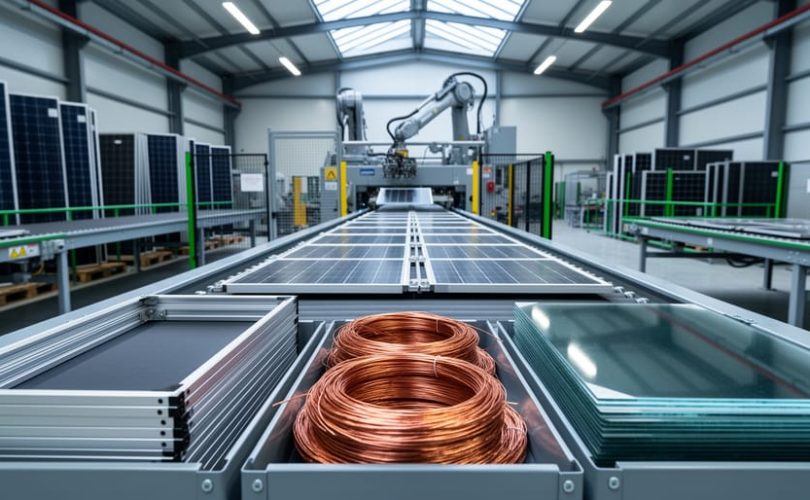
The solar industry growth that has delivered clean energy to millions now presents an urgent challenge: what happens when today’s photovoltaic panels reach end-of-life? By 2050, the International Renewable Energy Agency projects 78 million metric tons of accumulated solar panel waste globally—a mountain of materials that represents both an environmental liability and an untapped economic opportunity valued at over $15 billion in recoverable resources.
The photovoltaic circular economy, or PV circonomy, transforms this looming waste crisis into a sustainable materials ecosystem. Rather than discarding decommissioned panels in landfills, circonomy principles prioritize recovering valuable materials like silicon, silver, copper, and aluminum through advanced recycling technologies, then reintegrating these resources into new manufacturing cycles. This closed-loop approach addresses the fundamental contradiction in renewable energy: deploying millions of panels to combat climate change while simultaneously creating a linear waste stream that undermines sustainability goals.
Current recycling economics remain challenging, with recovery costs often exceeding material values under conventional processes. However, emerging technologies, evolving regulatory frameworks in the European Union and several U.S. states, and producer responsibility schemes are reshaping the financial landscape. Understanding PV circonomy is no longer optional for industry professionals—it’s essential knowledge for navigating the photovoltaic sector’s next evolution, where end-of-life management becomes as critical as installation efficiency.
The Looming Solar Waste Crisis: Understanding the Scale
Current and Projected Waste Volumes
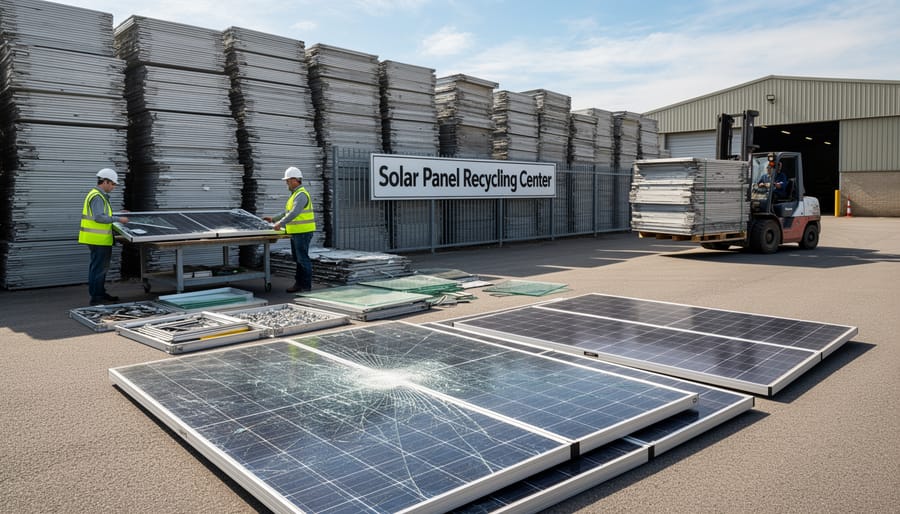
The International Renewable Energy Agency (IRENA) projects global PV waste volumes will reach approximately 78 million metric tons by 2050, a dramatic increase from current levels of roughly 250,000 metric tons annually. This exponential growth reflects the industry’s rapid expansion over the past two decades, with most installed panels now approaching their 25-30 year operational lifespan. Regional variations are significant: the European Union and China are expected to account for nearly 60% of cumulative waste by mid-century, driven by their early adoption leadership. The United States follows with projected volumes reaching 10 million metric tons by 2050.
To contextualize these figures, annual PV waste by 2050 could exceed the current global generation of electronic waste from personal computers. However, unlike many waste streams, end-of-life solar panels contain valuable materials including silicon, silver, copper, and aluminum worth an estimated $15 billion collectively. Early forecasts suggest that without proactive circularity measures, landfilling rates could reach 90% in regions lacking regulatory frameworks, representing both an environmental concern and a substantial economic opportunity loss for material recovery initiatives.
Material Value in End-of-Life Modules
Understanding the material composition of end-of-life photovoltaic modules reveals significant economic potential within the circular economy framework. A typical crystalline silicon panel contains approximately 76% glass, 10% polymer materials, 8% aluminum, 5% silicon, 1% copper, and trace amounts of silver and other metals. While these percentages may seem modest, the cumulative value becomes substantial when considering the growing volume of decommissioned modules.
Silicon wafers, the primary semiconductor component, represent a valuable resource for reprocessing into new solar cells or alternative applications. High-purity silicon can retain considerable market value even after initial use. Silver, though present in minute quantities (roughly 0.05% by weight), carries exceptional economic significance due to its high market price, with each module containing approximately 15-20 grams used in electrical contacts and busbars.
Aluminum frames constitute the most readily recoverable component, offering straightforward extraction and recycling processes with established market channels. Glass, while less valuable per kilogram, represents the largest material fraction and finds applications in fiberglass manufacturing, construction materials, or bottle production. Copper wiring and junction boxes add incremental value to the recovery equation.
Current estimates suggest that recoverable materials from a single 60-cell module can yield approximately 15-30 euros in raw material value, depending on commodity prices and processing efficiency. This economic baseline underpins the financial viability of professional recycling operations.
What PV Circular Economy Actually Means
The Four Rs of PV Circularity
The circular economy framework for photovoltaics rests on four foundational principles that collectively minimize waste and maximize resource value throughout a solar module’s lifecycle.
Reduce focuses on minimizing material consumption and environmental impact during manufacturing. This includes designing thinner silicon wafers, optimizing silver paste usage in cell metallization, and developing lighter frames that maintain structural integrity while using less aluminum. Manufacturers are also reducing packaging materials and implementing zero-waste production facilities to decrease their environmental footprint before panels even reach installation sites.
Reuse extends the functional life of PV components beyond their initial application. Solar modules removed from utility-scale installations after 25-30 years often retain 80-85% of their original capacity, making them viable for secondary markets such as off-grid applications, agricultural installations, or developing regions with less stringent performance requirements. Similarly, mounting structures, inverters, and junction boxes can be refurbished and redeployed, avoiding premature disposal.
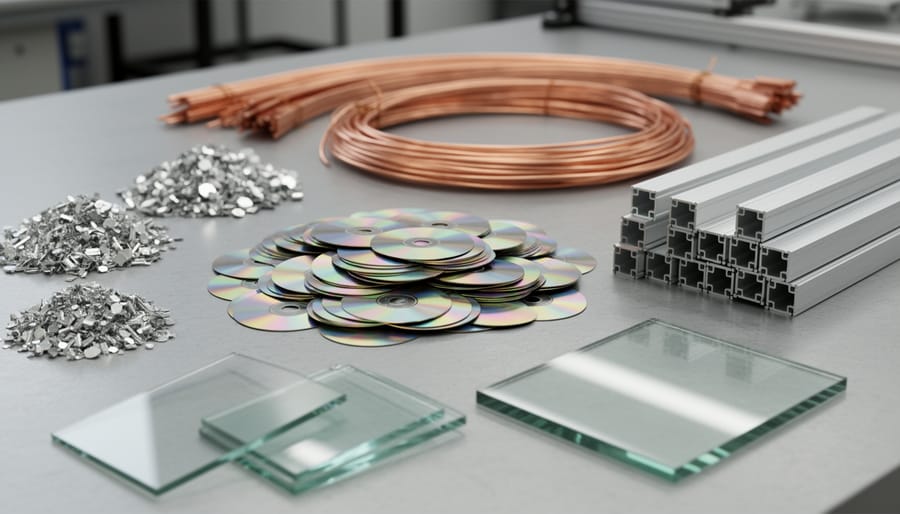
Recycle involves recovering valuable materials from end-of-life modules through mechanical, thermal, or chemical processes. Silicon, silver, copper, aluminum, and glass represent significant economic value, with some estimates suggesting up to 95% of a panel’s mass can be recovered. Advanced recycling techniques separate these materials to near-original purity levels, enabling their reintroduction into manufacturing supply chains.
Recover emphasizes energy recapture and material valorization when recycling proves economically unfeasible. This includes extracting lower-grade materials for alternative applications or converting non-recyclable components into energy through controlled incineration with energy recovery systems. Together, these four principles create a comprehensive strategy for sustainable PV lifecycle management.
Design for Circularity in Modern PV Manufacturing
Leading manufacturers are fundamentally rethinking panel architecture to enable efficient end-of-life material recovery. In modern PV manufacturing, design for circularity begins at the conceptual stage, incorporating standardized frames, adhesive-free lamination techniques, and easily separable junction boxes. Companies are transitioning from traditional ethylene-vinyl acetate encapsulants to thermoplastic polymers that soften under controlled heating, allowing glass and silicon cells to separate without damage. Frame designs now feature snap-fit connections rather than permanent welding, reducing disassembly time from hours to minutes.
Universities are collaborating with manufacturers to develop material passports—digital records documenting each panel’s composition, assembly method, and optimal recycling pathway. This transparency enables recyclers to sort modules efficiently and apply appropriate recovery techniques. Some manufacturers are adopting modular designs where individual components can be replaced rather than discarding entire panels. Educational programs now emphasize eco-design principles, training engineers to balance performance, cost, and recyclability from the initial design phase, ensuring future solar installations generate minimal waste while maximizing resource retention.
Current PV Recycling Technologies and Processes
Mechanical Recycling Processes
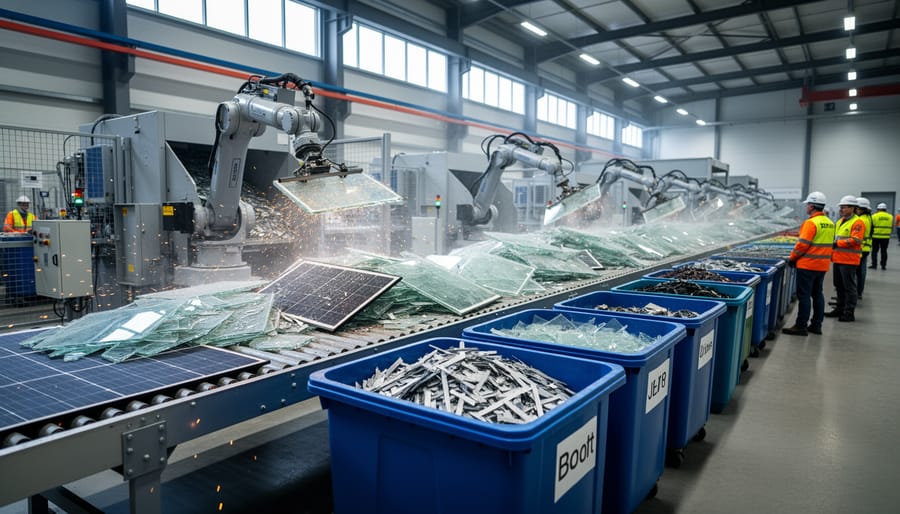
Mechanical recycling represents the most established and cost-effective approach to processing end-of-life solar panels. The process begins with dismantling, where aluminum frames and junction boxes are manually removed for direct resale. The remaining laminate undergoes crushing and grinding operations that reduce panels into small fragments, typically 4-5mm in size. These fragments then pass through separation stages utilizing technologies such as magnetic separation for ferrous materials, eddy current separation for aluminum and copper, and density-based sorting for glass and semiconductor materials.
Current mechanical recycling facilities achieve recovery rates of approximately 85-95% by weight, primarily capturing aluminum frames and glass. However, the valuable materials—silicon cells, silver contacts, and rare elements like tellurium or indium—often remain embedded in mixed fractions, limiting their recovery to 30-50%. The separated glass, representing 70% of panel weight, finds secondary applications in construction materials, fiberglass production, or abrasives, though it commands relatively low market prices.
The process excels at high throughput and low operational costs, making it economically viable at commercial scale. Many European facilities process thousands of tons annually, demonstrating proven industrial applicability. However, the incomplete liberation of high-value materials and subsequent quality limitations of recovered materials represent ongoing challenges that advanced recycling technologies aim to address.
Thermal and Chemical Recycling Methods
Advanced recycling methods for photovoltaic modules employ sophisticated thermal and chemical processes to maximize material recovery while minimizing environmental impact. Thermal delamination represents a critical first step, utilizing controlled heating between 400-600°C to separate the ethylene-vinyl acetate encapsulant from silicon cells and glass substrates. This process, often conducted in specialized furnaces or fluidized bed reactors, enables subsequent material separation without damaging valuable components.
Chemical extraction techniques complement thermal methods by employing solvents and reagents to selectively dissolve encapsulants and metallic layers. Organic solvents can effectively remove polymeric materials, while acid and alkaline leaching processes extract silver, copper, and other valuable metals from silicon wafers. Advanced facilities combine these approaches sequentially to achieve recovery rates exceeding 95% for glass, aluminum, and silicon.
Pyrolysis offers another pathway, breaking down organic materials at high temperatures in oxygen-free environments, converting polymers into recoverable fuels or chemical feedstocks. Universities and research institutions actively collaborate with industry partners to refine these processes, developing innovative methods such as electrochemical separation and supercritical fluid extraction. These emerging technologies promise higher efficiency and reduced energy consumption, addressing economic viability concerns while supporting comprehensive circular economy objectives for the photovoltaic sector.
Recovery Rates and Material Quality
Material recovery rates from end-of-life photovoltaic modules have improved significantly, though they vary considerably depending on the recycling technology employed. Current commercial recycling processes typically recover 85-95% of a solar panel’s total mass, with glass representing the largest proportion at approximately 75% of the panel weight. Aluminum frames achieve recovery rates near 100% and can be recycled indefinitely without quality degradation.
The quality challenge lies primarily with silicon and trace materials. Mechanical recycling processes can extract silicon at recovery rates of 80-85%, but the material often requires downgrading for lower-value applications rather than direct reuse in new solar cells. Advanced thermal and chemical processes show promise for recovering high-purity silicon suitable for photovoltaic manufacturing, with some facilities achieving purity levels above 99.99%. Silver recovery rates typically range from 85-95% when specialized techniques are employed, which is economically significant given silver’s high value and its role as a critical material in cell manufacturing.
However, recovering materials at their original quality remains technically demanding and cost-intensive. The laminated structure of panels makes separation challenging, and contamination during processing can compromise material purity. Research initiatives, including collaborations with universities, are actively developing techniques to improve both recovery rates and material quality to support true circularity.
The Economics of PV Module Recycling
Cost Breakdown: Collection, Transportation, and Processing
Understanding the financial structure of photovoltaic recycling requires examining three primary cost categories that shape operational viability. Collection represents the initial expense, encompassing logistics coordination, temporary storage facilities, and transportation from decommissioned solar installations to centralized processing centers. This phase typically accounts for 20-30% of total recycling costs, varying significantly based on geographic dispersal of end-of-life panels and regional infrastructure development.
Transportation costs constitute another substantial portion, generally representing 15-25% of overall expenses. Distance between collection points and recycling facilities, fuel prices, and specialized handling requirements for glass-laden modules all influence this category. Economies of scale become crucial here—consolidated shipments of larger panel volumes reduce per-unit transportation costs considerably.
Processing emerges as the most capital-intensive category, comprising 45-60% of total recycling expenditures. This encompasses facility operations, energy consumption, labor, specialized equipment maintenance, and disposal of non-recoverable materials. Advanced thermal and chemical treatments necessary for high-purity material recovery drive these costs upward, though technological innovations continue improving efficiency ratios.
The proportional balance between these categories directly impacts business models and pricing structures. Facilities achieving operational efficiency through higher throughput volumes and strategic geographic positioning demonstrate better cost management, making recycling economically competitive with virgin material extraction and traditional disposal methods.
Revenue Streams from Recovered Materials
The economic viability of PV recycling hinges significantly on recovered material values, creating a direct connection between commodity markets and circular economy profitability. High-purity silicon, the most valuable component, can fetch $2-4 per kilogram when recovered, though extraction costs and purity requirements substantially impact net returns. Silver, used in cell metallization, represents another premium material with recovery values around $500-600 per kilogram, yet only 5-10 grams exist per panel.
Aluminum frames offer the most straightforward revenue stream, commanding $1-2 per kilogram in scrap markets, while glass, despite comprising 70% of panel weight, generates minimal revenue at $0.03-0.08 per kilogram due to its low commodity value. Copper from junction boxes and cables provides moderate returns at $6-8 per kilogram.
Understanding these recovery economics parallels broader solar PV economics principles, where multiple value streams determine overall feasibility. Commodity price volatility introduces significant uncertainty—silicon prices, for instance, fluctuated between $10-30 per kilogram over the past decade, dramatically affecting recycling margins. When virgin material prices drop, recovered materials face intense competition, potentially rendering recycling operations unprofitable without regulatory support or processing innovations that reduce operational costs below current industry averages of $20-30 per panel.
The Profitability Gap and Scaling Challenges
The economic reality of PV recycling presents significant challenges that must be acknowledged. Currently, most solar panel recycling facilities operate at a loss, primarily due to insufficient feedstock volumes and the capital-intensive nature of advanced processing technologies. The fundamental issue lies in economies of scale: while a typical recycling plant requires substantial upfront investment in specialized equipment for delamination, thermal treatment, and material separation, the current flow of end-of-life panels remains relatively limited.
Industry analysis indicates that viable operations require processing volumes exceeding 10,000 tonnes annually to approach break-even points, yet many facilities struggle to secure even half this amount. The problem compounds when considering that manual disassembly methods, while less capital-intensive, prove labor-intensive and economically unsustainable at scale. Furthermore, recovered materials like glass and aluminum currently command relatively low market prices, making it difficult to offset processing costs without premium pricing for high-purity silicon and silver recovery. This profitability gap creates a paradox: investment in efficient recycling infrastructure depends on volume guarantees that won’t materialize until the first wave of mass panel decommissioning occurs around 2030-2035, creating a critical window where policy support and extended producer responsibility schemes become essential for bridging this transition period.
Policy Frameworks Driving Circular PV Economics
Extended Producer Responsibility (EPR) Programs
Extended Producer Responsibility (EPR) programs represent a pivotal regulatory approach to ensuring photovoltaic manufacturers assume accountability for their products throughout the entire lifecycle, including end-of-life management. These policy frameworks shift the financial and operational burden of waste management from municipalities and consumers back to producers, creating powerful incentives for designing more recyclable products and establishing collection infrastructure.
The European Union leads EPR implementation through the Waste Electrical and Electronic Equipment (WEEE) Directive, which classifies solar panels as electronic waste requiring mandatory collection and recycling targets. Under this directive, PV manufacturers must finance collection systems, achieve minimum recovery rates of 85 percent by weight, and prepare modules for reuse and recycling at 80 percent. Countries including France, Italy, and Germany have established PanEurope organizations like PV CYCLE to coordinate compliance, offering collective schemes that streamline producer obligations.
Beyond Europe, Japan implements its own EPR framework requiring manufacturers to accept returned panels, while several U.S. states, notably Washington, have enacted producer responsibility legislation. These programs typically mandate free take-back services for consumers and establish recycling targets, fundamentally transforming the economics of PV circularity by internalizing end-of-life costs into product pricing and business models.
Landfill Bans and Recycling Mandates
Regulatory frameworks are increasingly shaping the photovoltaic circular economy landscape, with several jurisdictions implementing strict landfill bans and recycling mandates. The European Union’s Waste Electrical and Electronic Equipment (WEEE) Directive pioneered this approach, requiring member states to collect and recycle solar panels, with producers bearing financial responsibility for end-of-life management. This extended producer responsibility model has created guaranteed feedstock streams for recycling facilities and incentivized design improvements for recyclability.
In the United States, Washington State became the first to mandate PV recycling in 2017, requiring manufacturers selling panels in the state to finance collection and recycling programs. California has classified solar panels as universal waste, imposing disposal restrictions that effectively drive materials toward recycling channels. Similar legislation is under consideration in multiple other states, reflecting growing awareness of impending waste volumes.
These regulations have demonstrable market effects. They create stable revenue expectations for recycling ventures, making investment more attractive despite current processing costs exceeding recovered material values in many cases. Mandates also spur technological innovation as companies seek cost-effective compliance solutions. However, enforcement remains inconsistent, and regulatory fragmentation across jurisdictions complicates compliance for multinational manufacturers. For aspiring professionals, understanding this evolving regulatory environment is essential, as policy mechanisms will likely determine which circular economy business models achieve commercial viability.
Business Models Emerging in the PV Circular Economy
Module Refurbishment and Secondary Markets
Before photovoltaic modules reach end-of-life recycling, significant economic and environmental value can be captured through refurbishment and secondary markets. Modules removed from installations due to upgrades, repowering projects, or partial system failures often retain 70-85% of their original capacity, making them viable candidates for resale rather than immediate recycling.
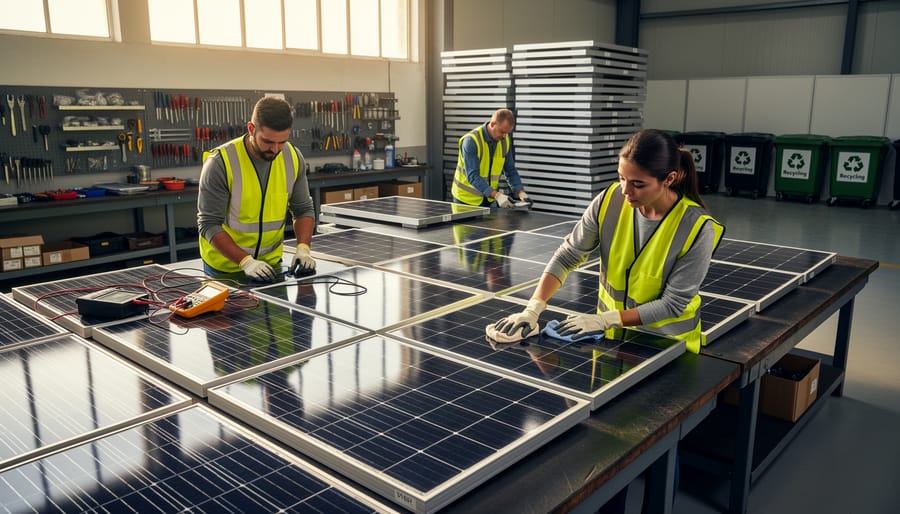
The refurbishment process begins with comprehensive testing using electroluminescence imaging and performance measurement equipment to identify functional modules. Those passing quality standards undergo cleaning, minor repairs such as junction box replacements, and recertification. This process requires considerably less energy and resources than manufacturing new panels or complete recycling operations.
Secondary markets for tested used modules exist in multiple segments. Developing regions with lower electricity requirements benefit from affordable solar access, while off-grid applications, temporary installations, and small-scale residential projects provide additional outlets. Some educational institutions partner with refurbishment programs to provide hands-on training for aspiring solar professionals while simultaneously extending module lifecycles.
The economic advantage is substantial: refurbished modules typically sell for 40-60% of new panel prices while maintaining warranties of 5-10 years. This creates employment in testing, repair, and distribution sectors while postponing resource-intensive recycling operations by 10-20 years, maximizing overall circularity benefits within the photovoltaic value chain.
Closed-Loop Manufacturing Partnerships
Leading manufacturers are demonstrating that closed-loop systems can successfully reintegrate recovered materials into new panel production. First Solar pioneered this approach with its collection and recycling program, recovering approximately 90% of materials from cadmium telluride modules and returning them to manufacturing facilities. The company reports that reclaimed semiconductor materials maintain quality standards while reducing raw material costs by 15-20%, creating a compelling business case beyond environmental benefits.
European manufacturer ROSI Solar has partnered with Veolia to establish direct material flows from recycled panels to new production lines. Their process recovers high-purity silicon, silver, and aluminum, with silicon reclamation achieving cost parity with virgin material when processing volumes exceed 10,000 tonnes annually. This threshold highlights the importance of scale in economic viability.
Several manufacturers have formed collaborative networks with universities to optimize material quality from recycled feedstock. These partnerships focus on maintaining electrical performance specifications while gradually increasing recycled content percentages. Current manufacturing lines typically incorporate 5-10% recycled materials, with targets reaching 30% by 2030 as processing technologies mature. The economics improve significantly when manufacturers co-locate recycling facilities near production sites, reducing transportation costs and enabling just-in-time material delivery systems that minimize inventory expenses.
Recycling-as-a-Service Models
Recycling-as-a-Service (RaaS) models are emerging as practical solutions for solar installers and asset owners facing end-of-life panel management challenges. These service providers handle the entire decommissioning process, from panel removal and transportation to certified recycling, eliminating logistical burdens for system owners. Companies offering RaaS typically charge per-panel fees or subscription-based contracts, often incorporating take-back guarantees at installation. This approach mirrors innovative financing models in solar deployment, where upfront costs are distributed over time. For commercial solar portfolios, RaaS ensures regulatory compliance with extended producer responsibility frameworks while providing transparent cost structures. Leading service providers partner with certified recyclers and maintain tracking systems documenting material recovery rates. Universities are collaborating with RaaS companies to develop training programs, preparing future professionals to manage circular workflows effectively within the photovoltaic industry.
Career Opportunities in PV Circular Economy
Emerging Job Roles and Required Competencies
The transition to a circular photovoltaic economy is creating diverse career pathways that blend technical expertise with sustainability principles. Organizations developing closed-loop solar systems require specialists across multiple operational areas, each demanding distinct competencies.
Recycling operations managers oversee end-of-life panel processing facilities, requiring knowledge of material recovery techniques, hazardous waste handling, and facility optimization. These professionals need backgrounds in chemical engineering, environmental science, or materials processing, combined with operational management skills.
Circular design engineers focus on developing panels with recyclability in mind, necessitating expertise in product lifecycle assessment, materials science, and modular design principles. Understanding both manufacturing processes and disassembly requirements proves essential for this role.
Reverse logistics coordinators manage the complex supply chains for collecting, transporting, and processing decommissioned panels. This position requires proficiency in supply chain management, regulatory compliance, and route optimization software.
Policy and compliance specialists navigate evolving extended producer responsibility frameworks and ensure organizational adherence to recycling mandates. These roles demand legal knowledge, regulatory expertise, and stakeholder engagement capabilities.
Universities are increasingly collaborating with industry partners to develop targeted educational programs addressing these competency gaps. Certificate programs, specialized master’s degrees, and professional development courses now incorporate circular economy principles, preparing the workforce for these emerging opportunities while advancing the sector’s sustainability objectives.
Educational Pathways and Certification Programs
The growing complexity of PV circularity demands specialized education and training programs. Leading universities worldwide now offer graduate certificates and master’s degree concentrations in renewable energy systems with dedicated modules on circular economy principles, end-of-life management, and advanced recycling technologies. These academic pathways equip students with knowledge spanning material science, environmental policy, and sustainable business models specific to photovoltaic lifecycles.
Professional certification programs complement traditional degrees, providing industry-recognized credentials for working professionals. Organizations such as the International Renewable Energy Agency and various technical institutes offer specialized courses in solar panel decommissioning, refurbishment techniques, and recycling facility management. These programs typically combine online learning with hands-on workshops at operational recycling facilities.
Collaboration between universities, industry partners, and research institutions creates valuable internship opportunities and applied research projects. Such partnerships enable students to work directly on pilot recycling programs, techno-economic assessments, and innovation in material recovery processes. This practical experience proves essential for developing the skilled workforce needed to scale PV circular economy operations globally.
Future Outlook: Making PV Circularity Economically Sustainable
Technological Breakthroughs on the Horizon
The future of PV circularity looks promising, with several technological innovations poised to transform recycling economics and efficiency. Automated disassembly systems represent a critical advancement, utilizing robotics and artificial intelligence to separate panel components with unprecedented precision and speed. These systems reduce labor costs while improving material recovery rates, addressing one of the primary economic barriers in current recycling operations.
Advanced recovery processes are achieving higher-purity silicon, silver, and other valuable materials through innovative chemical and thermal treatments. Researchers at leading universities are developing hydrometallurgical techniques that extract up to 99% of silver and copper, dramatically improving the value proposition of recycled materials. These high-purity outputs can compete directly with virgin materials in manufacturing new panels.
Novel approaches such as delamination technologies enable non-destructive separation of glass, encapsulants, and solar cells, preserving component integrity for potential reuse. Electrostatic separation and selective dissolution methods further refine material streams, reducing contamination and waste.
Several pilot facilities worldwide are demonstrating commercial viability of these technologies, with industrial partnerships accelerating deployment. As these breakthroughs transition from laboratory to commercial scale, they promise to fundamentally reshape recycling economics, making circularity not merely environmentally responsible but economically compelling for the photovoltaic industry.
The Role of Standardization and Industry Collaboration
The economic viability of photovoltaic recycling hinges significantly on design standardization across manufacturers. Currently, the solar industry produces panels with varying compositions, encapsulation materials, and frame designs, creating substantial challenges for recyclers who must adapt processes for each panel type. This heterogeneity increases processing costs and reduces efficiency, directly impacting profitability.
Industry-wide adoption of uniform design standards could transform recycling economics by enabling streamlined, high-volume processing. When recyclers can develop specialized equipment and procedures for standardized panel designs, economies of scale emerge rapidly. Several leading manufacturers have begun collaborating through organizations like the International Renewable Energy Agency and SOLARPOWER Europe to establish design-for-recycling guidelines that prioritize material recovery.
Universities are playing a crucial role in these collaborative efforts, conducting research on optimal panel designs that balance performance with end-of-life recyclability. Academic institutions are partnering with industry stakeholders to develop educational programs that train the next generation of professionals in circular economy principles, ensuring knowledge transfer between research and practical application.
Cooperative initiatives such as shared recycling infrastructure, cross-industry material recovery facilities, and joint research ventures distribute financial risks while accelerating technological advancement. These partnerships demonstrate that collective action, rather than competitive fragmentation, creates the foundation for economically sustainable photovoltaic circularity at scale.
The circular economy for photovoltaics stands at a critical juncture where environmental necessity converges with emerging business opportunity. As solar installations continue their exponential growth worldwide, the volume of end-of-life panels will increase proportionally, creating both an urgent waste management challenge and a significant economic prospect. The transition from linear disposal to circular material recovery is no longer optional but imperative for the long-term sustainability of the solar industry.
Current economic challenges, including high processing costs and volatile recovered material prices, should not deter engagement with PV circularity. Instead, they represent innovation opportunities for those willing to pioneer solutions. The professionals and organizations that develop cost-effective recycling technologies, efficient collection logistics, and value-added applications for recovered materials today will position themselves as industry leaders tomorrow. Policy support through extended producer responsibility schemes and landfill restrictions is accelerating, creating favorable conditions for circular business models.
For aspiring photovoltaic professionals, PV circularity represents a transformative career pathway. Universities are increasingly collaborating with industry partners to develop specialized educational programs addressing this knowledge gap. Whether your interest lies in materials science, process engineering, policy development, or business strategy, the circular solar economy offers meaningful work that combines environmental impact with commercial viability.
The time to engage is now. By understanding the technical fundamentals, economic realities, and policy landscape of PV recycling, you contribute to building a truly sustainable solar industry that preserves planetary resources while powering our renewable future.