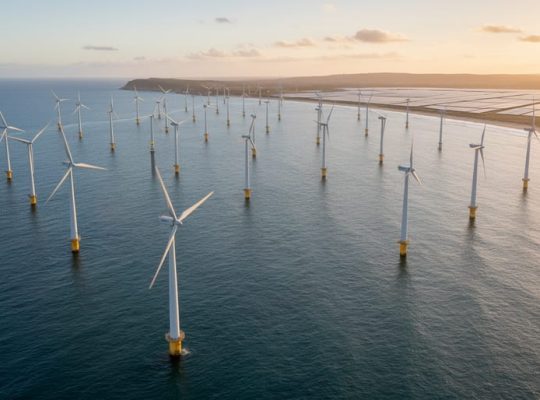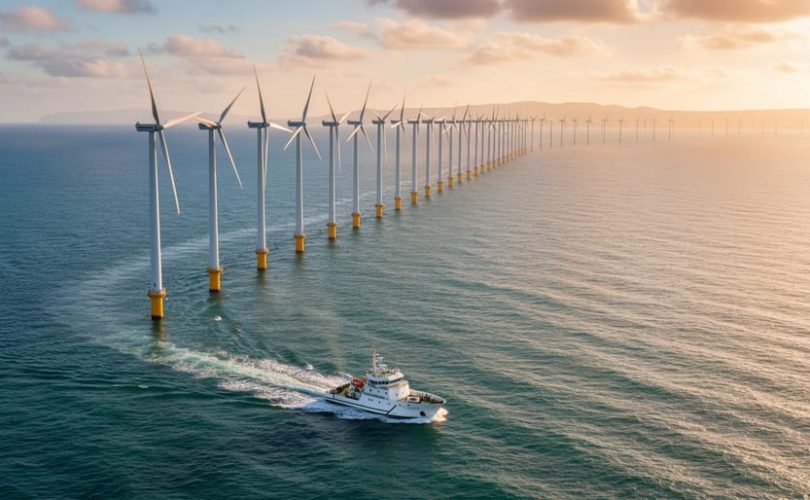
Offshore wind power has emerged as a cornerstone technology in global energy transition strategies, offering policymakers and energy planners a compelling suite of advantages that extend far beyond conventional renewable energy solutions. As nations accelerate decarbonization efforts and seek energy security amid geopolitical uncertainties, offshore wind installations present unique opportunities to harness stronger, more consistent wind resources available over ocean waters—typically generating 40-50% more electricity than comparable onshore facilities.
The strategic value of offshore wind extends across multiple policy dimensions. Economically, these projects catalyze substantial job creation in manufacturing, installation, and maintenance sectors while reducing long-term electricity costs through technological maturation and economies of scale. Environmental benefits include significant carbon emission reductions without land-use conflicts that often challenge onshore developments, preserving terrestrial ecosystems while contributing to climate mitigation targets. Technically, offshore wind’s capacity factors—often exceeding 50% in optimal locations—provide more reliable baseload power than many renewable alternatives, enhancing grid stability and energy resilience.
For renewable energy professionals and policymakers navigating the clean energy landscape, understanding offshore wind’s multifaceted advantages is essential for comprehensive energy planning. This analysis examines the economic drivers, environmental imperatives, technical capabilities, and strategic considerations that position offshore wind as a transformative force in national energy portfolios, offering insights applicable across the broader renewable energy sector including complementary technologies like solar photovoltaics.
The Strategic Advantages Driving Offshore Wind Policy
Superior Energy Generation Capacity
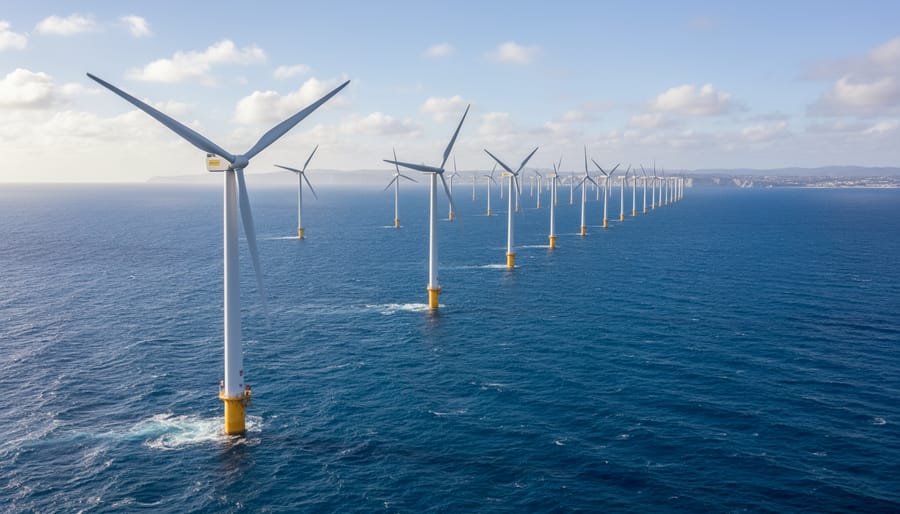
Offshore wind installations demonstrate substantially superior energy generation capacity compared to their onshore counterparts, primarily due to three interconnected factors that make them particularly attractive for policy consideration and grid integration planning.
Wind speeds over open water bodies consistently exceed those found over land, typically ranging 20-40% higher due to reduced surface friction and fewer physical obstructions. This translates directly into enhanced capacity factors, with offshore wind farms frequently achieving 40-50% capacity factors compared to 25-35% for onshore installations. The physics behind this advantage is straightforward: wind power generation increases exponentially with wind speed, meaning even modest speed increases yield significant energy output gains.
The marine environment also enables deployment of substantially larger turbine systems than feasible onshore. Modern offshore turbines now reach capacities of 12-15 megawatts per unit, with some manufacturers developing 18-megawatt prototypes. These massive installations benefit from economies of scale unavailable to land-based projects constrained by transportation logistics, foundation requirements, and community acceptance of visual impact. A single offshore turbine can generate electricity equivalent to multiple onshore units, reducing the number of installations required for target capacity goals.
Furthermore, offshore locations provide more consistent wind patterns with lower turbulence intensity, resulting in smoother power delivery profiles and reduced mechanical stress on turbine components. This consistency enhances grid stability and reduces intermittency challenges that complicate renewable energy integration. For policymakers developing energy transition strategies, these technical advantages represent compelling justification for prioritizing offshore wind development within broader renewable energy portfolios, particularly in regions with favorable coastal geography and established maritime infrastructure.
Minimal Land Use Conflicts
One of the most significant advantages of offshore wind power lies in its ability to bypass the land-use conflicts that frequently plague onshore renewable energy projects. By situating turbines in marine environments, offshore wind development eliminates competition for terrestrial spaces that could otherwise serve agricultural, residential, commercial, or conservation purposes. This fundamental distinction addresses a critical challenge facing renewable energy expansion: the social resistance that often emerges when large-scale energy infrastructure competes with established land uses.
Onshore wind farms and solar installations regularly encounter opposition from communities concerned about visual impacts, noise pollution, property values, and disruption to existing land activities. Agricultural stakeholders may resist projects that consume productive farmland, while environmental groups sometimes oppose developments that fragment wildlife habitats or threaten sensitive ecosystems. These conflicts can delay or derail renewable energy projects, undermining climate goals and creating regulatory uncertainty that discourages investment.
Offshore wind projects substantially reduce these concerns by utilizing marine spaces that typically have fewer competing uses. While ocean areas certainly support fishing, shipping, and recreational activities, the spatial extent of offshore zones generally allows for more flexible siting that minimizes conflicts with existing users. Advanced marine spatial planning techniques enable developers to identify locations where wind farms can coexist with other maritime activities, creating opportunities for shared ocean use that would be difficult to replicate on land.
The reduction in land-use conflicts translates directly into policy advantages. Governments pursuing aggressive renewable energy targets find offshore wind an attractive option because it generates less public opposition than terrestrial alternatives. This social acceptability accelerates permitting processes and reduces the political risks associated with renewable energy mandates. For policymakers balancing environmental objectives with constituent concerns, offshore wind offers a pathway to substantial clean energy capacity without the contentious land-use debates that can undermine public support for climate action.
Economic and Industrial Benefits Shaping Policy Frameworks
Job Creation and Supply Chain Development
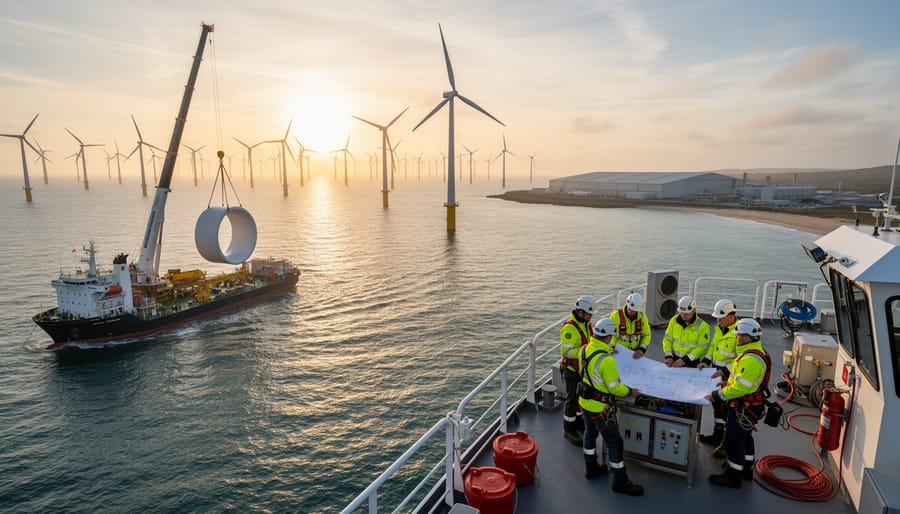
Offshore wind power development catalyzes substantial employment opportunities across multiple sectors, contributing significantly to renewable energy job creation at local, regional, and national levels. The industry generates diverse employment pathways spanning manufacturing, construction, installation, operations, and maintenance phases throughout project lifecycles.
Manufacturing facilities producing turbine components, blades, towers, and foundations create stable, long-term industrial jobs in coastal communities. These positions range from engineering and quality control roles to skilled trades in welding, composite fabrication, and precision assembly. The specialized nature of offshore wind equipment manufacturing often requires partnerships between industry and educational institutions to develop targeted training programs addressing specific technical competencies.
Installation activities demand specialized maritime expertise, including vessel operators, marine engineers, dive teams, and logistics coordinators. These high-skill positions command competitive wages and foster development of domestic maritime capabilities that extend beyond the renewable energy sector.
Ongoing operations and maintenance generate permanent local employment opportunities for technicians trained in advanced diagnostics, electrical systems, and offshore safety protocols. Universities and technical colleges increasingly collaborate with offshore wind developers to establish certification programs ensuring workforce readiness for these specialized roles.
The supply chain extends to port facilities, transportation services, specialized equipment providers, and consulting firms, multiplying economic benefits throughout regional economies. This comprehensive job creation potential positions offshore wind as a strategic workforce development tool for policymakers seeking sustainable economic growth alongside decarbonization objectives.
Energy Independence and Security
Offshore wind power represents a strategic pathway to energy independence, fundamentally transforming national energy security landscapes by reducing dependence on imported fossil fuels. Countries with developed offshore wind sectors have demonstrated measurable decreases in their reliance on foreign energy sources, creating more resilient and self-sufficient power systems that buffer against geopolitical instability and price volatility in global fuel markets.
The domestic nature of wind resources provides a permanent, indigenous energy supply that cannot be embargoed, disrupted by international conflicts, or subject to foreign market manipulation. European nations pioneering offshore wind development have reduced their exposure to imported natural gas and oil by substantial margins, with some achieving energy security gains that directly correlate with offshore capacity installations. This strategic advantage has become increasingly apparent during periods of energy market disruption, when countries with robust renewable portfolios experience less economic impact from supply chain interruptions.
From a policy perspective, offshore wind investments keep energy expenditures circulating within national economies rather than flowing to fossil fuel exporters. The capital that would otherwise purchase imported fuels instead supports domestic manufacturing, installation, and maintenance activities, creating a multiplier effect throughout the economy. This economic recirculation strengthens financial stability while building technical capabilities that position nations as potential technology exporters.
Additionally, offshore wind contributes to energy security through diversification, reducing single-source dependencies that create systemic vulnerabilities. By expanding the energy mix with predictable, locally controlled resources, policymakers establish more stable long-term planning frameworks that support industrial competitiveness and protect consumers from external price shocks inherent in fossil fuel dependency.
Long-Term Cost Competitiveness
Offshore wind has experienced remarkable cost reductions over the past decade, transforming from an expensive niche technology into an economically competitive energy source. The levelized cost of energy (LCOE) for offshore wind has declined by approximately 60-70% since 2010, driven by technological advancements and economies of scale. Larger turbines with capacities exceeding 12-15 MW have significantly reduced the number of installations required per gigawatt, lowering both capital and operational expenditures.
Manufacturing innovations, including longer blade designs and improved foundation systems, have enhanced energy capture efficiency while reducing per-megawatt costs. Supply chain maturation and specialized installation vessels have further streamlined deployment processes, decreasing project timelines and associated financing costs. Many recent offshore wind auctions in Europe have achieved grid parity with conventional energy sources, with some projects requiring minimal or zero subsidies.
Industry projections indicate continued cost reductions as turbine technology advances and installation methodologies improve. This downward trajectory positions offshore wind as a financially viable option for policymakers seeking large-scale renewable energy deployment. The technology’s improving cost competitiveness makes it increasingly attractive for energy portfolios, offering predictable long-term pricing that shields consumers from fossil fuel price volatility while supporting decarbonization objectives and energy security goals.
Environmental and Climate Policy Advantages
Carbon Emission Reduction at Scale
Offshore wind power represents one of the most effective tools for achieving substantial carbon emission reductions at scale. Each megawatt of offshore wind capacity installed displaces fossil fuel generation, with studies indicating that a single 5 MW offshore turbine can prevent approximately 13,000 tons of CO2 emissions annually compared to coal-fired generation. When deployed across multiple installations, these reductions compound significantly, making offshore wind a cornerstone technology for meeting national climate targets and international commitments under agreements such as the Paris Accord.
The scalability of offshore wind projects enables nations to pursue ambitious decarbonization pathways. Countries like the United Kingdom, which has deployed over 14 GW of offshore wind capacity, have attributed significant portions of their emission reductions to this technology. The European Union’s offshore wind strategy targets 300 GW by 2050, which would eliminate an estimated 770 million tons of CO2 emissions annually, equivalent to removing approximately 200 million cars from roads.
Beyond direct emission reductions, offshore wind contributes to grid decarbonization by enabling retirement of aging fossil fuel plants and supporting electrification of transportation and heating sectors. The technology’s high capacity factors and predictable output make it particularly valuable for baseload displacement, while advances in green hydrogen production using offshore wind electricity create additional pathways for hard-to-abate sector decarbonization, amplifying overall climate impact.
Minimal Visual and Noise Impact
Offshore wind installations significantly reduce visual and noise concerns that frequently generate public opposition to onshore wind projects. By positioning turbines several kilometers offshore, often beyond the visible horizon from coastal areas, these facilities minimize aesthetic disruption to landscapes and residential communities. Research indicates that visibility decreases substantially at distances exceeding 12 kilometers, making offshore turbines virtually imperceptible from shore under most atmospheric conditions.
Noise pollution, another primary objection to land-based wind farms, becomes negligible when turbines operate offshore. The combination of distance and natural sound attenuation over water ensures that acoustic emissions rarely impact coastal populations. This geographical separation addresses quality-of-life concerns that have historically delayed or prevented onshore wind development in densely populated regions.
The reduced community impact translates directly into smoother permitting processes and stronger policy support. Policymakers face fewer constituent complaints and local opposition campaigns, facilitating faster regulatory approvals and more ambitious renewable energy targets. Countries including the United Kingdom and Denmark have leveraged this public acceptance advantage to advance aggressive offshore wind deployment strategies, demonstrating how minimized visual and acoustic footprints enable policy frameworks that might prove politically unfeasible for equivalent onshore capacity. This social license advantage represents a critical non-technical benefit for renewable energy transition planning.
Marine Ecosystem Considerations
Offshore wind installations create complex marine ecosystem interactions that require careful consideration in policy frameworks. Foundation structures function as artificial reefs, attracting diverse marine species and increasing local biodiversity. Research from European offshore wind farms demonstrates that these structures provide substrate for filter-feeding organisms like mussels and barnacles, which improve water quality while supporting food chains. Fish populations, particularly juvenile species, often increase around turbine bases due to the exclusion of bottom-trawling fishing activities within wind farm zones.
However, responsible development demands attention to potential impacts. Construction noise and vibration can temporarily disturb marine mammals and fish during pile-driving operations, though advanced noise mitigation technologies significantly reduce these effects. Electromagnetic fields from subsea cables warrant ongoing monitoring, though studies indicate minimal biological significance at current intensity levels. Seabed disturbance during installation phases requires assessment of sediment plume impacts on benthic communities.
Policy frameworks must incorporate comprehensive environmental impact assessments, seasonal construction restrictions during critical breeding periods, and long-term monitoring programs. Collaboration with universities and marine research institutions provides essential baseline data and adaptive management strategies. These evidence-based approaches ensure offshore wind development enhances rather than compromises marine ecosystem health, informing regulations that balance renewable energy expansion with ocean conservation priorities.
Grid Integration and Energy System Benefits
Proximity to Coastal Demand Centers
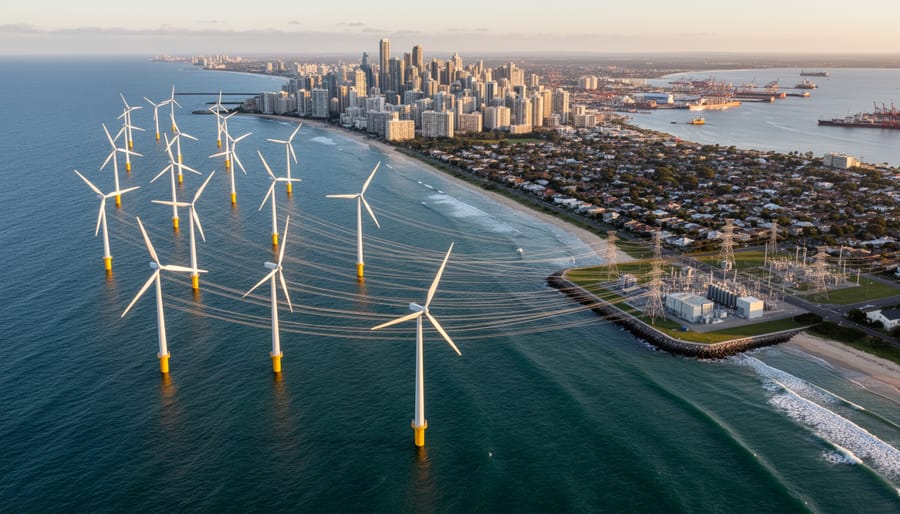
One of offshore wind power’s most significant strategic advantages lies in its proximity to major coastal demand centers. Approximately 40% of the United States population resides in coastal counties, representing some of the nation’s highest electricity consumption areas. This geographical alignment enables offshore wind farms to be developed near metropolitan regions where energy demand is greatest, fundamentally addressing transmission challenges that plague many renewable energy projects.
By positioning generation capacity close to load centers, offshore wind significantly reduces transmission losses that occur when electricity travels long distances. Traditional onshore wind farms in remote locations can experience transmission losses of 8-15%, whereas offshore installations near urban areas typically see losses below 5%. This proximity translates directly into improved grid efficiency and reduced infrastructure investment requirements.
The economic implications for policy development are substantial. Shorter transmission distances mean lower capital expenditures for new transmission lines and substations, making project economics more favorable. States like Massachusetts, New York, and New Jersey have leveraged this advantage in their offshore wind procurement strategies, recognizing that coastal installations can deliver power directly to high-demand markets without extensive grid buildout.
Furthermore, this strategic positioning enhances grid reliability during peak demand periods, particularly crucial for coastal cities facing increasing electrification and climate-driven cooling loads. Policymakers can utilize offshore wind’s location advantage to strengthen regional energy security while minimizing the environmental and financial costs associated with long-distance transmission infrastructure development.
Complementarity with Other Renewable Sources
Offshore wind power demonstrates remarkable synergies with other renewable technologies, particularly solar photovoltaic systems, enhancing overall grid stability and energy security. Wind generation patterns typically peak during winter months and nighttime hours, precisely when solar output diminishes. This natural complementarity reduces the intermittency challenges that affect individual renewable sources, creating more balanced energy supply throughout daily and seasonal cycles.
Research from leading energy institutions indicates that combining offshore wind with solar PV can achieve capacity factors exceeding 60% in optimally designed hybrid energy systems, compared to 25-40% for standalone solar installations. This enhanced reliability reduces dependence on fossil fuel backup generation and storage requirements, lowering overall system costs.
Furthermore, offshore wind’s consistent coastal breezes complement hydropower resources in many regions, enabling utilities to optimize water reservoir management while maintaining grid reliability. The integration of diverse clean energy technologies allows policymakers to design more resilient energy portfolios that capitalize on geographic and meteorological diversity.
Universities collaborating with renewable energy developers are documenting these complementarity patterns, providing critical data for policy frameworks that incentivize multi-technology approaches. Educational programs increasingly emphasize cross-technology understanding, preparing professionals to design and implement integrated renewable energy solutions that maximize resource utilization and minimize system-wide costs.
Policy Enablers and International Best Practices
Regulatory Frameworks and Permitting Streamlining
Effective regulatory frameworks serve as foundational pillars for offshore wind development, enabling projects to transition from concept to operation efficiently. Governments worldwide have implemented various policy mechanisms to accelerate deployment while maintaining environmental and economic safeguards.
Competitive auction systems have emerged as particularly effective instruments for offshore wind expansion. These mechanisms allow developers to bid for contracts, driving down costs through market competition while providing long-term revenue certainty. Countries like the United Kingdom and Germany have successfully utilized auction frameworks to achieve record-low strike prices, demonstrating how well-designed offshore wind policy initiatives can balance affordability with investor confidence.
Feed-in tariffs, though less common for newer offshore projects, historically provided crucial early-stage support by guaranteeing fixed electricity prices. This mechanism reduced investment risk during the technology’s nascent development phase, establishing the foundation for today’s mature industry.
Streamlined permitting processes represent another critical advantage-enabling factor. Traditional approval procedures often involved multiple agencies with overlapping jurisdictions, creating delays and uncertainty. Progressive jurisdictions now implement coordinated review processes, establishing single-window agencies that manage environmental assessments, maritime consultations, and grid connection approvals simultaneously. These reforms can reduce project timelines by years, improving financial viability and accelerating deployment.
Furthermore, spatial planning initiatives that pre-identify suitable offshore zones eliminate redundant site assessments, providing developers with regulatory clarity before significant capital commitment. Such comprehensive frameworks demonstrate how thoughtful policy design transforms offshore wind’s inherent advantages into realized clean energy capacity.
International Collaboration and Knowledge Transfer
The offshore wind sector thrives through international collaboration, with cross-border initiatives accelerating technological advancement and policy harmonization across nations. The European Union’s offshore wind cooperation framework exemplifies successful knowledge transfer, where countries like Denmark, Germany, and the Netherlands share grid infrastructure planning methodologies and regulatory best practices. These collaborative efforts reduce development costs by 15-20% through standardized approval processes and shared technical specifications.
Technology sharing agreements between established offshore wind markets and emerging ones facilitate rapid capacity building. Japan’s partnership with European developers transferred floating offshore wind expertise, enabling accelerated deployment in deep-water locations. Similarly, Taiwan’s offshore wind program benefited from knowledge transfer agreements that compressed its learning curve from decades to years, demonstrating how international cooperation overcomes barriers to market entry.
Academic institutions play pivotal roles in these knowledge ecosystems, conducting joint research projects and developing standardized training curricula that prepare the next generation of renewable energy professionals. University partnerships establish research centers focused on offshore wind optimization, marine environmental impact assessment, and advanced materials development. These educational collaborations ensure workforce readiness across participating nations while fostering innovation through shared research infrastructure.
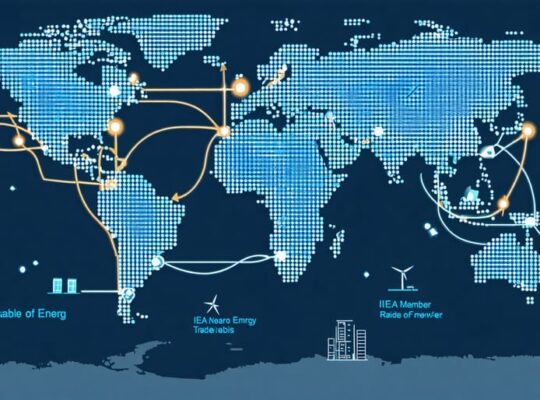
Policy development increasingly reflects this collaborative approach, with international forums enabling policymakers to compare regulatory frameworks and adopt proven strategies. The International Energy Agency’s offshore wind task force coordinates policy research and disseminates implementation insights, helping nations craft evidence-based regulations that accelerate deployment while maintaining environmental standards. This interconnected approach to offshore wind development creates synergies that benefit the broader renewable energy sector, including photovoltaic technologies, through shared grid integration solutions and complementary generation strategies.

The strategic advantages of offshore wind power present compelling rationales for robust policy frameworks supporting renewable energy expansion. From substantial energy generation capacity and minimal land-use conflicts to significant employment creation and grid stability contributions, offshore wind delivers multifaceted benefits that align with contemporary energy policy objectives. These advantages position offshore wind as a critical component in achieving decarbonization targets while simultaneously advancing economic development and energy security goals.
For renewable energy professionals, understanding the complementary nature of diverse clean energy technologies proves essential for effective energy transition planning. While photovoltaic systems excel in distributed generation and rapid deployment scenarios, offshore wind addresses baseload generation needs and leverages coastal resources efficiently. This technological diversity strengthens overall grid resilience and accelerates the displacement of fossil fuel generation.
Policymakers and industry stakeholders must recognize that comprehensive energy transitions require integrated approaches combining solar, wind, and other renewable technologies. Educational institutions and professional development programs increasingly emphasize cross-technology competency, preparing the next generation of energy professionals to navigate complex multi-source renewable portfolios. By synthesizing technical understanding across solar photovoltaic systems, offshore wind installations, and emerging technologies, professionals can contribute meaningfully to policy development and implementation strategies that maximize environmental benefits while ensuring economic viability and grid reliability throughout the transition to sustainable energy systems.