
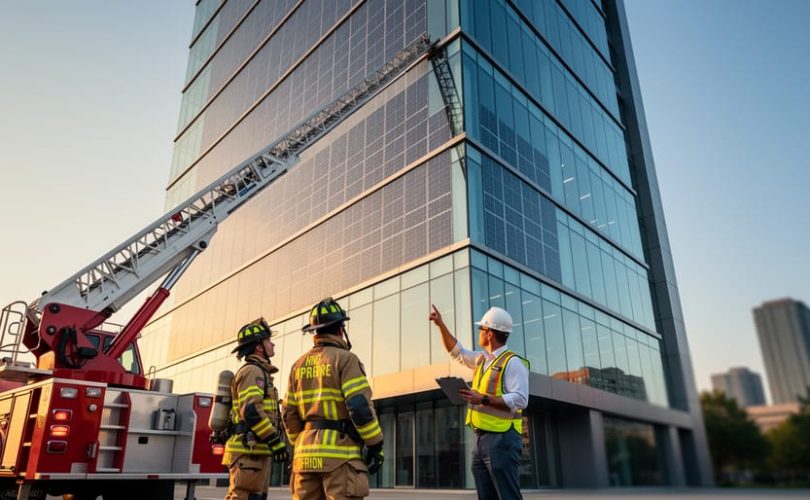
Building-integrated photovoltaics represent a convergence of architectural innovation and renewable energy technology, but their successful deployment hinges on navigating a complex regulatory landscape. Unified building codes provide the essential framework that ensures BIPV systems meet structural, electrical, and fire safety requirements while maintaining consistency across jurisdictions.
Understanding these standardized codes is fundamental for anyone entering the photovoltaic profession. Unlike traditional solar installations, BIPV systems function as both building envelope components and power generators, subjecting them to dual regulatory oversight. The International Building Code (IBC), National Electrical Code (NEC), and International Fire Code (IFC) form the foundation of unified standards in the United States, with parallel frameworks existing globally through organizations like the International Code Council.
The harmonization of building codes addresses a critical industry challenge: eliminating regulatory fragmentation that previously created barriers to widespread BIPV adoption. When municipalities adopt unified codes, installers and developers gain predictability, reducing project delays and ensuring safety standards remain consistent whether working in California or Connecticut. These codes specifically address BIPV-unique concerns including structural load calculations for facade-mounted modules, fire propagation risks across building surfaces, and emergency responder access considerations.
For aspiring professionals and current practitioners, mastering unified building codes is not optional. Code compliance directly impacts project permitting timelines, insurance coverage, system warranties, and long-term liability. The regulatory framework continues evolving as BIPV technology advances, requiring ongoing education and awareness of amendments addressing emerging materials like perovskite-based building materials and transparent photovoltaic glazing.
This comprehensive examination explores how unified building codes specifically apply to BIPV installations, detailing fire safety protocols, identifying authoritative regulatory bodies, and providing practical guidance for achieving compliance in this rapidly expanding sector of renewable energy infrastructure.
What Unified Building Codes Are and Why They Exist
The Role of Model Building Codes
Model building codes serve as foundational templates that establish minimum safety and construction standards across diverse jurisdictions. The International Building Code (IBC) and International Residential Code (IRC), developed by the International Code Council, represent the most widely adopted model codes in the United States. These documents provide comprehensive guidelines covering structural integrity, fire safety, mechanical systems, and electrical installations—all critical considerations for building-integrated photovoltaic systems.
The adoption process follows a logical pattern: state and local jurisdictions review model codes and determine whether to implement them wholesale or with jurisdiction-specific amendments. This approach balances national consistency with local needs, accounting for regional variations in climate, construction practices, and environmental conditions. For photovoltaic professionals, understanding this adoption mechanism proves essential, as BIPV installations must comply with the specific code version enforced in each jurisdiction.
Model codes undergo regular revision cycles, typically every three years, incorporating technological advances and lessons learned from field experience. Recent editions have expanded coverage of renewable energy systems, reflecting the growing prevalence of solar installations. The IRC specifically addresses residential solar applications, while the IBC governs commercial and larger-scale implementations.
Universities collaborating with industry organizations play vital roles in educating professionals about code interpretation and application. Educational programs increasingly incorporate model code training, preparing aspiring PV professionals to navigate the regulatory landscape effectively. Understanding how jurisdictions modify and enforce these baseline standards enables practitioners to design compliant, safe BIPV systems that meet both performance objectives and regulatory requirements.
From General Construction to Solar-Specific Requirements
Unified building codes have undergone significant transformation to keep pace with renewable energy technologies, particularly building-integrated photovoltaics (BIPV). Initially, these codes focused exclusively on traditional construction elements like structural integrity, fire resistance, and occupant safety. However, as solar technology advanced beyond rooftop-mounted systems to architecturally integrated solutions, regulatory frameworks needed expansion.
The International Building Code (IBC) began incorporating solar-specific provisions in the early 2000s, recognizing that BIPV systems serve dual functions as both building envelope components and energy generators. This distinction necessitated new code chapters addressing electrical safety, structural loading, fire classification, and weatherproofing requirements unique to photovoltaic installations.
Modern unified codes now include dedicated sections for BIPV systems, covering everything from solar shingles versus panels to curtain wall applications. These amendments establish minimum performance standards for fire resistance ratings, impact resistance, and electrical isolation between the photovoltaic circuit and building structure.
Educational institutions have collaborated with code development organizations to ensure these requirements reflect current research and industry best practices. This partnership has produced evidence-based standards that balance innovation with safety. Recent code cycles have introduced requirements for rapid shutdown systems, enhanced grounding protocols, and specific testing methodologies for BIPV products, demonstrating how unified codes continue evolving to address emerging solar technologies while maintaining their foundational commitment to public safety and building performance.
Building-Integrated PV Systems: Unique Code Challenges
Structural and Weather Protection Requirements
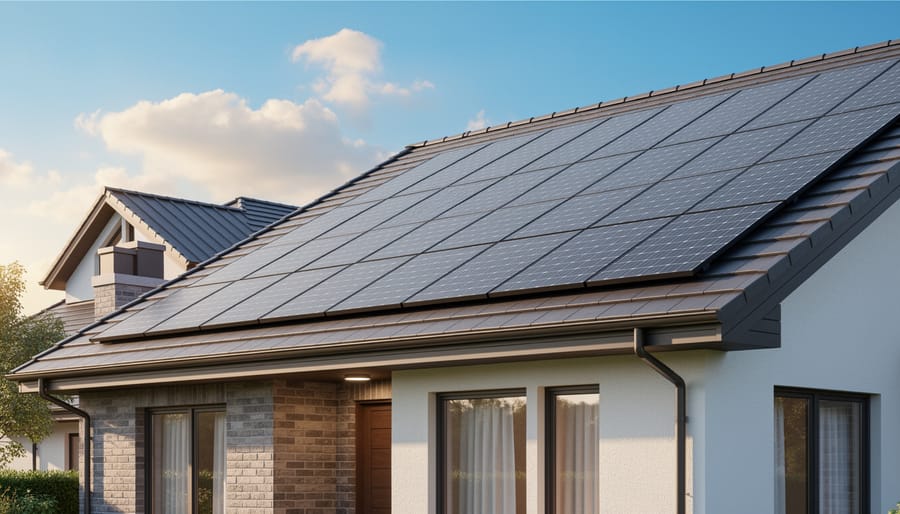
Building-integrated photovoltaic systems occupy a unique regulatory position, as they must simultaneously satisfy multiple building code categories beyond standard electrical requirements. Unlike conventional solar panels mounted on existing structures, BIPV components such as solar roof tiles serve as actual building envelope elements, making them subject to the same structural, weatherproofing, and durability standards as traditional construction materials.
Unified building codes mandate that BIPV installations meet structural load requirements for dead loads, live loads, wind uplift, and seismic forces as specified in the International Building Code. The photovoltaic elements must demonstrate adequate load-bearing capacity and proper load transfer to the supporting structure. Waterproofing standards are particularly critical, as BIPV systems must maintain continuous weather barriers, prevent water infiltration, and integrate properly with flashing systems and drainage planes.
Additionally, these systems must comply with thermal performance requirements, including insulation values and thermal bridging considerations. Fire resistance ratings for roof assemblies apply equally to BIPV installations, requiring testing and certification through recognized laboratories. The convergence of electrical, structural, and building envelope requirements necessitates close coordination between electrical engineers, structural engineers, and architects during design phases to ensure comprehensive code compliance.
Electrical Safety Integration
Building-Integrated Photovoltaic systems must comply with both structural building codes and electrical safety standards, particularly the National Electrical Code. The NEC, updated every three years, establishes comprehensive electrical safety requirements that directly impact BIPV installations. For systems integrated into building envelopes, compliance becomes more complex as electrical components are embedded within structural elements rather than mounted separately.
Rapid shutdown requirements under NEC Article 690.12 mandate that BIPV systems reduce conductor voltage to safe levels within 30 seconds of emergency activation. This provision protects firefighters and first responders who may need to access roofs or building exteriors during emergencies. The integration challenge lies in ensuring shutdown mechanisms remain accessible and functional when photovoltaic components serve dual purposes as building materials.
Arc-fault circuit protection, required by NEC Article 690.11, detects and interrupts potentially dangerous electrical arcs that could ignite surrounding materials. For BIPV installations, where modules interface directly with combustible or structural building components, this protection becomes critical. Academic research programs in collaboration with universities continue developing advanced detection systems tailored to BIPV configurations, recognizing that traditional arc-fault protection designed for rack-mounted systems may require adaptation for building-integrated applications. Installers must verify that their BIPV designs satisfy both NEC electrical safety provisions and jurisdiction-specific building code requirements simultaneously.
Fire Safety Standards for Building-Integrated Solar
Fire Classification and Testing Standards
When integrating photovoltaic systems into building structures, understanding fire classification becomes essential for compliance and safety. Building-integrated photovoltaic (BIPV) products must meet rigorous testing standards to ensure they don’t compromise the fire resistance of roofing assemblies.
UL 1703 serves as the primary safety standard for flat-plate photovoltaic modules and panels. This standard evaluates electrical and fire performance characteristics, establishing baseline safety requirements for PV products used in building applications. However, as BIPV technology evolved, UL 61730 emerged as a more comprehensive standard, consisting of two parts: Construction Requirements (Part 1) and Testing Requirements (Part 2). This internationally harmonized standard addresses mechanical, electrical, and fire safety concerns specific to photovoltaic modules, including those integrated into building envelopes.
Fire ratings for roofing assemblies follow a three-tier classification system established by ASTM E108 and UL 790 testing protocols. Class A represents the highest fire resistance, indicating the assembly can withstand severe fire exposure from external sources. Class B offers moderate protection against fire exposure, while Class C provides basic fire resistance for light exposures. For BIPV installations, the entire roofing assembly including the integrated PV components must achieve these ratings together.
Manufacturers must demonstrate that BIPV products maintain the underlying roof’s fire classification. This requirement presents unique challenges since photovoltaic materials, mounting systems, and electrical components can potentially alter fire behavior. Testing evaluates flame spread, intermittent flame exposure, burning brand resistance, and flying brand characteristics. Products failing to meet Class A, B, or C standards receive no fire rating classification, severely limiting their application in most jurisdictions.
Firefighter Access and Rapid Shutdown Requirements
Building-integrated photovoltaic systems present unique challenges for emergency responders, making firefighter access and rapid shutdown requirements essential components of unified building codes. These provisions balance the benefits of solar energy generation with critical safety considerations during fire suppression operations.
Rooftop access pathways constitute a fundamental requirement across most jurisdictions. The International Fire Code typically mandates clear access corridors measuring 3 feet wide around the perimeter of rooftop arrays, with additional pathways creating accessible zones every 150 feet. These setbacks ensure firefighters can navigate roof surfaces safely while establishing ventilation openings and conducting rescue operations. For ridge-mounted arrays, codes generally require a 4-foot-wide clear pathway along the ridge line to facilitate smoke ventilation operations.
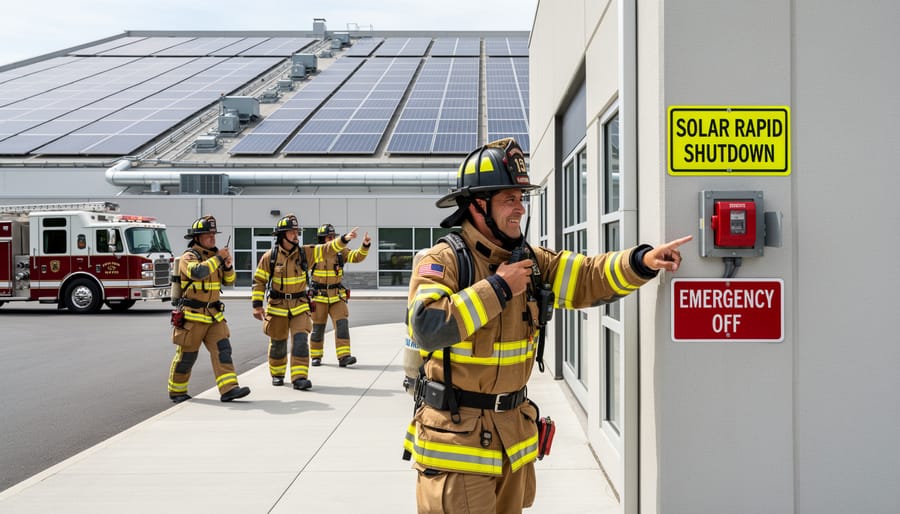
The National Electrical Code Article 690.12 establishes rapid shutdown provisions specifically designed to protect first responders from electrical hazards. This requirement mandates that PV system conductors located more than one foot from the array must reduce voltage to 80 volts or less within 30 seconds of rapid shutdown activation. The 2017 NEC revision strengthened these provisions, requiring controlled conductors within the array boundary to reduce to 80 volts as well, minimizing shock risks during emergency operations.
Implementation involves installing rapid shutdown initiators at readily accessible locations, typically near service disconnects or building entrances. These devices must be clearly labeled with permanent, weather-resistant signage indicating their function. Academic institutions collaborating with fire departments have demonstrated that properly implemented rapid shutdown systems significantly reduce electrical hazards, enabling more effective emergency response while maintaining system integrity once danger passes.
Key Code Organizations and Standards Governing BIPV
International Code Council and Building Codes
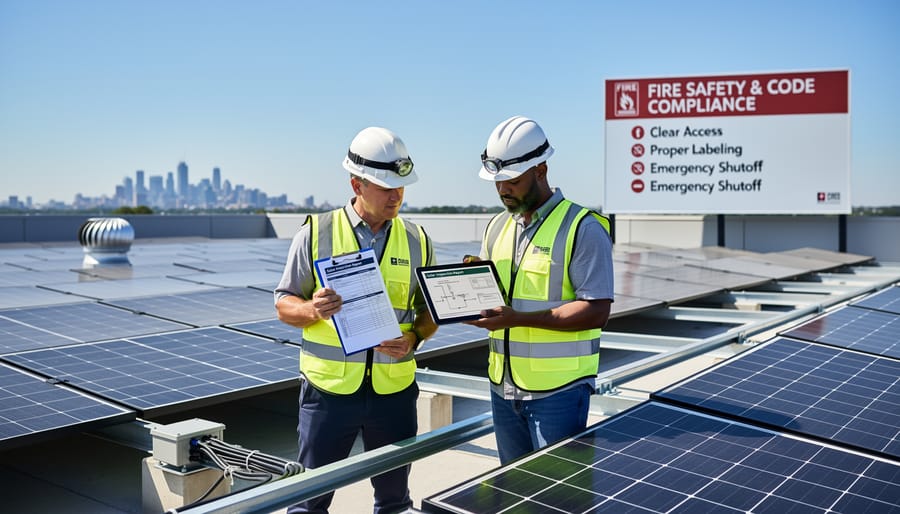
The International Code Council (ICC) serves as the primary organization responsible for developing and maintaining the model building codes adopted throughout the United States and many international jurisdictions. Established in 1994 through the consolidation of three regional code organizations, the ICC produces comprehensive code families that directly impact building-integrated photovoltaic system installations.
The International Building Code (IBC) provides foundational requirements for commercial and multi-family residential structures, addressing structural integrity, fire safety, and electrical system integration. For BIPV applications, the IBC establishes critical guidelines regarding roof load calculations, fire resistance ratings, and system accessibility for emergency responders. The International Residential Code (IRC) similarly governs one- and two-family dwellings, offering specific provisions for rooftop installations and electrical connections that BIPV systems must satisfy.
The International Fire Code (IFC) complements these documents by addressing operational fire safety considerations, including requirements for solar panel setbacks, firefighter access pathways, and rapid shutdown capabilities. These provisions recognize that BIPV systems present unique challenges during emergency response situations, necessitating clear roof access zones and electrical isolation procedures.
Many universities collaborate with the ICC to incorporate these code requirements into photovoltaic training programs, ensuring that aspiring professionals understand the regulatory framework governing BIPV installations. This educational foundation proves essential for industry stakeholders navigating the complex intersection of building codes and renewable energy technology.
NFPA, NEC, and Electrical Safety Standards
The National Fire Protection Association (NFPA) plays a central role in establishing electrical safety standards that directly impact building-integrated photovoltaic installations. The NFPA’s National Electrical Code (NEC), updated every three years, serves as the foundation for electrical safety requirements across the United States. For PV professionals, NEC Article 690 specifically addresses solar photovoltaic systems and contains critical provisions for system design, installation, and safety.
NEC Article 690 establishes requirements for circuit sizing, overcurrent protection, grounding, marking, and disconnection means for PV systems. These standards ensure that BIPV installations integrate safely with building electrical infrastructure while minimizing fire and shock hazards. The article addresses unique challenges posed by PV systems, including maximum voltage calculations, rapid shutdown requirements, and arc-fault protection—provisions particularly relevant for rooftop and facade-integrated installations.
Coordination between NFPA standards and building codes occurs at multiple levels. State and local jurisdictions adopt the NEC alongside building codes, creating a comprehensive regulatory framework. This coordination ensures that electrical safety standards align with structural, fire, and energy code requirements. Many universities offering renewable energy programs emphasize NEC compliance training, recognizing its fundamental importance for aspiring PV professionals entering the field. Understanding these interconnected standards enables practitioners to design compliant BIPV systems that meet both electrical safety and building integration requirements.
Testing and Certification Bodies
Several independent organizations establish testing protocols and certification frameworks that enable BIPV products to achieve code compliance. Underwriters Laboratories (UL) stands as a prominent testing and certification body, developing safety standards for electrical and fire performance of building-integrated photovoltaic systems. UL standards such as UL 790 for fire resistance and UL 1703 for flat-plate photovoltaic modules are frequently referenced in building codes.
The International Electrotechnical Commission (IEC) provides globally recognized testing standards including IEC 61730 for photovoltaic module safety qualification and IEC 61215 for crystalline silicon module design qualification. These standards form the technical foundation for verifying that BIPV products meet electrical safety and performance requirements.
Additional organizations like the International Code Council Evaluation Service (ICC-ES) issue evaluation reports that demonstrate product compliance with building codes, streamlining the approval process for installers and building officials. Many universities collaborate with these certification bodies to advance testing methodologies and train future professionals in proper compliance verification procedures.
How Unified Codes Benefit the PV Industry and Consumers
Streamlined Product Development and Market Access
Unified building codes create significant advantages for manufacturers operating in the competitive photovoltaic industry by eliminating the costly burden of developing jurisdiction-specific product variations. Companies like Mose Solar can design and certify Building-Integrated PV systems once to meet harmonized standards, then deploy these products across multiple markets without extensive redesign or recertification processes. This standardization reduces development cycles from years to months and dramatically lowers testing costs, as a single compliance pathway satisfies requirements in numerous jurisdictions simultaneously.
The economic impact extends beyond manufacturers to benefit the entire supply chain. Distributors maintain simplified inventory systems, installers require training on fewer product variations, and project developers experience faster permitting timelines. For emerging markets and developing regions, unified codes accelerate technology transfer by providing clear benchmarks that local manufacturers can adopt, fostering domestic solar industries while ensuring safety and performance standards remain consistent.
This regulatory harmonization particularly benefits innovative BIPV products like solar facades and integrated roofing systems, where complex building envelope interactions demand rigorous testing. Manufacturers can confidently invest in research and development knowing their innovations will access broader markets upon successful certification, ultimately driving technological advancement and cost reductions throughout the photovoltaic sector.
Installer Training and Professional Development
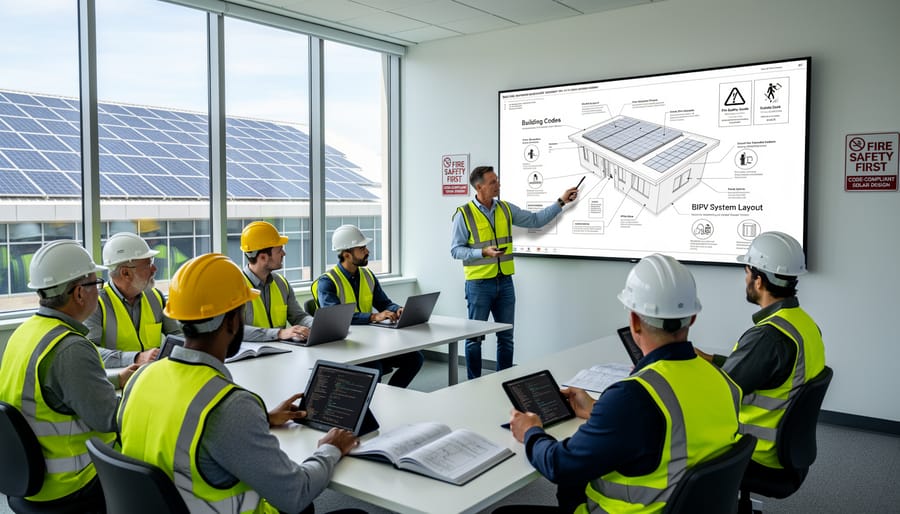
For aspiring photovoltaic professionals, comprehensive understanding of unified building codes represents a foundational competency that directly impacts career opportunities and installation quality. Educational programs at technical colleges and universities increasingly incorporate code compliance modules into their renewable energy curricula, recognizing that theoretical knowledge must align with regulatory requirements. These programs typically cover International Building Code provisions, National Electrical Code standards, and jurisdiction-specific amendments that govern BIPV installations.
Professional certification pathways, including those offered by the North American Board of Certified Energy Practitioners, require demonstrated code proficiency as part of their credentialing process. This emphasis reflects industry recognition that proper installation extends beyond technical skill to encompass regulatory awareness and fire safety considerations. Many community colleges now partner with solar industry associations to develop coursework that balances hands-on training with code interpretation exercises.
Continuing education remains essential even for experienced installers, as building codes undergo regular revision cycles to accommodate technological advances and emerging safety data. Professional development opportunities through webinars, workshops, and industry conferences help practitioners stay current with evolving standards. For those entering the field, investing time in code education accelerates career progression and reduces costly installation errors that result from compliance oversights.
Navigating Code Adoption and Jurisdiction Variations
Understanding Adoption Cycles and Amendments
Building codes do not operate on a universal timeline. Instead, jurisdictions adopt and update codes according to their own schedules, which can range from three-year to six-year cycles or longer. This staggered adoption means that neighboring cities or counties may enforce different editions of the International Building Code or International Fire Code, creating a patchwork regulatory landscape for BIPV professionals to navigate.
When jurisdictions adopt model codes, they frequently introduce local amendments that modify or supplement baseline requirements. These amendments typically address regional concerns such as seismic activity, wind loads, wildfire risk, or snow accumulation. For BIPV installations, local amendments may impose stricter fire ratings, specify particular mounting methods, or require additional structural certifications. Some jurisdictions have developed specific provisions for rooftop solar arrays that directly impact building-integrated systems.
Understanding the amendment history becomes essential for compliance. A jurisdiction might adopt the 2021 International Building Code but retain amendments from previous editions that specifically address photovoltaic systems. Professionals must consult with local building departments to identify applicable amendments and verify current code editions. Many jurisdictions publish their adopted codes with amendments online, though accessing complete documentation sometimes requires direct inquiry. This variability underscores the importance of thorough preliminary research before designing or installing BIPV systems across different regulatory territories.
Resources for Staying Current
Staying current with unified building codes requires ongoing commitment to professional development and regular consultation of authoritative sources. The International Code Council (ICC) serves as the primary resource for model building codes, offering comprehensive documentation, updates, and interpretive guidance through their official website and publications. Similarly, the National Fire Protection Association (NFPA) provides essential standards and educational materials specifically addressing photovoltaic system safety requirements.
Professional organizations such as the North American Board of Certified Energy Practitioners (NABCEP) offer continuing education courses that cover code compliance and emerging regulatory changes. Many universities now collaborate with industry partners to deliver specialized training programs in BIPV installation and code interpretation, providing accessible pathways for skill development.
Before any BIPV installation, consulting with local building departments remains essential, as jurisdictions frequently adopt amendments to model codes or maintain supplementary requirements. Authority Having Jurisdiction (AHJ) representatives can clarify specific local interpretations and permitting procedures. Additionally, manufacturers often provide technical bulletins addressing code compliance for their specific products. Subscribing to industry publications and joining professional associations ensures timely awareness of code revisions, interpretation bulletins, and best practice guidelines that directly impact BIPV project success and regulatory compliance.
Future Directions: Evolving Codes for Emerging PV Technologies
The photovoltaic industry stands at a pivotal juncture where unified building codes must evolve rapidly to accommodate groundbreaking technologies and design approaches. Building-Integrated Photovoltaic systems are transitioning from discrete add-ons to seamlessly embedded architectural elements, demanding code frameworks that address aesthetic integration, structural performance, and multifunctional capabilities. Progressive code bodies are developing provisions for transparent PV glass facades, solar roof tiles, and even PV-integrated roadway surfaces, recognizing that tomorrow’s solar installations will bear little resemblance to traditional rack-mounted arrays.
Energy storage integration represents another frontier requiring immediate code attention. As battery systems become standard companions to PV installations, unified codes are incorporating safety protocols for lithium-ion storage, thermal management requirements, and emergency disconnect procedures that account for both generation and storage components. The National Fire Protection Association and International Code Council are actively revising electrical and fire codes to address DC-coupled storage systems and the unique hazards they present.
Smart building integration further complicates the regulatory landscape. Codes now must consider PV systems as active participants in building energy management, incorporating provisions for grid-interactive capabilities, demand response participation, and cybersecurity requirements. Universities collaborating with code development organizations are researching optimal frameworks that balance innovation with safety.
Climate resilience has emerged as a critical consideration, with unified codes beginning to mandate enhanced wind resistance ratings, hail impact standards, and flood elevation requirements for PV installations. Forward-thinking jurisdictions are incorporating climate projection data into building code cycles, ensuring that PV systems installed today remain compliant and functional under predicted future environmental conditions. These adaptive code strategies will prove essential as the industry scales to meet global decarbonization targets.
Unified building codes serve as the foundational framework that enables the safe, reliable integration of photovoltaic systems into our built environment. As the renewable energy sector continues its rapid expansion, these standardized requirements ensure that building-integrated photovoltaic installations meet rigorous safety benchmarks while supporting innovation and technological advancement. The harmonization of codes across jurisdictions reduces complexity for installers, manufacturers, and building owners, ultimately accelerating solar adoption while maintaining public safety.
For photovoltaic professionals, comprehensive code literacy is not merely recommended—it is essential. Understanding the interplay between electrical standards, fire safety requirements, structural considerations, and local amendments empowers practitioners to design compliant systems, navigate inspections confidently, and deliver installations that protect both people and property. This knowledge differentiates competent professionals from those who risk costly errors and safety violations.
The regulatory landscape governing solar installations continues to evolve in response to emerging technologies, field experience, and research findings. Standards organizations regularly update requirements to address new materials, installation methods, and system configurations. This dynamic environment demands ongoing professional development and commitment to staying current with the latest code revisions and industry best practices.
We encourage all stakeholders in the photovoltaic industry to prioritize continuing education through professional certifications, industry conferences, and collaborative partnerships with academic institutions. Many universities now offer specialized programs focusing on renewable energy codes and standards, providing structured pathways for deepening technical expertise. By investing in code knowledge and professional growth, the solar community strengthens its capacity to deliver safe, compliant installations that advance the clean energy transition responsibly.


