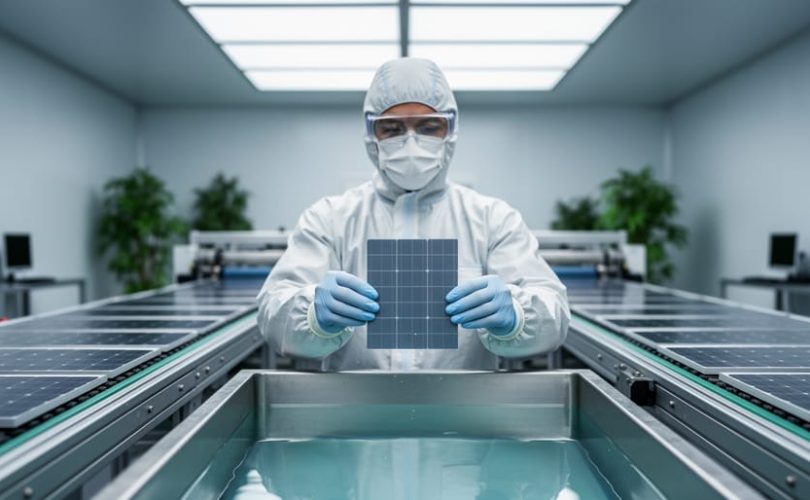
Green chemistry is revolutionizing photovoltaic manufacturing by replacing hazardous substances with safer alternatives that protect workers, communities, and ecosystems without compromising solar panel performance. The solar industry faces a critical paradox: while producing clean energy technology, conventional PV manufacturing relies on toxic chemicals including hydrofluoric acid, lead-based pastes, and chlorinated solvents that pose significant environmental and occupational health risks.
This transformation addresses three urgent priorities. First, regulatory pressure from the European Union’s REACH directive and similar frameworks worldwide demands elimination of substances of very high concern. Second, manufacturers recognize that sustainable production practices strengthen supply chain resilience and brand reputation in increasingly competitive markets. Third, breakthrough innovations in metallization pastes, texturing processes, and thin-film deposition now demonstrate that environmental responsibility and technical excellence are complementary rather than competing objectives.
Green chemistry principles—including waste prevention, atom economy, and designing safer chemicals—are being integrated across the PV value chain from silicon purification through module assembly. Leading manufacturers have achieved measurable results: 40-60% reductions in water consumption, elimination of lead from solar cells, and development of biodegradable encapsulation materials. These advances create substantial career opportunities for professionals who understand both photovoltaic technology and sustainable chemistry practices.
Understanding green chemistry’s role in solar manufacturing is essential for anyone entering the renewable energy sector, as environmental stewardship increasingly defines industry leadership and competitive advantage in the global transition to clean energy.
The Chemical Reality Behind Solar Panel Manufacturing
Traditional Chemicals in Silicon Wafer Processing
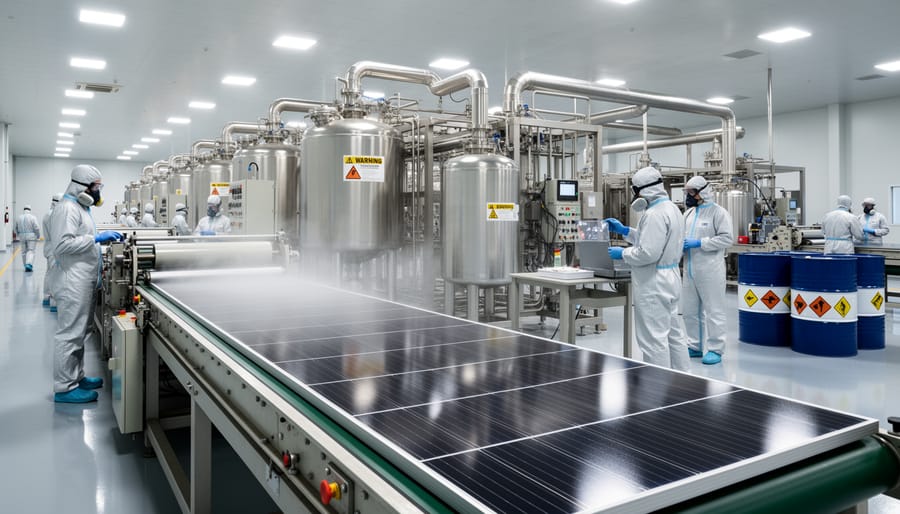
Conventional silicon wafer processing relies on several hazardous chemicals that pose significant environmental and occupational health risks. Understanding these substances is essential for appreciating the importance of green chemistry alternatives in photovoltaic manufacturing.
Hydrofluoric acid (HF) stands as one of the most dangerous chemicals used in the industry. This highly corrosive substance etches silicon surfaces to remove impurities and create textured surfaces that improve light absorption. However, HF can cause severe chemical burns and requires specialized handling protocols and safety equipment. Even minimal exposure can lead to serious injury, making it a primary target for replacement in green manufacturing initiatives.
Trichlorosilane (TCS), a key precursor in polysilicon production, presents additional hazards. This volatile compound is highly flammable and reacts violently with water, creating hydrochloric acid fumes. The production process generates substantial waste streams and requires energy-intensive purification steps, contributing to the environmental footprint of conventional solar panel manufacturing.
Cleaning solvents, including isopropyl alcohol, acetone, and various chlorinated compounds, are extensively used throughout manufacturing to remove organic contaminants and residues. While effective, these solvents contribute to volatile organic compound emissions and require careful disposal to prevent groundwater contamination. The cumulative impact of these traditional chemicals underscores the urgent need for safer, more sustainable alternatives that maintain manufacturing efficiency while protecting workers and the environment.
Environmental and Worker Safety Concerns
Conventional photovoltaic manufacturing processes have long raised significant concerns regarding environmental degradation and occupational health hazards. The environmental impacts of conventional manufacturing extend beyond energy consumption to include the handling of hazardous substances such as hydrofluoric acid, trichloroethane, and heavy metals like lead and cadmium.
Worker exposure represents a critical issue in traditional solar panel production facilities. Employees regularly handle corrosive chemicals during silicon wafer etching and cleaning processes, creating risks of chemical burns, respiratory problems, and long-term health complications. Inadequate ventilation systems and protective equipment in some facilities have historically compounded these dangers, particularly in regions with less stringent safety regulations.
The toxic waste generation from conventional processes poses substantial environmental challenges. Chemical runoff containing silicon tetrachloride, for instance, can contaminate water sources and soil if not properly treated. Air emissions from manufacturing facilities may release volatile organic compounds and particulate matter, affecting local air quality and community health.
Ecosystem impacts include bioaccumulation of heavy metals in food chains and long-term soil contamination near production sites. These consequences undermine the sustainability credentials of solar energy, creating an urgent imperative for green chemistry alternatives that protect both workers and the environment while maintaining production efficiency.
What Green Chemistry Means for PV Manufacturing
The 12 Principles of Green Chemistry Applied to Solar
The 12 Principles of Green Chemistry, established by Paul Anastas and John Warner in 1998, provide a framework for designing chemical products and processes that minimize environmental and health hazards. When applied to photovoltaic manufacturing, four principles stand out as particularly transformative.
Waste Prevention addresses the enormous challenge of chemical byproducts in solar cell production. Traditional silicon purification generates substantial hazardous waste, but green chemistry principles encourage manufacturers to redesign processes that eliminate waste at the source rather than treating or disposing of it afterward. This includes closed-loop systems where solvents and chemicals are continuously recycled within the manufacturing facility.
Safer Solvents and Auxiliaries targets one of the most problematic aspects of PV production. Conventional solar manufacturing relies heavily on toxic solvents like N-methyl-2-pyrrolidone (NMP) and chlorinated compounds for cleaning and processing. Green chemistry advocates for water-based alternatives, supercritical carbon dioxide, or eliminating solvents entirely through dry processing techniques. These substitutions dramatically reduce worker exposure risks and environmental contamination.
Design for Energy Efficiency recognizes that the energy consumed during chemical synthesis and manufacturing must be minimized. This principle is especially relevant for solar production, where the goal is creating energy-generating technology. Manufacturers are adopting lower-temperature processing methods, reducing the number of energy-intensive purification steps, and utilizing catalytic processes that require less energy input.
Designing for Degradation ensures that chemical products break down into harmless substances after their useful life. For photovoltaic modules, this principle guides the development of encapsulants, backsheets, and adhesives that can be safely decomposed or separated during recycling, facilitating true circular economy practices in solar panel end-of-life management.
Safer Chemical Alternatives in Production
The photovoltaic manufacturing industry is actively transitioning to safer chemical alternatives that reduce environmental impact without compromising product quality. These innovations represent practical steps toward more sustainable solar panel production.
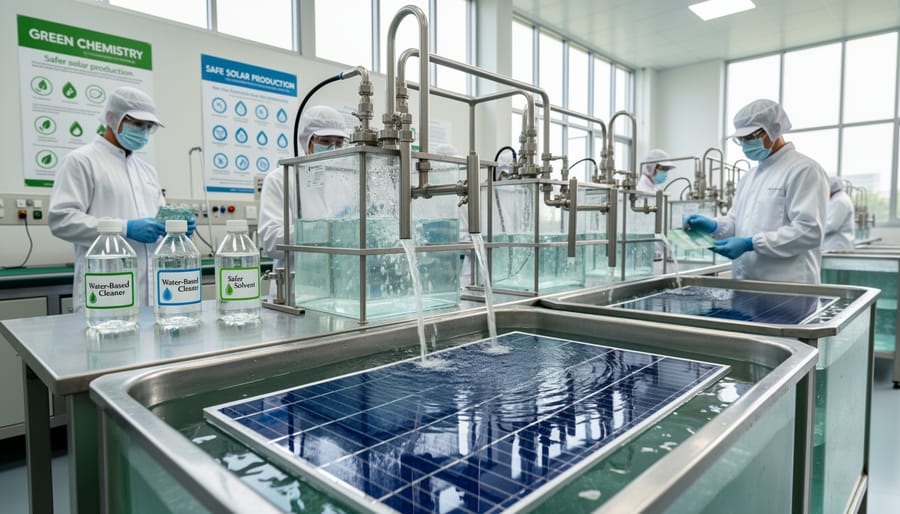
Water-based cleaning solutions have emerged as a primary replacement for traditional solvent-based cleaners used in wafer processing. These formulations effectively remove contaminants and residues while significantly reducing volatile organic compound emissions and workplace health risks. Leading manufacturers report that water-based systems achieve comparable cleaning efficacy to conventional methods while simplifying waste treatment processes and lowering disposal costs.
In the etching process, where silicon wafers are textured to optimize light absorption, manufacturers are adopting less toxic alternatives to highly corrosive acids. Newer etchant formulations utilize reduced concentrations of hazardous substances or substitute them entirely with safer compounds that maintain the precise surface characteristics required for high-efficiency solar cells. These alternatives minimize handling risks for workers and reduce the environmental burden of waste neutralization.
Biodegradable packaging materials represent another significant advancement in green chemistry applications. Solar panel manufacturers are replacing petroleum-based plastics with plant-derived polymers and compostable films for protective packaging during transport and storage. These materials provide adequate protection against moisture and physical damage while decomposing naturally at end-of-life, reducing landfill contributions.
Universities collaborating with industry partners continue researching next-generation alternatives, ensuring that safer chemistry remains central to photovoltaic manufacturing evolution. These collective efforts demonstrate that environmental responsibility and manufacturing excellence can advance together.
Breakthrough Green Processes Reshaping PV Production
Green Silicon Purification Methods
Traditional silicon purification for photovoltaic manufacturing relies heavily on energy-intensive processes and hazardous chemicals like trichlorosilane. However, innovative green purification methods are transforming this critical production stage, significantly reducing environmental impact while maintaining the high-purity standards essential for efficient solar cells.
Fluidized bed reactor (FBR) technology represents a major advancement in sustainable silicon production. Unlike conventional Siemens process reactors that deposit silicon on heated rods, FBR systems introduce silicon seed particles into a reactive gas stream, creating a fluid-like bed where purification occurs at lower temperatures. This approach reduces energy consumption by approximately 80-90% compared to traditional methods and minimizes waste generation. The continuous production capability of FBR systems also improves throughput efficiency, making high-purity silicon more economically accessible.
Upgraded metallurgical-grade silicon (UMG-Si) offers another promising pathway. This technique refines lower-grade metallurgical silicon through directional solidification, acid leaching, and plasma processing rather than converting it entirely to polysilicon through chemical vapor deposition. UMG-Si production typically uses 85% less energy than conventional polysilicon manufacturing and generates substantially fewer chemical byproducts. While early UMG-Si faced challenges meeting stringent purity requirements for premium solar cells, recent refinements have achieved suitable grades for many photovoltaic applications, particularly in multi-crystalline silicon cells.
Academic institutions and industry partnerships continue advancing these technologies, focusing on further reducing chemical inputs while improving silicon quality and production scalability for mainstream adoption.
Safer Texturing and Cleaning Technologies
Traditional wafer texturing processes rely heavily on hazardous acids like hydrofluoric acid and sodium hydroxide, which pose significant environmental and safety risks. The photovoltaic industry is now embracing innovative alternatives that deliver comparable performance with substantially reduced toxicity.
Metal-assisted chemical etching has emerged as a promising technique, utilizing catalytic nanoparticles to create surface textures while minimizing acid consumption by up to 70 percent. This method produces excellent anti-reflective surfaces while generating less hazardous waste. Similarly, atmospheric pressure plasma texturing represents a completely dry process that eliminates liquid chemical usage entirely, using ionized gases to modify silicon surfaces at the molecular level.
The cleaning stage of solar cell production traditionally employed chlorinated solvents and volatile organic compounds to remove contaminants and organic residues. Water-based cleaning formulations now offer effective alternatives, incorporating biodegradable surfactants and chelating agents that achieve high cleanliness standards without toxic emissions. These aqueous systems typically operate at neutral pH levels, reducing equipment corrosion and worker exposure risks.
Universities collaborating with photovoltaic manufacturers have developed ultrasonic-assisted cleaning methods that enhance water-based system effectiveness, allowing lower temperatures and reduced chemical concentrations. Advanced oxidation processes using ozone or hydrogen peroxide provide another pathway, breaking down contaminants through chemical reactions that produce only water and oxygen as byproducts.
These innovations demonstrate that environmental responsibility and manufacturing excellence need not conflict. Industry adoption continues to expand as performance validation and cost-competitiveness improve, supported by increasingly stringent environmental regulations and corporate sustainability commitments driving accelerated implementation across global production facilities.
Non-Toxic Encapsulation and Module Assembly
Module assembly presents significant opportunities to eliminate hazardous materials while maintaining structural integrity and performance. Traditional ethylene-vinyl acetate (EVA) encapsulants can release acetic acid during degradation, prompting manufacturers to explore thermoplastic polyolefin and ionomer-based non-toxic alternatives that offer comparable optical transmission and adhesion properties. Lead-free soldering techniques using tin-silver-copper alloys now routinely replace conventional tin-lead compositions, meeting RoHS compliance while ensuring reliable electrical connections. Water-based and bio-derived adhesives increasingly substitute solvent-heavy formulations in junction box attachment and frame assembly, reducing volatile organic compound emissions. These innovations collectively address environmental and worker safety concerns without compromising module durability or efficiency, demonstrating that sustainable manufacturing practices align with commercial viability in the photovoltaic sector.

Performance and Economic Benefits of Green Chemistry Adoption
Efficiency and Product Quality Outcomes
Green chemistry processes in photovoltaic manufacturing demonstrate compelling performance metrics that challenge the assumption that environmental responsibility requires performance trade-offs. Recent comparative studies reveal that silicon wafer cleaning protocols using biodegradable solvents achieve 98.5% contamination removal rates, matching traditional hydrofluoric acid treatments while eliminating hazardous waste streams. Module efficiency testing shows that solar cells processed with green etching solutions maintain conversion efficiencies above 22%, comparable to conventional manufacturing outputs.
Durability assessments provide equally encouraging results. Accelerated aging tests on modules produced through sustainable manufacturing practices demonstrate performance retention exceeding 85% after 25-year simulation cycles, meeting industry standards for long-term reliability. Water-based anti-reflective coatings exhibit adhesion strengths within 2% of solvent-based alternatives, while bio-derived encapsulants show moisture barrier properties that satisfy IEC 61215 certification requirements. Production throughput data from facilities implementing green chemistry protocols indicate cycle times reduced by 12-18% due to simplified handling procedures and faster curing processes. These empirical findings confirm that environmental stewardship and manufacturing excellence are mutually reinforcing objectives rather than competing priorities in modern solar production.
Cost Analysis and Return on Investment
Transitioning to green chemistry in photovoltaic manufacturing involves upfront capital expenditures, but the long-term financial benefits often justify the investment. Companies implementing safer chemical alternatives typically experience significant reductions in hazardous waste disposal costs, which can account for 15-25% of operational expenses in traditional manufacturing. These savings accumulate rapidly as regulatory compliance becomes simpler and disposal fees for non-hazardous materials remain substantially lower.
Insurance premiums represent another area of cost reduction. Facilities using less toxic chemicals face lower liability risks, translating to decreased workers’ compensation claims and reduced premiums for environmental liability coverage. Industry data suggests manufacturers can save 10-20% on insurance costs within two years of implementing comprehensive green chemistry programs.
Worker productivity improvements provide additional returns. Employees in facilities using safer chemicals report fewer health-related absences and demonstrate higher engagement levels. Reduced exposure to hazardous substances minimizes medical monitoring requirements and workplace safety incidents, streamlining operations and lowering administrative overhead.
The payback period for green chemistry investments typically ranges from three to seven years, depending on facility size and production scale. Larger manufacturers often achieve faster returns through economies of scale when purchasing alternative materials in bulk. Universities collaborating with industry partners have documented case studies showing that comprehensive green chemistry programs deliver 120-180% return on investment over ten years when factoring in all direct and indirect cost benefits, making sustainability financially strategic rather than merely ethically motivated.
Regulatory Drivers and Industry Standards
Global Chemical Regulations Affecting PV Manufacturing
Solar panel manufacturers operate within an increasingly complex regulatory landscape designed to minimize hazardous substance exposure and environmental harm. The European Union’s Registration, Evaluation, Authorization, and Restriction of Chemicals (REACH) regulation establishes comprehensive requirements for chemical safety assessment, requiring manufacturers to identify and manage risks associated with substances used in photovoltaic production. This framework particularly impacts lead-based solders and cadmium-containing materials common in certain solar technologies.
The Restriction of Hazardous Substances (RoHS) directive limits specific dangerous materials in electrical and electronic equipment, including solar panels sold in EU markets. Manufacturers must demonstrate compliance with maximum concentration values for substances like lead, mercury, and hexavalent chromium. California’s Proposition 65 mandates warning labels for products containing chemicals known to cause cancer or reproductive harm, influencing manufacturing choices for the North American market.
China’s Management Methods for Controlling Pollution by Electronic Information Products and similar regulations in Japan and South Korea create additional compliance obligations. These regulatory frameworks collectively drive innovation in green chemistry alternatives, as manufacturers seek cost-effective solutions that meet multiple jurisdictional requirements simultaneously. Academic collaborations with universities increasingly focus on developing compliant formulations that maintain product performance while satisfying these evolving standards.
Green Certifications and Industry Initiatives
Industry-wide certifications and collaborative initiatives are driving measurable progress toward safer chemical practices in photovoltaic manufacturing. The Cradle to Cradle Certified Product Standard represents one of the most comprehensive frameworks, evaluating solar products across five categories including material health, material reutilization, and renewable energy use. Several PV manufacturers have achieved Cradle to Cradle certification for specific product lines, demonstrating transparent chemical ingredient disclosure and commitment to continuous improvement in materials selection.
The Solar Scorecard, developed by the Silicon Valley Toxics Coalition, provides transparency regarding manufacturers’ chemical management practices, environmental footprint, and worker safety protocols. This independent assessment tool enables consumers and procurement officers to make informed decisions based on verified environmental performance data rather than marketing claims alone.
Industry partnerships such as the Clean Electronics Production Network facilitate knowledge sharing between manufacturers, research institutions, and environmental organizations. These collaborative platforms accelerate the adoption of safer alternatives by pooling resources for chemical testing, developing standardized assessment protocols, and creating accessible databases of vetted green chemistry solutions. Universities participating in these networks contribute research expertise while training the next generation of professionals in sustainable manufacturing principles, ensuring that green chemistry knowledge becomes embedded throughout the photovoltaic industry’s technical workforce.
Career Implications for Aspiring PV Professionals
Essential Green Chemistry Skills and Knowledge
Professionals entering the green chemistry field within photovoltaic manufacturing require a specific set of competencies that extend beyond traditional chemistry knowledge. Employers increasingly seek candidates who demonstrate proficiency in alternative chemical processes, particularly those involving bio-based solvents, water-based cleaning agents, and closed-loop chemical systems that minimize waste generation. Understanding lifecycle assessment methodologies stands as a critical skill, enabling professionals to evaluate environmental impacts from raw material extraction through manufacturing, use, and end-of-life disposal. This comprehensive perspective helps identify improvement opportunities throughout the production chain.
Sustainability metrics expertise represents another essential competency. Professionals must be familiar with quantitative measures such as atom economy, E-factor calculations, renewable carbon content, and energy efficiency ratios. These metrics provide objective frameworks for comparing process alternatives and demonstrating environmental improvements to stakeholders. Additionally, knowledge of regulatory compliance standards, including REACH regulations and RoHS directives, proves vital for ensuring manufacturing processes meet environmental and safety requirements.
Many universities now collaborate with industry partners to develop specialized educational programs that address these competencies, offering coursework in green engineering principles, sustainable materials science, and environmental chemistry. This academic-industry partnership ensures graduates possess practical, career-relevant skills aligned with evolving industry demands in sustainable photovoltaic manufacturing.
Educational Pathways and Professional Development
The integration of green chemistry principles into photovoltaic education represents a critical step in preparing the next generation of solar professionals. Forward-thinking institutions are now embedding sustainable manufacturing practices directly into their curricula, ensuring graduates enter the workforce with both technical expertise and environmental consciousness.
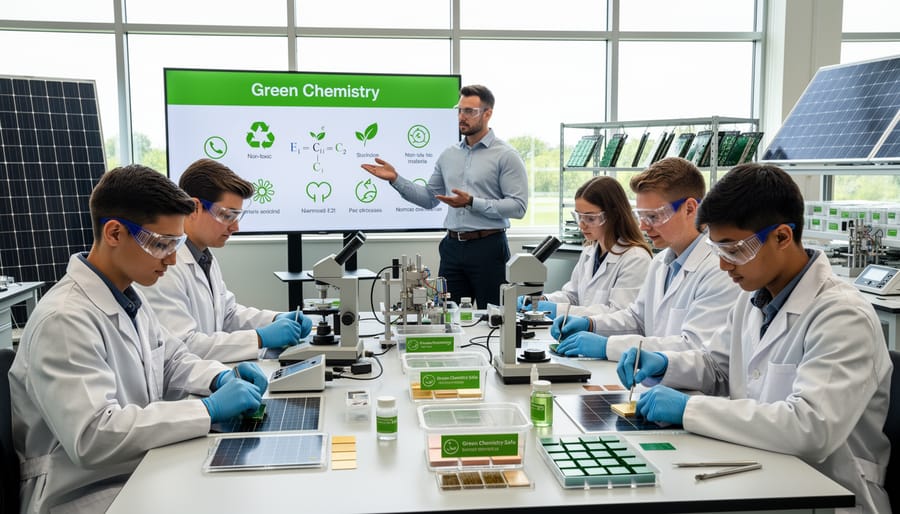
University collaborations play a pivotal role in this educational transformation. By partnering with academic institutions, industry leaders facilitate hands-on learning experiences that expose students to real-world applications of green chemistry in PV manufacturing. These partnerships typically include laboratory access to eco-friendly materials, case studies on solvent reduction strategies, and research opportunities focused on developing safer chemical alternatives for solar cell production.
Professional development programs are equally essential for current industry practitioners seeking to update their skills. Workshops and certification courses covering topics like hazardous substance elimination, closed-loop chemical systems, and lifecycle assessment methods enable working professionals to implement greener practices in existing facilities. These educational initiatives not only advance individual careers but also accelerate industry-wide adoption of sustainable manufacturing standards, creating a workforce capable of driving meaningful environmental improvements throughout the solar supply chain.
Green chemistry represents far more than an environmental consideration in photovoltaic manufacturing—it has become a defining competitive advantage and industry imperative. As global demand for solar energy accelerates, manufacturers who adopt safer chemical practices position themselves at the forefront of sustainable innovation, meeting increasingly stringent regulations while reducing operational risks and long-term costs. The transition from hazardous substances to benign alternatives, the implementation of closed-loop systems, and the development of safer production methods demonstrate that environmental responsibility and manufacturing excellence are complementary, not competing, objectives.
For aspiring photovoltaic professionals, understanding and championing green chemistry principles is no longer optional but essential. The industry’s future leaders will be those who can navigate the technical complexities of solar cell production while prioritizing worker safety, environmental protection, and resource efficiency. Educational programs and university collaborations are increasingly emphasizing these competencies, recognizing that tomorrow’s PV sector demands professionals fluent in both traditional manufacturing expertise and sustainable practices.
The path forward is clear: green chemistry will define the standard for photovoltaic manufacturing. Organizations that invest in safer alternatives today gain market differentiation, regulatory compliance, and enhanced brand reputation. For professionals entering this dynamic field, embracing green chemistry principles positions you as an invaluable asset to forward-thinking manufacturers. By committing to continuous learning about emerging alternatives and advocating for safer practices throughout your career, you contribute directly to solar energy’s promise as a truly sustainable power source for generations to come.