Understand your contractual obligations under Incoterms before a single solar panel leaves the factory floor. Whether you select FOB, CIF, or DAP terms determines precisely when insurance responsibility transfers between supplier and buyer, directly impacting who bears financial risk if panels crack during ocean transit or suffer water damage in port storage.
Verify that marine cargo insurance policies specifically cover photovoltaic modules with appropriate valuations reflecting current market prices, not just invoice costs. Solar panels face unique shipping vulnerabilities—micro-cracks from vibration, moisture ingress compromising electrical performance, and thermal cycling during multi-week voyages—that standard all-risk policies may inadequately address without explicit PV-specific endorsements.
Calculate the total insured value by including freight costs, duty fees, and expected profit margins, typically reaching 110-120% of CIF value. This comprehensive approach ensures adequate compensation if claims arise, particularly critical given that damaged solar modules often exhibit degraded performance only after installation, complicating post-delivery disputes.
Distinguish between seller-arranged insurance under CIF terms and buyer-procured coverage under FOB contracts. Under CIF, suppliers provide minimum Institute Cargo Clauses (C) coverage, but prudent buyers purchase supplementary insurance offering Institute Cargo Clauses (A) protection, which covers all risks except those explicitly excluded. This distinction proves vital when shipping high-value bifacial modules or next-generation technologies where replacement costs substantially exceed standard panel pricing.
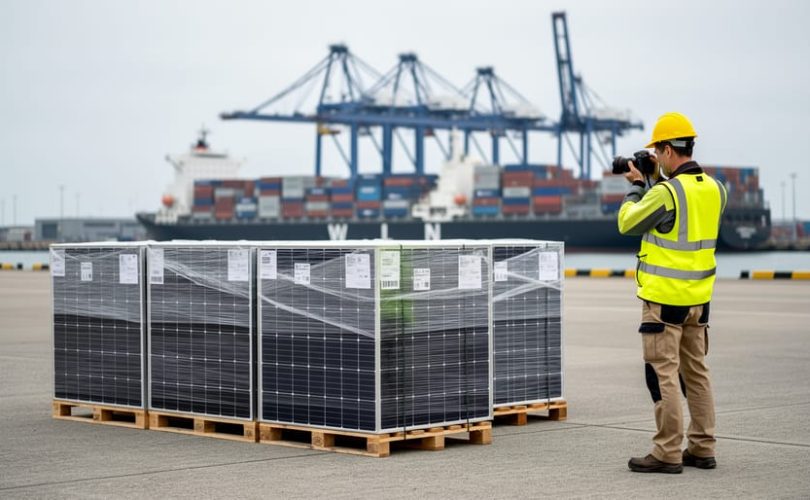
Document every shipment phase with photographs, packing lists, and condition surveys at origin and destination ports. This evidence becomes indispensable when filing claims with insurers or arbitrating disputes about whether damage occurred pre-shipment, during transit, or post-delivery.
Why PV Modules Need Specialized Marine Cargo Insurance
Common Shipping Risks for Solar Panels
Solar panels face distinct vulnerabilities during maritime transport that can compromise both their structural integrity and energy performance. Understanding these risks enables photovoltaic professionals to implement appropriate insurance coverage and protective measures.
Container condensation represents one of the most insidious threats to solar panel shipments. Temperature fluctuations during ocean voyages create moisture accumulation inside shipping containers, potentially corroding electrical connections, degrading anti-reflective coatings, and causing delamination between glass and photovoltaic cells. This issue intensifies during routes crossing multiple climate zones, where cargo experiences dramatic temperature variations.
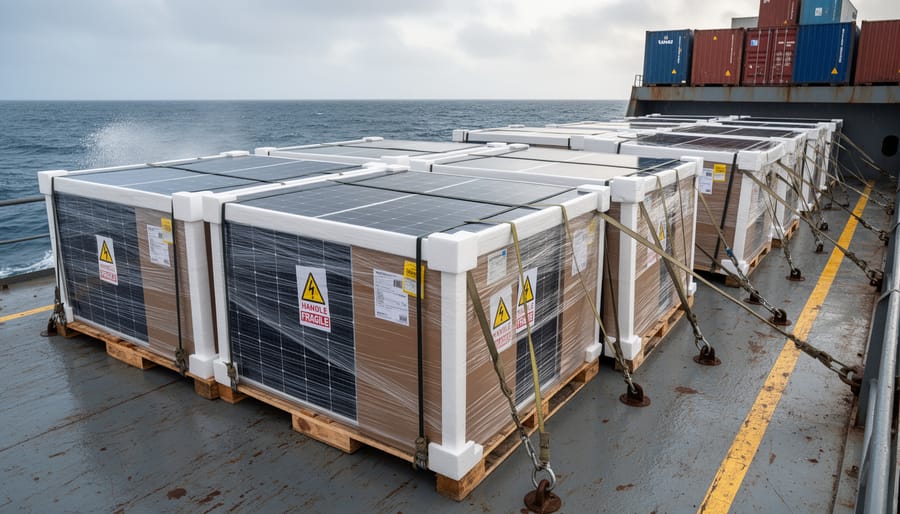
Improper stacking and securing practices constitute another significant risk factor. Solar panels, despite their durable appearance, require precise load distribution to prevent stress fractures in crystalline silicon cells. When stevedores stack containers incorrectly or fail to use appropriate dunnage materials, the resulting pressure points can create micro-cracks that may not manifest immediately but progressively reduce panel efficiency over time.
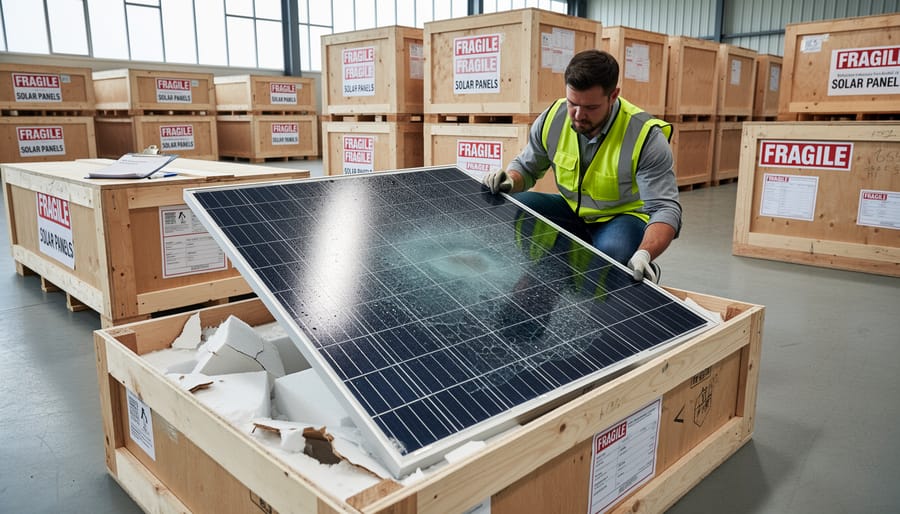
Port handling mishaps frequently occur during loading and unloading operations. Rough handling with forklifts, sudden drops, or impacts from other cargo can shatter tempered glass surfaces or damage junction boxes and frames. Statistics from maritime insurance claims indicate that port-related incidents account for approximately thirty percent of solar panel shipping damages.
Weather-related incidents, including severe storms, heavy seas, and container wash-overs, pose additional threats. Even properly secured cargo can experience structural damage when vessels encounter extreme conditions, making comprehensive marine cargo insurance essential for protecting these valuable renewable energy components throughout their international journey.
Financial Impact of Uninsured Losses
Shipping photovoltaic modules without adequate marine cargo insurance exposes solar businesses to substantial financial vulnerability. Direct product losses from a single container of premium PV panels can exceed $150,000, representing immediate capital depletion that impacts cash flow and project budgets. When multiple containers are involved in catastrophic events like vessel sinking or complete cargo destruction, losses can escalate into millions of dollars.
Beyond immediate product replacement costs, uninsured losses trigger cascading financial consequences. Project delays caused by waiting for replacement module shipments result in penalty clauses, lost revenue from delayed grid connection, and extended financing costs. Installation contractors face idle equipment and labor expenses while awaiting new deliveries. For utility-scale projects operating under power purchase agreements, each day of delay translates to measurable revenue loss and potential contractual penalties.
Reputation damage compounds these direct costs. Clients experiencing project delays due to inadequate risk management strategies often seek alternative suppliers for future projects. Educational institutions researching renewable energy procurement emphasize comprehensive insurance coverage as fundamental to sustainable supply chain management. The competitive solar market offers little tolerance for suppliers unable to guarantee delivery security, making uninsured shipping a business-threatening vulnerability rather than a cost-saving measure.
Understanding Marine Cargo Insurance Coverage Types
Institute Cargo Clause A: All-Risk Coverage
Institute Cargo Clause A represents the most comprehensive marine cargo insurance coverage available for photovoltaic module shipments. This all-risk policy protects against physical loss or damage from virtually any external cause during transit, including accidents, vessel collisions, severe weather conditions, and theft. For high-value PV module shipments, this coverage is strongly recommended due to the fragile nature of solar panels and their susceptibility to microcracks, moisture infiltration, and mechanical stress during handling and transport.
The policy covers all risks of loss or damage except for specific exclusions such as willful misconduct by the insured party, ordinary wear and tear, inherent vice of the goods, insufficient packaging, and delays. War, strikes, and civil commotion typically require separate clause additions. This comprehensive approach shifts the burden of proof to insurers rather than claimants, meaning if damage occurs, the insurance company must demonstrate the loss falls under an exclusion rather than the policyholder proving coverage applies.
Given that PV modules represent significant capital investments and any damage can compromise long-term energy production efficiency, Institute Cargo Clause A provides essential financial protection throughout the complex international shipping process, particularly when combined with appropriate Incoterms selection.
Institute Cargo Clauses B and C: Limited Coverage Options
Institute Cargo Clauses B and C provide more economical alternatives to all-risk coverage, though with significant limitations that warrant careful consideration for photovoltaic shipments. ICC (B) covers a narrower range of named perils, including fire, explosion, vessel stranding, sinking, collision, and discharge at a distress port. It excludes coverage for theft, pilferage, and non-delivery—risks particularly relevant when transporting high-value solar components through multiple handling points.
ICC (C) offers the most restrictive protection, covering only major casualties such as total loss from vessel sinking, burning, or collision. This minimal coverage typically costs 40-60% less than ICC (A) but leaves shipments vulnerable to common transport incidents like container damage, water ingress, or rough handling at terminals.
For solar product shipments, these limited options may suit specific scenarios: established trade routes with proven carriers, short domestic voyages, or lower-value auxiliary components like mounting brackets and junction boxes. However, they are generally inadvisable for high-value photovoltaic modules, inverters, or battery storage systems, where repair costs from partial damage can approach total loss values.
Academic research in supply chain risk management, developed through collaboration with universities, consistently demonstrates that cost savings from reduced premiums often prove insignificant compared to potential exposure when transporting sensitive renewable energy technology requiring specialized handling and environmental controls.
Additional Coverage Considerations for Solar Products
Standard marine cargo insurance policies exclude certain risks that warrant special consideration for photovoltaic module shipments. War risks and strikes, riots, and civil commotion (SRCC) coverage become particularly relevant when shipping through geopolitically sensitive maritime routes or regions experiencing labor unrest. These supplementary coverages protect against damage, loss, or delays resulting from armed conflicts, terrorist acts, port strikes, and political disturbances that could interrupt the supply chain.
Given the global nature of solar panel trade—with manufacturing concentrated in Asia and demand spanning multiple continents—shipping routes frequently traverse areas where these additional risks materialize. The Red Sea, Strait of Hormuz, and South China Sea exemplify critical chokepoints where elevated premiums for war risk coverage may apply. Transit through these zones warrants careful evaluation of whether standard Institute Cargo Clauses provide adequate protection or if riders are necessary.
Duration of voyage coverage also merits attention, as PV module shipments may experience extended storage periods at transshipment ports. Extended coverage endorsements ensure protection continues beyond typical policy limits, addressing delays caused by port congestion, customs inspections, or logistical complications inherent to renewable energy equipment imports.
The Critical Connection Between Incoterms and Insurance Responsibility
International Commercial Terms, commonly known as Incoterms, serve as standardized trade definitions published by the International Chamber of Commerce that directly determine insurance obligations in solar panel shipments. For photovoltaic professionals managing global procurement, understanding this relationship is not merely academic—it fundamentally affects both financial liability and risk exposure throughout the supply chain.
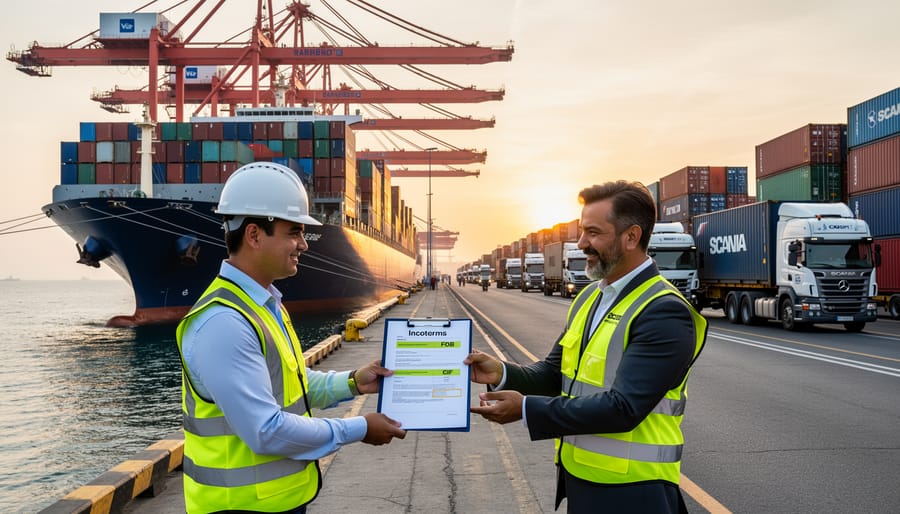
Incoterms establish precisely when the responsibility for goods transfers from seller to buyer during transit, and crucially, which party must arrange and pay for marine cargo insurance. For instance, under CIF (Cost, Insurance and Freight) terms, sellers must provide minimum insurance coverage until goods reach the destination port, whereas FOB (Free On Board) terms place this obligation squarely on the buyer once panels are loaded aboard the vessel. This distinction becomes particularly significant when transporting high-value photovoltaic modules, where a single shipping container may contain equipment worth hundreds of thousands of dollars.
The relationship between Incoterms and insurance extends beyond simple cost allocation. It influences contractual protection mechanisms, claims procedures, and ultimate financial responsibility when damage occurs. Under DAP (Delivered At Place) terms, sellers retain risk until delivery at the named destination, requiring comprehensive insurance coverage throughout the entire journey. Conversely, EXW (Ex Works) terms transfer all risks immediately upon collection, making buyer-arranged insurance essential from the manufacturing facility onward.
For renewable energy procurement teams, misunderstanding these allocations can lead to coverage gaps, duplicate insurance costs, or worse—discovering inadequate protection only after a loss occurs. Academic research in supply chain management emphasizes that approximately thirty percent of cargo claims involve disputes over insurance responsibility stemming from poorly understood Incoterm applications. Therefore, photovoltaic professionals must thoroughly evaluate how selected Incoterms align with their organization’s risk tolerance, insurance capabilities, and project timelines before finalizing purchase agreements with solar panel manufacturers or distributors.
Key Incoterms for PV Module Shipments and Their Insurance Implications
EXW (Ex Works): Buyer Assumes All Insurance Responsibility
Under EXW (Ex Works) terms, the buyer assumes complete responsibility for marine cargo insurance from the moment photovoltaic modules leave the seller’s premises or factory. This arrangement represents the minimum obligation for sellers and maximum responsibility for buyers in international trade.
For PV module purchasers operating under EXW conditions, insurance coverage must commence immediately upon collection of the goods. This includes protection during inland transportation to the port of origin, loading operations, ocean transit, unloading, and final delivery to the destination facility. Buyers must secure comprehensive all-risk coverage that addresses the specific vulnerabilities of solar panels, including physical damage, moisture exposure, and electrical component degradation.
The practical challenge for renewable energy companies lies in coordinating insurance activation precisely when goods are released from the seller’s control. Many photovoltaic professionals collaborate with experienced freight forwarders who can arrange door-to-door coverage, ensuring no gaps exist in protection. Academic researchers studying supply chain optimization note that EXW terms, while offering sellers simplicity, require buyers to develop robust insurance procurement capabilities and maintain relationships with specialized marine cargo insurers familiar with solar technology shipment requirements.
FOB (Free on Board): Insurance Transfer at the Ship’s Rail
Under FOB (Free on Board) terms, the insurance responsibility transfers from seller to buyer at a precisely defined moment: when goods pass the ship’s rail at the port of shipment. This transfer point carries significant implications for solar panel procurement from Asian manufacturers, where FOB arrangements dominate international trade practices.
When Chinese or Southeast Asian photovoltaic manufacturers quote FOB prices, they assume responsibility for delivering panels to the vessel and covering all costs until goods cross the ship’s rail. Once this physical boundary is crossed, the buyer immediately assumes all risks, including damage, loss, or theft during the ocean voyage. This arrangement explains why importers must secure comprehensive marine cargo insurance before shipment departure.
FOB terms are particularly common in solar panel shipments because they align with established manufacturing hubs in Asia, where sellers prefer limiting their liability to domestic logistics. For buyers, this creates a critical window requiring proactive insurance procurement. Understanding this transfer point enables photovoltaic professionals to coordinate coverage timing effectively, ensuring no gaps exist between seller and buyer protection periods during transpacific or transatlantic solar component transportation.
CIF (Cost, Insurance, and Freight): Seller-Provided Minimum Coverage
Under CIF terms, the seller assumes responsibility for procuring marine cargo insurance and bears the associated costs, but importantly, this obligation extends only to minimum coverage levels. According to the International Chamber of Commerce’s Incoterms 2020, sellers must obtain insurance complying with Institute Cargo Clauses (C) or equivalent standards, representing the most restrictive coverage tier available. This minimum protection covers only major perils including vessel sinking, fire, collision, and overturning during loading or unloading operations.
For photovoltaic module shipments, this baseline coverage presents significant limitations. Institute Cargo Clause C excludes numerous risks particularly relevant to solar equipment transportation, such as theft, pilferage, breakage, moisture damage, and temperature fluctuations that could compromise panel efficiency. Given that solar modules contain delicate semiconductor materials and precision-engineered components vulnerable to handling impacts and environmental exposure, relying solely on seller-provided minimum coverage creates substantial financial exposure.
Buyers procuring photovoltaic equipment under CIF terms should conduct thorough risk assessments evaluating their specific cargo vulnerabilities. In most cases, purchasing supplemental insurance upgrading to Institute Cargo Clause A coverage proves prudent, providing all-risk protection except for exclusions explicitly listed. This comprehensive approach ensures adequate protection for valuable solar installations, particularly for large-scale utility projects where shipment values frequently exceed several million dollars. Educational institutions developing renewable energy programs should emphasize this critical distinction when training future industry professionals on international procurement protocols.
CIP (Carriage and Insurance Paid To): Enhanced Insurance Requirements
The 2020 Incoterms revision introduced significant changes to CIP terms, directly impacting photovoltaic module procurement. Under the updated rules, sellers must now provide minimum Institute Cargo Clause A coverage, representing the most comprehensive insurance protection available. This enhancement addresses historical concerns where CIP’s previous minimum requirement of Institute Cargo Clause C left buyers vulnerable to coverage gaps during international shipments.
For renewable energy professionals purchasing solar panels, this modification offers substantial risk mitigation. Institute Cargo Clause A provides all-risk coverage, protecting against virtually all loss or damage except specific exclusions, whereas Clause C only covered named perils like fire, vessel collision, or theft. This comprehensive protection proves particularly valuable for fragile PV modules susceptible to transit damage.
However, buyers should verify that suppliers actually comply with these enhanced requirements, as contractual terms may still reference older standards. Academic institutions partnering with industry stakeholders emphasize the importance of confirming coverage details in shipping documentation. Understanding these insurance obligations enables procurement teams to make informed decisions, properly allocate costs, and ensure adequate protection for valuable solar equipment throughout the maritime supply chain.
DAP and DDP: When Sellers Retain Risk
Under DAP (Delivered at Place) and DDP (Delivered Duty Paid) terms, sellers bear significantly extended responsibility for PV module shipments, maintaining risk until goods reach the specified destination. The seller must arrange and pay for marine cargo insurance covering the entire transit route, including all handling and transshipment points. For photovoltaic module transactions, this arrangement provides buyers with enhanced protection, as sellers typically secure comprehensive coverage given their extended liability exposure. However, buyers should verify that seller-procured policies adequately address solar panel-specific risks such as moisture damage and thermal stress during prolonged transport. Additionally, buyers may consider contingency insurance to protect against gaps in seller coverage or insolvency scenarios, particularly for high-value shipments from international suppliers.
Best Practices for Insuring PV Module Shipments
Selecting the Right Coverage Level
Determining appropriate coverage levels requires careful assessment of multiple factors unique to solar panel logistics. Begin by analyzing shipping routes—consignments traveling through high-risk maritime corridors or regions prone to political instability warrant higher coverage limits. Similarly, routes involving multiple transshipment points increase handling risks and potential exposure.
Cargo valuation forms the foundation of coverage decisions. Calculate the total insurable value including product cost, freight charges, and expected profit margins, typically ranging from 110% to 125% of invoice value. For high-efficiency photovoltaic modules or specialized inverter systems, consider replacement cost rather than depreciated value to ensure adequate protection.
Risk tolerance assessment should align with your organization’s financial capacity and operational priorities. Companies with limited capital reserves benefit from comprehensive all-risk policies, while established firms might accept higher deductibles to reduce premium costs. Evaluate your overall risk management strategy, including protecting your solar business through complementary insurance products. Consult with experienced marine cargo insurers who understand photovoltaic equipment vulnerabilities and can recommend coverage levels matching your specific operational requirements and contractual obligations under applicable Incoterms.
Documentation and Claims Management
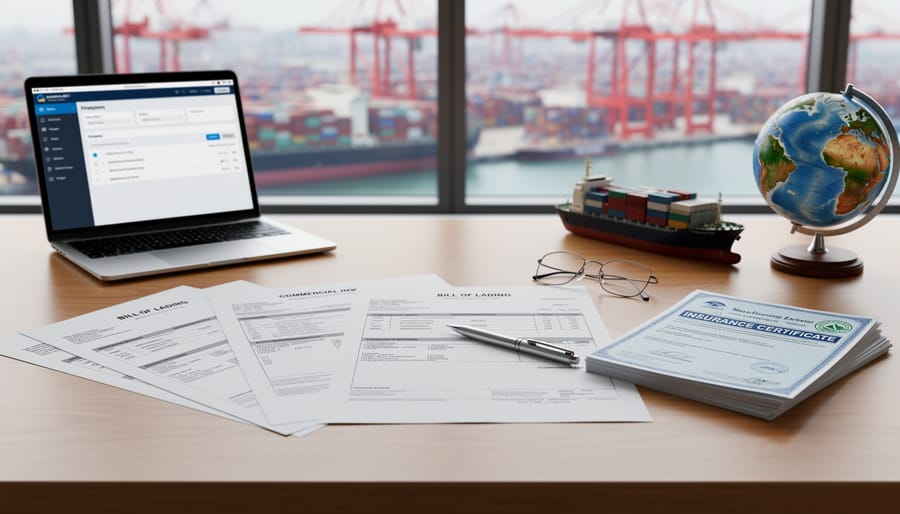
Proper documentation serves as the foundation for successful marine cargo insurance claims when shipping photovoltaic equipment internationally. Shippers must maintain comprehensive records including detailed packing lists that specify individual module serial numbers, wattage ratings, and quantity counts. Commercial invoices should clearly itemize the declared value of solar panels, inverters, and mounting systems to establish accurate replacement costs.
The bill of lading functions as both a receipt and contract of carriage, documenting the condition of cargo upon loading. Before shipment, photograph all packaging, container seals, and individual pallet configurations from multiple angles. This photographic evidence becomes invaluable when filing claims for transit damage. Additionally, retain certificates of origin, quality inspection reports from manufacturing facilities, and any pre-shipment survey documentation conducted by third-party assessors.
When damage occurs, immediately notify the carrier and insurer within the policy’s specified timeframe, typically 24-48 hours. Request an independent surveyor to assess the extent of damage before unpacking affected materials. Preserve damaged packaging and modules as evidence. Submit claims with complete documentation sets, including signed delivery receipts noting visible damage, repair cost estimates from certified technicians, and correspondence with all involved parties to expedite settlement processes.
Working with Freight Forwarders and Insurance Brokers
Selecting freight forwarders and insurance brokers with specialized solar industry experience ensures your PV module shipments receive appropriate protection. Partner with logistics providers who understand the unique vulnerabilities of photovoltaic cargo, including susceptibility to microcracks, moisture damage, and electrical degradation during transit. Experienced brokers can recommend coverage tailored to module specifications, shipping routes, and seasonal weather patterns affecting maritime transport.
Request documentation of previous solar shipment experience and ask for references from established module manufacturers. Qualified partners should demonstrate familiarity with industry standards like IEC 61215 for crystalline silicon modules and understand how shipping conditions affect product warranties. They should also assist with proper cargo classification, packaging requirements, and survey arrangements if damage occurs.
Establish clear communication protocols regarding insurance certificates, claims procedures, and damage documentation requirements. Your logistics partners should coordinate seamlessly with quality control teams to ensure inspection protocols align with policy terms. This collaborative approach to project risk mitigation reduces disputes and accelerates claims resolution, protecting both your investment and project timelines while maintaining supply chain integrity for renewable energy deployments.
Educational Resources for PV Professionals
Understanding the complexities of marine cargo insurance and international shipping terms represents a critical component of professional competency in the photovoltaic industry. At Mose Solar, we recognize that technical expertise in solar technology must be complemented by practical business acumen to navigate the global renewable energy marketplace effectively.
Our educational initiatives, developed in collaboration with leading universities, integrate essential commercial knowledge into comprehensive photovoltaic training programs. This approach ensures that aspiring professionals understand not only how solar panels function but also how they move through international supply chains. Marine cargo insurance, Incoterms, and risk management strategies form integral modules within our curriculum, preparing graduates to make informed procurement decisions and manage supplier relationships confidently.
The program emphasizes real-world applications, examining case studies where proper insurance coverage and clear contractual terms prevented significant financial losses during transit. Participants learn to evaluate insurance certificates, negotiate favorable shipping terms, and identify potential vulnerabilities in their supply chains. This practical business knowledge proves invaluable whether professionals work for installation companies, development firms, or manufacturing operations.
By bridging the gap between technical solar expertise and commercial logistics understanding, our university-collaborative programs produce well-rounded professionals capable of contributing meaningfully across multiple dimensions of the renewable energy sector. This holistic educational approach reflects the industry’s evolving needs and prepares the next generation of photovoltaic professionals for the complexities of international solar commerce.
The relationship between marine cargo insurance and Incoterms represents a fundamental pillar in the international trade of photovoltaic modules. Throughout this examination, we have demonstrated that understanding these interconnected elements is not merely an administrative consideration but a critical business imperative that directly impacts financial security and operational success in the solar industry.
For companies engaged in PV module procurement and distribution, proper insurance coverage serves as the foundation of comprehensive risk management. The selection of appropriate Incoterms determines insurance responsibilities, while adequate coverage protects against the substantial financial exposures inherent in shipping high-value solar equipment across international waters. These decisions affect everything from cash flow management to project timelines and ultimately influence the competitiveness of renewable energy installations.
We strongly encourage all industry professionals to meticulously review their shipping contracts, verify insurance adequacy, and ensure clear communication with all parties involved in the logistics chain. Understanding the nuances of when risk transfers under different Incoterms and maintaining appropriate coverage levels should be standard practice for every transaction.
At Mose Solar, our commitment extends beyond providing quality products. Through collaboration with universities and dedicated educational programs, we strive to equip industry stakeholders with the knowledge necessary to navigate the complexities of international solar trade successfully. By mastering these essential business practices, the photovoltaic industry can continue its growth trajectory while minimizing unnecessary risks and protecting investments in our sustainable energy future.