Solar photovoltaic installations lose billions annually to undiagnosed faults and performance degradation that traditional monitoring systems fail to catch early enough. When a solar array underperforms, identifying whether the culprit is module degradation, inverter malfunction, soiling, shading, or grid issues typically requires manual inspection, historical data analysis, and educated guesswork—a process that can take days or weeks while energy production suffers.
Artificial intelligence transforms this reactive approach into predictive precision. Unlike conventional monitoring that simply flags when performance drops below thresholds, AI root cause analysis examines patterns across hundreds of variables simultaneously—weather data, electrical characteristics, thermal signatures, and historical performance—to pinpoint exactly why systems underperform. Machine learning algorithms trained on vast datasets can distinguish between a failing bypass diode and partial shading effects, or identify specific underperforming strings within minutes rather than hours.
The stakes extend beyond immediate revenue loss. Incorrect diagnoses lead to unnecessary component replacements, wasted technician visits, and extended downtime. For utility-scale installations generating megawatts daily, each hour of misdiagnosis represents substantial financial impact and undermined investor confidence in renewable infrastructure reliability.
This analytical capability proves particularly valuable as solar portfolios scale. Asset managers overseeing hundreds of distributed sites cannot manually investigate every performance anomaly. AI systems continuously monitor entire fleets, prioritize genuine issues requiring intervention, and provide technicians with specific fault locations and probable causes before dispatch—transforming maintenance from reactive troubleshooting into strategic asset optimization.
The following examination explores how causal AI methodologies specifically address photovoltaic fault diagnosis, demonstrating practical applications across residential, commercial, and utility-scale installations while providing implementation frameworks for organizations considering this technology adoption.
The Hidden Complexity of PV System Failures
When Multiple Problems Mask the Real Issue
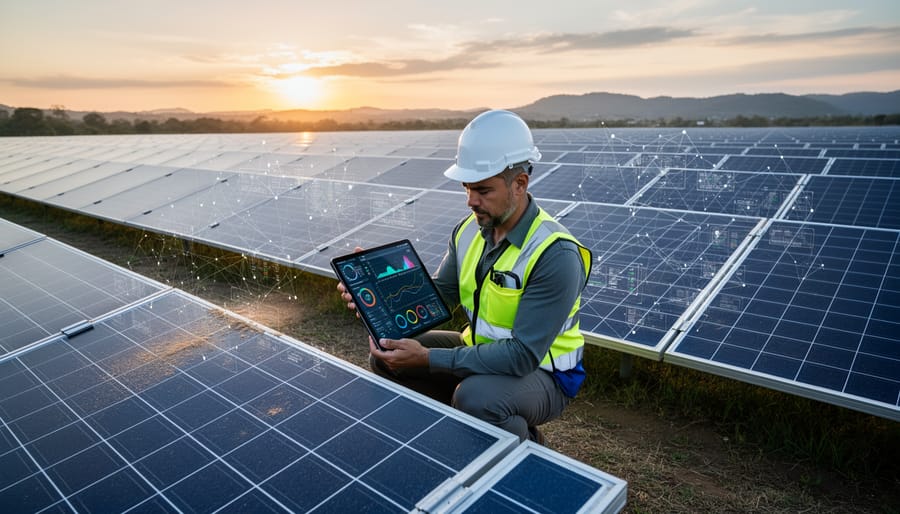
Photovoltaic systems frequently experience cascading failures that confound conventional diagnostic methods. A single root cause, such as a failing inverter component or deteriorating connection, can trigger multiple observable symptoms simultaneously. For instance, a microcrack in a bypass diode might manifest as reduced string voltage, irregular current fluctuations, abnormal temperature readings, and intermittent power output variations. Traditional troubleshooting approaches typically address each symptom independently, leading technicians to replace components that are actually functioning correctly while the underlying issue remains unresolved.
This diagnostic complexity intensifies in large-scale installations where hundreds or thousands of panels operate interdependently. When monitoring systems generate alerts for voltage drops, current mismatches, and thermal anomalies across different array sections, determining which symptom represents the actual problem versus secondary effects becomes extraordinarily challenging. Maintenance teams often waste valuable time and resources pursuing multiple false leads, implementing corrective actions that provide only temporary relief. This inefficiency not only increases operational costs but also extends system downtime, directly impacting energy production and revenue generation. The fundamental limitation lies in correlation-based analysis, which identifies patterns without understanding the directional relationships between variables that define genuine causation.
The Cost of Misdiagnosis
When photovoltaic systems experience performance degradation, misidentifying the underlying cause creates a cascade of avoidable expenses. Replacing inverters when the true issue lies in soiling patterns, or conducting repeated site visits to address recurring faults without understanding their origin, drains both budgets and operational efficiency.
Industry data reveals that symptom-based troubleshooting can increase maintenance costs by 30-40% compared to targeted interventions. Each unnecessary component replacement not only wastes capital—with major inverter units costing $15,000 or more—but also extends system downtime while technicians await parts and schedule return visits. For commercial installations, every hour of reduced output translates to lost revenue and delayed return on investment.
The operational impact extends beyond immediate costs. Maintenance teams dispatched without accurate diagnostics waste valuable time on-site, reducing their capacity to service additional installations. This inefficiency becomes particularly problematic for asset managers overseeing distributed portfolios across multiple locations.
AI-powered predictive maintenance addresses these challenges by identifying causal relationships between environmental factors, equipment behavior, and performance anomalies—enabling precision diagnosis that eliminates guesswork and reduces total cost of ownership. Organizations implementing root cause analysis report 25-35% reductions in repeat maintenance events and significantly improved mean time to resolution.
What Makes Causal AI Different From Traditional Analytics
Beyond Pattern Recognition
Traditional machine learning for diagnostics excels at identifying patterns within photovoltaic system data, detecting anomalies when performance deviates from expected norms. However, pattern recognition alone reveals correlation, not causation. When two variables move together—such as declining inverter efficiency and reduced power output—conventional algorithms can flag the relationship but cannot definitively establish which factor drives the other or whether both stem from an underlying cause.
Causal AI transcends this limitation by mapping directional relationships within PV performance data. Rather than simply observing that shading and voltage drops occur simultaneously, causal models determine whether shading directly causes voltage reduction, or if both result from a separate factor like faulty bypass diodes. This distinction proves critical for root cause analysis, as it prevents technicians from addressing symptoms while the actual problem persists.
The methodology employs sophisticated techniques including causal inference frameworks and counterfactual reasoning. By analyzing what would happen if specific variables changed—such as removing shading from particular panel strings—the system isolates genuine causal pathways from spurious correlations. For solar installations generating thousands of operational data points daily, this capability transforms troubleshooting from educated guesswork into evidence-based diagnosis, significantly reducing mean time to resolution and preventing unnecessary component replacements that address correlative symptoms rather than causal origins.
The Counterfactual Question
Traditional correlation-based analytics often struggle to distinguish genuine causes from coincidental patterns in photovoltaic system performance data. Two variables might move together without one actually causing the other—a challenge that frequently leads to misdiagnosed faults and ineffective remediation efforts.
Causal AI addresses this fundamental limitation by posing counterfactual questions: What would have happened to system output if the inverter temperature had remained stable? Would the production drop still have occurred if weather conditions had been different? This approach moves beyond observing that two events happened simultaneously to determining whether one actually caused the other.
In solar installations, this distinction proves particularly valuable. For instance, production decline might correlate with both rising ambient temperatures and gradual soiling accumulation. Traditional analytics might flag both as contributing factors, but counterfactual analysis can isolate which factor would have prevented the decline if addressed. By systematically testing alternative scenarios against observed outcomes, Causal AI constructs intervention models that reveal actual cause-and-effect relationships.
This methodology draws on principles established through academic collaboration between AI developers and university research programs, combining domain expertise in photovoltaic physics with advanced computational techniques. The result is diagnostic precision that identifies not just what went wrong, but specifically which variable changes would have prevented the fault—enabling targeted interventions rather than broad troubleshooting approaches. For renewable energy professionals, this represents a fundamental shift from reactive pattern recognition to proactive causal understanding.

How Causal AI Diagnoses PV Faults
Building Causal Models for Solar Systems
Causal AI distinguishes itself from traditional machine learning by constructing directed acyclic graphs (DAGs) that map the causal relationships between variables in photovoltaic systems. Rather than merely identifying correlations, these models encode how environmental factors, system components, and performance metrics influence one another through cause-and-effect pathways.
In a typical PV installation DAG, nodes represent measurable variables such as irradiance levels, panel temperature, inverter efficiency, and power output. Directed edges between nodes indicate causal influence, showing, for example, how increased ambient temperature causes reduced module efficiency, which in turn affects total energy yield. The acyclic nature ensures the model avoids circular reasoning, maintaining logical consistency.
Building these models requires domain expertise combined with data-driven validation. Engineers begin by incorporating established physical principles governing solar energy conversion, then refine the structure using historical operational data. Advanced algorithms can automatically discover previously unknown causal links by analyzing statistical patterns across thousands of operational hours.
The resulting DAG becomes a diagnostic framework that traces performance anomalies back to their originating causes. When output drops unexpectedly, the model evaluates each causal pathway, determining whether the root cause stems from weather conditions, equipment degradation, or system configuration issues. This structured approach eliminates the guesswork inherent in correlation-based methods, enabling precise interventions that address actual problems rather than symptoms. Universities collaborating with industry leaders continue developing more sophisticated modeling techniques, advancing the field through rigorous research and educational programs that train the next generation of renewable energy professionals.
Isolating Root Causes in Real Operating Conditions
In real-world photovoltaic installations, performance degradation rarely occurs in isolation. Multiple environmental and operational factors interact simultaneously, making traditional diagnostic approaches insufficient for accurate fault identification. AI-powered root cause analysis excels by systematically accounting for these confounding variables.
Advanced algorithms process data from IoT monitoring systems alongside meteorological records, evaluating how weather patterns, cloud cover, and atmospheric conditions affect output. The technology distinguishes between normal performance variations caused by seasonal sun angles or temporary shading and genuine equipment faults requiring intervention.
For example, when power output declines, AI models analyze historical performance patterns under similar environmental conditions. They compare expected versus actual generation, isolating variables such as temperature coefficients, soiling accumulation rates, and module degradation curves. This multivariate analysis enables the system to determine whether reduced output stems from preventable issues like inverter malfunctions or unavoidable factors like extended cloudy periods.
The causal inference capabilities of these systems prove particularly valuable in complex installations with partial shading or mixed-orientation arrays. By modeling the specific impact of each environmental variable on individual strings or modules, AI pinpoints precise fault locations while filtering out misleading correlations, ensuring maintenance teams address actual problems rather than symptoms of normal operational variability.
From Detection to Resolution
Identifying the root cause is only the first step—translating those insights into effective action separates theoretical understanding from measurable performance improvement. Causal AI systems generate prioritized maintenance recommendations by evaluating the severity, frequency, and cascading effects of identified issues. For instance, when analysis reveals that microinverter failures stem from thermal stress in specific array locations, the system automatically flags affected units for inspection while recommending ventilation improvements to prevent recurrence.
This actionable intelligence transforms reactive maintenance workflows into proactive strategies. Photovoltaic professionals receive clear guidance on whether immediate component replacement, system reconfiguration, or preventive monitoring best addresses each situation. Universities collaborating on AI implementation research emphasize that effective deployment requires integrating these recommendations into existing asset management platforms, ensuring technicians access contextualized repair protocols directly in the field. By automating the transition from diagnosis to resolution, Causal AI reduces downtime, optimizes labor allocation, and extends system lifespan—converting analytical precision into tangible operational value for solar installations of any scale.
Common PV Faults That Causal AI Excels at Solving
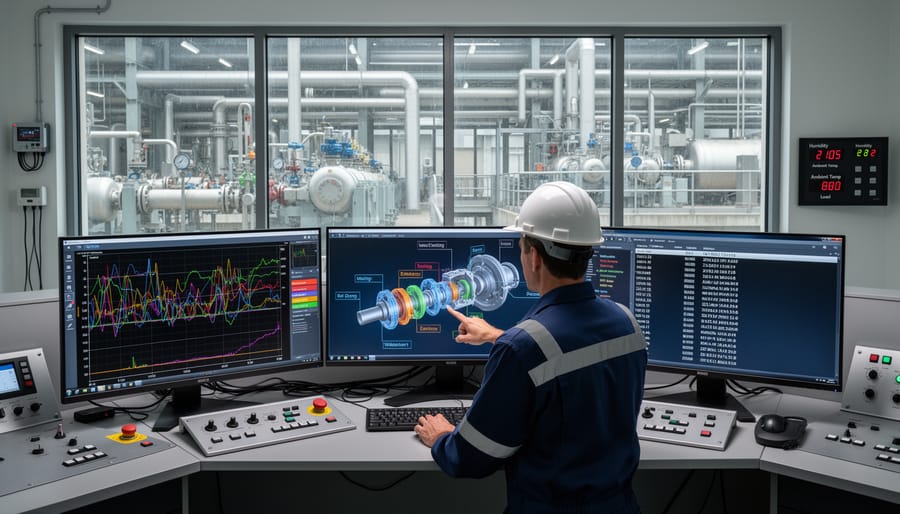
String-Level Underperformance Issues
String-level performance issues represent some of the most challenging diagnostic scenarios in photovoltaic operations, as multiple failure modes can produce similar symptoms. When a string underperforms, traditional monitoring systems typically flag the anomaly without identifying whether the root cause lies in module degradation, connection problems, or inverter malfunction.
Causal AI addresses this challenge by analyzing the relational patterns between variables rather than simply detecting deviations from expected output. The system examines voltage-current characteristics across the string, comparing individual module performance against adjacent units while factoring in environmental conditions. When connection problems occur, Causal AI identifies characteristic voltage drops and resistance patterns that distinguish loose terminals or corroded contacts from actual module failures.
For inverter-related issues, the technology recognizes systemic patterns affecting multiple strings simultaneously, often correlating with specific operating conditions or load scenarios. Module degradation, by contrast, typically presents as gradual, localized performance decline with distinct spectral response changes. This differentiation capability enables maintenance teams to deploy targeted interventions, whether that involves tightening connections, replacing failed modules, or addressing inverter components. Research collaborations with universities have validated these diagnostic approaches, demonstrating significant improvements in mean time to repair and reduction in unnecessary component replacements across diverse installation types.
Hotspot and Thermal Anomalies
Thermal anomalies in photovoltaic systems often signal underlying performance issues that, if left unaddressed, can escalate into costly failures. AI-powered root cause analysis excels at tracing these thermal irregularities back to their precise origins, distinguishing between electrical mismatches, physical damage, and manufacturing defects that may otherwise appear similar in infrared imagery.
When thermal cameras detect hotspots on solar panels, traditional inspection methods require manual interpretation to determine causation. AI systems, however, analyze thermal patterns alongside electrical characteristics, installation data, and historical performance metrics to identify whether elevated temperatures stem from cell cracking, bypass diode failures, soiling-induced shading, or string-level electrical imbalances. This multidimensional analysis significantly reduces diagnostic uncertainty.
Advanced machine learning models trained on extensive thermal datasets can differentiate between benign temperature variations and critical anomalies requiring immediate intervention. For instance, localized heating caused by manufacturing defects displays distinct thermal signatures compared to damage from environmental stress. By correlating thermal data with warranty claims and failure histories, AI systems continuously refine their diagnostic accuracy, enabling predictive maintenance strategies that address potential failures before they compromise system output or safety.
Intermittent Performance Drops
Intermittent faults represent one of the most vexing challenges in photovoltaic system diagnostics. When inverter efficiency drops only during peak irradiance hours or string performance degrades exclusively under specific temperature conditions, traditional monitoring systems often fail to capture the underlying cause. These transient issues evade simple rule-based diagnostics because they don’t present consistent patterns.
Causal AI excels precisely where conventional approaches falter. By continuously analyzing the relationships between variables—irradiance levels, ambient temperature, voltage fluctuations, and performance metrics—the system builds dynamic causal models that reveal condition-dependent failures. For instance, when a combiner box connection shows resistance issues only at elevated temperatures, Causal AI identifies the thermal correlation that triggers intermittent losses. The technology distinguishes between coincidental timing and genuine causal relationships, eliminating false diagnoses.
This capability proves particularly valuable for preventing system failures that develop gradually under specific environmental conditions. Research collaborations with universities have validated that Causal AI reduces diagnostic time for intermittent faults by up to sixty percent compared to manual investigation methods, enabling maintenance teams to address elusive performance issues before they escalate into complete component failures.
Implementing AI Root-Cause Analysis in Your PV Operations
Data Requirements and Quality Considerations
Effective AI root cause analysis depends fundamentally on comprehensive, high-quality monitoring data. For photovoltaic systems, essential data streams include module-level voltage and current measurements, irradiance sensors, ambient and module temperature readings, inverter performance metrics, and grid conditions. The temporal resolution matters significantly—sampling intervals of 1-5 minutes typically provide sufficient granularity for most fault detection scenarios, while real-time diagnostic capabilities require sub-minute data capture.
Data quality directly impacts diagnostic accuracy. Missing values, sensor drift, and measurement noise can introduce spurious correlations that mislead causal inference algorithms. Implementing validation protocols—such as cross-referencing multiple sensors and flagging outliers—ensures cleaner inputs for analysis. Metadata completeness is equally critical; system configuration details, maintenance logs, and historical performance baselines enable AI models to distinguish between normal operational variations and genuine anomalies.
Universities collaborating on renewable energy research emphasize that standardized data formats and consistent labeling conventions facilitate model training and validation. For organizations implementing AI diagnostics, investing in calibrated instrumentation and establishing data governance frameworks yields substantially more reliable root cause identification than deploying sophisticated algorithms on compromised datasets.
Building Expertise in Causal Analysis Interpretation
Successfully deploying AI-driven root cause analysis in photovoltaic operations requires a workforce equipped with specialized analytical skills. The knowledge gap between traditional solar maintenance practices and advanced causal AI methodologies presents both a challenge and an opportunity for professional development.
Leading universities have begun addressing this need through dedicated programs combining data science, renewable energy systems, and causal inference theory. These academic partnerships provide structured curricula covering machine learning fundamentals, statistical causation principles, and domain-specific applications in solar energy diagnostics. Graduate-level courses now incorporate hands-on projects using real-world PV performance datasets, enabling students to develop practical competencies in algorithm selection, model validation, and result interpretation.
For industry professionals, specialized training programs offer accelerated pathways to competency. These intensive courses typically span several weeks and focus on translating causal analysis outputs into actionable maintenance decisions. Training modules address critical skills including data preprocessing for solar installations, understanding confidence intervals in AI predictions, and distinguishing correlation from causation in complex system failures.
Certification programs developed through industry-academic collaborations provide standardized benchmarks for expertise verification. Organizations investing in these educational initiatives report improved diagnostic accuracy, reduced troubleshooting time, and enhanced cross-functional communication between data scientists and field technicians. This educational infrastructure ensures that as AI capabilities advance, the workforce evolves correspondingly to maximize diagnostic potential.
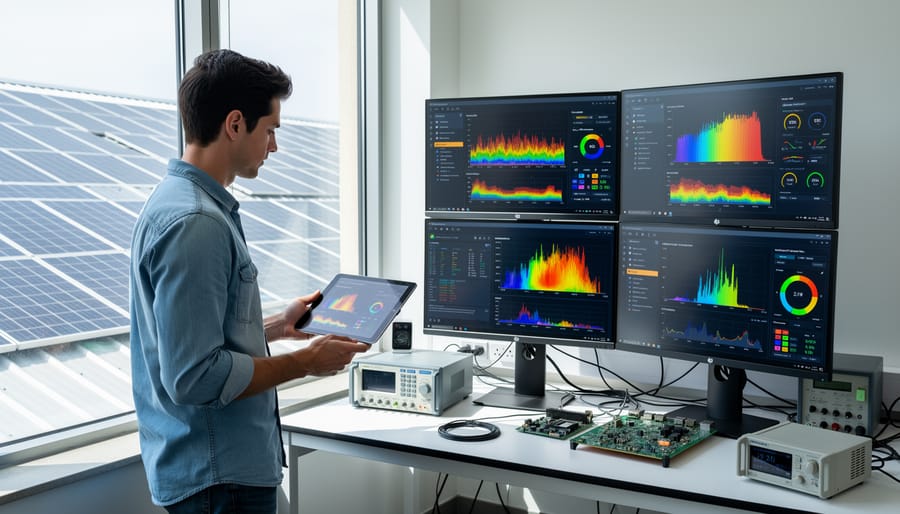
The adoption of Causal AI for photovoltaic fault root-cause analysis marks a fundamental transformation in how the solar energy industry approaches system reliability and performance optimization. Rather than responding to failures after they occur, this technology enables proactive identification of underlying issues before they escalate into costly downtime or safety hazards. By mapping causal relationships between system variables, these advanced diagnostic tools deliver precision insights that traditional correlation-based methods simply cannot achieve.
For photovoltaic professionals at all career stages, developing competency in AI-driven root cause analysis represents a significant competitive advantage. As the solar sector continues its rapid expansion, employers increasingly value practitioners who can leverage sophisticated diagnostic technologies to maximize energy yield and minimize operational expenses. The ability to interpret causal inference models, understand their outputs, and apply findings to real-world troubleshooting scenarios has become an essential skillset for technical leadership roles.
Educational institutions and industry organizations have recognized this knowledge gap and now offer specialized training programs focused on AI applications in renewable energy systems. Aspiring professionals should actively engage with these resources, which range from university certificate programs collaborating with leading solar companies to online courses covering machine learning fundamentals for photovoltaic diagnostics.
The future of solar energy management depends on professionals who can bridge traditional electrical engineering knowledge with emerging artificial intelligence capabilities. By investing in this critical skillset today, photovoltaic practitioners position themselves at the forefront of an industry undergoing profound technological evolution, ensuring both career advancement and contributions to sustainable energy solutions.