Photovoltaic Module Manufacturing

A single solar cell can be fragile and can produce a limited amount of power. In reality, PV modules are created by connecting up to 72 solar cells together electrically. A panel/PV module is a group of cells that are sealed in a weatherproof packaging. It is the key element of PV systems.

Popular Solar PV Modules

High-efficiency Solar Photovoltaic Modules

Mose Solar is a reliable source of solar photovoltaic modules for project developers and EPCs (Engineering, Procurement, and Construction) involved in utility-scale and commercial projects.

Read More

Solar Multi-crystalline Module

Multi-crystalline panels, also known as polycrystalline, are composed of silicon, which is similar to monocrystalline. Instead of just a single silicon crystal, manufacturers melt multiple pieces of silicon to form panel wafers.

Read More

Solar Monocrystalline Modules

Monocrystalline modules are solar panels put together using single cells or single-crystal silicon. Its composition allows the electrons to freely move compared to a multi-crystal layout.

Read More

Highlighted Articles

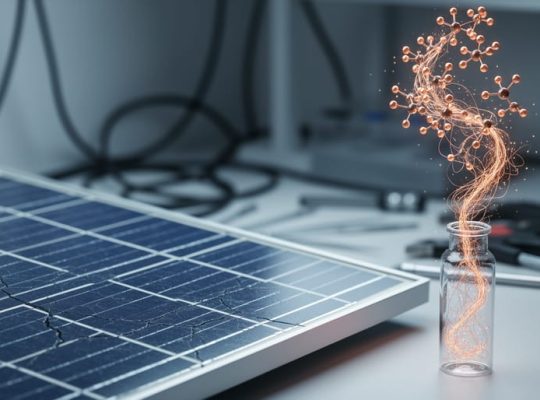
Close-up of a solar panel surface with fine weathering textures and a glowing copper-peptide-inspired visual suggesting protective regenerative effects in a laboratory environment.

Why This Copper Peptide Could Transform Solar Panel Longevity

GHK-Cu, or glycyl-L-histidyl-L-lysine-copper(II), delivers documented regenerative and protective benefits in biological systems through enhanced collagen synthesis, wound healing acceleration, and antioxidant activity. Originally isolated from human plasma in the 1970s, this naturally occurring copper peptide has gained recognition in skincare applications like the GLOW blend for its ability to stimulate tissue repair and reduce visible signs of aging. For photovoltaic professionals, however, the compound’s protective mechanisms present an intriguing parallel to one of solar …

Read More
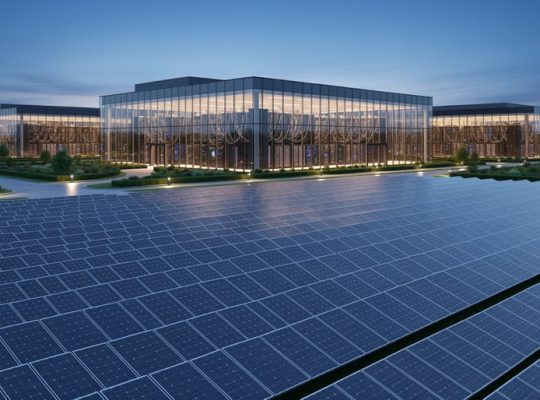
Rows of solar panels in the foreground leading to a glass-walled data center glowing warmly at twilight, under a cool blue sky, shot with deep focus.

How Solar Energy Could Transform Online Gambling Into a Sustainable Industry

The online gambling industry faces mounting pressure to address its substantial carbon footprint, with platforms where users can play with tether and similar operators consuming massive amounts of electricity to power 24/7 data centers, streaming services, and transaction processing systems. As global data center energy consumption reaches 200 terawatt-hours annually—roughly 1% of worldwide electricity demand—gambling platforms that operate continuously represent a significant portion of this digital infrastructure load.
Solar photovoltaic systems offer gambling operators a …

Read More
Industrial HHC gummies production line with stainless-steel kettles and a conveyor of small cube-shaped gummies, daylight streaming through large windows, and ground-mounted solar panels visible outside.

How Solar Energy Slashes Production Costs for HHC Gummies Manufacturers

HHC gummies manufacturing demands substantial energy consumption—from extraction and infusion processes to climate-controlled curing rooms and packaging operations. As production scales to meet growing demand, you can buy THCP gummies herewhile electricity costs can comprise 15-30% of total operational expenses, directly impacting profit margins in an increasingly competitive market.
Solar photovoltaic (PV) systems present a transformative solution for HHC manufacturers seeking energy independence and cost predictability. Modern commercial solar …

Read More
Homeowner at kitchen table holding a calculator next to unlabeled bills, looking through a window at sunlit rooftop solar panels; soft natural light with slightly blurred suburban rooftops in the background.

Why Payday Loans Are the Wrong Way to Pay for Solar Panels

**Avoid payday loans entirely for solar panel financing—these short-term, high-interest products fundamentally contradict the long-term investment nature of photovoltaic systems.** While low apr payday loans may seem accessible when facing upfront solar costs, their typical 14-30 day repayment terms and APRs exceeding 400% create financial distress rather than solutions.
Solar installations represent capital investments spanning 25-30 years, requiring financing mechanisms aligned with their extended payback periods and energy savings trajectories. Payday loans, designed for emergency …

Read More
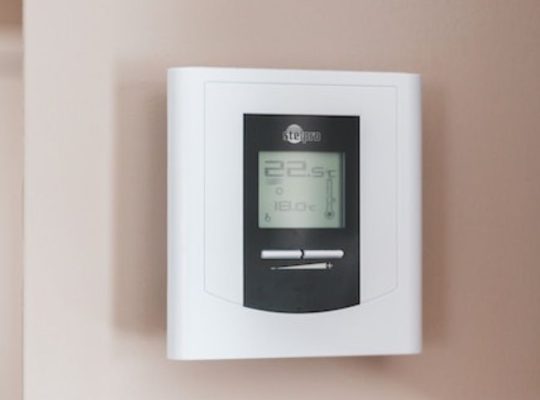
a thermostat on a wall

Advantages of a Thermostat

In today’s world, where people highly value convenience and efficiency, the humble thermostat has emerged as a technological hero in our homes. These unassuming devices help to regulate indoor temperatures, ensure comfort, and save money. And with the easily accessible thermostat rebates, anyone can have them in their home.
This article will explore the numerous advantages of thermostats. It will also highlight how they have evolved into smart energy-efficient solutions for modern living.
The Main Advantages of A Thermostat
…

Read More
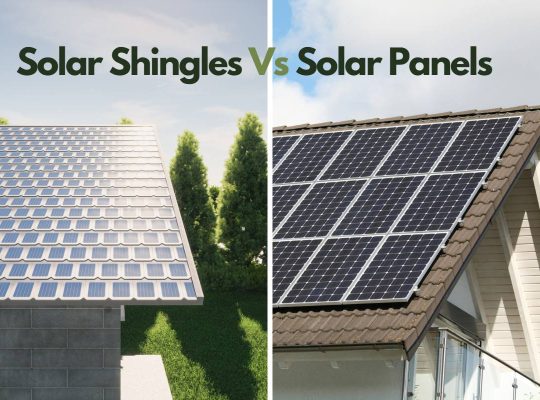
Solar Shingles Vs Solar Panels comparison

Solar Shingles Vs Solar Panels: How to Decide

Solar roof shingles and solar panels have some similarities and differences between them. For similarities, we’re talking about their technology, eco-friendliness, cost-effectiveness, suitability for net metering, etc. On the flip side, their differences include appearance, flexibility, cost, etc. In the solar shingles vs solar panels debate, this solar energy blog compares and contrasts the qualities and abilities of both solar power products designed to provide the same function – electricity for a building.
Solar Panels
…

Read More
See More Posts

Latest Articles

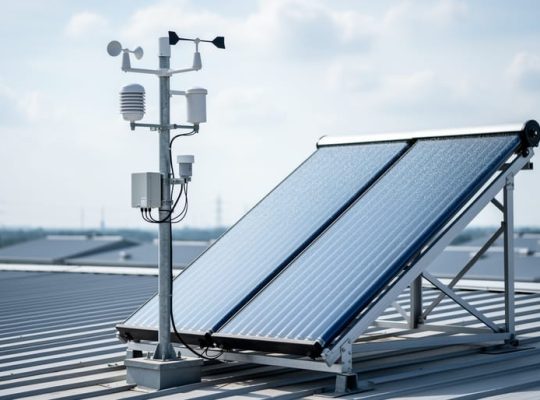
Weather station sensors positioned near a solar panel array to represent using meteorological climate data in solar process heat analytics.

What Is a Climate Source (and How Does It Work in Solar Process Heat Analytics)?

A climate source is a repository of historical and real-time meteorological data used to model solar irradiance, temperature, and atmospheric conditions for photovoltaic system performance predictions. In solar industrial process heat analytics, the choice of climate source directly determines the accuracy of energy yield forecasts, equipment sizing decisions, and financial modeling for multi-megawatt installations where even small forecasting errors translate into millions of dollars in lost revenue or oversized infrastructure.
The quality and resolution of climate data have become critical differentiators in professional solar …

Read More
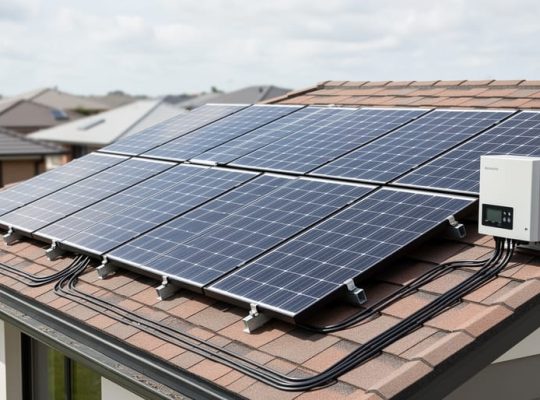
Residential rooftop solar array with eight panels and nearby inverter/charge controller equipment connected by conduit wiring.

What Is an 8 Solar Panels in Series Parallel Configuration (and How Does It Work)?

An 8 solar panel series-parallel configuration combines both wiring methods to balance voltage and current output, typically arranged as either two strings of four panels in series (2×4) or four strings of two panels in series (4×2). This hybrid approach addresses a fundamental challenge in photovoltaic system design: optimizing power delivery to inverters and charge controllers while maintaining system safety and efficiency.
Understanding series-parallel configurations is essential for anyone designing small to medium-scale solar installations. When you connect panels in series, voltages add together while current remains …

Read More
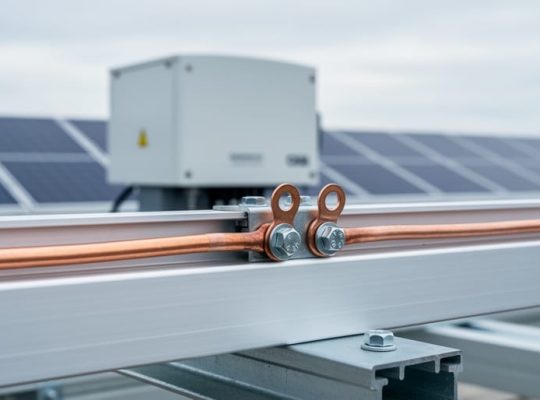
Close-up of a copper bonding conductor and bolted ring terminals connecting metal components on a photovoltaic mounting structure, shown beside solar modules.

Bonding Protection: The Essential Shield Against Equipment Damage and Safety Hazards in PV Systems

Bonding protection establishes low-impedance electrical connections between all metallic components in a photovoltaic system, ensuring they share the same electrical potential and preventing dangerous voltage differences during fault conditions or lightning strikes. This protective function works by creating deliberate pathways that allow fault currents to flow safely to ground, enabling overcurrent devices to trip quickly and reducing the risk of electric shock, equipment damage, and fire hazards.
While grounding provides a reference to earth potential, bonding interconnects conductive surfaces that people might touch or that could…

Read More
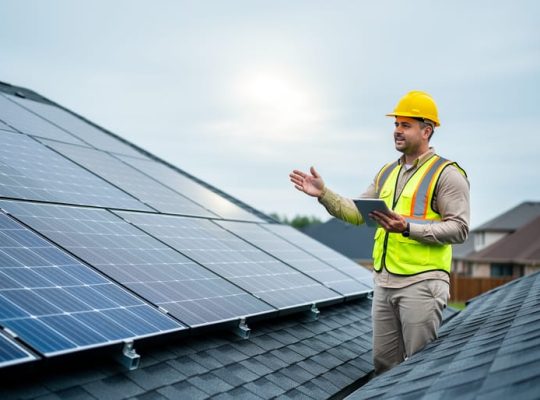
Technician on a residential roof reviewing solar panels with a tablet during a solar energy assessment.

What Is Solar Energy Assessment (and How Does It Work)?

A solar energy assessment is a systematic evaluation of a location’s solar potential and the technical, economic, and environmental feasibility of installing photovoltaic systems at that site. This process combines solar resource measurement, site-specific analysis, and energy yield modeling to determine whether solar power represents a viable investment and how best to design a system for optimal performance.
The assessment matters because installing …

Read More
See More Posts

Career

Do you want to be part of an international company that is committed to pushing the transition to renewable energy at a faster pace? Consult our job board online to view Mose Solar’s career opportunities.